

Portofino Travel Guide - Free Web & App
Your ultimate guide to Portofino. Discover top landmarks, proposed trips, and local tips. Free on the web or via the Evendo companion app.


Portofino, Italy, pairs a harbour of painted façades with Ligurian trails, Castello Brown, coastal views, seafood and boat trips to San Fruttuoso.
A Small Harbour with a Dramatic Setting
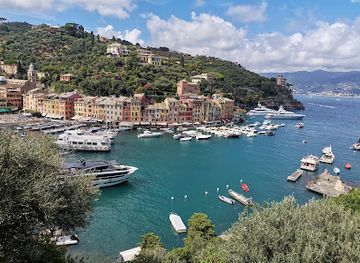
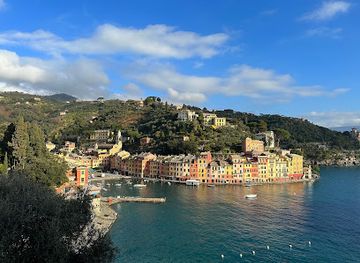
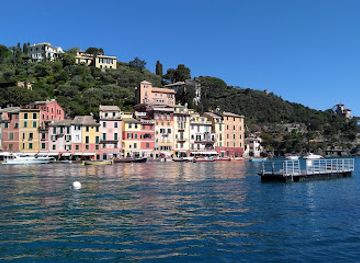
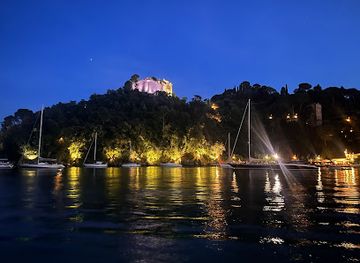
Portofino occupies a sheltered inlet on the Tigullio coast of Liguria, south-east of Genoa, where pastel-coloured houses curve around a compact harbour. The village itself is small, but its setting extends across the wooded promontory of Portofino, a landscape of steep slopes, rocky coves, Mediterranean vegetation and clear coastal views. Much of the peninsula forms part of the Portofino Regional Natural Park, while the surrounding waters are protected within the Portofino Marine Protected Area. This combination gives the destination a character that is as much natural as architectural: the waterfront is immediately backed by forested hills and narrow paths.Read more about Portofino
Village, Castle and Peninsula
Coastal Culture and Everyday Character
When is the best time to visit Portofino?
Best: May–June, October · 24–30°C| Month | High (°C) | Rainfall (mm) |
|---|---|---|
| January | 14 | 80 |
| February | 15 | 70 |
| March | 16 | 80 |
| April | 19 | 70 |
| May (best) | 24 | 60 |
| June (best) | 30 | 40 |
| July | 33 | 30 |
| August | 32 | 40 |
| September | 29 | 70 |
| October (best) | 24 | 90 |
| November | 19 | 100 |
| December | 16 | 90 |
Getting to and around Portofino
How to get there
Transportation
Best attractions in Portofino
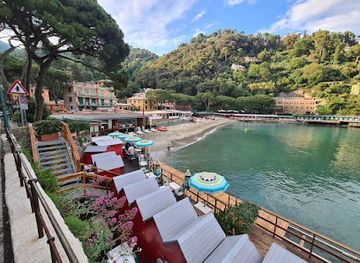
Portofino’s attractions are concentrated but varied. The harbour, framed by tall Ligurian façades and small craft, is the natural starting point, while the narrow lanes lead to the Church of San Martino and up towards the Church of San Giorgio. Castello Brown provides a historic viewpoint above the village, and the path beyond it continues towards the Portofino lighthouse on the headland. The Portofino Regional Natural Park offers walking routes through Mediterranean woodland, along rocky slopes and towards viewpoints over the Tigullio coast. The wider peninsula also includes coves and coastal paths that are best reached on foot or by boat. San Fruttuoso Abbey, set beside an isolated inlet, is one of the area’s defining excursions, although it lies in the municipality of Camogli rather than Portofino itself. Boat connections may also provide access to Santa Margherita Ligure, Camogli and other coastal perspectives when seasonal services are operating.
-
Tourist attraction
Chiesa del Divo Martino
Discover the breathtaking Chiesa del Divo Martino in Portofino, a stunning Catholic church with rich history and panoramic views.
-
Tourist attraction
Passeggiata dei Baci
Discover the romantic allure of Passeggiata dei Baci, a stunning coastal promenade in Paraggi, Italy, perfect for leisurely strolls and breathtaking views.
-
Tourist attraction
Base 0
Experience the breathtaking views and tranquility at Base 0 in Camogli, a hidden scenic gem on the Italian coast.
-
Tourist attraction
Museo del Parco
Explore the Museo del Parco in Portofino, where local art meets rich history in a stunning coastal setting.

Best landmarks in Portofino
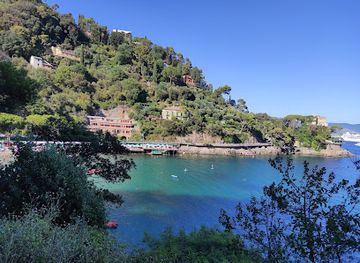
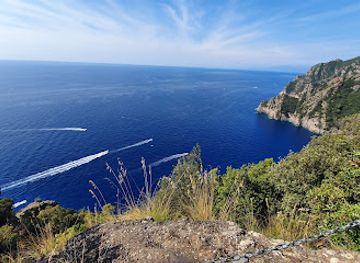
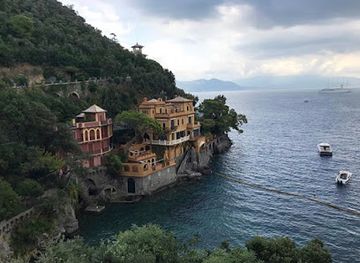
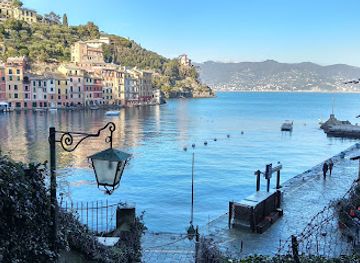
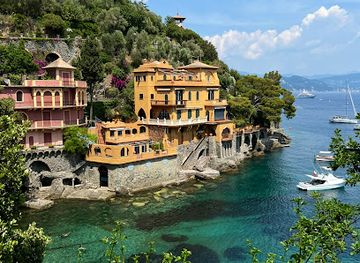
Portofino’s most recognisable landmark is its curved harbour, where brightly painted buildings reflect the maritime identity of the village and the sheltered geography of its inlet. Above it, Castello Brown occupies the headland’s strategic high ground and links the modern resort to the peninsula’s defensive history. The Church of San Giorgio stands on a terrace with broad coastal views, while San Martino remains an important religious and architectural focus within the settlement. Beyond the village, the wooded promontory, rocky shoreline and lighthouse form a connected natural landmark within the regional park. The nearby Abbey of San Fruttuoso is another major cultural landmark of the peninsula, though it is located in Camogli municipality. Together these sites show how Portofino’s identity depends on the relationship between fortified heights, religious buildings, maritime access and protected coastal terrain.
-
Tourist attraction
Faro di Portofino
Explore the stunning Faro di Portofino, a historic lighthouse offering breathtaking views of the Ligurian Sea and the stunning Italian Riviera.
-
Tourist attraction
Baia Cannone
Experience the breathtaking views and tranquil vibes at Baia Cannone, Portofino's hidden gem along the stunning Italian coastline.
-
Castle
Castello Brown
Explore Castello Brown: A historic castle in Portofino, offering breathtaking views and rich insights into Italy's storied past.
-
Catholic church
Chiesa di San Giorgio
Discover the breathtaking views and serene atmosphere of Chiesa di San Giorgio, a historic Catholic church in the heart of Portofino.
Explore Portofino on the map
Plan your trip on one map. See where the top attractions, landmarks, restaurants and hotels are, and book hotels and experiences in a few clicks.
Best hotels in Portofino
Best restaurants in Portofino
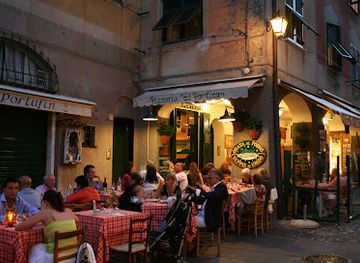
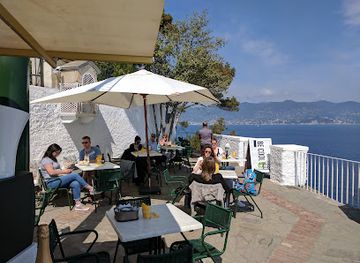
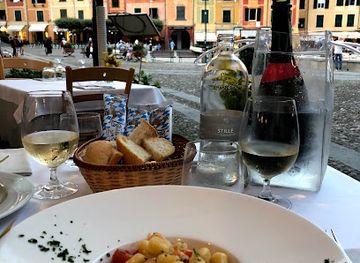
Portofino’s dining scene is concentrated around the harbour and village lanes, with restaurants and cafés shaped by Ligurian cooking and the demands of a compact seasonal resort. Menus commonly draw on regional staples such as pesto, focaccia, trofie or other pasta, vegetables grown on terraced hillsides, olive oil and seafood associated with the Ligurian coast. The setting encourages waterfront dining, but visitors seeking a wider range of everyday restaurants, bakeries and food shops will find more choice in Santa Margherita Ligure and Camogli, both nearby coastal towns rather than part of Portofino village. Small provisions for walks are best bought before leaving the settlement, since the peninsula’s protected landscape supports limited retail infrastructure away from its principal visitor hubs.
-
Italian
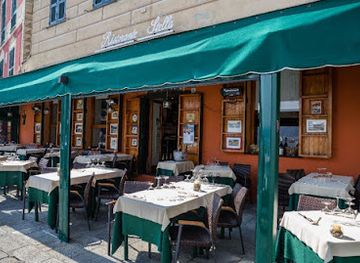
Ristorante Lo Stella
Experience exquisite Italian and seafood dishes at Ristorante Lo Stella, where breathtaking views meet culinary excellence in beautiful Portofino.
-
Restaurant
Trattoria Concordia
Discover authentic Italian cuisine and fresh seafood at Trattoria Concordia in beautiful Portofino.
-
Restaurant
I Gemelli
Experience authentic Italian and Ligurian flavors at I Gemelli in Portofino, where fresh seafood meets stunning coastal views.
-
Pizza
Pizzeria El Portico
Discover authentic Italian flavors at Pizzeria El Portico in beautiful Portofino - where every pizza tells a story.


Best bars in Portofino
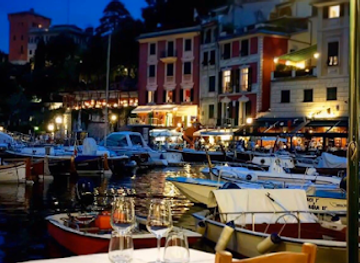
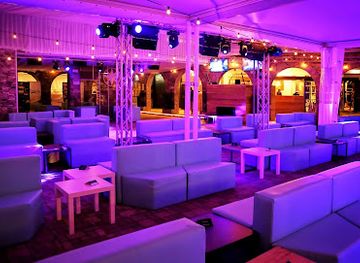
Portofino is not a nightlife destination in the clubbing sense. Evenings are generally quiet and centred on restaurants, hotel bars, cafés and Italian-style aperitivo around the harbour, with the atmosphere changing markedly outside the main visitor season. The village’s compact scale and protected coastal setting leave little room for a large entertainment district or numerous late-night venues. Santa Margherita Ligure and Rapallo provide a broader choice of bars, wine venues and evening restaurants along the Tigullio coast, while Genoa offers the region’s most substantial urban nightlife. In Portofino, the characteristic evening experience is a slow meal, a drink overlooking the water and a quieter walk through streets that are much calmer after day visitors have departed.
-
Italian
Ristorante Lo Stella
Discover exquisite Italian and seafood dining at Ristorante Lo Stella, where coastal views meet culinary excellence in Portofino.
-
Bar
Al Faro di Portofino Lounge Bar
Experience the charm of Portofino at Al Faro Lounge Bar, where stunning views and delightful drinks create the perfect coastal escape.
-
Restaurant
I Gemelli
Experience the finest Italian and Ligurian seafood at I Gemelli, a culinary highlight in the stunning coastal town of Portofino.
-
Restaurant
Trattoria Tripoli
Experience the best of Italian and seafood cuisine at Trattoria Tripoli, where each dish celebrates freshness and flavor in a stunning coastal setting.
Best nightclubs in Portofino
Portofino is not a nightlife destination in the clubbing sense. Evenings are generally quiet and centred on restaurants, hotel bars, cafés and Italian-style aperitivo around the harbour, with the atmosphere changing markedly outside the main visitor season. The village’s compact scale and protected coastal setting leave little room for a large entertainment district or numerous late-night venues. Santa Margherita Ligure and Rapallo provide a broader choice of bars, wine venues and evening restaurants along the Tigullio coast, while Genoa offers the region’s most substantial urban nightlife. In Portofino, the characteristic evening experience is a slow meal, a drink overlooking the water and a quieter walk through streets that are much calmer after day visitors have departed.
-
Disco club
Covo di Nord-Est
Experience the lively atmosphere of Covo di Nord-Est, where the Mediterranean meets vibrant nightlife in Santa Margherita Ligure.
-
Bar
Al Faro di Portofino Lounge Bar
Experience breathtaking views and exquisite cocktails at Al Faro di Portofino Lounge Bar, the perfect retreat in the heart of Portofino.
-
Wine bar
Winterose Wine Bar
Experience the elegance of Winterose Wine Bar in Portofino, a haven for wine lovers with breathtaking views and exquisite selections.
-
Restaurant
Le Carillon
Discover Le Carillon: A perfect blend of exquisite dining, vibrant nightlife, and stunning seaside views in Paraggi, Italy.
Best shops in Portofino
Shopping in Portofino is focused on small-scale tourism rather than extensive retail streets. Around the harbour and central lanes, visitors may find boutiques, galleries, jewellery, art, resort clothing and locally themed goods, while regional food products and Ligurian specialities provide more practical souvenirs. The village has limited everyday infrastructure, so visitors looking for supermarkets, pharmacies, broader food shopping or outdoor equipment should use Santa Margherita Ligure or another larger Tigullio settlement. Local products associated with Liguria include olive oil, pesto, focaccia and artisanal foods, though availability varies between businesses and seasons. Shopping is best understood as part of the village’s resort economy, with more varied independent retail and market activity found in neighbouring coastal towns rather than on the protected headland.
-
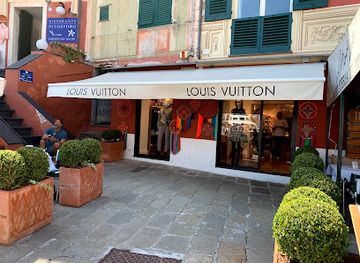
Leather goods store
Louis Vuitton Portofino Men
Experience the pinnacle of luxury shopping at Louis Vuitton Portofino, where elegance and high fashion meet in a stunning coastal paradise.
-
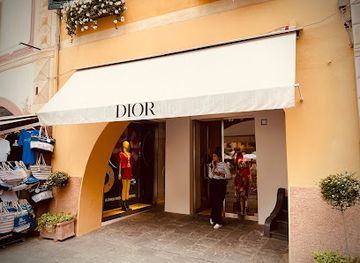
Clothing store
DIOR Portofino
Experience luxury fashion at DIOR Portofino, where elegance meets the stunning beauty of the Italian Riviera.
-
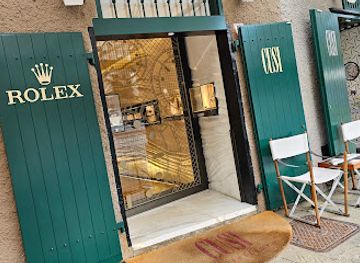
Jewelry store
Boutique Rolex - CUSI Gioielliere in Portofino
Discover the luxury of fine jewelry and exquisite timepieces at Boutique Rolex - CUSI Gioielliere in scenic Portofino.
-
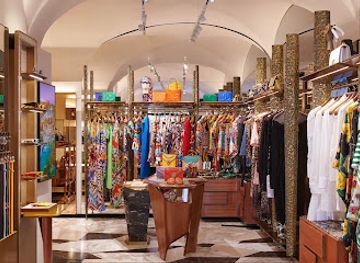
Women's clothing store
Dolce & Gabbana
Explore the luxurious Dolce & Gabbana store in Portofino, where Italian elegance meets stunning coastal beauty through exquisite fashion and accessories.
Get your free copy of our complete guide to Portofino, delivered straight to you.
Everything on this page, from attractions and restaurants to essentials and local phrases, in one PDF you can read offline, print or share.
Already have an account? Sign in
Your Portofino guide is ready.
We'll send it to · Not you? Sign out

Getting your guide ready…
We are putting together a fresh copy of the Portofino guide. This can take up to a minute.
This can take a few moments. If your browser asks, choose Allow so the download can start. You'll find the guide in your Downloads folder.
Nothing happened? Download it again
Sorry, the guide is taking longer than usual. Please try again in a minute, or get it by email instead.
Portofino essentials
Currency and Payment
Safety
Emergency Situations
Do's and Don'ts
Local Tips
From Eve
Local phrases worth knowing
You don't need to get them perfect. A few words go a long way, and locals appreciate the effort.
Basics
| English | Local | Say it |
|---|---|---|
| Hello | Ciao | [chow] |
| Goodbye | Arrivederci | [ah-ree-veh-dehr-chee] |
| Yes | Sì | [see] |
| No | No | [noh] |
| Please/You're welcome | Per favore/Prego | [pehr fah-voh-reh/preh-goh] |
| Thank you | Grazie | [grah-tsyeh] |
| Excuse me/Sorry | Mi scusi/Scusa | [mee skoo-zee/skoo-zah] |
| How are you? | Come stai? | [koh-meh stah-ee] |
| Fine. And you? | Bene. E tu? | [beh-neh/eh too] |
| Do you speak English? | Parli inglese? | [pahr-lee een-gleh-zeh] |
| I don't understand | Non capisco | [nohn kah-pee-skoh] |
Eating & Drinking
| English | Local | Say it |
|---|---|---|
| I'd like to see the menu, please | Vorrei vedere il menu, per favore | [vohr-reh-ee veh-deh-reh eel meh-noo/pehr fah-voh-reh] |
| I don't eat meat | Non mangio carne | [nohn mahn-joh kahr-neh] |
| Cheers! | Salute! | [sah-loo-teh] |
| I would like to pay, please | Vorrei pagare, per favore | [vohr-reh-ee pah-gah-reh/pehr fah-voh-reh] |
Emergencies
| English | Local | Say it |
|---|---|---|
| Help! | Aiuto! | [ah-yoo-toh] |
| Go away! | Vattene! | [vaht-teh-neh] |
| Call the Police! | Chiamare la polizia! | [kyah-mah-reh lah poh-lee-tsyah] |
| Call a doctor! | Chiamare un dottore! | [kyah-mah-reh oon doh-toh-reh] |
| I'm lost | Mi sono perso | [mee soh-noh pehr-soh] |
| I'm ill | Sono malato | [soh-noh mah-lah-toh] |
Shopping
| English | Local | Say it |
|---|---|---|
| I'd like to buy... | Vorrei comprare... | [vohr-reh-ee kohm-prah-reh] |
| I'm just looking | Sto solo guardando | [stoh soh-loh gwahr-dahn-doh] |
| How much is it? | Quanto costa? | [kwahn-toh koh-stah] |
| That's too expensive | È troppo caro | [eh troh-poh kah-roh] |
| Can you lower the price? | Può abbassare il prezzo? | [pwoh ahb-bahs-sah-reh eel preht-soh] |
Time & Numbers
| English | Local | Say it |
|---|---|---|
| What time is it? | Che ora è? | [keh oh-rah eh] |
| It's one o'clock | È l'una | [eh loo-nah] |
| Half past (10) | Sono le dieci e mezza | [soh-noh leh dyeh-chee eh meh-tzah] |
| Morning | Mattina | [maht-tee-nah] |
| Afternoon | Pomeriggio | [poh-meh-ree-joh] |
| Evening | Sera | [seh-rah] |
| Yesterday | Ieri | [yeh-ree] |
| Today | Oggi | [oh-jee] |
| Tomorrow | Domani | [doh-mah-nee] |
| 1 | Uno | [oo-noh] |
| 2 | Due | [doo-eh] |
| 3 | Tre | [treh] |
| 4 | Quattro | [kwah-troh] |
| 5 | Cinque | [cheen-kweh] |
| 6 | Sei | [seh-ee] |
| 7 | Sette | [seht-teh] |
| 8 | Otto | [oh-toh] |
| 9 | Nove | [noh-veh] |
| 10 | Dieci | [dyeh-chee] |
Transport & Directions
| English | Local | Say it |
|---|---|---|
| Where's a/the...? | Dov'è...? | [doh-veh] |
| What's the address? | Qual è l'indirizzo? | [kwahl eh leen-dee-ree-tso] |
| Can you show me (on the map)? | Puoi mostrarmi (sulla mappa)? | [pwah-ee mohs-trar-mee/sool-lah mahp-pah] |
| When's the next (bus)? | Quando è il prossimo (autobus)? | [kwahn-doh eh eel prohs-shee-moh/ow-toh-boos] |
| A ticket (to ....) | Un biglietto (per ....) | [oon beel-lyet-toh/pehr] |
History of Portofino
A Harbour Known in Antiquity
Portofino’s sheltered inlet has long been valued as a maritime refuge. Its name is generally connected with the ancient Latin Portus Delphini, although the precise origin and development of the early settlement are difficult to reconstruct from the surviving record. The peninsula’s position between the open Ligurian Sea and the deeper inlets of the Tigullio coast made it useful to seafarers, while the steep interior limited large-scale inland expansion. The setting that now attracts visitors therefore also explains the village’s compact form: Portofino developed as a small coastal community shaped by fishing, navigation and the practical advantages of a protected harbour.
Medieval Portofino and Religious Foundations
During the medieval period, Portofino formed part of the shifting political and ecclesiastical landscape of eastern Liguria. Control of the coast was contested among local powers and the Republic of Genoa, whose influence became decisive across the region. Churches and religious institutions helped organise community life, while the fortified position above the harbour provided surveillance over maritime approaches. The religious heritage visible today, particularly the churches of San Martino and San Giorgio, reflects the village’s development as a settled community rather than merely a temporary anchorage.
Genoese Maritime Influence
Portofino’s history is closely linked to Genoa’s maritime power. The harbour served local navigation and coastal trade, while defensive works on the promontory formed part of a wider system intended to monitor the Ligurian shoreline. Castello Brown, whose present form incorporates successive phases of fortification and later residential use, occupies the most commanding point above the village. Portofino never became a major industrial port: its steep terrain and small anchorage encouraged a compact economy based on seafaring, fishing, agriculture on terraces and services connected with the coast.
From Working Village to International Resort
In the nineteenth and twentieth centuries, improved transport and the growth of leisure travel brought Portofino to the attention of visitors from beyond Liguria. The harbour, colourful façades and wooded peninsula became associated with writers, artists, film-makers and affluent travellers, gradually changing the balance between local maritime life and tourism. The surrounding villages, especially Santa Margherita Ligure and Camogli, developed the transport and accommodation networks that made the peninsula more accessible. Portofino retained its traditional visual form even as its economic life became increasingly focused on hospitality, restaurants, boating and seasonal visitation.
Park Protection and Marine Conservation
Modern conservation has sought to protect the peninsula’s woodland, coastal paths, geological formations and marine habitats from the pressures of development and intensive visitor use. The Portofino Regional Natural Park safeguards much of the land around the village, while the Portofino Marine Protected Area manages the surrounding sea and its ecological value. These designations recognise that Portofino is not simply a scenic settlement but part of a wider coastal ecosystem. Contemporary visits therefore take place within a landscape where access, boating, walking and wildlife observation are shaped by environmental protection as well as by tourism.
Portofino in Photos
Browse through our photo collection highlighting the charm and character of the destination.
Neighbouring destination travel guides
The closest destinations to Portofino, if you have time for more than one.
-

-

-

-

-


Swipe for more destinations
Explore more
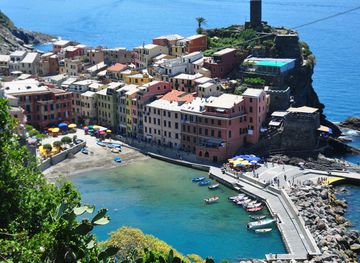
Explore more of Liguria
Discover Liguria, where picturesque coastal villages, vibrant cities, and stunning landscapes create an unforgettable Italian Riviera experience.
Explore Liguria
Explore more of Italy
Discover Italy: A land of ancient history, artistic marvels, and culinary delights; where every corner reveals a new story and every meal is a celebration.
Explore Italy