

Mount Nokogiri Travel Guide
Free Guide: Discover Mount Nokogiri: History, breathtaking views, and Japan's largest stone Buddha await on Chiba's 'Saw Mountain'.


A brief summary of Mount Nokogiri
Discover Mount Nokogiri: History, breathtaking views, and Japan's largest stone Buddha await on Chiba's 'Saw Mountain'.
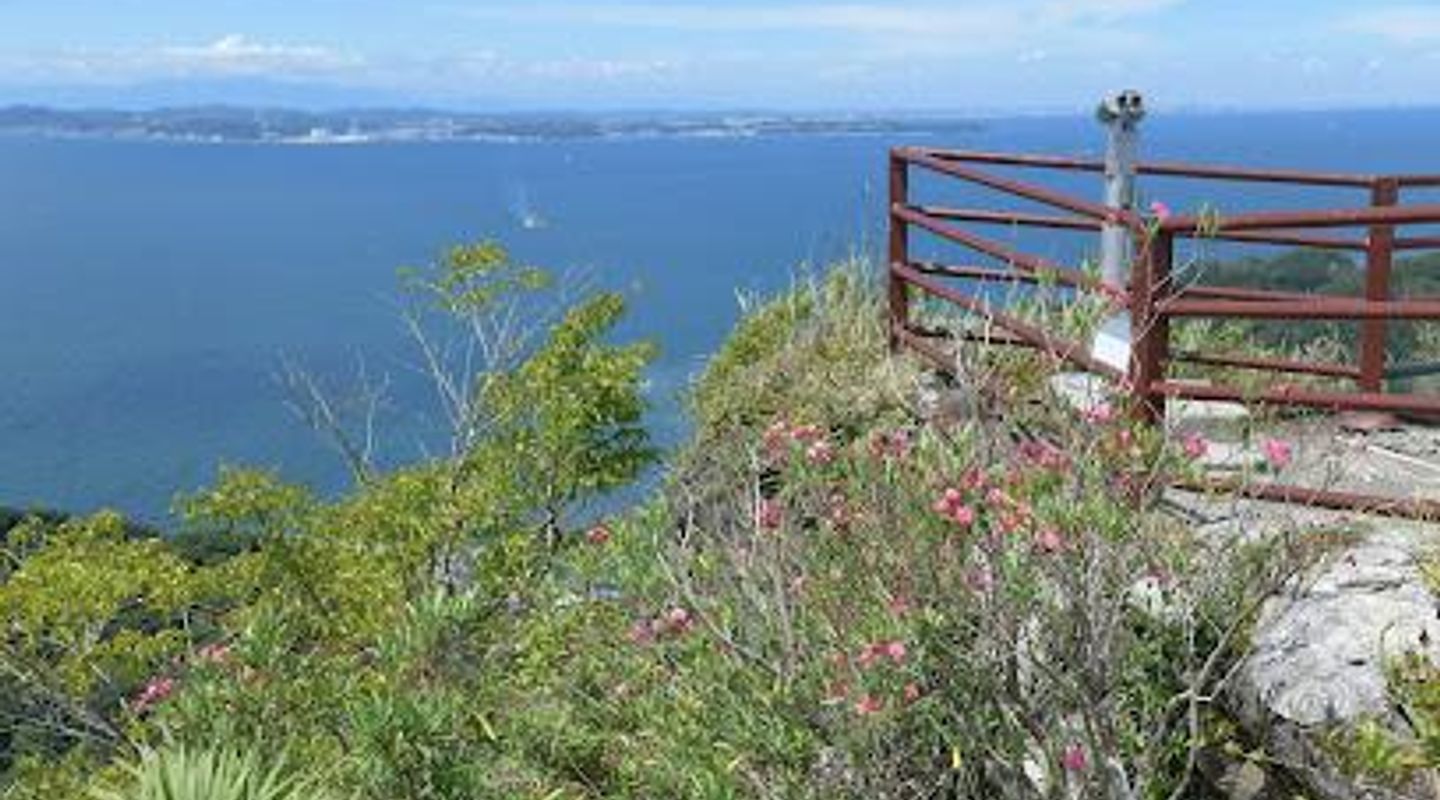
Mount Nokogiri, or 'Saw Mountain,' in Chiba Prefecture, Japan, offers a blend of natural beauty and historical significance. Once a stone quarry, it's now a popular destination with jagged cliffs, panoramic views of Tokyo Bay, and the Nihon-ji Temple complex, home to Japan's largest pre-modern stone-carved Buddha.
- Address
- Motona, Kyonan, Awa District, Chiba 299-1901
Getting there
Train
Ferry
Ropeway
Car
Discover more about Mount Nokogiri
Overview
Mount Nokogiri (Nokogiri-yama), translating to 'Saw Mountain,' derives its name from its distinctive saw-toothed ridge, a profile shaped both by natural formations and centuries of quarrying. Located on the Boso Peninsula in Chiba Prefecture, it presents a unique landscape and a rich history.From the Edo period (1603-1867), Nokogiri-yama served as a vital quarry, providing high-quality stone (Boshu-ishi) for major construction projects in Edo (modern Tokyo). This stone was used in iconic structures like Yasukuni Shrine and Waseda University. The mountain's scarred cliffs and exposed granite tell the story of this industrial past. Quarrying ceased in 1985 due to conservation concerns.Today, Mount Nokogiri is renowned for the Nihon-ji Temple, a sprawling Buddhist complex founded in 725 AD. Within the temple grounds, visitors encounter the awe-inspiring Nihon-ji Daibutsu, a 31-meter tall stone carving of Yakushi Nyorai, the Buddha of Healing. Another notable site is the Hyaku-Shaku Kannon, a massive carving of the Buddhist Goddess of Mercy. The mountain also features around 500 Arhat statues, with some missing heads from the anti-Buddhist campaign of the Meiji era.The mountain offers several viewpoints, including the famous 'Jigoku Nozoki' or 'Hell Peek Point,' a jutting cliff providing dramatic views of the Boso Peninsula and Tokyo Bay. On clear days, Mount Fuji can be seen in the distance. Visitors can ascend the mountain via hiking trails or the Nokogiriyama Ropeway, enjoying panoramic views along the way.
Evendo Review Centre
 Google
Guest reviews
Explore Mount Nokogiri on the map
A handpicked selection of must-see spots near Mount Nokogiri, mapped for you.
Get your free copy of our complete guide to Mount Nokogiri, delivered straight to you.
Everything on this page, from opening hours and how to get there to Eve’s tips and the best time to go, in one PDF you can read offline, print or share.
Already have an account? Sign in
Your Mount Nokogiri guide is ready.
We'll send it to · Not you? Sign out

Getting your guide ready…
We are putting together a fresh copy of the Mount Nokogiri guide. This can take up to a minute.
This can take a few moments. If your browser asks, choose Allow so the download can start. You'll find the guide in your Downloads folder.
Nothing happened? Download it again
Sorry, the guide is taking longer than usual. Please try again in a minute, or get it by email instead.
Unlock the best of Mount Nokogiri
Skip-the-line tickets, guided tours with entry, and walking tours of the area, booked in a few clicks.


Other nearby places you may find interesting
The closest places of the same kind, if this one is not quite what you had in mind.
-
-
-
-
-


Swipe for more places
More to explore near Mount Nokogiri

 Best experiences near Mount Nokogiri
 Best hotels near Mount Nokogiri
 Best landmarks near Mount Nokogiri
 Best attractions near Mount Nokogiri
 Best shops near Mount Nokogiri
 Best restaurants near Mount Nokogiri
 Best bars near Mount Nokogiri
Do you manage this location?
Take control to get all the benefits, like improved information, better appearance, and stronger visibility across AI-powered discovery.
Explore more

Explore more of Sagami
Discover Sagami, an enchanting city in Japan's Kanagawa Prefecture, where ancient temples, scenic landscapes, and vibrant festivals await your exploration.
Explore Sagami
Explore more of Japan
Discover the harmony of tradition and modernity in Japan, where ancient temples and cutting-edge technology coexist in perfect balance.
Explore Japan
