Chuson-ji, Tohoku Travel Guide
Discover a serene UNESCO World Heritage Site in Hiraizumi, featuring the dazzling Konjikido Golden Hall and exquisite Buddhist art.
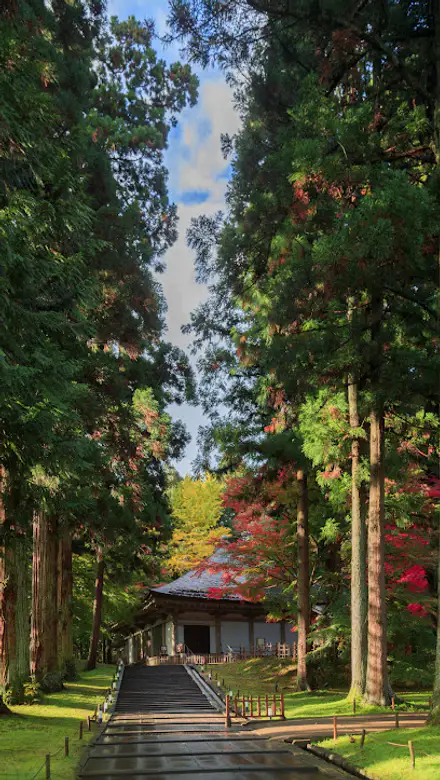
Chuson-ji Temple, a UNESCO World Heritage site in Hiraizumi, Iwate Prefecture, offers a serene escape into Japanese history and Buddhist art. Founded in 850, it rose to prominence in the 12th century under the Northern Fujiwara clan. The highlight is the Konjikido (Golden Hall), a dazzling structure covered in gold leaf.
A brief summary to Chuson-ji
- Koromonoseki-202 Hiraizumi, Hiraizumi, Koromonoseki Hiraizumi, Nishiiwai District, Iwate, 029-4195, JP
- Click to display
- Click to display
- Monday 8:30 am-5 pm
- Tuesday 8:30 am-5 pm
- Wednesday 8:30 am-5 pm
- Thursday 8:30 am-5 pm
- Friday 8:30 am-5 pm
- Saturday 8:30 am-5 pm
- Sunday 8:30 am-5 pm

Know before you go
Hi, I'm Eve. Here are a few practical things to know before exploring Chuson-ji.
- Wear comfortable shoes, as exploring Chuson-ji involves walking along paths through the forest.
- Photography is not allowed inside Konjikido, so be sure to take in the beauty with your eyes.
- Visit in the fall for stunning autumn foliage or in early May for the Fujiwara Festival.
- Allow at least 2-3 hours to fully explore the temple complex and its various halls and museums.
Do you manage this location?
Take control to get all the benefits, like improved information, better appearance, and stronger visibility across AI-powered discovery. Learn more about listing your business on Evendo
Activate your presenceOther nearby places you may find interesting
The closest places of the same kind, if this one is not quite what you had in mind.


Explore Chuson-ji on the Map
A handpicked selection of must-see spots near Chuson-ji, mapped for you.
Unlock the Best of Chuson-ji
Buy tickets
-
No tickets available
Book tours with entry


Book tours without entry
-
No tours available
Getting There
-
Walking
From JR Hiraizumi Station, Chuson-ji Temple can be reached in a 20-30 minute walk. Follow the signs from the station. The path leads through the town and then gradually uphill to the temple entrance. Note that the final approach involves climbing the Tsukimi-zaka (moon-viewing hill), a sloping path lined with trees.
-
Public Transport
From JR Hiraizumi Station, take the Hiraizumi Loop Bus 'Run Run' or a regular bus to Chuson-ji. The bus ride takes about 5-10 minutes. A single ride on the Loop Bus costs ¥150, or a day pass is available for ¥400. The bus stops near the Chuson-ji Tsukimizaka entrance.
-
Taxi
Taxis are available from JR Hiraizumi Station. The taxi ride to Chuson-ji Temple takes about 5 minutes. The estimated cost is ¥700-¥1000. Ask the driver to take you to the main entrance (Tsukimizaka).
Discover more about Chuson-ji













Your all‑in‑one travel companion app
Explore expert travel guides, compare and book tours, experiences, hotels, and more—all from the palm of your hand. Download now for seamless trip planning wherever your wanderlust takes you.


Explore More of Tohoku

Looking beyond Chuson-ji? Discover Tohoku for broader travel guides, local hot-spots, and regional highlights.
Explore Tohoku
Experience the serene beauty and historical charm of Ginzan Onsen, Japan's enchanting hot spring village nestled in the mountains of Yamagata.

Discover the tranquility and cultural richness of Kokuseki-ji Temple, a serene Buddhist sanctuary nestled in the heart of Oshu, Iwate.