

Free Dead Sea Region Travel Guide & Mobile App
Explore Dead Sea Region with free travel guides. Discover regional history, expert tips, proposed trips, and audio guides on web or mobile app.


Explore Jordan’s Dead Sea Region for mineral-rich bathing, canyon landscapes, hot springs, sacred sites and dramatic Jordan Valley scenery.
Read more about Dead Sea Region
When is the best time to visit Dead Sea Region?
Best: March–April, November · 24–28°C| Month | High (°C) | Rainfall (mm) |
|---|---|---|
| January | 20 | 30 |
| February | 21 | 25 |
| March (best) | 24 | 20 |
| April (best) | 28 | 10 |
| May | 33 | 5 |
| June | 38 | 0 |
| July | 40 | 0 |
| August | 39 | 0 |
| September | 36 | 0 |
| October | 32 | 10 |
| November (best) | 26 | 15 |
| December | 21 | 20 |
Getting to and around Dead Sea Region
How to get there
Transportation
Destinations in Dead Sea Region
Resorts, valleys and scenic spots worth a trip of their own.
-

-


Swipe for more destinations
Best attractions in Dead Sea Region
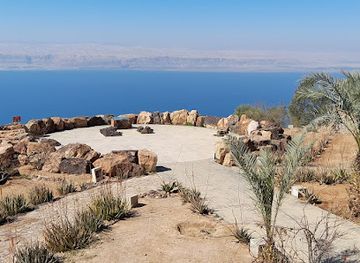
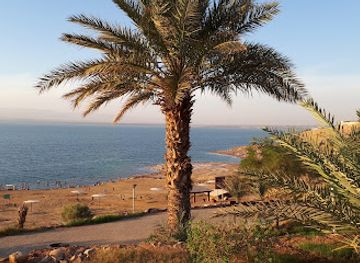
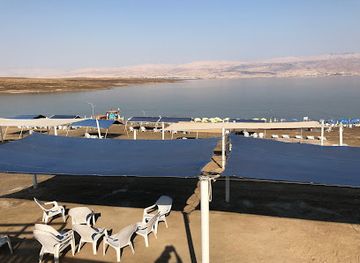
The Dead Sea itself is the region’s defining attraction, offering buoyant bathing, mineral mud treatments and broad views across the water towards the West Bank, although visitors should use designated shore access rather than entering wherever the water appears reachable. Around Sweimeh, resort spas and private beaches form the main visitor infrastructure. Away from the hotels, Wadi Mujib provides the region’s most adventurous landscape, with canyoning and hiking routes through a protected biosphere reserve when seasonal conditions allow. Hammamat Ma’in combines hot springs, waterfalls and steep travertine scenery, while the southern Ghor around Safi offers a more agricultural view of the lowlands. Religious and archaeological experiences include Al-Maghtas on the Jordan River and the elevated ruins of Machaerus. The attractions are therefore varied in character: therapeutic facilities beside the lake, demanding outdoor routes in the wadis, and historic sites on the surrounding plateau. Because distances, access roads and weather conditions differ considerably, excursions should be planned geographically rather than treated as a series of nearby stops.
-
 Tourist attraction
Ma'in Hot Springs
Discover the natural beauty and therapeutic wonders of Ma'in Hot Springs, a premier destination for relaxation and adventure in Jordan.
-
Restaurant
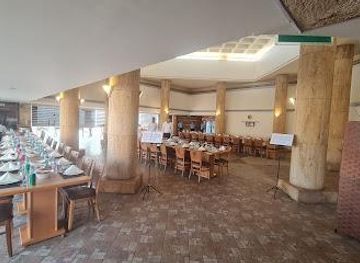
Dead Sea Museum
Uncover the rich history and unique geology of the Dead Sea at the Dead Sea Museum, a captivating experience for every traveler.
-
Visitor center
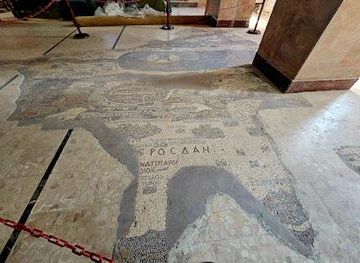
Madaba Visitors Center
Discover the rich cultural heritage of Madaba at the Visitors Center, your gateway to the city's historic mosaics and vibrant history.
-
Historical place
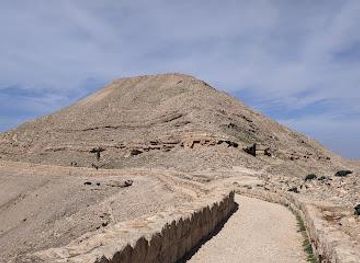
Fortress of Machaerus
Explore the historic Fortress of Machaerus in Madaba, Jordan, a site steeped in history and offering stunning views of the surrounding landscapes.
Best landmarks in Dead Sea Region
The Dead Sea is itself the region’s great natural landmark, recognised by its low elevation, intensely saline water and changing shoreline. On the eastern shore, the dramatic escarpment and the deeply incised gorge of Wadi Mujib create a powerful geological frame for the lake. Al-Maghtas, on the Jordan River north of the resort area, is a major religious and archaeological landmark associated with the baptism of Jesus; its churches, chapels and baptismal installations form part of a UNESCO World Heritage Site. High above the southern Dead Sea, Machaerus preserves the remains of a fortified Herodian palace and stronghold traditionally linked with John the Baptist. Hammamat Ma’in is distinguished by its waterfalls and mineral springs descending through pale rock, while the cultivated lowlands around Safi provide a contrasting landmark landscape of palms and irrigated fields. Together these places show how geology, sacred history and Jordan’s modern tourism economy are concentrated within a narrow but varied area.
-
Historical place
Petra
Explore Petra, the astonishing archaeological treasure of Jordan, where ancient civilization and breathtaking landscapes converge in a timeless experience.
-
Historical landmark
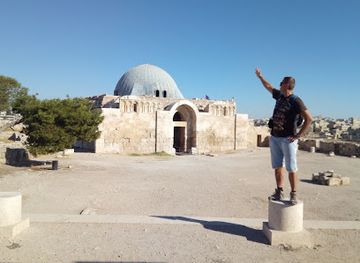
Amman Citadel
Explore the Amman Citadel: A historical masterpiece showcasing Jordan's rich heritage, ancient ruins, and stunning city views.
-
Historical landmark
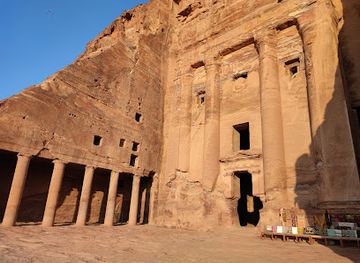
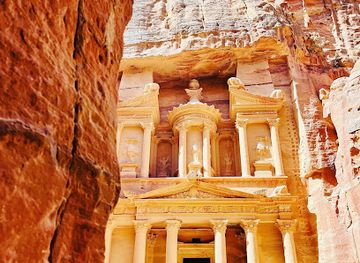
The Treasury
Discover The Treasury, Petra's stunning archaeological gem, where history and breathtaking architecture collide in a mesmerizing landscape.
-
Nature preserve
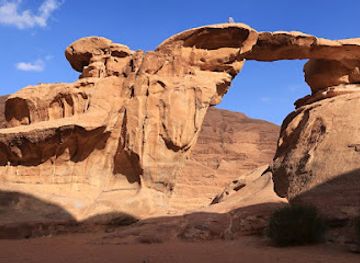
Wadi Rum Protected Area
Experience the mesmerizing beauty of Wadi Rum, a UNESCO World Heritage site filled with stunning landscapes, rich Bedouin culture, and unforgettable adventures.
Explore Dead Sea Region on the map
Plan your trip on one map. See where the top cities, national parks and sights are, and book hotels and experiences in a few clicks.
Best hotels in Dead Sea Region
Best restaurants in Dead Sea Region
Dining in the Dead Sea Region is concentrated in resort hotels and restaurants serving visitors travelling through the Jordan Valley. Menus commonly combine Jordanian and wider Levantine cooking with international dishes, including mezze, hummus, salads, grilled meats, rice preparations, flatbreads and seasonal vegetables. Local produce from the Jordan Valley may include dates, citrus fruit, tomatoes and other crops grown under irrigation, while traditional sweets and Arabic coffee are widely encountered. Outside the hotel zone, options are more modest and may consist of simple restaurants, cafés or roadside stops, so those exploring Wadi Mujib, Hammamat Ma’in or Machaerus should carry water and plan meals in advance. The region is not primarily a destination for a single signature dish; its culinary identity lies in the meeting of Jordanian hospitality, Levantine food traditions and resort dining. Alcohol availability is generally concentrated in licensed hotels and should not be assumed at independent or rural establishments.
-
Resort hotel
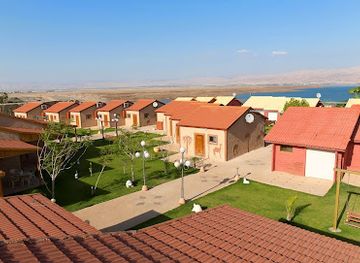
ביאנקיני - כפר נופש בצפון ים המלח
Experience luxury and tranquility at Bianchini Resort near the Dead Sea - a perfect getaway with stunning gardens and exquisite Moroccan cuisine.
-
Restaurant
Dead Sea Museum
Discover history and breathtaking views at the Dead Sea Museum – a unique blend of culture and nature in one stunning location.
-
American
Buffalo Wings & Rings - Dead Sea
Savor mouthwatering wings and American favorites at Buffalo Wings & Rings by the stunning shores of the Dead Sea.
-
Fast Food
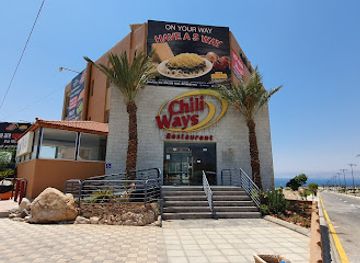
Chili Ways - Dead Sea
Discover delicious fast food at Chili Ways by the Dead Sea – where flavors meet breathtaking views!
Best bars in Dead Sea Region
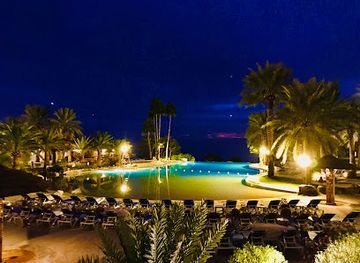
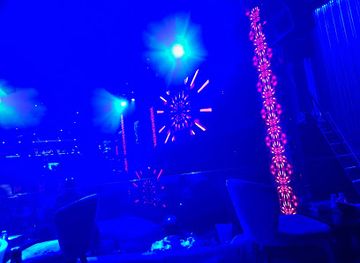
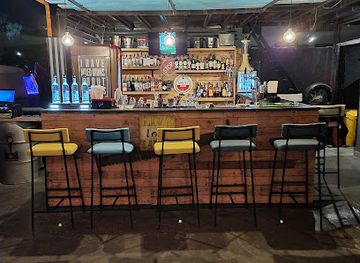
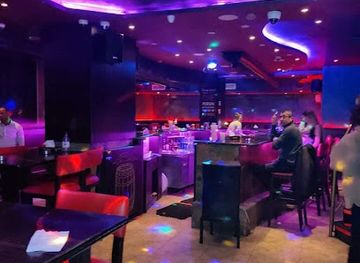
Evening life around the Dead Sea is centred on hotel lounges, restaurants, terraces and spa properties rather than an independent nightclub district. Larger resorts may offer evening entertainment, live music, bars and seating with views across the lake, but programmes and operating arrangements change seasonally. In smaller settlements and rural areas, social life is more likely to revolve around family gatherings, cafés and restaurants than late-night venues. Licensed hotel bars generally provide the clearest setting for wine, beer or cocktails, while Jordanian coffee and tea are widely available in both formal and informal settings. Visitors should not expect the concentrated nightlife associated with Amman or Aqaba; the region’s evenings are usually quieter, with many travellers returning from canyon, heritage or wellness activities before late hours.
-
American
Buffalo Wings & Rings - Dead Sea
Experience the best of American cuisine and sports at Buffalo Wings & Rings, nestled beside the enchanting Dead Sea.
-
Bar
Amman Beach, Dead Sea , Jordan
Experience the unique floating sensation at Amman Beach, Dead Sea, Jordan's ultimate relaxation and wellness destination.
-
Bar
Lowest Bar in the World
Discover the charm of the Lowest Bar in the World at Kalia Beach, where stunning views and refreshing drinks await you.
-
Irish pub
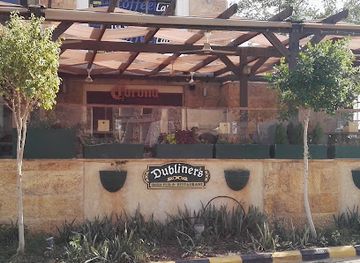
Dubliners Irish Pub & Restaurant
Discover the taste of Ireland at Dubliners Irish Pub & Restaurant, where authentic cuisine meets vibrant atmosphere in Swemeh, Jordan.
Best nightclubs in Dead Sea Region
Evening life around the Dead Sea is centred on hotel lounges, restaurants, terraces and spa properties rather than an independent nightclub district. Larger resorts may offer evening entertainment, live music, bars and seating with views across the lake, but programmes and operating arrangements change seasonally. In smaller settlements and rural areas, social life is more likely to revolve around family gatherings, cafés and restaurants than late-night venues. Licensed hotel bars generally provide the clearest setting for wine, beer or cocktails, while Jordanian coffee and tea are widely available in both formal and informal settings. Visitors should not expect the concentrated nightlife associated with Amman or Aqaba; the region’s evenings are usually quieter, with many travellers returning from canyon, heritage or wellness activities before late hours.
-
Bar
Amman Beach, Dead Sea , Jordan
Discover the serene beauty of Amman Beach at the Dead Sea, where relaxation meets breathtaking views and therapeutic waters.
-
Club
OMNI CLUB AMMAN
Discover the heartbeat of nightlife at Omni Club Amman, where unforgettable parties and vibrant music await every night.
-
Restaurant
Sekrab
Experience the pulse of Amman's nightlife at Sekrab, where delicious cuisine meets vibrant culture on Rainbow Street.
-
Pub
Long Island club
Discover the lively nightlife of Amman at Long Island Club, where great drinks and vibrant music create unforgettable experiences.
Best shops in Dead Sea Region
Shopping around the Dead Sea is oriented towards resort boutiques, wellness products and practical souvenirs rather than extensive retail districts. Mineral mud, bath salts and Dead Sea skincare products are the most characteristic purchases, although visitors should choose clearly labelled, reputable products and check regulations before carrying liquids or cosmetics across borders. Hotel shops may also stock Jordanian handicrafts, embroidered textiles, ceramics, jewellery, scarves, dates, olive-oil products and packaged sweets. The southern Ghor is associated with agricultural produce, particularly dates and other crops, but roadside buying is less formal than shopping in Amman or Madaba. Visitors seeking a broader range of crafts, books and locally made goods may find more choice in nearby Madaba or the capital, which are outside the Dead Sea Region. Bargaining can be appropriate in independent markets, while prices in hotel boutiques and formal shops are usually fixed.
-
Shopping mall
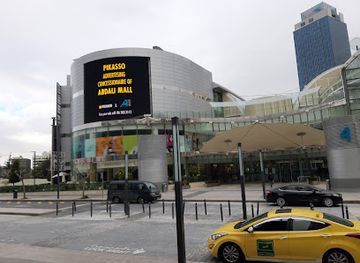
Abdali Mall
Discover Abdali Mall: Amman's premier shopping destination with diverse retail, dining, and entertainment options for an unforgettable experience.
-
Shopping mall
Taj Lifestyle Center
Discover a unique blend of shopping, dining, and entertainment at the Taj Lifestyle Center, Amman's premier shopping destination.
-
Hotel
Crowne Plaza Jordan - Dead Sea Resort & Spa, an IHG Hotel
Experience unparalleled luxury and relaxation at Crowne Plaza Jordan - Dead Sea Resort & Spa, your gateway to the wonders of the Dead Sea.
-
Hotel
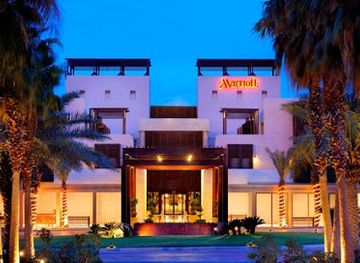
Dead Sea Marriott Resort & Spa
Discover luxury and relaxation at the Dead Sea Marriott Resort & Spa, where stunning views and rejuvenating experiences await.
Get your free copy of our complete guide to Dead Sea Region, delivered straight to you.
Everything on this page, from attractions and restaurants to essentials and local phrases, in one PDF you can read offline, print or share.
Already have an account? Sign in
Your Dead Sea Region guide is ready.
We'll send it to · Not you? Sign out

Getting your guide ready…
We are putting together a fresh copy of the Dead Sea Region guide. This can take up to a minute.
This can take a few moments. If your browser asks, choose Allow so the download can start. You'll find the guide in your Downloads folder.
Nothing happened? Download it again
Sorry, the guide is taking longer than usual. Please try again in a minute, or get it by email instead.
Dead Sea Region essentials
Currency and Payment
Safety
Emergency Situations
Do's and Don'ts
Local Tips
From Eve
Local phrases worth knowing
You don't need to get them perfect. A few words go a long way, and locals appreciate the effort.
Basics
| English | Local | Say it |
|---|---|---|
| Hello | مرحبا | [Marhaban] |
| Goodbye | وداعا | [Wada'an] |
| Yes | نعم | [Na'am] |
| No | لا | [La] |
| Please/You're welcome | من فضلك | [Min fadlik] |
| Thank you | شكرا | [Shukran] |
| Excuse me/Sorry | عذرا | [Udhuran] |
| How are you? | كيف حالك؟ | [Kayfa halak?] |
| Fine. And you? | بخير. وأنت؟ | [Bikhayr. Wa anta?] |
| Do you speak English? | هل تتحدث الإنجليزية؟ | [Hal tatahaddath al-ingliziyya?] |
| I don't understand | لا أفهم | [La afham] |
Eating & Drinking
| English | Local | Say it |
|---|---|---|
| I'd like to see the menu, please | أود رؤية القائمة، من فضلك | [Awad ru'yat al-qa'ima, min fadlik] |
| I don't eat meat | لا أأكل اللحم | [La akul al-lahm] |
| Cheers! | في صحتك! | [Fi sihtak!] |
| I would like to pay, please | أود الدفع، من فضلك | [Awad al-daf', min fadlik] |
Emergencies
| English | Local | Say it |
|---|---|---|
| Help! | نجدة! | [Najda!] |
| Go away! | ابتعد! | [Ibt'id!] |
| Call the Police! | اتصل بالشرطة! | [Ittasil bil-shurta!] |
| Call a doctor! | اتصل بطبيب! | [Ittasil bi-tabeeb!] |
| I'm lost | أنا ضائع | [Ana da'i'] |
| I'm ill | أنا مريض | [Ana marid] |
Shopping
| English | Local | Say it |
|---|---|---|
| I'd like to buy... | أود شراء... | [Awad shir'a...] |
| I'm just looking | أنا فقط أنظر | [Ana faqat anzur] |
| How much is it? | كم سعره؟ | [Kam si'ru?] |
| That's too expensive | هذا مكلف جدا | [Hatha mukallaf jidan] |
| Can you lower the price? | هل يمكنك تخفيض السعر؟ | [Hal yumkinuka takhfid al-si'r?] |
Time & Numbers
| English | Local | Say it |
|---|---|---|
| What time is it? | كم الساعة؟ | [Kam al-saa'a?] |
| It's one o'clock | الساعة واحدة | [Al-saa'a wahida] |
| Half past (10) | نصف بعد (10) | [Nisf ba'd (10)] |
| Morning | صباحا | [Sabahan] |
| Afternoon | بعد الظهر | [Ba'd al-zuhur] |
| Evening | مساءا | [Masa'an] |
| Yesterday | أمس | [Ams] |
| Today | اليوم | [Al-yawm] |
| Tomorrow | غدا | [Ghadan] |
| 1 | واحد | [Wahid] |
| 2 | اثنان | [Ithnan] |
| 3 | ثلاثة | [Thalatha] |
| 4 | أربعة | [Arba'a] |
| 5 | خمسة | [Khamsa] |
| 6 | ستة | [Sitta] |
| 7 | سبعة | [Sab'a] |
| 8 | ثمانية | [Thamaniya] |
| 9 | تسعة | [Tis'a] |
| 10 | عشرة | [Ashara] |
Transport & Directions
| English | Local | Say it |
|---|---|---|
| Where's a/the...? | أين ...؟ | [Ayn ...?] |
| What's the address? | ما هو العنوان؟ | [Ma huwa al-'unwan?] |
| Can you show me (on the map)? | هل يمكنك إظهاري (على الخريطة)؟ | [Hal yumkinuka izhar-i (ala al-kharita)?] |
| When's the next (bus)? | متى يأتي (الحافلة) التالية؟ | [Mata yati (al-hafila) al-taliya?] |
| A ticket (to ....) | تذكرة (إلى ....) | [Tadhkira (ila ....)] |
History of Dead Sea Region
The Dead Sea in Ancient Biblical and Classical Geography
Known in ancient traditions as the Salt Sea, the Dead Sea formed a natural boundary and landmark between the Jordan Valley and the highlands east of it. Biblical narratives associate its surrounding plain with Sodom and Gomorrah, while classical writers described the lake’s unusual buoyancy, mineral deposits and bitumen. These accounts helped establish the area as a place of religious memory and geographical curiosity. The modern shore is not identical to the landscapes described in ancient texts, particularly because the water level has fallen substantially, but the lake’s physical character remains central to the region’s historical identity.
Machaerus and the Herodian Era
The hilltop fortress of Machaerus, east of the Dead Sea, belonged to the Hasmonean and later Herodian political world. Herod the Great rebuilt it as a fortified palace, and it was inherited by his son Herod Antipas. The site is traditionally connected with the imprisonment and execution of John the Baptist, a story recorded by the historian Josephus and echoed in the Christian Gospels. Its ruins illustrate the strategic importance of the eastern Dead Sea plateau, where a commanding citadel could oversee routes between the highlands and the Jordan Valley.
Christian Pilgrimage and Al-Maghtas
The Jordan River east of the Dead Sea became an important destination for Christian pilgrims because of its association with the baptism of Jesus. Al-Maghtas contains the remains of churches, chapels, monasteries, baptism pools and related installations developed from the Roman and Byzantine periods onwards. The site’s importance persisted despite political changes and shifting river channels. Today, Al-Maghtas is one of Jordan’s major religious heritage sites and a UNESCO World Heritage Site, with its archaeological remains set within a protected landscape north of the main Dead Sea resort area.
Byzantine Settlement and the Monastic Landscape
During the Byzantine period, communities, churches and monasteries formed part of a wider Christian landscape linking the Jordan Valley with the plateau around Madaba and Mount Nebo. Pilgrims travelled through the region, while agricultural settlements depended on springs, wadis and the fertile valley floor. Mosaics, church remains and monastic traces found across the broader Madaba and Dead Sea area record the artistic and religious life of the period. Although many sites are fragmentary, their survival explains why the eastern Dead Sea is valued as much for its sacred geography as for its natural scenery.
Ottoman Rule and Traditional Valley Agriculture
For much of the Ottoman period, the Dead Sea shore itself remained sparsely settled, while villages and farming communities occupied more favourable ground on the surrounding plateau and in the Jordan Valley. Travel followed routes connecting the highlands with the valley, and cultivation depended on local springs and seasonal watercourses. The area’s isolation and harsh climate limited large-scale development, but salt, minerals and agricultural products remained part of its economic geography. Older routes and settlement patterns still help explain the contrast between the elevated towns and the low-lying shore.
Modern Jordan and the Rise of Dead Sea Tourism
Following the establishment of the modern Jordanian state, roads, electricity, water infrastructure and tourism investment gradually transformed the eastern shore. The Dead Sea became internationally known for spa treatments, mineral mud and floating, while hotels and conference facilities concentrated around Sweimeh. Resort development brought employment and improved visitor access, but it also highlighted the lake’s environmental vulnerability. Falling water levels, changing shorelines and pressure on scarce freshwater resources now shape public discussion about the region’s future and the need to balance tourism with conservation.
Dead Sea Region in Photos
Browse through our photo collection highlighting the charm and character of the destination.
Neighbouring regions of Dead Sea Region
The closest regions to Dead Sea Region, if you have time for more than one.
-

-

-

-

-


Swipe for more regions
Explore more

Explore more of Jordan
Discover Jordan: A land of ancient cities, breathtaking deserts, and therapeutic seas. Experience the blend of history and modernity in this Middle Eastern gem.
Explore Jordan