

Charyn Canyon Travel Guide - Free Web & App
Your ultimate guide to Charyn Canyon. Discover top landmarks, proposed trips, and local tips. Free on the web or via the Evendo companion app.


Charyn Canyon in Kazakhstan: explore red sandstone cliffs, the Valley of Castles, Charyn River landscapes and seasonal guided hiking near Almaty.
Cliffs, River and Desert Steppe
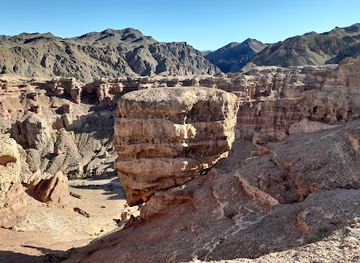
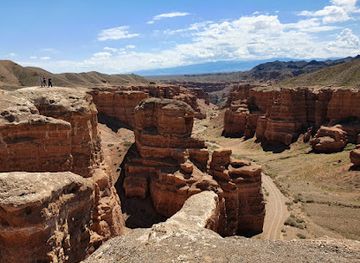
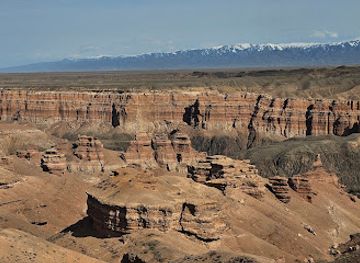
Charyn Canyon lies in southeastern Kazakhstan, around 200 kilometres east of Almaty, within the Charyn State National Nature Park. The Charyn River has cut through layers of sedimentary rock to create a long succession of ravines, escarpments and sculpted formations across the dry foothills of the Tian Shan. The most visited section is the Valley of Castles, where tall orange and ochre walls form a narrow passage shaped by erosion. Beyond it, the canyon system continues through a larger landscape of semi-desert, gravel plains and riverine vegetation.Read more about Charyn Canyon
A Landscape of Contrasts
Exploring Charyn
When is the best time to visit Charyn Canyon?
Best: June–August · 25–28°C| Month | High (°C) | Rainfall (mm) |
|---|---|---|
| January | -5 | 11 |
| February | -4 | 10 |
| March | 2 | 10 |
| April | 12 | 11 |
| May | 19 | 12 |
| June (best) | 25 | 15 |
| July (best) | 28 | 14 |
| August (best) | 26 | 12 |
| September | 19 | 9 |
| October | 13 | 8 |
| November | 4 | 9 |
| December | 0 | 10 |
Getting to and around Charyn Canyon
How to get there
Transportation
Best attractions in Charyn Canyon
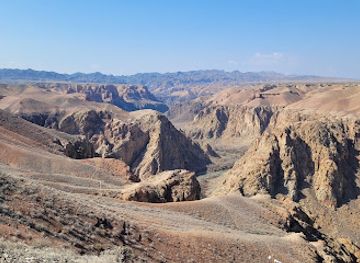
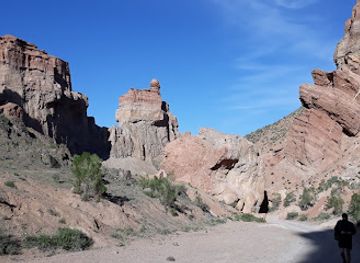
The Valley of Castles is Charyn Canyon’s defining attraction, a walking route through tall red, ochre and grey sedimentary walls that resemble towers, bastions and narrow corridors. The route descends from the main access area towards the Charyn River, revealing changing views of the eroded formations and the dry landscape beyond. The wider Charyn National Park contains other canyon sections and river valleys, including the Temirlik area, although these are less straightforward to visit and may require additional transport or local guidance. The river corridor introduces a contrasting landscape of shrubs and woodland, notably around stands of Sogdian ash, while the surrounding steppe and semi-desert provide expansive views and opportunities for landscape photography. Visitors should distinguish the main tourist route from more remote park areas, where facilities and reliable access are limited and conditions can be more demanding.
-
Hiking area
Chernyy Kan'on, Almaty Region
Discover the breathtaking Chernyy Kan'on in Almaty Region, a hiker's paradise with stunning views and diverse trails for every adventurer.
-
Tourist attraction
Observation deck of Charyn canyon
Discover the stunning Charyn Canyon Observation Deck, a must-visit attraction in Kazakhstan that offers breathtaking views and unforgettable experiences.
-
Hiking area
Smotrovaya Tochka Balkon
Discover the stunning vistas and serene hiking trails at Smotrovaya Tochka Balkon in Tamerlik, Kazakhstan, a paradise for nature lovers and adventure seekers.
Best landmarks in Charyn Canyon
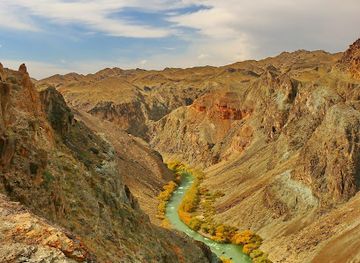
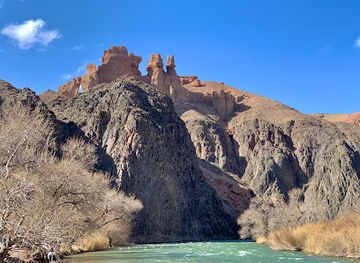
The Valley of Castles is Charyn’s principal natural landmark, formed by erosion of layered sedimentary rock into walls, towers and buttresses along the canyon floor. The Charyn River is the landscape’s defining geographical force and creates a green corridor below the dry, exposed cliffs. The Sogdian ash groves are a separate ecological landmark, representing a rare relict riverine woodland within an otherwise arid setting. Other recognised sections of the park, including the Temirlik canyon area, demonstrate that Charyn is a network of landscapes rather than a single viewpoint. These features carry geological and ecological significance rather than architectural meaning; the park’s identity lies in the relationship between eroded rock, flowing water, semi-desert terrain and protected vegetation.
-
National park
Charyn Canyon National Park
Discover the stunning landscapes and rich biodiversity of Charyn Canyon National Park, a must-visit destination for every nature lover exploring Kazakhstan.
-
Tourist attraction
Charyn Canyon view point
Experience the breathtaking beauty of Charyn Canyon, a natural wonder in Kazakhstan with stunning views and unforgettable adventures.
-
Tourist attraction
Charyn Canyon Viewpoint
Experience the breathtaking beauty of Charyn Canyon Viewpoint, a geological wonder in Kazakhstan, featuring stunning cliffs and vibrant landscapes.
-
Park
Charynskiy Kan'on.
Explore the breathtaking Charyn Canyon, a stunning natural wonder in Kazakhstan, with vibrant rock formations and diverse wildlife.


Explore Charyn Canyon on the map
Plan your trip on one map. See where the top attractions, landmarks, restaurants and hotels are, and book hotels and experiences in a few clicks.
Best hotels in Charyn Canyon
Best restaurants in Charyn Canyon
Charyn Canyon has a limited dining scene, with food concentrated around organised excursions, simple visitor facilities and nearby rural settlements rather than a choice of restaurants inside the natural area. Travellers commonly bring provisions from Almaty or buy supplies en route, particularly water, fruit, bread and other practical picnic food. In villages and regional guesthouses, visitors may encounter home-style Kazakh cooking influenced by the steppe tradition, including meat-based dishes, noodles, bread, dairy products and tea, though menus vary and should not be assumed. Saty, a principal gateway for wider trips in the region, has guesthouses and modest local dining, while larger towns offer more dependable choice and payment facilities. Eating arrangements should therefore be planned as part of the journey, especially for day trips that spend many hours away from substantial settlements.
-
National park
Charyn Canyon National Park
Explore the breathtaking landscapes of Charyn Canyon National Park in Kazakhstan – a hidden gem with stunning rock formations and rich geological history.
-
Western
Tary restaurant
Experience delightful Western cuisine at Tary Restaurant in Tamerlik, where every dish tells a story amidst stunning natural beauty.
Best nightclubs in Charyn Canyon
There is no established nightlife district or club scene at Charyn Canyon. Evenings are generally quiet, with visitors returning from walks to camps, guesthouses or simple accommodation connected with the park and nearby rural settlements. Where guesthouses provide meals, tea and conversation, the atmosphere is informal and rooted in local hospitality rather than commercial entertainment. Travellers staying in villages such as Saty may find a small number of local social venues, but should not expect late-opening bars, live-music programmes or a broad choice of nightlife. Almaty, several hours away by road, is the relevant destination for extensive evening entertainment, while at the canyon itself darkness, remoteness and conservation considerations make low-key evenings the normal experience.
-
National park
Charyn Canyon National Park
Discover the breathtaking beauty of Charyn Canyon National Park, a natural wonder showcasing stunning landscapes and rich biodiversity in Kazakhstan.
-
Scenic spot
Charyn Canyon Viewpoint
Experience the breathtaking beauty of Charyn Canyon Viewpoint, a must-visit scenic spot in Kazakhstan offering mesmerizing landscapes and outdoor adventures.
-
Campground
Charyn Canyon Campground
Discover the breathtaking beauty of Charyn Canyon Campground, a serene escape into nature's majestic landscapes in Kazakhstan.
Get your free copy of our complete guide to Charyn Canyon, delivered straight to you.
Everything on this page, from attractions and restaurants to essentials and local phrases, in one PDF you can read offline, print or share.
Already have an account? Sign in
Your Charyn Canyon guide is ready.
We'll send it to · Not you? Sign out

Getting your guide ready…
We are putting together a fresh copy of the Charyn Canyon guide. This can take up to a minute.
This can take a few moments. If your browser asks, choose Allow so the download can start. You'll find the guide in your Downloads folder.
Nothing happened? Download it again
Sorry, the guide is taking longer than usual. Please try again in a minute, or get it by email instead.
Charyn Canyon essentials
Currency and Payment
Safety
Emergency Situations
Do's and Don'ts
Local Tips
From Eve
Local phrases worth knowing
You don't need to get them perfect. A few words go a long way, and locals appreciate the effort.
Basics
| English | Local | Say it |
|---|---|---|
| Hello | Сәлем | [Salem] |
| Goodbye | Қош келдіңіз | [Qoş keldiniz] |
| Yes | Ия | [Iya] |
| No | Жоқ | [Joq] |
| Please/You're welcome | Рахмет | [Rahmet] |
| Thank you | Рахмет | [Rahmet] |
| Excuse me/Sorry | Кешіріңіз | [Keshiriniz] |
| How are you? | Қалайсыз ба? | [Qalaisyz ba?] |
| Fine. And you? | Жақсым. Сіз кім? | [Jaqsym. Siz kim?] |
| Do you speak English? | Сіз ағылшынша сөйлейсіз бе? | [Siz agylshynsha söyleisiz be?] |
| I don't understand | Мен түсінбеймін | [Men tusinbeymin] |
Eating & Drinking
| English | Local | Say it |
|---|---|---|
| I'd like to see the menu, please | Менюмен танысқаным келсе | [Menyumеn tanysqanım kelse] |
| I don't eat meat | Мен маған тамақ жемесі | [Men magan tamaq jemesi] |
| Cheers! | Тамшылар! | [Tamshılar!] |
| I would like to pay, please | Төлеуге болады | [Töleuge bolady] |
Emergencies
| English | Local | Say it |
|---|---|---|
| Help! | Көмек! | [Kömek!] |
| Go away! | Ауыр! | [Awır!] |
| Call the Police! | Полицияға қызықтыр! | [Politsiyağa qızıqtır!] |
| Call a doctor! | Докторға қоңырау! | [Doktorga końırau!] |
| I'm lost | Мен алғашқы/арыз қалдым | [Men algashqı/aryz qaldım] |
| I'm ill | Мен ауруландым | [Men aurulandım] |
Shopping
| English | Local | Say it |
|---|---|---|
| I'd like to buy... | Сатып алғым келеді | [Satıp algım keledi] |
| I'm just looking | Тек көремін | [Tek köremin] |
| How much is it? | Бұл қанша? | [Bul qansha?] |
| That's too expensive | Ол тым де арзан | [Ol tım de arzan] |
| Can you lower the price? | Бағаларды төмендете аласыз ба? | [Bağalardı tömendete alasız ba?] |
Time & Numbers
| English | Local | Say it |
|---|---|---|
| What time is it? | Қанша уақыт? | [Qansha waqıt?] |
| It's one o'clock | Бір уақыт | [Bir waqıt] |
| Half past (10) | Оннан кейін | [Onnan keyin] |
| Morning | Таң | [Tan] |
| Afternoon | Кеш | [Keş] |
| Evening | Кеш | [Keş] |
| Yesterday | Кеше | [Keşe] |
| Today | Бүгін | [Bugın] |
| Tomorrow | Ертең | [Erteñ] |
| 1 | Бір | [Bir] |
| 2 | Екі | [Eki] |
| 3 | Үш | [Üsh] |
| 4 | Төрт | [Tört] |
| 5 | Бес | [Bes] |
| 6 | Алты | [Altı] |
| 7 | Жеті | [Jeti] |
| 8 | Сегіз | [Segiz] |
| 9 | Тоғыз | [Toğız] |
| 10 | Он | [On] |
Transport & Directions
| English | Local | Say it |
|---|---|---|
| Where's a/the...? | ... қайда? | [... Qayda?] |
| What's the address? | Мекен-жайы қандай? | [Meken-jayı qanday?] |
| Can you show me (on the map)? | Менің (карта бойынша) көрсетесіз бе? | [Meniñ (karta boınısha) körsesiz be?] |
| When's the next (bus)? | Келесі (автобус) когда? | [Kelesi (avtobus) kogda?] |
| A ticket (to ....) | Билет (... үшін) | [Bilet (... Üshin)] |
History of Charyn Canyon
Sedimentary Origins of the Canyon
Charyn Canyon is a geological landscape rather than a monument created by human construction. Its walls consist chiefly of sedimentary rocks deposited and later exposed through the long-term evolution of the region, with erosion by the Charyn River and weathering shaping the present ravines, pinnacles and towers. The result is a canyon system with strongly layered cliffs and varied forms, most famously concentrated in the Valley of Castles. Geological processes continue through water, wind, temperature changes and occasional runoff, so the landscape should be understood as dynamic rather than fixed.
River Valleys and Early Movement
The Charyn River has long formed a natural corridor through the arid landscapes east of Almaty. Although the canyon itself is not known for a large permanent settlement, the wider region has been crossed by pastoral communities, traders and travellers moving between the steppe, the Ili Basin and the mountain country. Seasonal access to water shaped the distribution of grazing and travel, while the river’s wooded margins offered an ecological contrast to the surrounding dry uplands. The canyon’s significance therefore rests as much on its position within a wider Central Asian landscape as on its dramatic rock formations.
Pastoral Landscapes and Regional Exchange
For centuries, southeastern Kazakhstan was influenced by mobile pastoralism, caravan movement and the shifting political worlds of Central Asia. Communities used the broader valleys and steppe routes according to seasonal conditions, while settlements and cultivated areas were concentrated near reliable water sources. Charyn’s remote terrain limited dense development, helping preserve the contrast between river corridor and open semi-desert. Its historical setting is best understood alongside the Ili Valley and the foothills of the Tian Shan, where commerce, migration and pastoral life connected local places to wider regional networks.
Scientific Interest and Protected Status
Modern interest in Charyn grew through geological study, landscape exploration and appreciation of its unusual riverine habitats. The area became Charyn State National Nature Park in 2004, placing the canyon and surrounding ecosystems within a framework of conservation and managed recreation. Protection is particularly important for the Sogdian ash groves and for the fragile soils, slopes and vegetation of the canyon environment. Tourism has increased as access from Almaty has improved, making visitor management, waste control and respect for designated routes increasingly relevant to the area’s future.
Charyn Canyon in Photos
Browse through our photo collection highlighting the charm and character of the destination.
Neighbouring destination travel guides
The closest destinations to Charyn Canyon, if you have time for more than one.
-

-

-

-

-


Swipe for more destinations
Explore more

Explore more of Tian Shan
Explore Kazakhstan’s Tian Shan through Almaty’s alpine valleys, Kolsai and Kaindy lakes, high pastures, glaciers and protected mountain wilderness.
Explore Tian Shan
Explore more of Kazakhstan
Explore Kazakhstan's rich culture, modern cities, and stunning natural landscapes. From the Caspian Sea to the Altai Mountains, find adventure and beauty in Central Asia.
Explore Kazakhstan