

Maasai Mara, Kenya Travel Guide
Discover the wild beauty of Maasai Mara, Kenya's premier safari destination with the Big Five, the Great Migration, and rich Maasai culture in one breathtaking location.
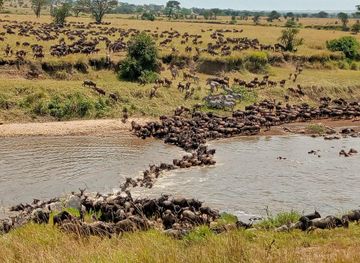
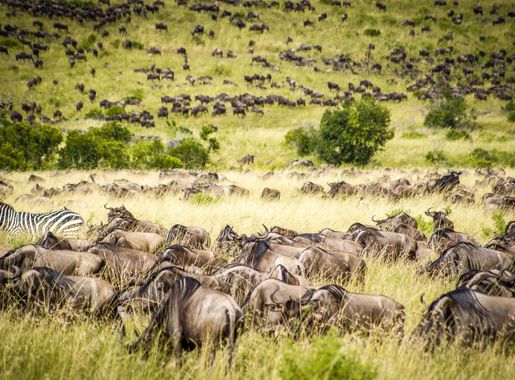
The Maasai Mara is a stunning wildlife reserve in southwestern Kenya. It is famous for its breathtaking landscapes, rich wildlife, and the Great Migration, where over 1.5 million wildebeest, zebras, and gazelles move across the plains. This spectacle is one of the world's most remarkable natural events and attracts many tourists and photographers. The reserve is named after the Maasai people, who live in the area and have a rich culture and history. Visitors can learn about their traditions and lifestyle through cultural tours and village visits. The Maasai Mara is home to the Big Five: lions, elephants, leopards, buffalo, and rhinos. Game drives offer the chance to see these majestic animals up close. Hot air balloon safaris provide a unique perspective of the park at sunrise, revealing the vastness and beauty of the savannah. Bird watchers will be thrilled by the over 450 bird species that inhabit the region, including the vibrant lilac-breasted roller and the striking secretary bird. Luxury lodges and tented camps within the Maasai Mara offer a range of accommodations, from rustic to opulent, ensuring a comfortable and immersive stay. The reserve's climate is generally mild, with cooler mornings and evenings, making it ideal for year-round travel. Whether you are a nature lover, a photography enthusiast, or someone seeking adventure, the Maasai Mara promises an unforgettable experience.

Know before you go
Hi, I'm Eve. Here are a few practical things to know before exploring Maasai Mara.
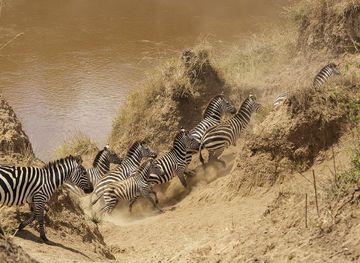
- Visit during the Great Migration (July to October) to witness the dramatic river crossings.
- Pack light, breathable clothing for daytime and warmer layers for early mornings and evenings.
- Carry binoculars and a good camera with a zoom lens for wildlife viewing.
- Book game drives and hot air balloon safaris in advance to secure your spot.
- Respect the Maasai culture; ask for permission before taking photographs of people.
- Stay hydrated and use insect repellent to protect against mosquitoes.
Destinations in Maasai Mara
Resorts, valleys and scenic spots worth a trip of their own.
Explore Maasai Mara: Things to Do, Places to Eat, Hotels & More
Handpicked recommendations for top attractions, local dining, accommodations, and more

Top Attractions & Sightseeing in Maasai Mara
Top-rated picks
Best Attractions

Sarova Mara Game Camp - Safari Lodge in Kenya
Discover luxury and adventure at Sarova Mara Game Camp in Kenya's iconic Maasai Mara, where wildlife and comfort meet in perfect harmony.

Naboisho Conservancy
Discover the breathtaking landscapes and incredible wildlife of Naboisho Conservancy, a gem in Kenya’s Maasai Mara region dedicated to conservation and community.

Mara Siligi Camp
Discover the enchanting Mara Siligi Camp, a perfect blend of comfort and adventure nestled in the heart of the Masai Mara.

Maasai Mara tours and safaris
Discover the majestic Maasai Mara National Reserve, home to incredible wildlife and breathtaking landscapes for an unforgettable safari experience.

Best landmarks in Maasai Mara
Top-rated picks
Best Landmarks

Nairobi National Park
Discover the breathtaking wildlife and natural beauty of Nairobi National Park, a unique urban sanctuary in the heart of Kenya.

Amboseli National Park
Experience the breathtaking beauty of Amboseli National Park, home to majestic elephants and stunning views of Mount Kilimanjaro.

Maasai Market
Explore the Maasai Market in Nairobi, a vibrant handicraft fair showcasing unique Kenyan arts, culture, and authentic souvenirs.

Maasai Mara National Reserve
Experience the breathtaking beauty and wildlife of Maasai Mara National Reserve, a premier safari destination in Kenya, known for its rich biodiversity and iconic Great Migration.

Best restaurants in Maasai Mara
Top-rated picks
Best Restaurants

The carnivore restaurant
Discover the ultimate dining adventure at The Carnivore Restaurant in Nairobi—where exotic flavors meet unforgettable experiences.

Kilimanjaro Jamia, Kimathi Street
Experience authentic Halal cuisine at Kilimanjaro Jamia in Nairobi—where every meal tells a story of rich flavors and warm hospitality.

Masai Lodge
Discover Masai Lodge: A Unique Blend of Comfort and Authentic Kenyan Culture in Ongata Rongai.

Mama Rocks Gourmet Burgers - Kilimani Branch
Discover unique gourmet burgers at Mama Rocks in Kilimani - a must-visit culinary gem in Nairobi.

Best bars in Maasai Mara
Top-rated picks
Best Bars
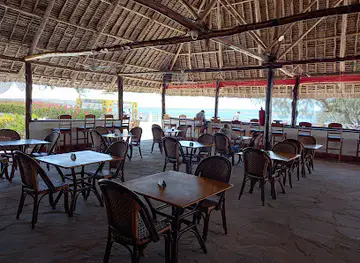
Maasai Beach Bar & Restaurant
Experience the lively atmosphere and delicious cuisine at Maasai Beach Bar & Restaurant, the perfect spot for tourists in Mombasa's coastal paradise.
Fairmont Mara Safari Club
Discover the luxury of Fairmont Mara Safari Club, where adventure meets elegance in the heart of Masai Mara National Reserve.

Maasai Nyali
Discover Maasai Nyali in Mombasa for an unforgettable grill experience, featuring delicious cuisine and a lively sports bar atmosphere.
Mara Leisure Camp
Discover the beauty of Masai Mara at Mara Leisure Camp, where luxury meets nature in a breathtaking wildlife paradise.

Best nightclubs in Maasai Mara
Top-rated picks
Best Nightclubs

Maasai Beach Bar & Restaurant
Discover the lively Maasai Beach Bar & Restaurant in Mombasa, where local flavors meet stunning ocean views in a vibrant coastal atmosphere.

K1 Klub House
Experience the vibrant nightlife of Nairobi at K1 Klub House, where great food, live music, and a lively atmosphere await.
Fairmont Mara Safari Club
Discover the luxury of Fairmont Mara Safari Club, where stunning wildlife encounters meet exceptional hospitality in the Masai Mara National Reserve.

Shakatak Disco
Dive into the vibrant nightlife of Diani Beach at Shakatak Disco, where music, dance, and cultural fusion come alive.

Best shops in Maasai Mara
Top-rated picks
Best Shops

Maasai Market
Immerse yourself in local culture at the Maasai Market, a vibrant handicraft fair in Nairobi showcasing authentic Kenyan arts and crafts.

Maasai Mall
Maasai Mall: A vibrant shopping and cultural hub in Ongata Rongai, perfect for tourists seeking local experiences and unique finds.

Maasai Mara National Reserve
Explore the breathtaking Maasai Mara National Reserve, a wildlife paradise where the Big Five roam and vibrant Maasai culture thrives.

Mara Triangle
Explore the stunning Mara Triangle, a national reserve in Kenya known for its breathtaking wildlife, cultural richness, and unforgettable safari experiences.

Explore Maasai Mara on the Map
A handpicked selection of must-see spots in Maasai Mara, mapped for you.
Maasai Mara Essentials
-
Maasai Mara is located in southwestern Kenya, approximately 270 kilometers from Nairobi, the capital city. The most convenient way to reach Maasai Mara is by taking a domestic flight from Wilson Airport in Nairobi to one of the several airstrips within the Maasai Mara. The flight duration is about 45 minutes. Alternatively, you can opt for a road trip which takes around 5-6 hours. Most tour operators offer safari packages that include transportation from Nairobi.
-
Within Maasai Mara, the most common mode of transportation is safari vehicles, usually 4x4 Land Cruisers or similar. These vehicles are well-equipped to handle the rough terrain and are often included as part of safari packages. Some lodges and camps offer game drives as part of their services. Walking safaris and hot air balloon rides are also popular options to explore the area. Public transportation is not available within Maasai Mara, so private transport or organized tours are essential.
-
The official currency is the Kenyan Shilling (KES). Most lodges and camps accept major credit cards, but it is advisable to carry some cash for tips and small purchases. ATMs are not available within Maasai Mara, so ensure you withdraw enough cash in Nairobi or other major towns before your journey. Some remote lodges may only accept cash payments.
-
Maasai Mara is generally safe for tourists, but standard precautions should be taken. Avoid wandering off alone, especially at night, as wild animals roam freely. Always follow the guidance of your safari guide. Petty crimes such as pickpocketing can occur in crowded areas, so keep your belongings secure. There are no specific high-crime areas targeting tourists within Maasai Mara, but it is always best to remain vigilant.
-
In case of emergency, contact your lodge or camp manager immediately, as they are equipped to handle emergencies and have contacts with local authorities and medical facilities. For medical emergencies, the nearest well-equipped hospitals are located in Nairobi. It's advisable to have comprehensive travel insurance that covers medical evacuation. The emergency contact number in Kenya is 999.
-
Fashion: Do wear comfortable, lightweight clothing in neutral colors suitable for safari. Avoid bright colors and patterns that may scare wildlife. Religion: Do respect the local Maasai culture by asking for permission before taking photographs of people. Public Transport: Public transport is not available within Maasai Mara, so rely on organized tours and private vehicles. Greetings: Do greet locals with a handshake and a smile. Learn a few Swahili phrases such as 'Jambo' (Hello) and 'Asante' (Thank you). Eating & Drinking: Do try local dishes offered at your lodge or camp. Don’t drink tap water; always opt for bottled or filtered water.
-
To experience Maasai Mara like a local, engage with the Maasai people by visiting a Maasai village (many lodges offer cultural visits). Participate in traditional Maasai activities such as beadwork and dancing. Attend local markets if available, where you can purchase handmade crafts and souvenirs. Always be respectful of local customs and traditions, and take the opportunity to learn about the Maasai way of life.
When is the best time to visit Maasai Mara?
Useful Local Phrases for Maasai Mara
You don't need to speak the language perfectly. Even learning a few simple words can make conversations warmer—and locals usually appreciate the effort.
— Eve

Here are the phrases I use most often in Maasai Mara. Try a few—you'll be surprised how far they go! 😊
❤️
-
- HelloSopa
[soh-pah] - GoodbyeSia
[see-ah] - YesEe
[ee] - NoAii
[eye-ee] - Please/You're welcomeOloishorri
[oh-loi-shor-ree] - Thank youAsante
[ah-sahn-teh] - Excuse me/SorryNaki
[nah-kee] - How are you?Olenyori?
[oh-len-yo-ree] - Fine. And you?Naki, na wewe?
[nah-kee, nah weh-weh] - Do you speak English?Ong'ere engilsh?
[ong-eh-reh en-geel-sh] - I don't understandEnkera nake
[en-keh-rah nah-keh]
- HelloSopa
-
- I'd like to see the menu, pleaseNaki oleng'ari emenyu, oloishorri
[nah-kee oh-leng-ah-ree eh-men-yoo, oh-loi-shor-ree] - I don't eat meatNaki enkitok
[nah-kee en-kee-tok] - Cheers!Pesa!
[peh-sah] - I would like to pay, pleaseNaki oleng'ari naki, oloishorri
[nah-kee oh-leng-ah-ree nah-kee, oh-loi-shor-ree]
- I'd like to see the menu, pleaseNaki oleng'ari emenyu, oloishorri
-
- Help!Naki!
[nah-kee] - Go away!Ong'ere nait!
[ong-eh-reh nah-eet] - Call the Police!Naki yie enkera!
[nah-kee yee-eh en-keh-rah] - Call a doctor!Naki yie ng'ojok!
[nah-kee yee-eh ng-oh-jok] - I'm lostNaki enkitok
[nah-kee en-kee-tok] - I'm illNaki oleng'ari ng'ojok
[nah-kee oh-leng-ah-ree ng-oh-jok]
- Help!Naki!
-
- I'd like to buy...Naki oleng'ari konyi...
[nah-kee oh-leng-ah-ree kohn-yee] - I'm just lookingNaki naki ng'ojok
[nah-kee nah-kee ng-oh-jok] - How much is it?Naki ing'wanik?
[nah-kee ing-wah-neek] - That's too expensiveNaki ilak echok
[nah-kee ee-lahk eh-chok] - Can you lower the price?Ong'ere enkitok naki?
[ong-eh-reh en-kee-tok nah-kee]
- I'd like to buy...Naki oleng'ari konyi...
-
- What time is it?Naki ing'wanik?
[nah-kee ing-wah-neek] - It's one o'clockNaki ing'wana ikiraru
[nah-kee ing-wah-nah ee-kee-rah-roo] - Half past (10)Naki ing'wanik ikiraru
[nah-kee ing-wah-neek ee-kee-rah-roo] - MorningEnkare
[en-kah-reh] - AfternoonEnkai
[en-kai] - EveningEnkaji
[en-kah-jee] - YesterdayNaki oleng'ari naki
[nah-kee oh-leng-ah-ree nah-kee] - TodayNaki lelo
[nah-kee leh-lo] - TomorrowNaki olesere
[nah-kee oh-leh-seh-reh] - 1Eka
[eh-kah] - 2Eru
[eh-roo] - 3Eka naki
[eh-kah nah-kee] - 4Eka naki ene
[eh-kah nah-kee eh-neh] - 5Eka naki katana
[eh-kah nah-kee kah-tah-nah] - 6Eka naki ishiria
[eh-kah nah-kee ee-shee-ree-ah] - 7Eka naki ikiraru
[eh-kah nah-kee ee-kee-rah-roo] - 8Eka naki naki
[eh-kah nah-kee nah-kee] - 9Eka naki ikiraru naki
[eh-kah nah-kee ee-kee-rah-roo nah-kee] - 10Eka naki ikiraru naki ikiraru
[eh-kah nah-kee ee-kee-rah-roo nah-kee ee-kee-rah-roo]
- What time is it?Naki ing'wanik?
-
- Where's a/the...?Naki oleng'ari...?
[nah-kee oh-leng-ah-ree...?] - What's the address?Naki ing'wanik naki?
[nah-kee ing-wah-neek nah-kee?] - Can you show me (on the map)?Ong'ere naki naki (na mapa)?
[ong-eh-reh nah-kee nah-kee (nah mah-pah)?] - When's the next (bus)?Naki ing'wanik naki (bus)?
[nah-kee ing-wah-neek nah-kee (boos)?] - A ticket (to ....)Naki enkitok (ku ...)
[nah-kee en-kee-tok (koo ...)]
- Where's a/the...?Naki oleng'ari...?
History of Maasai Mara
-
The Maasai Mara, named in honor of the Maasai people who inhabit the area, is a large game reserve in Narok County, Kenya. The name 'Mara' means 'spotted' in the Maasai language, and it refers to the circles of trees, scrub, savanna, and cloud shadows that mark the area. The Maasai people have lived in harmony with the wildlife for centuries, and their semi-nomadic pastoral lifestyle has significantly shaped the landscapes of the Mara.
-
The Maasai Mara National Reserve was established in 1961 as a wildlife sanctuary, primarily to protect the region's diverse wildlife. Initially, it covered only 520 square kilometers, but it was later expanded to its present size of approximately 1,510 square kilometers. The reserve is renowned for its high population of big cats, including lions, leopards, and cheetahs, as well as the annual migration of over 1.5 million wildebeest and hundreds of thousands of zebras and gazelles.
-
The Great Migration is one of the most spectacular natural events on the planet, occurring annually in the Maasai Mara. This mass movement of wildebeest, zebras, and other herbivores from the Serengeti in Tanzania to the Mara in Kenya is driven by the search for fresh grazing land and water. The migration typically takes place from July to October, drawing thousands of tourists and wildlife enthusiasts to witness river crossings and predator-prey interactions. This natural phenomenon underscores the ecological significance of the Maasai Mara.
-
The Maasai people are known for their distinctive customs, traditional attire, and intricate beadwork. Their society is organized into age-sets, and they have a rich oral history that includes myths, legends, and proverbs. Traditionally, Maasai warriors, known as morans, undergo rigorous training and ceremonies to mark their transition to adulthood. Livestock, particularly cattle, are central to Maasai culture, serving as a measure of wealth and a source of food. Visitors to the Maasai Mara can experience authentic cultural interactions by visiting Maasai villages, engaging in traditional dances, and learning about their way of life.
-
Conservation has been a critical aspect of the Maasai Mara's history, with various organizations and initiatives working to protect its unique biodiversity. Efforts include anti-poaching measures, community-based conservation programs, and habitat restoration projects. The Mara Conservancies, a collaborative effort between private landowners and conservationists, aim to create sustainable conservation models that benefit both wildlife and local communities. These initiatives are vital for ensuring the long-term survival of the region's wildlife and preserving the cultural heritage of the Maasai people.
-
Tourism has become a significant industry in the Maasai Mara, providing economic benefits to the local communities and funding for conservation efforts. However, it also presents challenges, such as habitat degradation, increased human-wildlife conflict, and cultural erosion. Sustainable tourism practices are being promoted to mitigate these impacts, ensuring that the Maasai Mara remains a thriving ecosystem and a culturally rich destination for future generations. The balance between tourism and conservation is crucial for the continued health and vitality of the Maasai Mara.
Neighbouring Regions of Maasai Mara
The closest regions to Maasai Mara, if you have time for more than one.
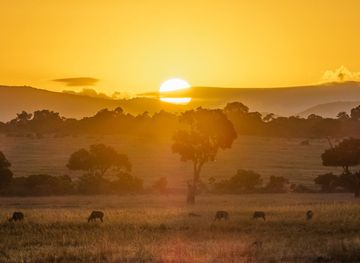

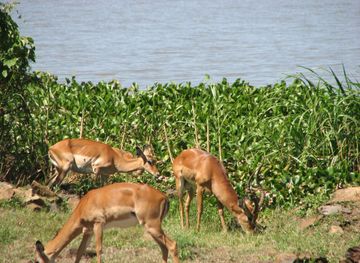


Your all‑in‑one travel companion app
Explore expert travel guides, compare and book tours, experiences, hotels, and more—all from the palm of your hand. Download now for seamless trip planning wherever your wanderlust takes you.


Explore More of Kenya
Looking beyond Maasai Mara? Discover Kenya for broader travel guides, local hot-spots, and regional highlights.
Explore KenyaMaasai Mara in Photos
Browse through our photo collection highlighting the charm and character of the destination.





The Enchanting Wilderness of Maasai Mara
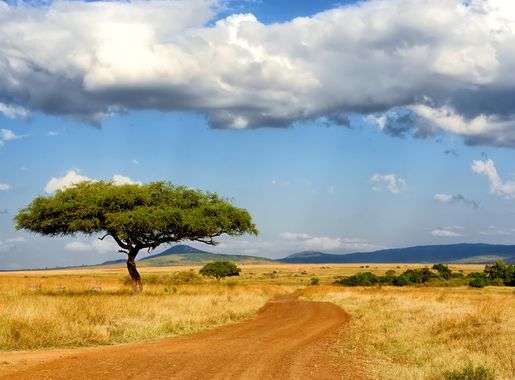
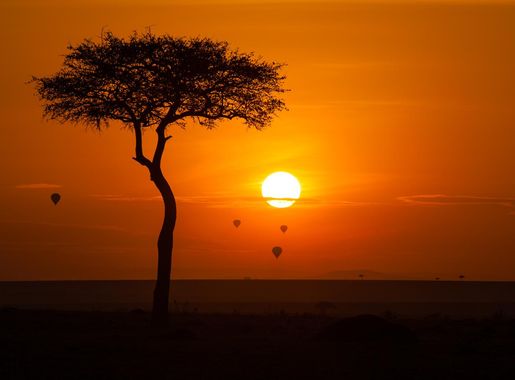
The Maasai Mara is a stunning wildlife reserve in southwestern Kenya. It is famous for its breathtaking landscapes, rich wildlife, and the Great Migration, where over 1.5 million wildebeest, zebras, and gazelles move across the plains. This spectacle is one of the world's most remarkable natural events and attracts many tourists and photographers. The reserve is named after the Maasai people, who live in the area and have a rich culture and history. Visitors can learn about their traditions and lifestyle through cultural tours and village visits. The Maasai Mara is home to the Big Five: lions, elephants, leopards, buffalo, and rhinos. Game drives offer the chance to see these majestic animals up close. Hot air balloon safaris provide a unique perspective of the park at sunrise, revealing the vastness and beauty of the savannah. Bird watchers will be thrilled by the over 450 bird species that inhabit the region, including the vibrant lilac-breasted roller and the striking secretary bird. Luxury lodges and tented camps within the Maasai Mara offer a range of accommodations, from rustic to opulent, ensuring a comfortable and immersive stay. The reserve's climate is generally mild, with cooler mornings and evenings, making it ideal for year-round travel. Whether you are a nature lover, a photography enthusiast, or someone seeking adventure, the Maasai Mara promises an unforgettable experience.