

Free Marsabit Plateau Travel Guide & Mobile App
Explore Marsabit Plateau with free travel guides. Discover regional history, expert tips, proposed trips, and audio guides on web or mobile app.


Marsabit Plateau combines volcanic crater lakes, wildlife-rich forest, pastoral cultures and vast northern Kenyan landscapes around Mount Marsabit.
Read more about Marsabit Plateau
When is the best time to visit Marsabit Plateau?
Best: June–August · 25–26°C| Month | High (°C) | Rainfall (mm) |
|---|---|---|
| January | 27 | 10 |
| February | 28 | 15 |
| March | 29 | 30 |
| April | 28 | 50 |
| May | 27 | 40 |
| June (best) | 26 | 20 |
| July (best) | 25 | 10 |
| August (best) | 25 | 10 |
| September | 26 | 20 |
| October | 27 | 30 |
| November | 27 | 50 |
| December | 26 | 20 |
Getting to and around Marsabit Plateau
How to get there
Transportation
Destinations in Marsabit Plateau
Resorts, valleys and scenic spots worth a trip of their own.

Swipe for more destinations
Best attractions in Marsabit Plateau
Marsabit National Park and Reserve is the plateau's principal attraction, protecting the forested volcanic slopes of Mount Marsabit, crater lakes and wildlife habitat surrounded by much drier country. Game drives may reveal elephant, buffalo, leopard, bushbuck and a variety of smaller mammals, while the forest and lake margins are particularly rewarding for birdwatchers. Lake Paradise is a notable destination within the protected landscape, although access conditions can vary and should be checked locally. The mountain itself offers a geological and ecological contrast to the open rangelands on the approach. Marsabit town provides a base for understanding northern trade and pastoral life, while organised community experiences can introduce visitors to local histories, livelihoods and craft traditions. The wider plateau is also suited to landscape photography, guided nature walks where permitted and overland journeys linking the forest with the arid country beyond. This is not a region of dense visitor infrastructure: its attractions are dispersed, conditions can be demanding and the experience depends as much on habitat, distance and cultural setting as on guaranteed wildlife sightings.
-
Park
Marsabit National Park
Explore the unparalleled beauty and rich biodiversity of Marsabit National Park, a true haven for wildlife enthusiasts and nature lovers in Kenya.
-
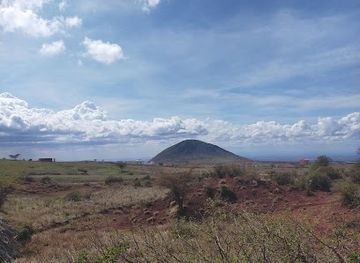
Volcano
Marsabit
Explore the breathtaking Marsabit Volcano in Kenya, a stunning blend of natural wonders and rich cultural experiences in a serene environment.


Best landmarks in Marsabit Plateau
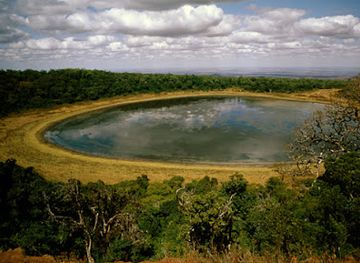
Mount Marsabit is the defining geographical landmark, an isolated volcanic massif whose forested summit rises dramatically above northern Kenya's dry rangelands. Its crater lakes, especially Lake Paradise, give the mountain a recognisable physical identity and help explain why this otherwise arid setting supports dense woodland and wildlife. Marsabit National Park and Reserve is also a landmark in the broader conservation history of northern Kenya, preserving a green volcanic refuge surrounded by semi-desert. Marsabit town is the plateau's principal human landmark, marking the meeting point of transport, administration, markets and pastoral trading routes. Beyond the mountain, the long A2 corridor is a significant modern landscape feature, linking the plateau with Isiolo to the south and Moyale near the Ethiopian border to the north. The contrast between lava-strewn slopes, dark forest, crater water and open acacia country is more important to the region's visual character than monumental architecture, and should be approached as a living geographical and cultural landscape.
-
Park
Marsabit National Park
Explore the diverse ecosystems and breathtaking landscapes of Marsabit National Park, a hidden gem in northern Kenya brimming with wildlife and natural beauty.
-
Volcano
Marsabit
Explore the unparalleled beauty of Marsabit, Kenya's breathtaking volcanic landscape filled with rich wildlife and cultural experiences.
-
Historical landmark
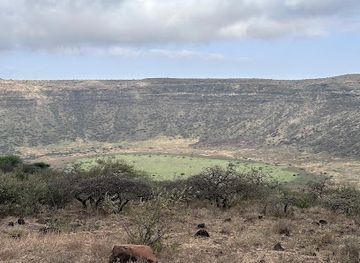
MARSABIT CRATER
Explore the breathtaking Marsabit Crater, a historical landmark in Kenya, offering stunning views, rich wildlife, and a glimpse into ancient geological history.
Explore Marsabit Plateau on the map
Plan your trip on one map. See where the top cities, national parks and sights are, and book hotels and experiences in a few clicks.
Best hotels in Marsabit Plateau
Best restaurants in Marsabit Plateau
Dining on Marsabit Plateau is centred on practical local eateries, hotel restaurants, cafés and food served along the northern transport corridor rather than on a destination fine-dining scene. In Marsabit town, visitors can expect Kenyan staples such as rice, beans, ugali, chapati, grilled meat and stewed vegetables, alongside tea and simple breakfast foods. Pastoral communities contribute a food culture in which milk, meat and livestock remain important, although availability and preparation vary between communities and establishments. Somali, Borana, Gabra and other northern influences may be reflected in spiced rice, flatbreads and meat dishes, while larger towns along the route provide a wider mix of Kenyan cooking. Fresh produce can be less abundant and more seasonal than in the highlands, so travellers on long road journeys should carry snacks and drinking water. Markets and small shops are useful for fruit, biscuits and bottled supplies, but visitors should not assume that every rural stop accepts cards.
-
 Hotel
HotelChicho Hotel
Experience comfort and culinary delights at Chicho Hotel in Marsabit - your gateway to Kenya's stunning landscapes.
-
Restaurant
Asali Fast Food Restaurant
Experience authentic Kenyan flavors with fast food favorites at Asali Fast Food Restaurant in Marsabit – where every meal is a delight!

Best bars in Marsabit Plateau
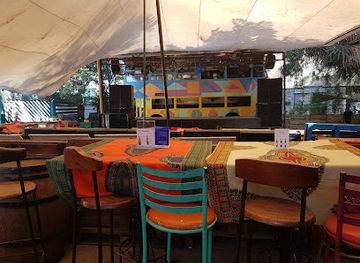
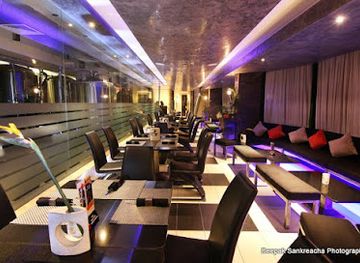
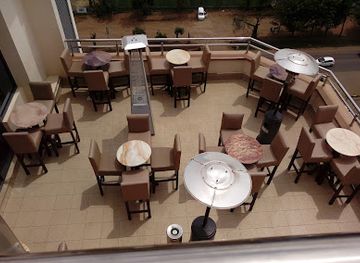
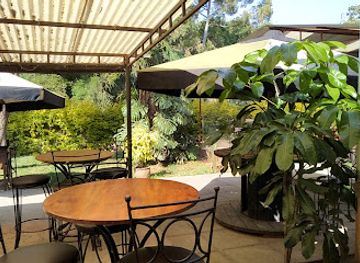
Marsabit Plateau has a modest evening scene focused on local restaurants, hotel lounges, cafés and traditional pubs rather than nightclubs or a concentrated entertainment district. Marsabit town is the main place to find an evening meal and a social drink, while smaller settlements along the roads generally offer only basic hospitality. Some venues may show football or provide music, but opening arrangements and atmosphere can change, so local advice is more dependable than assuming a fixed nightlife schedule. In rural areas and near the protected forest, nights are quiet and shaped by darkness, wildlife considerations and the early starts needed for travel or game viewing. Visitors should drink responsibly, respect local and religious sensibilities, and avoid walking alone on unfamiliar roads after dark. The plateau's evening appeal lies more in clear skies, cool air and conversation than in a major club culture.
-
Bar
The Alchemist
Experience the vibrant culture and culinary delights of Nairobi at The Alchemist, a top bar and event venue perfect for locals and tourists alike.
-
Brewpub
Brew Bistro and Lounge
Experience the vibrant atmosphere and delicious craft brews at Brew Bistro and Lounge in Nairobi, your ultimate dining destination.
-
Lounge
Onyx Lounge & Restaurant
Discover the lively blend of dining and nightlife at Onyx Lounge & Restaurant, Nairobi's ultimate destination for culinary and social experiences.
-
Restaurant
7 Degrees Bar Restaurant and Lounge
Discover the lively ambiance and diverse menu at 7 Degrees Bar Restaurant and Lounge, a must-visit destination in Nairobi for food and fun.
Best nightclubs in Marsabit Plateau
Marsabit Plateau has a modest evening scene focused on local restaurants, hotel lounges, cafés and traditional pubs rather than nightclubs or a concentrated entertainment district. Marsabit town is the main place to find an evening meal and a social drink, while smaller settlements along the roads generally offer only basic hospitality. Some venues may show football or provide music, but opening arrangements and atmosphere can change, so local advice is more dependable than assuming a fixed nightlife schedule. In rural areas and near the protected forest, nights are quiet and shaped by darkness, wildlife considerations and the early starts needed for travel or game viewing. Visitors should drink responsibly, respect local and religious sensibilities, and avoid walking alone on unfamiliar roads after dark. The plateau's evening appeal lies more in clear skies, cool air and conversation than in a major club culture.
-
Lounge
Onyx Lounge & Restaurant
Discover the perfect blend of exquisite cuisine and vibrant nightlife at Onyx Lounge & Restaurant in Nairobi.
-
Bar
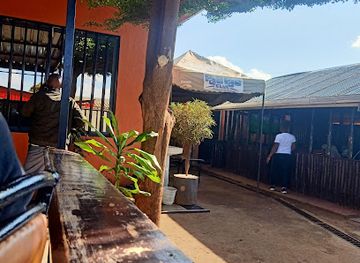
Club Palepale Marsabit
Discover the vibrant nightlife at Club Palepale Marsabit, a lively bar offering a unique blend of local culture and entertainment.

Best shops in Marsabit Plateau
Shopping on Marsabit Plateau is practical and locally focused, with Marsabit town offering markets, small general shops, mobile-phone services, clothing, household goods and supplies for onward travel. Markets may include livestock-related trade, fresh produce, grains, spices and everyday goods brought along northern transport routes. Visitors can look for locally made beadwork, woven items and other crafts, but availability, provenance and quality vary; buying directly through reputable community groups or guides can provide better context than purchasing anonymous souvenirs. There is no large luxury retail district, and specialist outdoor equipment, medicines and extensive food choices are easier to obtain before entering the region. Kenyan tea, packaged foods and practical travel supplies make sensible purchases, while bargaining should be polite and proportionate rather than assumed for every transaction. Carry cash for smaller traders, as card and mobile connectivity can be unreliable outside established businesses in Marsabit town.
-
Shopping mall
TRM - Thika Road Mall
Discover Nairobi's vibrant shopping scene at TRM - Thika Road Mall, where retail, dining, and entertainment converge for an unforgettable experience.
-
Shopping mall
The Junction Mall
Experience the vibrant shopping scene at The Junction Mall in Nairobi, where local culture meets international brands and delightful dining options.
-
Shopping mall
Village Market
Village Market in Nairobi: A vibrant shopping and entertainment hub offering culture, dining, and unique experiences in one stunning location.
-
Gift shop
Inscribed Gifts Kenya
Explore the artistry of Kenya with unique handcrafted gifts at Inscribed Gifts Kenya, where every item tells a story.


Get your free copy of our complete guide to Marsabit Plateau, delivered straight to you.
Everything on this page, from attractions and restaurants to essentials and local phrases, in one PDF you can read offline, print or share.
Already have an account? Sign in
Your Marsabit Plateau guide is ready.
We'll send it to · Not you? Sign out

Getting your guide ready…
We are putting together a fresh copy of the Marsabit Plateau guide. This can take up to a minute.
This can take a few moments. If your browser asks, choose Allow so the download can start. You'll find the guide in your Downloads folder.
Nothing happened? Download it again
Sorry, the guide is taking longer than usual. Please try again in a minute, or get it by email instead.
Marsabit Plateau essentials
Currency and Payment
Safety
Emergency Situations
Do's and Don'ts
Local Tips
From Eve
Local phrases worth knowing
You don't need to get them perfect. A few words go a long way, and locals appreciate the effort.
Basics
| English | Local | Say it |
|---|---|---|
| Hello | Naki | [Nah-kee] |
| Goodbye | Siyang | [See-yang] |
| Yes | Ee | [Ee] |
| No | Ayi | [Ah-yee] |
| Please/You’re welcome | Naki naki | [Nah-kee nah-kee] |
| Thank you | Asante | [Ah-sahn-te] |
| Excuse me/Sorry | Pole | [Poh-leh] |
| How are you? | U na gaji? | [Oo nah gah-jee] |
| Fine. And you? | Nzuri. Na wewe? | [N-zoo-ree. Nah weh-weh] |
| Do you speak English? | Unasema Kiingereza? | [Oo-nah-seh-mah Kee-in-ge-reh-zah] |
| I don't understand | Siwezi kuelewa | [See-weh-zee koo-eh-leh-wah] |
Eating & Drinking
| English | Local | Say it |
|---|---|---|
| I’d like to see the menu, please | Ningependa kuona menyu, tafadhali | [Nin-geh-pen-dah koo-oh-nah men-yoo, tah-fah-dah-lee] |
| I don't eat meat | Sili nyama | [See-lee nyah-mah] |
| Cheers! | Afya! | [Ah-fyah] |
| I would like to pay, please | Ningependa kulipa, tafadhali | [Nin-geh-pen-dah koo-lee-pah, tah-fah-dah-lee] |
Emergencies
| English | Local | Say it |
|---|---|---|
| Help! | Msaada! | [M-sah-dah] |
| Go away! | Toka mbali! | [Toh-kah m-bah-lee] |
| Call the Police! | Piga simu polisi! | [Pee-gah see-moo poh-lee-see] |
| Call a doctor! | Piga simu daktari! | [Pee-gah see-moo dahk-tah-ree] |
| I’m lost | Nimepotea | [Nee-meh-poh-teh-ah] |
| I’m ill | Nina ugonjwa | [Nee-nah oo-gon-jwah] |
Shopping
| English | Local | Say it |
|---|---|---|
| I’d like to buy... | Ningependa kununua... | [Nin-geh-pen-dah koo-nu-noo-ah] |
| I’m just looking | Natazama tu | [Nah-tah-zah-mah too] |
| How much is it? | Ni kiasi gani? | [Nee kee-ah-see gah-nee] |
| That’s too expensive | Hiyo ni ghali sana | [Hee-yoh nee ghah-lee sah-nah] |
| Can you lower the price? | Unaweza kupunguza bei? | [Oo-nah-weh-zah koo-pun-goo-zah beh-ee] |
Time & Numbers
| English | Local | Say it |
|---|---|---|
| What time is it? | Ni saa ngapi? | [Nee sah ngah-pee] |
| It’s one o'clock | Ni saa moja | [Nee sah moh-jah] |
| Half past (10) | Nusu ya (10) | [Noo-soo yah (10)] |
| Morning | Asubuhi | [Ah-soo-boo-hee] |
| Afternoon | Mchana | [M-chah-nah] |
| Evening | Jioni | [Jee-oh-nee] |
| Yesterday | Jana | [Jah-nah] |
| Today | Leo | [Leh-oh] |
| Tomorrow | Kesho | [Keh-shoh] |
| 1 | Moja | [Moh-jah] |
| 2 | Mbili | [M-bee-lee] |
| 3 | Tatu | [Tah-too] |
| 4 | Nne | [N-nay] |
| 5 | Tano | [Tah-noh] |
| 6 | Sita | [See-tah] |
| 7 | Saba | [Sah-bah] |
| 8 | Nane | [Nah-neh] |
| 9 | Tisa | [Tee-sah] |
| 10 | Kumi | [Koo-mee] |
Transport & Directions
| English | Local | Say it |
|---|---|---|
| Where's a/the...? | Iko wapi...? | [Ee-koh wah-pee] |
| What's the address? | Ni anwani gani? | [Nee ahn-wah-nee gah-nee] |
| Can you show me (on the map)? | Unaweza kunionyesha (katika ramani)? | [Oo-nah-weh-zah koo-nee-oh-nyesh-ah (kah-tee-kah rah-mah-nee)] |
| When's the next (bus)? | Basi ijayo ni lini? | [Bah-see ee-jah-yoh nee lee-nee] |
| A ticket (to ....) | Tiketi (kwenda ....) | [Tee-keh-tee (kwen-dah ....)] |
History of Marsabit Plateau
Volcanic formation and prehistoric landscapes
Marsabit Plateau is a volcanic massif that rose from the dry northern rift landscape, leaving a mountain of lava, forested slopes and crater depressions. Its lakes and woodland have long provided water, shade and grazing resources in a region where these are exceptionally valuable. Human movement across the wider Marsabit area predates written records, and archaeological research in northern Kenya has documented long histories of adaptation to changing climates, lakes and grasslands. The plateau's present forest is therefore not simply a scenic backdrop; it is part of a wider environmental story in which water, elevation and pasture have shaped settlement and movement.
Pastoral societies and regional exchange
For centuries, northern Kenya has been shaped by mobile pastoral economies and exchange between communities living across the Kenya-Ethiopia borderlands. Borana, Gabra, Rendille and Samburu peoples, among others, have developed distinct social institutions, livestock practices and cultural traditions suited to variable rainfall and dispersed water sources. Routes through the Marsabit area connected grazing territories and trading settlements, while livestock, salt, hides and other goods moved across the wider region. These networks did not follow modern county or international boundaries, and their legacy remains visible in the plateau's markets, languages and rural economy.
Colonial Northern Frontier District
Under British rule, Marsabit formed part of the Northern Frontier District, a vast and difficult-to-administer territory bordering Ethiopia and extending across arid northern Kenya. Colonial officials established administrative and military posts along strategic routes, while travel and settlement were regulated differently from in the more densely cultivated parts of the country. The region's remoteness, limited roads and pastoral economy contributed to a distinct political history. The colonial boundary with Ethiopia also formalised divisions across older movement and trading corridors, although cross-border cultural connections continued.
Forest protection and the national park
The ecological importance of Mount Marsabit led to formal protection of its forest, crater lakes and wildlife during the twentieth century. Marsabit National Park and Reserve became a major protected landscape in northern Kenya, preserving one of the country's most unusual combinations of montane woodland and arid surroundings. Conservation has also been linked to the protection of elephants and other large mammals that depend on the mountain's water and forest. The park's history reflects wider changes in Kenya, as wildlife protection, local land use and tourism have had to be considered within long-established pastoral landscapes.
Independence and the northern road
After Kenya became independent in 1963, Marsabit remained geographically remote from the country's principal political and economic centres. Government investment gradually improved roads, communications and public services, although distances and harsh conditions continue to influence daily life. The A2 corridor through Isiolo, Marsabit and Moyale has become especially important for trade and movement towards Ethiopia. Better road access has increased the region's connection to national markets, but it has not removed the practical challenges of drought, insecurity, water scarcity and high transport costs.
Contemporary cultural and environmental pressures
Modern Marsabit is shaped by the interaction of pastoral livelihoods, conservation, commercial transport, changing rainfall and growing demand for land and water. Droughts can place severe pressure on livestock and wildlife, while the protected forest remains important as a refuge in an otherwise dry environment. County-level development, tourism and cross-border commerce have brought new opportunities, but community participation remains important in decisions affecting grazing, conservation and cultural heritage. For visitors, the plateau's contemporary identity is best understood as a living northern Kenyan region rather than simply as a wildlife reserve.
Marsabit Plateau in Photos
Browse through our photo collection highlighting the charm and character of the destination.
Neighbouring regions of Marsabit Plateau
The closest regions to Marsabit Plateau, if you have time for more than one.
-

-

-

-

-


Swipe for more regions
Explore more
Explore more of Kenya
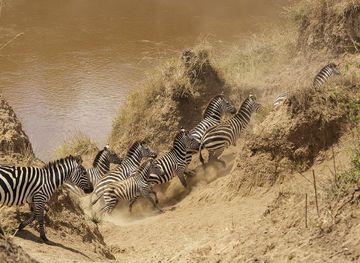
Discover Kenya: A land of breathtaking safaris, rich cultural heritage, and stunning coastlines that promise adventure and relaxation all in one.
Explore Kenya