

Samburu Region, Kenya Travel Guide
Discover the wild beauty and unique wildlife of Kenya's Samburu Region, where arid landscapes meet vibrant cultures and untamed nature thrives.
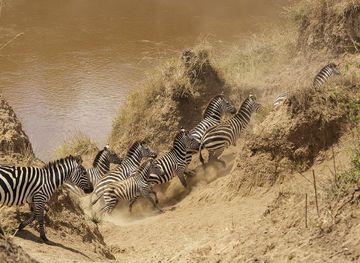
Nestled in the heart of Kenya, the Samburu Region is a raw and rugged wilderness that promises an unforgettable adventure. Known for its arid landscape and unique wildlife, Samburu offers a stark contrast to the lush savannas of other Kenyan parks. Here, you will encounter the rare 'Samburu Special Five': the Grevy's zebra, Somali ostrich, reticulated giraffe, gerenuk, and beisa oryx. These animals are found only in this part of the country, making a visit to Samburu a truly unique experience. The Ewaso Ng'iro River cuts through the region, providing a lifeline to the wildlife and creating stunning oases of green amidst the dry terrain. Along the riverbanks, you can spot elephants cooling off, crocodiles basking in the sun, and a myriad of bird species fluttering about. The landscape is dotted with acacia trees and the striking doum palm, adding to the region's distinctive charm. The Samburu people, known for their rich culture and traditions, are another highlight of the region. Visitors have the opportunity to engage with local communities and learn about their way of life. From traditional dances to colorful beadwork, the cultural experiences in Samburu are as enriching as the natural beauty. For those seeking a truly off-the-beaten-path adventure, Samburu is a destination that promises both excitement and serenity.

Know before you go
Hi, I'm Eve. Here are a few practical things to know before exploring Samburu Region.
- Best time to visit is during the dry season from June to October when wildlife is easier to spot.
- Carry plenty of water and sun protection as the region can get extremely hot.
- Hire a local guide to get the most out of your wildlife safaris and cultural experiences.
- Don't miss a visit to the Samburu National Reserve for an excellent chance of spotting the 'Samburu Special Five'.
- Respect the local customs and traditions when visiting Samburu villages.
Destinations in Samburu Region
Resorts, valleys and scenic spots worth a trip of their own.


Explore Samburu Region: Things to Do, Places to Eat, Hotels & More
Handpicked recommendations for top attractions, local dining, accommodations, and more

Top Attractions & Sightseeing in Samburu Region
Top-rated picks
Best Attractions

Sarova Shaba Game Lodge
Discover the luxury of Sarova Shaba Game Lodge, a serene escape in Samburu County, where breathtaking wildlife encounters await.

Samburu National Reserve
Explore the stunning Samburu National Reserve, where wildlife encounters and cultural experiences await in the heart of Kenya's wilderness.

Namunyak Wildlife Conservation Trust
Explore the breathtaking beauty of Namunyak Wildlife Conservation Trust, a sanctuary for wildlife and a hub for conservation efforts in Kenya's stunning landscapes.

Kalama Community Conservancy
Explore the breathtaking landscapes and rich biodiversity of Kalama Community Conservancy in Kenya, a perfect destination for nature lovers and eco-tourists.

Best landmarks in Samburu Region
Top-rated picks
Best Landmarks

Sarova Shaba Game Lodge
Discover the wild beauty of Northern Kenya at Sarova Shaba Game Lodge, a perfect blend of luxury and wildlife adventures.

Buffalo Springs National Reserve
Discover Buffalo Springs National Reserve: A Wildlife Haven in Kenya's Stunning Landscapes.

Samburu National Reserve
Explore the breathtaking Samburu National Reserve, a Kenyan gem of wildlife and culture, perfect for adventurers and nature lovers alike.

Namunyak Wildlife Conservation Trust
Discover the beauty and biodiversity of Namunyak Wildlife Conservation Trust, a sanctuary for wildlife and cultural experiences in the heart of Kenya.

Best restaurants in Samburu Region
Top-rated picks
Best Restaurants

Sarova Shaba Game Lodge
Experience luxury amidst nature at Sarova Shaba Game Lodge - your gateway to adventure in Kenya's stunning wilderness.

Trout Tree Restaurant
Discover Trout Tree Restaurant: A unique dining experience by Burguret River in Nanyuki with fresh trout and stunning views.

Samburu Guest House
Experience comfort and culture at Samburu Guest House in Maralal - your gateway to Kenya's stunning landscapes.

Iman Restaurant
Experience the flavors of Northern Kenya at Iman Restaurant in Isiolo – where Halal cuisine meets unforgettable dining.

Best bars in Samburu Region
Top-rated picks
Best Bars

The Alchemist
Experience the vibrant fusion of food, shopping, and nightlife at The Alchemist, Nairobi's premier bar and event venue.

Checkmate Lounge Meru
Experience the rich flavors of Kenya at Checkmate Lounge Meru, a vibrant grill and bar destination in the heart of Meru.

Sarova Shaba Game Lodge
Experience the wild beauty of Kenya at Sarova Shaba Game Lodge, a luxurious retreat in Samburu National Reserve offering breathtaking wildlife and cultural experiences.

Buffalo Springs National Reserve
Discover the stunning wildlife and natural beauty at Buffalo Springs National Reserve, a premier destination for nature lovers and adventure seekers in Kenya.

Best nightclubs in Samburu Region
Top-rated picks
Best Nightclubs

K1 Klub House
Experience the pulse of Nairobi's nightlife at K1 Klub House - a vibrant fusion of dining, drinks, and entertainment.

Checkmate Lounge Meru
Experience the rich flavors of local and international cuisine at Checkmate Lounge Meru, a grill restaurant that delights every palate.

Sarova Shaba Game Lodge
Experience the luxury of Sarova Shaba Game Lodge, where nature meets elegance in the heart of Samburu County's stunning landscapes.

Shakatak Disco
Discover the lively energy of Shakatak Disco in Diani Beach, where music and dance come alive under the stars.

Best shops in Samburu Region
Top-rated picks
Best Shops

The Cedar Mall Nanyuki
Discover an unparalleled shopping experience at The Cedar Mall Nanyuki, where vibrant retail and delightful dining meet in the breathtaking Mount Kenya region.

Sarova Shaba Game Lodge
Experience the magic of wildlife at Sarova Shaba Game Lodge, where luxury meets adventure in the heart of Samburu National Reserve.

Sayen Hyper Store - Meru
Discover the heart of Meru at Sayen Hyper Store – your go-to supermarket for local and international products.

Buffalo Springs National Reserve
Explore the breathtaking Buffalo Springs National Reserve, a wildlife haven in Kenya with stunning landscapes and diverse ecosystems.

Explore Samburu Region on the Map
A handpicked selection of must-see spots in Samburu Region, mapped for you.
Samburu Region Essentials
-
Samburu Region is located in northern Kenya. The nearest major airport is Jomo Kenyatta International Airport (NBO) in Nairobi, approximately 300 kilometers away. From Nairobi, you can take a domestic flight to Samburu Airport (also known as Buffalo Springs Airport). Alternatively, you can travel by road via the A2 highway, which takes about 6-7 hours. Car rentals and private transfers are available for a more flexible journey.
-
Within Samburu Region, transportation options include local taxis, hired 4x4 vehicles, and organized safari tours. The region is known for its rugged terrain, so a 4x4 vehicle is highly recommended for exploring the area. Public transport is limited, but local buses (matatus) connect major towns. For a more immersive experience, consider hiring a local guide who can navigate the area and provide cultural insights.
-
The official currency in Kenya is the Kenyan Shilling (KES). Credit cards are accepted in some hotels, lodges, and larger establishments, but it is advisable to carry cash, especially in remote areas. ATMs are available in larger towns like Maralal, but it's wise to withdraw sufficient cash before heading to more rural parts of Samburu. US Dollars are also sometimes accepted, but local currency is preferred.
-
Samburu Region is generally safe for tourists, but it is advisable to take standard precautions. Avoid walking alone at night and keep your belongings secure. Some areas, particularly near the borders with Ethiopia and Somalia, can be less stable, so it is best to stay informed about current travel advisories. Always travel with a reputable tour operator and avoid isolated areas without a guide.
-
In case of emergency, dial 999 for immediate assistance. The nearest medical facilities are in larger towns like Maralal and Isiolo, where you can find hospitals and clinics. It's recommended to have comprehensive travel insurance that covers medical emergencies. For minor health issues, carry a basic first aid kit and necessary medications.
-
Fashion: Do dress modestly, especially in rural areas and around local communities. Avoid wearing revealing clothing. Religion: Do respect local customs and traditions. When visiting religious sites, dress conservatively and be mindful of your behavior. Public Transport: Do be respectful and give up your seat to elderly passengers. Don't eat or drink on public transport. Greetings: Do greet people with a handshake. A friendly 'Jambo' (hello) is also well-received. Eating & Drinking: Do try local delicacies and accept food offerings graciously. Don't refuse hospitality, as it is considered impolite.
-
To experience Samburu Region like a local, visit the markets in Maralal or Baragoi to buy fresh produce and traditional Samburu crafts. Engage with the Samburu people, who are known for their rich culture and warm hospitality. Don't miss the chance to attend a traditional Samburu dance or visit a manyatta (traditional homestead). For a unique experience, explore the Samburu National Reserve, where you can see the 'Samburu Special Five': Grevy's zebra, Somali ostrich, reticulated giraffe, gerenuk, and beisa oryx.
When is the best time to visit Samburu Region?
Useful Local Phrases for Samburu Region
You don't need to speak the language perfectly. Even learning a few simple words can make conversations warmer—and locals usually appreciate the effort.
— Eve

Here are the phrases I use most often in Samburu Region. Try a few—you'll be surprised how far they go! 😊
❤️
-
- HelloSupa
[soo-pah] - GoodbyeNaki
[nah-kee] - YesEe
[ee] - NoAah
[ah] - Please/You're welcomeNaki
[nah-kee] - Thank youAsante
[ah-sahn-tay] - Excuse me/SorryNaki
[nah-kee] - How are you?Naki kuli?
[nah-kee koo-lee] - Fine. And you?Naki, na wewe?
[nah-kee, nah weh-weh] - Do you speak English?Wewe unazungumza Kiingereza?
[weh-weh oo-nah-zoong-oom-zah kee-in-ge-reh-zah] - I don't understandSijui
[see-joo-ee]
- HelloSupa
-
- I'd like to see the menu, pleaseNingependa kuona menyu, tafadhali
[neen-geh-pen-dah koo-oh-nah men-yoo, tah-fah-dah-lee] - I don't eat meatSikuli nyama
[see-koo-lee nyah-mah] - Cheers!Afya!
[ah-fyah] - I would like to pay, pleaseNingependa kulipa, tafadhali
[neen-geh-pen-dah koo-lee-pah, tah-fah-dah-lee]
- I'd like to see the menu, pleaseNingependa kuona menyu, tafadhali
-
- Help!Saidia!
[sah-ee-dee-ah] - Go away!Nenda mbali!
[nen-dah m-bah-lee] - Call the Police!Piga simu polisi!
[pee-gah see-moo poh-lee-see] - Call a doctor!Piga simu daktari!
[pee-gah see-moo dahk-tah-ree] - I'm lostNimepotea
[nee-meh-poh-teh-ah] - I'm illNina ugonjwa
[nee-nah oo-gohn-jwah]
- Help!Saidia!
-
- I'd like to buy...Ningependa kununua...
[neen-geh-pen-dah koo-noo-noo-ah] - I'm just lookingNiko tu kuangalia
[nee-koh too koo-ahng-ah-lee-ah] - How much is it?Ni shilingi ngapi?
[nee shee-lin-gee ngah-pee] - That's too expensiveHiyo ni ghali sana
[hee-yoh nee gah-lee sah-nah] - Can you lower the price?Unaweza kupunguza bei?
[oo-nah-weh-zah koo-poon-goo-zah beh-ee]
- I'd like to buy...Ningependa kununua...
-
- What time is it?Ni saa gani?
[nee sah gah-nee] - It's one o'clockNi saa moja
[nee sah moh-jah] - Half past (10)Nusu (10)
[noo-soo] - MorningAsubuhi
[ah-soo-boo-hee] - AfternoonMchana
[mchah-nah] - EveningJioni
[jee-oh-nee] - YesterdayJana
[jah-nah] - TodayLeo
[leh-oh] - TomorrowKesho
[keh-shoh] - 1Moja
[moh-jah] - 2Mbili
[m-bee-lee] - 3Tatu
[tah-too] - 4Nne
[n-nay] - 5Tano
[tah-no] - 6Sita
[see-tah] - 7Saba
[sah-bah] - 8Nane
[nah-nay] - 9Tisa
[tee-sah] - 10Kumi
[koo-mee]
- What time is it?Ni saa gani?
-
- Where's a/the...?Wapi...?
[wah-pee] - What's the address?Ni anwani gani?
[nee ahn-wah-nee gah-nee] - Can you show me (on the map)?Unaweza kunionesha (katika ramani)?
[oo-nah-weh-zah koo-nee-oh-neh-shah kah-tee-kah rah-mah-nee] - When's the next (bus)?Basi ijayo ni lini?
[bah-see ee-jah-yoh nee lee-nee] - A ticket (to ....)Tiketi (kwa ....)
[tee-keh-tee (kwah)]
- Where's a/the...?Wapi...?
History of Samburu Region
-
The Samburu people, a semi-nomadic pastoralist community, have inhabited the region for centuries. They are closely related to the Maasai and speak the Samburu dialect, which is a Nilo-Saharan language. The Samburu culture is rich in traditions, including ceremonies such as 'Moran' (warrior initiation) and 'Eunoto' (coming of age). Livestock, especially cattle, play a central role in their way of life, serving as a measure of wealth and social status.
-
During the early 20th century, the Samburu region came under British colonial rule. The Samburu people resisted the imposition of colonial authority and land alienation. Notably, the region was part of the larger Northern Frontier District, which saw significant resistance against British rule. Despite the challenges, the Samburu maintained their cultural identity and traditional way of life.
-
Established in 1962, the Samburu National Reserve is a key wildlife conservation area in Kenya. It was created to protect the unique biodiversity of the region and to promote tourism. The reserve is home to species such as the Grevy's zebra, reticulated giraffe, and Somali ostrich. The Samburu National Reserve has contributed significantly to the local economy and conservation efforts, balancing the interests of wildlife protection and the Samburu people's traditional practices.
-
The Samburu region has experienced periodic conflicts with neighboring communities, particularly the Turkana, over resources such as water and grazing land. These conflicts have historical roots but have been exacerbated by modern pressures such as climate change and population growth. Efforts have been made to foster peace and cooperation between the communities, including government interventions and initiatives by non-governmental organizations.
-
In recent decades, the Samburu region has seen significant changes due to modernization and development projects. Infrastructure improvements, such as roads and schools, have brought both opportunities and challenges. The Samburu people face the challenge of preserving their cultural heritage while adapting to new economic realities. Tourism continues to play a vital role in the region, providing income and encouraging the preservation of both natural and cultural assets.
Neighbouring Regions of Samburu Region
The closest regions to Samburu Region, if you have time for more than one.




Your all‑in‑one travel companion app
Explore expert travel guides, compare and book tours, experiences, hotels, and more—all from the palm of your hand. Download now for seamless trip planning wherever your wanderlust takes you.


Explore More of Kenya
Looking beyond Samburu Region? Discover Kenya for broader travel guides, local hot-spots, and regional highlights.
Explore KenyaSamburu Region in Photos
Browse through our photo collection highlighting the charm and character of the destination.


Samburu Region: Kenya's Untamed Wilderness
Nestled in the heart of Kenya, the Samburu Region is a raw and rugged wilderness that promises an unforgettable adventure. Known for its arid landscape and unique wildlife, Samburu offers a stark contrast to the lush savannas of other Kenyan parks. Here, you will encounter the rare 'Samburu Special Five': the Grevy's zebra, Somali ostrich, reticulated giraffe, gerenuk, and beisa oryx. These animals are found only in this part of the country, making a visit to Samburu a truly unique experience. The Ewaso Ng'iro River cuts through the region, providing a lifeline to the wildlife and creating stunning oases of green amidst the dry terrain. Along the riverbanks, you can spot elephants cooling off, crocodiles basking in the sun, and a myriad of bird species fluttering about. The landscape is dotted with acacia trees and the striking doum palm, adding to the region's distinctive charm. The Samburu people, known for their rich culture and traditions, are another highlight of the region. Visitors have the opportunity to engage with local communities and learn about their way of life. From traditional dances to colorful beadwork, the cultural experiences in Samburu are as enriching as the natural beauty. For those seeking a truly off-the-beaten-path adventure, Samburu is a destination that promises both excitement and serenity.