

Leptis Magna Travel Guide
Free Guide: Discover the stunningly preserved Roman city of Leptis Magna, a UNESCO World Heritage site on the Libyan coast. Explore ancient history and architecture.


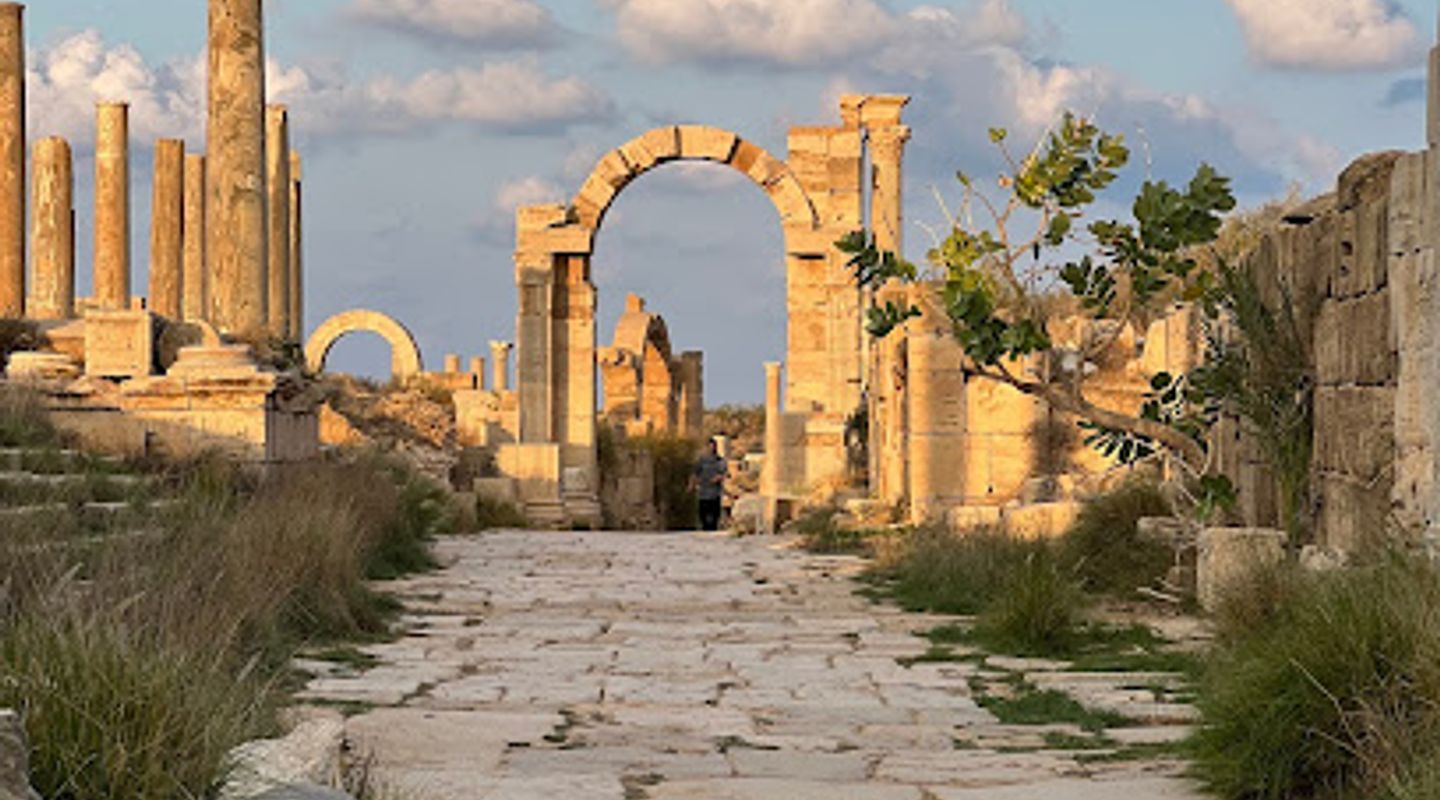
A brief summary of Leptis Magna
Discover the stunningly preserved Roman city of Leptis Magna, a UNESCO World Heritage site on the Libyan coast. Explore ancient history and architecture.
Explore the remarkably preserved ruins of Leptis Magna, a once-thriving Roman city on Libya's Mediterranean coast. Founded by the Phoenicians and later expanded by the Romans, especially under Emperor Septimius Severus, this UNESCO World Heritage site offers a captivating glimpse into the grandeur of the Roman Empire in Africa.
Opening hours
- Every day8 am–6 pm
Opening hours as listed on the venue’s Google Business Profile. Hours can change for services and special events, so check with the venue before you go.
- Address
- J7PR+C68, Khoms
- Phone
Getting there
Taxi
Public Transport
Driving
Discover more about Leptis Magna
Overview
Leptis Magna, located near present-day Khoms, Libya, is an ancient city that stands as a testament to the rise and fall of empires. Originally founded by the Phoenicians in the 7th century BC, it evolved into a major city within the Carthaginian Empire before becoming part of Roman Libya. Its strategic location on the Mediterranean coast and the mouth of the Wadi Lebda facilitated its growth as a key trade center.Under Roman rule, Leptis Magna flourished, especially during the reign of Emperor Septimius Severus (193-211 AD), who was born in the city. Severus invested heavily in his hometown, transforming it into one of the most important and beautiful cities in Roman Africa. The city boasted impressive public monuments, a bustling marketplace, storehouses, shops, and residential districts.Visitors to Leptis Magna can explore remarkably well-preserved ruins, including the Arch of Septimius Severus, the Hadrianic Baths, the Severan Basilica, and a stunning amphitheater. The theater, one of the oldest stone theaters in the Roman world, offers a glimpse into the city's cultural life. The Hadrianic Baths showcase the city's advanced engineering and social life, while the Severan Forum and Basilica highlight its political and economic importance.However, Leptis Magna's prosperity declined due to earthquakes, insecurity, and economic difficulties. The city was conquered by the Vandals in 455 AD and later by Arab tribes in 643 AD, eventually falling into ruin and being buried under sand. Rediscovered and excavated in the 1920s by Italian archaeologists, Leptis Magna is now a UNESCO World Heritage site, offering a unique and relatively untouched experience for those who venture to explore its ancient streets and structures.
Evendo Review Centre
 Google
Guest reviews
Explore Leptis Magna on the map
A handpicked selection of must-see spots near Leptis Magna, mapped for you.
Get your free copy of our complete guide to Leptis Magna, delivered straight to you.
Everything on this page, from opening hours and how to get there to Eve’s tips and the best time to go, in one PDF you can read offline, print or share.
Already have an account? Sign in
Your Leptis Magna guide is ready.
We'll send it to · Not you? Sign out

Getting your guide ready…
We are putting together a fresh copy of the Leptis Magna guide. This can take up to a minute.
This can take a few moments. If your browser asks, choose Allow so the download can start. You'll find the guide in your Downloads folder.
Nothing happened? Download it again
Sorry, the guide is taking longer than usual. Please try again in a minute, or get it by email instead.
Other nearby places you may find interesting
The closest places of the same kind, if this one is not quite what you had in mind.
-
-
-
-
-


Swipe for more places
More to explore near Leptis Magna

 Best experiences near Leptis Magna
 Best hotels near Leptis Magna
 Best landmarks near Leptis Magna
 Best attractions near Leptis Magna
 Best shops near Leptis Magna
 Best restaurants near Leptis Magna
 Best bars near Leptis Magna
Do you manage this location?
Take control to get all the benefits, like improved information, better appearance, and stronger visibility across AI-powered discovery.
Explore more

Explore more of Al-Khums
Explore the ancient ruins of Leptis Magna and enjoy serene Mediterranean beaches in the historic city of Al-Khums, Libya.
Explore Al-Khums
Explore more of Libya
Discover Libya: Ancient ruins, vast deserts, and Mediterranean charm await in this North African gem.
Explore Libya
