

Hadrianic Baths, Zliten Travel Guide
Free Guide: Step back in time at the Hadrianic Baths in Leptis Magna, exploring ancient Roman luxury and social life in stunningly preserved ruins.


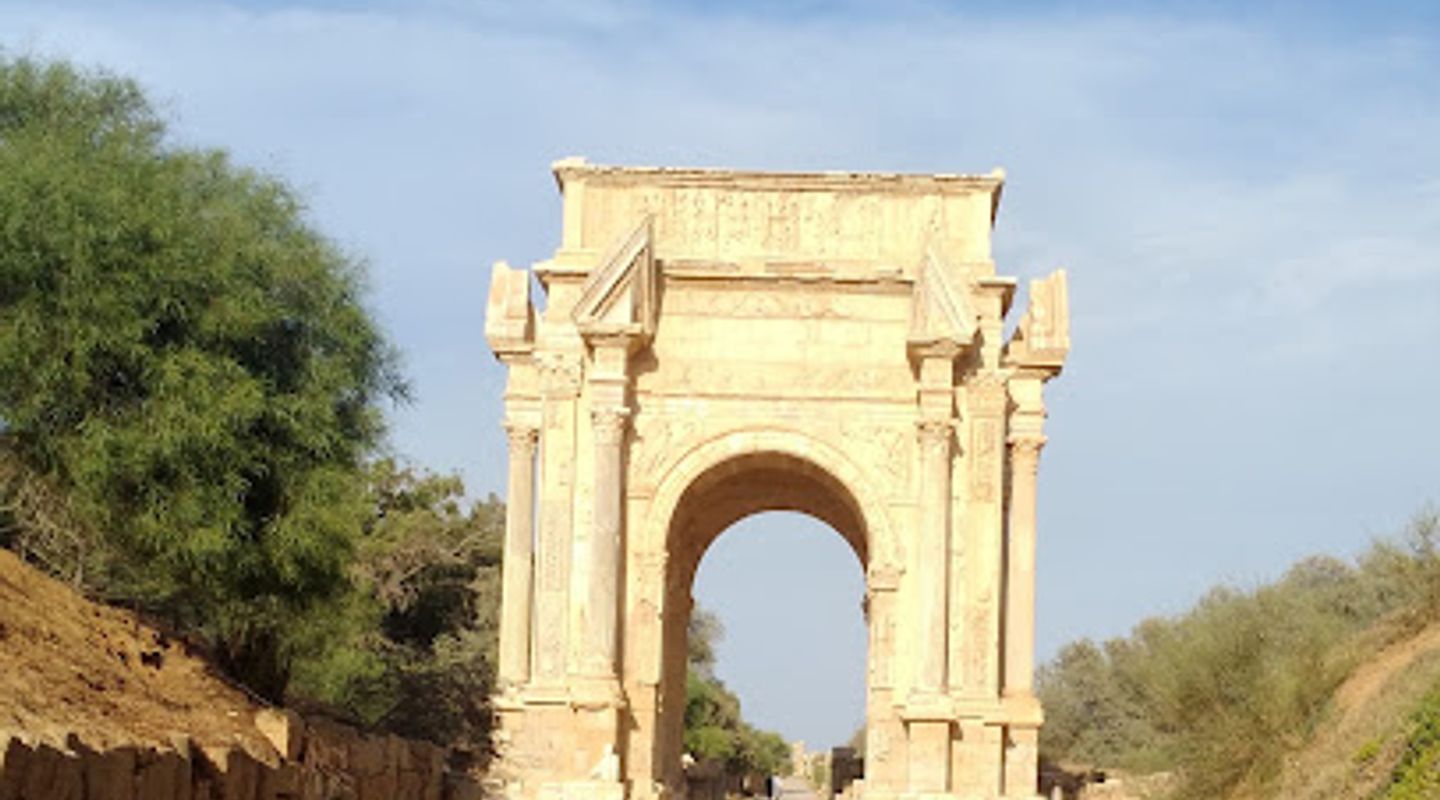
A brief summary of Hadrianic Baths
Step back in time at the Hadrianic Baths in Leptis Magna, exploring ancient Roman luxury and social life in stunningly preserved ruins.
Explore the ruins of the Hadrianic Baths in Leptis Magna, a testament to Roman engineering and social life in North Africa. Built during Emperor Hadrian's reign (117-138 AD), these baths were more than just a place for hygiene; they were a social hub for relaxation, exercise, and intellectual discussions.
- Address
- J7PR+2H5, Leptis Magna
Getting there
Taxi
Bus
Discover more about Hadrianic Baths
Overview
The Hadrianic Baths at Leptis Magna stand as a remarkable example of Roman architecture and culture in North Africa. Constructed during the rule of Emperor Hadrian in 126-127 AD and opened in 137 AD, the baths provided more than just a space for bathing; they acted as a vibrant social center. Citizens gathered here to unwind, engage in physical activities, and participate in intellectual discourse.As you approach the site, you'll be struck by the impressive ruins, featuring towering columns and well-preserved mosaics that showcase the artistic skills of the time. The baths demonstrate the advanced engineering of the Romans, including sophisticated heating and temperature control systems, reflecting their dedication to luxury and comfort.Visitors can explore the various sections of the complex, such as the frigidarium (cold bath), tepidarium (warm bath), and caldarium (hot bath). Each area boasts unique architectural elements that highlight the significance of hygiene and leisure in Roman society. The intricate tile work and remnants of marble statues enhance the site's beauty and historical importance, allowing you to envision the opulent lifestyle of ancient Romans. The complex was symmetrically designed along a north-south axis, with halls and facilities duplicated, except for the natatio (swimming pool). It is believed that men and women could bathe separately at the same time, with the natatio possibly reserved for one sex.The baths were equipped with two large toilet rooms, similar in design to those found in Sabratha, Ostia, and other locations throughout the Roman Empire. The walls were covered in marble, and windows, likely closed with selenite plates, allowed sunlight to enter.
Evendo Review Centre
 Google
Guest reviews
Explore Hadrianic Baths on the map
A handpicked selection of must-see spots near Hadrianic Baths, mapped for you.
Get your free copy of our complete guide to Hadrianic Baths, delivered straight to you.
Everything on this page, from opening hours and how to get there to Eve’s tips and the best time to go, in one PDF you can read offline, print or share.
Already have an account? Sign in
Your Hadrianic Baths guide is ready.
We'll send it to · Not you? Sign out

Getting your guide ready…
We are putting together a fresh copy of the Hadrianic Baths guide. This can take up to a minute.
This can take a few moments. If your browser asks, choose Allow so the download can start. You'll find the guide in your Downloads folder.
Nothing happened? Download it again
Sorry, the guide is taking longer than usual. Please try again in a minute, or get it by email instead.
Other nearby places you may find interesting
The closest places of the same kind, if this one is not quite what you had in mind.
-
-
-
-


Swipe for more places
More to explore near Hadrianic Baths

 Best experiences near Hadrianic Baths
 Best hotels near Hadrianic Baths
 Best landmarks near Hadrianic Baths
 Best attractions near Hadrianic Baths
 Best shops near Hadrianic Baths
 Best restaurants near Hadrianic Baths
 Best bars near Hadrianic Baths
Do you manage this location?
Take control to get all the benefits, like improved information, better appearance, and stronger visibility across AI-powered discovery.
Explore more

Explore more of Zliten
Discover the hidden gem of Zliten, Libya, where history, culture, and natural beauty converge along the stunning Mediterranean coast.
Explore Zliten
Explore more of Libya
Discover Libya: Ancient ruins, vast deserts, and Mediterranean charm await in this North African gem.
Explore Libya
