

Augstenberg Trail Travel Guide - Free Web & App
Your ultimate guide to Augstenberg Trail. Discover top landmarks, proposed trips, and local tips. Free on the web or via the Evendo companion app.


Augstenberg Trail in Liechtenstein offers high-alpine walking from Malbun, ridge views, limestone peaks and access to the Pfälzerhütte.
Mountain Landscape
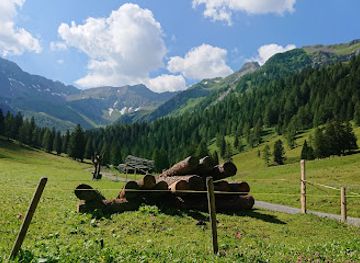
The Augstenberg Trail leads into Liechtenstein’s high alpine terrain above Malbun, the country’s principal mountain resort in the municipality of Triesenberg. The route reaches the Augstenberg summit at approximately 2,359 metres and is characterised by open grass-covered slopes, rugged limestone scenery, broad ridgelines and far-reaching views across the Rätikon mountains. Although Liechtenstein is a small country, this is a serious mountain environment rather than a lowland walking route: steep ground, exposed sections, loose rock and rapidly changing weather can all influence the experience.Read more about Augstenberg Trail
From Malbun to the Summit
Alpine Character and Conservation
Getting to and around Augstenberg Trail
How to get there
Best attractions in Augstenberg Trail
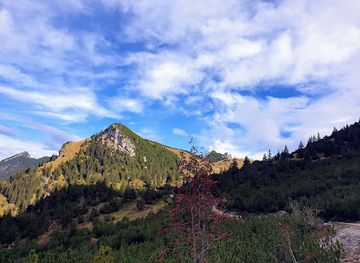
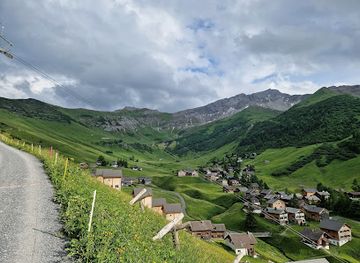
The principal attraction is the high-alpine route from Malbun towards Augstenberg, where open pasture, limestone ridges and elevated views replace the enclosed character of the valley. The summit at about 2,359 metres provides a natural objective for experienced hillwalkers, while the surrounding paths offer connections towards the Sareis area and the Pfälzerhütte near the Austrian border. Malbun itself is a compact mountain resort and a useful starting point for understanding the landscape, with summer walking routes and winter sports infrastructure that changes seasonally. The wider Triesenberg area adds a cultural dimension through Walser traditions, alpine farms and mountain settlement patterns. Wildlife may be encountered in the uplands, although sightings are never guaranteed and animals should be observed from a distance. The attraction is fundamentally a route through working and protected alpine terrain rather than a sequence of built visitor sights.
-
Tourist attraction
Kathedrale St. Florin
Discover Vaduz's iconic neo-Gothic cathedral, a symbol of Liechtenstein's rich cultural and religious heritage, featuring stunning architecture and serene ambiance.
-
Tourist attraction
Kunstmuseum Liechtenstein
Explore modern and contemporary art in a striking architectural setting at Vaduz's Kunstmuseum Liechtenstein. A cultural gem in the heart of the city.
-
Tourist attraction
Bergbahnen Malbun AG
Explore the stunning landscapes and thrilling slopes of Bergbahnen Malbun AG, the premier ski resort in Liechtenstein's majestic mountains.
-
Farm
Lama- & Alpakahof Triesenberg
Experience the charm of Liechtenstein's mountains with gentle llamas and alpacas at this unique farm in Triesenberg.
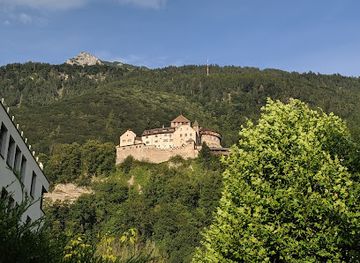
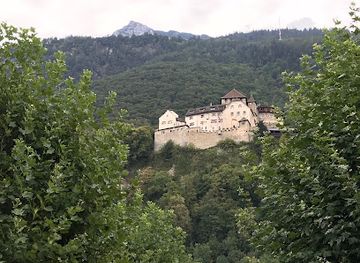
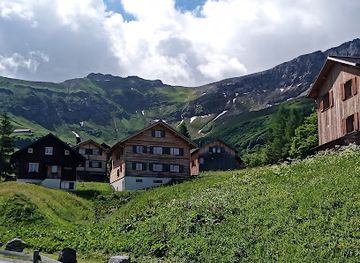
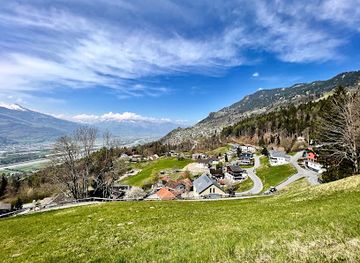
Best landmarks in Augstenberg Trail
Augstenberg itself is the defining natural landmark, rising to roughly 2,359 metres above the Malbun valley and forming part of the elevated Rätikon landscape. Its broad summit and surrounding ridges illustrate the contrast between grassy alpine pasture and weathered limestone terrain. The Sareis area is another important geographical reference, linking Malbun with higher walking routes and views across the mountain borderlands. Near the route’s wider network, the Pfälzerhütte is a significant human landmark: an alpine refuge positioned close to the Liechtenstein–Austria frontier and associated with the development of organised mountain travel. Below, Malbun represents the modern mountain settlement, while Triesenberg’s Walser cultural landscape explains how high-valley communities historically used these slopes. The landmarks are therefore primarily geological and alpine rather than monumental, with the trail itself revealing the relationship between mountain environment, pasture and recreation.
-
Bridge
Alte Rheinbrücke
Discover the Alte Rheinbrücke, a breathtaking bridge connecting Switzerland and Liechtenstein, rich in history and stunning natural beauty.
-
Hiking area
Vaduz Planet Trail
Experience nature like never before on the Vaduz Planet Trail, where hiking meets astronomy in the stunning landscapes of Liechtenstein.
-
Hiking area
Sassförkle
Explore the breathtaking hiking trails of Sassförkle in Malbun, Liechtenstein, where nature and adventure await every step of the way.
-
Hiking area
Sassweg hiking trail
Explore the mesmerizing Sassweg hiking trail in Malbun, a perfect blend of stunning views and nature's tranquility.
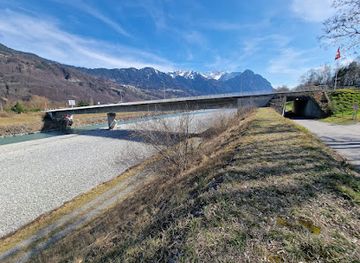
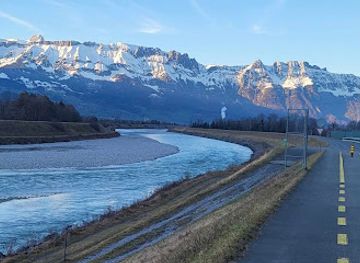
Explore Augstenberg Trail on the map
Plan your trip on one map. See where the top attractions, landmarks, restaurants and hotels are, and book hotels and experiences in a few clicks.
Best hotels in Augstenberg Trail
Best restaurants in Augstenberg Trail
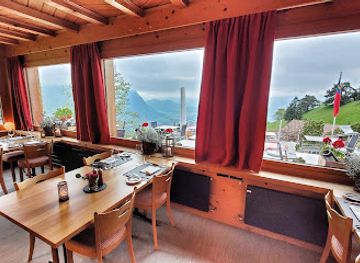
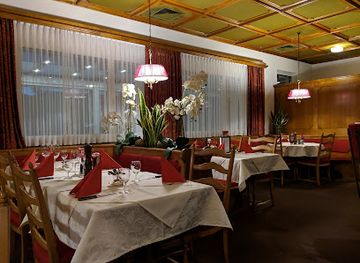
Dining opportunities for the Augstenberg Trail are concentrated in Malbun, Triesenberg and the larger settlements of the Liechtenstein lowlands rather than along the summit route. In Malbun, seasonal mountain-resort restaurants and cafés provide practical meals and refreshments for walkers when open, while traditional restaurants and inns elsewhere in Triesenberg reflect Liechtenstein’s Alpine and Rhine Valley food culture. Menus may include regional cheeses, bread, meat dishes, soups and other Central European fare, with Swiss and Austrian influences particularly apparent in mountain areas. The Pfälzerhütte may offer simple refuge hospitality when operating, but walkers should check its current opening arrangements and should not depend on it for provisions. Carrying a packed lunch is sensible for a full day on the trail, especially outside the main summer period or when facilities are closed.
-
 Hotel
HotelHotel Turna Malbun
Discover the charm of Liechtenstein at Hotel Turna Malbun—your cozy retreat in the heart of the Alps with exquisite dining options.
-
Restaurant
Berggasthaus Masescha
Savor authentic local cuisine while enjoying breathtaking views at Berggasthaus Masescha in Triesenberg, Liechtenstein.
-
Swiss
Restaurant Forum
Experience authentic Swiss cuisine at Restaurant Forum in Schaan – where tradition meets taste in every dish.
-
Swiss
Adler
Experience authentic Swiss cuisine at Adler in Vaduz, where local flavors meet warm hospitality for an unforgettable dining experience.

Best bars in Augstenberg Trail
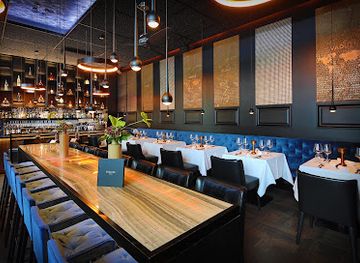
The Augstenberg Trail does not have a nightlife scene of its own; evenings are generally quiet once walkers have returned to Malbun. The resort has seasonal hospitality venues where visitors may find a drink or a relaxed meal, while Triesenberg and the Rhine Valley offer a broader selection of restaurants, hotel bars and traditional pubs. These are places for conversation and local hospitality rather than late-night clubbing. Entertainment varies with the season, and opening arrangements can change outside peak periods. Visitors seeking larger nightlife options would normally need to travel beyond the mountain area to the towns of the lowlands or across the border into nearby Swiss or Austrian centres, rather than expecting a club district near the trail.
-
Bar
Esquire Bar.Bistro
Discover the vibrant culinary experience at Esquire Bar.Bistro in Vaduz, offering delicious dishes and exceptional drinks in a stylish, welcoming atmosphere.
-
Restaurant
Alp Valüna
Discover the flavors of Triesen at Alp Valüna, where local cuisine meets stunning alpine views in a cozy dining setting.
-
Bar
Zwei Bar
Experience the vibrant nightlife of Vaduz at Zwei Bar, where exceptional drinks and a welcoming atmosphere await every visitor.
-
Beer Garden
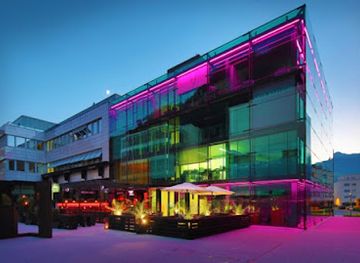
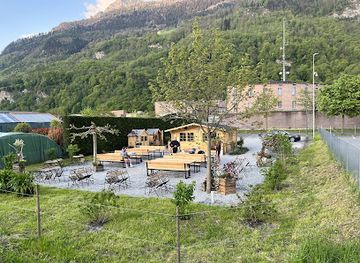
Lömagarta
Discover Lömagarta, Vaduz's enchanting beer garden, where local brews and a relaxing atmosphere create the perfect escape for tourists.
Best nightclubs in Augstenberg Trail
The Augstenberg Trail does not have a nightlife scene of its own; evenings are generally quiet once walkers have returned to Malbun. The resort has seasonal hospitality venues where visitors may find a drink or a relaxed meal, while Triesenberg and the Rhine Valley offer a broader selection of restaurants, hotel bars and traditional pubs. These are places for conversation and local hospitality rather than late-night clubbing. Entertainment varies with the season, and opening arrangements can change outside peak periods. Visitors seeking larger nightlife options would normally need to travel beyond the mountain area to the towns of the lowlands or across the border into nearby Swiss or Austrian centres, rather than expecting a club district near the trail.
-
Bar
Esquire Bar.Bistro
Discover a vibrant dining experience at Esquire Bar.Bistro in Vaduz, where culinary delights meet a lively atmosphere in the heart of Liechtenstein.
-
Bar
Zwei Bar
Discover the vibrant nightlife of Vaduz at Zwei Bar, where modern cocktails meet a lively atmosphere in the heart of Liechtenstein.
-
Bar
Take 5 Vaduz
Discover the vibrant nightlife at Take 5 Vaduz, a premier bar lounge in Triesen, offering a delightful drink menu and a lively ambiance.
-
Bar
Black Pearl Bar
Discover the vibrant nightlife at Black Pearl Bar in Triesen, where exquisite drinks and a trendy outdoor lounge await every visitor.



Best shops in Augstenberg Trail
Shopping directly on the Augstenberg Trail is limited to what can be obtained in Malbun, at mountain hospitality venues or in the wider settlements of Triesenberg and Vaduz. Visitors may find practical walking and winter-sports supplies in the mountain resort, while village shops and regional retailers provide food for self-catering and packed lunches. In the lowlands, Liechtenstein crafts, art, local food products and souvenirs are more readily available, with Triesenberg offering the strongest connection to the country’s mountain and Walser identity. Specialist retail is more developed in Vaduz and other larger settlements than in the high valley. Shops and services in Malbun can be seasonal, so walkers should purchase essential provisions before setting out and should not assume that a remote refuge or summit area functions as a retail centre.
-
Souvenir store
Hoi Liechtenstein - Souvenir Boutique
Explore Hoi Liechtenstein for unique souvenirs, local wines, and handcrafted gifts that capture the spirit of Vaduz.
-
Clothing store
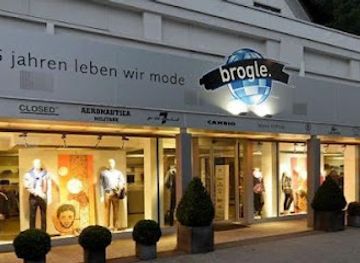
Brogle Fashion Est
Discover the ultimate fashion destination in Vaduz, where style meets quality at Brogle Fashion, your go-to clothing and accessories store.
Get your free copy of our complete guide to Augstenberg Trail, delivered straight to you.
Everything on this page, from attractions and restaurants to essentials and local phrases, in one PDF you can read offline, print or share.
Already have an account? Sign in
Your Augstenberg Trail guide is ready.
We'll send it to · Not you? Sign out

Getting your guide ready…
We are putting together a fresh copy of the Augstenberg Trail guide. This can take up to a minute.
This can take a few moments. If your browser asks, choose Allow so the download can start. You'll find the guide in your Downloads folder.
Nothing happened? Download it again
Sorry, the guide is taking longer than usual. Please try again in a minute, or get it by email instead.
From Eve
Local phrases worth knowing
You don't need to get them perfect. A few words go a long way, and locals appreciate the effort.
Basics
| English | Local | Say it |
|---|---|---|
| Hello | Hallo | [ha-lo] |
| Goodbye | Auf Wiedersehen | [owf vee-der-zay-en] |
| Yes | Ja | [ya] |
| No | Nein | [nine] |
| Please/You're welcome | Bitte | [bit-te] |
| Thank you | Danke | [dahn-kuh] |
| Excuse me/Sorry | Entschuldigung | [ent-shuhl-di-gung] |
| How are you? | Wie geht es dir? | [vee geht es deer] |
| Fine. And you? | Gut. Und du? | [goot. oont doo] |
| Do you speak English? | Sprechen Sie Englisch? | [shpre-khen zee eng-lish] |
| I don't understand | Ich verstehe nicht | [ihk fer-shtay-uh nikht] |
Eating & Drinking
| English | Local | Say it |
|---|---|---|
| I'd like to see the menu, please | Ich hätte gerne die Speisekarte, bitte | [ihk heh-teh gehr-neh dee shpahy-zeh-kahr-teh, bit-teh] |
| I don't eat meat | Ich esse kein Fleisch | [ihk eh-suh kine flysh] |
| Cheers! | Prost! | [prohst] |
| I would like to pay, please | Ich möchte bitte bezahlen | [ihk merkhte bit-teh beh-tsah-len] |
Emergencies
| English | Local | Say it |
|---|---|---|
| Help! | Hilfe! | [hil-feh] |
| Go away! | Geh weg! | [geh vekh] |
| Call the Police! | Rufen Sie die Polizei! | [roo-fen zee dee poh-lee-tsai] |
| Call a doctor! | Rufen Sie einen Arzt! | [roo-fen zee ay-nen ahrts] |
| I'm lost | Ich habe mich verirrt | [ihk hah-beh meeh fer-eert] |
| I'm ill | Ich bin krank | [ihk been krahnk] |
Shopping
| English | Local | Say it |
|---|---|---|
| I'd like to buy... | Ich möchte ... kaufen | [ihk merkhte ... kow-fen] |
| I'm just looking | Ich schaue nur | [ihk shou-eh noor] |
| How much is it? | Wie viel kostet es? | [vee feel koh-stet es] |
| That's too expensive | Das ist zu teuer | [dahs ist tsoo toy-er] |
| Can you lower the price? | Könnten Sie den Preis senken? | [ker-nen zee den prees zehn-ken] |
Time & Numbers
| English | Local | Say it |
|---|---|---|
| What time is it? | Wie spät ist es? | [vee shpeht ist es] |
| It's one o'clock | Es ist ein Uhr | [es ist eye-n oor] |
| Half past (10) | Halb zehn | [halb tsehn] |
| Morning | Morgen | [mor-ghen] |
| Afternoon | Nachmittag | [nahkh-mit-tahk] |
| Evening | Abend | [ah-bent] |
| Yesterday | Gestern | [ges-tern] |
| Today | Heute | [hoy-teh] |
| Tomorrow | Morgen | [mor-ghen] |
| 1 | eins | [eyns] |
| 2 | zwei | [tsvey] |
| 3 | drei | [dry] |
| 4 | vier | [feer] |
| 5 | fünf | [foonf] |
| 6 | sechs | [zeks] |
| 7 | sieben | [zee-ben] |
| 8 | acht | [akht] |
| 9 | neun | [noyn] |
| 10 | zehn | [tsehn] |
Transport & Directions
| English | Local | Say it |
|---|---|---|
| Where's a/the...? | Wo ist ein/der...? | [vo ist eye-n/dehr] |
| What's the address? | Was ist die Adresse? | [vahs ist dee ah-dreh-seh] |
| Can you show me (on the map)? | Können Sie mir zeigen (auf der Karte)? | [ker-nen zee meer tsai-gen (owf dehr kar-teh)] |
| When's the next (bus)? | Wann kommt der nächste (Bus)? | [vahn komt dehr nakh-steh (boos)] |
| A ticket (to ....) | Eine Fahrkarte (nach ....) | [eye-nuh fahr-kahr-teh (nahkh ....)] |
History of Augstenberg Trail
A Limestone Alpine Landscape
The Augstenberg rises within the Rätikon, a mountain group forming part of the Northern Limestone Alps. Its ridges and slopes were shaped by long-term geological uplift, erosion and the action of ice and weather, producing the mixture of grassy high pastures, broken rock and steep mountain faces visible around Malbun. These geological processes belong to a timescale vastly older than human settlement, but they remain central to understanding why routes in the area repeatedly alternate between open alpine turf and rugged limestone terrain.
Seasonal Mountain Pastures
For centuries, the mountains around Malbun were used as alpine pasture, with livestock moved to higher grazing grounds during the warmer months. Such seasonal farming helped shape the open character of the slopes and connected mountain life with settlements in the Liechtenstein Rhine Valley. The uplands were working landscapes rather than recreational scenery alone: paths served herders, livestock and the movement of supplies between valley communities and summer pastures.
Walser Heritage in Triesenberg
The wider mountain area is closely associated with Triesenberg and its Walser heritage. Walser communities settled in the high valley during the medieval period, bringing forms of alpine farming, settlement and local culture that still contribute to the identity of the municipality. Malbun developed from this mountain economy and later became a base for mountaineering and recreation. The trail therefore lies within a landscape where modern walking routes overlap with older patterns of pasture use and transalpine mountain culture.
From Alpine Refuge to Walking Destination
Organised mountaineering and alpine tourism expanded in the region during the late nineteenth and early twentieth centuries, encouraging the improvement of paths and the construction of refuges. The Pfälzerhütte, near the high border area, reflects this development and remains an important reference point for routes around Augstenberg. Malbun subsequently became Liechtenstein’s best-known mountain resort, while hiking, ski tourism and landscape protection increasingly complemented traditional agriculture. Today, the trail is experienced as part of a managed alpine recreation network rather than as an isolated wilderness route.
Augstenberg Trail in Photos
Browse through our photo collection highlighting the charm and character of the destination.
Cities in Augstenberg Trail
The towns and cities of Augstenberg Trail, and the easiest places to base yourself.
-

-

-

-


Swipe for more cities
Neighbouring destination travel guides
The closest destinations to Augstenberg Trail, if you have time for more than one.
-

-

-

-

-


Swipe for more destinations
Explore more

Explore more of Oberland
Explore Liechtenstein’s Oberland for Vaduz museums, medieval castles, Walser villages and Alpine trails rising from the Rhine Valley.
Explore Oberland
Explore more of Liechtenstein
Discover the charm of Liechtenstein, a tiny Alpine principality offering medieval castles, stunning hiking trails, and a rich cultural heritage in the heart of Europe.
Explore Liechtenstein