

Malbun Travel Guide - Free Web & App
Your ultimate guide to Malbun. Discover top landmarks, proposed trips, and local tips. Free on the web or via the Evendo companion app.


Malbun, Liechtenstein, offers alpine skiing, hiking, family mountain activities and high Rätikon scenery from a compact year-round resort village.
Mountain Setting and Character
Malbun is Liechtenstein’s principal mountain resort, set in a sheltered high valley in the municipality of Triesenberg at roughly 1,600 metres above sea level. Reached by a winding road from the Rhine Valley, the compact settlement is surrounded by the forested slopes and limestone peaks of the Rätikon range. Its elevated position gives Malbun a distinctly alpine atmosphere while keeping it within practical reach of Vaduz and the country’s lower valleys.Read more about Malbun
Winter and Summer Landscapes
Alpine Heritage and Outdoor Life
When is the best time to visit Malbun?
Best: July–September · 18–22°C| Month | High (°C) | Rainfall (mm) |
|---|---|---|
| January | 1 | 50 |
| February | 2 | 45 |
| March | 4 | 45 |
| April | 9 | 55 |
| May | 15 | 80 |
| June | 19 | 100 |
| July (best) | 22 | 110 |
| August (best) | 22 | 100 |
| September (best) | 18 | 80 |
| October | 12 | 65 |
| November | 7 | 55 |
| December | 3 | 50 |
Getting to and around Malbun
How to get there
Transportation
Best attractions in Malbun
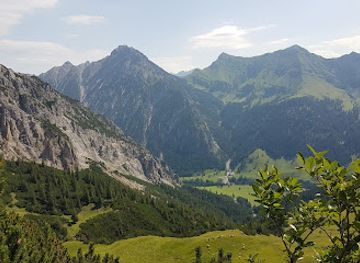
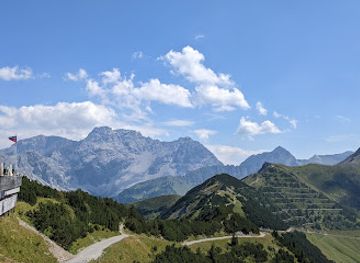
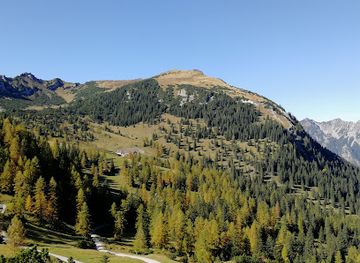
Malbun’s principal attraction is its high alpine setting, where the village sits beneath the slopes of the Sareis sector and the surrounding Rätikon mountains. In winter, the local ski area offers pistes and lifts suited to recreational skiing, snowboarding and family snow activities, while summer visitors use the lift-accessed mountain terrain as a starting point for walking. The route towards Augstenberg provides broad views across Liechtenstein’s uplands when conditions are clear, and the Fürstin-Gina-Weg is associated with a popular high-level walking experience near the resort. Longer hikers can continue towards the Pfälzerhütte and the mountain passes near the Austrian border, provided routes are open and conditions are appropriate. Nearby Steg adds a quieter alpine landscape centred on the reservoir and surrounding pastures, while Triesenberg provides access to Walser cultural heritage and mountain viewpoints beyond Malbun itself.
-
Hiking area
Sareiserjoch
Explore Sareiserjoch in Malbun, Liechtenstein: a hiking paradise with breathtaking alpine views and trails for all skill levels.
-
Hiking area
Fürstin-Gina-Weg
Hike the Fürstin-Gina-Weg in Malbun for stunning alpine views, flower-filled meadows, and a memorable journey through Liechtenstein's natural beauty.
-
Hiking area
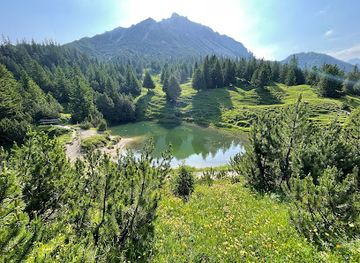
Sass-Seeli
Discover Sass-Seeli in Malbun: breathtaking alpine scenery, serene hiking trails, and a perfect escape into nature's tranquility.
-
Hiking area
Sassförkle
Discover Sassförkle in Malbun: Hike scenic trails, breathe fresh mountain air, and capture breathtaking views in Liechtenstein's alpine paradise.
Best landmarks in Malbun
The most defining landmark in Malbun is the alpine valley itself, framed by the peaks and ridges of the Rätikon and linked visually with the high country around Sareis and Augstenberg. The Sareis chairlift is an important visitor structure as well as a practical gateway to elevated terrain, while the mountain routes towards the Pfälzerhütte reveal the area’s historic role as a passage through pastoral and border landscapes. Steg Reservoir, in the neighbouring high valley reached from Malbun by road, is a notable human-made feature set among mountain meadows and wooded slopes. In the wider cultural landscape, the parish church and traditional settlement character of Triesenberg represent the Walser heritage that distinguishes Liechtenstein’s mountain community. These features together express Malbun’s identity as a working alpine resort rather than a historic town dominated by monuments.
-
Hotel
Hotel Turna Malbun
Experience the beauty of Liechtenstein at Hotel Turna Malbun, where comfort meets adventure in a stunning alpine setting.
-
 Hotel
HotelVögeli Alpenhotel Malbun
Experience alpine charm and adventure at Vögeli Alpenhotel Malbun, where comfort meets breathtaking landscapes in the heart of Liechtenstein.
-
Hotel
JUFA Hotel Malbun
Discover the perfect mountain escape at JUFA Hotel Malbun, where adventure meets comfort in the heart of Liechtenstein.
-
Hotel
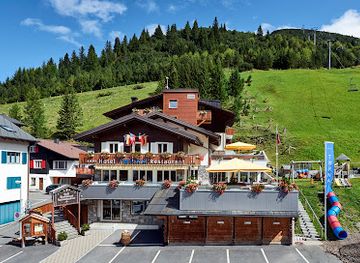
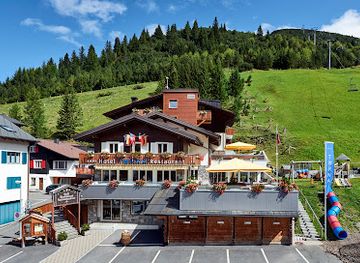
Gorfion Familotel Liechtenstein
Experience unforgettable family adventures at Gorfion Familotel Liechtenstein, where comfort meets breathtaking alpine beauty, perfect for all ages.
Explore Malbun on the map
Plan your trip on one map. See where the top attractions, landmarks, restaurants and hotels are, and book hotels and experiences in a few clicks.
Best hotels in Malbun
Best restaurants in Malbun
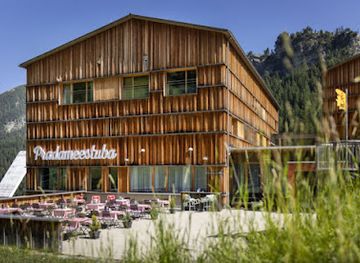
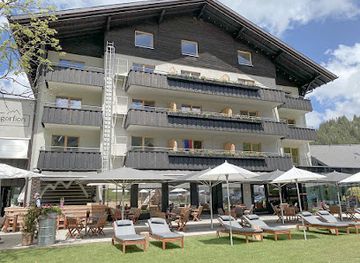
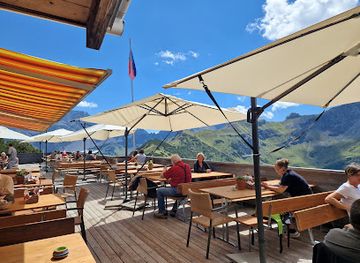
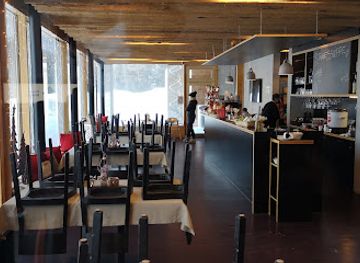
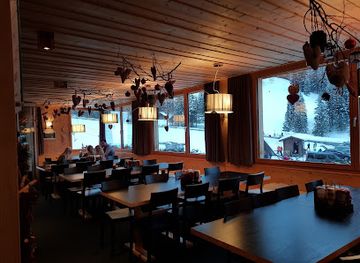
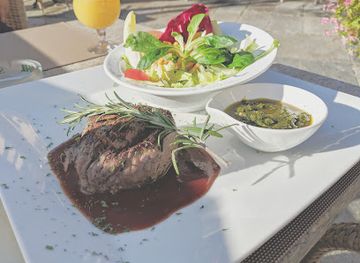
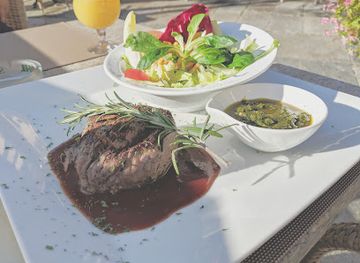
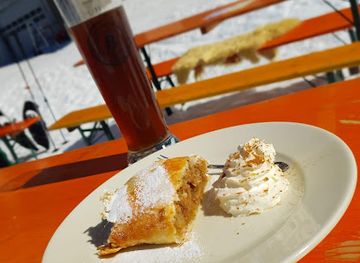
Malbun’s dining options are concentrated in its hotels, mountain facilities and a small number of resort restaurants rather than spread across a large town centre. Menus typically reflect the wider Alpine region, with dishes based on cheese, potatoes, soups, pasta, meat and hearty seasonal cooking suited to cold-weather activity. Visitors can also encounter Liechtenstein and Swiss specialities such as käsknöpfle, a cheese-based dumpling dish, alongside familiar Central European fare. Mountain restaurants provide convenient meals during the winter and summer operating seasons, while Triesenberg and the Rhine Valley offer a broader choice of cafés, traditional restaurants and international dining. Because Malbun is compact and seasonal, restaurant opening patterns can vary, particularly outside peak ski and summer periods; checking directly with accommodation providers or establishments is sensible.
-
Restaurant
Hotel Turna Malbun
Discover culinary excellence and serene mountain views at Hotel Turna Malbun – your perfect getaway in Liechtenstein.
-
Restaurant
JUFA Hotel Malbun
Discover comfort and adventure at JUFA Hotel Malbun - your gateway to Liechtenstein's stunning landscapes and outdoor activities.
-
Restaurant
Gorfion Familotel Liechtenstein
Discover the charm of Gorfion Familotel Liechtenstein – where delightful dining meets family-friendly hospitality amidst stunning alpine scenery.
-
Restaurant
Bergrestaurant Sareis
Experience exquisite mountain dining at Bergrestaurant Sareis in Malbun, Liechtenstein – where stunning views meet delightful local flavors.
Best bars in Malbun
Malbun is not a nightlife destination and has no extensive club district or late-night entertainment scene. Evening activity is centred on hotel lounges, resort restaurants and the informal atmosphere of mountain hospitality, with visitors generally returning from the slopes or walking routes for dinner and conversation. Some venues may offer a bar service or occasional seasonal entertainment, but availability should not be assumed outside busy periods. Triesenberg provides additional traditional hospitality, while Vaduz and the lowland towns have the country’s wider selection of bars and cultural evening venues. The character of Malbun after dark is predominantly quiet and alpine, with limited traffic and a strong sense of distance from the urban valley.
-
Pizza
Gitzihöll
Experience authentic Italian flavors at Gitzihöll, a beloved pizza restaurant in Malbun, surrounded by breathtaking alpine scenery.
-
Restaurant
Schlucher-Treff
Experience the flavors of Malbun at Schlucher-Treff, where local cuisine and a cozy atmosphere create unforgettable dining moments.
-
Restaurant
Restaurant Schneeflucht
Discover the flavors of Liechtenstein at Restaurant Schneeflucht, a charming alpine eatery nestled in the breathtaking Malbun region.
-
Bar
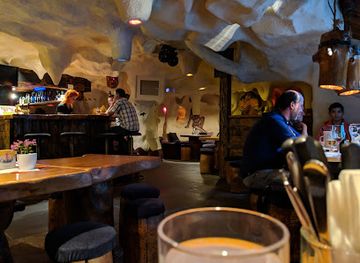
Elch bar
Unwind at Elch Bar in Malbun, where local culture meets alpine charm in a cozy setting, perfect for relaxing after your adventures.
Best nightclubs in Malbun
Malbun is not a nightlife destination and has no extensive club district or late-night entertainment scene. Evening activity is centred on hotel lounges, resort restaurants and the informal atmosphere of mountain hospitality, with visitors generally returning from the slopes or walking routes for dinner and conversation. Some venues may offer a bar service or occasional seasonal entertainment, but availability should not be assumed outside busy periods. Triesenberg provides additional traditional hospitality, while Vaduz and the lowland towns have the country’s wider selection of bars and cultural evening venues. The character of Malbun after dark is predominantly quiet and alpine, with limited traffic and a strong sense of distance from the urban valley.
Best shops in Malbun
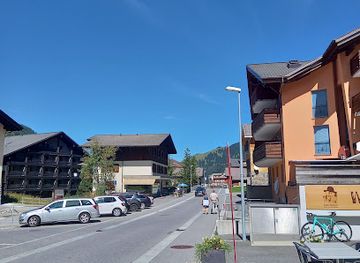
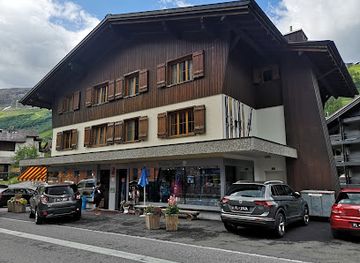
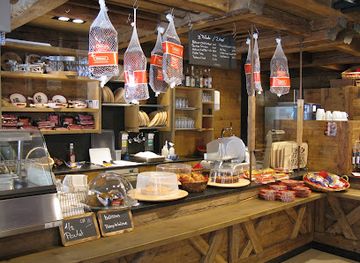
Shopping in Malbun is limited and focused on immediate visitor needs, including winter and walking equipment, small provisions and souvenirs available through resort businesses or accommodation establishments. The village is not a regional retail centre, so visitors seeking a wider selection of groceries, outdoor goods, gifts or everyday services should use Triesenberg, Vaduz or other lowland towns. Local products associated with Liechtenstein and the Alpine region may include cheese, honey, farm produce, confectionery, spirits, handicrafts and small-scale artworks, although availability varies between shops and seasons. Triesenberg is the most relevant nearby place for exploring the culture of the mountain community, while Vaduz offers the country’s broader range of specialist shops, galleries and visitor-oriented retail.
-
Grocery store
Herbert Ospelt Lebensmittel
Experience the flavors of Liechtenstein at Herbert Ospelt Lebensmittel, your go-to grocery store in Triesenberg for local delights and gourmet treats.
-
Sporting goods store
Malbun Sport
Explore the great outdoors with top-notch gear from Malbun Sport, your destination for adventure in the heart of Liechtenstein's alpine beauty.
-
Grocery store
Malbuner Stuba
Discover Malbuner Stuba in Triesenberg: A local grocery store with a unique selection of Liechtenstein's finest products and warm hospitality.
-
Farm shop
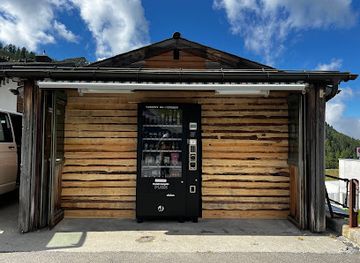
Hofladenautomat Malbun
Experience the best of Liechtenstein's local produce at Hofladenautomat Malbun, a unique farm shop in a stunning mountain setting.
Get your free copy of our complete guide to Malbun, delivered straight to you.
Everything on this page, from attractions and restaurants to essentials and local phrases, in one PDF you can read offline, print or share.
Already have an account? Sign in
Your Malbun guide is ready.
We'll send it to · Not you? Sign out

Getting your guide ready…
We are putting together a fresh copy of the Malbun guide. This can take up to a minute.
This can take a few moments. If your browser asks, choose Allow so the download can start. You'll find the guide in your Downloads folder.
Nothing happened? Download it again
Sorry, the guide is taking longer than usual. Please try again in a minute, or get it by email instead.
Malbun essentials
Currency and Payment
Safety
Emergency Situations
Do's and Don'ts
Local Tips
From Eve
Local phrases worth knowing
You don't need to get them perfect. A few words go a long way, and locals appreciate the effort.
Basics
| English | Local | Say it |
|---|---|---|
| Hello | Hallo | [hah-loh] |
| Goodbye | Tschüss | [chooss] |
| Yes | Ja | [yah] |
| No | Nein | [nine] |
| Please/You're welcome | Bitte | [bih-teh] |
| Thank you | Danke | [dahn-keh] |
| Excuse me/Sorry | Entschuldigung | [ent-shool-dee-goong] |
| How are you? | Wie geht es dir? | [vee geyt es deer] |
| Fine. And you? | Gut. Und dir? | [goot oont deer] |
| Do you speak English? | Sprichst du Englisch? | [shpreekhst doo ang-gleesh] |
| I don't understand | Ich verstehe nicht | [eekh fair-shteh-eh neekt] |
Eating & Drinking
| English | Local | Say it |
|---|---|---|
| I'd like to see the menu, please | Ich hätte gerne die Speisekarte, bitte | [eekh het-teh gehr-neh dee shpy-zeh-kahr-teh, bih-teh] |
| I don't eat meat | Ich esse kein Fleisch | [eekh ess-eh kine flysh] |
| Cheers! | Prost! | [prohst] |
| I would like to pay, please | Ich möchte bitte zahlen | [eekh mehrkh-teh bih-teh tsah-len] |
Emergencies
| English | Local | Say it |
|---|---|---|
| Help! | Hilfe! | [hil-feh] |
| Go away! | Geh weg! | [geh vehg] |
| Call the Police! | Rufen Sie die Polizei! | [roo-fen zee dee poh-lee-tsai] |
| Call a doctor! | Rufen Sie einen Arzt! | [roo-fen zee iyn-en ahrts] |
| I'm lost | Ich habe mich verirrt | [eekh hah-beh meesh fair-eert] |
| I'm ill | Ich bin krank | [eekh been krahnk] |
Shopping
| English | Local | Say it |
|---|---|---|
| I'd like to buy... | Ich möchte ... kaufen | [eekh mehrkh-teh ... kow-fen] |
| I'm just looking | Ich schaue nur | [eekh show-eh noor] |
| How much is it? | Wie viel kostet es? | [vee feel kohs-teht es] |
| That's too expensive | Das ist zu teuer | [dahs ist tsoo toy-er] |
| Can you lower the price? | Können Sie den Preis senken? | [kern-en zee den prees zehn-ken] |
Time & Numbers
| English | Local | Say it |
|---|---|---|
| What time is it? | Wie spät ist es? | [vee shpeht ist es] |
| It's one o'clock | Es ist ein Uhr | [es ist iyn oor] |
| Half past (10) | Halb (zehn) | [halb (tsayn)] |
| Morning | Morgen | [mor-gen] |
| Afternoon | Nachmittag | [nahkh-mit-tahg] |
| Evening | Abend | [ah-bent] |
| Yesterday | Gestern | [geh-shtern] |
| Today | Heute | [hoy-teh] |
| Tomorrow | Morgen | [mor-gen] |
| 1 | Eins | [ayns] |
| 2 | Zwei | [tsvay] |
| 3 | Drei | [dray] |
| 4 | Vier | [feer] |
| 5 | Fünf | [foonf] |
| 6 | Sechs | [zeks] |
| 7 | Sieben | [zee-ben] |
| 8 | Acht | [akht] |
| 9 | Neun | [noyn] |
| 10 | Zehn | [tsayn] |
Transport & Directions
| English | Local | Say it |
|---|---|---|
| Where's a/the...? | Wo ist ein/der...? | [voh ist iyn/dehr] |
| What's the address? | Was ist die Adresse? | [vahs ist dee ah-dreh-seh] |
| Can you show me (on the map)? | Können Sie es mir zeigen (auf der Karte)? | [kern-en zee es meer tsie-gen (owf dehr kahr-teh)] |
| When's the next (bus)? | Wann kommt der nächste (Bus)? | [vahn kohmt dehr nehkh-steh (boos)] |
| A ticket (to ....) | Eine Fahrkarte (nach ....) | [iyn-eh fahr-kahr-teh (nahkh)] |
History of Malbun
The Walser Settlement of Triesenberg
Malbun’s human history is closely connected with Triesenberg, whose mountain community was shaped by Walser settlers who moved into the highlands of the central Alps during the Middle Ages. The Walsers brought distinctive settlement patterns, farming practices and forms of communal organisation to Liechtenstein’s uplands. Malbun itself developed as a seasonal alpine pasture rather than as a conventional valley settlement, with the surrounding meadows used for livestock and summer grazing. This relationship between Triesenberg and its high pastures remains central to the cultural character of the area.
Pastures, Herding and Alpine Land Use
For centuries, the Malbun valley was primarily a working landscape of hay meadows, grazing land and mountain paths. Seasonal movement of livestock between lower farms and higher pastures helped sustain the scattered settlements of Triesenberg and created the open clearings visible around the village today. Alpine agriculture was demanding and often remained modest in scale, but it shaped access routes, buildings and local customs. The surrounding mountains also formed a practical frontier landscape, with routes connecting Liechtenstein’s high country to neighbouring valleys in Austria and Switzerland.
From Mountain Valley to Ski Resort
Modern Malbun emerged as tourism and winter sports gained importance in the twentieth century. Roads, accommodation and lift infrastructure gradually transformed the former pastoral valley into Liechtenstein’s main ski centre, while retaining a compact settlement pattern rather than developing into a large resort town. Skiing, family recreation and mountain holidays became important complements to traditional agriculture. The resort’s scale reflects Liechtenstein’s small territory: Malbun provides access to alpine sports and scenery without the extensive infrastructure associated with major ski domains.
Conservation and Year-Round Tourism
Contemporary Malbun is shaped by the balance between tourism, mountain agriculture and the protection of a sensitive alpine environment. Winter sports remain significant, but summer walking, nature observation and hut-to-hut routes have broadened the area’s visitor season. The high landscape around Sareis, Augstenberg and the routes towards the Pfälzerhütte is managed as terrain where weather, grazing and ecological conditions influence access. Tourism in Malbun therefore continues an older pattern of using the mountains seasonally, while placing greater emphasis on responsible recreation and landscape stewardship.
Malbun in Photos
Browse through our photo collection highlighting the charm and character of the destination.
Neighbouring destination travel guides
The closest destinations to Malbun, if you have time for more than one.
-

-

-

-

-


Swipe for more destinations
Explore more

Explore more of Oberland
Explore Liechtenstein’s Oberland for Vaduz museums, medieval castles, Walser villages and Alpine trails rising from the Rhine Valley.
Explore Oberland
Explore more of Liechtenstein
Discover the charm of Liechtenstein, a tiny Alpine principality offering medieval castles, stunning hiking trails, and a rich cultural heritage in the heart of Europe.
Explore Liechtenstein