

Grand Isle Travel Guide - Free Web & App
Your ultimate guide to Grand Isle. Discover top landmarks, proposed trips, and local tips. Free on the web or via the Evendo companion app.


Grand Isle, Louisiana, pairs Gulf beaches, bird migration, sport fishing and coastal history with a remote barrier-island setting shaped by wind and water.
Coast, Marsh and Open Water
Grand Isle is Louisiana’s only inhabited barrier island, stretching along the Gulf of Mexico at the southern edge of Jefferson Parish. Reached by road across the long, marsh-fringed Louisiana Highway 1, it is a narrow landscape of sandy shore, live-oak shade, salt marsh and fishing channels, shaped continually by hurricanes, erosion and sediment movement. The island faces the Gulf to the south and lies beside Caminada Bay and Barataria Pass, giving it a strongly maritime character despite its modest settlement.Read more about Grand Isle
Wildlife and Outdoor Life
A Working Coastal Community
When is the best time to visit Grand Isle?
Best: March–April, November · 23–26°C| Month | High (°C) | Rainfall (mm) |
|---|---|---|
| January | 17 | 90 |
| February | 19 | 85 |
| March (best) | 23 | 110 |
| April (best) | 26 | 110 |
| May | 30 | 130 |
| June | 32 | 160 |
| July | 33 | 165 |
| August | 33 | 165 |
| September | 32 | 150 |
| October | 28 | 110 |
| November (best) | 24 | 90 |
| December | 18 | 95 |
Getting to and around Grand Isle
How to get there
Transportation
Best attractions in Grand Isle
Grand Isle State Park is the island’s principal public landscape, with Gulf shoreline, coastal vegetation and views across the open water, although its facilities and access may be affected by storm recovery. The island’s beaches and tidal edges are suited to quiet walking, shore fishing and observing the changing barrier coast, while Caminada Bay and Barataria Pass reveal the relationship between the Gulf and Louisiana’s marshes. Birdwatchers can explore the island’s live-oak groves, beach and wetland margins during spring and autumn migration, when transitory songbirds may appear alongside resident shore and wading birds. Fishing remains one of Grand Isle’s major attractions, ranging from inshore trips to offshore charter excursions. Nearby Grand Terre Island contains the remains of Fort Livingston, a nineteenth-century fortification reached separately by boat rather than by road from Grand Isle. The surrounding mainland wetlands and waterways add further opportunities for guided ecological and boating excursions.
-
Wildlife refuge
Elmer's Island Wildlife Refuge
Explore the natural wonder of Elmer's Island Wildlife Refuge, a paradise for birdwatchers and nature lovers in Louisiana.
-
Wildlife refuge
Elmer's Island Beach
Explore the serene beauty of Elmer's Island Beach, a wildlife refuge in Grand Isle, Louisiana, perfect for nature lovers and beach enthusiasts.
-
Historical landmark
Grand Isle Water Tower
Explore the Grand Isle Water Tower, a historical landmark and symbol of Louisiana's maritime heritage, surrounded by stunning coastal views.
-
Nature preserve
Lafitte Woods Nature Preserve Grilletta Tract
Experience the tranquility and beauty of Lafitte Woods Nature Preserve in Grand Isle, Louisiana—an oasis of nature and wildlife waiting to be explored.


Best landmarks in Grand Isle
Grand Isle itself is the defining natural landmark: a narrow barrier island separating the Gulf of Mexico from the bays and marshes of southeastern Louisiana. The Gulf-facing beach, shifting dunes and wind-shaped vegetation demonstrate the island’s exposure to coastal processes, while Caminada Bay and Barataria Pass form important waterways on its sheltered sides. Grand Isle State Park marks the eastern end of the inhabited island and provides one of the clearest public settings for seeing the meeting of beach, marsh and open water. Nearby Fort Livingston, on Grand Terre Island, is the area’s most significant historic structure, a partially completed nineteenth-century brick fort built to defend the entrance to Barataria Pass. It is not connected to Grand Isle by road, and its remains are best understood as part of the wider maritime landscape rather than as an inland monument.
-
Historical landmark
Grand Isle Water Tower
Explore the Grand Isle Water Tower, a historic landmark in Louisiana, that offers stunning views and a glimpse into the region's rich maritime heritage.

Explore Grand Isle on the map
Plan your trip on one map. See where the top attractions, landmarks, restaurants and hotels are, and book hotels and experiences in a few clicks.
Best hotels in Grand Isle
Best restaurants in Grand Isle
Dining on Grand Isle is shaped by its fishing community and by the practical needs of a remote coastal island. Seafood is the dominant regional influence, with Gulf fish, shrimp, oysters and crab appearing where local supply and seasonal conditions allow, alongside Louisiana staples such as gumbo, étouffée, fried seafood and rice-based dishes. Options are concentrated around the island’s small commercial areas, marinas, accommodation businesses and casual seafood establishments rather than a formal restaurant district. Visitors should not expect the range found in New Orleans or Houma, and some businesses may be affected by storms, rebuilding or seasonal patterns. The mainland approach and nearby coastal communities provide additional cafés, supermarkets and restaurants, making it sensible to carry provisions for beach days, fishing trips and periods when island services are limited.
-
Seafood
Starfish Restaurant
Experience fresh seafood delights and hearty breakfasts at Starfish Restaurant in beautiful Grand Isle, Louisiana.
-
Seafood
Hurricane Hole
Experience the best of Louisiana seafood at Hurricane Hole in Grand Isle, where fresh flavors meet coastal charm.
-
Restaurant
Yum's
Discover Yum's in Grand Isle: A delightful restaurant serving fresh seafood and authentic Louisiana cuisine amidst a charming coastal atmosphere.
-
Deli
Jo-Bob's Gas & Grill
Experience authentic Louisiana flavors at Jo-Bob's Gas & Grill - your go-to deli and convenience store in Grand Isle.


Best bars in Grand Isle
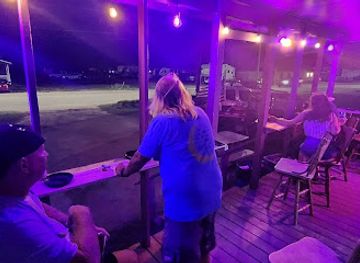
Grand Isle has a quiet, working-coast evening atmosphere rather than a conventional nightlife scene. Social life is centred on casual restaurants, marina areas, local bars and the communal character of fishing and holiday communities, with evenings often spent outdoors, watching the sunset or preparing for an early departure on the water. Live entertainment and special events may occur seasonally, but they should not be assumed to operate on a regular schedule. There are no well-established nightclub districts or dense concentration of late-opening venues on the island. Visitors seeking a broader choice of bars, music and evening dining will find more options in mainland towns along the route from Houma or the New Orleans area, though these are outside Grand Isle and require a substantial return journey.
-
Seafood
Starfish Restaurant
Experience the best seafood and breakfast in Grand Isle, Louisiana, at Starfish Restaurant, where coastal flavors meet warm hospitality.
-
Bar
Tommy’s Bar & Restaurant
Discover the flavors of Louisiana at Tommy’s Bar & Restaurant, where local cuisine meets coastal charm in Grand Isle.
-
Seafood
Hurricane Hole
Discover the best seafood dining experience at Hurricane Hole in Grand Isle, Louisiana, where fresh flavors meet local charm.
-
Restaurant
Yum's
Experience the flavors of the Gulf at Yum's, a charming restaurant in Grand Isle known for fresh seafood and a cozy atmosphere.


Best nightclubs in Grand Isle
Grand Isle has a quiet, working-coast evening atmosphere rather than a conventional nightlife scene. Social life is centred on casual restaurants, marina areas, local bars and the communal character of fishing and holiday communities, with evenings often spent outdoors, watching the sunset or preparing for an early departure on the water. Live entertainment and special events may occur seasonally, but they should not be assumed to operate on a regular schedule. There are no well-established nightclub districts or dense concentration of late-opening venues on the island. Visitors seeking a broader choice of bars, music and evening dining will find more options in mainland towns along the route from Houma or the New Orleans area, though these are outside Grand Isle and require a substantial return journey.
-
Bar
Cisco's Hideaway Lounge
Experience the vibrant atmosphere and local charm at Cisco's Hideaway Lounge, the ultimate bar destination in Grand Isle, Louisiana.
-
Bar
Native Island Daiquiri
Discover the vibrant flavors of Louisiana at Native Island Daiquiri, where refreshing cocktails meet lively bayou culture in Grand Isle.
-
Bar
Pirate Island Daiquiri
Discover the vibrant atmosphere and refreshing daiquiris at Pirate Island Daiquiri, the perfect bar for a laid-back tropical escape in Grand Isle, Louisiana.


Best shops in Grand Isle
Shopping on Grand Isle is practical and closely connected with fishing, coastal recreation and everyday island life. Small local businesses may provide bait, tackle, fuel, basic supplies, souvenirs and equipment for visitors heading onto the beach or water, while seafood businesses reflect the island’s working maritime economy. Retail choice is limited compared with mainland towns, and stock or opening arrangements can change after storms or outside the main visitor season. Visitors seeking a full supermarket shop, specialist outdoor equipment, broader craft selection or general retail services should use larger mainland communities before crossing the final stretch of Louisiana Highway 1. Regional food products and Louisiana seafood are often more meaningful purchases than generic souvenirs, but availability depends on season, regulation and local supply.
-
Resort hotel
Bridge Side Cabins and Marina
Discover tranquility and adventure at Bridge Side Cabins and Marina, your perfect getaway in Grand Isle, Louisiana, surrounded by nature's beauty and water activities.
-
Supermarket
Sureway Supermarket
Explore Sureway Supermarket in Grand Isle, your go-to for local groceries, fresh seafood, and a taste of Louisiana's culture.
-
Wildlife refuge
Elmer's Island Wildlife Refuge
Discover the serene beauty of Elmer's Island Wildlife Refuge, Louisiana’s coastal gem, teeming with diverse wildlife and breathtaking landscapes.
-
Seafood
Hurricane Hole
Experience the best seafood in Grand Isle at Hurricane Hole, where fresh flavors of the Gulf Coast come to life in a vibrant setting.


Get your free copy of our complete guide to Grand Isle, delivered straight to you.
Everything on this page, from attractions and restaurants to essentials and local phrases, in one PDF you can read offline, print or share.
Already have an account? Sign in
Your Grand Isle guide is ready.
We'll send it to · Not you? Sign out

Getting your guide ready…
We are putting together a fresh copy of the Grand Isle guide. This can take up to a minute.
This can take a few moments. If your browser asks, choose Allow so the download can start. You'll find the guide in your Downloads folder.
Nothing happened? Download it again
Sorry, the guide is taking longer than usual. Please try again in a minute, or get it by email instead.
Grand Isle essentials
Currency and Payment
Safety
Emergency Situations
Do's and Don'ts
Local Tips
From Eve
Local phrases worth knowing
You don't need to get them perfect. A few words go a long way, and locals appreciate the effort.
Basics
| English | Local | Say it |
|---|---|---|
| Hello | Hé Chère | [Hey Share] |
| Goodbye | À la prochaine | [Ah la pro-shayn] |
| Yes | Oui | [Wee] |
| No | Non | [Nawn] |
| Please/You're welcome | S'il vous plaît | [See voo play] |
| Thank you | Merci | [Mer-see] |
| Excuse me/Sorry | Désolé | [Day-so-lay] |
| How are you? | Ça va? | [Sa va] |
| Fine. And you? | Ça va bien. Et toi? | [Sa va byen. Ay twa] |
| Do you speak English? | Tu parles anglais? | [Too par-layz ahn-glay] |
| I don't understand | Je ne comprends pas | [Zhuh nuh com-prond pah] |
Eating & Drinking
| English | Local | Say it |
|---|---|---|
| I'd like to see the menu, please | J'aimerais voir le menu, s'il vous plaît | [Jem-ur vwar luh men-oo, see voo play] |
| I don't eat meat | Je ne mange pas de viande | [Zhuh nuh mahnj pah duh vee-ahnd] |
| Cheers! | Santé! | [Sahn-tay] |
| I would like to pay, please | Je voudrais payer, s'il vous plaît | [Zhuh voo-dray pay-ay, see voo play] |
Emergencies
| English | Local | Say it |
|---|---|---|
| Help! | Au secours! | [Oh seh-koo] |
| Go away! | Va-t-en! | [Vah-tahn] |
| Call the Police! | Appelez la police! | [Ah-puh-lay lah poh-lees] |
| Call a doctor! | Appelez un médecin! | [Ah-puh-lay uhn may-dsanh] |
| I'm lost | Je suis perdu | [Zhuh swee pair-doo] |
| I'm ill | Je suis malade | [Zhuh swee mah-lahd] |
Shopping
| English | Local | Say it |
|---|---|---|
| I'd like to buy... | Je voudrais acheter... | [Zhuh voo-dray ash-tay...] |
| I'm just looking | Je regarde juste | [Zhuh ruh-gard juhst] |
| How much is it? | Combien ça coûte? | [Com-byen sah koot] |
| That's too expensive | C'est trop cher | [Say troh share] |
| Can you lower the price? | Pouvez-vous baisser le prix? | [Poo-vay voo bay-say luh pree] |
Time & Numbers
| English | Local | Say it |
|---|---|---|
| What time is it? | Quelle heure est-il? | [Kell ur ay eel] |
| It's one o'clock | Il est une heure | [Eel ayz un ur] |
| Half past (10) | Dix et demie | [Dee ay day-mee] |
| Morning | Matin | [Mah-tahn] |
| Afternoon | Après-midi | [Ah-pray mee-dee] |
| Evening | Soir | [Swahr] |
| Yesterday | Hier | [Yayr] |
| Today | Aujourd'hui | [O-jurd-wee] |
| Tomorrow | Demain | [Day-man] |
| 1 | Un | [Uhn] |
| 2 | Deux | [Duh] |
| 3 | Trois | [Twa] |
| 4 | Quatre | [Kat] |
| 5 | Cinq | [Sank] |
| 6 | Six | [Sees] |
| 7 | Sept | [Set] |
| 8 | Huit | [Wee-et] |
| 9 | Neuf | [Nuhf] |
| 10 | Dix | [Dee] |
Transport & Directions
| English | Local | Say it |
|---|---|---|
| Where's a/the...? | Où est...? | [Oo ay...] |
| What's the address? | Quelle est l'adresse? | [Kell ay la-dress] |
| Can you show me (on the map)? | Pouvez-vous me montrer (sur la carte)? | [Poo-vay voo muh mohn-tray (soor la kart)] |
| When's the next (bus)? | Quand est le prochain (bus)? | [Kond ay luh pro-shayn (bus)] |
| A ticket (to ....) | Un billet (pour ...) | [Uhn bee-yay (poor)] |
History of Grand Isle
A Barrier Island in Formation
Grand Isle is part of Louisiana’s active barrier-island system, built and reshaped by waves, tides, storms and the movement of sediment along the Gulf coast. Its position between the Gulf of Mexico and the bays of the Barataria basin has always made the island environmentally changeable. Shorelines migrate, passes open and close, and hurricanes can remove dunes, damage vegetation and alter channels. This geological and coastal setting remains central to understanding both Grand Isle’s appeal and its vulnerability.
Indigenous and Colonial Coast
Before European settlement, Indigenous peoples used the islands, passes and wetlands of the Barataria region for fishing, hunting and travel. French colonial expansion along the lower Mississippi and Gulf coast brought new patterns of land use and administration, while the island’s position near important waterways connected it with the wider maritime world. The surrounding waters later became associated with fishing, trapping and shipping, activities that depended on detailed local knowledge of tides, marshes and channels.
Plantations, Piracy and Fort Livingston
During the nineteenth century, Grand Isle and neighbouring islands were linked with plantation agriculture, coastal trade and the ambiguous maritime economy of Barataria Bay. Jean Lafitte and the Baratarians became part of regional history through smuggling, privateering and their involvement in the defence of New Orleans during the War of 1812, although the dramatic stories attached to them often extend across the wider coast rather than one single site. Fort Livingston, begun in the 1830s on nearby Grand Terre Island, was intended to guard the approach to Barataria Pass but was never completed as a fully operational fortress.
Fishing and Coastal Tourism
By the late nineteenth and twentieth centuries, commercial fishing, oyster harvesting and recreational angling had become defining elements of Grand Isle’s economy. The island also developed as a seasonal escape for residents of southern Louisiana, with camps, small businesses and holiday homes reflecting the region’s close relationship with the coast. Grand Isle State Park, established on the island’s eastern end, helped make its beach and coastal landscape accessible to visitors while retaining the island’s strongly local, working character.
Storms, Oil and Conservation
Grand Isle’s modern history has been marked by environmental and economic shocks. The 2010 Deepwater Horizon oil spill affected the surrounding Gulf and wetlands, while major hurricanes, including Hurricane Ida in 2021, caused extensive damage to buildings, roads, vegetation and public facilities. Recovery has been uneven and conditions can change rapidly after tropical weather. Coastal restoration, habitat protection and adaptation now sit alongside fishing and tourism as continuing priorities, illustrating the pressures faced by Louisiana’s barrier islands.
Grand Isle in Photos
Browse through our photo collection highlighting the charm and character of the destination.
Neighbouring destination travel guides
The closest destinations to Grand Isle, if you have time for more than one.
-

-

-

-

-


Swipe for more destinations
Explore more

Explore more of Bayou Country
Explore Bayou Country in Louisiana for wetlands, Cajun and Creole food, historic towns, wildlife and boat journeys through coastal marshes.
Explore Bayou Country
Explore more of Louisiana
Discover Louisiana: A melting pot of cultures, flavors, and music in the heart of the American South. Experience the vibrant heritage and natural beauty of the Bayou State.
Explore Louisiana