

Free Moselle Valley Travel Guide & Mobile App
Explore Moselle Valley with free travel guides. Discover regional history, expert tips, proposed trips, and audio guides on web or mobile app.


Explore Luxembourg's Moselle Valley for riverside cycling, vineyard villages, crémant tastings, wetlands and the European history of Schengen.
Read more about Moselle Valley
When is the best time to visit Moselle Valley?
Best: June–August · 21–23°C| Month | High (°C) | Rainfall (mm) |
|---|---|---|
| January | 4 | 50 |
| February | 5 | 45 |
| March | 9 | 55 |
| April | 13 | 50 |
| May | 18 | 65 |
| June (best) | 21 | 70 |
| July (best) | 23 | 75 |
| August (best) | 23 | 70 |
| September | 19 | 65 |
| October | 14 | 60 |
| November | 8 | 55 |
| December | 5 | 60 |
Getting to and around Moselle Valley
How to get there
Transportation
Top city travel guides in Moselle Valley
The cities of Moselle Valley, and the easiest places to base yourself.
-

-

-


Swipe for more cities
Best attractions in Moselle Valley
The Luxembourg Moselle's attractions are closely connected to the river landscape rather than concentrated in one large city. Remich and Grevenmacher offer promenades, cafés and access to boat trips, while Wasserbillig provides a northern riverside base with rail connections. Wine remains the central theme: vineyard paths, cellar visits and the National Wine Museum in Ehnen explain how viticulture shaped the valley's villages and terraces. Seasonal wine festivals add a social dimension, although dates and arrangements vary. For nature, the Haff Réimech wetlands near Remerschen, within the municipality of Schengen, provide walking and birdwatching around former gravel-extraction areas, with the Biodiversum serving as an interpretation centre for the reserve's wildlife and habitats. The Schengen European Museum presents the history of the agreement that bears the village's name. Cycling routes follow the Moselle and connect many of the larger settlements, while quieter lanes climb towards vineyard viewpoints. The area is best suited to unhurried touring, combining a museum or historic stop with a tasting, riverside walk and time outdoors rather than a succession of large-scale attractions.
-
Tourist attraction
Roman Villa Borg
Explore the meticulously reconstructed Roman Villa Borg near Perl, Germany—experience ancient Roman life with working baths, gardens, and immersive exhibits.
-
Protestant church
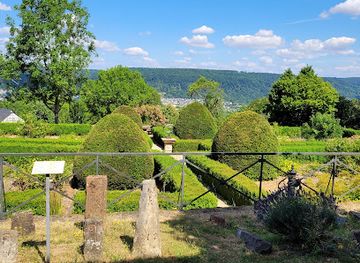
New Temple
A riverside neo-Romanesque landmark on Île du Petit-Saulcy, Metz's Temple Neuf offers stunning architecture and tranquil garden views at the heart of the city.
-
Opera house
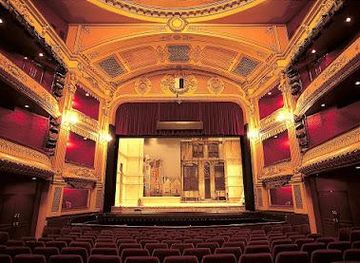
Opéra-Théâtre de Metz
Discover France’s oldest working theatre on the heart-shaped islet of Petit-Saulcy, where neoclassical architecture, lyrical opera, and ballet enchant in historic Metz.
-
Tourist attraction
Freilichtmuseum Roscheiderhof
Explore rural history at Freilichtmuseum Roscheiderhof, where village streets, farmhouses, and lively exhibits bring the traditions of the Moselle Valley to life.

Best landmarks in Moselle Valley
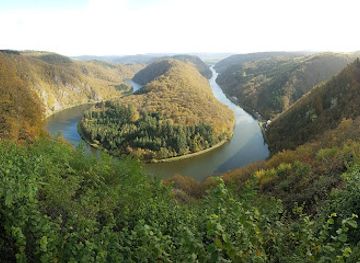
The Moselle itself is the valley's defining geographical landmark, forming Luxembourg's south-eastern boundary and giving the riverside towns their shared visual identity. In Schengen, the European Museum and the commemorative markers associated with the 1985 Schengen Agreement make the village a landmark of modern European history as well as a border settlement. The riverside village of Stadtbredimus is recognised by its château, whose origins and later alterations reflect the area's long association with local lordship and wine-growing estates, although access arrangements should be checked before visiting. In Ehnen, the historic village fabric and National Wine Museum express the cultural importance of viticulture, while the vineyard slopes around Wormeldange, Ahn and Machtum form a distinctive agricultural landscape. Grevenmacher's old town and riverside setting provide a more urban focal point, and Remich's promenade marks the valley's principal southern resort-like centre. At Haff Réimech, the wetlands near Remerschen are a natural landmark created from a reshaped former industrial landscape and now valued for their ecological importance.
-
Historical place
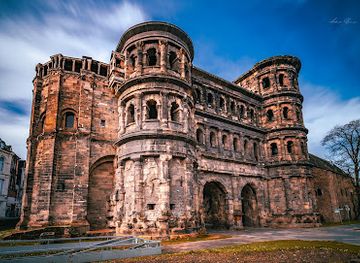
Porta Nigra
Trier’s Porta Nigra is a vast, ancient Roman city gate—the best-preserved north of the Alps and the city’s top landmark, offering unrivaled views into the classical world.
-
Castle
Vianden Castle
Vianden Castle, perched high above the Our valley in northern Luxembourg, offers an unforgettable journey through medieval halls, towers, and sweeping panoramic vistas.
-
Historical landmark
Bock Casemates
Descend into the Bock Casemates, Luxembourg City's extraordinary maze of underground tunnels and mighty stone chambers—part of a UNESCO World Heritage Site and fortress legacy.
-
Bridge
Pont Adolphe
Luxembourg’s iconic Pont Adolphe—historic triumph of engineering, uniting Ville Haute with sweeping city and valley views from a national symbol.

Explore Moselle Valley on the map
Plan your trip on one map. See where the top cities, national parks and sights are, and book hotels and experiences in a few clicks.
Best hotels in Moselle Valley
Best restaurants in Moselle Valley
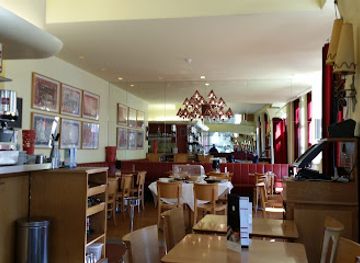
Dining in the Luxembourg Moselle reflects the region's position between Luxembourgish, French and German culinary traditions. Riverside restaurants and village inns commonly pair local wines or Luxembourgish crémant with dishes built around seasonal produce, freshwater and river-region influences, meat, game, potatoes and rich sauces. Luxembourg specialities such as judd mat gaardebounen, a smoked pork dish with broad beans, and various tarts and pastries may appear alongside French-style cooking, though neither should be treated as exclusive inventions of the Moselle Valley. Wine villages provide opportunities to taste Riesling, Auxerrois, Pinot Blanc, Elbling and other regional varieties, while producers and cooperatives may offer tastings rather than full meals. Remich and Grevenmacher have the broadest concentration of cafés and restaurants, whereas smaller villages tend to have fewer options and may require advance planning. Farmers' markets, winery events and seasonal fêtes can offer local products, but availability changes through the year. Book ahead for rural dining and check arrangements before travelling between villages without a car.
-
Restaurant
Brasserie du Cercle
Experience the best of Luxembourg's culinary scene at Brasserie du Cercle – where tradition meets modern flavor.
-
Lebanese
Bazaar Bar and Restaurant
Discover the best of Lebanese cuisine at Bazaar Bar and Restaurant in Luxembourg—where delicious food meets vibrant nightlife.
-
Seafood
Brasserie Guillaume
Discover Brasserie Guillaume: Luxurious seafood dining in Ville Haute, Luxembourg with fresh ingredients and exquisite flavors.
-
Restaurant
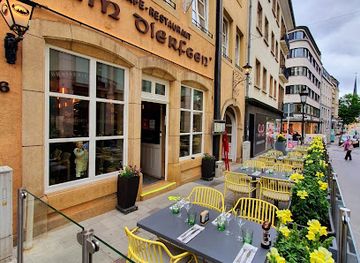
Café-Restaurant Um Dierfgen
Discover authentic Luxembourgish cuisine at Café-Restaurant Um Dierfgen - where tradition meets modern dining in a cozy atmosphere.
Best bars in Moselle Valley
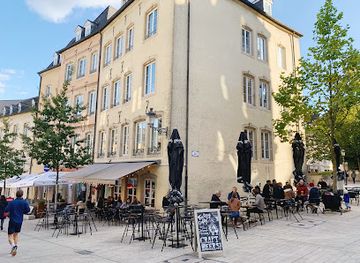
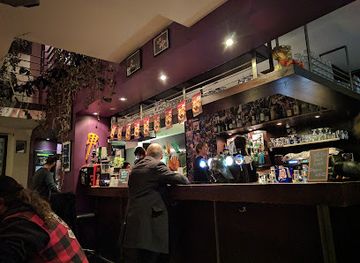
Evening life in the Moselle Valley is generally sociable and low-key rather than centred on large nightclubs. Remich and Grevenmacher have the widest choice of bars, cafés and restaurants, with riverside terraces particularly active in warmer months. Traditional cafés and village inns remain important meeting places, while wine bars, cellar tastings and producer events provide a more regionally distinctive way to spend an evening. During summer and the wine-harvest period, local fêtes may bring music, food stalls and tastings to towns and villages, but programmes are seasonal and should be checked locally. Wasserbillig has a practical, cross-border town atmosphere rather than a dedicated nightlife district. Visitors seeking late-night clubs will find a much broader choice in Luxembourg City, outside the Moselle Valley, while the valley itself is better suited to dinner, conversation, live music and a glass of local wine enjoyed responsibly.
-
Gastropub
Scott's Pub
Discover the culinary delights of Scott's Pub in Grund, Luxembourg, a gastropub offering a unique blend of local flavors and a vibrant atmosphere.
-
Bar
Tube
Experience the vibrant nightlife of Luxembourg at The Tube Bar, where locals and tourists gather for great drinks and lively entertainment.
-
Cafe
Rock Solid
Discover Rock Solid, a charming cafe and pub in Ville Haute, Luxembourg, perfect for drinks, relaxation, and socializing in a vibrant atmosphere.
-
European
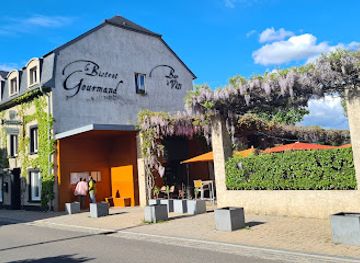
Le Bistrot Gourmand
Discover the culinary delights of Le Bistrot Gourmand, where European flavors meet exceptional dining in the heart of Schengen.

Best nightclubs in Moselle Valley
Evening life in the Moselle Valley is generally sociable and low-key rather than centred on large nightclubs. Remich and Grevenmacher have the widest choice of bars, cafés and restaurants, with riverside terraces particularly active in warmer months. Traditional cafés and village inns remain important meeting places, while wine bars, cellar tastings and producer events provide a more regionally distinctive way to spend an evening. During summer and the wine-harvest period, local fêtes may bring music, food stalls and tastings to towns and villages, but programmes are seasonal and should be checked locally. Wasserbillig has a practical, cross-border town atmosphere rather than a dedicated nightlife district. Visitors seeking late-night clubs will find a much broader choice in Luxembourg City, outside the Moselle Valley, while the valley itself is better suited to dinner, conversation, live music and a glass of local wine enjoyed responsibly.
-
Disco club
Apoteca
Experience the vibrant nightlife at Apoteca, where great Italian cuisine meets an electrifying disco atmosphere in the heart of Luxembourg.
-
Bar
Seven Remich
Discover the lively ambiance of Seven Remich, where great food, drinks, and hookah create unforgettable moments in the heart of Remich.
-
Night club
Saumur Crystal Club
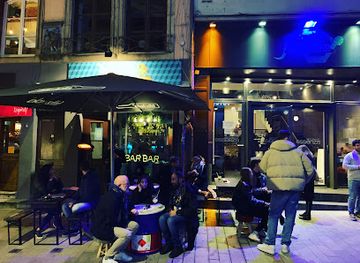
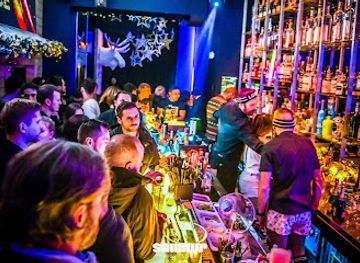
Discover the vibrant nightlife of Luxembourg at Saumur Crystal Club, featuring dynamic performances and an energetic atmosphere perfect for any night out.
-
Disco club
Lenox Club
Discover the vibrant nightlife of Luxembourg at Lenox Club, the ultimate disco destination for dance and fun.


Best shops in Moselle Valley
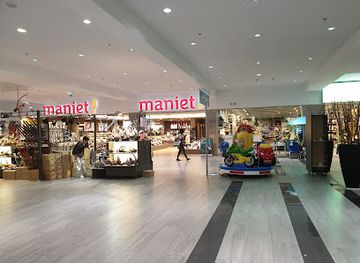
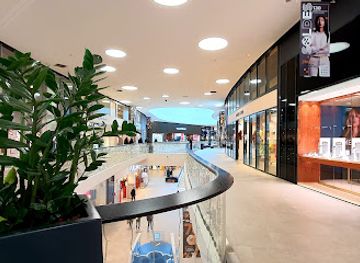
Shopping in the Moselle Valley is focused on local produce, wine and small-town retail rather than large commercial centres. Remich and Grevenmacher have the broadest selection of everyday shops, cafés and independent businesses, while Wasserbillig serves as a practical shopping town in the northern part of the valley. Winery shops and cooperative cellars are the main places to buy Luxembourgish Moselle wines and crémant; ask about transport and customs considerations if carrying bottles across borders. Other useful purchases include grape products, regional preserves, honey, chocolates and seasonal goods, although the range varies by producer. Markets and wine festivals may offer crafts, food and farm products on particular dates, but they should not be assumed to operate daily. In villages such as Ehnen and Wormeldange, shopping is part of a wider visit combining a cellar, museum or walk rather than a standalone retail excursion. For designer fashion, major international brands and extensive book or department-store shopping, Luxembourg City, outside the valley, is the more suitable destination.
-
Shopping mall
Knauf Shopping Center Pommerloch
Explore Knauf Shopping Center Pommerloch - A shopping haven in Luxembourg with a variety of stores, dining options, and family-friendly activities.
-
Shopping mall
Knauf Shopping Schmiede
Explore the vibrant Knauf Shopping Schmiede in Luxembourg for an unforgettable shopping and dining experience in a charming atmosphere.
-
Shopping mall
Belval Plaza Shopping Center
Discover Belval Plaza Shopping Center, a vibrant hub of shopping, dining, and entertainment in Esch-Belval, Luxembourg.
-
Shopping mall
Cloche d'Or Shopping Center
Discover a shopping paradise at Cloche d'Or Shopping Center, featuring top brands, diverse dining options, and a vibrant atmosphere in Luxembourg.

Get your free copy of our complete guide to Moselle Valley, delivered straight to you.
Everything on this page, from attractions and restaurants to essentials and local phrases, in one PDF you can read offline, print or share.
Already have an account? Sign in
Your Moselle Valley guide is ready.
We'll send it to · Not you? Sign out

Getting your guide ready…
We are putting together a fresh copy of the Moselle Valley guide. This can take up to a minute.
This can take a few moments. If your browser asks, choose Allow so the download can start. You'll find the guide in your Downloads folder.
Nothing happened? Download it again
Sorry, the guide is taking longer than usual. Please try again in a minute, or get it by email instead.
Moselle Valley essentials
Currency and Payment
Safety
Emergency Situations
Do's and Don'ts
Local Tips
From Eve
Local phrases worth knowing
You don't need to get them perfect. A few words go a long way, and locals appreciate the effort.
Basics
| English | Local | Say it |
|---|---|---|
| Hello | Moien | [moy-en] |
| Goodbye | Äddi | [eh-dee] |
| Yes | Jo | [yo] |
| No | Nee | [nay] |
| Please/You're welcome | Wann ech gelift | [van ech geh-lift] |
| Thank you | Merci | [mer-see] |
| Excuse me/Sorry | Entschëllegt | [ent-shell-echt] |
| How are you? | Wéi geet et dir? | [vee gate et deer] |
| Fine. And you? | Gutt. An dir? | [goot. an deer] |
| Do you speak English? | Sprécht Dir Englesch? | [shprekt deer eng-lesh] |
| I don't understand | Ech verstinn net | [ech fer-stin net] |
Eating & Drinking
| English | Local | Say it |
|---|---|---|
| I'd like to see the menu, please | Ech géif gär de Menü gesin, wann ech gelift | [ech geef gar de men-oo gee-sin, van ech geh-lift] |
| I don't eat meat | Ech iessen keen Fleesch | [ech ee-sen keen flesh] |
| Cheers! | Prost! | [prohst] |
| I would like to pay, please | Ech géif gär bezuelen, wann ech gelift | [ech geef gar beh-zoy-len, van ech geh-lift] |
Emergencies
| English | Local | Say it |
|---|---|---|
| Help! | Hëllef! | [hel-ef] |
| Go away! | Géi fort! | [gay fort] |
| Call the Police! | Rufft d'Police! | [ruft de police] |
| Call a doctor! | Rufft e Dokter! | [ruft e dok-ter] |
| I'm lost | Ech sinn verluer | [ech sin fer-loor] |
| I'm ill | Ech sinn krank | [ech sin krank] |
Shopping
| English | Local | Say it |
|---|---|---|
| I'd like to buy... | Ech géif gär kafen... | [ech geef gar kah-fen] |
| I'm just looking | Ech kucken just | [ech kook-en yoost] |
| How much is it? | Wéi vill kascht et? | [vee veel kasht et] |
| That's too expensive | Dat ass ze deier | [dat ass ze die-er] |
| Can you lower the price? | Kënnt Dir de Präis erofsetzen? | [kent deer de prays air-off-setzen] |
Time & Numbers
| English | Local | Say it |
|---|---|---|
| What time is it? | Wéi spät ass et? | [vee shpayt ass et] |
| It's one o'clock | Et ass een Auer | [et ass een ow-er] |
| Half past (10) | Halb (zehn) | [halb (tsan)] |
| Morning | Mëdetten | [med-e-ten] |
| Afternoon | Nomëden | [no-me-den] |
| Evening | Owend | [ow-end] |
| Yesterday | Gëschter | [gesh-ter] |
| Today | Haut | [howt] |
| Tomorrow | Mëngschter | [meng-shter] |
| 1 | Eent | [eent] |
| 2 | Zwee | [zvee] |
| 3 | Dräi | [dry] |
| 4 | Véier | [vee-er] |
| 5 | Fënnef | [fun-ef] |
| 6 | Sechs | [zex] |
| 7 | Siwen | [see-ven] |
| 8 | Acht | [acht] |
| 9 | Néng | [neng] |
| 10 | Zéng | [zeng] |
Transport & Directions
| English | Local | Say it |
|---|---|---|
| Where's a/the...? | Wou ass e/d'...? | [voo ass e/de...?] |
| What's the address? | Wéi ass d'Adress? | [vee ass de ad-dress] |
| Can you show me (on the map)? | Kënnt Dir mir weisen (op der Kaart)? | [kent deer meer vize-en (op der cart)?] |
| When's the next (bus)? | Wann ass de nächste (Bus)? | [van ass de naesh-te (bus)?] |
| A ticket (to ....) | E Ticket (an ....) | [e teek-it (an....)] |
History of Moselle Valley
Roman Roads and Riverside Settlement
The Moselle was an important route through the Roman province of Gallia Belgica, linking settlements and transport corridors in what is now Luxembourg, Germany and France. Roman remains and archaeological discoveries in the wider Moselle region attest to organised agriculture, trade and viticulture, although the modern towns of the Luxembourg valley should not be treated as unchanged Roman settlements. The river's navigable course and fertile terraces continued to influence settlement after Roman rule, establishing the long-term importance of communication and farming along the valley.
Medieval Lords, Churches and Wine Villages
During the Middle Ages, the Moselle valley was divided among ecclesiastical institutions, noble families and territorial powers connected with the medieval County and later Duchy of Luxembourg. Churches, fortified residences and village estates developed around agricultural communities, while vineyards occupied favourable slopes above the floodplain. Places such as Grevenmacher, Remich and Stadtbredimus grew as local centres, their histories shaped by river commerce, regional politics and the changing boundaries of neighbouring Luxembourgish and German territories.
The Growth of Commercial Viticulture
Wine production became increasingly organised from the nineteenth century onwards, as improved transport, changing markets and more formal methods of production strengthened the Luxembourg Moselle's agricultural economy. The valley's south- and south-east-facing slopes offered suitable conditions for white-wine grapes, while villages developed networks of cellars, presses and wine cooperatives. Roads, river transport and later rail links connected producers with Luxembourg City and markets beyond the valley. Viticulture remains a visible expression of this economic transformation in the landscape.
War, Borders and Reconstruction
The Moselle's position on an international frontier made the valley sensitive to the upheavals of the twentieth century. The region experienced the effects of both world wars, border controls and changing political relationships between Luxembourg and Germany. After 1945, European cooperation gradually replaced the older emphasis on fortified borders and national separation. The river remains an international boundary in places, but today bridges, shared cycling routes and cross-border travel make the valley feel more connected than divided.
The Schengen Agreement, 1985
Schengen became internationally recognised when representatives of Belgium, France, Luxembourg, the Netherlands and West Germany signed the Schengen Agreement in 1985. The signing took place aboard the ship Princesse Marie-Astrid on the Moselle near the village, rather than in a conventional government building. The agreement began a process that led to the removal of many internal border controls among participating European countries. The European Museum in Schengen interprets this political development and its continuing significance.
Modern Wine Culture and River Landscapes
In the late twentieth and early twenty-first centuries, the Luxembourg Moselle increasingly combined agricultural production with tourism, nature conservation and cross-border recreation. Wine festivals, tasting rooms, riverside promenades, cycling routes and cultural museums now sit alongside working vineyards rather than replacing them. Conservation initiatives at places such as Haff Réimech reflect a broader effort to protect wetlands and wildlife in a valley also used for settlement, transport and leisure. The region's contemporary identity therefore rests on both production and interpretation.
Moselle Valley in Photos
Browse through our photo collection highlighting the charm and character of the destination.
Neighbouring regions of Moselle Valley
The closest regions to Moselle Valley, if you have time for more than one.
-

-

-

-

-


Swipe for more regions
Explore more

Explore more of Luxembourg
Discover Luxembourg: A charming blend of historical wonders, breathtaking landscapes, and cultural vibrancy in the heart of Europe.
Explore Luxembourg