

Free Blackstone Valley Travel Guide & Mobile App
Explore Blackstone Valley with free travel guides. Discover regional history, expert tips, proposed trips, and audio guides on web or mobile app.


Explore Massachusetts's Blackstone Valley for mill towns, river trails, canal heritage, wooded countryside and Worcester's urban culture.
Read more about Blackstone Valley
When is the best time to visit Blackstone Valley?
Best: June, August–September · 23–27°C| Month | High (°C) | Rainfall (mm) |
|---|---|---|
| January | 2 | 79 |
| February | 4 | 75 |
| March | 9 | 91 |
| April | 15 | 87 |
| May | 20 | 93 |
| June (best) | 25 | 96 |
| July | 28 | 107 |
| August (best) | 27 | 100 |
| September (best) | 23 | 88 |
| October | 17 | 86 |
| November | 11 | 92 |
| December | 5 | 89 |
Getting to and around Blackstone Valley
How to get there
Transportation
Top city travel guides in Blackstone Valley
The cities of Blackstone Valley, and the easiest places to base yourself.
-
-


Swipe for more cities
Destinations in Blackstone Valley
Resorts, valleys and scenic spots worth a trip of their own.

Swipe for more destinations
Best attractions in Blackstone Valley
The Massachusetts Blackstone Valley combines industrial heritage with accessible countryside. Worcester provides the area's broadest selection of museums, galleries, theatres and urban cultural attractions, while the smaller communities offer mill districts, local historical societies and former company villages. In Uxbridge, Blackstone River and Canal Heritage State Park brings together towpaths, waterways, woodland and interpretation of the canal era. River Bend Farm and other conservation landscapes provide opportunities for walking, cycling, birdwatching and seasonal outdoor recreation. Sections of the Blackstone River Bikeway and related rail trails make it possible to explore the valley without a car for shorter stretches, although the regional network is not entirely continuous. Northbridge's Whitinsville area is important for textile-machinery history, while Hopedale offers planned streets, industrial buildings and a different model of nineteenth-century community development. Southwick's Zoo in Mendon adds a family-oriented attraction within the wider valley landscape. Across the region, the most rewarding itineraries combine a museum or historic district with a river walk, wooded preserve, farm country or canal landscape, revealing how industry and nature remain closely connected.
-
State park
Purgatory Chasm State Reservation
Explore the breathtaking landscapes and adventurous trails of Purgatory Chasm State Reservation, a stunning natural wonder in Massachusetts.
-
State park
Douglas State Forest
Explore the beauty of Douglas State Forest, a nature lover's paradise with trails, a swimming lake, and diverse wildlife in Massachusetts.
-
Park
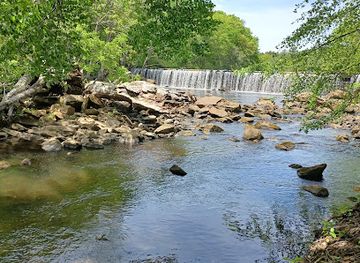
Blackstone Gorge
Experience the tranquil beauty and rich history of Blackstone Gorge, a perfect park for relaxation, exploration, and a taste of local culture in Massachusetts.
-
Park
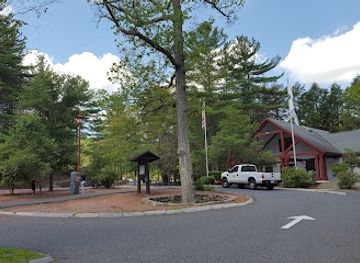
Blackstone River State Park
Experience the serene beauty and outdoor adventures at Blackstone River State Park, a premier destination in Lincoln, Rhode Island for nature lovers.

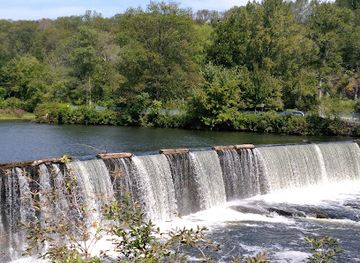
Best landmarks in Blackstone Valley
-
State park
Wachusett Mountain State Reservation
Discover Wachusett Mountain State Reservation, a breathtaking state park in Massachusetts perfect for hiking, bird watching, and year-round outdoor adventures.
-
Auditorium
Palladium
Discover the vibrant atmosphere of The Palladium, Worcester's premier auditorium and live music venue, showcasing diverse performances all year round.
-
Park
Elm Park
Immerse yourself in the natural beauty of Elm Park, Worcester's tranquil escape featuring lush landscapes, recreational activities, and vibrant community events.
-
Brunch
In A Pickle Restaurant
Discover In A Pickle Restaurant in Waltham, MA: a charming brunch spot serving delicious American cuisine in a cozy atmosphere perfect for any meal.


Explore Blackstone Valley on the map
Plan your trip on one map. See where the top cities, national parks and sights are, and book hotels and experiences in a few clicks.
Best hotels in Blackstone Valley
Best restaurants in Blackstone Valley
Dining in the Blackstone Valley reflects central Massachusetts rather than a narrowly defined regional cuisine. Worcester has the greatest range, from long-established diners and bakeries to international restaurants shaped by the city's successive immigrant communities. In the smaller valley towns, expect neighbourhood restaurants, cafés, pubs, pizza shops, farm stands and seasonal businesses rather than a dense fine-dining scene. Local menus commonly draw on New England traditions such as clam chowder, seafood, roast meats, sandwiches, baked goods and apple-based desserts, while Massachusetts farm produce appears in season. Mill villages and rural communities are good places to look for casual meals after visiting heritage sites or trails, but evening choices can be limited outside Worcester and larger town centres. Farmers' markets, orchard produce, maple products and locally made baked goods provide useful ways to sample the agricultural side of the valley. American service customs apply: table-service restaurants generally expect a gratuity, and portions may be substantial.
-
Restaurant
Gibbet Hill Grill
Discover Gibbet Hill Grill in Groton, MA – a top-tier steakhouse offering exquisite farm-to-table dishes with breathtaking views.
-
Steak
Outback Steakhouse
Experience authentic Australian cuisine at Outback Steakhouse in Auburn - where every meal is a celebration of flavor.
-
Steak
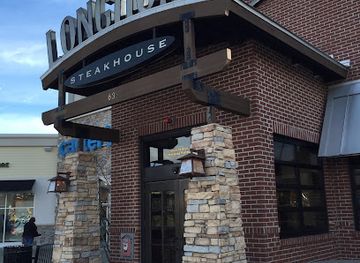
LongHorn Steakhouse
Experience the essence of traditional American dining at LongHorn Steakhouse with savory steaks and warm hospitality in Millbury.
-
Barbecue
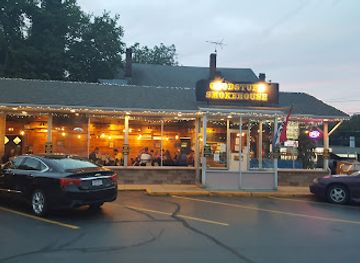
Goodstuff Smokehouse
Discover mouthwatering barbecue delights at Goodstuff Smokehouse in Blackstone – where every bite tells a story.


Best bars in Blackstone Valley
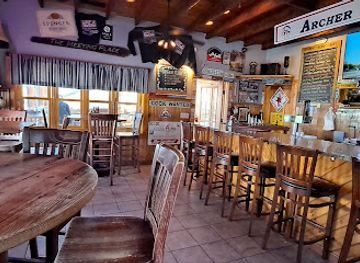
Nightlife is concentrated in Worcester, where visitors will find the region's broadest choice of pubs, breweries, cocktail bars, live-music venues and late-evening restaurants. The city's student population and established arts scene create more activity after dark than in the smaller valley communities. Elsewhere, evening life generally centres on traditional pubs, taverns, casual restaurants, breweries and occasional live music rather than large nightclubs. Uxbridge, Northbridge and Hopedale have local bars and social venues, but opening patterns and transport options vary, particularly outside the main town centres. Rural areas are better suited to an early dinner, a brewery or an inn than to clubbing, and a designated driver or pre-arranged ride is important when travelling between dispersed communities. Seasonal concerts, community events and performances may add variety, but they should be checked locally because schedules change.
-
Movie theater
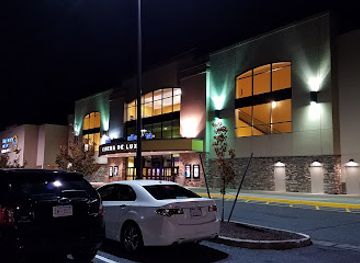
Blackstone Valley 14 Cinema de Lux
Discover luxury cinema at Blackstone Valley 14 Cinema de Lux, where films meet fine dining for an unforgettable experience in Millbury, MA.
-
Steak
LongHorn Steakhouse
Experience the ultimate steakhouse dining at LongHorn Steakhouse, where flavor meets tradition in a welcoming atmosphere.
-
Barbecue
Goodstuff Smokehouse
Experience the essence of authentic barbecue at Goodstuff Smokehouse in Blackstone, Massachusetts, where smoky flavors and hearty meals await.
-
Restaurant
Depot Street Tavern
Discover the vibrant dining experience at Depot Street Tavern in Milford, offering delicious food and a welcoming atmosphere for every tourist.
Best nightclubs in Blackstone Valley
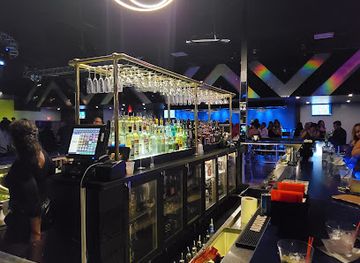
Nightlife is concentrated in Worcester, where visitors will find the region's broadest choice of pubs, breweries, cocktail bars, live-music venues and late-evening restaurants. The city's student population and established arts scene create more activity after dark than in the smaller valley communities. Elsewhere, evening life generally centres on traditional pubs, taverns, casual restaurants, breweries and occasional live music rather than large nightclubs. Uxbridge, Northbridge and Hopedale have local bars and social venues, but opening patterns and transport options vary, particularly outside the main town centres. Rural areas are better suited to an early dinner, a brewery or an inn than to clubbing, and a designated driver or pre-arranged ride is important when travelling between dispersed communities. Seasonal concerts, community events and performances may add variety, but they should be checked locally because schedules change.
-
Night club
Vincent's Nightclub
Discover the vibrant nightlife at Vincent's Nightclub in Randolph, MA, where music, dance, and unforgettable memories await every weekend.
-
Social club
The Summit Lounge
Discover Worcester's vibrant social scene at The Summit Lounge, where exceptional coffee meets a lively atmosphere perfect for relaxation and connection.
-
Night club
Havana Club
Dive into the lively atmosphere of Havana Club, where salsa dancing and vibrant music create an unforgettable nightlife experience in Cambridge.
-
Lesbian bar
Femme Bar
Discover Femme Bar in Worcester, a vibrant lesbian bar known for its inclusivity, signature cocktails, and lively entertainment.


Best shops in Blackstone Valley
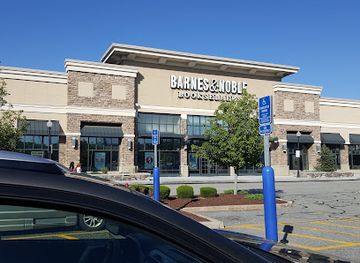
Shopping in the Blackstone Valley is concentrated in Worcester's larger commercial districts, independent shops and urban neighbourhoods, while the smaller towns offer practical high streets, antiques, galleries, cafés and locally oriented businesses. Northbridge, Uxbridge and Hopedale are useful places to browse historic town centres and seek out small retailers, although stock and opening days vary. Farm stands, orchards, seasonal markets and producers' shops provide regional purchases such as apples, maple products, baked goods, preserves and other Massachusetts-grown food. Antiques, books, handmade goods and art associated with former mill buildings can be found in parts of the valley, but the retail landscape is dispersed rather than organised around one major shopping quarter. Visitors looking for gifts should consider local food, craftwork or industrial-history books instead of generic souvenirs. A car is helpful for farm shopping and out-of-town businesses, while Worcester is the easiest base for combining retail browsing with restaurants, museums and public transport.
-
Shopping mall
The Shops at Blackstone Valley
Explore a diverse range of shopping and dining options at The Shops at Blackstone Valley, your ultimate retail escape in Millbury, MA.
-
Department store
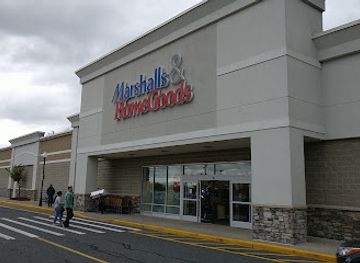
Marshalls & HomeGoods
Explore Marshalls & HomeGoods for stylish clothing and unique home decor at unbeatable prices in Millbury, Massachusetts.
-
Craft store
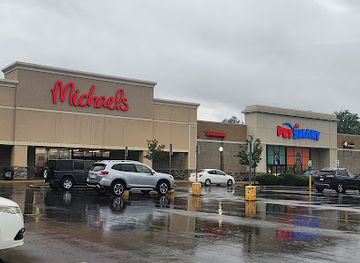
Michaels
Discover endless crafting possibilities at Michaels, your one-stop destination for art supplies, home decor, and seasonal treasures in Millbury, MA.
-
Cannabis store
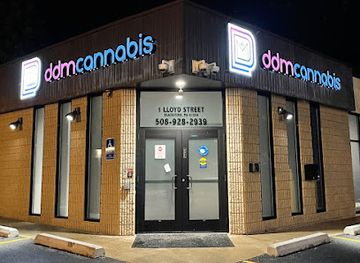
DDM Cannabis | Blackstone, MA Dispensary
Discover DDM Cannabis in Blackstone, MA - your premier destination for quality cannabis products and knowledgeable service in a welcoming environment.
Get your free copy of our complete guide to Blackstone Valley, delivered straight to you.
Everything on this page, from attractions and restaurants to essentials and local phrases, in one PDF you can read offline, print or share.
Already have an account? Sign in
Your Blackstone Valley guide is ready.
We'll send it to · Not you? Sign out

Getting your guide ready…
We are putting together a fresh copy of the Blackstone Valley guide. This can take up to a minute.
This can take a few moments. If your browser asks, choose Allow so the download can start. You'll find the guide in your Downloads folder.
Nothing happened? Download it again
Sorry, the guide is taking longer than usual. Please try again in a minute, or get it by email instead.
Blackstone Valley essentials
Currency and Payment
Safety
Emergency Situations
Do's and Don'ts
Local Tips
From Eve
Local phrases worth knowing
You don't need to get them perfect. A few words go a long way, and locals appreciate the effort.
Basics
| English | Local | Say it |
|---|---|---|
| Hello | Hey | [Hay] |
| Goodbye | See ya | [See ya] |
| Yes | Yeah | [Yah] |
| No | Nah | [Nah] |
| Please/You're welcome | No problem | [No prob-lum] |
| Thank you | Thanks | [Thanks] |
| Excuse me/Sorry | Sorry 'bout that | [Sorry 'bout that] |
| How are you? | How ya doin'? | [How yah doin'?] |
| Fine. And you? | Good. And you? | [Good. An' you?] |
| Do you speak English? | Do ya speak English? | [Doo yah speak English?] |
| I don't understand | I don't get it | [I don't get it] |
Eating & Drinking
| English | Local | Say it |
|---|---|---|
| I'd like to see the menu, please | Can I see the menu? | [Can I see the menu?] |
| I don't eat meat | I'm a vegetarian | [I'm a vege-tair-ian] |
| Cheers! | Cheers! | [Cheers!] |
| I would like to pay, please | Can I get the check? | [Can I get the check?] |
Emergencies
| English | Local | Say it |
|---|---|---|
| Help! | Help! | [Help!] |
| Go away! | Get lost! | [Get lost!] |
| Call the Police! | Call the cops! | [Call the cops!] |
| Call a doctor! | Call a doc! | [Call a doc!] |
| I'm lost | I'm lost | [I'm lost] |
| I'm ill | I'm not feeling well | [I'm not feelin' well] |
Shopping
| English | Local | Say it |
|---|---|---|
| I'd like to buy... | I wanna buy... | [I wanna buy...] |
| I'm just looking | Just browsing | [Just browsin'] |
| How much is it? | What’s the price? | [What’s the price?] |
| That's too expensive | That's too pricey | [That's too price-ee] |
| Can you lower the price? | Can ya bring down the price? | [Can yah bring down the price?] |
Time & Numbers
| English | Local | Say it |
|---|---|---|
| What time is it? | What time is it? | [What time is it?] |
| It's one o'clock | It's one o'clock | [It's one o'clock] |
| Half past (10) | Half past ten | [Half past ten] |
| Morning | Morning | [Mornin'] |
| Afternoon | Afternoon | [Afternoon] |
| Evening | Evening | [Evenin'] |
| Yesterday | Yesterday | [Yesterday] |
| Today | Today | [Today] |
| Tomorrow | Tomorrow | [Tomorrow] |
| 1 | One | [One] |
| 2 | Two | [Two] |
| 3 | Three | [Three] |
| 4 | Four | [Four] |
| 5 | Five | [Five] |
| 6 | Six | [Six] |
| 7 | Seven | [Seven] |
| 8 | Eight | [Eight] |
| 9 | Nine | [Nine] |
| 10 | Ten | [Ten] |
Transport & Directions
| English | Local | Say it |
|---|---|---|
| Where's a/the...? | Where's the...? | [Where's the...?] |
| What's the address? | What's the address? | [What's the address?] |
| Can you show me (on the map)? | Can ya show me on the map? | [Can yah show me on the map?] |
| When's the next (bus)? | When's the next bus? | [When's the next bus?] |
| A ticket (to ....) | A ticket to... | [A ticket to...] |
History of Blackstone Valley
Nipmuc Homeland and Early Settlement
Before European colonisation, the Blackstone Valley formed part of the homeland of the Nipmuc, whose communities used the river, wetlands and uplands for fishing, hunting, cultivation and travel. European settlement expanded during the seventeenth century, bringing farms, mills and new roads, while disease, dispossession and changing political power severely affected Indigenous communities. The valley's modern town boundaries and historic buildings therefore sit within a much older cultural landscape. Visitors will find this history reflected in regional interpretation and in the continuing presence of Nipmuc people in central Massachusetts, even though much of the visible heritage dates from the colonial and industrial periods.
Waterpower and the Rise of Textile Manufacturing
The Blackstone River's falls, channels and mill sites supplied the waterpower that encouraged manufacturing from the late eighteenth century onwards. The most famous early textile development, Samuel Slater's mill at Pawtucket, lies in Rhode Island, but its success helped stimulate industrial growth throughout the wider valley. In Massachusetts, communities such as Northbridge, Uxbridge and Millbury developed textile mills and associated villages, using dams and ponds to regulate production. The river became an industrial corridor in which machinery, labour, transport and capital transformed previously rural settlements.
The Blackstone Canal and Nineteenth-Century Commerce
The Blackstone Canal opened in 1828, linking Worcester with Providence and giving central Massachusetts a water route to the Atlantic. In the Massachusetts valley it passed through or near communities including Millbury, Sutton, Northbridge and Uxbridge. The canal carried raw materials, manufactured goods and agricultural produce, but it faced competition from the expanding railway network and closed in the 1840s. Its former towpaths, locks and canal structures remain important archaeological and landscape features, showing how quickly transport technology altered the region's economic geography.
Whitin, Uxbridge and the Industrial Mill Villages
Nineteenth-century industrial expansion created substantial mill settlements in Northbridge and Uxbridge. The Whitin Machine Works, founded in Northbridge in the early nineteenth century, became a major manufacturer of textile machinery and supported generations of employment and community development around Whitinsville. Uxbridge grew around textile manufacturing, with mills, housing, churches and civic buildings that still shape its townscape. These enterprises connected the valley to national and international textile markets, while also creating company-controlled environments in which employers influenced housing, public spaces and social life.
Hopedale and Planned Industrial Community
Hopedale began in the 1840s as a community influenced by the communal ideas of Adin Ballou and later developed into an important manufacturing centre. The Hopedale Community's experiment did not last in its original form, but the settlement's planned layout and social aspirations left a distinctive legacy. The Draper Corporation subsequently became known for textile machinery, and Hopedale grew around industrial employment, housing and civic institutions. Its surviving streets and buildings illustrate both the idealism and the practical pressures that shaped nineteenth-century planned communities in New England.
Railways, Immigration and Industrial Change
Railways replaced the canal as the valley's principal long-distance transport system during the nineteenth century, linking mills to Worcester, Providence and wider markets. Industrial prosperity attracted workers from Ireland, French Canada, Italy, eastern Europe and other regions, adding new languages, religious institutions and cultural traditions to older New England communities. Mill employment also brought demanding working conditions and dependence on fluctuating textile markets. As manufacturing declined during the twentieth century, many mills closed or changed use, while their buildings became offices, studios, housing and heritage sites.
Heritage Conservation and the Modern Valley
The late twentieth century brought a stronger effort to preserve the Blackstone Valley's industrial and environmental history. The Blackstone River Valley National Heritage Corridor, established in 1986 across Massachusetts and Rhode Island, encouraged cooperation between communities, museums, parks and conservation groups. In Massachusetts, former mill districts, canal landscapes, river trails and historic villages are now interpreted as parts of one connected story. The region remains a place of manufacturing and suburban life, but heritage tourism, outdoor recreation and adaptive reuse have become important ways of understanding and sustaining its changing identity.
Blackstone Valley in Photos
Browse through our photo collection highlighting the charm and character of the destination.
Neighbouring regions of Blackstone Valley
The closest regions to Blackstone Valley, if you have time for more than one.
-
-

-

-
 Norfolk County
Explore Norfolk County, Massachusetts, for presidential history, coastal towns, Blue Hills trails, diverse dining and easy access to Boston.
-


Swipe for more regions
Explore more

Explore more of Massachusetts
Discover Massachusetts: A blend of rich history, stunning landscapes, and vibrant culture. From Boston's historic sites to Cape Cod's beaches, it's the heart of New England.
Explore Massachusetts