

Free Greater Boston Travel Guide & Mobile App
Explore Greater Boston with free travel guides. Discover regional history, expert tips, proposed trips, and audio guides on web or mobile app.


Explore Greater Boston for revolutionary landmarks, world-class museums, university districts, harbour islands, seafood and walkable historic neighbourhoods.
Read more about Greater Boston
When is the best time to visit Greater Boston?
Best: June, August–September · 23–28°C| Month | High (°C) | Rainfall (mm) |
|---|---|---|
| January | 2 | 89 |
| February | 3 | 79 |
| March | 8 | 99 |
| April | 14 | 94 |
| May | 20 | 91 |
| June (best) | 26 | 89 |
| July | 29 | 98 |
| August (best) | 28 | 100 |
| September (best) | 23 | 93 |
| October | 17 | 98 |
| November | 11 | 101 |
| December | 4 | 99 |
Getting to and around Greater Boston
How to get there
Transportation
Top city travel guides in Greater Boston
The cities of Greater Boston, and the easiest places to base yourself.
-

-

-
-

-
-


Swipe for more cities
Destinations in Greater Boston
Resorts, valleys and scenic spots worth a trip of their own.
-

-

-
-
-
-


Swipe for more destinations
Best attractions in Greater Boston
Greater Boston’s attractions range from revolutionary history to major museums, universities, parks and maritime landscapes. In central Boston, the Freedom Trail, Boston Common, the Public Garden, Faneuil Hall and the waterfront form a dense heritage district, while the Museum of Fine Arts and Isabella Stewart Gardner Museum offer very different approaches to art. The New England Aquarium and the nearby harbour provide marine perspectives, and the Boston Harbor Islands National and State Park adds beaches, forts, trails and open water reached seasonally by ferry. Cambridge contributes Harvard’s historic precinct, MIT’s riverside setting and a strong programme of lectures, galleries and performances. Fenway Park is an important sporting and cultural landmark, not merely a baseball venue. In the outer metropolitan area, Lexington and Concord interpret the opening of the Revolution through battlefields, houses and museum collections, while the Arnold Arboretum in Jamaica Plain and the Emerald Necklace provide substantial green space within the urban fabric. Visitors should plan by district: the region’s attractions are numerous, but they are spread across a transport network and a metropolitan area rather than concentrated in one compact site.
-
Stadium
Fenway Park
Experience the historic charm and vibrant atmosphere of Fenway Park, home of the Boston Red Sox, and enjoy a day of baseball in Boston.
-
Market
Faneuil Hall Marketplace
Discover the heart of Boston at Faneuil Hall Marketplace, where history, shopping, and culinary delights come together in a vibrant atmosphere.
-
City park
Boston Common
Explore Boston Common, the historic heart of Boston, where nature, history, and community come together in a stunning urban park.
-
Museum
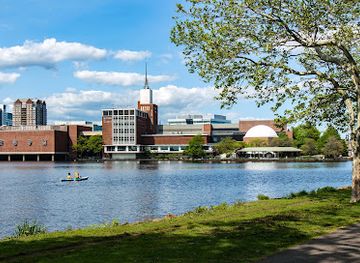
Museum of Science
Discover the excitement of science and technology at the Museum of Science in Boston, a must-visit destination for curious minds and families.

Best landmarks in Greater Boston
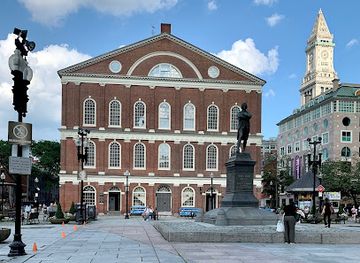
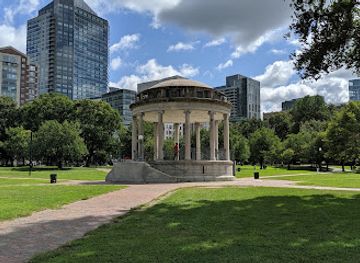
Boston Common and the adjoining Public Garden are defining civic landscapes at the centre of the region, combining historic public space with the recognisable Swan Boats operating seasonally on the Garden lagoon. Beacon Hill’s brick terraces and narrow streets convey the city’s nineteenth-century architectural character, while the Massachusetts State House forms a prominent golden-domed landmark above the neighbourhood. Across the Charles River, Harvard Yard in Cambridge symbolises the region’s long academic tradition, and the neoclassical Massachusetts Institute of Technology buildings and river views offer a contrasting architectural setting. The Bunker Hill Monument in Charlestown commemorates the first major battle of the American Revolution, and the USS Constitution at Charlestown Navy Yard represents the area’s naval heritage. Trinity Church and the Boston Public Library anchor Copley Square, where historic civic architecture meets the commercial skyline. Fenway Park is a particularly recognisable twentieth-century landmark, embedded in a dense urban district rather than isolated from city life. The harbour islands, lighthouses and working waterfront provide a different kind of landmark: geographical features that explain Boston’s long relationship with the Atlantic.
-
Monument
John Harvard Statue
Discover the iconic John Harvard Statue in Harvard Yard, a symbol of academic excellence and a perfect photo opportunity for every traveler.
-
Unitarian Universalist Church
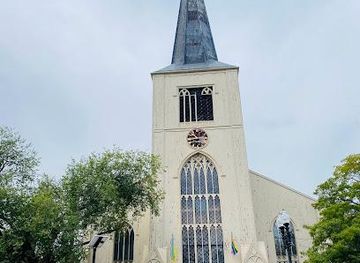
The First Parish in Cambridge, Unitarian Universalist
Experience the historical charm and welcoming spirit of The First Parish in Cambridge, a key destination for cultural and spiritual exploration.
-
Sculpture
Alchemist by Jaume Plensa
Discover the captivating Alchemist by Jaume Plensa, a stunning sculpture in Cambridge that embodies creativity and invites reflection amidst a vibrant community.
-
Memorial park
Charles Sumner Statue
Explore the Charles Sumner Statue in Cambridge, a historic memorial park honoring the fight for civil rights and social justice amidst beautiful surroundings.



Explore Greater Boston on the map
Plan your trip on one map. See where the top cities, national parks and sights are, and book hotels and experiences in a few clicks.
Best hotels in Greater Boston
Best restaurants in Greater Boston
Dining in Greater Boston combines New England staples with the cuisines brought by generations of immigrants and international students. Seafood remains prominent, including oysters, fried clams, lobster rolls and clam chowder, while Italian-American restaurants and bakeries give the North End a distinctive culinary identity. The South End, Back Bay, Cambridge, Somerville and Chinatown offer broad choices ranging from contemporary dining rooms to casual cafés, noodle shops and bakeries. Roast beef sandwiches are associated with the region’s North Shore communities, while farmers’ markets and specialist shops showcase Massachusetts produce, cider, cheese and baked goods. Traditional pubs and seafood restaurants sit alongside restaurants influenced by East Asian, South Asian, Middle Eastern, Latin American and African cuisines. Menus, prices and service styles vary widely between university districts, historic neighbourhoods and suburban centres. In restaurants with table service, tipping is customary, and visitors should check whether a service charge has already been added before paying.
-
Seafood
Union Oyster House
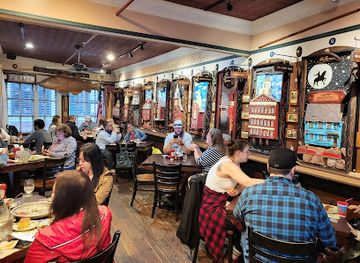
Discover the rich culinary heritage of Boston at Union Oyster House, where fresh seafood meets historic charm.
-
Crab
The Barking Crab
Experience the best of Boston’s seafood at The Barking Crab - fresh flavors and vibrant waterfront views await!
-
Seafood
Boston Sail Loft
Experience exquisite seafood dining with stunning harbor views at Boston Sail Loft in downtown Boston.
-
Seafood
Row 34
Discover Row 34: A premier seafood destination in Boston offering fresh oysters and innovative dishes in a vibrant waterfront setting.


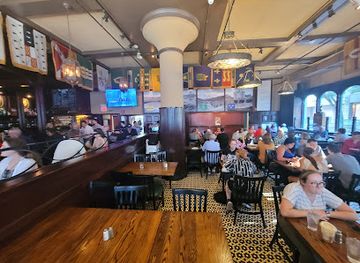
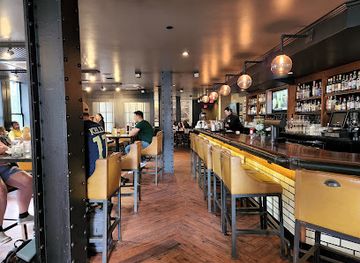
Best bars in Greater Boston
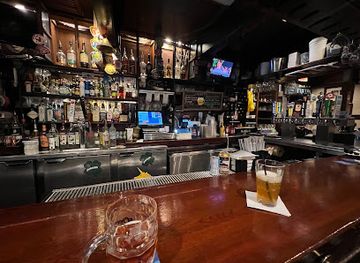
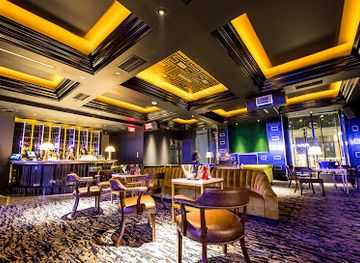
Greater Boston’s evening culture is concentrated in central Boston, the South End, Fenway, Cambridge and Somerville, with additional activity around university districts and selected suburban centres. Traditional pubs, Irish bars, sports bars, cocktail lounges, breweries and wine bars provide more of the region’s nightlife than large clubs. Cambridge and Somerville are known for live music, small performance spaces and student-oriented venues, while the Theatre District offers concerts, plays and touring productions. Beacon Hill and the waterfront tend towards quieter, more polished evenings, whereas Fenway can become busy around major sports events. Nightclubs exist but are subject to changing licensing and operating arrangements, so visitors should check current information rather than rely on old listings. Alcohol service is regulated and identification may be requested from anyone who appears under the legal drinking age. Evening travel is easiest along subway corridors, though late-night options become less frequent outside the central area.
-
Pub
Cheers
Experience the charm of Boston at Cheers, the iconic pub famous for its American menu and rich connection to television history.
-
Irish pub
The Black Rose
Discover the heart of Irish culture in Boston at The Black Rose, where live music, delicious food, and friendly faces await you.
-
Bar
Bostonia Public House
Enjoy a lively blend of New England cuisine, craft cocktails, and live music at Bostonia Public House in the heart of Boston.
-
American
Bell in Hand
Experience Boston's iconic dining at Bell in Hand, a historic American restaurant offering delicious food, lively atmosphere, and local culture.

Best nightclubs in Greater Boston
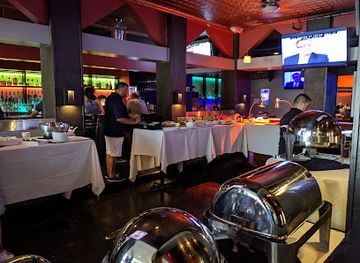
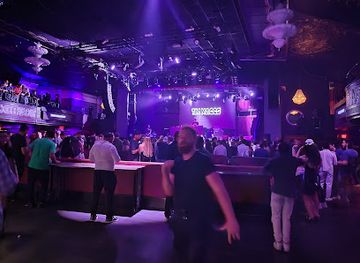
Greater Boston’s evening culture is concentrated in central Boston, the South End, Fenway, Cambridge and Somerville, with additional activity around university districts and selected suburban centres. Traditional pubs, Irish bars, sports bars, cocktail lounges, breweries and wine bars provide more of the region’s nightlife than large clubs. Cambridge and Somerville are known for live music, small performance spaces and student-oriented venues, while the Theatre District offers concerts, plays and touring productions. Beacon Hill and the waterfront tend towards quieter, more polished evenings, whereas Fenway can become busy around major sports events. Nightclubs exist but are subject to changing licensing and operating arrangements, so visitors should check current information rather than rely on old listings. Alcohol service is regulated and identification may be requested from anyone who appears under the legal drinking age. Evening travel is easiest along subway corridors, though late-night options become less frequent outside the central area.
-
American
Club Café
Discover Club Café in Boston: a vibrant American eatery and gay bar with live music and a welcoming atmosphere for everyone.
-
Night club
Royale
Discover Royale Nightclub, Boston's premier destination for live music, electrifying dance parties, and a chic lounge experience in the heart of the city.
-
Night club
The Grand Boston
Discover the electrifying atmosphere of The Grand Boston, a premier nightclub offering unforgettable nightlife experiences in the heart of the city.
-
Night club
Middlesex
Discover the energetic nightlife at Middlesex, a premier night club in Cambridge, MA, known for its amazing music and lively atmosphere.

Best shops in Greater Boston
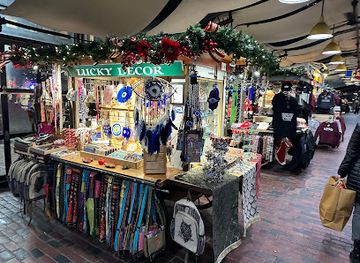
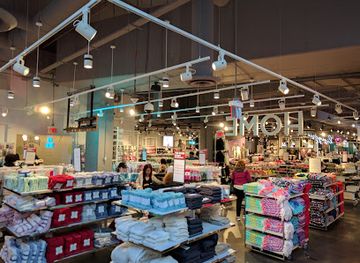
Shopping in Greater Boston ranges from historic central streets and department stores to independent boutiques, university bookshops, food markets and suburban town centres. Newbury Street is known for fashion, design and cafés in a Back Bay setting, while the area around Copley Square and Downtown Crossing provides larger retailers and department-store shopping. Cambridge’s Harvard Square combines books, clothing, gifts and student-focused businesses, and nearby neighbourhoods offer independent specialist shops. The North End is a useful place for Italian pastries, coffee and packaged foods, while public markets and farmers’ markets provide local produce, baked goods, cheese and seasonal products. Visitors seeking regional food gifts can look for maple products, preserves, cider, craft beer and New England confectionery, subject to airline and customs restrictions. Antique shops, galleries and craft retailers are scattered through older districts and suburban centres rather than gathered in one single regional market. Retail hours and individual businesses vary, particularly on Sundays and around public holidays, so smaller shops may require more flexible planning than major commercial areas.
-
Shopping mall
Faneuil Hall Marketplace
Discover the lively Faneuil Hall Marketplace in Boston, a blend of history, shopping, and diverse culinary experiences.
-
Shopping mall
Prudential Center
Discover Boston's Prudential Center: A premier shopping mall and observation deck with stunning views and diverse dining options.
-
Clothing store
Primark
Discover affordable fashion and stylish finds at Primark in Boston's Downtown Crossing, where trendy meets budget-friendly.
-
Shopping mall
CambridgeSide
Experience the best of shopping, dining, and entertainment at CambridgeSide, a vibrant shopping mall in the heart of Cambridge, MA.


Get your free copy of our complete guide to Greater Boston, delivered straight to you.
Everything on this page, from attractions and restaurants to essentials and local phrases, in one PDF you can read offline, print or share.
Already have an account? Sign in
Your Greater Boston guide is ready.
We'll send it to · Not you? Sign out

Getting your guide ready…
We are putting together a fresh copy of the Greater Boston guide. This can take up to a minute.
This can take a few moments. If your browser asks, choose Allow so the download can start. You'll find the guide in your Downloads folder.
Nothing happened? Download it again
Sorry, the guide is taking longer than usual. Please try again in a minute, or get it by email instead.
Greater Boston essentials
Currency and Payment
Safety
Emergency Situations
Do's and Don'ts
Local Tips
From Eve
Local phrases worth knowing
You don't need to get them perfect. A few words go a long way, and locals appreciate the effort.
Basics
| English | Local | Say it |
|---|---|---|
| Hello | Hey | [hey] |
| Goodbye | See ya | [see yah] |
| Yes | Yeah | [yeah] |
| No | Nah | [nah] |
| Please/You're welcome | No problem | [noh prob-lum] |
| Thank you | Thanks | [thanks] |
| Excuse me/Sorry | Sorry | [saw-ree] |
| How are you? | How ya doin'? | [how yah doin'?] |
| Fine. And you? | Good. And you? | [good. and yah?] |
| Do you speak English? | You speakin' English? | [you speakin' ing-lish?] |
| I don't understand | I don’t get it | [I don't get it] |
Eating & Drinking
| English | Local | Say it |
|---|---|---|
| I'd like to see the menu, please | Can I see the menu? | [can I see the men-yoo?] |
| I don't eat meat | I don't do meat | [I don't do meat] |
| Cheers! | Cheers! | [cheers] |
| I would like to pay, please | Can I get the check? | [can I get the check?] |
Emergencies
| English | Local | Say it |
|---|---|---|
| Help! | Help! | [help] |
| Go away! | Get lost! | [get lost] |
| Call the Police! | Call the cops! | [call the cops] |
| Call a doctor! | Get a doctor! | [get a doc-tor] |
| I'm lost | I’m lost | [I'm lost] |
| I'm ill | I feel sick | [I feel sick] |
Shopping
| English | Local | Say it |
|---|---|---|
| I'd like to buy... | I wanna buy... | [I wanna buy...] |
| I'm just looking | Just lookin' | [just lookin'] |
| How much is it? | How much? | [how much?] |
| That's too expensive | That's wicked expensive | [that's wicked expen-sive] |
| Can you lower the price? | Can you drop the price? | [can ya drop the price?] |
Time & Numbers
| English | Local | Say it |
|---|---|---|
| What time is it? | What time is it? | [what time is it?] |
| It's one o'clock | It's one | [it's one] |
| Half past (10) | Half past ten | [half past ten] |
| Morning | Morning | [morning] |
| Afternoon | Afternoon | [afternoon] |
| Evening | Evening | [evening] |
| Yesterday | Yesterday | [yesterday] |
| Today | Today | [today] |
| Tomorrow | Tomorrow | [tomorrow] |
| 1 | One | [one] |
| 2 | Two | [two] |
| 3 | Three | [three] |
| 4 | Four | [four] |
| 5 | Five | [five] |
| 6 | Six | [six] |
| 7 | Seven | [seven] |
| 8 | Eight | [eight] |
| 9 | Nine | [nine] |
| 10 | Ten | [ten] |
Transport & Directions
| English | Local | Say it |
|---|---|---|
| Where's a/the...? | Where's the...? | [where's the...?] |
| What's the address? | What's the address? | [what's the address?] |
| Can you show me (on the map)? | Can you show me on the map? | [can you show me on the map?] |
| When's the next (bus)? | When's the next bus? | [when's the next bus?] |
| A ticket (to ....) | A ticket to... | [a ticket to...] |
History of Greater Boston
Indigenous Homelands and Early English Settlement
The Boston area lies within the traditional homelands of the Massachusett and neighbouring Indigenous peoples, whose communities used the coast, rivers, islands and inland forests for fishing, farming and trade. English settlement expanded from the 1620s, particularly around Boston, Charlestown and the lower Charles River. Epidemics and colonial dispossession severely affected Indigenous communities, while English institutions, churches and commercial networks became dominant. The region’s modern landscape therefore rests on a much older human history, even though many visible historic sites primarily interpret the colonial period.
Boston and the American Revolution
Boston became a principal centre of resistance to British taxation and imperial control in the eighteenth century. Events associated with the Boston Massacre in 1770, the Boston Tea Party in 1773 and the opening battles at Lexington and Concord in April 1775 made the region central to the American Revolution. Paul Revere’s ride connected Boston to the surrounding countryside, while Charlestown’s Breed’s Hill was the site of the Battle of Bunker Hill. The surviving streets, meeting places and harbour form the foundation of the region’s major revolutionary heritage.
Maritime Commerce and Industrial Growth
During the nineteenth century, Boston’s harbour supported overseas trade, shipbuilding, fishing and the movement of manufactured goods. Charlestown Navy Yard became an important naval site, while canals, railways and factories connected the city to inland New England. Textile production was especially significant in surrounding communities, including Lowell beyond the immediate urban core, and Boston developed as a centre of finance, publishing and commercial services. Much of the region’s later architecture, from commercial blocks to densely built residential districts, reflects this period of expansion.
Immigration, Reform and Abolitionism
Greater Boston was shaped by migration from Ireland, Italy, Eastern Europe and many other parts of the world, as well as by African American communities and longstanding Black activism. The North End, South Boston and other neighbourhoods retain traces of successive immigrant histories in architecture, food and religious institutions. Boston was also a significant centre of abolitionism and reform. Figures including William Lloyd Garrison and activists associated with the city’s Black community challenged slavery and racial inequality, while the Underground Railroad and antislavery movement left an important regional legacy.
Universities, Medicine and Scientific Research
Harvard University in Cambridge and the Massachusetts Institute of Technology helped establish Greater Boston as an international centre of education and research. Boston’s hospitals and medical schools strengthened the region’s influence in medicine, while universities contributed to social sciences, engineering, public policy and the arts. The concentration of institutions encouraged the growth of publishing, biotechnology and technology industries. Today, historic campuses such as Harvard Yard stand alongside modern research districts including Kendall Square, illustrating the region’s continuing transition from established scholarship to innovation-led development.
Urban Renewal, Preservation and the Modern Metropolitan Region
After the Second World War, Greater Boston experienced suburbanisation, highway construction, industrial decline and major changes to its waterfront and inner neighbourhoods. Large renewal schemes altered parts of central Boston, while preservation campaigns protected Beacon Hill, historic streets and significant civic buildings. The restoration of the waterfront, expansion of the park system and development of cultural institutions helped reshape the visitor economy. Contemporary Greater Boston remains a diverse metropolitan area balancing historic conservation, housing pressure, academic expansion, new technology and the continuing importance of its port.
Greater Boston in Photos
Browse through our photo collection highlighting the charm and character of the destination.
Neighbouring regions of Greater Boston
The closest regions to Greater Boston, if you have time for more than one.
-
 Norfolk County
Explore Norfolk County, Massachusetts, for presidential history, coastal towns, Blue Hills trails, diverse dining and easy access to Boston.
-

-

-
-


Swipe for more regions
Explore more

Explore more of Massachusetts
Discover Massachusetts: A blend of rich history, stunning landscapes, and vibrant culture. From Boston's historic sites to Cape Cod's beaches, it's the heart of New England.
Explore Massachusetts