

Free Hampshire County Travel Guide & Mobile App
Explore Hampshire County with free travel guides. Discover regional history, expert tips, proposed trips, and audio guides on web or mobile app.


Explore Hampshire County, Massachusetts, for Connecticut River landscapes, college towns, literary heritage, farm produce, cycling and arts-led communities.
Read more about Hampshire County
Getting to and around Hampshire County
How to get there
Transportation
Destinations in Hampshire County
Resorts, valleys and scenic spots worth a trip of their own.
-

-
-


Swipe for more destinations
Best attractions in Hampshire County
Hampshire County's attractions range from literary houses and college museums to river trails, working farms and forested ridges. In Amherst, the Emily Dickinson Museum presents the poet's family home and the adjoining Evergreens, while the Eric Carle Museum of Picture Book Art offers exhibitions and family-oriented programming. Northampton combines the art collections of Smith College with Historic Northampton and a broad calendar of music, theatre and gallery events. The former mill district of Easthampton provides studios, exhibitions and creative businesses in adapted industrial buildings. Outdoors, the Norwottuck Rail Trail follows an old railway route through the Connecticut River Valley, and the Holyoke Range State Park area offers walking, birdwatching and elevated views. Look Park in Northampton is a landscaped recreational space, while Arcadia Wildlife Sanctuary, spanning Northampton and Easthampton, protects wetlands, fields and woodland. Farms, orchards, seasonal markets and roadside stands add a distinctly agricultural dimension, especially from late spring through autumn. South Hadley contributes campus architecture, gardens and access to the northern side of the Holyoke Range, while smaller river towns reward visitors interested in historic streets, local produce and quieter cycling routes.
-
Theme park
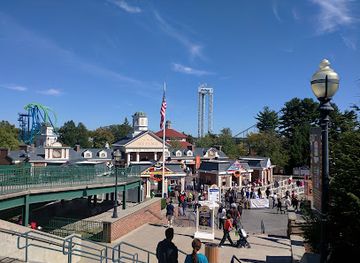
Six Flags New England
Experience the ultimate adventure at Six Flags New England, where thrilling roller coasters and family fun unite in a spectacular theme park setting.
-
Festival
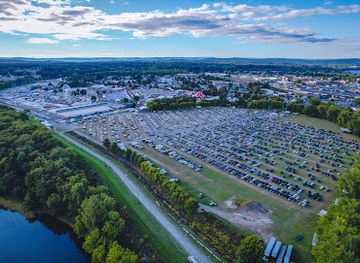
Eastern States Exposition
Explore the vibrant Eastern States Exposition, a premier festival showcasing New England's culture through food, entertainment, and local traditions.
-
Art museum
MASS MoCA
Explore contemporary art and vibrant performances at MASS MoCA, a key cultural destination in the Berkshires of Massachusetts.
-
Historical place
Bridge of Flowers
Discover the Bridge of Flowers in Shelburne Falls, a unique historical attraction offering stunning floral displays and scenic views along a repurposed trolley bridge.
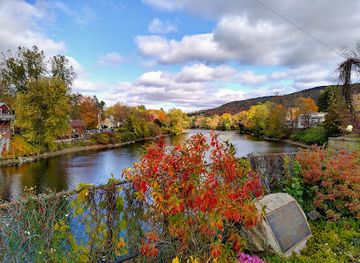
Best landmarks in Hampshire County
-
Park
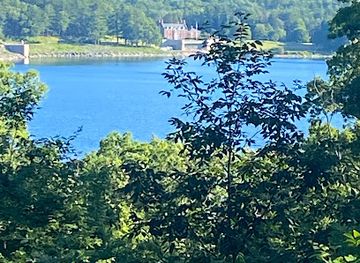
Quabbin Observation Tower
Discover the breathtaking views and rich history at Quabbin Observation Tower, a peaceful retreat in the heart of Massachusetts.
-
Scenic spot
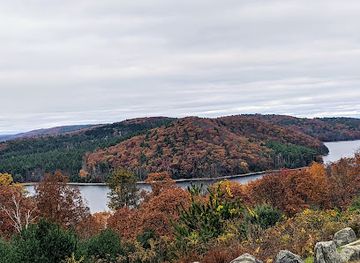
Enfield Lookout
Discover the breathtaking views and serene atmosphere of Enfield Lookout in Ware, Massachusetts, a perfect retreat for nature lovers and explorers.
-
Wildlife refuge
Mass Audubon's High Ledges Wildlife Sanctuary
Experience the beauty of wildlife at Mass Audubon's High Ledges Wildlife Sanctuary, a serene refuge in Shelburne Falls, Massachusetts.
-
Historical landmark
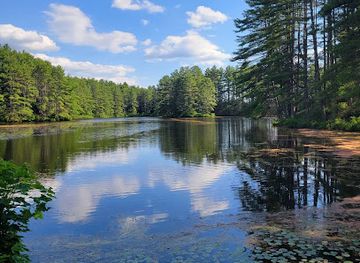
Dana Town Common
Explore Dana Town Common, a historical landmark in Massachusetts, where nature meets rich cultural heritage in a serene environment.

Explore Hampshire County on the map
Plan your trip on one map. See where the top cities, national parks and sights are, and book hotels and experiences in a few clicks.
Best hotels in Hampshire County
Best restaurants in Hampshire County
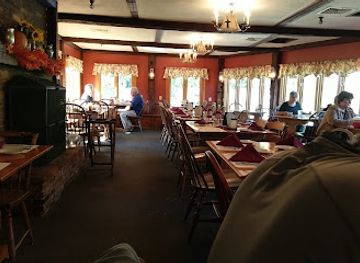
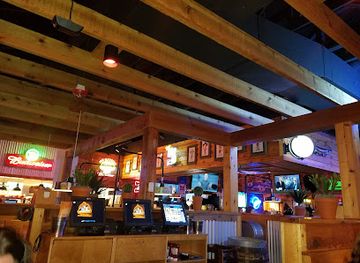
Dining in Hampshire County reflects the contrast between fertile Connecticut River Valley farms, college-town cosmopolitanism and the pub and café traditions of New England. Northampton and Amherst have the broadest range of restaurants, with menus shaped by local vegetables, orchard fruit, bread, cheese, eggs and meat alongside international cooking brought by students and long-established communities. Easthampton's converted mill spaces support cafés, breweries and contemporary restaurants, while South Hadley and the smaller towns offer casual dining, bakeries and traditional American eateries. Farm stands and seasonal markets are particularly important for sweet corn, berries, apples, pumpkins and other produce, and valley farms supply restaurants during the growing season. Visitors will encounter New England staples such as clam chowder, maple products and cider, but these are regional ingredients and traditions rather than exclusively Hampshire County inventions. Reservations can be useful in Northampton and Amherst during university terms and cultural events, while rural restaurants may keep more limited schedules outside the main season.
-
American
The 1761 Old Mill
Discover the rich flavors and historical charm of The 1761 Old Mill - your perfect dining destination in Westminster, MA.
-
Restaurant
Gibbet Hill Grill
Discover Gibbet Hill Grill in Groton: An exquisite steakhouse offering locally sourced dishes with stunning views of Massachusetts' scenic landscapes.
-
Steak
Texas Roadhouse
Discover the authentic taste of America at Texas Roadhouse – where every meal is a celebration of flavor!
-
Breakfast
Nouria
Discover Nouria: A cozy breakfast restaurant in South Deerfield serving delicious dishes in a warm atmosphere.


Best bars in Hampshire County
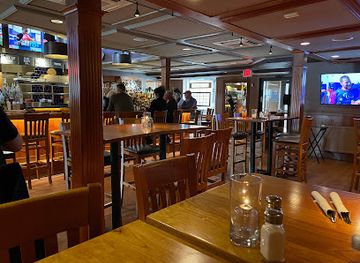
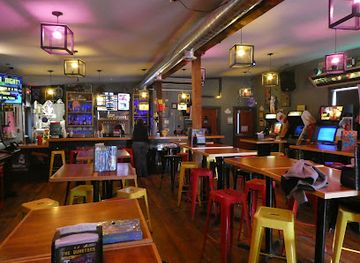
Nightlife is concentrated in Northampton, Amherst and Easthampton rather than spread evenly across the county. Northampton offers the widest choice of pubs, cocktail bars, cafés that stay open into the evening, live music rooms and performance venues, with activity often linked to its arts calendar. Amherst's student population supports bars, informal music events and late-evening food, although the atmosphere changes considerably during university holidays. Easthampton's former industrial buildings contain breweries, bars, galleries and occasional live performances, creating a more compact arts-oriented evening scene. In South Hadley and rural communities, evenings are more likely to centre on restaurants, taverns, local breweries or community events than on nightclubs. Visitors should check current schedules and transport options in advance, particularly when returning from a rural venue, and should not assume that late-night services run throughout the county.
-
Brewpub
Northampton Brewery
Discover Northampton Brewery, a lively brewpub offering unique craft beers and delicious cuisine in the heart of Massachusetts.
-
Bar
The Quarters
Experience the perfect blend of dining and entertainment at The Quarters in Hadley, MA, where fun meets flavor in an inviting atmosphere.
-
Bar
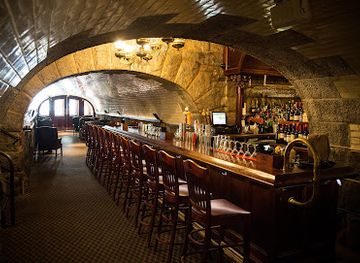
The Tunnel Bar
Discover The Tunnel Bar in Northampton – where innovative cocktails, charcuterie, and a vibrant atmosphere create unforgettable moments.
-
American
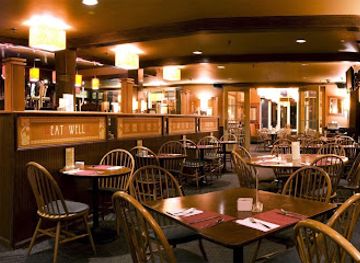
Johnny's Bar & Grille
Experience the best of American cuisine at Johnny's Bar & Grille, where great food meets a vibrant atmosphere in South Hadley.
Best nightclubs in Hampshire County
Nightlife is concentrated in Northampton, Amherst and Easthampton rather than spread evenly across the county. Northampton offers the widest choice of pubs, cocktail bars, cafés that stay open into the evening, live music rooms and performance venues, with activity often linked to its arts calendar. Amherst's student population supports bars, informal music events and late-evening food, although the atmosphere changes considerably during university holidays. Easthampton's former industrial buildings contain breweries, bars, galleries and occasional live performances, creating a more compact arts-oriented evening scene. In South Hadley and rural communities, evenings are more likely to centre on restaurants, taverns, local breweries or community events than on nightclubs. Visitors should check current schedules and transport options in advance, particularly when returning from a rural venue, and should not assume that late-night services run throughout the county.
-
Restaurant
Dewey's Jazz Lounge
Discover Dewey's Jazz Lounge in Springfield, MA - a lively cocktail bar and live music venue blending exquisite drinks with soulful jazz performances.
-
Live Music
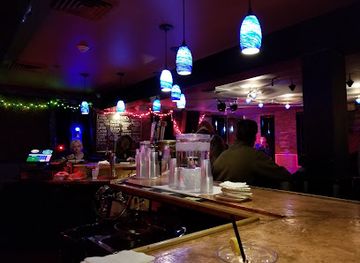
Bishop's Lounge
Experience the vibrant nightlife and live music scene at Bishop's Lounge in Northampton, MA, where great tunes meet a welcoming atmosphere.
-
Cocktail bar
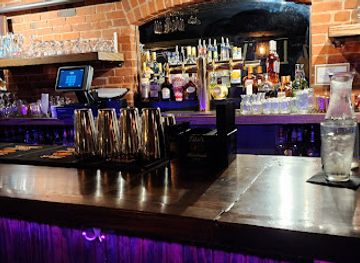
Green Room
Discover the vibrant cocktail culture at The Green Room, Northampton's premier destination for artisanal drinks and lively atmosphere.
-
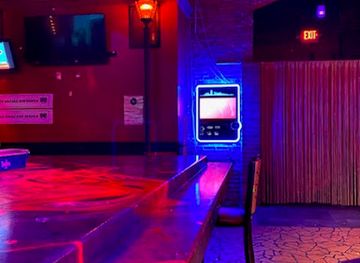
Gay bar
The X-Room
Experience the vibrant nightlife at The X-Room, Springfield's premier gay bar and adult entertainment club, where diversity and fun collide.

Best shops in Hampshire County
Northampton is Hampshire County's principal shopping centre, with an established concentration of independent clothing shops, bookshops, galleries, jewellers, homeware stores and cafés around its walkable central streets. Amherst combines independent retailers with student-oriented shops, bookstores and food businesses, while Easthampton's former mill buildings house galleries, studios, design shops and small creative enterprises. Seasonal farmers' markets and farm stands are the best places to look for valley produce, maple products, cider, baked goods, flowers and locally made preserves, though opening patterns vary by season. Craft and art purchases are particularly associated with the county's gallery communities and college-town culture; pottery, prints, textiles, jewellery and artists' work make more distinctive souvenirs than generic merchandise. Hadley and other river towns offer practical shopping and agricultural outlets rather than a continuous boutique district. Visitors should carry reusable bags where possible and remember that Massachusetts sales tax is generally added at checkout to taxable goods.
-
Gift shop
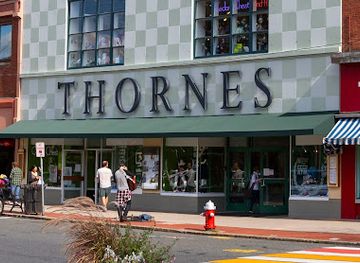
Thornes Marketplace
Explore Thornes Marketplace, Northampton's vibrant destination for shopping, dining, and local culture, featuring unique shops and delightful eateries.
-
Toy store
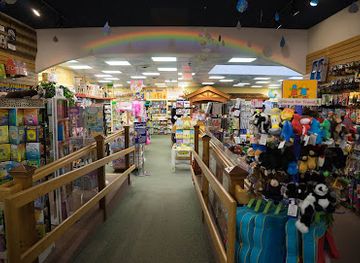
A2Z Science & Learning Toy Store
Explore A2Z Science & Learning Toy Store in Northampton, MA, where fun meets education with an array of innovative toys and games for all ages.
-
Bead store
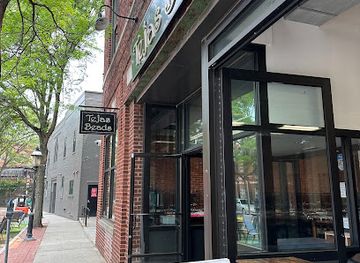
Tejas Beads
Explore creativity at Tejas Beads in Northampton, MA - your destination for vibrant beads, unique rocks, and all your jewelry-making needs.
-
Gift shop
Inspirit Crystals
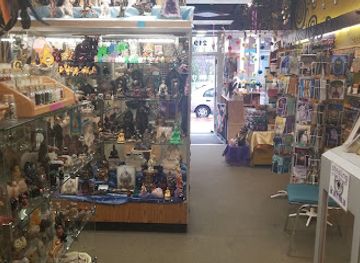
Explore the mystical world of crystals and metaphysical supplies at Inspirit Crystals in Northampton, MA.
Get your free copy of our complete guide to Hampshire County, delivered straight to you.
Everything on this page, from attractions and restaurants to essentials and local phrases, in one PDF you can read offline, print or share.
Already have an account? Sign in
Your Hampshire County guide is ready.
We'll send it to · Not you? Sign out

Getting your guide ready…
We are putting together a fresh copy of the Hampshire County guide. This can take up to a minute.
This can take a few moments. If your browser asks, choose Allow so the download can start. You'll find the guide in your Downloads folder.
Nothing happened? Download it again
Sorry, the guide is taking longer than usual. Please try again in a minute, or get it by email instead.
Hampshire County essentials
Currency and Payment
Safety
Emergency Situations
Do's and Don'ts
Local Tips
From Eve
Local phrases worth knowing
You don't need to get them perfect. A few words go a long way, and locals appreciate the effort.
Basics
| English | Local | Say it |
|---|---|---|
| Hello | Hi there | [Hai thair] |
| Goodbye | See ya | [See yah] |
| Yes | Yup | [Yup] |
| No | Nah | [Nah] |
| Please/You're welcome | Sure thing | [Shur thing] |
| Thank you | Thanks | [Thangs] |
| Excuse me/Sorry | Pardon me | [Pardon me] |
| How are you? | How ya doin'? | [How yah doin'?] |
| Fine. And you? | Good. You? | [Good. You?] |
| Do you speak English? | Can you speak English? | [Can you speak English?] |
| I don't understand | I'm not following | [I'm not followin'] |
Eating & Drinking
| English | Local | Say it |
|---|---|---|
| I'd like to see the menu, please | Can I see the menu? | [Can I see the menu?] |
| I don't eat meat | I’m a vegetarian | [I'm a vegetarian] |
| Cheers! | Bottoms up! | [Bottoms up!] |
| I would like to pay, please | Can I get the check, please? | [Can I get the check, please?] |
Emergencies
| English | Local | Say it |
|---|---|---|
| Help! | Help! | [Help!] |
| Go away! | Leave me alone! | [Leave me alone!] |
| Call the Police! | Call 911! | [Call 911!] |
| Call a doctor! | I need a doctor! | [I need a doctor!] |
| I'm lost | I’m turned around | [I'm turned around] |
| I'm ill | I’m not feeling well | [I'm not feeling well] |
Shopping
| English | Local | Say it |
|---|---|---|
| I'd like to buy... | I want to buy... | [I want to buy...] |
| I'm just looking | Just browsing, thanks | [Just browsing, thanks] |
| How much is it? | What’s the price? | [What's the price?] |
| That's too expensive | That costs too much | [That costs too much] |
| Can you lower the price? | Can you give me a better deal? | [Can you give me a better deal?] |
Time & Numbers
| English | Local | Say it |
|---|---|---|
| What time is it? | What time do you have? | [What time do you have?] |
| It's one o'clock | It's one | [It's one] |
| Half past (10) | Ten thirty | [Ten thirty] |
| Morning | Morning | [Morning] |
| Afternoon | Afternoon | [Afternoon] |
| Evening | Evening | [Evening] |
| Yesterday | Yesterday | [Yesterday] |
| Today | Today | [Today] |
| Tomorrow | Tomorrow | [Tomorrow] |
| 1 | One | [One] |
| 2 | Two | [Two] |
| 3 | Three | [Three] |
| 4 | Four | [Four] |
| 5 | Five | [Five] |
| 6 | Six | [Six] |
| 7 | Seven | [Seven] |
| 8 | Eight | [Eight] |
| 9 | Nine | [Nine] |
| 10 | Ten | [Ten] |
Transport & Directions
| English | Local | Say it |
|---|---|---|
| Where's a/the...? | Where can I find...? | [Where can I find...?] |
| What's the address? | What’s the address? | [What's the address?] |
| Can you show me (on the map)? | Can you point it out on the map? | [Can you point it out on the map?] |
| When's the next (bus)? | When’s the next bus? | [When's the next bus?] |
| A ticket (to ....) | A ticket to... | [A ticket to...] |
History of Hampshire County
Indigenous Connecticut River Valley Communities
Before English colonisation, the Connecticut River Valley was inhabited by Indigenous peoples including the Norwottuck, whose homeland centred on the area now associated with Northampton and Hadley. Communities cultivated fertile river terraces, fished, hunted and moved through a landscape shaped by seasonal knowledge and established trade routes. European settlement, disease, land transactions made under unequal conditions and armed conflict radically altered Indigenous life. The names of places such as Nonotuck and Norwottuck remain part of the county's historical vocabulary, while contemporary interpretation increasingly places Native history before the colonial narrative rather than treating it as a preface to it.
Colonial Settlement and Hampshire County, 1660s–1770s
English settlement expanded along the Connecticut River during the seventeenth century, with Northampton founded in 1654 and neighbouring river communities developing around agriculture, churches and local trade. Hampshire County was established in 1662, originally covering a far larger area than the present county before later divisions created additional western Massachusetts counties. Town centres were organised around meetinghouses, burial grounds and common land, while farms occupied the fertile valley and surrounding uplands. The built legacy survives in historic homes, village greens, old roads and church landscapes, although it should be understood alongside the displacement of Indigenous communities.
Revolutionary-era Politics and Valley Commerce
The Connecticut River Valley participated in the political upheavals that led to the American Revolution and the creation of the United States. Towns in the county supplied agricultural goods and were connected by river, road and overland trade to Boston, Albany and other regional markets. Northampton and surrounding communities became centres of local government, religious life and commerce. After independence, turnpikes, bridges and improved river transport gradually strengthened connections between farms and towns. The period also established patterns of civic participation and reform that later influenced religious dissent, abolitionism, women's rights and educational development across the county.
Agriculture, Mills and Industrial Change
The county's fertile valley supported tobacco, orchards, vegetables, dairy farming and other forms of commercial agriculture, while waterpower encouraged mills along the Connecticut, Mill and Manhan rivers. Northampton, Easthampton and smaller communities developed manufacturing interests, including textile and other industrial work, though the county's industrial history differs from the much larger mill complex in neighbouring Hampden County. Railways later connected agricultural producers and factories with wider markets. The decline of many traditional mills in the twentieth century left industrial buildings that have since been reused for studios, galleries, offices, food businesses and cultural venues, particularly in Easthampton.
Colleges, Reform and New England Intellectual Life
Higher education became one of Hampshire County's most influential forces. Amherst College was founded in 1821, Mount Holyoke Female Seminary in South Hadley in 1837, Smith College in Northampton in 1871, and the University of Massachusetts Amherst developed from the Massachusetts Agricultural College established in 1863. These institutions shaped the region's intellectual, social and economic life, while attracting reformers, writers, scientists and artists. The county also became associated with abolitionism, women's education and changing ideas about public culture. College libraries, museums, lectures and performance programmes remain central to the area's identity.
Emily Dickinson and Literary Amherst
Emily Dickinson was born in Amherst in 1830 and spent most of her life there, writing poetry that received limited public attention during her lifetime but became central to American literary history after her death in 1886. Her family home, the Homestead, and the neighbouring Evergreens, occupied by her brother's family, preserve an important Amherst literary landscape. Dickinson's work is not simply a local curiosity: it offers an unusually intimate record of nineteenth-century domestic life, religion, nature and language. The houses and related collections help visitors understand both the poet and the town in which her writing developed.
Twentieth-century Transformation and Contemporary Culture
During the twentieth century, Hampshire County moved from an economy rooted mainly in agriculture, small manufacturing and local commerce towards one shaped by higher education, healthcare, culture, professional services and tourism. Northampton's music, book, gallery and independent retail scenes expanded, while Easthampton's former industrial spaces found new uses. Amherst grew as a university town, and the county's farms gained renewed visibility through local food networks and direct sales. Today, historic preservation, environmental stewardship, arts programming and debates over development coexist with the practical pressures of housing, transport and seasonal college populations.
Hampshire County in Photos
Browse through our photo collection highlighting the charm and character of the destination.
Neighbouring regions of Hampshire County
The closest regions to Hampshire County, if you have time for more than one.
-

-

-

-

-


Swipe for more regions
Explore more

Explore more of Massachusetts
Discover Massachusetts: A blend of rich history, stunning landscapes, and vibrant culture. From Boston's historic sites to Cape Cod's beaches, it's the heart of New England.
Explore Massachusetts