

Free Khangai Mountains Travel Guide & Mobile App
Explore Khangai Mountains with free travel guides. Discover regional history, expert tips, proposed trips, and audio guides on web or mobile app.


Explore Mongolia’s Khangai Mountains for forested valleys, volcanic lakes, ancient Karakorum, pastoral culture and wide-ranging summer journeys.
Read more about Khangai Mountains
When is the best time to visit Khangai Mountains?
Best: June–August · 20–23°C| Month | High (°C) | Rainfall (mm) |
|---|---|---|
| January | -14 | 2 |
| February | -11 | 2 |
| March | -3 | 3 |
| April | 7 | 7 |
| May | 14 | 12 |
| June (best) | 20 | 30 |
| July (best) | 23 | 35 |
| August (best) | 21 | 32 |
| September | 15 | 18 |
| October | 7 | 10 |
| November | -2 | 4 |
| December | -11 | 2 |
Getting to and around Khangai Mountains
How to get there
Transportation
Top city travel guides in Khangai Mountains
The cities of Khangai Mountains, and the easiest places to base yourself.
-

-


Swipe for more cities
Destinations in Khangai Mountains
Resorts, valleys and scenic spots worth a trip of their own.
-

-

-


Swipe for more destinations
Best attractions in Khangai Mountains
The Khangai’s attractions are spread across a large mountain landscape rather than concentrated in one resort town. Around Tsetserleg, visitors can combine wooded hills, monastic remains and nearby hot-spring country with walks through river valleys. The volcanic district around Khorgo and Terkhiin Tsagaan Lake offers lava formations, crater scenery and lakeside camping, while the Chuluut River is known for its basalt gorges and rugged valley landscapes. In the south, Kharkhorin and the Orkhon Valley bring together archaeological heritage, Erdene Zuu Khiid, broad pasture and the long history of Mongolian pastoralism. Horse riding, multi-day trekking, birdwatching, photography and family-run ger stays are central experiences, but facilities are dispersed and often seasonal. Protected areas and fragile archaeological sites reward low-impact visits: marked access, local guides, careful waste management and respect for grazing land are more important here than a packed sightseeing schedule.
-
Tourist attraction
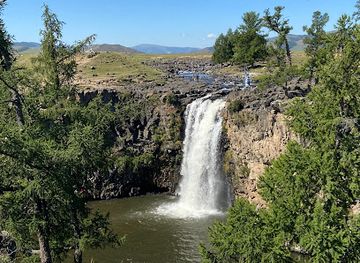
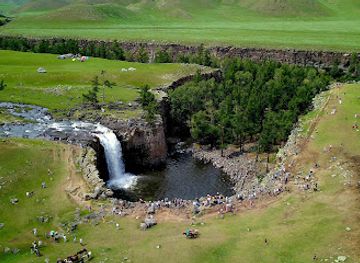
Orkhon Waterfall
Experience the stunning Orkhon Waterfall, a breathtaking natural wonder in Mongolia's Ovorkhangai region, perfect for nature lovers and adventurers.
-
Tourist attraction
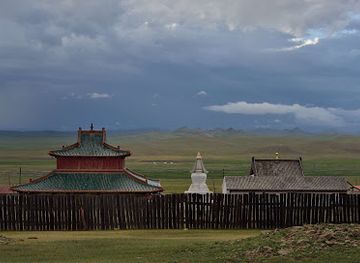
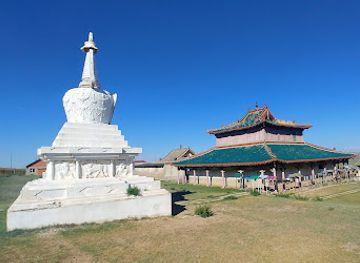
Shankh Monastery
Explore the serene Shankh Monastery in Ovorkhangai, a hidden gem of Mongolia showcasing rich Buddhist culture and stunning natural landscapes.
-
National park
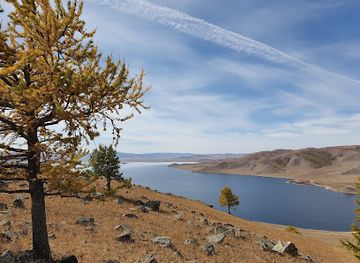
Хорго Тэрхийн Цагаан Нуур БЦГ
Discover the stunning landscapes and rich biodiversity of Khorgo-Terkhiin Tsagaan Nuur National Park in Mongolia's Arkhangai region.
-
Tourist attraction
Orkhon Tushee Juulchny Baaz
Experience the serene beauty and rich traditions of Mongolia at Orkhon Tushee Juulchny Baaz, a captivating tourist attraction in Ovorkhangai.
Best landmarks in Khangai Mountains
The Khangai’s principal landmarks express both the region’s deep history and its volcanic geography. Erdene Zuu Khiid near Kharkhorin is recognised by its enclosing walls and surviving temples, and its location beside the former Mongol capital gives it significance beyond its religious architecture. The archaeological landscape of Karakorum, including the area associated with the medieval capital, connects the modern Orkhon Valley with the thirteenth-century Mongol Empire. In the eastern Khangai, Tsetserleg’s Zaya Gegeenii Monastery complex preserves an important reminder of the town’s Buddhist past. Natural landmarks are equally defining: Khorgo’s volcanic crater and lava fields, Terkhiin Tsagaan Lake, the basalt gorges of the Chuluut River and the wide Orkhon Valley all show how geological forces and pastoral use have shaped the scenery. Some sites are remote, lack formal interpretation and require local guidance.
-
Tourist attraction
Red Waterfall
Explore the breathtaking beauty of the Red Waterfall in Ovorkhangai, Mongolia—a stunning natural wonder that captivates with its vibrant colors and serene landscapes.
-
Monastery
Shankh Monastery
Discover the tranquil Shankh Monastery in Mongolia's Ovorkhangai region, a place where spirituality meets breathtaking natural beauty.
-
 Tourist attraction
Baharhal-Morinii shuteen/Бахархал Морьны Хүндэтгэлийн шүтээн цогцолбор
Experience the serene beauty of Baharhal-Morinii Shuteen, a hidden gem in Mongolia's Ovorkhangai region, perfect for nature lovers and adventure seekers.
Explore Khangai Mountains on the map
Plan your trip on one map. See where the top cities, national parks and sights are, and book hotels and experiences in a few clicks.
Best hotels in Khangai Mountains
Best restaurants in Khangai Mountains
-
Hotel
The Blue Sky Hotel and Tower
Ulaanbaatar's glittering skyscraper icon: luxury rooms, skyline dining, spa indulgence, and Sükhbaatar Square views define upscale urban escape.
-
Restaurant
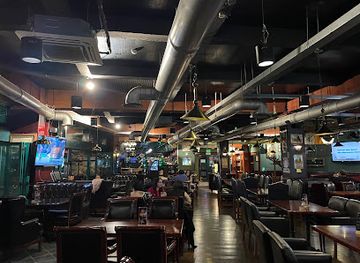
Grand Khaan Irish Pub
Discover Grand Khaan Irish Pub in Ulaanbaatar: where traditional Irish charm meets Mongolian hospitality for an unforgettable dining experience.
-
Restaurant
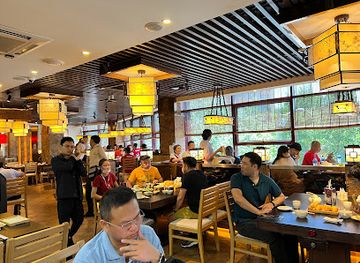
The Bull Hot Pot Restaurant
Discover authentic Mongolian flavors at The Bull Hot Pot Restaurant—where fresh ingredients meet delightful broth choices.
-
Italian
Rosewood Kitchen + Enoteca
Experience authentic Italian cuisine in Ulaanbaatar at Rosewood Kitchen + Enoteca – where fresh ingredients meet exquisite flavors.
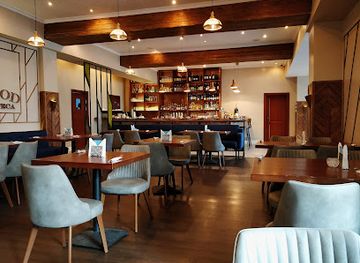
Best bars in Khangai Mountains
The Khangai does not have a major clubbing scene; evening life centres on family homes, ger camps, modest town restaurants and a small number of bars in provincial centres such as Tsetserleg and Kharkhorin. Visitors are more likely to spend the night drinking tea, sharing food, listening to stories or observing the stars than moving between entertainment districts. Some town venues serve beer, vodka and soft drinks, while ger camps may offer limited drinks with meals, but stock and opening arrangements are variable. In summer, the social atmosphere can be livelier around tourist camps and local celebrations, though these are not permanent nightlife venues. Alcohol should be approached with moderation and cultural sensitivity, particularly when staying with pastoral families or travelling far from medical and transport services.
-
Restaurant
Grand Khaan Irish Pub
Discover the vibrant atmosphere and delightful flavors at Ulaanbaatar's Grand Khaan Irish Pub, where Irish hospitality meets Mongolian culture.
-
Restaurant
Great Mongol Restaurant & Pub
Savor authentic Mongolian flavors at Great Mongol Restaurant & Pub, a vibrant dining experience in Ulaanbaatar.
-
Bar
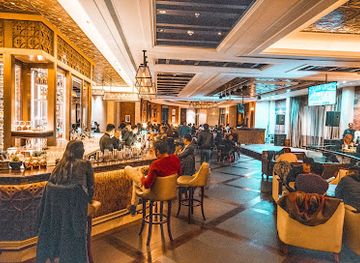
Naadam Bar & Restaurant, Shangri-La Ulaanbaatar
Experience a culinary adventure at Naadam Bar & Restaurant, where Mongolian flavors meet international cuisine in the heart of Ulaanbaatar.
-
Jazz
Fat Cat Jazz Club Ulaanbaatar
Experience the vibrant nightlife of Ulaanbaatar at Fat Cat Jazz Club, where live music and a cozy atmosphere come together for an unforgettable evening.

Best nightclubs in Khangai Mountains
The Khangai does not have a major clubbing scene; evening life centres on family homes, ger camps, modest town restaurants and a small number of bars in provincial centres such as Tsetserleg and Kharkhorin. Visitors are more likely to spend the night drinking tea, sharing food, listening to stories or observing the stars than moving between entertainment districts. Some town venues serve beer, vodka and soft drinks, while ger camps may offer limited drinks with meals, but stock and opening arrangements are variable. In summer, the social atmosphere can be livelier around tourist camps and local celebrations, though these are not permanent nightlife venues. Alcohol should be approached with moderation and cultural sensitivity, particularly when staying with pastoral families or travelling far from medical and transport services.
-
Bar
Star nightclub
Discover the vibrant nightlife at Star Nightclub in Arvaikheer, where local culture meets modern entertainment in an electrifying atmosphere.
-
Disco club
Энхүүшийн уудаг газар
Discover the vibrant atmosphere of Энхүүшийн уудаг газар, Khovsgol's top disco club, where music and dance come alive in a unique Mongolian setting.
Best shops in Khangai Mountains
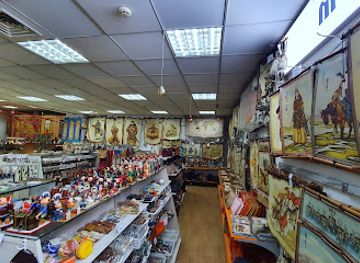
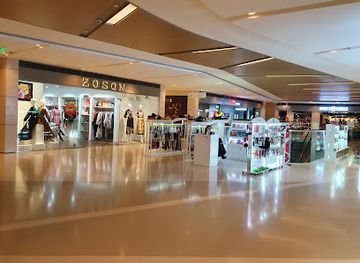
Shopping in the Khangai is practical and locally oriented rather than centred on large retail districts. Tsetserleg and Kharkhorin have the broadest selections of everyday goods, clothing, food and travel supplies, while small provincial markets may offer locally produced dairy foods, dried curds, flour, meat and seasonal produce. Ger camps and craft outlets sometimes sell felt slippers, felt goods, leather items, wool products, horse equipment and small souvenirs, although quality and availability vary. Visitors can look for cashmere, wool textiles, carved objects and locally made handicrafts, but should ask about materials and prices before buying and avoid purchasing archaeological items or wildlife products. Regional food products make useful gifts when they can be transported safely, while cash is essential for purchases outside the main towns. Shops and markets may close early or have limited stock, so obtain fuel, medicines and specialist provisions before heading into remote valleys.
-
Department store
State Department Store
Explore a vibrant shopping experience at the State Department Store in Ulaanbaatar, where tradition meets modernity in the heart of Mongolia.
-
Shopping mall
Ulaanbaatar Department Store
Experience the vibrant shopping scene at Ulaanbaatar Department Store, where local charm meets international flair for an unforgettable retail adventure.
-
Shopping mall
Hunnu Mall
Discover the ultimate shopping experience at Hunnu Mall, Ulaanbaatar's premier destination for retail, dining, and entertainment.
-
Shopping mall
Shangri-La Centre
Discover Ulaanbaatar's Shangri-La Centre: A premier shopping mall with a blend of international brands, dining, and entertainment in a modern setting.

Get your free copy of our complete guide to Khangai Mountains, delivered straight to you.
Everything on this page, from attractions and restaurants to essentials and local phrases, in one PDF you can read offline, print or share.
Already have an account? Sign in
Your Khangai Mountains guide is ready.
We'll send it to · Not you? Sign out

Getting your guide ready…
We are putting together a fresh copy of the Khangai Mountains guide. This can take up to a minute.
This can take a few moments. If your browser asks, choose Allow so the download can start. You'll find the guide in your Downloads folder.
Nothing happened? Download it again
Sorry, the guide is taking longer than usual. Please try again in a minute, or get it by email instead.
Khangai Mountains essentials
Currency and Payment
Safety
Emergency Situations
Do's and Don'ts
Local Tips
From Eve
Local phrases worth knowing
You don't need to get them perfect. A few words go a long way, and locals appreciate the effort.
Basics
| English | Local | Say it |
|---|---|---|
| Hello | Сайн уу | [Sain uu] |
| Goodbye | Баяртай | [Bayartai] |
| Yes | Тийм | [Tiim] |
| No | Үгүй | [Ügüi] |
| Please/You're welcome | Гуйя/Танд баярлалаа | [Guiya/Tand bayarlalaa] |
| Thank you | Баярлалаа | [Bayarlalaa] |
| Excuse me/Sorry | Уучлаарай | [Uuchlaarai] |
| How are you? | Та хэр байна? | [Ta kher baina?] |
| Fine. And you? | Сайн. Та? | [Sain. Ta?] |
| Do you speak English? | Та Англиар ярьдаг уу? | [Ta Angliar yaryadag uu?] |
| I don't understand | Би ойлгохгүй байна | [Bi oilgokhgui baina] |
Eating & Drinking
| English | Local | Say it |
|---|---|---|
| I'd like to see the menu, please | Миний менютай танилцуулах уу? | [Minii menyutai taniltsuulakh uu?] |
| I don't eat meat | Би мах иддэггүй | [Bi makh iddegui] |
| Cheers! | Сайн сайхны төлөө! | [Sain saikhny toloo!] |
| I would like to pay, please | Би төлбөрөө төлөхийг хүсч байна | [Bi tölböröö tölökhig khüsch baina] |
Emergencies
| English | Local | Say it |
|---|---|---|
| Help! | Туслаарай! | [Tuslaarai!] |
| Go away! | Зайлаарай! | [Zailaarai!] |
| Call the Police! | Цагдаа дууд! | [Tsagdaa duud!] |
| Call a doctor! | Эмч дууд! | [Emch duud!] |
| I'm lost | Би алга болсон | [Bi alga bolson] |
| I'm ill | Би өвдсөн | [Bi övdson] |
Shopping
| English | Local | Say it |
|---|---|---|
| I'd like to buy... | Би ... худалдаж авахыг хүсч байна | [Bi ... khudaldazh avakhig khüsch baina] |
| I'm just looking | Би зүгээр л харж байна | [Bi zügeer l kharj baina] |
| How much is it? | Энэ хэд вэ? | [Ene khed ve?] |
| That's too expensive | Энэ үнэтэй байна | [Ene ünetei baina] |
| Can you lower the price? | Та үнийг буулгаж чадах уу? | [Ta ünig buulgaaj chadah uu?] |
Time & Numbers
| English | Local | Say it |
|---|---|---|
| What time is it? | Одоо хэдийн? | [Odoo khediin?] |
| It's one o'clock | Нэг цаг боллоо | [Neg tsag bolloo] |
| Half past (10) | 10:30 боллоо | [10:30 bolloo] |
| Morning | Өглөө | [Öglöö] |
| Afternoon | Орой | [Oroi] |
| Evening | Орой | [Oroi] |
| Yesterday | Өчигдөр | [Öchigdur] |
| Today | Өнөөдөр | [Önöödör] |
| Tomorrow | Маргааш | [Margaash] |
| 1 | 1 | [1] |
| 2 | 2 | [2] |
| 3 | 3 | [3] |
| 4 | 4 | [4] |
| 5 | 5 | [5] |
| 6 | 6 | [6] |
| 7 | 7 | [7] |
| 8 | 8 | [8] |
| 9 | 9 | [9] |
| 10 | 10 | [10] |
Transport & Directions
| English | Local | Say it |
|---|---|---|
| Where's a/the...? | Гүйцэтгэгч хаана байна вэ? | [Güitsedgüj khaana baina ve?] |
| What's the address? | Хаяг нь юу вэ? | [Khayaag ni yuu ve?] |
| Can you show me (on the map)? | Та надад (газрын зураг дээр) харуулах уу? | [Ta nadad (gazryn zurag deer) kharuulakh uu?] |
| When's the next (bus)? | Дараагийн (автобус) хэзээ вэ? | [Daraagiin (avtobus) khedzee ve?] |
| A ticket (to ....) | Билет (.... руу) | [Bilet (.... ruu)] |
History of Khangai Mountains
Prehistoric Pastoral Landscapes and Deer Stones
The Khangai contains extensive evidence of Bronze Age and early Iron Age communities, including burial mounds known as khirigsuur and carved deer stones. These monuments are associated with mobile pastoral societies that managed horses and other livestock across the grasslands and mountain valleys. Their distribution demonstrates that the region was part of long-distance cultural networks well before the rise of the Mongol Empire. Many sites remain in open landscapes rather than enclosed museums, making responsible travel and avoidance of damage especially important.
Early Steppe Empires and Turkic Influence
The mountain valleys of central Mongolia lay within the sphere of successive steppe powers, including the Xiongnu and later Turkic polities. Rivers, pasture and mountain corridors helped connect communities across what is now Mongolia, while memorial complexes and inscriptions elsewhere in the central steppe reveal the political and ritual importance of the region. The Khangai’s position between northern forests, central grasslands and the southern steppe made it a valuable zone for movement, seasonal grazing and imperial control.
Karakorum and the Mongol Empire
In the thirteenth century, Ögödei Khan established Karakorum in the Orkhon Valley as the permanent capital of the Mongol Empire. The city became an administrative and commercial centre linking the Mongolian plateau with China, Central Asia and the wider Eurasian world. Although the capital was later moved to Dadu, the settlement left a lasting historical imprint on the Khangai’s southern approaches. Archaeological work around modern Kharkhorin continues to clarify the scale and cosmopolitan character of the medieval city.
Buddhism and Erdene Zuu Khiid
Tibetan Buddhism became increasingly influential among Mongolian elites from the sixteenth century, and the former Karakorum area became an important religious centre. Erdene Zuu Khiid was founded in the late sixteenth century using stone and materials associated with the old capital. Its temples, walls and surviving artistic traditions represent the development of Mongolian Buddhism, while its history also reflects periods of political change, religious suppression and later revival. The monastery remains one of the Khangai’s most significant cultural sites.
Imperial Rule and Monastic Society
From the seventeenth century until the early twentieth century, Mongolia was incorporated into the Qing imperial system. The Khangai was administered through banners and noble estates, while monasteries exercised major religious, educational and economic influence. Tsetserleg and other settlements developed around monastic institutions and administrative centres. Pastoral households continued seasonal migration, but taxation, obligations and monastic networks shaped how herding communities related to political authority and regional markets.
Socialist Transformation in the Twentieth Century
The Mongolian People’s Republic transformed life in the Khangai through collectivisation, state farms, expanded education, veterinary services and new administrative towns. Monasteries were closed or destroyed during the anti-religious campaigns of the 1930s, causing a profound rupture in religious life. Roads and communications improved, but pastoral production was reorganised under state control. After the democratic transition of 1990, livestock ownership returned largely to private households, bringing greater independence but also renewed pressure on pasture during harsh winters and periods of drought.
Contemporary Pastoralism and Conservation
Today the Khangai combines mobile herding with provincial-town services, tourism and conservation initiatives. Families continue to move between camps according to pasture and weather, while protected areas seek to safeguard forests, rivers, volcanic formations and wildlife. Tourism has created income through guiding, horse trekking, ger accommodation and cultural visits, but the region’s remoteness makes infrastructure fragile. Responsible travel is therefore closely connected with respecting grazing land, reducing waste and recognising that the landscape is a working home rather than an empty wilderness.
Khangai Mountains in Photos
Browse through our photo collection highlighting the charm and character of the destination.
Neighbouring regions of Khangai Mountains
The closest regions to Khangai Mountains, if you have time for more than one.
-

-

-

-

-


Swipe for more regions
Explore more

Explore more of Mongolia
Discover Mongolia: From the vast steppes and towering mountains to the rich nomadic culture and ancient traditions, experience the land of eternal blue sky.
Explore Mongolia