

Lüderitzland, Namibia Travel Guide
Discover Lüderitzland in Namibia, a coastal town rich in history, stunning landscapes, and vibrant local culture, perfect for history buffs and nature lovers alike.
Lüderitzland is a quaint coastal town nestled in the southwest of Namibia, known for its unique blend of German colonial architecture and stunning natural landscapes. This hidden gem is a must-visit for travelers seeking a mix of history, culture, and breathtaking scenery. The town's colorful buildings and charming streets offer a glimpse into its rich past, while its surrounding areas provide a haven for nature enthusiasts. One of the highlights of Lüderitzland is its proximity to the Namib Desert, where the famous Kolmanskop ghost town lies. Once a thriving diamond mining settlement, Kolmanskop is now an eerie yet fascinating attraction with its sand-filled buildings and historical remnants. Visitors can take guided tours to explore this surreal site and learn about its intriguing history. The coastal location of Lüderitzland also means that visitors can enjoy a variety of water-based activities. The harbor is perfect for leisurely boat trips, and the nearby Diaz Point offers spectacular views of the Atlantic Ocean. Birdwatchers will be delighted by the diverse avian species that inhabit the area, including flamingos and pelicans. For those interested in marine life, a visit to the Lüderitz Peninsula is essential, where seals and penguins can often be spotted. In addition to its natural and historical attractions, Lüderitzland boasts a vibrant local culture. The town hosts several annual festivals celebrating its heritage, and visitors can enjoy delicious seafood at local restaurants. The friendly and welcoming community ensures that every traveler feels right at home in this charming destination.

Know before you go
Hi, I'm Eve. Here are a few practical things to know before exploring Lüderitzland.
- Carry cash, as not all places accept cards.
- Book guided tours in advance, especially for Kolmanskop.
- Visit during the Lüderitz Crayfish Festival for a unique experience.
- Pack warm clothing; it can get chilly by the coast.
- Rent a car to explore the surrounding areas at your own pace.
Top City Travel Guides in Lüderitzland
The cities of Lüderitzland, and the easiest places to base yourself.

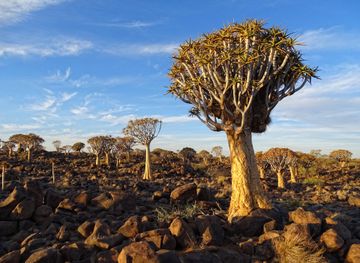
Destinations in Lüderitzland
Resorts, valleys and scenic spots worth a trip of their own.

Explore Lüderitzland: Things to Do, Places to Eat, Hotels & More
Handpicked recommendations for top attractions, local dining, accommodations, and more

Top Attractions & Sightseeing in Lüderitzland
Top-rated picks
Best Attractions

Kolmanskop
Explore the haunting beauty of Kolmanskop, a ghost town in Namibia where sand meets history, offering a unique insight into diamond mining's past.

Site of Original Dias Cross
Discover the historical significance of the Original Dias Cross in Luderitz, Namibia, where exploration and breathtaking coastal views meet.
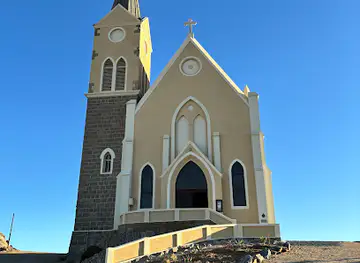
Felsenkirche
Explore the stunning Felsenkirche in Lüderitz, where breathtaking architecture meets serene ocean views.
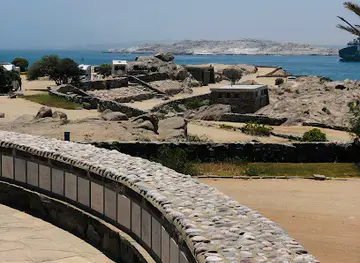
Shark Island Camp Site
Discover the tranquil beauty of Shark Island Camp Site, perfect for camping and exploring Lüderitz and Kolmanskop's rich history.

Best landmarks in Lüderitzland
Top-rated picks
Best Landmarks

Etosha National Park
Explore Etosha National Park, Namibia's premier wildlife destination, where vast landscapes and abundant wildlife create unforgettable safari experiences.

Arebbusch Travel Lodge
Discover comfort and tranquility at Arebbusch Travel Lodge; a self-catering haven in Windhoek offering lush gardens and convenient access to city attractions.
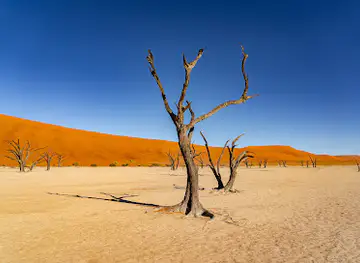
Deadvlei
Discover the surreal beauty of Deadvlei, where ancient trees meet stunning white clay and towering red dunes in a breathtaking Namibian landscape.

Canyon Roadhouse, Gondwana Collection Namibia
Discover the unique charm of Canyon Roadhouse, a quirky lodge and restaurant blending rustic decor and local cuisine in the heart of Namibia.

Best restaurants in Lüderitzland
Top-rated picks
Best Restaurants
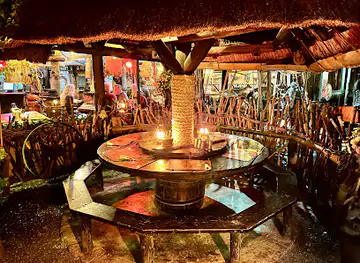
Joe's Beerhouse
Discover Joe's Beerhouse: A cultural gem in Windhoek offering traditional Namibian cuisine and a vibrant bar atmosphere.

The Tug Restaurant
Experience exquisite dining aboard a historic tugboat with breathtaking ocean views at The Tug Restaurant in Swakopmund.

Arebbusch Travel Lodge
Discover comfort and local cuisine at Arebbusch Travel Lodge in Windhoek - your ideal retreat for relaxation and culinary adventures.

Anchors Waterfront Restaurant
Discover exquisite seafood and Portuguese dishes at Anchors Waterfront Restaurant in Walvis Bay, Namibia's scenic coastal treasure.

Best bars in Lüderitzland
Top-rated picks
Best Bars

Avani Windhoek Hotel & Casino
Discover the luxury and vibrant culture of Windhoek at Avani Windhoek Hotel & Casino, the perfect retreat for travelers.
Hotel Thule
Experience breathtaking views and exceptional hospitality at Hotel Thule, your perfect getaway in Windhoek, Namibia.

Andy's Pub & Restaurant
Experience the heart of Windhoek with great food, drinks, and a vibrant atmosphere at Andy's Pub & Restaurant.

Kücki's Pub
Experience the vibrant atmosphere of Kücki's Pub in Swakopmund, where local flavors meet international cuisine in a lively setting.

Best nightclubs in Lüderitzland
Top-rated picks
Best Nightclubs

Infinity Lounge Swakopmund
Discover the vibrant nightlife of Swakopmund at Infinity Lounge, where great music and cold drinks create unforgettable nights.

Bar Zonder Naam
Discover Bar Zonder Naam in Swakopmund: a vibrant wine bar blending exquisite wines, lively ambiance, and delectable bites for an unforgettable experience.

Tall Trees Lounge Bar
Discover the vibrant atmosphere at Tall Trees Lounge Bar in Windhoek—your perfect retreat for drinks, music, and socializing.

Nitecall Entertainment Rundu
Experience the vibrant nightlife of Rundu at Nitecall Entertainment, where lively ambiance meets local culture and entertainment.

Best shops in Lüderitzland
Top-rated picks
Best Shops

Wernhil
Experience the heart of Windhoek at Wernhil, your ultimate shopping and leisure destination with diverse stores and dining options.

The Grove Mall of Namibia
Experience the vibrant shopping culture at The Grove Mall of Namibia, where diverse shops and delightful dining await in Windhoek.

Maerua Mall
Discover the best shopping experience at Maerua Mall in Windhoek, featuring a variety of shops, dining options, and entertainment for the whole family.

Dunes Mall
Explore Dunes Mall in Walvis Bay for an unforgettable shopping experience, featuring diverse stores, delightful dining, and vibrant entertainment.

Explore Lüderitzland on the Map
A handpicked selection of must-see spots in Lüderitzland, mapped for you.
Lüderitzland Essentials
-
Lüderitzland is located in the coastal region of Namibia. The nearest international airport is Hosea Kutako International Airport in Windhoek, approximately 800 kilometers away. From Windhoek, you can take a domestic flight to Lüderitz Airport, which is the most convenient option. Alternatively, you can drive from Windhoek to Lüderitz, which takes around 9 to 10 hours by road. There are also bus services that operate between Windhoek and Lüderitz, providing an economical mode of travel.
-
Lüderitzland is relatively small, and many attractions are within walking distance in the town of Lüderitz. For exploring the surrounding areas, renting a car is highly recommended for convenience and flexibility. Local taxis are available but may not be as reliable. There are also guided tours that offer transportation to key sites such as Kolmanskop Ghost Town and Diaz Point.
-
The official currency in Namibia is the Namibian Dollar (NAD), which is pegged to the South African Rand (ZAR). Credit cards are widely accepted in hotels, restaurants, and major shops in Lüderitz. However, it is advisable to carry some cash for smaller establishments and tips. ATMs are available in Lüderitz, but it's wise to withdraw sufficient cash in Windhoek before traveling.
-
Lüderitzland is generally safe for tourists, but like any travel destination, precautions should be taken. Avoid walking alone at night in unfamiliar areas and keep your belongings secure in crowded places. There are no specific high-crime areas targeting tourists, but it is always best to stay vigilant. Exercise caution when exploring remote areas and avoid isolated spots after dark.
-
In case of emergency, dial 10111 for police assistance and 10177 for medical emergencies. The local police station and a hospital are available in Lüderitz. It is highly recommended to have travel insurance that covers medical emergencies. For minor health issues, pharmacies are available in the town where over-the-counter medications can be purchased.
-
Fashion: Do dress in light, breathable clothing due to the arid climate, but bring layers for cooler evenings. Avoid overly revealing attire. Religion: Do respect local customs and traditions, especially when visiting places of worship. Public Transport: Do be patient and polite when using public transport. Don't expect punctuality as schedules can be flexible. Greetings: Do greet people with a friendly smile and a handshake. Don't be overly formal. Eating & Drinking: Do try local seafood delicacies and accept food offerings graciously. Don't refuse hospitality, as it is considered impolite.
-
To experience Lüderitzland like a local, visit the Lüderitz Market for fresh produce and crafts. Engage with locals, who are often friendly and willing to share stories about the area’s history and culture. Take a walk along the waterfront and enjoy the unique architecture influenced by German colonial history. Don't miss the chance to visit Kolmanskop Ghost Town early in the morning for the best lighting for photography.
When is the best time to visit Lüderitzland?
Useful Local Phrases for Lüderitzland
You don't need to speak the language perfectly. Even learning a few simple words can make conversations warmer—and locals usually appreciate the effort.
— Eve

Here are the phrases I use most often in Lüderitzland. Try a few—you'll be surprised how far they go! 😊
❤️
-
- HelloHallo
[Hah-loh] - GoodbyeTschüss
[Chews] - YesJa
[Yah] - NoNein
[Nine] - Please/You’re welcomeBitte
[Bitt-eh] - Thank youDanke
[Dahn-keh] - Excuse me/SorryEntschuldigung
[Ent-shool-dee-goong] - How are you?Wie geht's?
[Vee gates?] - Fine. And you?Gut. Und dir?
[Goot. Oond deer?] - Do you speak English?Sprechen Sie Englisch?
[Shpreh-ken Zee English?] - I don't understandIch verstehe nicht
[Ish fer-shtay-eh nikht]
- HelloHallo
-
- I'd like to see the menu, pleaseIch möchte die Speisekarte sehen, bitte
[Ish moech-teh dee Shpy-zeh-kahr-teh zeh-en, bitt-eh] - I don't eat meatIch esse kein Fleisch
[Ish ess-eh kine Flysh] - Cheers!Prost!
[Prohst!] - I would like to pay, pleaseIch möchte bezahlen, bitte
[Ish moech-teh beh-tsah-len, bitt-eh]
- I'd like to see the menu, pleaseIch möchte die Speisekarte sehen, bitte
-
- Help!Hilfe!
[Hil-feh!] - Go away!Geh weg!
[Gay vek!] - Call the Police!Rufen Sie die Polizei!
[Roo-fen Zee dee Poh-lee-tzai!] - Call a doctor!Rufen Sie einen Arzt!
[Roo-fen Zee eye-nen Artsht!] - I'm lostIch habe mich verlaufen
[Ish hah-beh mikh fer-lau-fen] - I'm illIch bin krank
[Ish bin krangk]
- Help!Hilfe!
-
- I'd like to buy...Ich möchte kaufen...
[Ish moech-teh kow-fen...] - I'm just lookingIch schaue nur
[Ish shau-eh noor] - How much is it?Wie viel kostet es?
[Vee feel kost-et es?] - That's too expensiveDas ist zu teuer
[Das ist tsoo toy-er] - Can you lower the price?Können Sie den Preis senken?
[Koe-nnen Zee den Pryce sen-ken?]
- I'd like to buy...Ich möchte kaufen...
-
- What time is it?Wie spät ist es?
[Vee shpate ist es?] - It's one o'clockEs ist ein Uhr
[Es ist ine Oor] - Half past (10)Halb (10)
[Halb (10)] - MorningMorgen
[Mor-gen] - AfternoonNachmittag
[Nahch-mit-tahg] - EveningAbend
[Ah-bent] - YesterdayGestern
[Geh-stern] - TodayHeute
[Hoy-teh] - TomorrowMorgen
[Mor-gen] - 1Eins
[Eins] - 2Zwei
[Tsvai] - 3Drei
[Dry] - 4Vier
[Fear] - 5Fünf
[Foonf] - 6Sechs
[Zex] - 7Sieben
[Zee-ben] - 8Acht
[Ahkt] - 9Neun
[Noyn] - 10Zehn
[Tsen]
- What time is it?Wie spät ist es?
-
- Where's a/the...?Wo ist ein/das...?
[Vo ist ine/das...?] - What's the address?Was ist die Adresse?
[Vas ist dee Ah-dress-eh?] - Can you show me (on the map)?Können Sie mir (auf der Karte) zeigen?
[Koe-nnen Zee meer (owf der Kart-eh) tsai-gen?] - When's the next (bus)?Wann kommt der nächste (Bus)?
[Vahn komt der naysh-teh (Boos)?] - A ticket (to ....)Ein Ticket (nach ....)
[Ine Tick-et (nahkh ....)]
- Where's a/the...?Wo ist ein/das...?
History of Lüderitzland
-
Lüderitz was founded in 1883 by German merchant Adolf Lüderitz, after whom the town is named. He purchased the land from local Nama chief Josef Fredericks and established a trading post. This marked the beginning of German colonial influence in the area.
-
Between 1884 and 1915, Lüderitzland was part of German South West Africa. The town became a crucial port and hub for the German colonial administration. The architecture from this era, including the Felsenkirche (Rock Church) and various colonial buildings, still stands as a testament to this period.
-
In 1908, diamonds were discovered near Lüderitz, sparking a significant diamond rush. Hundreds of prospectors flocked to the area, leading to the establishment of several mining towns, including Kolmanskop, which eventually became a ghost town. The diamond industry dramatically altered the region's economy and demographics.
-
Kolmanskop, once a bustling diamond mining town, was founded in the early 1900s. It flourished until the mid-1920s when richer diamond deposits were found elsewhere. By 1956, the town was abandoned and has since become a popular tourist attraction, offering a glimpse into the past with its preserved buildings and mining equipment.
-
During World War I, Lüderitz and the rest of German South West Africa were occupied by South African forces. After the war, the Treaty of Versailles mandated that the territory be administered by South Africa under a League of Nations mandate, marking the end of German colonial rule.
-
After decades of South African administration and a long struggle for liberation, Namibia gained independence on March 21, 1990. Lüderitz has since evolved into a quiet coastal town, known for its rich history, unique architecture, and vibrant cultural heritage.
-
The Lüderitz Peninsula, known for its stunning landscapes and wildlife, has been an important area for both historical events and ecological conservation. The peninsula features several historical sites, including old whaling stations and remnants of colonial-era infrastructure, as well as protected areas for seals and seabirds.
-
Lüderitz is a melting pot of various cultures, including Nama, Damara, and German. This blend is reflected in the town’s festivals, cuisine, and daily life. The annual Lüderitz Crayfish Festival is a celebration of this cultural diversity, featuring local music, dance, and culinary delights.
Neighbouring Regions of Lüderitzland
The closest regions to Lüderitzland, if you have time for more than one.

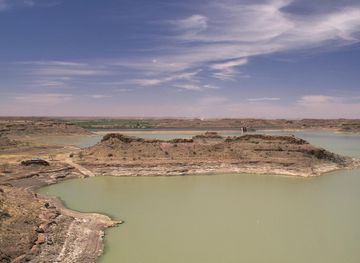


Your all‑in‑one travel companion app
Explore expert travel guides, compare and book tours, experiences, hotels, and more—all from the palm of your hand. Download now for seamless trip planning wherever your wanderlust takes you.


Explore More of Namibia

Looking beyond Lüderitzland? Discover Namibia for broader travel guides, local hot-spots, and regional highlights.
Explore NamibiaLüderitzland in Photos
Browse through our photo collection highlighting the charm and character of the destination.


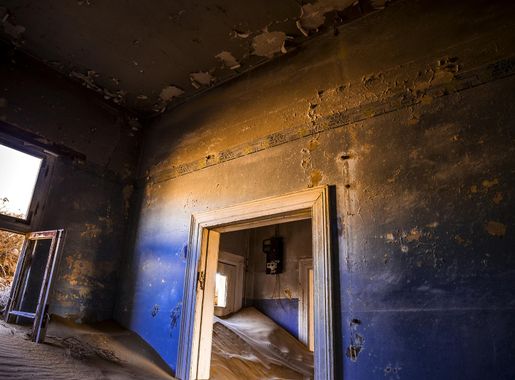


Lüderitzland: Namibia's Coastal Gem
Lüderitzland is a quaint coastal town nestled in the southwest of Namibia, known for its unique blend of German colonial architecture and stunning natural landscapes. This hidden gem is a must-visit for travelers seeking a mix of history, culture, and breathtaking scenery. The town's colorful buildings and charming streets offer a glimpse into its rich past, while its surrounding areas provide a haven for nature enthusiasts. One of the highlights of Lüderitzland is its proximity to the Namib Desert, where the famous Kolmanskop ghost town lies. Once a thriving diamond mining settlement, Kolmanskop is now an eerie yet fascinating attraction with its sand-filled buildings and historical remnants. Visitors can take guided tours to explore this surreal site and learn about its intriguing history. The coastal location of Lüderitzland also means that visitors can enjoy a variety of water-based activities. The harbor is perfect for leisurely boat trips, and the nearby Diaz Point offers spectacular views of the Atlantic Ocean. Birdwatchers will be delighted by the diverse avian species that inhabit the area, including flamingos and pelicans. For those interested in marine life, a visit to the Lüderitz Peninsula is essential, where seals and penguins can often be spotted. In addition to its natural and historical attractions, Lüderitzland boasts a vibrant local culture. The town hosts several annual festivals celebrating its heritage, and visitors can enjoy delicious seafood at local restaurants. The friendly and welcoming community ensures that every traveler feels right at home in this charming destination.