

Fort Ransom State Park Travel Guide - Free Web & App
Your ultimate guide to Fort Ransom State Park. Discover top landmarks, proposed trips, and local tips. Free on the web or via the Evendo companion app.


Fort Ransom State Park in North Dakota pairs the Sheyenne River valley with prairie trails, pioneer history, camping, canoeing and four-season outdoor recreation.
Prairie Landscapes and the Sheyenne River
Fort Ransom State Park occupies a sheltered section of the Sheyenne River valley in south-eastern North Dakota, near the small community of Fort Ransom. Rather than the broad, almost treeless prairie often associated with the state, the park is shaped by wooded riverbanks, rolling grassland, ravines and open hillsides. The Sheyenne, one of North Dakota's principal rivers, gives the area a quieter, more intimate character as it winds through the valley.Read more about Fort Ransom State Park
Outdoor Recreation and Seasonal Change
Pioneer Heritage
When is the best time to visit Fort Ransom State Park?
Best: May–June, August · 21–26°C| Month | High (°C) | Rainfall (mm) |
|---|---|---|
| January | -6 | 15 |
| February | -3 | 15 |
| March | 3 | 20 |
| April | 12 | 30 |
| May (best) | 21 | 45 |
| June (best) | 25 | 65 |
| July | 27 | 75 |
| August (best) | 26 | 65 |
| September | 21 | 50 |
| October | 14 | 35 |
| November | 3 | 25 |
| December | -5 | 20 |
Getting to and around Fort Ransom State Park
How to get there
Transportation
Best attractions in Fort Ransom State Park
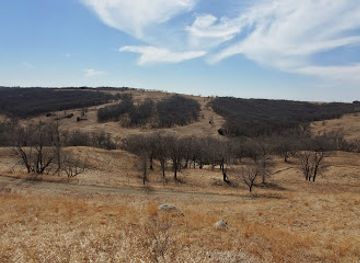
Fort Ransom State Park's principal attractions are its contrasting sections of the Sheyenne River valley, where wooded banks, prairie slopes, grassland and narrow ravines create varied walking scenery. The park's trail system provides access to quiet viewpoints and wildlife habitat, although route conditions change with weather and season. The Sheyenne River is central to the landscape and may be suitable for canoeing or kayaking when water levels and local conditions allow. The Bjone House offers a tangible connection with the area's homesteading period, while heritage events such as Sodbuster Days interpret farming practices and rural life through demonstrations and community programming. Nearby Fort Ransom adds a small-town setting and historical context, while the broader countryside leads towards the Sheyenne National Grassland, which lies outside the state park and should be treated as a separate destination.
-
Visitor center
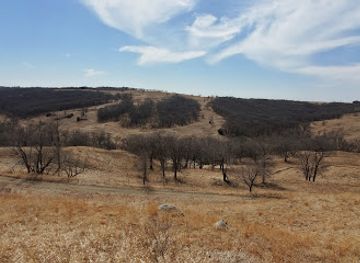
Fort Ransom State Park Visitors Center
Experience the stunning beauty and rich history at Fort Ransom State Park Visitors Center, where nature and adventure await in North Dakota.
-
Recreation center
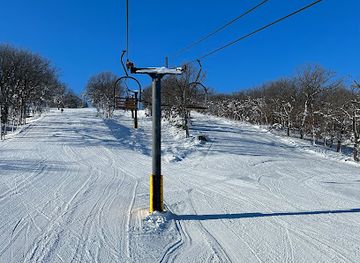
Thrill Hills
Experience ultimate fun at Thrill Hills, the top recreation center in Fort Ransom, North Dakota, where adventure awaits for the whole family.
-
Historical place
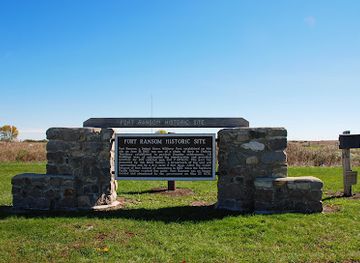
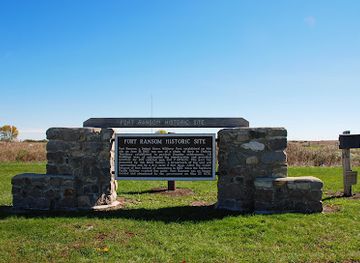
Fort Ransom State Historic Site
Explore the rich history of North Dakota at Fort Ransom State Historic Site, a fascinating glimpse into the past amid stunning landscapes.
-
Museum
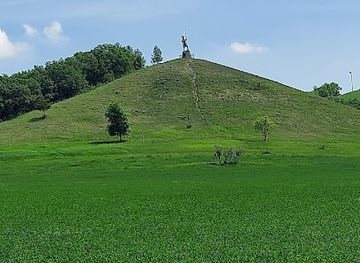
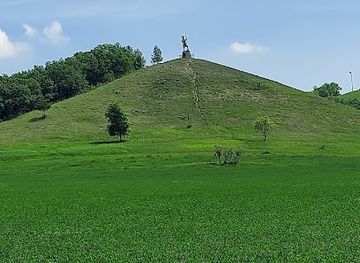
Pyramid Hill Info Plaque
Explore the historical Pyramid Hill Info Plaque in Fort Ransom, ND, where local heritage meets the beauty of nature.
Best landmarks in Fort Ransom State Park
The Sheyenne River is Fort Ransom State Park's defining natural landmark, its wooded course creating a distinct valley landscape within the wider prairie country of North Dakota. The surrounding bluffs, grass-covered slopes and wooded draws are smaller-scale physical landmarks whose significance lies in the contrast they create with the region's flatter agricultural plains. The Bjone House is the park's most important surviving historic feature, representing homestead settlement and the built environment of rural families who worked the valley. The name Fort Ransom also recalls the short-lived nineteenth-century military post associated with the wider area, although the original post should not be presented as the same place as the modern state park. Nearby Fort Ransom provides the community context for these landscapes and historical associations.
-
Visitor center
Fort Ransom State Park Visitors Center
Explore the wonders of Fort Ransom State Park Visitors Center, your gateway to North Dakota's stunning landscapes and rich history.
-
Historical place
Fort Ransom State Historic Site
Discover the rich history of Fort Ransom State Historic Site, a charming destination showcasing North Dakota's frontier heritage and military past.
-
Museum
Pyramid Hill Info Plaque
Explore the Pyramid Hill Info Plaque in Fort Ransom, ND, for a captivating look into local history surrounded by stunning natural beauty.
Explore Fort Ransom State Park on the map
Plan your trip on one map. See where the top attractions, landmarks, restaurants and hotels are, and book hotels and experiences in a few clicks.
Best hotels in Fort Ransom State Park
Best restaurants in Fort Ransom State Park
Dining within Fort Ransom State Park is limited, so visitors should plan to bring food for walks, picnics and camping rather than expecting a substantial restaurant scene inside the park. The nearby town of Fort Ransom may provide occasional local services, but availability can be seasonal or limited. More dependable choices are generally found in regional towns such as Lisbon and Valley City, outside the park, where visitors can look for cafés, diners, grocery shops and everyday provisions. The area's food culture reflects eastern North Dakota's agricultural setting, with practical Midwestern cooking, locally produced ingredients and community-oriented dining rather than a concentrated culinary district. Travellers staying in cabins or campsites should check facilities in advance and shop before entering the rural valley, particularly when arriving late or visiting outside the main summer season.
-
Bar
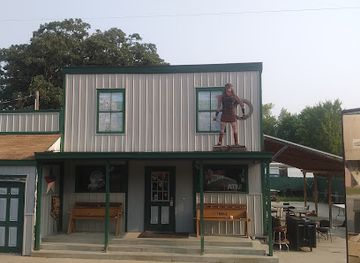
Thor's & The Old Mill Grill Inc.
Discover local flavors at Thor's & The Old Mill Grill Inc., where hearty meals meet friendly service in Fort Ransom, North Dakota.
Best bars in Fort Ransom State Park
Fort Ransom State Park has no developed nightlife district, and evenings are generally quiet, shaped by camping, open skies and the sounds of the river valley rather than clubs or late-night entertainment. The nearby town of Fort Ransom may offer occasional community gatherings or local hospitality, but visitors should not assume that evening venues operate every day. Traditional bars, restaurants and broader evening services are more likely to be found in regional towns such as Lisbon and Valley City, outside the destination. Seasonal heritage events, including Sodbuster Days, can provide a social and cultural evening atmosphere when scheduled, while visitors staying in the park should follow campsite rules, use lighting responsibly and respect the quiet of neighbouring campers and rural residents.
-
Bar
Thor's & The Old Mill Grill Inc.
Discover the local flavors and cozy ambiance at Thor's & The Old Mill Grill Inc., a charming bar in Fort Ransom, North Dakota.
Get your free copy of our complete guide to Fort Ransom State Park, delivered straight to you.
Everything on this page, from attractions and restaurants to essentials and local phrases, in one PDF you can read offline, print or share.
Already have an account? Sign in
Your Fort Ransom State Park guide is ready.
We'll send it to · Not you? Sign out

Getting your guide ready…
We are putting together a fresh copy of the Fort Ransom State Park guide. This can take up to a minute.
This can take a few moments. If your browser asks, choose Allow so the download can start. You'll find the guide in your Downloads folder.
Nothing happened? Download it again
Sorry, the guide is taking longer than usual. Please try again in a minute, or get it by email instead.
Fort Ransom State Park essentials
Currency and Payment
Safety
Emergency Situations
Do's and Don'ts
Local Tips
From Eve
Local phrases worth knowing
You don't need to get them perfect. A few words go a long way, and locals appreciate the effort.
Basics
| English | Local | Say it |
|---|---|---|
| Hello | Howdy | [haw-dee] |
| Goodbye | See you later | [see yoo lay-ter] |
| Yes | Yah | [yah] |
| No | Nah | [nah] |
| Please/You're welcome | Sure thing | [shore thang] |
| Thank you | Much obliged | [muhch uh-blahy-d] |
| Excuse me/Sorry | Pardon me | [par-dn me] |
| How are you? | Howdy | [haw-dee] |
| Fine. And you? | Right as rain. And you? | [rahyt az reyn. And yoo?] |
| Do you speak English? | Y'all speak English? | [yawl speek ing-glish?] |
| I don't understand | I ain't catchin' | [ahynt kach-in'] |
Eating & Drinking
| English | Local | Say it |
|---|---|---|
| I'd like to see the menu, please | Can I take a gander at the grub, please | [kan eye tayk uh gan-der at the gruhb, please] |
| I don't eat meat | I ain't no carnivore | [ahynt noh kahr-nuh-vawr] |
| Cheers! | Bottoms up! | [bot-uhmz uhp] |
| I would like to pay, please | I reckon I'll settle up, please | [ahy rehk-uhn ayl suht-l uhp, please] |
Emergencies
| English | Local | Say it |
|---|---|---|
| Help! | SOS! | [ess-oh-ess] |
| Go away! | Git! | [git] |
| Call the Police! | Ring the law! | [ring thuh law] |
| Call a doctor! | Ring a healer! | [ring uh hee-ler] |
| I'm lost | I'm turned around | [ahym turnd uh-rown-d] |
| I'm ill | I ain't feelin' right | [ahynt feel-in rahyt] |
Shopping
| English | Local | Say it |
|---|---|---|
| I'd like to buy... | I reckon I'll buy... | [ahy rehk-uhn ayl bahy...] |
| I'm just looking | I'm just browsin' | [ahym juhst brow-zin'] |
| How much is it? | What's the damage? | [whats thuh dam-ij?] |
| That's too expensive | That ain't worth it | [thet ahynt wuhrth it] |
| Can you lower the price? | Can ya do better on the price? | [kan yuh doh bet-er awn thuh prahys?] |
Time & Numbers
| English | Local | Say it |
|---|---|---|
| What time is it? | What's the hour? | [whuts thuh ow-er?] |
| It's one o'clock | It's one on the nose | [its wan on thuh nohz] |
| Half past (10) | T'was half past (10) | [twuz haf past (10)] |
| Morning | Mornin' | [morn-in] |
| Afternoon | Afternoon | [after-noon] |
| Evening | Evenin' | [eev-nin] |
| Yesterday | Yest'day | [yest-day] |
| Today | Today | [toh-day] |
| Tomorrow | Tomorrer | [tom-or-er] |
| 1 | One | [wun] |
| 2 | Two | [too] |
| 3 | Three | [three] |
| 4 | Four | [for] |
| 5 | Five | [fahyv] |
| 6 | Six | [siks] |
| 7 | Seven | [sev-uhn] |
| 8 | Eight | [eyt] |
| 9 | Nine | [nahyn] |
| 10 | Ten | [ten] |
Transport & Directions
| English | Local | Say it |
|---|---|---|
| Where's a/the...? | Where's the... to? | [wheres thuh... tuh?] |
| What's the address? | What's the directions? | [whuts thuh duh-rek-shuns?] |
| Can you show me (on the map)? | Can ya point me out? | [kan yuh point me owt?] |
| When's the next (bus)? | When's the next transport? | [whens thuh nekst trans-port?] |
| A ticket (to ....) | A pass (to ....) | [uh pass (tu)] |
History of Fort Ransom State Park
A River Valley Shaped by Ice and Water
The landscape around Fort Ransom was formed by the geological processes that shaped the northern Great Plains, including glacial activity and the later erosion of the Sheyenne River and its tributaries. The result is a more varied terrain than the level prairie farther west: wooded draws, river terraces, grass-covered slopes and sheltered valley bottoms occur within a relatively small area. These physical contrasts influenced where people travelled, settled and farmed, and they remain central to the park's character today.
Settlement along the Sheyenne
Indigenous peoples used the Sheyenne River valley long before Euro-American settlement, relying on the region's water, wildlife and travel routes. During the nineteenth century, increasing migration and agricultural settlement altered the valley. Homesteads, roads and cultivated fields developed alongside the river and its tributary draws, while the surrounding prairie became part of the expanding farming landscape of eastern North Dakota. The community of Fort Ransom grew in this rural setting and retains the name associated with the area's frontier history.
The Fort Ransom Frontier Post
The name Fort Ransom refers to a United States military post established in the region in the late 1860s and abandoned after only a short period of operation. It was part of the wider military and transport history of the northern Plains during a period of rapid settlement and changing relations between federal authorities, Indigenous nations and incoming communities. The original post should not be confused with the present-day state park, which preserves a broader river-valley landscape near the town bearing its name.
Homesteads and Rural Traditions
As farming became the dominant land use, homes, barns, hay meadows and cultivated fields gave the Sheyenne valley a distinctive cultural landscape. The Bjone House, preserved within Fort Ransom State Park, represents this period of rural settlement and helps visitors understand the practical realities of pioneer life. Heritage interpretation also reflects the work of immigrant and later farming families who adapted buildings, crops and livestock practices to North Dakota's seasons, soils and fluctuating weather.
From Working Landscape to State Park
Fort Ransom State Park was established in the late twentieth century to protect a representative section of the Sheyenne River valley while providing public opportunities for camping, walking and heritage education. Park management has balanced recreation with the conservation of prairie, woodland and river environments. Events such as Sodbuster Days keep elements of agricultural history visible through demonstrations and interpretation, linking the protected landscape with the farming traditions that shaped the surrounding region.
Fort Ransom State Park in Photos
Browse through our photo collection highlighting the charm and character of the destination.
Neighbouring destination travel guides
The closest destinations to Fort Ransom State Park, if you have time for more than one.
-

-

-

-

-


Swipe for more destinations
Explore more

Explore more of Drift Prairie
Explore North Dakota’s Drift Prairie for glacial lakes, open farmland, Indigenous heritage, small-town museums, wildlife and wide prairie horizons.
Explore Drift Prairie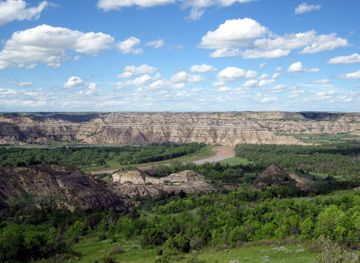
Explore more of North Dakota
Discover the rugged beauty, rich history, and warm hospitality of North Dakota, the untamed frontier of the United States.
Explore North Dakota