

Free Akershus Travel Guide & Mobile App
Explore Akershus with free travel guides. Discover regional history, expert tips, proposed trips, and audio guides on web or mobile app.


Explore Akershus in Norway for fjord villages, forest walks, constitutional history, farm produce and easy journeys around Oslo.
Read more about Akershus
When is the best time to visit Akershus?
Best: June–August · 20–22°C| Month | High (°C) | Rainfall (mm) |
|---|---|---|
| January | -1 | 50 |
| February | 0 | 45 |
| March | 4 | 50 |
| April | 10 | 45 |
| May | 16 | 50 |
| June (best) | 20 | 65 |
| July (best) | 22 | 70 |
| August (best) | 21 | 75 |
| September | 16 | 65 |
| October | 10 | 80 |
| November | 4 | 70 |
| December | 0 | 60 |
Getting to and around Akershus
How to get there
Transportation
Top city travel guides in Akershus
The cities of Akershus, and the easiest places to base yourself.

Swipe for more cities
Best attractions in Akershus
Akershus offers a broad mixture of heritage, nature and family-oriented activities across a relatively accessible part of eastern Norway. The constitutional museum at Eidsvollsbygningen is the county’s most important historical attraction, while Fetsund Lenser presents the demanding timber-floating industry through preserved riverside structures and equipment. Oscarsborg Fortress adds military history in an Oslofjord setting reached by ferry from Drøbak. In Bærum, Henie Onstad Kunstsenter combines modern and contemporary art with a fjord-side location, and the surrounding coast provides walking and boating opportunities. TusenFryd amusement park near Ås is a major seasonal attraction for families. The county’s natural appeal lies in its variety: forest trails around Romerike and Bærum, the wetlands and waterways of the Glomma and Lake Øyeren area, cultivated landscapes around Eidsvoll and Ås, and the islands and skerries of the inner Oslofjord. Beaches, kayaking, cycling and cross-country skiing are all possible, but facilities and public transport differ sharply between suburban centres and rural districts.
-
Opera house
Oslo Opera House
Experience the Oslo Opera House, a stunning architectural masterpiece and cultural hub offering world-class performances and breathtaking views.
-
Sculpture museum
The Vigeland Park
Explore the stunning Vigeland Park, an open-air sculpture museum in Oslo showcasing over 200 masterpieces by Gustav Vigeland set in a tranquil park environment.
-
Fortress
Akershus Fortress
Explore the historic Akershus Fortress in Oslo, a medieval castle with stunning views, rich history, and engaging museums that showcase Norway's heritage.
-
Ski jumping hill
Holmenkollbakken
Experience the thrill of ski jumping and delve into Norway's rich winter sports heritage at Holmenkollbakken, Oslo's iconic attraction.


Best landmarks in Akershus
Eidsvollsbygningen is Akershus’s defining political landmark: the preserved manor where the representatives of 1814 drafted and adopted Norway’s Constitution. At the entrance to the Oslofjord, Oscarsborg Fortress occupies the islands in the narrow Drøbak Sound and represents the strategic importance of controlling the maritime approach to Oslo. Fetsund Lenser is a different kind of landmark, formed by long timber booms and riverside industrial buildings that document the historic movement of logs along the Glomma. The old centre of Drøbak provides a visual contrast through its wooden houses, harbour and compact streets, while the county’s medieval churches, including those at Nes and Ås, preserve long-settled agricultural landscapes. In Bærum, the modern architecture and waterfront setting of Henie Onstad Kunstsenter stand out as a cultural landmark rather than a military or historic monument. The county’s natural landmarks include the Oslofjord shoreline, the river environments around Fetsund and the broad, open landscapes of Romerike.
-
 Fortress
Akershus Fortress
Discover the rich history and stunning views at Akershus Fortress, a must-see attraction in Oslo, Norway, perfect for all history enthusiasts and nature lovers.
-
Castle
The Royal Palace
Explore the grandeur of The Royal Palace in Oslo, a captivating blend of history, architecture, and royal tradition amidst lush gardens.
-
Fortress
Oscarsborg Fortress
Experience the rich history and stunning views at Oscarsborg Fortress, a must-visit tourist attraction in Norway's breathtaking Oslofjord.
-
History museum
Norwegian Armed Forces Museum
Explore Norway's military history at the Norwegian Armed Forces Museum, located in Akershus Fortress, a must-visit for history enthusiasts and tourists alike.


Explore Akershus on the map
Plan your trip on one map. See where the top cities, national parks and sights are, and book hotels and experiences in a few clicks.
Best hotels in Akershus
Best restaurants in Akershus
Dining in Akershus reflects the county’s position between Oslo’s metropolitan market and eastern Norway’s farming, forestry and coastal landscapes. Towns such as Lillestrøm, Sandvika, Asker and Ski offer a broad choice of cafés, bakeries, international restaurants and contemporary Norwegian cooking, while smaller communities tend to centre on cafés, traditional restaurants, pubs and seasonal venues. Local produce may include vegetables from the agricultural districts of Follo and Romerike, berries, apples, breads, dairy products and meat from nearby farms; coastal restaurants and fish counters draw on the Oslofjord’s maritime setting, though not every seafood dish is locally sourced. Farm shops and markets are good places to look for preserves, baked goods and seasonal produce. Norwegian staples such as open sandwiches, waffles, fish and hearty soups are widely available, alongside modern menus shaped by the county’s diverse population and close connection with Oslo.
-
Traditional Norwegian restaurant
Den Glade Gris
Experience authentic Norwegian cuisine at Den Glade Gris in Oslo; where tradition meets taste in a cozy setting.
-
Italian
Casa Mia Ristorante Cucina Italiana
Savor authentic Italian flavors at Casa Mia Ristorante Cucina Italiana in Lillestrøm - where every meal is an exquisite culinary journey.
-
Restaurant
Morten's Kro
Discover authentic Norwegian cuisine at Morten's Kro in Hagan – where tradition meets taste in a cozy setting.
-
Fine Dining
Ekebergrestauranten
Experience exquisite Norwegian cuisine at Ekebergrestauranten with breathtaking views over Oslo's skyline and fjord.


Best bars in Akershus
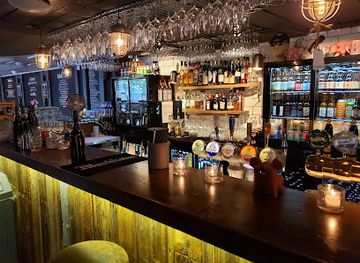
Akershus has no single nightlife district comparable with central Oslo. Evening life is distributed among the county’s main towns, with Lillestrøm, Sandvika, Asker, Drøbak and Ski offering the widest choice of pubs, restaurants, cafés and occasional live-music or cultural events. Traditional pubs and hotel bars are common meeting places, while breweries and modern bars provide a more contemporary setting in larger centres. Drøbak’s harbour area has a seasonal evening atmosphere, but it becomes quieter outside summer. In suburban and rural communities, nightlife usually finishes earlier and depends on local restaurants, community venues and programmed performances rather than large clubs. Visitors should check current arrangements for concerts and late-opening venues, and remember that public transport becomes less frequent at night away from the main railway corridors.
-
Brewpub
Crow Bar & Brewery
Explore the vibrant craft beer scene at Crow Bar & Brewery in Oslo, where local flavors and a welcoming atmosphere await every visitor.
-
Cocktail bar
HIMKOK Storgata Destilleri
Discover HIMKOK Storgata Destilleri, Oslo's premier cocktail and cider bar, known for its creative drinks and vibrant atmosphere.
-
Irish pub
The Dubliner Folk Pub
Experience authentic Irish culture at The Dubliner Folk Pub in Oslo, featuring live music, delicious food, and a vibrant atmosphere.
-
Bar
Kulturpuben
Discover the lively Kulturpuben in Lillestrøm – a cultural bar offering a vibrant atmosphere, diverse drinks, and engaging events for a memorable night out.


Best nightclubs in Akershus
Akershus has no single nightlife district comparable with central Oslo. Evening life is distributed among the county’s main towns, with Lillestrøm, Sandvika, Asker, Drøbak and Ski offering the widest choice of pubs, restaurants, cafés and occasional live-music or cultural events. Traditional pubs and hotel bars are common meeting places, while breweries and modern bars provide a more contemporary setting in larger centres. Drøbak’s harbour area has a seasonal evening atmosphere, but it becomes quieter outside summer. In suburban and rural communities, nightlife usually finishes earlier and depends on local restaurants, community venues and programmed performances rather than large clubs. Visitors should check current arrangements for concerts and late-opening venues, and remember that public transport becomes less frequent at night away from the main railway corridors.
-
Live Music
BLÅ
Immerse yourself in Oslo's nightlife at BLÅ, a premier venue for live music, disco nights, and a vibrant beer garden experience.
-
Bar
Heidis Bier Bar - Oslo
Experience the vibrant atmosphere of Heidi's Bier Bar in Oslo, where German beer culture meets Norwegian hospitality in a lively setting.
-
Bar
Schouskjelleren Mikrobryggeri
Explore the vibrant world of craft beer at Schouskjelleren Mikrobryggeri in Oslo, where quality brews meet a cozy atmosphere.
-
Night club
F6 Cocktailbar
Discover Oslo's vibrant nightlife at F6 Cocktailbar, where exquisite cocktails and lively ambiance create unforgettable experiences.


Best shops in Akershus
Shopping in Akershus is organised around practical town centres, suburban retail areas, independent streets and seasonal producers rather than one concentrated destination. Lillestrøm, Sandvika, Asker and Ski provide the broadest range of shops, cafés and services, while Drøbak is known for a more intimate setting of small retailers, galleries and harbour-area businesses. Market towns and rural districts are useful for farm shops selling preserves, baked goods, berries, vegetables, honey and other Norwegian food products, although opening days can be limited. Craft galleries and museum shops offer ceramics, textiles, books and locally themed gifts, while supermarkets are convenient for assembling a picnic or buying everyday Norwegian specialities. Visitors seeking design goods, luxury fashion or a very large retail selection may find central Oslo more suitable, but the county’s independent businesses and producers give shopping a more local, seasonal character.
-
Shopping mall
Strømmen Storsenter
Discover a shopping haven at Strømmen Storsenter, where variety meets convenience in the heart of Norway.
-
Shopping mall
Sandvika Storsenter
Discover Sandvika Storsenter: A Shopping Paradise with Diverse Retail, Dining, and Entertainment Options in Norway.
-
Shopping mall
Paleet
Experience the essence of Oslo at Paleet, where shopping, dining, and culture unite in a vibrant atmosphere.
-
Shopping mall
Jessheim Storsenter
Explore Jessheim Storsenter: A Shopping Haven in Norway with Fashion, Food, and Fun for Everyone!


Get your free copy of our complete guide to Akershus, delivered straight to you.
Everything on this page, from attractions and restaurants to essentials and local phrases, in one PDF you can read offline, print or share.
Already have an account? Sign in
Your Akershus guide is ready.
We'll send it to · Not you? Sign out

Getting your guide ready…
We are putting together a fresh copy of the Akershus guide. This can take up to a minute.
This can take a few moments. If your browser asks, choose Allow so the download can start. You'll find the guide in your Downloads folder.
Nothing happened? Download it again
Sorry, the guide is taking longer than usual. Please try again in a minute, or get it by email instead.
Akershus essentials
Currency and Payment
Safety
Emergency Situations
Do's and Don'ts
Local Tips
From Eve
Local phrases worth knowing
You don't need to get them perfect. A few words go a long way, and locals appreciate the effort.
Basics
| English | Local | Say it |
|---|---|---|
| Hello | Hei | [Hay] |
| Goodbye | Ha det | [Hah deh] |
| Yes | Ja | [Yah] |
| No | Nei | [Nay] |
| Please/You're welcome | Vær så snill/Ingen årsak | [Vair soh snil/In-gen or-sahk] |
| Thank you | Takk | [Tahk] |
| Excuse me/Sorry | Unnskyld | [Oon-shild] |
| How are you? | Hvordan har du det? | [Vor-dan har doo deh?] |
| Fine. And you? | Bra. Og du? | [Brah. Oh doo?] |
| Do you speak English? | Snakker du engelsk? | [Snak-ker doo eng-elsk?] |
| I don't understand | Jeg forstår ikke | [Yay for-stor ik-ke] |
Eating & Drinking
| English | Local | Say it |
|---|---|---|
| I'd like to see the menu, please | Jeg vil gjerne se menyen, vær så snill | [Yay vil yair-na seh me-nuen, vair soh snil] |
| I don't eat meat | Jeg spiser ikke kjøtt | [Yay spee-ser ik-ke shutt] |
| Cheers! | Skål! | [Skawl!] |
| I would like to pay, please | Jeg vil gjerne betale, vær så snill | [Yay vil yair-na be-ta-le, vair soh snil] |
Emergencies
| English | Local | Say it |
|---|---|---|
| Help! | Hjelp! | [Yelp!] |
| Go away! | Gå vekk! | [Gaw vek!] |
| Call the Police! | Ring politiet! | [Ring po-li-tiet!] |
| Call a doctor! | Ring en lege! | [Ring en leh-geh!] |
| I'm lost | Jeg er tapt | [Yay air tahpt] |
| I'm ill | Jeg er syk | [Yay air seek] |
Shopping
| English | Local | Say it |
|---|---|---|
| I'd like to buy... | Jeg vil gjerne kjøpe... | [Yay vil yair-na shuh-pe...] |
| I'm just looking | Jeg bare ser | [Yay bah-reh sair] |
| How much is it? | Hvor mye koster det? | [Vor mee-eh koh-ster deh?] |
| That's too expensive | Det er for dyrt | [Deh air for deert] |
| Can you lower the price? | Kan du senke prisen? | [Kan doo sen-keh pree-sen?] |
Time & Numbers
| English | Local | Say it |
|---|---|---|
| What time is it? | Hva er klokka? | [Hva air klo-kah?] |
| It's one o'clock | Det er ett | [Deh air ett] |
| Half past (10) | Halv (10) | [Halv (10)] |
| Morning | Morgen | [Morgen] |
| Afternoon | Ettermiddag | [Et-ter-mid-dahg] |
| Evening | Kveld | [Kveld] |
| Yesterday | I går | [Ee gor] |
| Today | I dag | [Ee dahg] |
| Tomorrow | I morgen | [Ee mor-gen] |
| 1 | 1 | [1] |
| 2 | 2 | [2] |
| 3 | 3 | [3] |
| 4 | 4 | [4] |
| 5 | 5 | [5] |
| 6 | 6 | [6] |
| 7 | 7 | [7] |
| 8 | 8 | [8] |
| 9 | 9 | [9] |
| 10 | 10 | [10] |
Transport & Directions
| English | Local | Say it |
|---|---|---|
| Where's a/the...? | Hvor er en...? | [Vor air en...?] |
| What's the address? | Hva er adressen? | [Hva air ad-ress-en?] |
| Can you show me (on the map)? | Kan du vise meg (på kartet)? | [Kan doo vee-seh my (paw kar-tet)?] |
| When's the next (bus)? | Når går neste (buss)? | [Nor gor nes-teh (boos)?] |
| A ticket (to ....) | En billett (til ....) | [En bee-lett (til ....)] |
History of Akershus
Early Settlement and Iron-Age Landscapes
Akershus has been occupied since prehistoric times, with the fertile soils around Romerike, Follo and the Glomma waterways supporting farming communities. Burial mounds, ancient field systems and place names preserve evidence of Iron-Age society, when control of land and routes was closely connected to political power. The region’s rivers and fjord inlets provided practical routes for movement and exchange, linking inland farms with coastal communities. Although much of the modern landscape is developed, archaeological remains and historic churches still indicate the long continuity of settlement across the county.
Medieval Churches and Agricultural Communities
Christianisation brought new institutions and stone or timber churches to the settled districts of Akershus. Medieval churches at places such as Nes, Skedsmo and Ås reflect the growth of organised parishes amid productive agricultural landscapes. Farms, manors and religious institutions shaped local society, while waterways and roads connected the area to Oslo and other parts of eastern Norway. Several later buildings stand on older ecclesiastical sites, making the county’s churches important not only for worship but also for understanding the settlement pattern that developed during the Middle Ages.
Akershus Fortress and the Defence of Oslo
The name Akershus derives from Akershus Fortress, founded in Oslo in the late thirteenth century, although the fortress itself is now within Oslo rather than the modern county. Its strategic importance influenced the wider territory, whose fjord approaches, roads and agricultural resources helped sustain the capital and its defences. In the nineteenth century, Oscarsborg Fortress was built on the Oslofjord’s narrow Drøbak Sound to protect the maritime approach. The county therefore contains a visible record of changing military strategies, from medieval castle power to coastal artillery.
The Constitution at Eidsvoll, 1814
Eidsvoll is central to Norway’s modern political history. In spring 1814, representatives gathered at Eidsvollsbygningen, the home of ironmaster Carsten Anker, to draft and adopt the Norwegian Constitution on 17 May. The assembly followed the upheavals of the Napoleonic period and the transfer of Norway from Danish to Swedish rule, and it established principles that remain fundamental to the Norwegian state. The preserved building and grounds in Eidsvoll provide an unusually direct connection with the country’s constitutional foundation.
Timber Floating and Industrial Change
The Glomma and its tributaries supported a major timber economy for centuries. Logs from inland forests were floated downstream to sawmills and ports, and Fetsund became an important transfer point where timber was sorted and handled. Fetsund Lenser preserves this working landscape with its floating timber booms, buildings and equipment. Railways, improved roads and industrial processing later changed the movement of goods, while agriculture and manufacturing expanded around settlements such as Lillestrøm. The legacy of forestry remains visible in both the landscape and local museums.
Railways, Suburban Growth and the Modern County
Railway construction from the nineteenth century transformed Akershus by linking agricultural and industrial communities with Christiania, now Oslo, and with inland Norway. Lillestrøm grew as a significant junction and industrial centre, while stations across Romerike and Follo encouraged new settlements and commuting patterns. During the twentieth century, improved roads, housing development and the expansion of Oslo’s metropolitan economy brought substantial suburban growth to Bærum, Asker and other districts. Modern Akershus is consequently both a rural county with deep agricultural roots and an integrated part of Norway’s largest urban region.
Akershus in Photos
Browse through our photo collection highlighting the charm and character of the destination.
Neighbouring regions of Akershus
The closest regions to Akershus, if you have time for more than one.
-

-

-

-

-


Swipe for more regions
Explore more

Explore more of Norway
Explore Norway's spectacular fjords, vibrant cities, and natural wonders. Experience the Northern Lights, Midnight Sun, and rich cultural heritage in this Scandinavian gem.
Explore Norway