

Free Vestfold Travel Guide & Mobile App
Explore Vestfold with free travel guides. Discover regional history, expert tips, proposed trips, and audio guides on web or mobile app.


Explore Vestfold’s Viking heritage, coastal towns, island landscapes, forests and maritime culture along Norway’s southern Oslofjord shore.
Read more about Vestfold
When is the best time to visit Vestfold?
Best: June–August · 20–22°C| Month | High (°C) | Rainfall (mm) |
|---|---|---|
| January | 1 | 60 |
| February | 2 | 50 |
| March | 6 | 50 |
| April | 11 | 40 |
| May | 16 | 40 |
| June (best) | 20 | 50 |
| July (best) | 22 | 70 |
| August (best) | 21 | 80 |
| September | 16 | 70 |
| October | 12 | 60 |
| November | 6 | 70 |
| December | 2 | 60 |
Getting to and around Vestfold
How to get there
Transportation
Top city travel guides in Vestfold
The cities of Vestfold, and the easiest places to base yourself.

Swipe for more cities
Best attractions in Vestfold
Vestfold’s attractions range from Viking archaeology and medieval ruins to maritime museums, galleries, forests and protected island landscapes. At Borre, the burial mounds and Midgard Viking Centre provide the region’s clearest introduction to Viking Age power and society, while Tønsberg’s Slottsfjell and museums explain the county’s medieval history. Horten combines the Borre heritage area with naval and technological collections at Karljohansvern, including the Royal Norwegian Navy Museum and Preus Museum. Sandefjord’s Whaling Museum examines the town’s seafaring past, while Larvik offers the Kaupang archaeological site, the wooded Bøkeskogen and access to a varied southern coastline. Færder National Park is the major nature attraction, with islands, skerries, seabird habitats and opportunities for boating, kayaking, swimming and walking. Stavern, Nevlunghavn and the headlands around Verdens Ende add coastal settlements and open-water scenery, while Åsgårdstrand brings together art history, shoreline walks and small-town architecture. Facilities and transport are more seasonal away from the principal towns, so outdoor visits benefit from weather-aware planning.
-
Tourist attraction
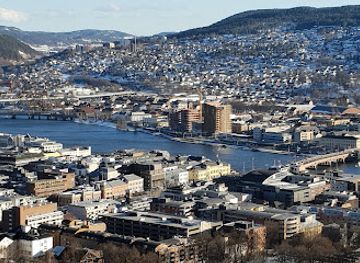
Drammen Spiral
Experience the breathtaking views of Drammen from the Drammen Spiral, a stunning observation deck that showcases nature's beauty and engineering marvel.
-
Tourist attraction
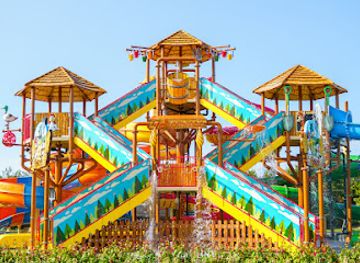
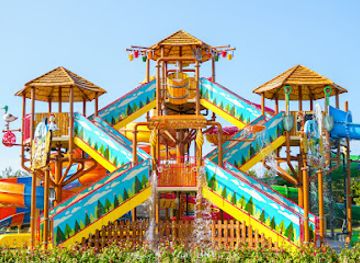
Foldvik Family Park
Discover adventure and joy at Foldvik Family Park, where fun meets nature in the heart of Stavern, Norway.
-
Scenic spot
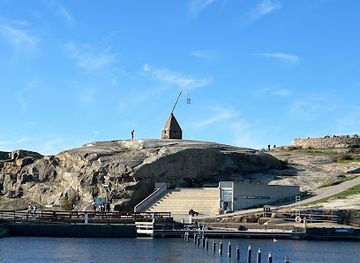
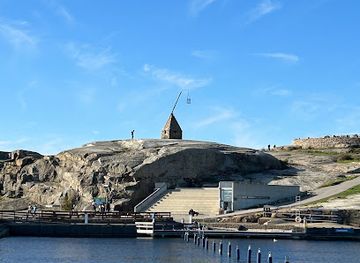
World's End
Explore the breathtaking coastal views and scenic beauty of World’s End in Tjøme, Norway, a perfect destination for nature lovers and photographers.
-
Tourist attraction
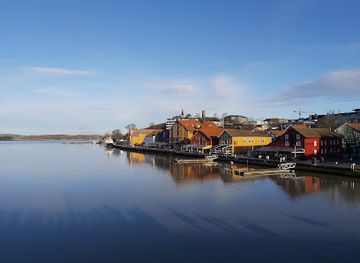
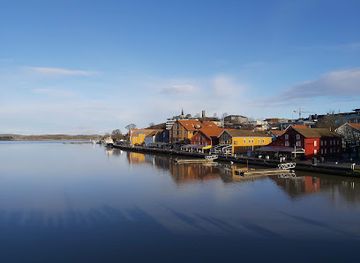
Brygga i Tønsberg
Explore Brygga i Tønsberg, a historic waterfront hub offering dining, nightlife, and stunning views in Norway's oldest town.
Best landmarks in Vestfold
The burial mounds at Borre are Vestfold’s most powerful archaeological landmark, forming a monumental Viking Age landscape near the Oslofjord shore. In Tønsberg, the Slottsfjell tower and surrounding remains mark the site of Tunsberghus, a medieval fortress overlooking the town and harbour. Karljohansvern in Horten is a substantial historic naval complex whose buildings, fortifications and waterfront preserve the town’s military significance. Stavern’s Fredriksvern retains an important group of eighteenth-century naval buildings and defensive structures, giving the former port a distinctive architectural character. Larvik’s Bøkeskogen is a natural landmark as well as a recreational landscape, with mature beech woodland rising above the town. Further south, Verdens Ende is recognised for its open skerries, coastal rock and distinctive stone navigation monument, while the islands and exposed waters of Færder National Park form a larger geographical landmark. Åsgårdstrand’s historic shoreline and Munch’s former summer house provide a cultural landmark shaped by the relationship between artists and the Oslofjord.
-
 Hotel
HotelScandic Park Sandefjord
Experience the charm of Sandefjord at Scandic Park, where modern comforts meet stunning coastal views and exquisite dining.
-
Amusement park
Foldvik Family Park
Experience family fun at Foldvik Family Park, where amusement rides, farm animals, and beautiful landscapes create unforgettable memories in Stavern, Norway.
-
Scenic spot
World's End
Experience the stunning coastal beauty and dramatic landscapes of World's End in Tjøme, Norway, a must-visit scenic spot for nature lovers.
-
Historical landmark
Brygga i Tønsberg
Discover the historical charm and vibrant life of Brygga i Tønsberg, where culture meets history along a stunning waterfront.
Explore Vestfold on the map
Plan your trip on one map. See where the top cities, national parks and sights are, and book hotels and experiences in a few clicks.
Best hotels in Vestfold
Best restaurants in Vestfold
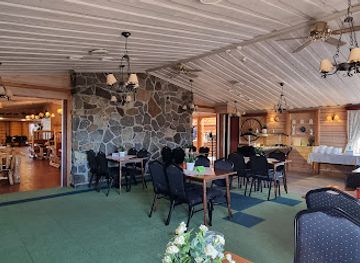
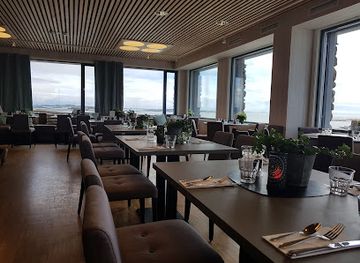
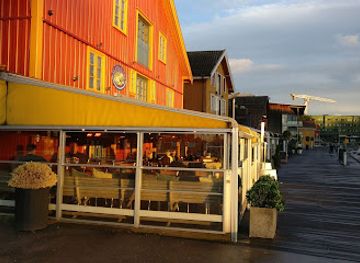
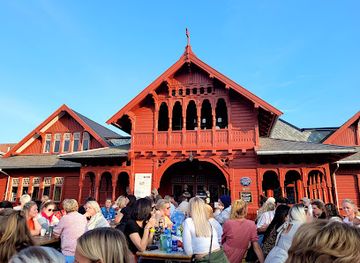
Vestfold’s dining is closely tied to the Oslofjord and its agricultural hinterland. Seafood, prawns, mussels and locally landed fish are common features of menus in harbour towns, while cafés and bakeries provide familiar Norwegian breads, pastries and coffee. Sandefjord, Tønsberg, Larvik and Åsgårdstrand offer the widest range of restaurants, from informal waterfront meals and traditional pubs to contemporary kitchens using seasonal produce. In rural areas, farm shops and small producers may sell vegetables, berries, preserves and other goods, particularly during the warmer months. Local food markets and summer waterside stalls are useful places to find regional produce, although availability varies by town and season. Norwegian staples such as open sandwiches, waffles and brown cheese are part of the wider national food culture rather than exclusive Vestfold specialities. Fish soup, shellfish and freshly prepared seafood best reflect the region’s maritime setting, while craft beer, cider and non-alcoholic drinks are increasingly available alongside established Norwegian beverages.
-
Restaurant
Kverneriet Tønsberg
Savor the best burgers in Tønsberg at Kverneriet – where quality meets flavor in every bite.
-
Norwegian
Furulund Kro & Motel AS
Experience genuine Norwegian dining and cozy accommodations at Furulund Kro & Motel in scenic Stokke.
-
Restaurant
The End of the World Eatery
Discover culinary excellence at The End of the World Eatery in Tjøme—where fresh local ingredients meet stunning coastal views.
-
Restaurant
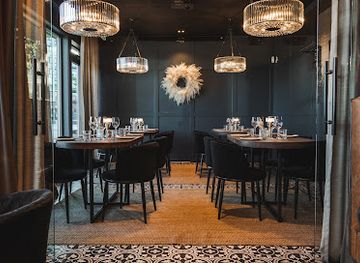
Havariet
Experience exquisite dining at Havariet in Tønsberg - where local flavors meet international cuisine in a warm atmosphere.
Best bars in Vestfold
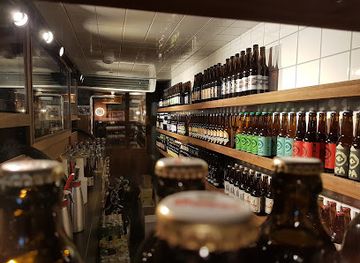
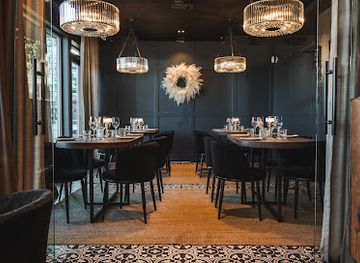
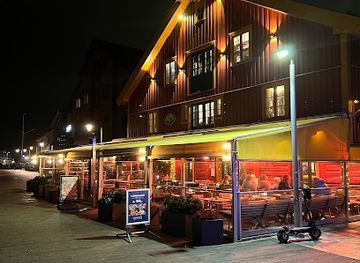
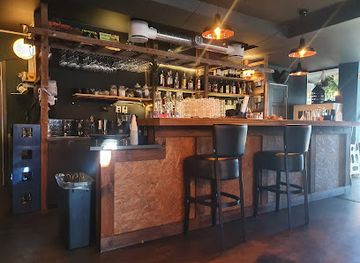
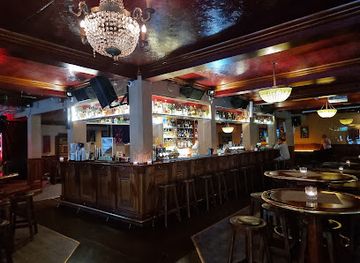
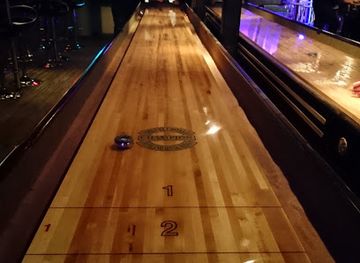
Evening life in Vestfold is concentrated in Tønsberg, Sandefjord, Larvik and, during summer, the harbour areas of Stavern and other coastal towns. Traditional pubs, hotel bars, cafés and restaurants provide the main social settings, with a modest selection of live music and later venues in the larger towns. Tønsberg and Sandefjord generally offer the broadest choice, while Larvik combines established local bars with seasonal activity near the waterfront. On islands and in smaller villages, evenings are quieter and depend more on restaurants, holiday homes and occasional summer events than on permanent nightlife. Coastal venues can become busy during the short high season, but opening arrangements and programmes change regularly. Norway’s high alcohol prices and licensing rules shape the scene, so an evening centred on food, conversation, music or a harbour walk is often more typical than a late club night.
-
Restaurant
Brygga i Tønsberg
Experience the perfect blend of dining, nightlife, and history at Brygga i Tønsberg, a premier destination on Norway's stunning coastline.
-
Bar
Kverneriet Tønsberg
Discover the flavors of Tønsberg at Kverneriet, where gourmet burgers and crafted cocktails meet a vibrant bar atmosphere.
-
Restaurant
Havariet
Discover Havariet, a vibrant restaurant in Tønsberg offering authentic Norwegian cuisine in a cozy atmosphere, perfect for every traveler.
-
Bar
Beist Burger & Bar
Experience the vibrant atmosphere and gourmet burgers at Beist Burger & Bar in Sandefjord, the ultimate destination for food lovers.
Best nightclubs in Vestfold
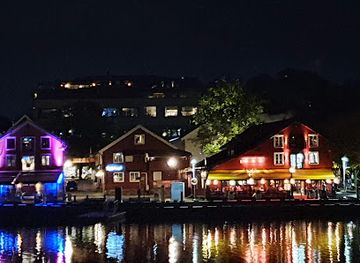
Evening life in Vestfold is concentrated in Tønsberg, Sandefjord, Larvik and, during summer, the harbour areas of Stavern and other coastal towns. Traditional pubs, hotel bars, cafés and restaurants provide the main social settings, with a modest selection of live music and later venues in the larger towns. Tønsberg and Sandefjord generally offer the broadest choice, while Larvik combines established local bars with seasonal activity near the waterfront. On islands and in smaller villages, evenings are quieter and depend more on restaurants, holiday homes and occasional summer events than on permanent nightlife. Coastal venues can become busy during the short high season, but opening arrangements and programmes change regularly. Norway’s high alcohol prices and licensing rules shape the scene, so an evening centred on food, conversation, music or a harbour walk is often more typical than a late club night.
-
Night club
Brygga i Tønsberg
Discover Brygga i Tønsberg: A lively mix of nightlife, dining, and history by the stunning waterfront of Norway.
-
Pub
James Clark Pub & Restaurant AS
Discover the lively vibe of James Clark Pub & Restaurant AS in Sandefjord, offering great food, drinks, and entertainment for an unforgettable night.
-
Live music bar
Kurbadhagen - Musikkbar & Cocktailbar
Experience the lively ambiance of Kurbadhagen, a premier live music and cocktail bar in Sandefjord, blending great drinks with unforgettable performances.
-
Bar
Barkaden
Experience the vibrant nightlife at Barkaden, Tønsberg's premier bar, known for its eclectic drinks and lively atmosphere.
Best shops in Vestfold
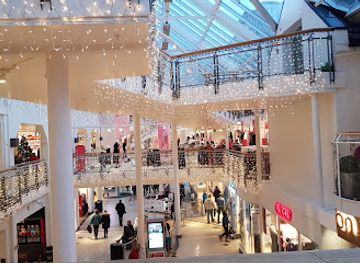
Shopping in Vestfold is centred on the high streets, harbour areas and commercial centres of Tønsberg, Sandefjord, Larvik, Horten and Holmestrand. Tønsberg combines modern retail with historic streets and independent shops, while the coastal towns are useful for maritime-themed goods, outdoor equipment and seasonal holiday shopping. Farmers’ markets and farm shops offer opportunities to buy berries, vegetables, preserves, baked goods and other locally produced food, with the greatest choice during spring and summer. Galleries and craft shops in Åsgårdstrand, Stavern and other visitor centres may stock paintings, ceramics, textiles, jewellery and design objects inspired by the coast. Museums often provide more considered souvenirs, including books on Viking history, naval heritage, whaling and Norwegian art. Færder and the southern shoreline have limited everyday retail outside their main settlements, so buy provisions before heading to quieter islands or remote coastal walks.
-
Shopping mall
Farmandstredet Shopping Center
Experience the best of shopping and dining at Farmandstredet Shopping Center in Tønsberg, Norway, where variety meets convenience.
-
Hypermarket
Obs Sandefjord
Discover the extensive offerings at Obs Sandefjord, where shopping meets convenience in a vibrant hypermarket setting.
-
Shopping mall
Hvaltorvet kjøpesenter
Explore Hvaltorvet Kjøpesenter in Sandefjord for an unforgettable shopping experience with diverse stores and delightful dining options.
-
Shopping mall
Nordbyen
Explore Nordbyen, Larvik's bustling shopping mall, offering diverse shops, delicious dining, and convenient services for a complete shopping experience.

Get your free copy of our complete guide to Vestfold, delivered straight to you.
Everything on this page, from attractions and restaurants to essentials and local phrases, in one PDF you can read offline, print or share.
Already have an account? Sign in
Your Vestfold guide is ready.
We'll send it to · Not you? Sign out

Getting your guide ready…
We are putting together a fresh copy of the Vestfold guide. This can take up to a minute.
This can take a few moments. If your browser asks, choose Allow so the download can start. You'll find the guide in your Downloads folder.
Nothing happened? Download it again
Sorry, the guide is taking longer than usual. Please try again in a minute, or get it by email instead.
Vestfold essentials
Currency and Payment
Safety
Emergency Situations
Do's and Don'ts
Local Tips
From Eve
Local phrases worth knowing
You don't need to get them perfect. A few words go a long way, and locals appreciate the effort.
Basics
| English | Local | Say it |
|---|---|---|
| Hello | Hei | [hay] |
| Goodbye | Ha det | [hah deh] |
| Yes | Ja | [yah] |
| No | Nei | [nay] |
| Please/You're welcome | Vær så snill | [vair soh snill] |
| Thank you | Takk | [tahk] |
| Excuse me/Sorry | Unnskyld | [oon-shild] |
| How are you? | Hvordan har du det? | [vor-dahn har doo deh] |
| Fine. And you? | Bra. Og du? | [brah. oh doo?] |
| Do you speak English? | Snakker du engelsk? | [snahk-er doo eng-elsk?] |
| I don't understand | Jeg forstår ikke | [yai for-stor ik-keh] |
Eating & Drinking
| English | Local | Say it |
|---|---|---|
| I'd like to see the menu, please | Jeg vil gjerne se menyen, vær så snill | [yai vil yaer-neh seh men-yen, vair soh snill] |
| I don't eat meat | Jeg spiser ikke kjøtt | [yai spee-ser ik-keh shutt] |
| Cheers! | Skål! | [skawl] |
| I would like to pay, please | Jeg vil gjerne betale, vær så snill | [yai vil yaer-neh beh-tah-leh, vair soh snill] |
Emergencies
| English | Local | Say it |
|---|---|---|
| Help! | Hjelp! | [yelp] |
| Go away! | Gå bort! | [goh bort] |
| Call the Police! | Ring politiet! | [ring poh-lee-teh] |
| Call a doctor! | Ring en lege! | [ring en leh-geh] |
| I'm lost | Jeg er tapt | [yai air tahpt] |
| I'm ill | Jeg er syk | [yai air seek] |
Shopping
| English | Local | Say it |
|---|---|---|
| I'd like to buy... | Jeg vil kjøpe... | [yai vil shuh-peh...] |
| I'm just looking | Jeg bare ser | [yai bah-reh ser] |
| How much is it? | Hvor mye koster det? | [vor myeh kost-er deh?] |
| That's too expensive | Det er for dyrt | [deh air for deert] |
| Can you lower the price? | Kan du senke prisen? | [kan doo sen-keh pree-sen?] |
Time & Numbers
| English | Local | Say it |
|---|---|---|
| What time is it? | Hva er klokka? | [vah air klok-ka?] |
| It's one o'clock | Den er ett | [dehn air ett] |
| Half past (10) | Halv elleve | [halv el-leh-veh] |
| Morning | Morgen | [mor-gen] |
| Afternoon | Ettermiddag | [et-ter-mid-dahg] |
| Evening | Kveld | [kveld] |
| Yesterday | I går | [ee gor] |
| Today | I dag | [ee dahg] |
| Tomorrow | I morgen | [ee mor-gen] |
| 1 | 1 | [en] |
| 2 | 2 | [toh] |
| 3 | 3 | [treh] |
| 4 | 4 | [fireh] |
| 5 | 5 | [fem] |
| 6 | 6 | [seks] |
| 7 | 7 | [sju] |
| 8 | 8 | [åtte] |
| 9 | 9 | [ni] |
| 10 | 10 | [ti] |
Transport & Directions
| English | Local | Say it |
|---|---|---|
| Where's a/the...? | Hvor er en/den...? | [vor air en/den?] |
| What's the address? | Hva er adressen? | [vah air ah-dress-en?] |
| Can you show me (on the map)? | Kan du vise meg (på kartet)? | [kan doo vee-seh mai (poh kar-teh)?] |
| When's the next (bus)? | Når går neste (buss)? | [nor gor nes-teh (boos)?] |
| A ticket (to ....) | En billett (til ....) | [en bee-lett (til ....)] |
History of Vestfold
Stone Age settlement and coastal resources
People have lived around the Oslofjord since the retreat of the last Ice Age, using Vestfold’s shores, forests and sheltered waters for fishing, hunting and gathering. Changing sea levels mean that archaeological sites are not always located beside today’s coastline, but Stone Age finds across the county demonstrate long occupation and movement through the landscape. Farming gradually became more important, and later communities combined cultivation with maritime activity. This early relationship with the sea and fertile lowlands established patterns that would continue through the Bronze Age, Iron Age and later history.
Borre and the Viking Age
The burial mounds at Borre, near Horten, form one of the most significant Viking Age monumental landscapes in Scandinavia. The mounds and associated archaeological evidence indicate that the area was connected with powerful elites and wider networks of exchange and political influence. Nearby Midgard Viking Centre presents this heritage in an accessible setting, while the landscape itself remains the essential historical evidence. Vestfold’s Viking importance is also represented by Kaupang, an early trading settlement near Larvik that linked the region to commerce across the North Sea and Baltic worlds.
Tønsberg and medieval royal power
Tønsberg developed into an important medieval centre, traditionally regarded as Norway’s oldest town. Its position on the western side of the Oslofjord made it useful for trade, administration and royal power. The fortress at Slottsfjell, known historically as Tunsberghus, became one of Norway’s major medieval strongholds before falling into decline after the late medieval period. The remaining tower and earthworks, together with archaeological collections in the town, preserve the memory of Tønsberg’s role in the political and commercial life of medieval Norway.
Timber, shipping and the Larvik estate
From the early modern period, Vestfold’s forests and harbours supported timber production, export and shipbuilding. Larvik became especially closely associated with the powerful Treschow family and the extensive estate that shaped local landholding and industry. Timber moved through coastal ports to markets abroad, while shipping connected communities along the Oslofjord with the North Sea. The legacy can be read in historic buildings, harbour landscapes and the continuing importance of forestry and maritime trade, even though modern economic life is more diverse than it was in the age of wooden sailing ships.
Naval development at Horten and Stavern
Horten became a major centre for the Royal Norwegian Navy after Karljohansvern was established there in the nineteenth century. Naval workshops, fortifications and technical institutions brought strategic and industrial importance to the town. Further south, Stavern grew around the naval base at Fredriksvern, founded in the eighteenth century. Its streets and surviving military buildings reflect Norway’s earlier maritime defence system. Together, Horten and Stavern show how the Oslofjord coast served not only commerce and fishing but also the organisation of national naval power.
Whaling and the modern port towns
In the nineteenth and twentieth centuries, Sandefjord became internationally associated with commercial whaling. Companies, shipowners, crews and processing businesses operated from the port, creating wealth and employment while also participating in an industry that profoundly reduced whale populations and is now prohibited in the form once practised there. The Whaling Museum in Sandefjord presents this history, including its technological, economic and environmental dimensions. The town’s maritime identity, like that of several Vestfold ports, later shifted towards shipping, services, tourism and cultural heritage.
Artists and the Oslofjord landscape
The light, shoreline and small-town atmosphere of the Oslofjord attracted artists in the late nineteenth and early twentieth centuries. Åsgårdstrand became particularly associated with Edvard Munch, who owned a summer house there and used local settings in several works. The community’s artistic history forms part of a broader cultural landscape that includes galleries, museums and historic residences across Vestfold. It also illustrates how the region’s coastal environment was interpreted not only as a working maritime space but as a subject for modern Norwegian art.
Vestfold in Photos
Browse through our photo collection highlighting the charm and character of the destination.
Neighbouring regions of Vestfold
The closest regions to Vestfold, if you have time for more than one.
-

-

-

-

-


Swipe for more regions
Explore more

Explore more of Norway
Explore Norway's spectacular fjords, vibrant cities, and natural wonders. Experience the Northern Lights, Midnight Sun, and rich cultural heritage in this Scandinavian gem.
Explore Norway