

Free Jebel Shams Travel Guide & Mobile App
Explore Jebel Shams with free travel guides. Discover regional history, expert tips, proposed trips, and audio guides on web or mobile app.


Jebel Shams brings high-altitude landscapes, canyon viewpoints, mountain villages and demanding walks to Oman's dramatic Al Hajar range.
Read more about Jebel Shams
When is the best time to visit Jebel Shams?
Best: April–May, October · 23–27°C| Month | High (°C) | Rainfall (mm) |
|---|---|---|
| January | 15 | 15 |
| February | 16 | 13 |
| March | 19 | 18 |
| April (best) | 23 | 8 |
| May (best) | 27 | 5 |
| June | 30 | 3 |
| July | 31 | 3 |
| August | 30 | 3 |
| September | 28 | 4 |
| October (best) | 24 | 5 |
| November | 19 | 13 |
| December | 16 | 15 |
Getting to and around Jebel Shams
How to get there
Transportation
Best attractions in Jebel Shams
Jebel Shams is primarily an outdoor destination, centred on the high plateau, the immense ravines of Wadi Ghul and the viewpoints reached along the mountain road. The Balcony Walk is the signature excursion, following the canyon rim towards As Sab and offering close views of cliff strata, terraces and isolated mountain settlements. Shorter walks, photographic stops and overnight camping provide alternatives for visitors who do not want a demanding hike, while clear nights can be excellent for observing the stars. The area also rewards slower exploration of its stone villages, old paths, cultivated pockets and rugged wadis, although access should always respect private land and local guidance. Mountain lodges and camps form part of the visitor infrastructure, rather than the attraction itself, and facilities remain modest compared with urban Oman. Al Hamra, below the mountain, is a useful complementary stop for traditional architecture and local history, while Nizwa and Bahla lie farther away and should be treated as separate nearby destinations within a wider Al Dakhiliyah journey.
-
Mountain peak
Jebel Shams
Discover the breathtaking views and thrilling hikes at Jebel Shams, Oman’s stunning mountain peak and the Grand Canyon of the Middle East.
-
Tourist attraction
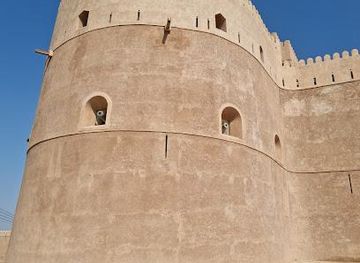
Al-Hazm Fort | حصن الحزم
Discover the splendor of Al-Hazm Fort, a remarkable testament to Oman's architectural heritage and rich history, nestled in the heart of Al Hazm.
-
Mountain range
Jebel Akhdar
Explore the breathtaking beauty of Jebel Akhdar, a stunning mountain range in Oman, perfect for nature lovers and cultural enthusiasts alike.
-
Resort hotel
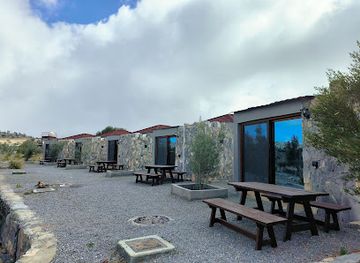
Jebel Shams Resort منتجع جبل شمس
Discover the enchanting heights of Jebel Shams Resort in Oman, where luxury meets breathtaking mountain vistas and authentic Omani culture.

Best landmarks in Jebel Shams
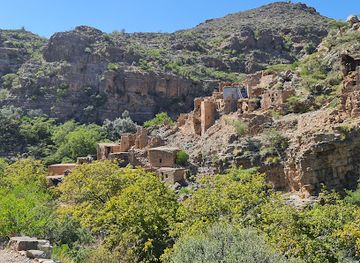
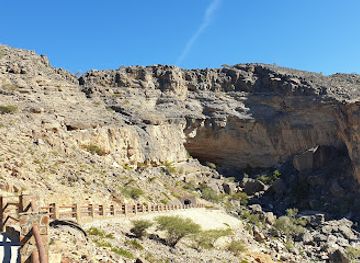
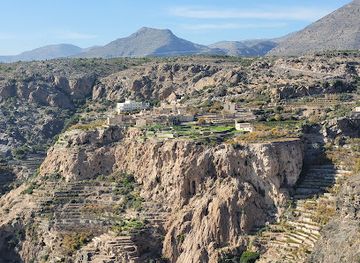
The defining landmark is the great escarpment above Wadi Ghul, where pale, horizontally layered limestone forms a vast canyon system beneath the Jebel Shams plateau. Viewpoints along the upper rim reveal the depth of the gorge and the sharply incised ravines that have shaped settlement and movement through the mountains. The Balcony Walk is also a recognisable cultural landmark because its path links dramatic scenery with the abandoned village of As Sab, whose stone remains occupy a narrow ledge above the wadi. Scattered traditional villages, terrace walls and falaj channels provide a more intimate architectural record of highland life. The mountain summit area itself is less a single monument than a high, exposed landscape of ridges, cliffs and broad rock terraces. Together these features distinguish Jebel Shams from Oman's lower desert and coastal landmarks, while demanding careful behaviour around unstable ground and unprotected edges.
-
Historical landmark
Bahla Fort
Discover the enchanting Bahla Fort, a UNESCO World Heritage site that embodies Oman's rich history and stunning architectural beauty.
-
Tourist attraction
Al Hoota Cave
Explore Al Hoota Cave, a stunning natural wonder in Oman, showcasing breathtaking formations and a rich geological history.
-
Garden
Falaj Daris Park
Discover the tranquil beauty of Falaj Daris Park in Nizwa, Oman, a garden oasis showcasing rich culture and stunning landscapes.
-
Tourist attraction
Misfat Al Abriyeen
Experience the stunning beauty and cultural richness of Misfat Al Abriyeen, a must-visit village in the heart of Oman, surrounded by breathtaking landscapes.
Explore Jebel Shams on the map
Plan your trip on one map. See where the top cities, national parks and sights are, and book hotels and experiences in a few clicks.
Best hotels in Jebel Shams
Best restaurants in Jebel Shams
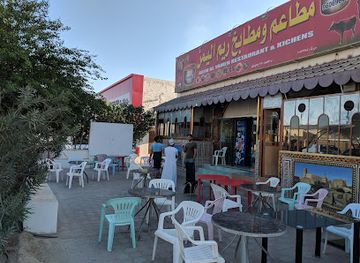
Dining on Jebel Shams is simple and closely tied to accommodation camps, mountain lodges and meals arranged in advance rather than to a developed restaurant district. Visitors should expect cooked Omani and South Asian-influenced fare, rice dishes, grilled meats, soups, breads, tea and coffee, with menus varying according to the individual property. Fresh provisions are less readily available on the plateau, so independent travellers should stock up in Al Hamra or another larger town before ascending. In the wider Al Dakhiliyah region, dates, flatbreads, rice-based meals and spiced meat reflect national Omani food traditions, while village hospitality may include coffee and dates. Al Hamra and Nizwa offer a broader choice of cafés and everyday restaurants, but they are outside the Jebel Shams area. Advance confirmation of meal arrangements is sensible when staying at a remote camp, particularly outside peak periods or when arriving late.
-
Yemenite
Reem Al Yamen Restaurants & kitchens
Discover the vibrant flavors of Yemenite cuisine at Reem Al Yamen Restaurants & Kitchens in Al Hamra - A culinary experience not to be missed!
-
Restaurant
Layali Al Jabal Restaurant
Experience authentic Omani flavors at Layali Al Jabal Restaurant - a culinary delight in Labal.
-
Restaurant
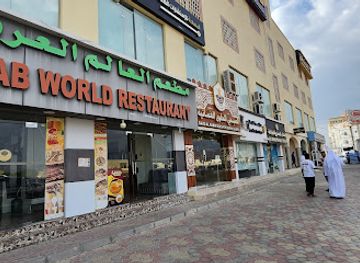
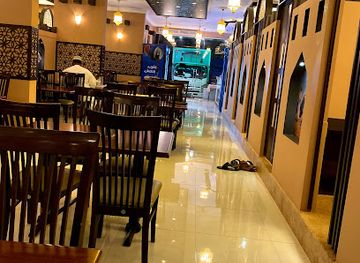
مطعم العالم العربي Arab World Restaurant
Experience authentic Omani cuisine at Arab World Restaurant in Nizwa—where tradition meets taste in a warm atmosphere.
-
Pakistani
Rainbow restaurant
Experience authentic Pakistani flavors at Rainbow Restaurant in Al Mudayq - where every dish tells a story.
Best bars in Jebel Shams
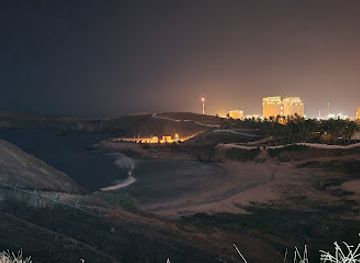
Jebel Shams has no conventional nightlife district, and evening life revolves around quiet mountain accommodation, campfires where permitted, conversation, tea, stargazing and the darkness of the high plateau. Some accommodation providers organise simple evening activities, but these are property-specific and should not be assumed. Alcohol is not a feature of village life and availability is limited by Oman's national licensing rules; visitors should never expect bars or nightclubs on the mountain. For a livelier evening, cafés and restaurants in Al Hamra or Nizwa provide the nearest established options, although both are outside Jebel Shams and require a planned drive. The mountain's appeal after sunset lies instead in its silence, cooler air and exceptionally broad views of the surrounding Al Hajar terrain.
-
Resort hotel
Jebel Shams Resort منتجع جبل شمس
Discover the breathtaking beauty of Jebel Shams Resort, where luxury meets nature in the heart of Oman's stunning mountains.
-
Restaurant
Oasis Club
Experience the vibrant culinary scene at Oasis Club in Raysut, where delicious food meets a lively bar atmosphere for an unforgettable night out.
-
Grill
Rock Bottom Cafe Muscat
Experience the vibrant atmosphere of Rock Bottom Cafe Muscat, where American cuisine meets lively entertainment in a dynamic setting.
-
Resort hotel
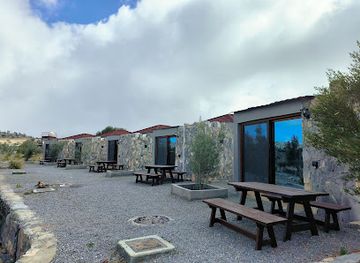
The View
Discover breathtaking beauty and luxurious comfort at The View Resort Hotel in Al Hamra, Oman, your perfect getaway spot.
Best nightclubs in Jebel Shams
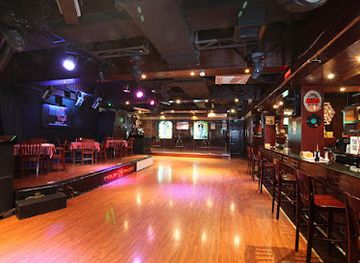
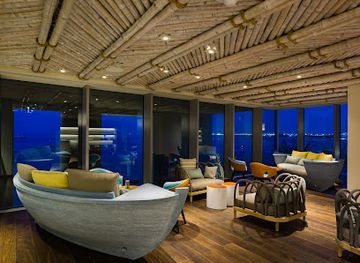
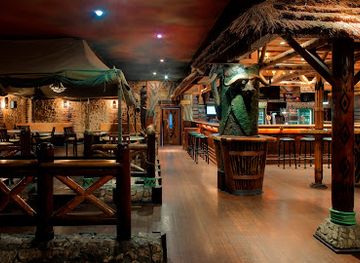
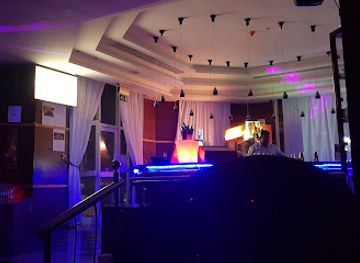
Jebel Shams has no conventional nightlife district, and evening life revolves around quiet mountain accommodation, campfires where permitted, conversation, tea, stargazing and the darkness of the high plateau. Some accommodation providers organise simple evening activities, but these are property-specific and should not be assumed. Alcohol is not a feature of village life and availability is limited by Oman's national licensing rules; visitors should never expect bars or nightclubs on the mountain. For a livelier evening, cafés and restaurants in Al Hamra or Nizwa provide the nearest established options, although both are outside Jebel Shams and require a planned drive. The mountain's appeal after sunset lies instead in its silence, cooler air and exceptionally broad views of the surrounding Al Hajar terrain.
-
Resort hotel
Jebel Shams Resort منتجع جبل شمس
Discover the breathtaking beauty of Jebel Shams Resort, where luxury meets adventure in the heart of Oman's majestic mountains.
-
Lounge
Zale Beach Club & Lounge
Experience luxury, exquisite cuisine, and stunning ocean views at Zale Beach Club & Lounge in Muscat.
-
Bar
Club Safari
Discover the lively Club Safari, an enchanting bar in Muscat's Grand Hyatt, offering exotic drinks and an unforgettable ambiance.
-
Disco club
Whispers Night Club
Unleash your night at Whispers Night Club, Salalah’s premier disco destination for music, dance, and unforgettable experiences.
Best shops in Jebel Shams
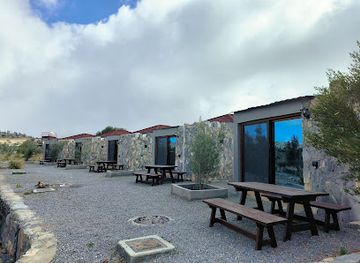
Shopping on Jebel Shams is limited to small supplies, locally made items and products offered by individual camps or guesthouses rather than a formal retail centre. Visitors may find dates, honey, woven goods, handicrafts or simple souvenirs, but availability is inconsistent and should not be treated as guaranteed. Al Hamra is the nearest useful place for everyday provisions before the ascent, while Nizwa provides a much wider range of food products, crafts and traditional goods in its established market areas; both lie outside the mountain area. Regional purchases may include Omani dates, coffee, spices, woven articles and small handmade objects, with the exact selection varying by season and seller. Buy respectfully from local producers, carry reusable bags and avoid collecting stones, plants or archaeological fragments from the mountain landscape.
-
Resort hotel
Jebel Shams Resort منتجع جبل شمس
Experience the breathtaking beauty of Oman at Jebel Shams Resort, where luxury meets nature in an unforgettable mountain escape.
-
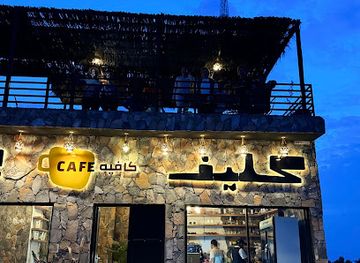
Coffee shop
Cliff Café
Experience the perfect blend of breathtaking views and exquisite coffee at Cliff Café in Jabal Shams, Oman.
-
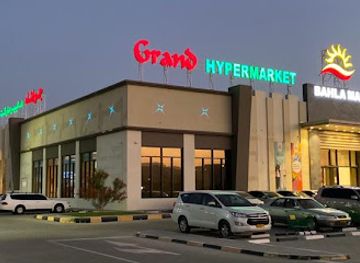
Gift shop
BAHLA MALL Grand Hypermarket-بهلا مول جراند هايبر ماركت
Discover the vibrant Bahla Mall - your ultimate shopping and dining destination in Oman, featuring Grand Hypermarket and family-friendly amenities.
-
Gift shop
بسملة basmalah
Explore بسملة Basmalah, Rustaq's premier gift shop for authentic Omani handicrafts and unique souvenirs that celebrate the local culture.

Get your free copy of our complete guide to Jebel Shams, delivered straight to you.
Everything on this page, from attractions and restaurants to essentials and local phrases, in one PDF you can read offline, print or share.
Already have an account? Sign in
Your Jebel Shams guide is ready.
We'll send it to · Not you? Sign out

Getting your guide ready…
We are putting together a fresh copy of the Jebel Shams guide. This can take up to a minute.
This can take a few moments. If your browser asks, choose Allow so the download can start. You'll find the guide in your Downloads folder.
Nothing happened? Download it again
Sorry, the guide is taking longer than usual. Please try again in a minute, or get it by email instead.
Jebel Shams essentials
Currency and Payment
Safety
Emergency Situations
Do's and Don'ts
Local Tips
From Eve
Local phrases worth knowing
You don't need to get them perfect. A few words go a long way, and locals appreciate the effort.
Basics
| English | Local | Say it |
|---|---|---|
| Hello | مرحبا | [Marhaban] |
| Goodbye | مع السلامة | [Ma'a as-salama] |
| Yes | نعم | [Na'am] |
| No | لا | [La] |
| Please/You're welcome | من فضلك | [Min fadlik] |
| Thank you | شكرا | [Shukran] |
| Excuse me/Sorry | عفوا | [Afwan] |
| How are you? | كيف حالك؟ | [Kayfa halak?] |
| Fine. And you? | بخير. وأنت؟ | [Bikhayr. Wa anta?] |
| Do you speak English? | هل تتحدث الإنجليزية؟ | [Hal tatahaddath al-Ingliziyya?] |
| I don't understand | لا أفهم | [La afham] |
Eating & Drinking
| English | Local | Say it |
|---|---|---|
| I'd like to see the menu, please | أريد أن أرى القائمة، من فضلك | [Urid an ara al-qa'ima, min fadlik] |
| I don't eat meat | لا آكل اللحم | [La akul al-lahm] |
| Cheers! | صحتين | [Sahteen] |
| I would like to pay, please | أريد أن أدفع، من فضلك | [Urid an adfa'a, min fadlik] |
Emergencies
| English | Local | Say it |
|---|---|---|
| Help! | نجدة! | [Najda!] |
| Go away! | اذهب بعيدا! | [Izhab ba'idan!] |
| Call the Police! | اتصل بالشرطة! | [Ittasil bil-shurta!] |
| Call a doctor! | اتصل بطبيب! | [Ittasil bi-tabeeb!] |
| I'm lost | أنا ضائع | [Ana da'i'a] |
| I'm ill | أنا مريض | [Ana marid] |
Shopping
| English | Local | Say it |
|---|---|---|
| I'd like to buy... | أريد أن أشتري... | [Urid an ashtari...] |
| I'm just looking | أنا فقط أنظر | [Ana faqat anzur] |
| How much is it? | كم ثمنه؟ | [Kam thamanuh?] |
| That's too expensive | هذا مكلف جدا | [Hatha mukallaf jidan] |
| Can you lower the price? | هل يمكنك تخفيض السعر؟ | [Hal yumkinuka takhfid as-si'r?] |
Time & Numbers
| English | Local | Say it |
|---|---|---|
| What time is it? | كم الساعة؟ | [Kam as-saa'a?] |
| It's one o'clock | الساعة واحدة | [As-saa'a wahida] |
| Half past (10) | نصف بعد (10) | [Nisf ba'd (10)] |
| Morning | صباح | [Sabah] |
| Afternoon | بعد الظهر | [Ba'd az-zuhur] |
| Evening | مساء | [Masa'a] |
| Yesterday | أمس | [Ams] |
| Today | اليوم | [Al-yawm] |
| Tomorrow | غدا | [Ghad] |
| 1 | واحد | [Wahid] |
| 2 | اثنان | [Ithnayn] |
| 3 | ثلاثة | [Thalatha] |
| 4 | أربعة | [Arba'a] |
| 5 | خمسة | [Khamsa] |
| 6 | ستة | [Sitta] |
| 7 | سبعة | [Sab'a] |
| 8 | ثمانية | [Thamaniya] |
| 9 | تسعة | [Tis'a] |
| 10 | عشرة | [Ashara] |
Transport & Directions
| English | Local | Say it |
|---|---|---|
| Where's a/the...? | أين الـ...؟ | [Ayna al...?] |
| What's the address? | ما هو العنوان؟ | [Ma huwa al-'unwan?] |
| Can you show me (on the map)? | هل يمكنك أن تريني (على الخريطة)؟ | [Hal yumkinuka an turini (ala al-kharita)?] |
| When's the next (bus)? | متى تأتي (الحافلة) التالية؟ | [Mata ta'ti (al-hafila) at-taliya?] |
| A ticket (to ....) | تذكرة (إلى....) | [Tadhkira (ila....)] |
History of Jebel Shams
The Geological Formation of the Al Hajar Mountains
Jebel Shams belongs to Oman's Al Hajar range, a region whose dramatic geology was shaped by the collision of the Arabian and Eurasian tectonic plates and the exposure of ancient oceanic rocks. In the Jebel Shams area, thick limestone strata have been uplifted, fractured and cut by erosion, producing the steep walls of Wadi Ghul and the deep ravines surrounding the plateau. The mountain's cliffs are therefore not simply scenic backdrops: they record the geological history of a former sea and the subsequent rise of the Omani landscape. Rock layers, scree slopes and exposed ridges remain central to the area's identity and appeal.
Early Mountain Settlement and Pastoral Life
For centuries, communities in the Al Hajar survived through a combination of small-scale cultivation, animal husbandry and movement between mountain and lowland environments. At Jebel Shams, settlement was constrained by altitude, steep slopes and limited water, so homes and fields developed in sheltered pockets and along accessible terraces. Goats and other livestock were important to household economies, while mountain paths connected villages with markets and lower valleys. The surviving stone structures and abandoned settlements around the canyon provide evidence of a demanding way of life shaped more by topography than by political boundaries.
Falaj Irrigation and Terraced Agriculture
Water management has long determined where people could live in Oman's mountains. Falaj systems, in which water is channelled from underground or mountain sources towards settlements and fields, supported cultivation in otherwise arid terrain. Around the Al Hajar, channels and terrace walls made it possible to grow dates, fruit and other crops in carefully limited areas. The Jebel Shams landscape contains traces of this relationship between water, stone and cultivation, although the condition and accessibility of individual channels vary. Irrigation traditions across Oman are part of a wider national heritage built on communal maintenance and precise allocation.
Mountain Villages and the Changing Rural Economy
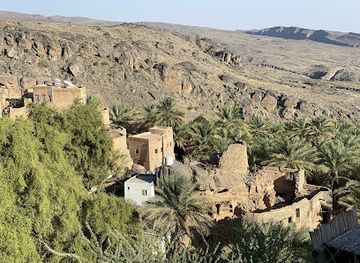
Traditional villages around Wadi Ghul and the Jebel Shams plateau were built from locally available stone and mud-based materials, often in positions that offered access to terraces, water and defensible slopes. Over time, improved roads, schooling, healthcare and economic opportunities encouraged many residents to spend more of their lives in larger settlements and towns. Some highland villages are now partly abandoned, while others continue to be inhabited or used seasonally. Their remaining houses, paths and agricultural plots illustrate the transformation of Oman's rural economy without reducing the mountains to an uninhabited wilderness.
Modern Road Access and Mountain Tourism
Jebel Shams was once reached primarily by demanding tracks and established footpaths linking mountain communities to the lower valleys. Modern road construction made the plateau accessible to private vehicles and gradually introduced camping, guesthouses and guided outdoor activities. Tourism has grown around the canyon viewpoints, hiking routes and cooler highland climate, but infrastructure remains limited compared with Oman's cities and coastal resorts. This recent development has brought new income opportunities while also increasing the importance of waste management, careful driving, respect for village life and responsible behaviour around fragile mountain terrain.
The Balcony Walk and Contemporary Outdoor Culture
The route commonly called the Balcony Walk follows the upper side of Wadi Ghul towards the abandoned settlement of As Sab. It uses an old mountain path rather than a purpose-built urban trail, reflecting the historic movement of people and livestock along the canyon. In recent decades it has become one of Oman's best-known hiking experiences, attracting visitors interested in walking, geology, photography and mountain scenery. Its popularity has also highlighted the hazards of exposed terrain: the route remains a demanding highland walk, and its cultural and natural setting requires more care than a conventional sightseeing attraction.
Jebel Shams in Photos
Browse through our photo collection highlighting the charm and character of the destination.
Neighbouring regions of Jebel Shams
The closest regions to Jebel Shams, if you have time for more than one.
-

-

-

-

-


Swipe for more regions
Explore more
Explore more of Oman
Discover Oman: A land of ancient forts, golden deserts, and warm hospitality, offering a perfect blend of adventure and tranquility.
Explore Oman