

Free Darien Travel Guide & Mobile App
Explore Darien with free travel guides. Discover regional history, expert tips, proposed trips, and audio guides on web or mobile app.


Darién, Panama combines rainforest, rivers, Indigenous cultures and Pacific waterways in a remote region best explored with local guides.
Read more about Darien
When is the best time to visit Darien?
Best: January–March · 29°C| Month | High (°C) | Rainfall (mm) |
|---|---|---|
| January (best) | 29 | 30 |
| February (best) | 29 | 30 |
| March (best) | 29 | 40 |
| April | 30 | 70 |
| May | 30 | 160 |
| June | 30 | 210 |
| July | 30 | 220 |
| August | 30 | 230 |
| September | 30 | 210 |
| October | 30 | 190 |
| November | 29 | 110 |
| December | 29 | 50 |
Getting to and around Darien
How to get there
Transportation
Best attractions in Darien
Darién’s attractions are primarily ecological, riverine and cultural rather than built for mass tourism. Darién National Park is the central draw, offering rainforest, mountain foothills, wetlands and exceptional wildlife habitat, although access is remote and should be arranged with guides and current permission. Boat journeys on the Tuira, Chucunaque and connected waterways reveal a landscape of forest banks, tidal channels and small settlements more effectively than a hurried road itinerary. The Pacific coast and Gulf of San Miguel provide opportunities for fishing, birdwatching and exploring mangrove and estuarine environments, with communities such as Garachiné and Jaqué serving as possible bases where local arrangements exist. The Filo del Tallo area is important for forest and watershed conservation, but it is not a conventional theme-park attraction and requires careful planning. Community visits among Emberá, Wounaan or Guna communities can introduce visitors to crafts, food, river knowledge and local environmental perspectives when organised respectfully. Wildlife watching may include monkeys, macaws, amphibians and, with considerable luck, larger forest mammals; sightings are never guaranteed. Yaviza, the end of the Pan-American Highway, offers geographic context for understanding the Darién Gap rather than an independent attraction circuit.
-
Park
Miguel de Cervantes Saavedra Park
Explore the lush landscapes and vibrant culture of Miguel de Cervantes Saavedra Park in David, a serene escape perfect for relaxation and local experiences.
-
Nature preserve
Punta Patiño
Discover Punta Patiño: A serene nature preserve in Darién Province, rich in biodiversity and breathtaking landscapes, perfect for eco-tourism and wildlife adventures.

Best landmarks in Darien
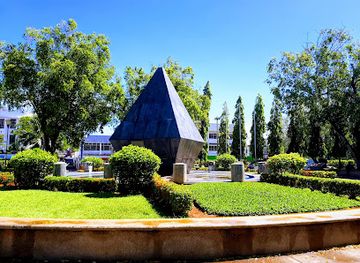
Darién’s most significant landmarks are landscapes and places that express its geographic importance. Darién National Park is the region’s defining natural landmark, protecting an immense block of rainforest, mountain terrain, wetlands and coastal habitat at the meeting point of Central and South American biological worlds. The Tuira River is another landmark in practical and cultural terms: its broad waterway connects La Palma and interior settlements and remains one of the region’s principal corridors. Yaviza marks the eastern end of the Pan-American Highway and provides a powerful, if understated, reference point for the unfinished road through the Darién Gap. The Gulf of San Miguel and its mangrove-fringed shores demonstrate the importance of tides, estuaries and Pacific waterways to local life. Filo del Tallo’s forested watershed is significant for regional conservation, while the remote highlands and river valleys of the national park form a dramatic natural boundary between settled areas and interior wilderness. These landmarks are best understood through guided travel, since many are not equipped as conventional sightseeing sites and may require boats, permits or community permission.
-
Historical place
Panamá Viejo
Explore the historical heart of Panama at Panamá Viejo, where ancient ruins and modern skyline meet.
-
Boat ramp
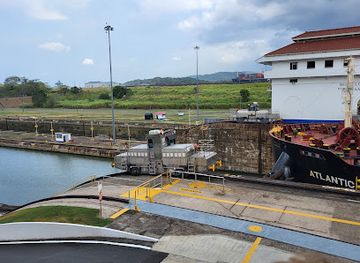
Miraflores Locks
Explore the Miraflores Locks, a stunning historical landmark of the Panama Canal, offering breathtaking views and a deep dive into maritime engineering.
-
Observation deck
Agua Clara Locks Visitor Center
Experience the breathtaking views and engineering wonders at the Agua Clara Locks Visitor Center, a must-visit attraction on your Panama adventure.
-
Historical place
Fort San Lorenzo
Discover the historic Fort San Lorenzo in Panama, a UNESCO World Heritage site showcasing colonial architecture and breathtaking nature views.



Explore Darien on the map
Plan your trip on one map. See where the top cities, national parks and sights are, and book hotels and experiences in a few clicks.
Best hotels in Darien
Best restaurants in Darien
Darién’s dining scene is small, practical and closely tied to river, coast and household cooking rather than to a concentration of formal restaurants. In La Palma, Yaviza and larger settlements, visitors may find simple eateries serving rice, beans, plantain, chicken, fresh fish and seafood, with menus shaped by seasonal supply and what can be transported along rivers. Coastal communities draw on fish, prawns and other Pacific products, while Afro-Darien cooking contributes hearty stews, coconut-based preparations and plantain dishes to the regional food culture. Indigenous households and community tourism projects may offer locally prepared meals, but arrangements, dietary requirements and prices should be agreed beforehand. Markets and small shops are useful for basic provisions, though selection is limited outside the main centres. Panama’s national fondness for coffee, fruit drinks, fried snacks and casual meals is also evident here, but visitors should not expect a developed fine-dining or café circuit. Bring non-perishable supplies for remote excursions and carry safe drinking water unless purification has been confirmed.
-
Restaurant
Fonda Lo Que Hay
Experience authentic Panamanian cuisine at Fonda Lo Que Hay in Panama City—where tradition meets flavor in a vibrant setting.
-
Restaurant
Mahalo Cocina y Jardin
Discover Mahalo Cocina y Jardin - A culinary gem nestled in Panama City's heart offering fresh local dishes amidst serene gardens.
-
Restaurant
Kaandela Restaurant
Discover authentic Panamanian flavors at Kaandela Restaurant – where every dish tells a story in a cozy yet vibrant setting.
-
Restaurant
Restaurante Y Hospedaje Mely
Experience authentic Panamanian cuisine and cozy lodging at Restaurante Y Hospedaje Mely in beautiful Darién Province.


Best bars in Darien
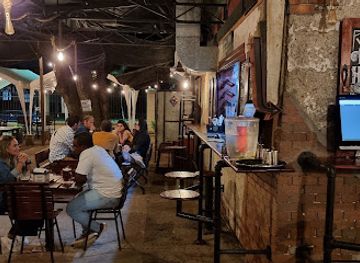
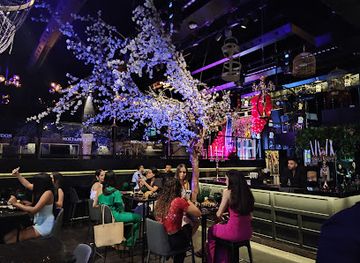
Darién does not have a significant nightclub scene. Evening life centres on modest local bars, restaurants, community gatherings and informal social spaces in La Palma, Yaviza and other populated settlements, while smaller and Indigenous communities may have few public venues for visitors. Music and conversation are more characteristic of the evening than a dedicated entertainment district, and activity generally follows local routines rather than late-night tourism. Some lodges or community tourism projects may provide a place to relax after a river or forest excursion, but facilities and opening arrangements vary. Drink responsibly, avoid travelling on unfamiliar rivers after dark, and respect community rules about noise, photography and alcohol. Travellers should not assume that nightlife will be available in remote areas and should purchase essential provisions during daylight hours.
-
Brewpub
La Fábrica
Experience the best of Panama's craft beer scene at La Fábrica, where gourmet burgers meet stunning bay views.
-
Brewpub
Istmo Brew Pub
Experience the vibrant craft beer culture of Panama at Istmo Brew Pub, a must-visit brewpub in Panama City offering a diverse selection of local brews and delicious food.
-
Bar
Pedro Mandinga Rum Bar
Discover the enchanting Pedro Mandinga Rum Bar, where vibrant cocktails and a lively atmosphere meet the rich spirit of Panama in the heart of Casco Antiguo.
-
Bar
Amano Bar
Experience unique cocktails and vibrant nightlife at Amano Bar in Panama City, a perfect blend of local flavors and modern vibes.


Best nightclubs in Darien
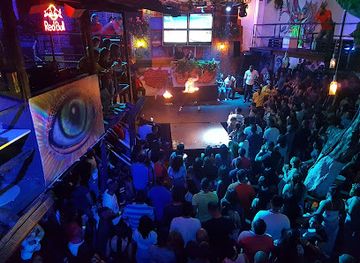
Darién does not have a significant nightclub scene. Evening life centres on modest local bars, restaurants, community gatherings and informal social spaces in La Palma, Yaviza and other populated settlements, while smaller and Indigenous communities may have few public venues for visitors. Music and conversation are more characteristic of the evening than a dedicated entertainment district, and activity generally follows local routines rather than late-night tourism. Some lodges or community tourism projects may provide a place to relax after a river or forest excursion, but facilities and opening arrangements vary. Drink responsibly, avoid travelling on unfamiliar rivers after dark, and respect community rules about noise, photography and alcohol. Travellers should not assume that nightlife will be available in remote areas and should purchase essential provisions during daylight hours.
-
Disco club
Chill out discotheque
Dive into Panama's nightlife at Chill Out Discotheque, where the music is vibrant, the lights are dazzling, and the energy is electrifying.
-
Bar
La Tana
La Tana: Where Panama City's nightlife comes alive with great music, delicious drinks, and an unforgettable atmosphere.
-
Event venue
La Nueva Gruta Azul
Experience the vibrant culture and lively atmosphere at La Nueva Gruta Azul, an exceptional event venue in the heart of Panama City.
-
Adult entertainment club
Le Palace
Discover Panama City's vibrant nightlife at Le Palace, where captivating performances and a welcoming atmosphere await you.


Best shops in Darien
Shopping in Darién is focused on practical supplies, local produce and community-made crafts rather than extensive retail districts. La Palma and Yaviza have the broadest choice of small shops and provisions, but visitors heading into remote areas should buy essentials beforehand because stock and cash services are limited. Community projects and Indigenous artisans may offer baskets, carved objects, woven items, jewellery or textiles associated with Emberá, Wounaan or Guna traditions. Buy directly and respectfully, confirm that materials are legally sourced, and avoid purchasing archaeological objects, wildlife products or anything made from protected species. Small food markets and local shops may sell plantains, fruit, rice, fish and other regional staples, while souvenirs are more likely to be handmade than branded. Prices, stock and market locations can change, so do not build an itinerary around a particular market. Cash in small US dollar denominations is useful, especially when purchasing from independent sellers or community enterprises.
-
Store
Melo Yaviza
Explore Melo Yaviza, a cultural store in Panama's Darién Province, where local goods meet a vibrant community spirit.
-
Store
Subasta Ganadera de Darien
Explore the rich agricultural heritage of Darién at Subasta Ganadera, where vibrant livestock auctions meet local culture.
-
Youth clothing store
Villa'S Shop
Explore the vibrant youth fashion scene at Villa'S Shop in Metetí, where local culture meets contemporary style for all ages.
-
Grocery store
Tienda del Chino
Experience the vibrant local culture and flavors at Tienda del Chino, a must-visit grocery store on the Pan-American Highway in Darién, Panama.


Get your free copy of our complete guide to Darien, delivered straight to you.
Everything on this page, from attractions and restaurants to essentials and local phrases, in one PDF you can read offline, print or share.
Already have an account? Sign in
Your Darien guide is ready.
We'll send it to · Not you? Sign out

Getting your guide ready…
We are putting together a fresh copy of the Darien guide. This can take up to a minute.
This can take a few moments. If your browser asks, choose Allow so the download can start. You'll find the guide in your Downloads folder.
Nothing happened? Download it again
Sorry, the guide is taking longer than usual. Please try again in a minute, or get it by email instead.
Darien essentials
Currency and Payment
Safety
Emergency Situations
Do's and Don'ts
Local Tips
From Eve
Local phrases worth knowing
You don't need to get them perfect. A few words go a long way, and locals appreciate the effort.
Basics
| English | Local | Say it |
|---|---|---|
| Hello | Hola | [O-la] |
| Goodbye | Adiós | [A-dee-os] |
| Yes | Sí | [See] |
| No | No | [No] |
| Please/You're welcome | Por favor/De nada | [Por fa-vor/De na-da] |
| Thank you | Gracias | [Gra-thias] |
| Excuse me/Sorry | Disculpe/Lo siento | [Dis-cool-peh/Lo syen-to] |
| How are you? | ¿Cómo estás? | [Ko-mo es-tas] |
| Fine. And you? | Bien. ¿Y tú? | [Bee-en. Ee too] |
| Do you speak English? | ¿Hablas inglés? | [A-blas een-gles] |
| I don't understand | No entiendo | [No en-tyen-do] |
Eating & Drinking
| English | Local | Say it |
|---|---|---|
| I'd like to see the menu, please | Me gustaría ver el menú, por favor | [Me gus-ta-ree-a ver el me-nu, por fa-vor] |
| I don't eat meat | No como carne | [No ko-mo kar-ne] |
| Cheers! | ¡Salud! | [Sa-lud] |
| I would like to pay, please | Me gustaría pagar, por favor | [Me gus-ta-ree-a pa-gar, por fa-vor] |
Emergencies
| English | Local | Say it |
|---|---|---|
| Help! | ¡Ayuda! | [A-yu-da] |
| Go away! | ¡Vete! | [Ve-te] |
| Call the Police! | ¡Llama a la policía! | [Ya-ma a la po-li-cia] |
| Call a doctor! | ¡Llama a un doctor! | [Ya-ma a un doc-tor] |
| I'm lost | Estoy perdido | [Es-toy per-di-do] |
| I'm ill | Estoy enfermo | [Es-toy en-fer-mo] |
Shopping
| English | Local | Say it |
|---|---|---|
| I'd like to buy... | Me gustaría comprar... | [Me gus-ta-ree-a kom-prar...] |
| I'm just looking | Solo estoy mirando | [So-lo es-toy mi-ran-do] |
| How much is it? | ¿Cuánto cuesta? | [Kwan-to kwes-ta] |
| That's too expensive | Es demasiado caro | [Es de-ma-si-a-do ka-ro] |
| Can you lower the price? | ¿Puedes bajar el precio? | [Pwe-des ba-har el pre-sio] |
Time & Numbers
| English | Local | Say it |
|---|---|---|
| What time is it? | ¿Qué hora es? | [Ke o-ra es] |
| It's one o'clock | Es la una | [Es la u-na] |
| Half past (10) | Diez y media | [Dyes ee me-dia] |
| Morning | Mañana | [Ma-nya-na] |
| Afternoon | Tarde | [Tar-de] |
| Evening | Noche | [No-che] |
| Yesterday | Ayer | [A-yer] |
| Today | Hoy | [Oi] |
| Tomorrow | Mañana | [Ma-nya-na] |
| 1 | Uno | [U-no] |
| 2 | Dos | [Dos] |
| 3 | Tres | [Tres] |
| 4 | Cuatro | [Kua-tro] |
| 5 | Cinco | [Sin-co] |
| 6 | Seis | [Seis] |
| 7 | Siete | [Sye-te] |
| 8 | Ocho | [O-cho] |
| 9 | Nueve | [Nwe-ve] |
| 10 | Diez | [Dyes] |
Transport & Directions
| English | Local | Say it |
|---|---|---|
| Where's a/the...? | ¿Dónde está un/ la...? | [Don-de es-ta un/ la...?] |
| What's the address? | ¿Cuál es la dirección? | [Kwal es la di-rec-cion] |
| Can you show me (on the map)? | ¿Puedes mostrarme (en el mapa)? | [Pwe-des mos-trar-me (en el ma-pa)?] |
| When's the next (bus)? | ¿Cuándo es el próximo (bus)? | [Kwan-do es el pro-xi-mo (bus)?] |
| A ticket (to ....) | Un boleto (a ...) | [Un bo-le-to (a ...)] |
History of Darien
Indigenous societies before European colonisation
Long before Spanish arrival, the Darién region was inhabited by Indigenous societies with established systems of agriculture, fishing, river travel and exchange. Guna, Emberá and Wounaan communities retain important cultural connections to the region, although their histories have been shaped by migration, colonial pressure, disease and changing national boundaries. Archaeological evidence and material traditions demonstrate that the isthmus was not an empty wilderness but a populated landscape linked to wider networks across Central and South America. Rivers and coastal routes were especially important, helping communities move through terrain that remains difficult for modern transport.
Spanish exploration and the eastern isthmus
During the early sixteenth century, Spanish expeditions used settlements and waterways around the wider Darién and eastern Panamanian isthmus as bases for exploration. Vasco Núñez de Balboa’s crossing to the Pacific in 1513 was made from the eastern side of the isthmus, an event that revealed the geographic relationship between the Atlantic and Pacific to Europeans. The best-known early Spanish settlement associated with the Darién, Santa María la Antigua del Darién, stood across the present-day border in modern Colombia, so it should not be confused with a Panamanian site. Nevertheless, the expeditions profoundly affected eastern Panama and its Indigenous populations.
Colonial frontier and Indigenous resistance
Spanish authority remained comparatively weak in much of present-day Darién. Dense forests, difficult rivers and determined Indigenous resistance limited permanent colonial control, while missionaries, soldiers, traders and escaped enslaved people moved through the frontier at different times. The region’s distance from the main colonial centres allowed local societies to preserve considerable autonomy, though they faced violence, forced labour, disease and disruption of established trade. This history helps explain why Darién developed differently from the more densely settled areas around Panama City and the central isthmus.
Afro-Darien communities and riverine life
Afro-Darien communities became an important part of the region’s social and cultural history through settlement, river transport, farming, fishing, timber work and coastal trade. Their traditions developed alongside those of Indigenous peoples and later migrants, producing distinctive forms of music, cuisine and community life. The Tuira and Chucunaque river systems have long served as practical corridors through a landscape where roads are scarce. Contemporary Darién is therefore shaped not only by its forests but also by interconnected river settlements and the people who maintain them.
Road building and the Darién Gap
The Pan-American Highway reached Yaviza but was never completed through the forest and wetlands separating Panama from Colombia. This unfinished section is known as the Darién Gap. The absence of a continuous road reflects formidable terrain, conservation concerns, Indigenous land rights, engineering challenges and security issues. Yaviza consequently became recognised as the highway’s eastern endpoint, while onward travel depends on rivers, aircraft and local boats. The gap has also become associated with irregular migration, making border and forest travel particularly sensitive and unsuitable for independent overland attempts.
Darién National Park and conservation
The establishment and expansion of protected areas in the late twentieth century marked a major shift in how the region was managed. Darién National Park safeguards extensive rainforest, wetlands, mountains and coastal habitats, while the neighbouring Filo del Tallo area protects important watersheds and forest. UNESCO inscribed Darién National Park as a World Heritage Site in 1981 because of its exceptional biodiversity and its role as a biological link between North and South America. Conservation remains complex, involving national agencies, local communities, Indigenous territories, agriculture, resource use and pressure from roads and illegal activities.
Contemporary Darién
Modern Darién combines provincial administration, small-scale farming, fishing, river transport, conservation and limited nature-based tourism. La Palma and Yaviza act as important service centres, while coastal and Indigenous communities retain distinct patterns of life shaped by geographic isolation. The province also occupies a sensitive position beside Colombia and along a major migration route through the Darién Gap. Visitors encounter this contemporary reality directly: tourism can support local guides and community enterprises, but travel requires respect for security advice, environmental limits and the rights of communities whose homes are not conventional tourist attractions.
Darien in Photos
Browse through our photo collection highlighting the charm and character of the destination.
Neighbouring regions of Darien
The closest regions to Darien, if you have time for more than one.
-

-

-
-

-


Swipe for more regions
Explore more

Explore more of Panama
Discover Panama: A vibrant blend of modernity and nature, where historic charm, tropical rainforests, and pristine beaches come together in the heart of Central America.
Explore Panama