

Free Guna Yala Travel Guide & Mobile App
Explore Guna Yala with free travel guides. Discover regional history, expert tips, proposed trips, and audio guides on web or mobile app.


Explore Guna Yala in Panama for coral islands, Caribbean waters, Indigenous culture, mola art and locally organised coastal adventures.
Read more about Guna Yala
When is the best time to visit Guna Yala?
Best: January–March · 30°C| Month | High (°C) | Rainfall (mm) |
|---|---|---|
| January (best) | 30 | 150 |
| February (best) | 30 | 120 |
| March (best) | 30 | 100 |
| April | 31 | 150 |
| May | 31 | 200 |
| June | 31 | 250 |
| July | 31 | 230 |
| August | 31 | 210 |
| September | 31 | 230 |
| October | 31 | 250 |
| November | 30 | 270 |
| December | 30 | 200 |
Getting to and around Guna Yala
How to get there
Transportation
Top city travel guides in Guna Yala
The cities of Guna Yala, and the easiest places to base yourself.

Swipe for more cities
Best attractions in Guna Yala
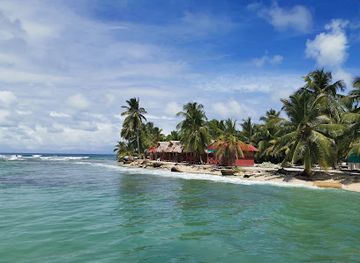
Guna Yala’s attractions are primarily marine and community-based rather than built around large museums or monumental architecture. Small coral islands offer swimming, snorkelling, kayaking and quiet beaches, while boat excursions may visit shallow sandbanks, reef areas and uninhabited cays when conditions permit. The richly forested mainland presents a contrasting environment of rivers, mangroves and tropical vegetation, though access away from settlements requires local arrangements and should not be treated as an independent hiking destination. Community visits can introduce visitors to Guna history, everyday island life and mola textile traditions, provided that photography and movement are guided by local permission. Fishing and other coastal activities may be available through hosts, but methods, seasons and arrangements vary. The appeal lies in experiencing a network of islands and settlements within a living Indigenous territory, not in ticking off a fixed list of attractions. Weather, tides and community rules shape each day, making flexible planning more useful than a tightly timed sightseeing schedule.
-
Historical place
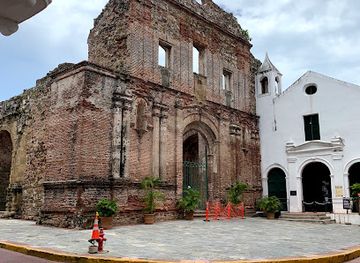
Panamá Viejo
Discover the captivating ruins of Panamá Viejo, where history meets breathtaking scenery in the heart of Panama City.
-
Tourist attraction
France Square
Explore France Square in Panama City, a picturesque park filled with lush greenery, historical charm, and vibrant local culture.
-
Park
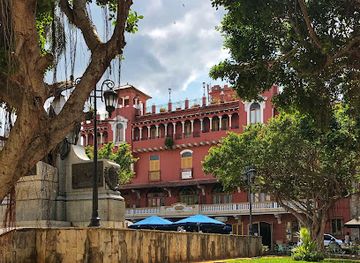
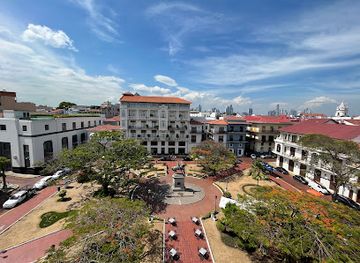
Plaza Simón Bolívar
Experience the vibrant culture and tranquil beauty of Plaza Simón Bolívar, a must-visit park in the heart of Panama City.
-
Tourist attraction
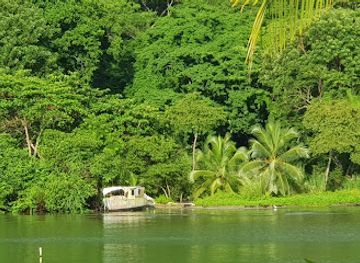
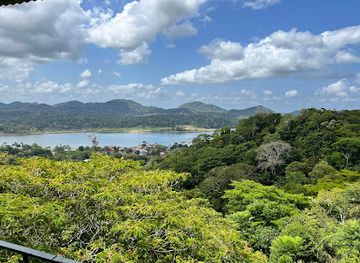
Gamboa Rainforest Reserve
Explore lush jungles and vibrant wildlife at Gamboa Rainforest Reserve, a premier tourist attraction and nature preserve in Panama.
Best landmarks in Guna Yala
The defining landmarks of Guna Yala are geographical and cultural rather than monumental. The long chain of low coral cays, with their palms, reefs and narrow beaches, forms the visual identity of the comarca, while the forested Caribbean mainland provides a dramatic counterpoint. El Porvenir is an important administrative and transport point, although its significance is functional rather than that of a preserved historic town. The community settlements of Narganá and Corazón de Jesús are notable as living centres of Guna society, and visitors should approach them as inhabited places with their own rules rather than open-air museums. Traditional meeting houses, where present and accessible by permission, reflect the importance of community assemblies and local authority. Mola textiles are not physical landmarks, but their distinctive layered designs are among the most recognisable cultural expressions associated with Guna Yala. Offshore reefs, mangrove edges and shifting sandbanks complete a landmark landscape in which water, forest and Indigenous settlement are inseparable.
-
Tourist attraction
Isla Diablo (Niadup)
Isla Diablo (Niadup) offers breathtaking beaches, vibrant culture, and unforgettable adventures in the stunning San Blas archipelago, Panama.
-
 Hotel
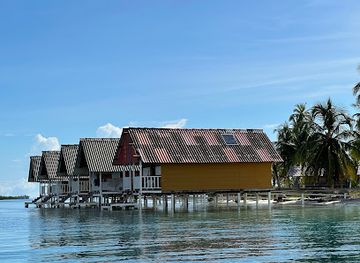
HotelKuna Yala
Discover the beauty and culture of Kuna Yala, Panama, where vibrant traditions meet breathtaking landscapes in a tropical paradise.
-
Serviced accommodation
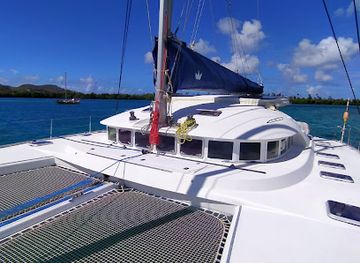
Catamarán San Blas Trip
Experience the stunning beauty of the San Blas Islands with the Catamarán San Blas Trip, where adventure and culture await in Panama's paradise.
-
Sightseeing tour agency
*San Blas IslandsTours-Guna Yala Explorer
Explore the stunning San Blas Islands with Guna Yala Explorer – a tropical paradise of pristine beaches, vibrant culture, and unforgettable adventures.
Explore Guna Yala on the map
Plan your trip on one map. See where the top cities, national parks and sights are, and book hotels and experiences in a few clicks.
Best hotels in Guna Yala
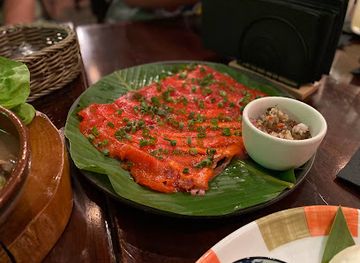
Best restaurants in Guna Yala
Dining in Guna Yala is closely tied to small lodges, family homes and locally organised boat stays rather than a conventional restaurant scene. Meals commonly draw on seafood, fish, rice, plantain, coconut and other ingredients available through coastal supply networks, with preparation varying between communities and accommodation providers. Breakfasts and evening meals are often simple and communal, while packed lunches may be provided for excursions. Larger inhabited settlements can have modest food stalls or small eateries, but visitors should not expect a broad choice of international cuisine, late-night dining or dependable dietary substitutions on every island. Confirm allergies and dietary requirements before arrival, particularly when travelling far from Panama City. Drinking water arrangements also differ, so ask whether treated or bottled water is included. Buying mola textiles, local crafts or refreshments through community-based sellers supports the regional economy, provided prices and permissions are understood clearly rather than negotiated aggressively.
-
Grill
CasaCasco
Discover CasaCasco: A vibrant grill and nightlife hub in Panama City offering delicious food, creative cocktails, and unforgettable dancing experiences.
-
Restaurant
Fonda Lo Que Hay
Discover authentic Panamanian cuisine at Fonda Lo Que Hay, where every dish tells a story of tradition and flavor.
-
Restaurant
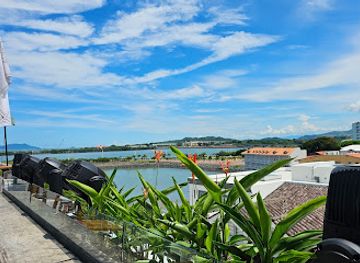
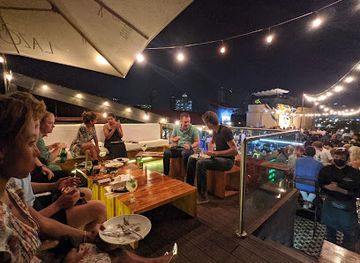
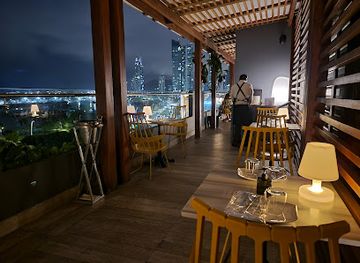
Lazotea Restaurant & Rooftop
Experience stunning skyline views and delightful local cuisine at Lazotea Restaurant & Rooftop in Panama City.
-
Restaurant
Azahar Panama
Experience culinary artistry at Azahar Panama, where fresh ingredients meet innovative flavors in a stunning setting.
Best bars in Guna Yala
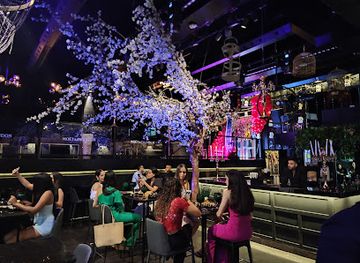
Guna Yala does not have a conventional nightlife circuit, and nightclubs, cocktail lounges and late-opening entertainment venues are largely absent. Evenings usually centre on the quiet atmosphere of a lodge, a shared meal, conversation, stargazing or the sound of the sea. Some inhabited communities may have small local establishments selling drinks, but visitors should follow community rules and avoid assuming that alcohol is appropriate everywhere. After dark, lighting can be limited and boat travel should only be undertaken with a responsible local operator. Music and social gatherings may occur within communities, yet these are part of local life rather than scheduled tourist entertainment and should not be entered or photographed without invitation. Travellers seeking a more extensive bar and club scene should stay in Panama City or another urban destination before or after visiting the comarca; Guna Yala is better suited to early starts, sea excursions and unhurried evenings.
-
Grill
CasaCasco
Discover the vibrant fusion of grill, cocktails, and nightlife at CasaCasco, a premier destination in Panama City for foodies and party enthusiasts.
-
Grill
Boga Bar Restaurant
Experience the vibrant flavors and warm hospitality of Boga Bar Restaurant in San Carlos District, a culinary gem for tourists and locals alike.
-
Bar
Amano Bar
Discover Amano Bar, Panama City's premier cocktail bar and restaurant, where exquisite drinks and vibrant nightlife come together.
-
Bar
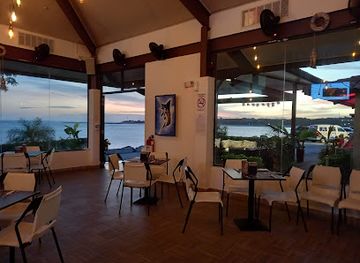
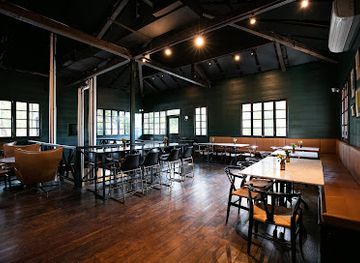
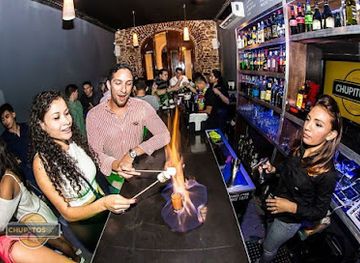
Chupitos 507
Experience the vibrant nightlife of Panama City at Chupitos 507, where creative shots and lively atmosphere await you.
Best nightclubs in Guna Yala
Guna Yala does not have a conventional nightlife circuit, and nightclubs, cocktail lounges and late-opening entertainment venues are largely absent. Evenings usually centre on the quiet atmosphere of a lodge, a shared meal, conversation, stargazing or the sound of the sea. Some inhabited communities may have small local establishments selling drinks, but visitors should follow community rules and avoid assuming that alcohol is appropriate everywhere. After dark, lighting can be limited and boat travel should only be undertaken with a responsible local operator. Music and social gatherings may occur within communities, yet these are part of local life rather than scheduled tourist entertainment and should not be entered or photographed without invitation. Travellers seeking a more extensive bar and club scene should stay in Panama City or another urban destination before or after visiting the comarca; Guna Yala is better suited to early starts, sea excursions and unhurried evenings.
-
Disco club
Casa Jaguar
Experience the electrifying nightlife of Casa Jaguar in Panama City, where vibrant music and delicious cuisine come together for an unforgettable evening.
-
Disco club
Chill out discotheque
Discover the vibrant nightlife at Chill Out Discotheque, Panama City's premier disco club featuring electrifying music and an energetic crowd.
-
Night club
Habano's Café
Discover Panama City's lively nightlife at Habano's Café, where music, cocktails, and unforgettable moments await.
-
Bar
La Tana
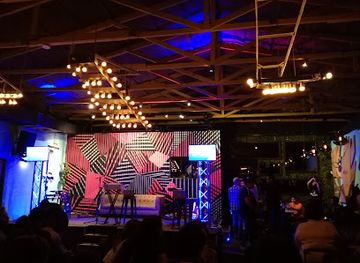
Experience the vibrant nightlife of Panama City at La Tana, a top bar and nightclub featuring energetic music and a friendly atmosphere.


Best shops in Guna Yala
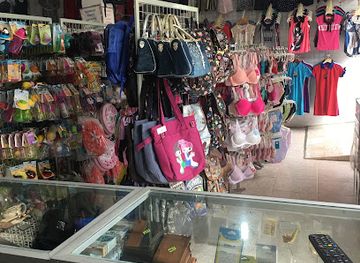
Shopping in Guna Yala is small-scale and closely connected to community life. The best-known purchase is the mola, a hand-made layered textile traditionally associated with Guna women’s clothing and now sold in panels, clothing and other crafted forms. Designs, workmanship and prices vary, so ask sellers about the piece and handle textiles carefully. Visitors may also find beadwork, woven items, carvings and modest locally produced souvenirs, although stock differs from island to island. Small village shops generally focus on everyday necessities rather than fashion or extensive retail, and there are no large shopping centres or dependable luxury-shopping districts within the comarca. Carry cash in small denominations, clarify prices and buy directly through appropriate community channels. Panama City offers a much wider selection of crafts and provisions, but purchasing in Guna Yala can provide a more direct connection with local makers when done respectfully and without treating cultural designs as disposable commodities.
-
Gas station
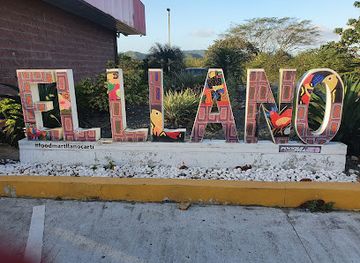
Estación Texaco Llano Cartí, FoodMart
Discover convenience and local flavors at Estación Texaco Llano Cartí, your essential stop on the way to Panama's San Blas Islands.
-
Tour agency
Catamaran Adventures San Blas
Discover the beauty of the San Blas Islands with Catamaran Adventures, where pristine waters meet vibrant culture and unforgettable experiences await.
-
Clothing store
Almacén Evelyn
Explore Almacén Evelyn in Santa Fe for a vibrant selection of local clothing and accessories that embody the spirit of Panama.
-
General store
Tienda Yodalis
Explore the vibrant local culture at Tienda Yodalis, a charming general store in Mulatupu, offering unique handicrafts and local delicacies.
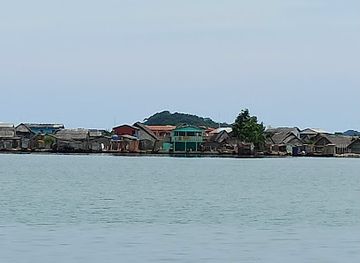
Get your free copy of our complete guide to Guna Yala, delivered straight to you.
Everything on this page, from attractions and restaurants to essentials and local phrases, in one PDF you can read offline, print or share.
Already have an account? Sign in
Your Guna Yala guide is ready.
We'll send it to · Not you? Sign out

Getting your guide ready…
We are putting together a fresh copy of the Guna Yala guide. This can take up to a minute.
This can take a few moments. If your browser asks, choose Allow so the download can start. You'll find the guide in your Downloads folder.
Nothing happened? Download it again
Sorry, the guide is taking longer than usual. Please try again in a minute, or get it by email instead.
Guna Yala essentials
Currency and Payment
Safety
Emergency Situations
Do's and Don'ts
Local Tips
From Eve
Local phrases worth knowing
You don't need to get them perfect. A few words go a long way, and locals appreciate the effort.
Basics
| English | Local | Say it |
|---|---|---|
| Hello | Nega | [ne-ga] |
| Goodbye | Nega aila | [ne-ga ai-la] |
| Yes | O | [o] |
| No | Ain | [ain] |
| Please/You're welcome | Tugub | [tu-gub] |
| Thank you | Tugub por tu | [tu-gub por tu] |
| Excuse me/Sorry | Niga | [ni-ga] |
| How are you? | Nega sa? | [ne-ga sa] |
| Fine. And you? | Nega, a tu? | [ne-ga a tu] |
| Do you speak English? | Joa sapa inlis? | [jo-a sa-pa in-lis] |
| I don't understand | No sapa | [no sa-pa] |
Eating & Drinking
| English | Local | Say it |
|---|---|---|
| I'd like to see the menu, please | Nega alki menu, tugub | [ne-ga al-ki me-nu tu-gub] |
| I don't eat meat | No sapa meat | [no sa-pa meat] |
| Cheers! | Tugub! | [tu-gub] |
| I would like to pay, please | Nega alki pagar, tugub | [ne-ga al-ki pa-gar tu-gub] |
Emergencies
| English | Local | Say it |
|---|---|---|
| Help! | Nega aila! | [ne-ga ai-la] |
| Go away! | Nega aila! | [ne-ga ai-la] |
| Call the Police! | Nega llama policia! | [ne-ga ya-ma po-li-cia] |
| Call a doctor! | Nega llama doctor! | [ne-ga ya-ma doc-tor] |
| I'm lost | Nega sa niga | [ne-ga sa ni-ga] |
| I'm ill | Nega sa mala | [ne-ga sa ma-la] |
Shopping
| English | Local | Say it |
|---|---|---|
| I'd like to buy... | Nega alki comprar... | [ne-ga al-ki com-prar] |
| I'm just looking | Nega mana aila | [ne-ga ma-na ai-la] |
| How much is it? | Nega sa ki? | [ne-ga sa ki] |
| That's too expensive | Ain sapa niga | [ain sa-pa ni-ga] |
| Can you lower the price? | Nega sa baja precio? | [ne-ga sa ba-ja pre-cio] |
Time & Numbers
| English | Local | Say it |
|---|---|---|
| What time is it? | Nega sa ki tiempo? | [ne-ga sa ki tiam-po] |
| It's one o'clock | Sa uno | [sa u-no] |
| Half past (10) | Medio (10) | [me-dio] |
| Morning | Nega | [ne-ga] |
| Afternoon | Nega | [ne-ga] |
| Evening | Nega | [ne-ga] |
| Yesterday | Ain | [ain] |
| Today | Nega | [ne-ga] |
| Tomorrow | Ain | [ain] |
| 1 | Uno | [u-no] |
| 2 | Dos | [dos] |
| 3 | Tres | [tres] |
| 4 | Cuatro | [cua-tro] |
| 5 | Cinco | [cin-co] |
| 6 | Seis | [seis] |
| 7 | Siete | [sie-te] |
| 8 | Ocho | [o-cho] |
| 9 | Nueve | [nue-ve] |
| 10 | Diez | [diez] |
Transport & Directions
| English | Local | Say it |
|---|---|---|
| Where's a/the...? | Donde sa ...? | [don-de sa] |
| What's the address? | Que sa direccion? | [ke sa di-rec-cion] |
| Can you show me (on the map)? | Nega sa muestre (en el mapa)? | [ne-ga sa mu-es-tre en el ma-pa] |
| When's the next (bus)? | Cuando sa proxima (bus)? | [quan-do sa pro-xi-ma] |
| A ticket (to ....) | Un boleto (a ....) | [un bo-le-to] |
History of Guna Yala
Guna Settlement and Caribbean Trade
The Guna have inhabited the Caribbean coast and nearby islands for centuries, maintaining communities linked by seafaring, fishing, trade and seasonal movement between the coast and archipelago. Their language, social organisation and knowledge of reefs, rivers and forest developed within this maritime environment. European arrival did not erase these networks, although colonial activity and later state expansion brought new pressures. The geography that can appear fragmented to visitors has historically connected rather than isolated Guna communities.
Spanish Colonial Expansion
Spanish colonisation affected the wider Isthmus of Panama from the sixteenth century, but the Caribbean coast remained difficult for colonial authorities to control. Missionary activity, coastal settlements and competition among European powers altered regional trade, while disease and conflict affected Indigenous populations. Guna communities retained substantial autonomy in the eastern Caribbean zone. The absence of a large colonial urban centre in today’s Guna Yala helps explain why the comarca’s cultural landscape differs sharply from Panama’s principal historic cities.
The Panamanian State and Foreign Concessions
After Panama became independent from Colombia in 1903, the new republic sought stronger administrative control over its remote Caribbean territories. Government officials, traders and outside commercial interests entered Guna areas with growing frequency, and disputes developed over authority, land, labour and cultural practices. During the early twentieth century, pressures to assimilate Guna communities and regulate their way of life particularly affected relations between local leaders and the national government.
The Guna Revolution of 1925
In February 1925, Guna communities rebelled against government policies and abuses in several settlements, an episode commonly known as the Guna Revolution. The uprising was supported by leaders including Nele Kantule and Olonibiginya, and negotiations followed with the Panamanian government. While the settlement did not immediately create the comarca in its modern form, it marked a decisive assertion of Guna political and cultural rights. Its memory remains central to the region’s understanding of autonomy.
Creation of the Comarca, 1938
Panama formally created the San Blas Indigenous Reserve in 1938, establishing an institutional framework for Guna territorial administration. The name and administrative arrangements changed over time, and the area is now officially known as Guna Yala. The comarca’s status reflects an extended process rather than a single constitutional moment: Guna authorities continued to defend communal landholding, local decision-making and control over cultural matters while negotiating with the Panamanian state.
Molas, Identity and Cultural Continuity
Layered mola textiles became an especially visible expression of Guna identity during the twentieth century. Their designs draw on remembered, natural and contemporary subjects, and their production is connected to women’s dress, family knowledge and cultural continuity rather than merely to tourist commerce. Mola-making and other forms of craft have helped communicate Guna identity both within the comarca and beyond it. Visitors should understand these textiles as culturally meaningful works whose value extends beyond their role as souvenirs.
Contemporary Autonomy and Environmental Pressures
Modern Guna Yala combines Indigenous governance with carefully managed visitor access, fishing, small-scale agriculture and links to Panama’s national economy. The islands face environmental pressures familiar to low-lying Caribbean communities, including coastal erosion, changing marine conditions, waste management challenges and the effects of climate change. Tourism provides income for some communities but also requires local regulation to protect reefs, settlements and cultural authority. These tensions shape the visitor experience as much as the archipelago’s scenery does.
Guna Yala in Photos
Browse through our photo collection highlighting the charm and character of the destination.
Neighbouring regions of Guna Yala
The closest regions to Guna Yala, if you have time for more than one.
-

-
-

-

-


Swipe for more regions
Explore more

Explore more of Panama
Discover Panama: A vibrant blend of modernity and nature, where historic charm, tropical rainforests, and pristine beaches come together in the heart of Central America.
Explore Panama