

Free Estremadura Travel Guide & Mobile App
Explore Estremadura with free travel guides. Discover regional history, expert tips, proposed trips, and audio guides on web or mobile app.


Explore Estremadura’s historic Lisbon, Atlantic beaches, medieval towns, royal palaces, surf coast and distinctive Portuguese food traditions.
Read more about Estremadura
When is the best time to visit Estremadura?
Best: May–June, October · 24–28°C| Month | High (°C) | Rainfall (mm) |
|---|---|---|
| January | 15 | 100 |
| February | 16 | 90 |
| March | 19 | 80 |
| April | 21 | 70 |
| May (best) | 24 | 60 |
| June (best) | 28 | 50 |
| July | 31 | 40 |
| August | 31 | 40 |
| September | 28 | 50 |
| October (best) | 24 | 60 |
| November | 19 | 80 |
| December | 16 | 90 |
Getting to and around Estremadura
How to get there
Transportation
Top city travel guides in Estremadura
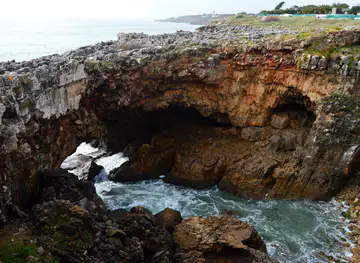
The cities of Estremadura, and the easiest places to base yourself.
-

-

-

-

-
-


Swipe for more cities
Destinations in Estremadura
Resorts, valleys and scenic spots worth a trip of their own.
-

-

-

-

-

-


Swipe for more destinations
Best attractions in Estremadura
Estremadura offers an unusually broad range of attractions within a compact part of Portugal, although distances and transport links vary. Lisbon provides museums, historic neighbourhoods, riverfront monuments and the maritime heritage of Belém, while nearby Sintra combines wooded hills with royal and aristocratic estates such as the Palácio Nacional da Pena, the Moorish Castle and the National Palace of Sintra. Cascais and Estoril add beaches, promenades and coastal scenery. Inland and northwards, the Palace-Convent of Mafra, the walled town of Óbidos, the thermal and ceramic traditions of Caldas da Rainha, and the surf and fishing heritage of Peniche offer different perspectives. The coastline includes sandy beaches, limestone cliffs, dunes and exposed headlands, with Nazaré noted for its fishing culture and powerful winter surf. Boat excursions to the Berlengas, departing from Peniche when conditions permit, introduce protected island landscapes. Monasteries at Alcobaça and Batalha provide major architectural and historical experiences, while the Lines of Torres Vedras bring military history into the countryside. Walking, surfing, cycling, birdwatching, food markets and small museums complete an attraction landscape shaped as much by geography as by individual monuments.
-
Plaza
Praça do Comércio
Explore Praça do Comércio: A stunning historical square in Lisbon, where culture, architecture, and the Tagus River converge beautifully.
-
 Aquarium
Oceanário de Lisboa
Explore the captivating marine life and ecosystems at the Oceanário de Lisboa, one of Europe's largest aquariums, located in vibrant Lisbon.
-
Monument
Belém Tower
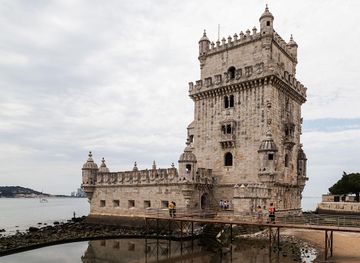
Discover the enchanting Belém Tower, a UNESCO World Heritage site, where history and stunning architecture converge along the banks of the Tagus River.
-
Castle
National Palace of Pena
Discover the captivating beauty and rich history of the National Palace of Pena, a UNESCO World Heritage site that enchants visitors in Sintra, Portugal.


Best landmarks in Estremadura
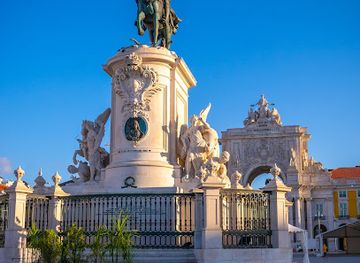
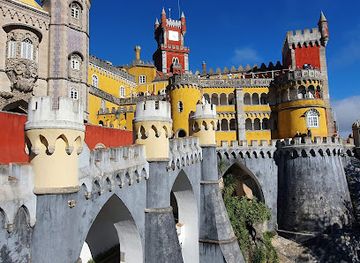
Estremadura’s landmarks express its roles as Portugal’s royal, maritime, religious and defensive heartland. In Lisbon, the Jerónimos Monastery and Belém Tower are internationally recognised Manueline monuments associated with the country’s oceanic expansion, while the Baixa’s rectilinear streets embody the reconstruction that followed the earthquake of 1755. Sintra’s Palácio Nacional da Pena crowns the hills with nineteenth-century Romantic architecture, and the Moorish Castle traces the area’s medieval strategic importance. The Palace-Convent of Mafra is one of the region’s most imposing royal foundations, combining a palace, basilica and former convent in a vast eighteenth-century complex. Óbidos retains its medieval walls and compact historic townscape, while Alcobaça Monastery is a major Cistercian monument with lasting influence on Portuguese architecture and history. Along the coast, Nazaré’s headland and lighthouse overlook a dramatic beach and fishing town, and Peniche’s fortress recalls the area’s military and maritime importance. The Lines of Torres Vedras are less monumental in appearance but form a significant landscape landmark, with surviving forts and earthworks spread through the hills north of Lisbon.
-
Plaza
Praça do Comércio
Explore Lisbon's iconic Praça do Comércio, a vibrant historical square by the Tagus River, rich in culture, architecture, and local flavor.
-
Monument
Belém Tower
Explore the historic Belém Tower in Lisbon, a UNESCO World Heritage site symbolizing Portugal's maritime legacy and architectural beauty.
-
Castle
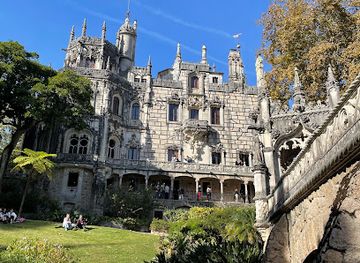
Quinta da Regaleira
Discover the enchanting Quinta da Regaleira, a masterpiece of Gothic architecture and lush gardens in Sintra, Portugal, steeped in history and mystique.
-
Castle
National Palace of Pena
Explore the National Palace of Pena, a stunning Romantic castle in Sintra, boasting vibrant colors, rich history, and breathtaking views.
Explore Estremadura on the map
Plan your trip on one map. See where the top cities, national parks and sights are, and book hotels and experiences in a few clicks.
Best hotels in Estremadura
Best restaurants in Estremadura
Dining in Estremadura is grounded in the meeting of the Atlantic, the Tagus estuary, fertile agricultural land and Lisbon’s cosmopolitan traditions. Fish and shellfish feature strongly in coastal towns, where menus may include grilled catch, seafood rice, caldeiradas and simple preparations that depend on the day’s supply. Nazaré and Peniche retain especially visible links to fishing, while inland restaurants and village taverns serve pork, poultry, soups, breads, cheeses and seasonal vegetables. Lisbon contributes pastel de nata, traditional cafés and dishes associated with the capital, while ginjinha, a sour-cherry liqueur, is closely linked with Lisbon and Óbidos. The western countryside is also known for vineyards, fruit-growing areas and farm produce, and Caldas da Rainha is associated with regional market and ceramic culture. Visitors will find everything from modest cafés and family-run casas de pasto to contemporary restaurants, seafood houses and rural inns. Markets are useful for discovering local fruit, bread, cheese and prepared snacks, but regional dishes can vary considerably between the coast, the capital and inland communities.
-
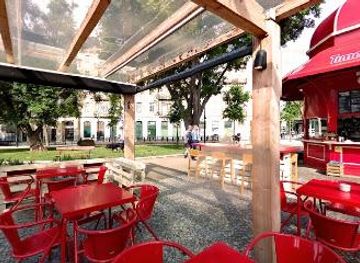
Food court
Time Out Market
Lisbon's iconic food hall in historic Mercado da Ribeira: 26 chef stalls, lively bars, events, and market vibes for an unbeatable culinary adventure.
-
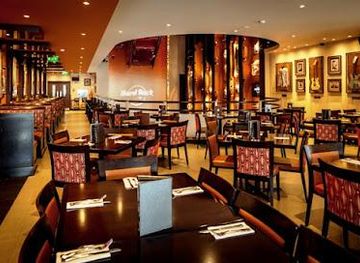
American
Hard Rock Cafe | Lisboa
Rock out on Lisbon's grandest avenue with juicy burgers, smoky ribs, and memorabilia-packed vibes at this American staple open till 2am.
-
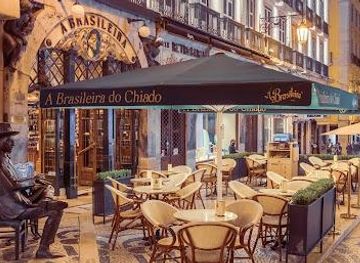
Cafe
A Brasileira
Where Fernando Pessoa's spirit lingers over a perfect bica in Lisbon's most storied café.
-
Restaurant
Casa do Alentejo
Authentic Alentejo cuisine in a 17th-century Moorish palace with ornate tiles and vibrant cultural programming.
Best bars in Estremadura
Nightlife is concentrated in Lisbon, where historic neighbourhoods, riverfront areas and districts such as Bairro Alto and Cais do Sodré offer late-opening bars, live music, clubs and restaurants. These are urban nightlife areas within Estremadura, but they do not represent the evening character of the whole region. Cascais and Estoril provide a more resort-oriented choice of bars, restaurants and occasional live entertainment, while Sintra’s evenings are generally quieter and suited to dining, historic surroundings and cultural programmes rather than large clubs. In towns such as Óbidos, Peniche, Nazaré and Ericeira, traditional cafés, pubs, wine bars and seafood restaurants form the main evening scene, with greater activity during summer and holiday periods. Surf communities may support informal social venues and live music, but schedules and businesses change seasonally. Outside the principal towns, evenings often centre on family restaurants, local festivals or village cafés rather than a formal club circuit, so visitors should plan transport back to their accommodation in advance.
-
Pub
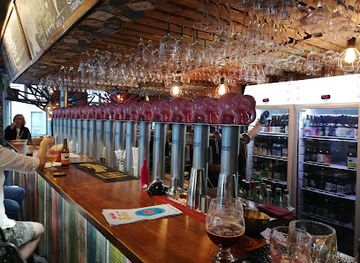
Delirium Café
Experience the vibrant atmosphere of Delirium Café, where beer lovers gather to enjoy an unparalleled selection of brews in the heart of Lisbon.
-
Bar
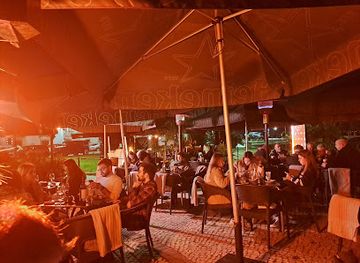
Alcach Bar
Experience the vibrant atmosphere of Alcach Bar in Alcochete, where delicious drinks and local culture come together for an unforgettable night out.
-
Bar
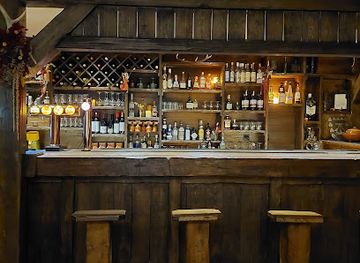
Trobadores - Taberna Medieval
Discover Trobadores - Taberna Medieval, where Lisbon's vibrant gastronomy meets captivating medieval entertainment in a unique setting.
-
Pub
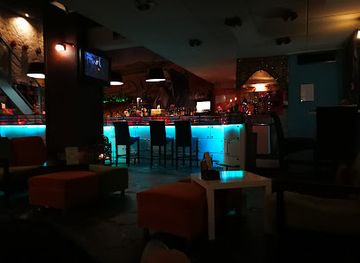
Touareg Lounge Bar
Discover the vibrant nightlife at Touareg Lounge Bar in Badajoz, where great drinks and live music create an unforgettable evening.
Best nightclubs in Estremadura
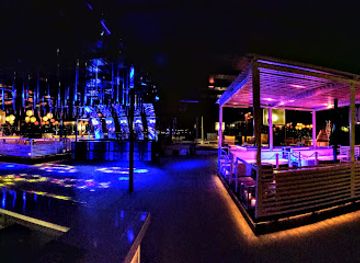
Nightlife is concentrated in Lisbon, where historic neighbourhoods, riverfront areas and districts such as Bairro Alto and Cais do Sodré offer late-opening bars, live music, clubs and restaurants. These are urban nightlife areas within Estremadura, but they do not represent the evening character of the whole region. Cascais and Estoril provide a more resort-oriented choice of bars, restaurants and occasional live entertainment, while Sintra’s evenings are generally quieter and suited to dining, historic surroundings and cultural programmes rather than large clubs. In towns such as Óbidos, Peniche, Nazaré and Ericeira, traditional cafés, pubs, wine bars and seafood restaurants form the main evening scene, with greater activity during summer and holiday periods. Surf communities may support informal social venues and live music, but schedules and businesses change seasonally. Outside the principal towns, evenings often centre on family restaurants, local festivals or village cafés rather than a formal club circuit, so visitors should plan transport back to their accommodation in advance.
-
Disco club
K Urban Beach Club
Experience the vibrant nightlife of Lisbon at K Urban Beach Club, a premier disco destination with stunning views and an electrifying atmosphere.
-
Night club
LuxFrágil
Discover Lisbon's electrifying nightlife at LuxFrágil, a premier nightclub and concert hall with stunning river views and unforgettable music.
-
Cocktail bar
CINCO lounge
Discover the vibrant nightlife at CINCO Lounge in Lisbon, offering exquisite cocktails and a stylish atmosphere for every occasion.
-
Night club
Moreclub, Lda.
Discover Porto's nightlife at Moreclub, Lda., a premier night club offering electrifying music and a vibrant atmosphere for an unforgettable experience.



Best shops in Estremadura
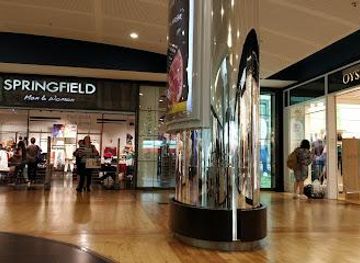
Shopping in Estremadura ranges from Lisbon’s major retail streets and department stores to the independent businesses and weekly markets of smaller towns. Historic Lisbon districts are useful for Portuguese food products, ceramics, books, textiles and design, while traditional shops and contemporary boutiques are concentrated in different parts of the capital. Óbidos offers local liqueur, crafts and literary-themed browsing within its walled centre, although visitors should distinguish genuinely regional products from mass-produced souvenirs. Caldas da Rainha is particularly associated with ceramics, from practical pottery to the eccentric decorative tradition linked with Rafael Bordalo Pinheiro, and has a long market culture. Coastal towns such as Peniche and Nazaré are places to look for fish-related products, woven goods, beachwear and small craft shops, while village markets provide fruit, vegetables, bread, cheese and seasonal produce. Lisbon’s food halls and historic market spaces offer the widest selection, but smaller municipal markets can provide a more direct view of everyday regional commerce. Opening days and individual traders vary, especially outside the capital.
-
Shopping mall
Colombo Shopping Centre
Discover the ultimate shopping experience at Colombo Shopping Centre, Lisbon's premier destination for retail, dining, and entertainment.
-
Shopping mall
Centro Vasco da Gama
Experience the best of shopping, dining, and entertainment at Centro Vasco da Gama in Lisbon, a vibrant destination for all visitors.
-
Shopping mall
UBBO
Experience the ultimate shopping and dining destination at UBBO in Pontinha, Portugal – where style meets leisure in a vibrant atmosphere.
-
Department store
El Corte Inglés Lisboa
Discover the ultimate shopping experience at El Corte Inglés Lisboa, where luxury meets convenience in the heart of the city.



Get your free copy of our complete guide to Estremadura, delivered straight to you.
Everything on this page, from attractions and restaurants to essentials and local phrases, in one PDF you can read offline, print or share.
Already have an account? Sign in
Your Estremadura guide is ready.
We'll send it to · Not you? Sign out

Getting your guide ready…
We are putting together a fresh copy of the Estremadura guide. This can take up to a minute.
This can take a few moments. If your browser asks, choose Allow so the download can start. You'll find the guide in your Downloads folder.
Nothing happened? Download it again
Sorry, the guide is taking longer than usual. Please try again in a minute, or get it by email instead.
Estremadura essentials
Currency and Payment
Safety
Emergency Situations
Do's and Don'ts
Local Tips
From Eve
Local phrases worth knowing
You don't need to get them perfect. A few words go a long way, and locals appreciate the effort.
Basics
| English | Local | Say it |
|---|---|---|
| Hello | Olá | [oh-LAH] |
| Goodbye | Adeus | [ah-DAY-oos] |
| Yes | Sim | [seem] |
| No | Não | [now] |
| Please/You're welcome | Por favor/De nada | [por fah-VOR/je NAH-da] |
| Thank you | Obrigado/Obrigada | [oh-bree-GAH-do/oh-bree-GAH-da] |
| Excuse me/Sorry | Desculpe | [des-KOOL-peh] |
| How are you? | Como está? | [KOH-moo es-TAH] |
| Fine. And you? | Bem. E você? | [BAYM. E vo-SEH?] |
| Do you speak English? | Você fala inglês? | [vo-SEH FAH-lah een-GLESH?] |
| I don't understand | Não entendo | [now en-TEN-do] |
Eating & Drinking
| English | Local | Say it |
|---|---|---|
| I'd like to see the menu, please | Gostaria de ver o menu, por favor | [gos-tah-REE-ah je ver oo MEH-noo, por fah-VOR] |
| I don't eat meat | Não como carne | [now KOH-mo KAR-nee] |
| Cheers! | Saúde! | [sah-OO-deh] |
| I would like to pay, please | Gostaria de pagar, por favor | [gos-tah-REE-ah je pah-GAR, por fah-VOR] |
Emergencies
| English | Local | Say it |
|---|---|---|
| Help! | Socorro! | [so-KOHR-roo] |
| Go away! | Vá embora! | [vah em-BOH-rah] |
| Call the Police! | Chame a polícia! | [SHAH-meh ah poh-LEE-syah] |
| Call a doctor! | Chame um médico! | [SHAH-meh oom MEH-dee-koh] |
| I'm lost | Estou perdido | [es-TOH pehr-DEE-doh] |
| I'm ill | Estou doente | [es-TOH do-EHN-teh] |
Shopping
| English | Local | Say it |
|---|---|---|
| I'd like to buy... | Gostaria de comprar... | [gos-tah-REE-ah je kom-PRAR...] |
| I'm just looking | Estou apenas a olhar | [es-TOH ah-PEH-nas ah oh-LYAR] |
| How much is it? | Quanto custa? | [KWAHN-toh KOOS-tah?] |
| That's too expensive | É muito caro | [eh MOON-toh KAH-roh] |
| Can you lower the price? | Pode baixar o preço? | [POH-jeh bye-SHAR oo PREH-so?] |
Time & Numbers
| English | Local | Say it |
|---|---|---|
| What time is it? | Que horas são? | [keh OH-ras sow?] |
| It's one o'clock | É uma hora | [eh OO-mah OH-rah] |
| Half past (10) | Dez e meia | [dez ee MAY-ah] |
| Morning | Manhã | [mahn-YAH] |
| Afternoon | Tarde | [TAR-deh] |
| Evening | Noite | [NOY-teh] |
| Yesterday | Ontem | [ON-tem] |
| Today | Hoje | [OH-zhe] |
| Tomorrow | Amanhã | [ah-mahn-YAH] |
| 1 | Um | [oom] |
| 2 | Dois | [doyz] |
| 3 | Três | [trehz] |
| 4 | Quatro | [KWAH-tro] |
| 5 | Cinco | [SEEN-ko] |
| 6 | Seis | [sayz] |
| 7 | Sete | [SEH-teh] |
| 8 | Oito | [OY-toh] |
| 9 | Nove | [NOH-veh] |
| 10 | Dez | [dez] |
Transport & Directions
| English | Local | Say it |
|---|---|---|
| Where's a/the...? | Onde está um/a...? | [ON-deh es-TAH oom/ah...?] |
| What's the address? | Qual é o endereço? | [kwal eh oo in-deh-RES-so] |
| Can you show me (on the map)? | Pode me mostrar (no mapa)? | [POH-jeh meh mohs-TRAR (no MAH-pah)?] |
| When's the next (bus)? | Quando é o próximo (autocarro)? | [KWAN-do eh oo PROH-see-mo (ow-toh-KAR-roo)?] |
| A ticket (to ....) | Um bilhete (para ...) | [oom bee-YEH-teh (PAH-rah ...)] |
History of Estremadura
Prehistoric Settlement and Atlantic Trade
Estremadura contains important evidence of prehistoric settlement, including caves, rock shelters and megalithic remains distributed through the Lisbon and western-central Portuguese landscapes. The region’s estuaries, fertile valleys and access to the Atlantic encouraged movement and exchange from an early period. Sites such as the prehistoric settlement at Vila Nova de São Pedro, north-east of Lisbon, illustrate the presence of organised communities during the Copper Age. Archaeological evidence from the wider region also records contacts with Mediterranean peoples, showing that the Atlantic coast was connected to long-distance exchange well before the Roman period.
Roman Lusitania and Olisipo
Rome incorporated the territory into Lusitania and developed Olisipo, present-day Lisbon, as an important port and commercial centre on the Tagus. Roads, agricultural estates, ceramics production and maritime trade linked the lower Tagus to other parts of the empire. Roman remains survive in Lisbon and at sites across the surrounding countryside, although later building has obscured much of the ancient urban fabric. The Roman emphasis on ports, roads and productive hinterlands established patterns that continued to influence the region’s settlement and economic geography.
The Christian Reconquest and Medieval Towns
Lisbon was conquered by Afonso I of Portugal in 1147 with the participation of northern European crusaders, an event that strengthened the Christian kingdom’s control over the lower Tagus. Medieval settlement expanded through castles, monasteries, market towns and agricultural colonisation. Places such as Óbidos, Leiria and Santarém became strategically important, while religious houses helped organise landholding and production. The region’s surviving town walls, monasteries and historic street plans reflect this period of frontier consolidation, royal administration and growing commercial activity.
The Age of Discoveries and Lisbon’s Maritime Power
From the fifteenth century, Lisbon became the principal centre of Portugal’s oceanic expansion. Its position on the Tagus connected the kingdom to Atlantic islands, Africa, Asia and Brazil, bringing shipping, money, people and new commodities into the capital and its surrounding ports. Belém’s monastery and tower, built during the Manueline period, express the wealth and religious symbolism of this maritime age. The wider Estremaduran coast supported fishing, coastal trade and naval activity, while inland towns supplied food, materials and labour to an increasingly outward-looking kingdom.
Royal Estates, Religious Foundations and Mafra
The seventeenth and eighteenth centuries brought substantial royal and aristocratic investment to Estremadura. Sintra became associated with courtly retreats, while Queluz, near Lisbon, developed as a royal palace and garden complex. The enormous Palace-Convent of Mafra, commissioned by João V in the eighteenth century, demonstrated the wealth generated by Brazil and the close relationship between monarchy, church and architecture. At the same time, monasteries at Alcobaça and other religious centres remained major landowners and cultural institutions. Their estates shaped agriculture, settlement and local economies.
The Peninsular War and the Lines of Torres Vedras
During the Peninsular War, the countryside north of Lisbon became the setting for one of Europe’s most extensive defensive systems. The Lines of Torres Vedras comprised forts, redoubts and fieldworks built under Wellington’s direction to protect Lisbon from French invasion. Their success in 1810 helped force Marshal Masséna’s army to withdraw. Many earthworks are modest and rural rather than monumental, but together they reveal how the region’s hills, roads and valleys were transformed into a strategic military landscape. Several surviving positions can be visited around Torres Vedras and neighbouring municipalities.
Earthquake, Modernisation and the Contemporary Coast
The earthquake and tsunami of 1755 severely damaged Lisbon and affected settlements along the lower Tagus, prompting major rebuilding in the capital’s Baixa under the Marquis of Pombal. Later centuries brought railways, improved roads, industrial development, tourism and the growth of coastal resorts such as Cascais and Estoril. Fishing ports and agricultural towns retained their own economies while becoming linked to Lisbon’s expanding metropolitan area. Today, Estremadura combines historic monuments and rural production with commuter settlements, beach tourism, surfing, creative industries and heritage conservation.
Estremadura in Photos
Browse through our photo collection highlighting the charm and character of the destination.
Neighbouring regions of Estremadura
The closest regions to Estremadura, if you have time for more than one.
-

-

-

-

-


Swipe for more regions
Explore more
Explore more of Portugal
Discover Portugal: A blend of historic charm, stunning coastlines, and delightful cuisine awaits in this captivating European gem.
Explore Portugal