

Vieques Island, Puerto Rico Travel Guide
Discover the untouched paradise of Vieques Island in Puerto Rico, where pristine beaches, bioluminescent bays, and rich history await the adventurous traveler.
Nestled off the eastern coast of Puerto Rico, Vieques Island is a serene escape, offering a perfect blend of natural beauty and rich history. This stunning island is renowned for its pristine beaches, crystal-clear waters, and vibrant marine life. Whether you are looking to relax on the soft sands of Sun Bay Beach or explore the underwater wonders of the Mosquito Bay, Vieques Island has something for every traveler. One of the island's most magical attractions is the Bioluminescent Bay, also known as Mosquito Bay. This natural wonder glows with a mystical blue light at night, thanks to the high concentration of bioluminescent microorganisms in the water. A guided kayak tour is the best way to experience this otherworldly phenomenon. Beyond the beaches, Vieques is steeped in history. The island was once used as a military training ground and now serves as a wildlife refuge, preserving its unique flora and fauna. Visitors can explore the Vieques National Wildlife Refuge, which covers nearly two-thirds of the island and offers hiking trails, bird watching, and secluded beaches. Vieques also boasts a vibrant culture and friendly locals. The island's charming towns, like Isabel Segunda and Esperanza, are filled with colorful buildings, local shops, and delicious eateries serving authentic Puerto Rican cuisine. Don't miss the chance to try mofongo, a traditional dish made with mashed plantains. For those seeking adventure, Vieques offers a variety of outdoor activities, including snorkeling, horseback riding, and paddleboarding. The island's unspoiled landscapes and tranquil atmosphere make it an ideal destination for nature lovers and those looking to unwind from the hustle and bustle of daily life.

Know before you go
Hi, I'm Eve. Here are a few practical things to know before exploring Vieques Island.
- Visit the Bioluminescent Bay on a moonless night for the best glow.
- Rent a car or a scooter to explore the island at your own pace.
- Bring insect repellent, especially for evening outings.
- Cash is preferred in many local establishments; ATMs can be scarce.
- Respect the local wildlife and do not disturb the horses roaming freely.
Top City Travel Guides in Vieques Island
The cities of Vieques Island, and the easiest places to base yourself.

Explore Vieques Island: Things to Do, Places to Eat, Hotels & More
Handpicked recommendations for top attractions, local dining, accommodations, and more

Top Attractions & Sightseeing in Vieques Island
Top-rated picks
Best Attractions

Snorkeling Puerto Rico | Boat Tours
Dive into the vibrant underwater world of Fajardo with unforgettable snorkeling tours that showcase the beauty of Puerto Rico's marine life.

La Piedra Escrita
Explore La Piedra Escrita, a fascinating tourist attraction in Jayuya, Puerto Rico, showcasing ancient petroglyphs of the Taino indigenous culture amidst stunning natural beauty.

Caracas Beach
Discover the serene beauty of Caracas Beach in Vieques, Puerto Rico, where soft sands and turquoise waters create an idyllic tropical escape.

Vieques National Wildlife Refuge
Immerse yourself in nature's wonder at Vieques National Wildlife Refuge, where pristine landscapes and diverse wildlife await in Puerto Rico.

Best landmarks in Vieques Island
Top-rated picks
Best Landmarks

Caracas Beach
Discover the idyllic Caracas Beach in Puerto Ferro, Vieques - a breathtaking paradise with stunning views, crystal-clear waters, and vibrant marine life.

Black Sand Beach
Experience the mesmerizing beauty of Black Sand Beach in Vieques, Puerto Rico, where volcanic sands and turquoise waters create an unforgettable escape.

Vieques National Wildlife Refuge
Explore the breathtaking Vieques National Wildlife Refuge, a paradise of pristine beaches and diverse ecosystems in Puerto Rico.

Rising Roost / Guake’te
Experience the vibrant flavors of Puerto Rican cuisine at Rising Roost / Guakéte in Vieques, a must-visit destination for food lovers.

Best restaurants in Vieques Island
Top-rated picks
Best Restaurants

Duffy's Esperanza
Discover Duffy's Esperanza in Vieques - where delicious grill dishes meet vibrant island hospitality for an unforgettable dining experience.

Bananas
Experience authentic Puerto Rican flavors at Bananas in Esperanza – where fresh ingredients meet vibrant Caribbean culture.

Biekes Bistro
Experience authentic Caribbean cuisine at Biekes Bistro in Vieques - where fresh ingredients meet vibrant flavors.

Rising Roost / Guake’te
Experience the best breakfast in Vieques at Rising Roost / Guake’te - where local flavors meet warm hospitality.

Best bars in Vieques Island
Top-rated picks
Best Bars

Duffy's Esperanza
Discover the vibrant flavors of Vieques at Duffy's Esperanza, where fresh grilled dishes meet a tropical bar atmosphere.

Bananas
Experience the vibrant flavors of the Caribbean at Bananas Restaurant, a culinary gem in Esperanza, Vieques, perfect for every traveler.

Biekes Bistro
Experience the flavors of the Caribbean at Biekes Bistro, a must-visit culinary destination in the heart of Vieques.

Rising Roost / Guake’te
Experience the vibrant flavors of Vieques at Rising Roost / Guake’te, a local favorite for fresh and authentic Puerto Rican cuisine.

Best nightclubs in Vieques Island
Top-rated picks
Best Nightclubs

Duffy's Esperanza
Discover the flavors of Vieques at Duffy's Esperanza, where delicious grilled cuisine meets a vibrant island atmosphere.

The Mar Azul
Savor the flavors of Vieques at The Mar Azul, where grilled specialties meet stunning waterfront views for an unforgettable dining experience.

Trade Winds Bar & Restaurant, Guest House & Gift Shop
Experience vibrant Caribbean dining at Trade Winds Bar & Restaurant in Vieques, where flavors meet hospitality in a picturesque setting.

Robin’s Mojito Bar & Grill
Experience the vibrant flavors of the Caribbean at Robin's Mojito Bar & Grill, where every meal is a celebration of local cuisine and culture.

Best shops in Vieques Island
Top-rated picks
Best Shops

Black Beard Sports
Explore the underwater beauty and natural landscapes of Vieques with Black Beard Sports, your go-to dive shop and adventure center.

Trade Winds Bar & Restaurant, Guest House & Gift Shop
Experience the vibrant flavors and warm hospitality of Trade Winds Bar & Restaurant, a Caribbean gem in Vieques that offers dining, lodging, and local crafts.

Superdescuentos Morales Market
Experience the vibrant local culture and flavors at Superdescuentos Morales Market in Vieques, Puerto Rico's premier supermarket.

Marshmallow Candy & Coffee
Discover the sweet delights of Marshmallow Candy & Coffee in Vieques, a perfect blend of candies and coffee for every visitor.

Explore Vieques Island on the Map
A handpicked selection of must-see spots in Vieques Island, mapped for you.
Vieques Island Essentials
-
Vieques Island can be accessed by air or sea from mainland Puerto Rico. The fastest way is to fly from San Juan to the Antonio Rivera Rodríguez Airport (VQS) in Vieques. Several airlines offer daily flights, and the trip takes about 30 minutes. Alternatively, you can take a ferry from Ceiba, a town on the eastern coast of Puerto Rico. The ferry ride takes approximately 1.5 hours and offers a scenic view of the Caribbean Sea.
-
Once on Vieques Island, you can rent a car, scooter, or bicycle to explore the island. Car rentals are popular, as they provide the most convenience for visiting various beaches and attractions. Public transport is limited to shared taxi services known as 'publicos,' which are relatively inexpensive but may not be as frequent. Walking is also an option within the main towns of Isabel Segunda and Esperanza.
-
The official currency in Vieques is the United States Dollar (USD). Credit and debit cards are widely accepted at most restaurants, shops, and hotels. However, it is advisable to carry some cash, especially when visiting smaller establishments or remote areas. ATMs are available in the main towns but may not be as prevalent in more secluded parts of the island.
-
Vieques is generally a safe destination for tourists, but it is essential to take standard precautions. Avoid leaving valuables unattended on the beach or in your car. While Vieques has a low crime rate, petty theft can occur. Some areas, particularly remote beaches, may be less safe after dark, so it's best to stay in well-populated areas during the evening. Always be aware of your surroundings and practice common sense.
-
In case of emergency, dial 911 for immediate assistance. Vieques has a small hospital, the Susana Centeno Community Health Center, which can handle most medical emergencies. For more severe cases, patients may need to be transferred to the mainland. It is recommended to have travel insurance that covers medical emergencies. Pharmacies are available in the main towns for minor health issues and over-the-counter medications.
-
Fashion: Do dress casually and comfortably. Beachwear is acceptable at the beach, but cover up when leaving the beach areas. Religion: Do respect local religious practices and dress modestly if visiting churches. Public Transport: Do be patient with 'publicos' as they might not follow strict schedules. Don’t expect public transport to be as reliable as in larger cities. Greetings: Do greet people with a friendly 'Hola' or 'Buenos días.' A handshake is common when meeting someone for the first time. Eating & Drinking: Do try local dishes and accept invitations to eat with locals, as hospitality is a key part of the culture. Don’t rush through meals; dining is a social activity.
-
To experience Vieques like a local, visit the farmers' market in Isabel Segunda, where you can buy fresh produce and homemade goods. Engage with locals at the beach or in town; they are often eager to share stories about the island's history and culture. Don't miss the bioluminescent bay tours, a unique natural phenomenon best experienced on a moonless night. For a more authentic experience, consider staying in locally-owned guesthouses or bed and breakfasts.
When is the best time to visit Vieques Island?
Useful Local Phrases for Vieques Island
You don't need to speak the language perfectly. Even learning a few simple words can make conversations warmer—and locals usually appreciate the effort.
— Eve

Here are the phrases I use most often in Vieques Island. Try a few—you'll be surprised how far they go! 😊
❤️
-
- HelloHola
[OH-lah] - GoodbyeAdiós
[ah-DYOS] - YesSí
[SEE] - NoNo
[NO] - Please/You're welcomePor favor
[por fah-VOR] - Thank youGracias
[GRAH-syahs] - Excuse me/SorryPerdón
[pehr-DON] - How are you?¿Cómo estás?
[KOH-moh es-TAS] - Fine. And you?Bien. ¿Y tú?
[BYEN. ee TOO?] - Do you speak English?¿Hablas inglés?
[AH-blas een-GLES?] - I don't understandNo entiendo
[NO en-TYEN-doh]
- HelloHola
-
- I'd like to see the menu, pleaseMe gustaría ver el menú, por favor
[meh goos-TAH-ree-ah BEHR el meh-NOO, por fah-VOR] - I don't eat meatNo como carne
[NO KOH-mo KAR-neh] - Cheers!¡Salud!
[sah-LOOD] - I would like to pay, pleaseMe gustaría pagar, por favor
[meh goos-TAH-ree-ah pah-GAR, por fah-VOR]
- I'd like to see the menu, pleaseMe gustaría ver el menú, por favor
-
- Help!¡Ayuda!
[ah-YOO-dah] - Go away!¡Vete!
[VEH-teh] - Call the Police!¡Llama a la policía!
[YAH-ma ah lah poh-lee-SEE-ah] - Call a doctor!¡Llama a un doctor!
[YAH-ma ah oon dok-TOR] - I'm lostEstoy perdido
[es-TOY per-DID-oh] - I'm illEstoy enfermo
[es-TOY en-FER-mo]
- Help!¡Ayuda!
-
- I'd like to buy...Me gustaría comprar...
[meh goos-TAH-ree-ah kom-PRAR...] - I'm just lookingSolo estoy mirando
[SO-lo es-TOY mee-RAN-do] - How much is it?¿Cuánto cuesta?
[KWAN-toh KWES-tah?] - That's too expensiveEso es muy caro
[EH-so es MOOY KAH-ro] - Can you lower the price?¿Puedes bajar el precio?
[PWEH-des bah-HAR el PREH-syo?]
- I'd like to buy...Me gustaría comprar...
-
- What time is it?¿Qué hora es?
[KEH OR-ah es?] - It's one o'clockEs la una
[es lah OO-nah] - Half past (10)Y media (10)
[ee MEH-dee-ah (10)] - MorningMañana
[mah-NYAH-nah] - AfternoonTarde
[TAR-deh] - EveningNoche
[NOH-cheh] - YesterdayAyer
[ah-YER] - TodayHoy
[OY] - TomorrowMañana
[mah-NYAH-nah] - 1Uno
[OO-no] - 2Dos
[DOS] - 3Tres
[TRES] - 4Cuatro
[KWA-tro] - 5Cinco
[SEEN-ko] - 6Seis
[SAYS] - 7Siete
[SYEH-teh] - 8Ocho
[OH-cho] - 9Nueve
[NWEH-beh] - 10Diez
[DYEZ]
- What time is it?¿Qué hora es?
-
- Where's a/the ...?¿Dónde hay un/a ...?
[DON-deh ai oon/ah ...?] - What's the address?¿Cuál es la dirección?
[KWAL es lah dee-rek-SYON?] - Can you show me (on the map)?¿Puedes mostrarme (en el mapa)?
[PWEH-des mos-TRAR-me (en el MAH-pah)?] - When's the next (bus)?¿Cuándo es el próximo (bus)?
[KWAN-do es el PROK-see-mo (bus)?] - A ticket (to ...)Un boleto (a ...)
[OON bo-LEH-to (a ...)]
- Where's a/the ...?¿Dónde hay un/a ...?
History of Vieques Island
-
Vieques Island was originally inhabited by indigenous Taíno people long before the arrival of Europeans. The Taíno had a rich culture and were known for their agricultural skills, fishing techniques, and intricate social structure. Archaeological sites on the island reveal remnants of their presence, including petroglyphs and ancient artifacts.
-
Christopher Columbus is believed to have sighted Vieques during his second voyage in 1493. However, it wasn't until the 16th century that Spanish colonizers began to establish a presence on the island. Vieques became a point of interest for European powers due to its strategic location and fertile lands.
-
In the 17th century, Vieques became a notorious haven for pirates. The island's secluded coves and bays provided perfect hideouts for buccaneers like Blackbeard and Henry Morgan, who used Vieques as a base to launch attacks on passing Spanish galleons laden with treasures from the New World.
-
During the 18th century, Vieques was a focal point of contention between the Danish and Spanish empires. The Danish briefly claimed the island in the early 1700s, but it was later reclaimed by the Spanish. Fortín Conde de Mirasol, the island's last Spanish fort, stands as a testament to this period of military and colonial struggle.
-
In the 19th century, Vieques experienced a boom in sugar cane cultivation, driven by the establishment of large plantations. This period saw an influx of enslaved Africans and laborers from other Caribbean islands. The sugar industry significantly shaped the island's economy and social fabric until its decline in the early 20th century.
-
In 1941, the United States Navy purchased large portions of Vieques to use as a military training ground and weapons testing site. This resulted in the relocation of many residents and had a profound impact on the island's environment and community. Protests and civil disobedience campaigns against the Navy's presence intensified in the late 20th century, leading to the Navy's withdrawal in 2003.
-
Following the departure of the U.S. Navy, Vieques has focused on conservation and ecotourism. The establishment of the Vieques National Wildlife Refuge has preserved large areas of the island's natural beauty, including bioluminescent bays, pristine beaches, and diverse wildlife. Today, Vieques is celebrated for its commitment to sustainable tourism and environmental protection.
-
Vieques is a melting pot of cultural influences, with a rich heritage that reflects its Taíno roots, Spanish colonial past, African contributions, and contemporary Puerto Rican identity. Festivals, traditional music, dance, and culinary traditions thrive on the island, offering visitors a deep and immersive cultural experience.
Neighbouring Regions of Vieques Island
The closest regions to Vieques Island, if you have time for more than one.



Your all‑in‑one travel companion app
Explore expert travel guides, compare and book tours, experiences, hotels, and more—all from the palm of your hand. Download now for seamless trip planning wherever your wanderlust takes you.


Explore More of Puerto Rico

Looking beyond Vieques Island? Discover Puerto Rico for broader travel guides, local hot-spots, and regional highlights.
Explore Puerto RicoVieques Island in Photos
Browse through our photo collection highlighting the charm and character of the destination.




Vieques Island: Puerto Rico's Hidden Gem
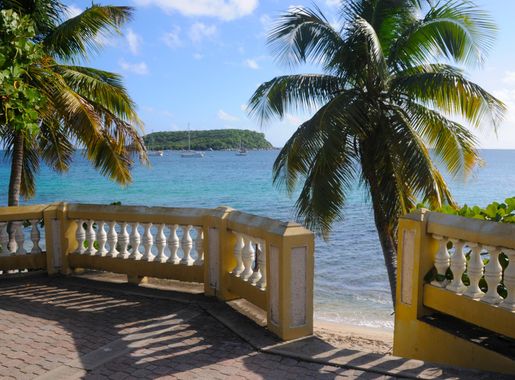
Nestled off the eastern coast of Puerto Rico, Vieques Island is a serene escape, offering a perfect blend of natural beauty and rich history. This stunning island is renowned for its pristine beaches, crystal-clear waters, and vibrant marine life. Whether you are looking to relax on the soft sands of Sun Bay Beach or explore the underwater wonders of the Mosquito Bay, Vieques Island has something for every traveler. One of the island's most magical attractions is the Bioluminescent Bay, also known as Mosquito Bay. This natural wonder glows with a mystical blue light at night, thanks to the high concentration of bioluminescent microorganisms in the water. A guided kayak tour is the best way to experience this otherworldly phenomenon. Beyond the beaches, Vieques is steeped in history. The island was once used as a military training ground and now serves as a wildlife refuge, preserving its unique flora and fauna. Visitors can explore the Vieques National Wildlife Refuge, which covers nearly two-thirds of the island and offers hiking trails, bird watching, and secluded beaches. Vieques also boasts a vibrant culture and friendly locals. The island's charming towns, like Isabel Segunda and Esperanza, are filled with colorful buildings, local shops, and delicious eateries serving authentic Puerto Rican cuisine. Don't miss the chance to try mofongo, a traditional dish made with mashed plantains. For those seeking adventure, Vieques offers a variety of outdoor activities, including snorkeling, horseback riding, and paddleboarding. The island's unspoiled landscapes and tranquil atmosphere make it an ideal destination for nature lovers and those looking to unwind from the hustle and bustle of daily life.