

Free Luquillo Mountains Travel Guide & Mobile App
Explore Luquillo Mountains with free travel guides. Discover regional history, expert tips, proposed trips, and audio guides on web or mobile app.


Explore Puerto Rico’s Luquillo Mountains for cloud-forest trails, waterfalls, wildlife and memorable viewpoints above the north-eastern coast.
Read more about Luquillo Mountains
When is the best time to visit Luquillo Mountains?
Best: January–March · 27°C| Month | High (°C) | Rainfall (mm) |
|---|---|---|
| January (best) | 27 | 121 |
| February (best) | 27 | 100 |
| March (best) | 27 | 90 |
| April | 27 | 131 |
| May | 28 | 141 |
| June | 28 | 151 |
| July | 28 | 161 |
| August | 28 | 170 |
| September | 28 | 180 |
| October | 28 | 190 |
| November | 28 | 200 |
| December | 27 | 210 |
Getting to and around Luquillo Mountains
How to get there
Transportation
Top city travel guides in Luquillo Mountains
The cities of Luquillo Mountains, and the easiest places to base yourself.
-

-


Swipe for more cities
Destinations in Luquillo Mountains
Resorts, valleys and scenic spots worth a trip of their own.

Swipe for more destinations
Best attractions in Luquillo Mountains
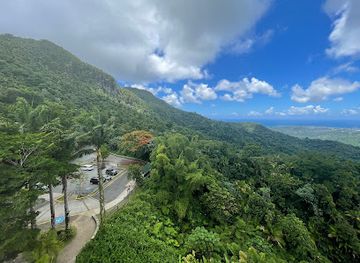
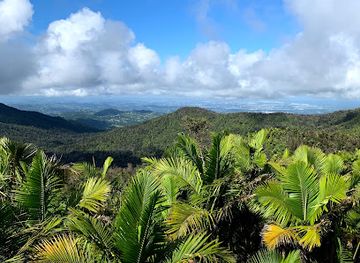
The main attraction of the Luquillo Mountains is El Yunque National Forest, where visitors can combine interpretive facilities, marked rainforest trails, lookout points, waterfalls and wildlife observation. Trails vary from accessible walks near developed visitor areas to more demanding routes through steep, wet terrain. Mount Britton and El Yunque Peak offer elevated destinations when visibility and access allow, while La Mina Falls and Juan Diego Falls are associated with forest streams and water-carved valleys; conditions and swimming access can change after storms. Towers such as Yokahu provide a different perspective on the layered canopy and the north-eastern coast. The region’s appeal is not confined to individual sites: cloud forest, palms, orchids, tree ferns and the sound of coquí frogs create a constantly changing natural setting. At the foothills, Luquillo’s beach and food kiosks provide a coastal complement, while Río Grande and Naguabo offer access to the rural edges of the range. Visitors should distinguish the protected forest experience from nearby commercial adventure activities and check current permissions before setting out.
-
Tourist attraction
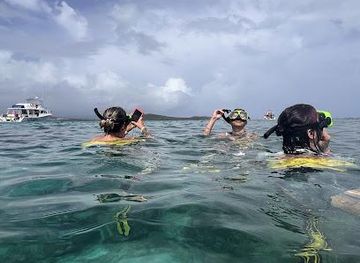
Snorkeling Puerto Rico | Boat Tours
Explore the vibrant underwater world of Fajardo, Puerto Rico, with unforgettable snorkeling tours and breathtaking marine encounters.
-
Boat tour agency
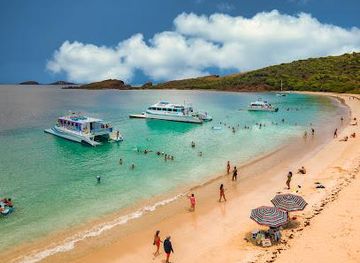
East Island Excursions
Discover the breathtaking beauty of Fajardo with East Island Excursions, offering unforgettable boat tours and rentals in stunning Caribbean waters.
-
Beach
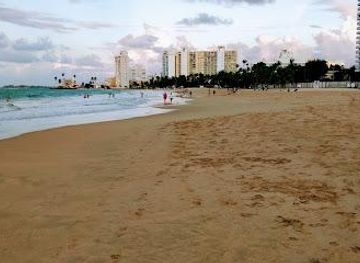
Hobie Beach
Discover Hobie Beach in Puerto Rico: a stunning destination for sun, sand, and water sports, perfect for a tropical escape.
-
Marina
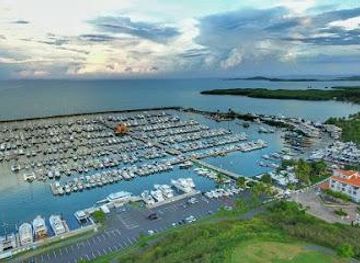
Safe Harbor Puerto Del Rey
Explore the beauty of the Caribbean at Safe Harbor Puerto Del Rey, a premier marina in Fajardo offering boat services, rentals, and breathtaking views.
Best landmarks in Luquillo Mountains
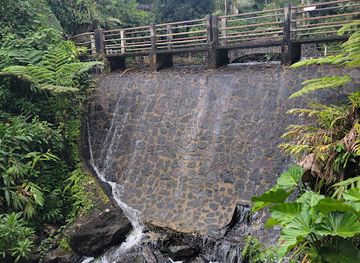
El Yunque Peak is the symbolic high point of the range, rising above the forest and often surrounded by rapidly changing cloud. Mount Britton’s observation area is another recognisable highland feature, offering broad views when the atmosphere is clear. Yokahu Tower stands among the forest’s best-known structures and provides a raised viewpoint over the canopy and the north-eastern foothills. The stone and concrete visitor infrastructure associated with El Yunque reflects several generations of public-forest design and conservation work. La Mina Falls and Juan Diego Falls are natural landmarks rather than built monuments, their importance coming from the rivers, rock formations and dense vegetation that define the mountain environment. Beyond the forest roads, the sharp transition from the wooded slopes to Luquillo’s coast and the eastern foothills around Naguabo gives the range its visual identity. These places are weather-dependent landscapes: cloud, rainfall, hurricane recovery and seasonal stream levels can alter the appearance and accessibility of even the most familiar landmarks.
-
Observation deck
Torre Yokahú
Experience the breathtaking vistas of El Yunque National Forest from Torre Yokahú, the ultimate observation deck in Puerto Rico.
-
Tourist attraction
Vereda Angelito
Experience the serene beauty of Vereda Angelito in Luquillo, Puerto Rico, where crystal-clear waters meet lush tropical landscapes for an unforgettable escape.
-
Historical landmark
Torre Britton
Discover the historic charm of Torre Britton in Río Grande, Puerto Rico – a captivating landmark steeped in rich heritage and stunning views.
-
Historical landmark
Baño Grande Historic Site
Explore the serene beauty and rich history of Baño Grande, a captivating historic site nestled in the lush landscapes of Río Grande, Puerto Rico.

Explore Luquillo Mountains on the map
Plan your trip on one map. See where the top cities, national parks and sights are, and book hotels and experiences in a few clicks.
Best hotels in Luquillo Mountains
Best restaurants in Luquillo Mountains
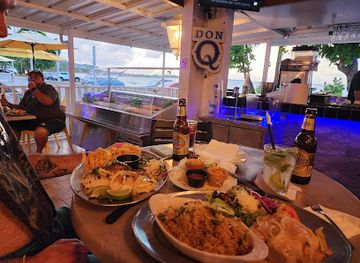
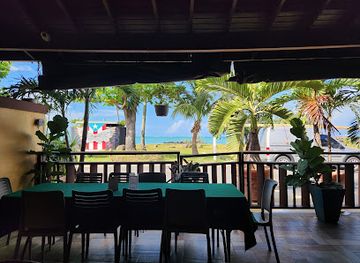
Dining around the Luquillo Mountains is shaped by the meeting of rainforest, coastal towns and Puerto Rican home cooking. Luquillo’s kiosks are the most recognisable food stop, offering casual meals and snacks such as mofongo, fried plantains, rice dishes, seafood and other Puerto Rican favourites, while restaurants in Luquillo and Río Grande provide a broader range of local and contemporary cooking. Naguabo contributes an eastern-coast setting with seafood and traditional dishes, although menus vary by establishment and season. Small cafés, bakeries and roadside businesses are useful for breakfast, coffee and provisions before a forest walk. Local produce, pork, root vegetables, plantains and tropical fruit appear frequently in regional cooking, alongside the wider island traditions of sofrito, rice and beans. The mountain forest itself has limited dining, so visitors should carry water and snacks and avoid leaving food waste on trails. Evening meals are generally easier to find in the coastal communities than inside the upland areas.
-
Seafood
La Parrilla
Experience authentic Puerto Rican flavors at La Parrilla in Luquillo—where seafood meets steak amidst stunning ocean views.
-
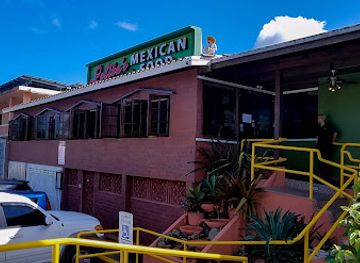
Mexican
Lolita's Mexican Food
Experience vibrant Mexican cuisine at Lolita's Mexican Food in Luquillo – where flavor meets friendly service amidst tropical charm.
-
Restaurant
Terruño
Discover gourmet Puerto Rican cuisine at Terruño in Luquillo – where tradition meets innovation in every delightful dish.
-
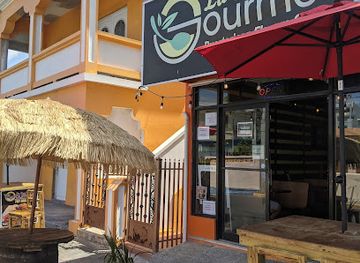
Restaurant
La Fonda Gourmet
Experience authentic Puerto Rican cuisine at La Fonda Gourmet in Luquillo - where every dish tells a story!
Best bars in Luquillo Mountains
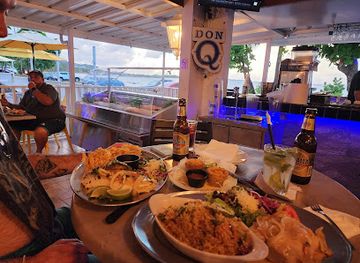
Evening life around the Luquillo Mountains is concentrated in Luquillo, Río Grande and Naguabo rather than in the forest itself. Luquillo’s beachfront and kiosk areas support informal evenings with food, drinks and occasional music, while local bars and restaurants provide a more relaxed setting than a dedicated club district. Río Grande has hotel-based dining and bars alongside neighbourhood establishments, and Naguabo offers a quieter coastal atmosphere. Nightclubs are not the defining feature of this rural mountain region, and options can be limited outside the main towns or beyond the busiest periods. Visitors should plan a safe return before travelling into the hills, where roads are winding, lighting is sparse and mobile coverage can be inconsistent. Local nightlife is best approached as an extension of community restaurants, music and conversation rather than as a large-scale entertainment scene.
-
Seafood
La Parrilla
Experience the best of Puerto Rican seafood and steak at La Parrilla, a culinary delight in Luquillo.
-
Grill
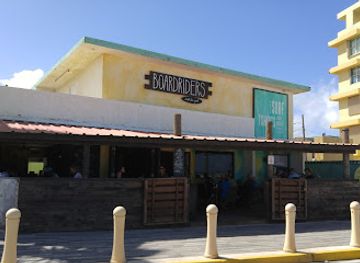
Boardrider's Surf Bar and Grill
Boardrider's Surf Bar and Grill in Luquillo: Enjoy delicious grilled delights and refreshing cocktails in a stunning beachfront setting.
-
Restaurant
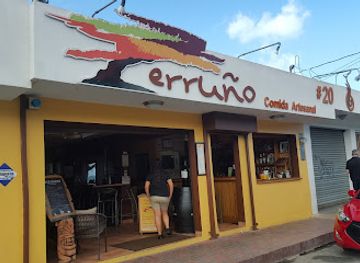
Terruño
Discover authentic Puerto Rican flavors at Terruño, the artisanal restaurant in Luquillo that delights with every dish.
-
Restaurant
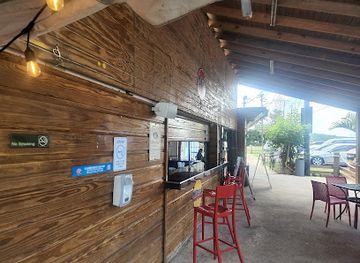
El Hamberguito & Steak House
Discover the taste of Puerto Rico at El Hamberguito & Steak House, where delicious steaks meet a vibrant dining atmosphere in Luquillo.
Best nightclubs in Luquillo Mountains
Evening life around the Luquillo Mountains is concentrated in Luquillo, Río Grande and Naguabo rather than in the forest itself. Luquillo’s beachfront and kiosk areas support informal evenings with food, drinks and occasional music, while local bars and restaurants provide a more relaxed setting than a dedicated club district. Río Grande has hotel-based dining and bars alongside neighbourhood establishments, and Naguabo offers a quieter coastal atmosphere. Nightclubs are not the defining feature of this rural mountain region, and options can be limited outside the main towns or beyond the busiest periods. Visitors should plan a safe return before travelling into the hills, where roads are winding, lighting is sparse and mobile coverage can be inconsistent. Local nightlife is best approached as an extension of community restaurants, music and conversation rather than as a large-scale entertainment scene.
-
Bar
El Flamboyán
Experience the vibrant atmosphere and refreshing drinks at El Flamboyán in Luquillo, the perfect spot for relaxation and fun on your Puerto Rican adventure.
-
Bar
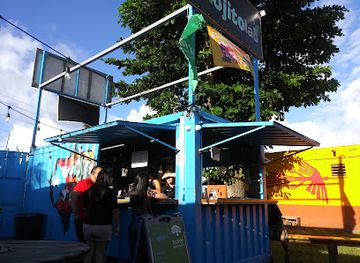
MojitoLab
Discover the ultimate mojito experience at MojitoLab in Luquillo, Puerto Rico, where every sip is a taste of paradise.
-
Lounge
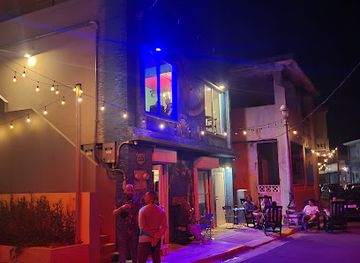
C Note Jazz Club
Discover the vibrant atmosphere of C Note Jazz Club in Luquillo, where live music and a cozy lounge experience await every visitor.
-
Bar
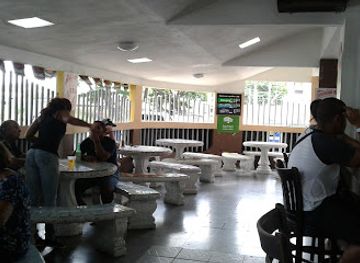
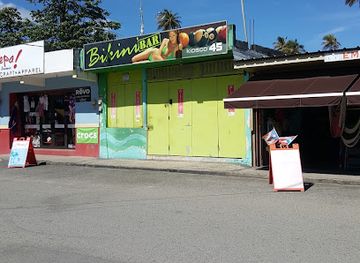
Bikini Sport Bar
Experience the vibrant atmosphere of Bikini Sport Bar in Luquillo, where delicious cocktails and local music create unforgettable moments in the heart of Puerto Rico.
Best shops in Luquillo Mountains
Shopping in the Luquillo Mountains is primarily practical and local rather than centred on large retail districts. Luquillo’s food-kiosk area and town shops are useful for snacks, drinks, beach supplies and Puerto Rican food products, while small businesses around Río Grande and Naguabo provide everyday provisions before or after a forest visit. Visitors may find locally made crafts, artwork, jewellery, souvenirs and packaged coffee or sweets in independent shops and market-style settings, but stock and trading days can vary. Farmers’ produce and roadside stands may offer tropical fruit and other regional goods when available. The strongest purchases are generally compact, useful items that reflect Puerto Rican culture rather than natural material taken from the forest. Do not remove plants, rocks, shells or other objects from El Yunque, and check food and agricultural restrictions before carrying fresh produce or plant material onward.
-
Shopping mall
Plaza Las Américas
Explore Plaza Las Américas, Puerto Rico's largest shopping mall, offering vibrant shopping, diverse dining, and family-friendly entertainment experiences.
-
Theme park
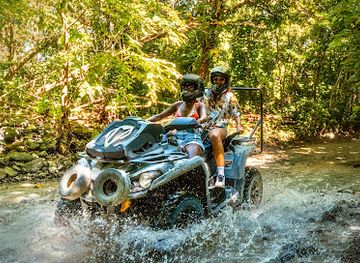
Carabalí Rainforest Park
Experience the ultimate adventure at Carabalí Rainforest Park in Luquillo, Puerto Rico, with thrilling ATV rides and scenic horseback excursions.
-
Shopping mall
Plaza Fajardo
Discover a vibrant shopping experience at Plaza Fajardo, where diverse stores, delightful dining, and family-friendly entertainment await you.
-
Tourist attraction
Las Pailas
Explore the thrilling natural water slides of Las Pailas in Luquillo, Puerto Rico – a perfect blend of adventure and serene beauty.


Get your free copy of our complete guide to Luquillo Mountains, delivered straight to you.
Everything on this page, from attractions and restaurants to essentials and local phrases, in one PDF you can read offline, print or share.
Already have an account? Sign in
Your Luquillo Mountains guide is ready.
We'll send it to · Not you? Sign out

Getting your guide ready…
We are putting together a fresh copy of the Luquillo Mountains guide. This can take up to a minute.
This can take a few moments. If your browser asks, choose Allow so the download can start. You'll find the guide in your Downloads folder.
Nothing happened? Download it again
Sorry, the guide is taking longer than usual. Please try again in a minute, or get it by email instead.
Luquillo Mountains essentials
Currency and Payment
Safety
Emergency Situations
Do's and Don'ts
Local Tips
From Eve
Local phrases worth knowing
You don't need to get them perfect. A few words go a long way, and locals appreciate the effort.
Basics
| English | Local | Say it |
|---|---|---|
| Hello | Hola | [Ola] |
| Goodbye | Adiós | [A-dios] |
| Yes | Sí | [See] |
| No | No | [No] |
| Please/You're welcome | Por favor/De nada | [Por fa-vor/De na-da] |
| Thank you | Gracias | [Gra-cias] |
| Excuse me/Sorry | Disculpe/Lo siento | [Dis-cul-pe/Lo sien-to] |
| How are you? | ¿Cómo estás? | [Ko-mo es-tas] |
| Fine. And you? | Bien. ¿Y tú? | [Byen. E tu] |
| Do you speak English? | ¿Hablas inglés? | [A-blas in-glés] |
| I don't understand | No entiendo | [No en-tien-do] |
Eating & Drinking
| English | Local | Say it |
|---|---|---|
| I'd like to see the menu, please | Me gustaría ver el menú, por favor | [Me gus-ta-ría ver el me-nú, por fa-vor] |
| I don't eat meat | No como carne | [No co-mo car-ne] |
| Cheers! | ¡Salud! | [Sa-lud] |
| I would like to pay, please | Me gustaría pagar, por favor | [Me gus-ta-ría pa-gar, por fa-vor] |
Emergencies
| English | Local | Say it |
|---|---|---|
| Help! | ¡Ayuda! | [A-yu-da] |
| Go away! | ¡Vete! | [Ve-te] |
| Call the Police! | ¡Llama a la policía! | [Ya-ma a la po-li-cía] |
| Call a doctor! | ¡Llama a un doctor! | [Ya-ma a un doc-tor] |
| I'm lost | Estoy perdido | [Es-toy per-di-do] |
| I'm ill | Estoy enfermo | [Es-toy en-fer-mo] |
Shopping
| English | Local | Say it |
|---|---|---|
| I'd like to buy... | Me gustaría comprar... | [Me gus-ta-ría com-prar] |
| I'm just looking | Solo estoy mirando | [So-lo es-toy mi-ran-do] |
| How much is it? | ¿Cuánto cuesta? | [Cuan-to cues-ta] |
| That's too expensive | Eso es muy caro | [E-so es muy ca-ro] |
| Can you lower the price? | ¿Puedes bajar el precio? | [Pue-des ba-har el pre-cio] |
Time & Numbers
| English | Local | Say it |
|---|---|---|
| What time is it? | ¿Qué hora es? | [Ke o-ra es] |
| It's one o'clock | Es la una | [Es la u-na] |
| Half past (10) | Y media (10) | [Y me-dia] |
| Morning | Mañana | [Ma-ña-na] |
| Afternoon | Tarde | [Tar-de] |
| Evening | Noche | [No-che] |
| Yesterday | Ayer | [A-yer] |
| Today | Hoy | [Oy] |
| Tomorrow | Mañana | [Ma-ña-na] |
| 1 | Uno | [U-no] |
| 2 | Dos | [Dos] |
| 3 | Tres | [Tres] |
| 4 | Cuatro | [Cua-tro] |
| 5 | Cinco | [Cin-co] |
| 6 | Seis | [Seis] |
| 7 | Siete | [Sie-te] |
| 8 | Ocho | [O-cho] |
| 9 | Nueve | [Nue-ve] |
| 10 | Diez | [Diez] |
Transport & Directions
| English | Local | Say it |
|---|---|---|
| Where's a/the...? | ¿Dónde está un/los...? | [Don-de es-tá un/los] |
| What's the address? | ¿Cuál es la dirección? | [Cual es la di-rec-ción] |
| Can you show me (on the map)? | ¿Puedes enseñarme (en el mapa)? | [Pue-des en-se-ñar-me (en el ma-pa)] |
| When's the next (bus)? | ¿Cuándo es el próximo (autobús)? | [Cuan-do es el pró-xi-mo (au-to-bús)] |
| A ticket (to ....) | Un boleto (a ....) | [Un bo-le-to] |
History of Luquillo Mountains
Indigenous Settlement Before European Colonisation
Before Spanish colonisation, Taíno communities lived across Puerto Rico and used the north-eastern landscape for agriculture, fishing, travel and the collection of forest resources. The Luquillo Mountains were not an isolated wilderness but part of a wider network linking coastal settlements with inland valleys. Archaeological evidence and surviving knowledge of Taíno culture provide important context for understanding the forest as a lived and used landscape long before modern conservation boundaries were established.
Spanish Colonial Land Use
During Spanish rule, the lower slopes and valleys around the Luquillo Mountains were incorporated into the agricultural economy of eastern Puerto Rico. Farming, timber use and settlement altered accessible areas, while steep and wetter uplands remained comparatively forested. The range’s rivers and rainfall supported cultivation below the hills, and coastal communities such as Luquillo and Naguabo developed in close relationship with these inland resources.
The Spanish Forest Reserve of 1876
In 1876, the Spanish colonial government established a forest reserve in the Luquillo uplands, reflecting growing concern about timber resources, watersheds and the long-term management of forest land. The reserve is important because it marked an early formal attempt to protect part of Puerto Rico’s mountain forests rather than treating them solely as sources of agricultural land or timber. Its administrative legacy helped shape later public forest conservation.
United States Forest Administration After 1903
After Puerto Rico became a United States territory in 1898, management of the Luquillo forest changed under American administration. In 1903 the forest entered the United States forest reserve system, and it later became associated with the United States Forest Service. Roads, ranger facilities, scientific work and public recreation gradually expanded, while forestry policy increasingly balanced resource use with watershed protection and conservation.
El Yunque National Forest and Scientific Research
The forest became widely known as El Yunque National Forest, a name now strongly associated with Puerto Rico’s tropical uplands. During the twentieth century it became an important centre for tropical forestry, hydrology and ecological research. Research stations and long-term observation helped document the effects of rainfall, hurricanes, altitude and human disturbance on Caribbean forest ecosystems, giving the Luquillo Mountains significance well beyond recreation.
Conservation, Tourism and Hurricane Change
Improved roads, trails, towers and interpretive facilities brought increasing numbers of visitors to the range, particularly from the northern coastal corridor. Tourism has developed alongside efforts to protect habitats and water supplies. Hurricanes, including the severe damage caused by Hurricane Maria in 2017, have repeatedly reshaped trails, vegetation and infrastructure. Recovery and repair remain part of the forest’s modern history, and conditions can differ considerably from one visit to the next.
Contemporary Stewardship of a Tropical Mountain Range
Today the Luquillo Mountains are managed through a combination of federal forest administration, Puerto Rican environmental policy, scientific research and local tourism economies. El Yunque protects important watersheds and habitat for distinctive Caribbean species while receiving visitors from around the world. The continuing challenge is to provide access without degrading trails, streams or wildlife habitat, particularly after storms and during periods of heavy visitation.
Luquillo Mountains in Photos
Browse through our photo collection highlighting the charm and character of the destination.
Neighbouring regions of Luquillo Mountains
The closest regions to Luquillo Mountains, if you have time for more than one.
-

-

-

-

-


Swipe for more regions
Explore more

Explore more of Puerto Rico
Discover Puerto Rico, where vibrant culture, stunning beaches, and rich history create an unforgettable Caribbean experience. Perfect for adventurers and relaxation seekers alike.
Explore Puerto Rico