

Free Jazan Travel Guide & Mobile App
Explore Jazan with free travel guides. Discover regional history, expert tips, proposed trips, and audio guides on web or mobile app.


Explore Jazan’s Red Sea islands, mountain valleys, tropical farms, seafood traditions and southern Saudi heritage from coast to highlands.
Read more about Jazan
When is the best time to visit Jazan?
Best: December–February · 28–29°C| Month | High (°C) | Rainfall (mm) |
|---|---|---|
| January (best) | 28 | 20 |
| February (best) | 29 | 15 |
| March | 31 | 10 |
| April | 32 | 8 |
| May | 34 | 5 |
| June | 35 | 4 |
| July | 37 | 6 |
| August | 37 | 7 |
| September | 36 | 10 |
| October | 34 | 12 |
| November | 32 | 15 |
| December (best) | 29 | 20 |
Getting to and around Jazan
How to get there
Transportation
Top city travel guides in Jazan
The cities of Jazan, and the easiest places to base yourself.
-

-

-

-


Swipe for more cities
Destinations in Jazan
Resorts, valleys and scenic spots worth a trip of their own.
-
-

-


Swipe for more destinations
Best attractions in Jazan
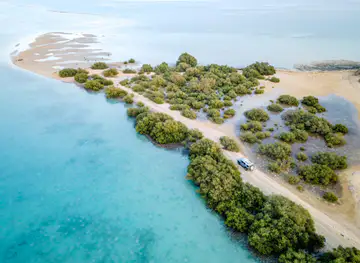
Jazan’s attractions range from maritime nature to mountain scenery and living agricultural landscapes. Jazan city provides the most accessible introduction through its waterfront, cultural displays, markets and heritage areas, while the city’s historic defensive remains help explain its coastal role. The Farasan Islands are the region’s most distinctive excursion, combining coral-rich waters, mangrove habitats, fishing traditions and opportunities for boating, diving and wildlife observation. On the mainland, the Fifa Mountains offer terraces, high viewpoints and dramatic roads through cultivated uplands. Wadi Lajab near Rayth is known for its narrow rock-walled gorge and requires sensible planning after rain. Smaller towns including Sabya and Abu Arish bring visitors closer to farms, traditional commerce and southern foodways. Outdoor activities are strongly seasonal: warm coastal water and marine trips contrast with more comfortable winter walking, while heat and sudden weather can affect access. The region’s appeal lies in this variety of environments rather than in a single concentrated sightseeing district.
-
Park
Abu Kheyal Park
Discover tranquility and natural beauty at Abu Kheyal Park, an essential destination for nature lovers in Abha, Saudi Arabia.
-
Park
The Art Street
Explore The Art Street in Abha, where nature meets creativity through stunning murals and vibrant cultural experiences in a serene park setting.
-
Tourist attraction
High city
Experience the breathtaking views and rich cultural heritage of High City in Abha, a must-visit destination in the heart of Saudi Arabia's As Sarawat mountains.
-
Park
Andalus Park
Discover the lush landscapes and serene beauty of Andalus Park, a perfect escape for relaxation and family fun in Abha, Saudi Arabia.


Best landmarks in Jazan
Jazan’s most recognisable landmarks express its coastal position, mountain geography and long political history. Al-Dosariyah Castle in Jazan city is associated with the region’s defensive past and occupies a prominent position above the urban landscape, although access arrangements should be checked before visiting. The Jazan Heritage Village presents traditional southern architectural forms and material culture in a setting designed to interpret regional life for visitors. Beyond the city, the sharply elevated Fifa Mountains form a natural landmark visible across the southern landscape, with terraced cultivation and settlements adapting to steep terrain. Wadi Lajab is a geological landmark rather than a built monument: its narrow gorge, high rock walls and vegetation create a marked contrast with the coastal plain. The Farasan archipelago is itself a defining geographical landmark, with low islands, reefs and mangroves scattered across the Red Sea. Together these places show why Jazan’s identity is shaped by the relationship between defensive coast, cultivated highlands and island ecology.
-
Tourist attraction
Soudah National Park
Discover the stunning landscapes and rich biodiversity of Soudah National Park, a must-visit tourist attraction in the heart of Saudi Arabia.
-
Historical landmark
Shamsan Castle
Explore the rich history and breathtaking views at Shamsan Castle, a captivating historical landmark in the heart of Abha, Saudi Arabia.
-
Historical landmark
Shamsan Historical Castle
Explore Shamsan Historical Castle, a stunning architectural masterpiece in Abha that unveils the rich history and culture of Saudi Arabia.
-
Park
Al Soudah National Park
Explore the breathtaking Al Soudah National Park, a natural paradise in Saudi Arabia with stunning landscapes, diverse wildlife, and endless outdoor adventures.


Explore Jazan on the map
Plan your trip on one map. See where the top cities, national parks and sights are, and book hotels and experiences in a few clicks.
Best hotels in Jazan
Best restaurants in Jazan
Jazan’s food reflects both its Red Sea coast and its productive southern lowlands. Seafood is prominent, with fish and prawns appearing in restaurants and local markets, while rice dishes, spiced stews, grilled meats and breads connect the region with wider Saudi culinary traditions. Coastal communities and the Farasan Islands have their own maritime food culture, though availability varies with catches and season. The plains around Jazan and Abu Arish produce mangoes and other warm-climate fruit, which are worth seeking in season from markets and roadside sellers. In the towns, dining ranges from casual rice and grilled-food restaurants to cafés, bakeries and contemporary venues serving familiar regional and international dishes. Traditional meals may be shared, and eating customs can differ between family settings and commercial restaurants. Visitors should look for busy local establishments, ask about the day’s seafood and treat market produce as a central part of Jazan’s culinary identity rather than merely a souvenir.
-
Restaurant
مطعم كايا | Kaya Restaurant
Discover the exquisite flavors of Saudi Arabia at Kaya Restaurant, where fine dining meets exceptional service in the heart of Jazan.
-
Seafood
Happy times Fish Restaurant
Experience exquisite seafood dining at Happy Times Fish Restaurant in Jazan – where freshness meets flavor in every dish.
-
Indian
Taste of spices
Experience authentic Indian flavors at Taste of Spices in Jazan - where every dish tells a story.
-
Restaurant
Applebee's
Discover the best of American cuisine at Applebee's Jazan – where flavor meets comfort in every dish.


Best bars in Jazan
Jazan does not have a conventional bar or nightclub scene, as alcohol is prohibited under Saudi law. Evening life centres instead on family restaurants, cafés, tea and coffee shops, waterfront strolling and gatherings in the region’s larger towns. Jazan city has the broadest choice of contemporary cafés and late dining, while smaller towns offer a quieter rhythm built around local restaurants, sweet shops and social meeting places. Cultural programmes, seasonal festivals and public events may add music or performances, but schedules are changeable and should be checked locally. In the mountains and on the Farasan Islands, evenings are primarily about dining, conversation and the landscape rather than organised nightlife; accommodation facilities may have limited evening services. Dress modestly, respect family-oriented spaces and follow venue rules, particularly during religious periods and public celebrations.
-
Hotel
Novotel Jazan
Discover luxury and comfort at Novotel Jazan, the perfect hotel for travelers seeking elegance and modern amenities in the heart of Jazan.
-
Seafood
Happy times Fish Restaurant
Discover the essence of coastal cuisine at Happy Times Fish Restaurant, where every dish tells a story of freshness and flavor in Jazan.
-
Indian
Tamarind Restaurant Jizan- مطعم تمر هند جازان
Experience the vibrant flavors of India and Asia at Tamarind Restaurant Jizan, a culinary gem in the heart of Jizan.
-
Seafood
مطعم كوست فيو Coast View
Experience the best seafood at Coast View, where fresh flavors meet stunning coastal views in Jazan.


Best nightclubs in Jazan
Jazan does not have a conventional bar or nightclub scene, as alcohol is prohibited under Saudi law. Evening life centres instead on family restaurants, cafés, tea and coffee shops, waterfront strolling and gatherings in the region’s larger towns. Jazan city has the broadest choice of contemporary cafés and late dining, while smaller towns offer a quieter rhythm built around local restaurants, sweet shops and social meeting places. Cultural programmes, seasonal festivals and public events may add music or performances, but schedules are changeable and should be checked locally. In the mountains and on the Farasan Islands, evenings are primarily about dining, conversation and the landscape rather than organised nightlife; accommodation facilities may have limited evening services. Dress modestly, respect family-oriented spaces and follow venue rules, particularly during religious periods and public celebrations.
-
Amusement center
Best Ball
Experience the ultimate fun at Best Ball Amusement Center in Jazan—your go-to destination for games, laughter, and unforgettable memories.
-
Night club
مخيمات اطلالة ابها
Experience the vibrant nightlife at مخيمات اطلالة ابها, where stunning views and lively entertainment create unforgettable memories.
-
Night club
سكاي تايم
Experience the vibrant nightlife of Abha at Sky Time, where music, dance, and unforgettable moments await.
-
 Night club
حلاق ريحانه
Experience the vibrant nightlife of Abha at حلاق ريحانه, a premier night club offering electrifying entertainment and an unforgettable atmosphere.


Best shops in Jazan
Shopping in Jazan is rooted in food, everyday commerce and regional craft rather than large-scale luxury retail. Jazan city has the region’s widest range of modern shops, supermarkets, cafés and traditional market streets, while Abu Arish, Sabya and other larger towns serve as practical centres for local produce and household goods. Seasonal mangoes and other fruit from the coastal plain are among the most characteristic purchases, though visitors should check transport and customs rules before taking fresh produce across borders. Fish markets and seafood stalls reflect the region’s maritime economy, while heritage areas and craft sellers may offer woven items, baskets, incense and locally styled textiles. On the Farasan Islands, shopping is limited and more closely connected to island life, so do not rely on finding a broad selection of gifts there. Bargaining may be possible in some traditional markets, but fixed prices are common in modern retailers; modest, respectful negotiation is the appropriate approach where it is invited.
-
Shopping mall
Al Rashid Mall JAZAN
Explore Al Rashid Mall JAZAN: a shopper's paradise with diverse brands, delightful dining, and family-friendly entertainment in the heart of Jazan.
-
Shopping mall
Kadi Mall | كادي مول
Discover Kadi Mall in Jazan, a premier shopping destination featuring diverse retail, dining, and entertainment experiences for every traveler.
-
Shopping mall
Alshamil Mall
Explore Alshamil Mall in Jazan for an unforgettable shopping experience filled with diverse shops, delicious dining, and exciting entertainment options.
-
Clothing store
ريفي | Reefi
Discover the vibrant world of fashion at Reefi, Jazan's premier destination for clothing, cosmetics, and more, catering to all ages and styles.


Get your free copy of our complete guide to Jazan, delivered straight to you.
Everything on this page, from attractions and restaurants to essentials and local phrases, in one PDF you can read offline, print or share.
Already have an account? Sign in
Your Jazan guide is ready.
We'll send it to · Not you? Sign out

Getting your guide ready…
We are putting together a fresh copy of the Jazan guide. This can take up to a minute.
This can take a few moments. If your browser asks, choose Allow so the download can start. You'll find the guide in your Downloads folder.
Nothing happened? Download it again
Sorry, the guide is taking longer than usual. Please try again in a minute, or get it by email instead.
Jazan essentials
Currency and Payment
Safety
Emergency Situations
Do's and Don'ts
Local Tips
From Eve
Local phrases worth knowing
You don't need to get them perfect. A few words go a long way, and locals appreciate the effort.
Basics
| English | Local | Say it |
|---|---|---|
| Hello | مرحبا | [Marhaban] |
| Goodbye | مع السلامة | [Ma'a as-salama] |
| Yes | نعم | [Na'am] |
| No | لا | [La] |
| Please/You're welcome | من فضلك | [Min fadlik] |
| Thank you | شكرا | [Shukran] |
| Excuse me/Sorry | عفوا | [Afwan] |
| How are you? | كيف حالك؟ | [Kayfa halak?] |
| Fine. And you? | بخير. وأنت؟ | [Bikhayr. Wa anta?] |
| Do you speak English? | هل تتحدث الإنجليزية؟ | [Hal tatahadath al-ingliziyya?] |
| I don't understand | لا أفهم | [La afham] |
Eating & Drinking
| English | Local | Say it |
|---|---|---|
| I'd like to see the menu, please | أود رؤية القائمة، من فضلك | [Awad ru'yat al-qa'ima, min fadlik] |
| I don't eat meat | لا أأكل اللحم | [La akul al-lahm] |
| Cheers! | في صحتك! | [Fi sihtak!] |
| I would like to pay, please | أود الدفع، من فضلك | [Awad al-daf', min fadlik] |
Emergencies
| English | Local | Say it |
|---|---|---|
| Help! | نجدة! | [Najda!] |
| Go away! | ابتعد! | [Ibta'id!] |
| Call the Police! | اتصل بالشرطة! | [Ittasil bil-shurta!] |
| Call a doctor! | اتصل بطبيب! | [Ittasil bi-tabeeb!] |
| I'm lost | أنا ضائع | [Ana da'i'] |
| I'm ill | أنا مريض | [Ana marid] |
Shopping
| English | Local | Say it |
|---|---|---|
| I'd like to buy... | أود شراء... | [Awad shira'] |
| I'm just looking | أنا فقط أنظر | [Ana faqat anzur] |
| How much is it? | كم سعره؟ | [Kam si'ruhu?] |
| That's too expensive | هذا غالي جدا | [Hatha ghaly jiddan] |
| Can you lower the price? | هل يمكنك خفض السعر؟ | [Hal yumkinuka khafdh as-si'r?] |
Time & Numbers
| English | Local | Say it |
|---|---|---|
| What time is it? | كم الساعة؟ | [Kam as-saa'a?] |
| It's one o'clock | الساعة واحدة | [As-saa'a wahida] |
| Half past (10) | نصف الساعة (10) | [Nisf as-saa'a (10)] |
| Morning | صباحا | [Sabahan] |
| Afternoon | بعد الظهر | [Ba'd al-zuhur] |
| Evening | مساء | [Masa'a] |
| Yesterday | أمس | [Ams] |
| Today | اليوم | [Al-yawm] |
| Tomorrow | غدا | [Ghadan] |
| 1 | واحد | [Wahid] |
| 2 | اثنان | [Ithnayn] |
| 3 | ثلاثة | [Thalatha] |
| 4 | أربعة | [Arba'a] |
| 5 | خمسة | [Khamsa] |
| 6 | ستة | [Sitta] |
| 7 | سبعة | [Sab'a] |
| 8 | ثمانية | [Thamaniya] |
| 9 | تسعة | [Tis'a] |
| 10 | عشرة | [Ashara] |
Transport & Directions
| English | Local | Say it |
|---|---|---|
| Where's a/the...? | أين ...؟ | [Ayna ...?] |
| What's the address? | ما هو العنوان؟ | [Ma huwa al-unwan?] |
| Can you show me (on the map)? | هل يمكنك أن تريني (على الخريطة)؟ | [Hal yumkinuka an turini (ala al-kharita)?] |
| When's the next (bus)? | متى يأتي (الحافلة) القادمة؟ | [Mata ya'ti (al-hafila) al-qadima?] |
| A ticket (to ....) | تذكرة (إلى ....) | [Tadhkira (ila ....)] |
History of Jazan
Ancient Red Sea Trade and Southern Arabian Settlement
Jazan’s coastal plain and islands formed part of the wider Red Sea and southern Arabian trading world long before the modern Saudi state. Maritime routes connected the coast with Yemen, the Horn of Africa and ports farther north, carrying incense, foodstuffs and other goods. Archaeological remains and inscriptions across the south-west Arabian cultural zone point to long settlement, farming and seafaring traditions, although individual sites require careful interpretation. The Farasan Islands’ position made them especially significant as an offshore stopping point and fishing area.
Islamic-Era Coastal Networks
After the emergence of Islam, the southern Red Sea coast remained connected to the pilgrimage, commercial and political networks linking western Arabia with Yemen and Africa. Coastal settlements supported fishing, small-scale agriculture and maritime exchange, while inland communities maintained terraced cultivation and routes through the mountains. Jazan’s history during this broad period was shaped less by a single capital than by shifting local authorities, tribal alliances and the economic importance of ports and valleys.
Ottoman Influence and Regional Fortifications
Ottoman power reached parts of the Red Sea coast at different times, alongside local rulers and competing authorities in southern Arabia. Forts and administrative buildings in the Jazan area reflect the strategic importance of controlling ports, roads and cultivated lowlands, although surviving structures vary greatly in preservation. The period also illustrates the region’s position between the Ottoman Red Sea sphere and the political world of Yemen. Local agricultural and maritime life continued beneath these changing layers of authority.
The Idrisi Emirate and Early Twentieth-Century Politics
In the early twentieth century, the Idrisi dynasty established an emirate centred on parts of Asir and Jazan, navigating relations with the Ottoman Empire, Yemen and the emerging Saudi state. Its authority reflected the region’s distinctive political position and the importance of its coastal and agricultural districts. The emirate’s history is part of the wider realignment of south-western Arabia after the First World War, when borders and regional power relationships were being renegotiated.
Incorporation into Saudi Arabia
Jazan became part of the Kingdom of Saudi Arabia through the political and military developments that culminated in the 1934 Treaty of Taif between Saudi Arabia and Yemen. The settlement placed the region within the modern Saudi state while formalising wider territorial arrangements in the south-west. Since then, Jazan has developed as a Saudi administrative region with its own cultural character, strengthened roads, public services and links to national markets.
Agriculture, Ports and Modern Development
Modern Jazan has been transformed by investment in irrigation, roads, electricity, port infrastructure and industry. The coastal plain remains productive, particularly for mangoes and other warm-climate crops, while fishing continues to connect communities with the Red Sea. Jazan Economic City and associated industrial development represent a further shift towards manufacturing, logistics and energy-related activity. These changes sit alongside older livelihoods rather than replacing the region’s island, farming and mountain identities entirely.
Jazan in Photos
Browse through our photo collection highlighting the charm and character of the destination.
Neighbouring regions of Jazan
The closest regions to Jazan, if you have time for more than one.
-

-

-

-

-


Swipe for more regions

