

Free East Region Travel Guide & Mobile App
Explore East Region with free travel guides. Discover regional history, expert tips, proposed trips, and audio guides on web or mobile app.


Explore Singapore’s East Region for Changi heritage, hawker food, coastal parks, reservoirs, cycling routes and the island’s airport gateway.
Read more about East Region
When is the best time to visit East Region?
Best: January–March · 30–31°C| Month | High (°C) | Rainfall (mm) |
|---|---|---|
| January (best) | 30 | 200 |
| February (best) | 30 | 180 |
| March (best) | 31 | 190 |
| April | 31 | 190 |
| May | 31 | 190 |
| June | 31 | 190 |
| July | 31 | 190 |
| August | 31 | 190 |
| September | 31 | 190 |
| October | 31 | 190 |
| November | 31 | 200 |
| December | 30 | 200 |
Getting to and around East Region
How to get there
Transportation
Top city travel guides in East Region
The cities of East Region, and the easiest places to base yourself.
-

-


Swipe for more cities
Destinations in East Region
Resorts, valleys and scenic spots worth a trip of their own.
-

-


Swipe for more destinations
Best attractions in East Region
The East Region’s attractions combine open-air recreation, local urban life and aviation heritage. East Coast Park is the principal waterfront space, with beaches, cycling routes, food venues and broad views across the Singapore Strait. Bedok Reservoir Park offers a greener inland circuit, while Pasir Ris Park provides lawns, coastal scenery and mangrove habitats suited to relaxed walks and nature observation. Changi Point and Changi Village retain a more maritime atmosphere, with jetties, village-scale streets and access to the shoreline. The Changi Chapel and Museum provides the region’s most substantial historical interpretation, focusing on wartime captivity and the Japanese occupation. At the modern end of the spectrum, Jewel Changi Airport brings gardens, retail, dining and aviation architecture into a major visitor complex, while Singapore EXPO hosts exhibitions and events when scheduled. Tampines and Bedok are valuable for experiencing Singapore’s mature new-town planning, public art, markets and everyday food culture rather than for single monumental sights. Outdoor visits are especially rewarding early or late in the day, when the tropical climate is more comfortable.
-
Park
East Coast Park
Experience the serenity and thrill of East Coast Park, Singapore's premier destination for beach activities, lush greenery, and family fun.
-
Shopping mall
Changi City Point
Explore Changi City Point, a vibrant shopping mall in Singapore featuring diverse stores, delectable dining, and exciting entertainment options for all.
-
Wildlife park
River Wonders
Explore River Wonders in Singapore, where adventure meets conservation in a stunning wildlife park showcasing river ecosystems and exotic animals.
-
Bedok Reservoir Park
Experience the tranquil beauty of Bedok Reservoir Park, a lush retreat in Singapore perfect for leisure, sports, and nature exploration.


Best landmarks in East Region
Jewel Changi Airport is the East Region’s most recognisable contemporary landmark, distinguished by its glass-and-steel form and the Rain Vortex surrounded by indoor planting. It represents Singapore’s transformation into an aviation, logistics and services hub, although it is part of the wider airport complex rather than a historic monument. The Changi Chapel and Museum is the region’s most significant memorial landmark, preserving the memory of wartime imprisonment and civilian suffering during the Japanese occupation. Singapore EXPO, with its large exhibition halls, reflects the east’s modern commercial role, while the runway and terminal landscape around Changi shapes the visual identity of the surrounding district. Along the coast, East Coast Park’s broad shoreline and recreational infrastructure form a familiar public landmark rather than a single building. Bedok Reservoir’s engineered lake, wooded edges and surrounding skyline illustrate the way Singapore integrated water management, open space and housing into its planned urban landscape. Changi Village’s coastal setting and nearby jetty provide a smaller-scale reminder of the east’s maritime geography.
-
Garden
Gardens by the Bay
Explore the breathtaking Gardens by the Bay, where nature meets innovation in the heart of Singapore's vibrant landscape.
-
Theme park
Universal Studios Singapore
Discover the thrill of Universal Studios Singapore, a world-class theme park on Sentosa Island that brings your favorite movies to life.
-
Park
Merlion Park
Discover the iconic Merlion Park in Singapore, where stunning views meet rich history, making it a must-see destination for every traveler.
-
Garden
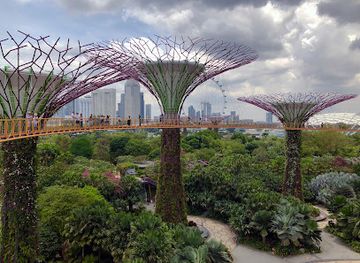
Supertree Grove
Explore the enchanting Supertree Grove in Singapore, where nature meets innovation in a spectacular display of beauty and technology.


Explore East Region on the map
Plan your trip on one map. See where the top cities, national parks and sights are, and book hotels and experiences in a few clicks.
Best hotels in East Region
Best restaurants in East Region
Dining in the East Region is grounded in Singapore’s hawker culture, with neighbourhood food centres in Bedok, Tampines, Pasir Ris and Changi offering dishes such as chicken rice, laksa, nasi lemak, roti prata, fishball noodles and grilled seafood. Changi Village Hawker Centre is associated with a relaxed local setting near the coast, while Bedok’s food centres reflect the dense, everyday dining culture of a mature residential town. East Coast Park adds seafood restaurants, cafés and casual waterfront eating, and the airport precinct provides a wide international selection ranging from fast meals to polished restaurants. Malay, Chinese, Indian and Peranakan-influenced flavours are all part of the east’s culinary landscape, although individual dishes often belong to Singapore’s broader national food culture rather than to this region alone. Wet markets and neighbourhood bakeries are useful for seeing how residents shop and eat, while air-conditioned malls provide dependable options during the hottest part of the day.
-
Turkish
Cappadocia Turkish & Mediterranean Restaurant
Discover authentic Turkish and Mediterranean flavors at Cappadocia Restaurant in Kampong Glam, Singapore - a true feast for food lovers.
-
Barbecue
Burnt Ends
Discover the exquisite flavors of modern Australian barbecue at Burnt Ends in Singapore's vibrant Dempsey Hill.
-
Chinese
San Ren Xing 三人行 - Thomson Plaza
Discover authentic Fujian cuisine at San Ren Xing - Thomson Plaza; a culinary delight waiting to be explored by every food lover visiting Singapore.
-
Restaurant
The Coastal Settlement
Experience delightful dining at The Coastal Settlement - where culinary excellence meets serene coastal charm in Singapore.


Best bars in East Region
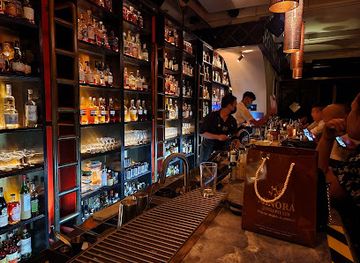
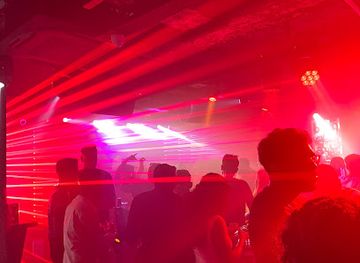
Nightlife in the East Region is comparatively relaxed and dispersed rather than centred on a major club district. Changi Village has casual bars and restaurants suited to an evening near the coast, while East Coast Park offers waterfront dining and places for a quieter drink. Bedok and Tampines have local pubs, cafés and restaurants around their commercial centres, with occasional live entertainment rather than a concentration of late-night clubs. The airport and hotel precincts around Changi provide lounges and international dining, but their atmosphere is oriented towards travellers and business guests. Visitors seeking Singapore’s largest concentration of cocktail bars and nightclubs generally travel outside the East Region to the central entertainment districts. Check current trading arrangements before making a late journey, as suburban venues and seasonal outdoor spaces can have more limited hours than central nightlife areas.
-
Cocktail bar
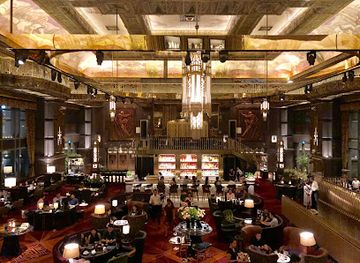
ATLAS
Experience luxury at ATLAS, Singapore's premier cocktail bar, where classic elegance meets innovative mixology in a stunning Art Deco setting.
-
Bar
Jigger & Pony
Experience the vibrant cocktail culture at Jigger & Pony, Singapore's premier bar known for its innovative drinks and lively atmosphere.
-
Cocktail bar
No.5 Emerald Hill
Discover the enchanting cocktail experience at No.5 Emerald Hill in Singapore, where every sip tells a story in a vibrant atmosphere.
-
Cocktail bar
28 HongKong Street
Discover the magic of mixology at 28 HongKong Street, Singapore's top cocktail bar offering an unforgettable speakeasy experience.


Best nightclubs in East Region
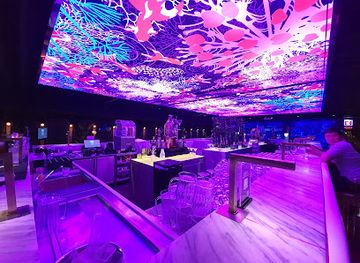
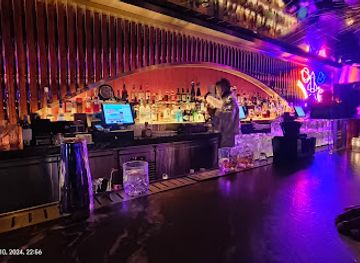
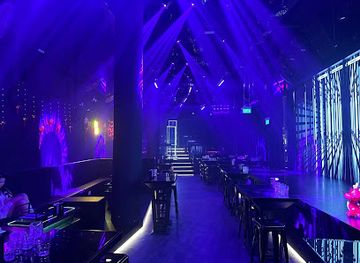
Nightlife in the East Region is comparatively relaxed and dispersed rather than centred on a major club district. Changi Village has casual bars and restaurants suited to an evening near the coast, while East Coast Park offers waterfront dining and places for a quieter drink. Bedok and Tampines have local pubs, cafés and restaurants around their commercial centres, with occasional live entertainment rather than a concentration of late-night clubs. The airport and hotel precincts around Changi provide lounges and international dining, but their atmosphere is oriented towards travellers and business guests. Visitors seeking Singapore’s largest concentration of cocktail bars and nightclubs generally travel outside the East Region to the central entertainment districts. Check current trading arrangements before making a late journey, as suburban venues and seasonal outdoor spaces can have more limited hours than central nightlife areas.
-
Night club
Zouk Singapore
Experience the electrifying nightlife at Zouk Singapore, a premier club with world-class DJs and unforgettable parties in the heart of the city.
-
Night club
MARQUEE Singapore
Discover the electrifying nightlife at MARQUEE Singapore, where world-class DJs, stunning visuals, and unforgettable experiences await you.
-
Night club
XclusiV
Experience the electrifying nightlife at XclusiV, Singapore's premier night club with vibrant music, stunning visuals, and unforgettable parties.
-
Disco club
ALPHA NIGHTLIFE
Discover the electrifying energy of Alpha Nightlife, Singapore’s premier disco club, where the night comes alive with music, dancing, and unforgettable moments.
Best shops in East Region
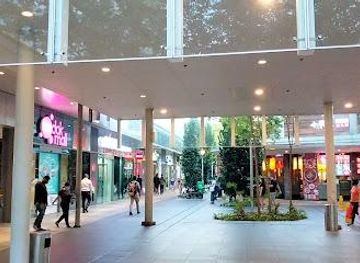
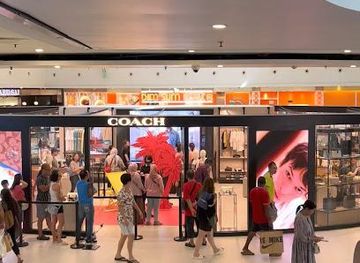
Shopping in the East Region is led by practical neighbourhood malls, transport-linked town centres and airport retail rather than a single specialist shopping quarter. Tampines is the principal regional retail hub, with large malls and extensive everyday services, while Bedok offers a more local high-street and market atmosphere around its town centre. Pasir Ris and Simei provide convenient suburban shopping, dining and services for nearby residents. Changi Airport and Jewel offer international brands, travel goods, food products and design-led retail in a polished visitor setting, though prices and product ranges differ from neighbourhood markets. For regional food gifts, look for packaged kaya, biscuits, tea, sauces and other Singaporean products from established supermarkets or airport shops. Wet markets and small provision stores are better for observing local shopping habits than for conventional souvenirs, while independent craft and lifestyle stores appear in selected malls and commercial areas rather than forming a clearly defined district.
-
Shopping mall
Bedok Mall
Discover Bedok Mall in Singapore: A vibrant shopping center offering a diverse selection of retail, dining, and entertainment experiences for all.
-
Shopping mall
Changi City Point
Discover unparalleled shopping, delightful dining, and family-friendly entertainment at Changi City Point, Singapore's ultimate shopping mall experience.
-
Shopping mall
Far East Plaza
Discover Far East Plaza: A vibrant shopping mall in Singapore with unique boutiques, delicious dining, and a lively atmosphere for every traveler.
-
Shopping mall
Tanglin Mall
Explore luxury shopping and diverse dining at Tanglin Mall, Singapore's premier shopping destination blending modern elegance with local charm.


Get your free copy of our complete guide to East Region, delivered straight to you.
Everything on this page, from attractions and restaurants to essentials and local phrases, in one PDF you can read offline, print or share.
Already have an account? Sign in
Your East Region guide is ready.
We'll send it to · Not you? Sign out

Getting your guide ready…
We are putting together a fresh copy of the East Region guide. This can take up to a minute.
This can take a few moments. If your browser asks, choose Allow so the download can start. You'll find the guide in your Downloads folder.
Nothing happened? Download it again
Sorry, the guide is taking longer than usual. Please try again in a minute, or get it by email instead.
East Region essentials
Currency and Payment
Safety
Emergency Situations
Do's and Don'ts
Local Tips
From Eve
Local phrases worth knowing
You don't need to get them perfect. A few words go a long way, and locals appreciate the effort.
Basics
| English | Local | Say it |
|---|---|---|
| Hello | Hi | [hai] |
| Goodbye | Bye | [bai] |
| Yes | Yeah | [yea] |
| No | Nope | [nohp] |
| Please/You're welcome | No problem | [noh prob-lem] |
| Thank you | Thanks | [thangs] |
| Excuse me/Sorry | Sorry | [sor-ree] |
| How are you? | How are you? | [how are you?] |
| Fine. And you? | Good. You? | [good. you?] |
| Do you speak English? | You speak English? | [you speak ing-glish?] |
| I don't understand | I don’t get it | [I dont get it] |
Eating & Drinking
| English | Local | Say it |
|---|---|---|
| I'd like to see the menu, please | Can I see the menu? | [kan I see the menu?] |
| I don't eat meat | I don't eat meat | [I dont eat meat] |
| Cheers! | Cheers! | [cheers!] |
| I would like to pay, please | Can I pay now? | [kan I pay now?] |
Emergencies
| English | Local | Say it |
|---|---|---|
| Help! | Help! | [help!] |
| Go away! | Leave me alone! | [leave me alone!] |
| Call the Police! | Call the cops! | [call the cops!] |
| Call a doctor! | Get a doctor! | [get a doctor!] |
| I'm lost | I'm lost | [I'm lost] |
| I'm ill | I'm not feeling well | [I'm not feeling well] |
Shopping
| English | Local | Say it |
|---|---|---|
| I'd like to buy... | I want to buy... | [I want to buy...] |
| I'm just looking | Just browsing | [just browsing] |
| How much is it? | How much? | [how much?] |
| That's too expensive | That's too pricey | [that's too pricy] |
| Can you lower the price? | Can you drop the price? | [kan you drop the price?] |
Time & Numbers
| English | Local | Say it |
|---|---|---|
| What time is it? | What time? | [what time?] |
| It's one o'clock | It's 1 o'clock | [it's 1 o'clock] |
| Half past (10) | Half past 10 | [half past 10] |
| Morning | Morning | [morning] |
| Afternoon | Afternoon | [afternoon] |
| Evening | Evening | [evening] |
| Yesterday | Yesterday | [yesterday] |
| Today | Today | [today] |
| Tomorrow | Tomorrow | [tomorrow] |
| 1 | 1 | [one] |
| 2 | 2 | [two] |
| 3 | 3 | [three] |
| 4 | 4 | [four] |
| 5 | 5 | [five] |
| 6 | 6 | [six] |
| 7 | 7 | [seven] |
| 8 | 8 | [eight] |
| 9 | 9 | [nine] |
| 10 | 10 | [ten] |
Transport & Directions
| English | Local | Say it |
|---|---|---|
| Where's a/the...? | Where's the...? | [where's the...?] |
| What's the address? | What's the address? | [what's the address?] |
| Can you show me (on the map)? | Can you point it out? | [kan you point it out?] |
| When's the next (bus)? | When's the next bus? | [when's the next bus?] |
| A ticket (to ....) | A ticket to... | [a ticket to...] |
History of East Region
Early Coastal Settlement and Maritime Connections
The eastern shoreline formed part of the wider maritime environment around Singapore long before the modern city was built. Coastal inlets, mangroves and rivers supported fishing, small-scale settlement and movement by boat, while the island’s position in the Straits of Malacca connected it to regional trading networks. Much of the original coast has since been altered by reclamation, port development and drainage works, but the relationship between settlement and the sea remains visible in places such as Changi and Pasir Ris.
Malay Kampongs and the Pre-Modern East
Before large-scale public housing and industrial development, eastern Singapore included Malay kampongs, plantations, fishing communities and rural roads. Names such as Bedok and Changi preserve traces of this earlier landscape, although their historical interpretations and boundaries have changed over time. Houses, coconut groves and village-scale settlements gradually gave way to urban expansion, yet Malay cultural influences remain part of the east’s social and culinary history.
Colonial Military and Aviation Development
The eastern districts became strategically important during the colonial period because of their open land, coastal position and distance from the crowded central settlement. Military facilities and airfields were established in and around the east, including the site later associated with Paya Lebar Air Base. These installations influenced road networks, land use and the distribution of settlements, leaving a legacy that continued into Singapore’s post-independence planning.
The Japanese Occupation and Changi’s Wartime Memory
During the Japanese occupation from 1942 to 1945, Changi became associated with detention, military control and the imprisonment of Allied personnel and civilians. Changi Prison and nearby wartime sites acquired lasting significance through the testimony of those who experienced internment. The Changi Chapel and Museum now presents this history through documents, personal accounts and reconstructed religious spaces, offering a more careful interpretation than the simplified image of Changi as only a military location.
Reclamation, New Towns and Public Housing
After self-government and independence, Singapore transformed the east through extensive land reclamation, public housing and infrastructure construction. Bedok, Tampines and Pasir Ris developed as planned towns with schools, transport interchanges, parks and commercial centres. Reclaimed land also supported East Coast Park and new industrial and logistics areas. This process changed the coastline and displaced much of the former rural landscape, but created the connected urban districts that define the region today.
Changi Airport and the International East
Singapore Changi Airport opened in 1981 on reclaimed land in the east, replacing the former Paya Lebar Airport as the country’s principal international gateway. Its growth encouraged hotels, logistics, aviation services, business parks and exhibition facilities around the region. The airport’s successive terminals and the Jewel complex have made Changi an internationally recognised part of Singapore, while the surrounding districts continue to combine global infrastructure with established residential communities.
East Region in Photos
Browse through our photo collection highlighting the charm and character of the destination.
Neighbouring regions of East Region
The closest regions to East Region, if you have time for more than one.
-

-

-

-

-


Swipe for more regions
Explore more

Explore more of Singapore
Explore Singapore: A vibrant city-state where modernity meets tradition, offering world-class cuisine, stunning gardens, and unique cultural experiences.
Explore Singapore