

Free Kallang Travel Guide & Mobile App
Explore Kallang with free travel guides. Discover regional history, expert tips, proposed trips, and audio guides on web or mobile app.


Explore Kallang’s riverfront parks, sporting landmarks, historic airport, hawker food and well-connected neighbourhoods in central Singapore.
Read more about Kallang
When is the best time to visit Kallang?
Best: February, June–July · 30–31°C| Month | High (°C) | Rainfall (mm) |
|---|---|---|
| January | 30 | 210 |
| February (best) | 30 | 150 |
| March | 31 | 180 |
| April | 31 | 180 |
| May | 31 | 170 |
| June (best) | 31 | 150 |
| July (best) | 31 | 160 |
| August | 31 | 170 |
| September | 31 | 200 |
| October | 31 | 210 |
| November | 31 | 220 |
| December | 30 | 240 |
Getting to and around Kallang
How to get there
Transportation
Top city travel guides in Kallang
The cities of Kallang, and the easiest places to base yourself.
-

-

-

-


Swipe for more cities
Best attractions in Kallang
Kallang’s attractions combine major sports venues, waterfront recreation, neighbourhood heritage and everyday urban life. The Singapore Sports Hub is the district’s headline complex, with the National Stadium, Singapore Indoor Stadium, aquatic facilities, public plazas and retail areas forming a large event and leisure precinct beside the river. Around it, the Kallang River and connected park paths provide opportunities for walking, cycling and observing the changing waterfront. The former Kallang Airport terminal offers a significant architectural and aviation-history stop, although visitors should check access arrangements rather than assume the interior is open. Older districts towards Lavender, Bendemeer, Boon Keng and Jalan Besar bring together temples, mosques, churches, shophouses, food centres and long-established streets. Families may prefer the open spaces and sports facilities around the river, while visitors interested in architecture can trace the contrast between modern stadium design, public housing and early twentieth-century buildings. Kallang is less a district of one enclosed attraction than a collection of connected precincts, best explored through a combination of MRT journeys, short walks and time spent eating in local neighbourhoods.
-
Observation deck
SkyPark Observation Deck
Experience unparalleled views of Singapore from the SkyPark Observation Deck at Marina Bay Sands, a stunning architectural marvel and top tourist attraction.
-
Park
Fort Canning Park
Discover the lush greenery and historical treasures of Fort Canning Park, a must-visit attraction in Singapore's vibrant cityscape.
-
Hindu temple
Sri Veeramakaliamman Temple
Explore the vibrant Sri Veeramakaliamman Temple, a stunning Hindu temple in Singapore, where spirituality and culture converge in a beautiful setting.
-
Sports complex
Singapore Sports Hub
Experience the vibrant energy of Singapore Sports Hub, where sports, entertainment, and community come together in a state-of-the-art complex.



Best landmarks in Kallang
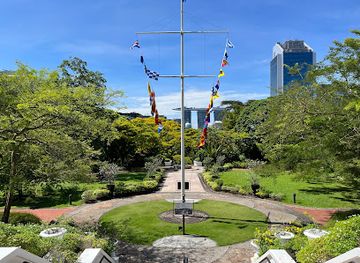
The Singapore Sports Hub is Kallang’s most prominent modern landmark. Its domed National Stadium and neighbouring Singapore Indoor Stadium define the contemporary waterfront skyline and continue the site’s long association with national sporting life. The former Kallang Airport terminal is a very different landmark: its streamlined modern architecture recalls the era when Singapore’s principal airport stood beside Kallang Basin and civil aviation was becoming central to the city’s international role. The Kallang River is another defining feature, not a single monument but a geographical landmark that explains the district’s name, historic settlement and later redevelopment. Along the surrounding roads, religious buildings and older commercial streets reflect the communities that shaped inner-eastern Singapore, while Jalan Besar Stadium records the area’s continuing football heritage. Public housing estates, bridges and reclaimed waterfronts complete the district’s visual story, showing how former coastal and low-lying land became part of a dense modern city. These landmarks are most meaningful when seen together, since Kallang’s character comes from the relationship between water, transport, sport, worship and urban expansion.
-
Garden
Gardens by the Bay
Experience the breathtaking beauty of Gardens by the Bay, Singapore's iconic garden attraction featuring stunning Supertrees, lush flora, and innovative architecture.
-
 Hotel
Marina Bay Sands Singapore
Experience the grandeur of Marina Bay Sands, a luxurious resort offering stunning views, world-class dining, and unique attractions in the heart of Singapore.
-
Garden
Supertree Grove
Discover the stunning Supertree Grove in Singapore, where nature meets technology in a breathtaking garden experience.
-
Tourist attraction
Cloud Forest
Explore the breathtaking Cloud Forest in Singapore, a spectacular indoor garden showcasing diverse plant species and a majestic waterfall.


Explore Kallang on the map
Plan your trip on one map. See where the top cities, national parks and sights are, and book hotels and experiences in a few clicks.
Best hotels in Kallang
Best restaurants in Kallang
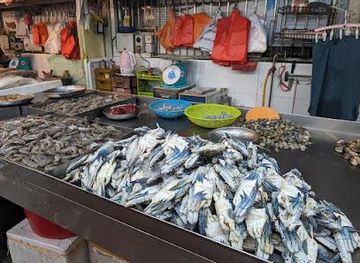
Dining in Kallang reflects Singapore’s mixed urban population and the district’s long-established food corridors. Hawker centres, food courts, coffee shops and casual eateries provide familiar local dishes including chicken rice, laksa, char kway teow, nasi lemak, satay and roti prata, while the streets around Jalan Besar, Lavender, Serangoon Road and Bendemeer offer Indian, Malay, Chinese and regional Asian cooking. The area is also useful for South Indian breads, biryani, vegetarian dishes, snacks and sweets, with specialist grocers and bakeries adding to the choice. Around the Sports Hub, restaurants and cafés are convenient before or after events, though prices and crowds can rise when major fixtures or concerts take place. For a more local routine, visit a neighbourhood food centre or coffee shop and observe ordering and table etiquette. Singapore’s dining customs are generally national rather than exclusive to Kallang, but the district’s combination of old food streets, public-housing precincts and stadium hospitality gives it a broad range of informal and contemporary options.
-
Hawker center
Tekka Centre
Dive into Little India's chaotic hawker heart: spice-laden curries, fresh market bustle, and multicultural bites at unbeatable prices beside the MRT.
-
French
Poulet - Kallang Wave Mall
Savor authentic French cuisine at Poulet in Kallang Wave Mall – where every dish tells a story.
-
Cafe
Brunches Cafe
Discover Brunches Cafe in Kallang – where delicious breakfasts meet vibrant ambiance for an unforgettable dining experience.
-
Chinese
PUTIEN Kitchener Road
Experience authentic Fujian cuisine at PUTIEN Kitchener Road, where every dish tells a story of tradition and flavor.


Best bars in Kallang
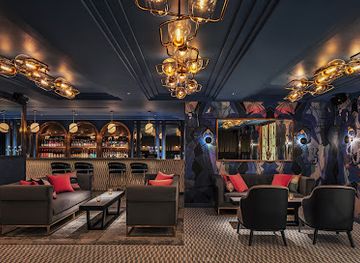
Kallang’s evening scene is varied but not centred on one continuous nightclub district. The Sports Hub brings concerts, matches and event-related dining, with cafés, bars and restaurants becoming busier when venues are operating. Jalan Besar and Lavender have a more local, mixed evening character, including casual restaurants, traditional coffee shops, contemporary bars and places serving food late into the night. The area around the Kallang River and stadium precinct can be pleasant for an evening walk, although it is quieter outside scheduled events. Visitors seeking a larger club concentration generally travel into Singapore’s central nightlife areas rather than treating Kallang as a dedicated clubbing destination. As elsewhere in Singapore, licensing and public-drinking restrictions apply, and businesses’ hours can change, so check current arrangements before making late-night plans. For many visitors, Kallang’s strongest evening appeal lies in combining a performance or sporting event with dinner and a relaxed neighbourhood stop.
-
Cocktail bar
ATLAS
Discover the elegance of ATLAS, a premier cocktail bar in Singapore, where Art Deco charm meets exquisite mixology and an extensive gin collection.
-
Bar
Druggists | Craft Beer Taproom Restaurant Singapore
Experience the best of craft beer and gourmet dining at Druggists, Singapore's top taproom and gastropub.
-
Bar
Bar Stories
Experience the eclectic nightlife of Singapore at Bar Stories, where innovative cocktails and a vibrant atmosphere await every visitor.
-
Grill
The Skewer Bar
Discover the vibrant flavors of Singapore at The Skewer Bar in Geylang, where grilled delights and fine sake await you.


Best nightclubs in Kallang
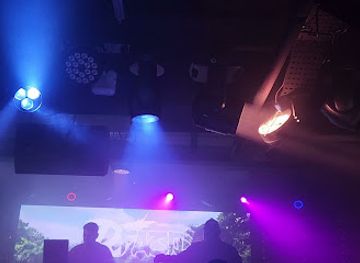
Kallang’s evening scene is varied but not centred on one continuous nightclub district. The Sports Hub brings concerts, matches and event-related dining, with cafés, bars and restaurants becoming busier when venues are operating. Jalan Besar and Lavender have a more local, mixed evening character, including casual restaurants, traditional coffee shops, contemporary bars and places serving food late into the night. The area around the Kallang River and stadium precinct can be pleasant for an evening walk, although it is quieter outside scheduled events. Visitors seeking a larger club concentration generally travel into Singapore’s central nightlife areas rather than treating Kallang as a dedicated clubbing destination. As elsewhere in Singapore, licensing and public-drinking restrictions apply, and businesses’ hours can change, so check current arrangements before making late-night plans. For many visitors, Kallang’s strongest evening appeal lies in combining a performance or sporting event with dinner and a relaxed neighbourhood stop.
-
Night club
XclusiV
Discover the electrifying nightlife at XclusiV, Singapore's premier nightclub offering unforgettable experiences with top DJs and vibrant ambiance.
-
Disco club
ALPHA NIGHTLIFE
Discover the electric atmosphere of Alpha Nightlife, Singapore's premier disco club featuring top DJs and unforgettable dance experiences.
-
Cocktail bar
Club 5
Discover the exciting cocktail culture at Club 5, a vibrant bar in Singapore's Kampong Glam, perfect for travelers seeking a lively night out.
-
Disco club
Taal
Experience the electrifying nightlife of Taal, Singapore's premier disco club, where music and dance come alive.


Best shops in Kallang
Shopping in Kallang is practical and varied rather than dominated by luxury retail. Kallang Wave Mall, within the Singapore Sports Hub, is convenient for food, lifestyle purchases and event-related visits, while City Square Mall near Farrer Park provides a larger indoor retail environment close to the district’s western side. The streets around Kallang, Lavender, Bendemeer and Jalan Besar are better suited to everyday shopping, with small grocers, bakeries, provision shops, cafés and specialist food businesses. Visitors interested in South Asian ingredients, snacks, textiles and household goods can explore the commercial area around Serangoon Road and nearby Mustafa Centre, which is outside the core stadium precinct but within the wider Kallang planning area. Hawker centres and food shops are useful places to buy packaged snacks, sauces, tea and other edible souvenirs. Independent retail is interspersed with housing and busy roads, so it is worth researching a specific shop before setting out; the district is best approached as a collection of local shopping clusters rather than one continuous high street.
-
Shopping mall
City Square Mall
Discover Singapore's City Square Mall: Your ultimate shopping and dining destination with a green twist.
-
Shopping mall
Changi City Point
Discover shopping bliss at Changi City Point, Singapore's leading shopping mall featuring a diverse range of retail outlets and dining options.
-
Shopping mall
Clarke Quay Central
Discover Clarke Quay Central, Singapore's vibrant shopping mall, where retail, dining, and entertainment come together by the riverside.
-
Department store
Mustafa Centre
Explore the bustling Mustafa Centre in Singapore: a 24-hour department store offering a diverse range of products and a unique shopping experience.



Get your free copy of our complete guide to Kallang, delivered straight to you.
Everything on this page, from attractions and restaurants to essentials and local phrases, in one PDF you can read offline, print or share.
Already have an account? Sign in
Your Kallang guide is ready.
We'll send it to · Not you? Sign out

Getting your guide ready…
We are putting together a fresh copy of the Kallang guide. This can take up to a minute.
This can take a few moments. If your browser asks, choose Allow so the download can start. You'll find the guide in your Downloads folder.
Nothing happened? Download it again
Sorry, the guide is taking longer than usual. Please try again in a minute, or get it by email instead.
Kallang essentials
Currency and Payment
Safety
Emergency Situations
Do's and Don'ts
Local Tips
From Eve
Local phrases worth knowing
You don't need to get them perfect. A few words go a long way, and locals appreciate the effort.
Basics
| English | Local | Say it |
|---|---|---|
| Hello | Hello | [Heh-loh] |
| Goodbye | Goodbye | [Good-bye] |
| Yes | Yes | [Yes] |
| No | No | [No] |
| Please/You're welcome | Please/You're welcome | [Pleez/Yer welcome] |
| Thank you | Thank you | [Thangk you] |
| Excuse me/Sorry | Excuse me/Sorry | [Ex-kyoos mee/Sor-ree] |
| How are you? | How are you? | [How are you?] |
| Fine. And you? | Fine. And you? | [Fine. And you?] |
| Do you speak English? | Do you speak English? | [Do you speak English?] |
| I don't understand | I don't understand | [I don't un-der-stand] |
Eating & Drinking
| English | Local | Say it |
|---|---|---|
| I'd like to see the menu, please | I'd like to see the menu, please | [I'd like to see the men-yoo, pleez] |
| I don't eat meat | I don't eat meat | [I don't eet meet] |
| Cheers! | Cheers! | [Cheerz!] |
| I would like to pay, please | I would like to pay, please | [I wud like to pay, pleez] |
Emergencies
| English | Local | Say it |
|---|---|---|
| Help! | Help! | [Help!] |
| Go away! | Go away! | [Go a-way!] |
| Call the Police! | Call the Police! | [Call the Po-leece!] |
| Call a doctor! | Call a doctor! | [Call a doc-tor!] |
| I'm lost | I'm lost | [I'm lost] |
| I'm ill | I'm ill | [I'm ill] |
Shopping
| English | Local | Say it |
|---|---|---|
| I'd like to buy... | I'd like to buy... | [I'd like to buy...] |
| I'm just looking | I'm just looking | [I'm just looking] |
| How much is it? | How much is it? | [How much is it?] |
| That's too expensive | That's too expensive | [That's too ex-pen-sive] |
| Can you lower the price? | Can you lower the price? | [Can you lo-wer the price?] |
Time & Numbers
| English | Local | Say it |
|---|---|---|
| What time is it? | What time is it? | [What time is it?] |
| It's one o'clock | It's one o'clock | [It's one o-clock] |
| Half past (10) | Half past (10) | [Half past (ten)] |
| Morning | Morning | [Mor-ning] |
| Afternoon | Afternoon | [Af-ter-noon] |
| Evening | Evening | [Eve-ning] |
| Yesterday | Yesterday | [Yes-ter-day] |
| Today | Today | [To-day] |
| Tomorrow | Tomorrow | [To-mor-row] |
| 1 | 1 | [One] |
| 2 | 2 | [Two] |
| 3 | 3 | [Three] |
| 4 | 4 | [Four] |
| 5 | 5 | [Five] |
| 6 | 6 | [Six] |
| 7 | 7 | [Seven] |
| 8 | 8 | [Eight] |
| 9 | 9 | [Nine] |
| 10 | 10 | [Ten] |
Transport & Directions
| English | Local | Say it |
|---|---|---|
| Where's a/the...? | Where's a/the...? | [Where's a/the...?] |
| What's the address? | What's the address? | [What's the ad-dress?] |
| Can you show me (on the map)? | Can you show me (on the map)? | [Can you show me (on the map)?] |
| When's the next (bus)? | When's the next (bus)? | [When's the next (bus)?] |
| A ticket (to ....) | A ticket (to ....) | [A tick-et (to ....)] |
History of Kallang
The Kallang River and Early Coastal Settlements
Kallang developed around the Kallang River, one of Singapore’s significant waterways, which historically flowed through low-lying coastal lands into Kallang Basin. The basin supported fishing, boat movement and shoreline settlement before extensive land reclamation and drainage reshaped the area. The name Kallang is generally associated with the Orang Kallang, an indigenous maritime community recorded in Singapore’s early history. Although the original landscape has been heavily urbanised, the river and basin remain important physical reminders of the district’s pre-modern geography.
Colonial Infrastructure and the Serangoon Road Corridor
During the nineteenth and early twentieth centuries, roads, drains, religious institutions and commercial activity expanded across the area now associated with Kallang, Jalan Besar and Serangoon Road. The district became connected to Singapore’s growing urban economy and absorbed diverse communities, including Indian, Malay and Chinese residents. Places of worship and older commercial buildings along the surrounding roads reflect this development. Much of the original low-lying terrain has disappeared beneath reclamation and infrastructure, but the road network and surviving institutions preserve the outline of the older settlement pattern.
Kallang Airport and the Beginnings of Civil Aviation
Kallang Airport opened in 1937 as Singapore’s principal civil airport and introduced modern aviation infrastructure to the eastern edge of the city. Its terminal, designed in the streamlined modern style associated with the period, served passenger and commercial flights before operations moved to Paya Lebar Airport in the early 1950s. The surviving terminal building is historically important because it records Singapore’s emergence as an international transport centre. Its architectural form and location beside reclaimed ground illustrate how aviation contributed to the transformation of Kallang.
War, Occupation and Post-war Reconstruction
Singapore’s fall to Japan in 1942 and the occupation that followed affected Kallang as part of the wider city, disrupting transport, administration and daily life. After the war, Singapore faced housing shortages, overcrowding and pressure to modernise its infrastructure. Kallang’s accessible but underdeveloped land made it suitable for public housing, roads, industrial uses and sporting facilities. In the post-war decades, the district changed from a low-lying coastal fringe into a densely built urban area tied closely to national development planning.
The National Stadium and Singapore’s Sporting Identity
The original National Stadium opened at Kallang in 1973 and became one of Singapore’s most recognisable public buildings. It hosted athletics, football, national ceremonies and major cultural events, helping establish Kallang as the country’s principal sporting precinct. Its large covered grandstand was a familiar feature of the city for several decades. The stadium was demolished in 2010 as part of the redevelopment of the site, but its legacy survives through the newer Singapore Sports Hub and the district’s continuing role in public sporting life.
The Singapore Sports Hub and Waterfront Renewal
The Singapore Sports Hub opened in the mid-2010s on the former National Stadium site, combining a new National Stadium with the Singapore Indoor Stadium, aquatic facilities, retail and public spaces. Its development formed part of a broader effort to renew the Kallang waterfront and make major sporting infrastructure available for wider community use. The project altered the district’s skyline and public realm while retaining Kallang’s long association with national events. River walks, open plazas and park connections now sit alongside the large-scale venues.
Kallang in Photos
Browse through our photo collection highlighting the charm and character of the destination.
Neighbouring regions of Kallang
The closest regions to Kallang, if you have time for more than one.
-

-

-

-

-


Swipe for more regions
Explore more

Explore more of Singapore
Explore Singapore: A vibrant city-state where modernity meets tradition, offering world-class cuisine, stunning gardens, and unique cultural experiences.
Explore Singapore