

Free Oyster Pond Travel Guide & Mobile App
Explore Oyster Pond with free travel guides. Discover regional history, expert tips, proposed trips, and audio guides on web or mobile app.


Oyster Pond in Sint Maarten pairs a sheltered lagoon, boating, coastal scenery and a distinctive Dutch-French island border.
Read more about Oyster Pond
When is the best time to visit Oyster Pond?
Best: January–March · 28–29°C| Month | High (°C) | Rainfall (mm) |
|---|---|---|
| January (best) | 28 | 70 |
| February (best) | 29 | 60 |
| March (best) | 29 | 50 |
| April | 30 | 60 |
| May | 30 | 70 |
| June | 31 | 90 |
| July | 31 | 100 |
| August | 32 | 110 |
| September | 31 | 120 |
| October | 31 | 130 |
| November | 30 | 120 |
| December | 29 | 100 |
Getting to and around Oyster Pond
How to get there
Transportation
Top city travel guides in Oyster Pond
The cities of Oyster Pond, and the easiest places to base yourself.

Swipe for more cities
Destinations in Oyster Pond
Resorts, valleys and scenic spots worth a trip of their own.
-

-

-


Swipe for more destinations
Best attractions in Oyster Pond
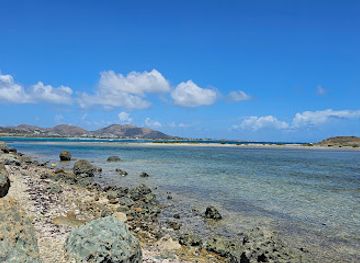
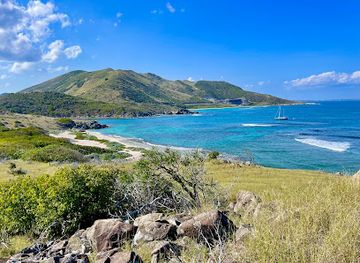
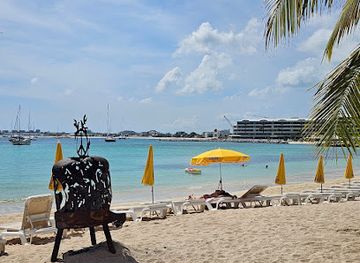
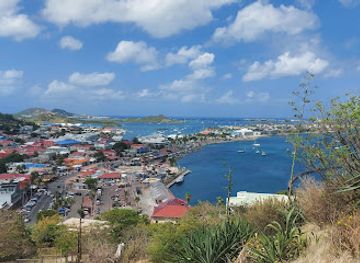
Oyster Pond’s attractions centre on its sheltered lagoon, maritime setting and access to the less urbanised eastern side of Sint Maarten. The waterfront is the locality’s main focus, with boating activity, marina facilities and views across the water towards the French side of the island. Coastal walks and drives reveal dry hillsides, rocky headlands and changing perspectives over the Caribbean, although routes can be uneven or privately accessed and should be approached with care. Nearby Dawn Beach provides a broad sandy shoreline on the Dutch side, but its Atlantic exposure means that swimming conditions require more judgement than the calmer bays on the island’s western coast. The district is also a useful starting point for boat-based excursions, fishing and other marine activities when weather and operators permit. Beyond the immediate lagoon, visitors can reach Sint Maarten’s principal museums, historic buildings, beaches and cultural venues by road, but these are not attractions within Oyster Pond itself. The locality is therefore better suited to visitors seeking a coastal base, boating atmosphere and cross-border geography than to those looking for a dense programme of museums or family attractions on their doorstep.
-
Tourist attraction
Rotary Lookout Point
Discover breathtaking views and serene landscapes at Rotary Lookout Point, a must-visit scenic destination in St Martin.
-
Museum
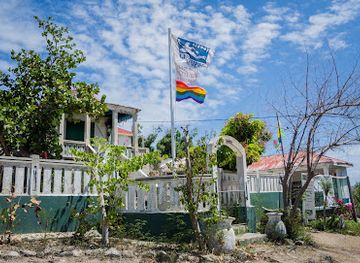
Amuseum Naturalis at The Old House
Discover the rich natural history and vibrant culture of St. Martin at Amuseum Naturalis, where botanical beauty and historical insights await.
-
Cafe
Le Galion Beach
Experience the tranquility of Le Galion Beach, a family-friendly paradise in St. Martin with shallow waters and stunning views.
-
Tourist attraction
Pinel Island Beach
Explore the serene beauty of Pinel Island Beach, a tropical paradise in St. Martin known for its clear waters and vibrant marine life.
Best landmarks in Oyster Pond
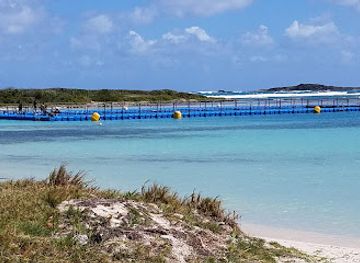
The defining landmark of Oyster Pond is the lagoon itself, a sheltered body of water set between the Dutch and French parts of the island and closely associated with the community’s maritime identity. Its shoreline, boat-filled approaches and surrounding hills create a recognisable landscape distinct from the more densely developed resort corridors of western Sint Maarten. The nearby international boundary is also a significant geographical and political landmark: it represents the historic division established by the Treaty of Concordia while remaining part of an island where movement between the two jurisdictions is often informal. Dawn Beach, on the Dutch side just beyond the lagoon area, is an important natural feature, with a wide strand facing the open Atlantic and conditions that can differ sharply from the island’s sheltered Caribbean beaches. The most meaningful landmarks here are therefore environmental and geopolitical rather than monumental. Oyster Pond has few grand civic buildings or extensive historic ruins, and its visual identity comes from the relationship between water, hills, boats, roads and the living border.
-
 Hotel
HotelDivi Little Bay Beach Resort
Discover the ultimate tropical getaway at Divi Little Bay Beach Resort in Sint Maarten – a blend of luxury, adventure, and relaxation awaits you.
-
Nature preserve
Loterie Farm
Experience the charm of Loterie Farm, a nature preserve in St. Martin with hiking, swimming, and delicious dining in a tropical paradise.
-
Grill
Buccaneer Beach Bar
Experience the vibrant flavors and lively atmosphere at Buccaneer Beach Bar, the ultimate grill destination in Simpson Bay, Sint Maarten.
-
Island
Saint Martin
Explore the stunning landscapes and vibrant culture of Saint Martin, a Caribbean island paradise known for its beautiful beaches, unique cuisine, and lively atmosphere.
Explore Oyster Pond on the map
Plan your trip on one map. See where the top cities, national parks and sights are, and book hotels and experiences in a few clicks.
Best hotels in Oyster Pond
Best restaurants in Oyster Pond
Dining in Oyster Pond is shaped by the lagoon, marine activity and the practical needs of a residential community rather than by a large restaurant district. Waterfront establishments and nearby accommodation generally provide seafood, grilled dishes, Caribbean-influenced cooking, burgers, salads and familiar international food, with menus and opening arrangements changing over time. The wider island adds a broader culinary range, including Creole and French-influenced dishes, fresh fish, shellfish, barbecued meats, rice-based sides and Dutch Caribbean staples. Visitors crossing into French Saint-Martin will encounter a stronger French culinary presence, but that dining culture belongs to the neighbouring jurisdiction rather than exclusively to Oyster Pond. Shops and markets elsewhere on Sint Maarten are useful for fruit, drinks and provisions for self-catering accommodation. Ask whether service charges are included, check the accepted currency before ordering and allow extra time for meals near the water, where weather, deliveries and seasonal business patterns can affect operations.
-
Restaurant
Chesterfields Restaurant & Bar
Discover Chesterfields Restaurant & Bar in Philipsburg: where exquisite Caribbean flavors meet stunning ocean views for an unforgettable dining experience.
-
Restaurant
Pineapple Pete Restaurant
Discover Pineapple Pete Restaurant: A Culinary Gem in Cole Bay Offering Delicious Caribbean Cuisine & Lively Atmosphere.
-
Restaurant
Little Jerusalem Restaurant SXM
Experience authentic Middle Eastern flavors at Little Jerusalem Restaurant SXM in Simpson Bay - a culinary haven for tourists seeking delicious cuisine.
-
French
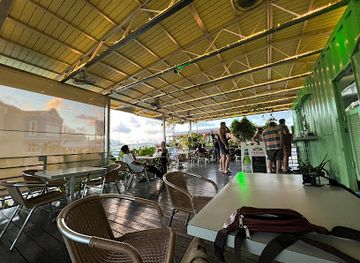
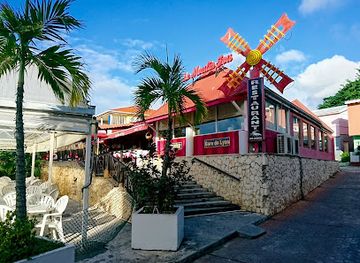
Le moulin fou sxm
Experience exquisite French cuisine at Le Moulin Fou in Maho Plaza, where every dish tells a story of culinary artistry and local flavors.

Best bars in Oyster Pond
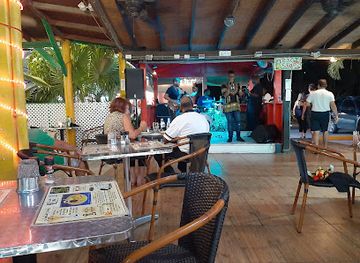
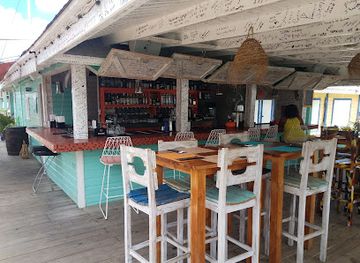
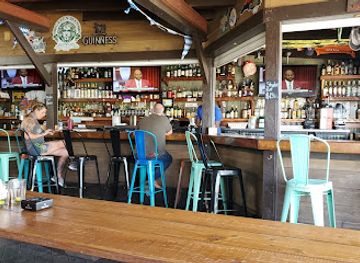
Oyster Pond has a modest evening scene focused on waterfront restaurants, hotel bars and relaxed drinks rather than a concentrated nightclub district. The lagoon provides an atmospheric setting for an early evening meal or a drink, while live music and busier late-night entertainment are more likely to be found in larger centres elsewhere on Sint Maarten. Philipsburg, Simpson Bay and Maho have a broader choice of bars, casinos, music venues and late-opening establishments, but they require a road journey from Oyster Pond and should be approached with a reliable transport plan. Evening activity in the locality can vary according to season, weather, tourism levels and the recovery or redevelopment of individual businesses. Visitors who prefer quiet conversation, coastal views and dining will find the area more suitable than those seeking an intensive club circuit.
-
Grill
Sunset Bar and Grill
Discover the vibrant flavors and breathtaking sunsets at Sunset Bar and Grill in Simpson Bay, Sint Maarten, where every meal is a seaside celebration.
-
Grill
Buccaneer Beach Bar
Experience the vibrant flavors of the Caribbean at Buccaneer Beach Bar, a must-visit grill in Simpson Bay, Sint Maarten.
-
Grill
Nowhere Special
Experience the vibrant atmosphere and delectable grilled cuisine at Nowhere Special, a must-visit grill in Simpson Bay, Sint Maarten.
-
Restaurant
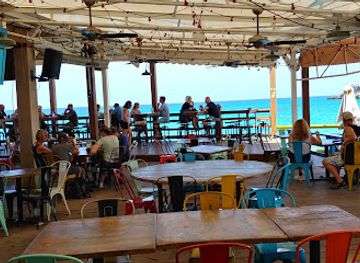
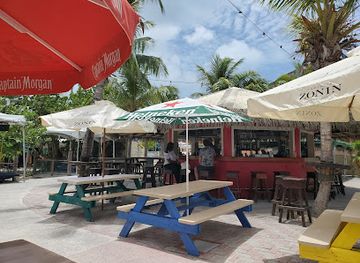
Dinghy Dock Sailors Bar
Experience the vibrant atmosphere and mouthwatering Caribbean cuisine at Dinghy Dock Sailors Bar in Simpson Bay, a perfect getaway for food lovers.
Best nightclubs in Oyster Pond
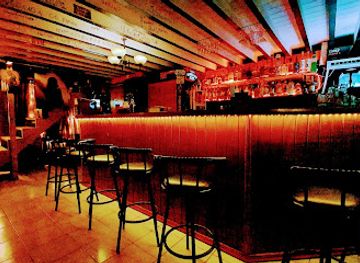
Oyster Pond has a modest evening scene focused on waterfront restaurants, hotel bars and relaxed drinks rather than a concentrated nightclub district. The lagoon provides an atmospheric setting for an early evening meal or a drink, while live music and busier late-night entertainment are more likely to be found in larger centres elsewhere on Sint Maarten. Philipsburg, Simpson Bay and Maho have a broader choice of bars, casinos, music venues and late-opening establishments, but they require a road journey from Oyster Pond and should be approached with a reliable transport plan. Evening activity in the locality can vary according to season, weather, tourism levels and the recovery or redevelopment of individual businesses. Visitors who prefer quiet conversation, coastal views and dining will find the area more suitable than those seeking an intensive club circuit.
-
Piano bar
The Red Piano SXM
Experience the vibrant nightlife at The Red Piano SXM, where live music and exquisite cocktails create unforgettable moments in Sint Maarten.
-
Restaurant
The Bar 3Angle formerly XLounge
Experience the vibrant nightlife at The Bar 3Angle in Simpson Bay, where live music, karaoke, and sports unite for an unforgettable night.
-
Bar
Dirty Sanchez Crew Bar
Discover the vibrant atmosphere of Dirty Sanchez Crew Bar in Philipsburg, Sint Maarten, where great drinks and friendly service await.
-
Bar
Juggie's Place
Experience the vibrant local culture and refreshing drinks at Juggie's Place, a must-visit bar in Philipsburg, Sint Maarten.



Best shops in Oyster Pond
Shopping in Oyster Pond is limited and local in scale, consisting mainly of convenience stores, provisions, boating-related services and small businesses serving residents and visitors. It is not a principal destination for department stores, designer retail or a substantial craft market. Travellers staying in self-catering accommodation may need to organise a larger food shop in another Dutch-side centre, while local waterfront businesses can be useful for immediate supplies and marine services. Philipsburg offers the most established Dutch-side shopping environment, including jewellery, watches, clothing, souvenirs and general high-street retail, although its commercial character is distinct from Oyster Pond’s quieter residential setting. Markets and independent shops elsewhere on the island are better places to look for local food products, Caribbean goods, art and practical souvenirs. Across the border, French Saint-Martin has its own retail patterns and uses the euro, so check prices, payment methods and transport arrangements before shopping there.
-
Jewelry store
Jewels & Beyond
Explore the elegance of Jewels & Beyond in Sint Maarten, where fine jewelry and unique souvenirs await your discovery.
-
Shopping mall
Phillipsburg, Sint Maarten
Discover the vibrant shopping scene and stunning beaches of Phillipsburg, Sint Maarten, where every corner offers a unique blend of culture and relaxation.
-
Shopping mall
Sint Rose Shopping Mall
Explore Sint Rose Shopping Mall in Philipsburg for a unique blend of shopping, dining, and vibrant local culture.
-
Party store
Shop-4-Less
Explore Shop-4-Less in Sint Maarten for an extensive range of party supplies, toys, and festive decorations that bring joy to every celebration.


Get your free copy of our complete guide to Oyster Pond, delivered straight to you.
Everything on this page, from attractions and restaurants to essentials and local phrases, in one PDF you can read offline, print or share.
Already have an account? Sign in
Your Oyster Pond guide is ready.
We'll send it to · Not you? Sign out

Getting your guide ready…
We are putting together a fresh copy of the Oyster Pond guide. This can take up to a minute.
This can take a few moments. If your browser asks, choose Allow so the download can start. You'll find the guide in your Downloads folder.
Nothing happened? Download it again
Sorry, the guide is taking longer than usual. Please try again in a minute, or get it by email instead.
Oyster Pond essentials
Currency and Payment
Safety
Emergency Situations
Do's and Don'ts
Local Tips
From Eve
Local phrases worth knowing
You don't need to get them perfect. A few words go a long way, and locals appreciate the effort.
Basics
| English | Local | Say it |
|---|---|---|
| Hello | Hola | [Oh-lah] |
| Goodbye | Adios | [Ah-dee-ohs] |
| Yes | Si | [See] |
| No | No | [No] |
| Please/You're welcome | Por favor/De nada | [Por fah-vor/Deh nah-dah] |
| Thank you | Gracias | [Gra-thee-as] |
| Excuse me/Sorry | Perdón | [Per-dohn] |
| How are you? | ¿Cómo estás? | [Koh-moh es-tas] |
| Fine. And you? | Bien. ¿Y tú? | [Byen. Ee too] |
| Do you speak English? | ¿Hablas inglés? | [Ah-blas een-glays] |
| I don't understand | No entiendo | [No en-tyen-doh] |
Eating & Drinking
| English | Local | Say it |
|---|---|---|
| I'd like to see the menu, please | Me gustaría ver el menú, por favor | [Meh goos-tah-ree-ah ver el meh-noo, por fah-vor] |
| I don't eat meat | No como carne | [No koh-mo kar-neh] |
| Cheers! | Salud! | [Sah-lud] |
| I would like to pay, please | Me gustaría pagar, por favor | [Meh goos-tah-ree-ah pah-gar, por fah-vor] |
Emergencies
| English | Local | Say it |
|---|---|---|
| Help! | ¡Ayuda! | [Ah-yoo-dah] |
| Go away! | ¡Vete! | [Beh-teh] |
| Call the Police! | ¡Llama a la policía! | [Yah-mah ah lah poh-lee-see-ah] |
| Call a doctor! | ¡Llama a un doctor! | [Yah-mah ah oon dok-tor] |
| I'm lost | Estoy perdido | [Es-toy per-dee-doh] |
| I'm ill | Estoy enfermo | [Es-toy en-fer-mo] |
Shopping
| English | Local | Say it |
|---|---|---|
| I'd like to buy... | Me gustaría comprar... | [Meh goos-tah-ree-ah kom-prar] |
| I'm just looking | Solo estoy mirando | [So-lo es-toy mee-ran-do] |
| How much is it? | ¿Cuánto cuesta? | [Kwan-toh kwes-tah] |
| That's too expensive | Eso es muy caro | [Eh-so es mwee kah-roh] |
| Can you lower the price? | ¿Puedes bajar el precio? | [Pweh-des bah-har el preh-syo] |
Time & Numbers
| English | Local | Say it |
|---|---|---|
| What time is it? | ¿Qué hora es? | [Keh oh-rah es] |
| It's one o'clock | Es la una | [Es lah oo-nah] |
| Half past (10) | Y diez y media | [Ee dyas ee meh-dee-ah] |
| Morning | Mañana | [Mah-nyah-nah] |
| Afternoon | Tarde | [Tar-deh] |
| Evening | Noche | [Noh-cheh] |
| Yesterday | Ayer | [Ah-yer] |
| Today | Hoy | [Oy] |
| Tomorrow | Mañana | [Mah-nyah-nah] |
| 1 | Uno | [Oo-no] |
| 2 | Dos | [Dohs] |
| 3 | Tres | [Tres] |
| 4 | Cuatro | [Kwah-tro] |
| 5 | Cinco | [Sin-koh] |
| 6 | Seis | [Says] |
| 7 | Siete | [See-eh-teh] |
| 8 | Ocho | [Oh-cho] |
| 9 | Nueve | [Nweh-veh] |
| 10 | Diez | [Dyas] |
Transport & Directions
| English | Local | Say it |
|---|---|---|
| Where's a/the...? | ¿Dónde está un/una...? | [Dohn-deh es-tah oon/oo-nah] |
| What's the address? | ¿Cuál es la dirección? | [Kwahl es lah dee-rek-syon] |
| Can you show me (on the map)? | ¿Puedes mostrarme (en el mapa)? | [Pweh-des mos-trar-meh (en el mah-pah)] |
| When's the next (bus)? | ¿Cuándo es el próximo (bus)? | [Kwan-doh es el prohk-see-mo (boos)] |
| A ticket (to ....) | Un boleto (a ...) | [Oon bo-leh-toh (ah ...)] |
History of Oyster Pond
Indigenous Settlement Before European Colonisation
Long before the arrival of European powers, Sint Maarten was inhabited by Indigenous peoples connected with the wider Caribbean world. Archaeological evidence from the island indicates settlement, pottery production, fishing and the use of coastal and inland resources. Oyster Pond’s sheltered lagoon and shoreline would have formed part of this broader maritime environment, although the visible modern settlement gives little direct impression of its earlier inhabitants. Visitors should understand the locality within this deeper island history rather than viewing its story as beginning with the colonial boundary.
European Competition and the 1648 Treaty of Concordia
Spanish, Dutch and French interests all affected the island during the early colonial period, but the decisive political settlement came in 1648, when Dutch and French representatives agreed to divide Sint Maarten. The Treaty of Concordia established the basis of the boundary that still separates Sint Maarten from the French collectivity of Saint-Martin. Oyster Pond lies beside this historic division, making its lagoon and roads part of a rare shared island landscape governed by two different jurisdictions.
Plantations, Salt and Maritime Exchange
From the seventeenth century onwards, the island’s economy developed around salt production, livestock, agriculture, plantation activity and maritime exchange. Oyster Pond was not the principal urban or commercial centre, but its sheltered waters formed part of the coastal network linking settlements and small harbour sites. Much of the colonial economy depended on difficult labour systems, including enslavement, whose consequences remain central to understanding the social history of Sint Maarten. The landscape today contains fewer obvious plantation structures than some Caribbean destinations, but the island’s place names, land divisions and settlement patterns preserve traces of that era.
The End of Slavery and Economic Change
Emancipation in the Dutch Caribbean came in 1863, transforming the legal and economic structure of Sint Maarten while leaving substantial social and economic inequalities in place. During the later nineteenth and early twentieth centuries, the island remained relatively small-scale and dependent on agriculture, livestock, salt, fishing and regional trade. Oyster Pond retained a rural and coastal character rather than becoming a major town. Its modern role as a residential and boating area developed much later, as transport links and tourism altered the island’s economy.
Tourism and the Modern Island Economy
The expansion of tourism during the twentieth century reshaped Sint Maarten, bringing hotels, restaurants, improved roads, marine services and a large international visitor economy. Development concentrated particularly around Philipsburg, the airport corridor and the island’s principal resort beaches, while Oyster Pond remained quieter and more dispersed. The community’s waterfront orientation and proximity to the border gave it a role in leisure boating and cross-island travel without turning it into a large urban centre.
Hurricane Irma and Reconstruction
Hurricane Irma struck Sint Maarten in September 2017 with catastrophic force, damaging homes, businesses, marinas, roads, vegetation and essential infrastructure across the island. Oyster Pond, exposed on the eastern side and closely tied to its waterfront, was among the communities affected. Reconstruction altered parts of the built environment and continued over several years, while the storm also highlighted the vulnerability of low-lying coastal settlements and marine facilities. Hurricane preparedness, resilient construction and rapid weather monitoring remain important aspects of life in the locality.
Oyster Pond in Photos
Browse through our photo collection highlighting the charm and character of the destination.
Neighbouring regions of Oyster Pond
The closest regions to Oyster Pond, if you have time for more than one.
-
 Sucker Garden
 offers a hillside base on Dutch Sint Maarten, with local neighbourhood character, coastal views and easy access to Philipsburg and the east.
Sucker Garden
Sucker Garden offers a hillside base on Dutch Sint Maarten, with local neighbourhood character, coastal views and easy access to Philipsburg and the east.
-

-

-

-


Swipe for more regions
Explore more

Explore more of Sint Maarten
Discover Sint Maarten: A Caribbean paradise with a blend of Dutch and French cultures, stunning beaches, vibrant nightlife, and unforgettable experiences.
Explore Sint Maarten