

Free Bratislava Region Travel Guide & Mobile App
Explore Bratislava Region with free travel guides. Discover regional history, expert tips, proposed trips, and audio guides on web or mobile app.


Explore Bratislava Region for Danube heritage, Little Carpathian vineyards, historic castles, contemporary art and easy countryside escapes in Slovakia.
Read more about Bratislava Region
When is the best time to visit Bratislava Region?
Best: June–August · 24–26°C| Month | High (°C) | Rainfall (mm) |
|---|---|---|
| January | 3 | 35 |
| February | 4 | 30 |
| March | 9 | 35 |
| April | 15 | 40 |
| May | 20 | 60 |
| June (best) | 24 | 70 |
| July (best) | 26 | 70 |
| August (best) | 25 | 60 |
| September | 21 | 50 |
| October | 15 | 40 |
| November | 9 | 40 |
| December | 4 | 35 |
Getting to and around Bratislava Region
How to get there
Transportation
Top city travel guides in Bratislava Region
The cities of Bratislava Region, and the easiest places to base yourself.
-
-


Swipe for more cities
Best attractions in Bratislava Region
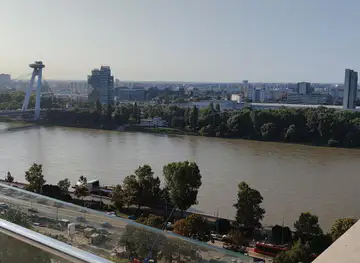
Bratislava Region offers an unusually varied selection of attractions within a relatively compact part of Slovakia. In the capital, visitors can explore the medieval and Baroque historic centre, Bratislava Castle, St Martin’s Cathedral, museums, galleries and the Danube waterfront. The Roman site of Gerulata in Rusovce provides archaeological context, while the Danubiana Meulensteen Art Museum at Čunovo combines contemporary art with a distinctive river setting. North of the city, the Little Carpathians bring marked woodland trails, cycling routes, vineyards and the historic towns of Pezinok and Modra. Červený Kameň Castle near Častá is the region’s major fortified heritage attraction, with imposing walls and extensive interior spaces. South-eastern districts offer the Danube floodplain, water-sports opportunities and nature-based excursions around Čunovo, while Senec is known for lakeside recreation. West of Bratislava, the Záhorie lowlands are better suited to forest walks, cycling and quieter rural exploration than conventional sightseeing. The attraction landscape is therefore divided between capital-city culture, wine-country heritage and accessible riverine or forest environments.
-
Castle
Bratislava Castle
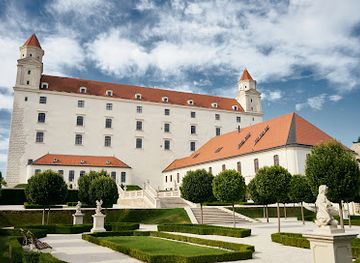
Discover the timeless beauty of Bratislava Castle, a historic fortress offering panoramic views and a journey through Slovakia's rich cultural heritage.
-
Castle
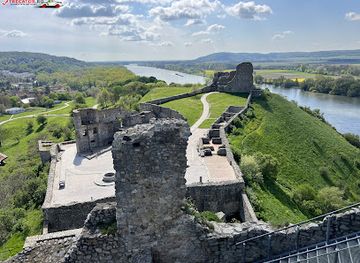
Hrad Devín
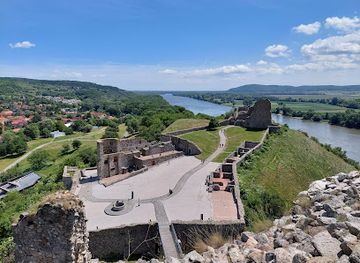
Explore Hrad Devín, a historic castle offering stunning views and a glimpse into Slovakia's rich heritage at the confluence of the Morava and Danube rivers.
-
Historical landmark
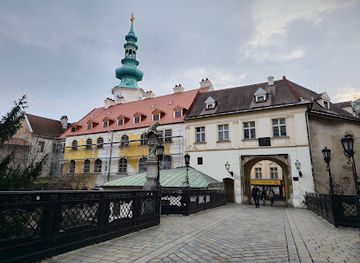
Michael's Gate
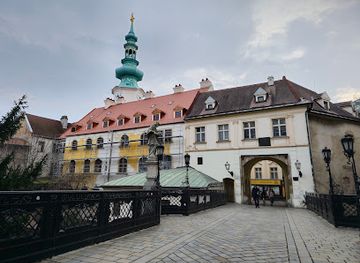
Discover the captivating history and stunning architecture of Michael's Gate, a must-see landmark in the heart of Bratislava's Old Town.
-
Catholic church
The Blue Church - Church of St. Elizabeth
Explore the enchanting Blue Church in Bratislava, a stunning example of Art Nouveau architecture and a serene place of worship.


Best landmarks in Bratislava Region
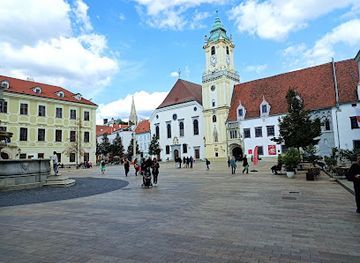
Bratislava Castle dominates the capital’s hill above the Danube and serves as the region’s most immediately recognisable landmark, although its present appearance reflects several periods of rebuilding. St Martin’s Cathedral, with its coronation history and prominent tower, anchors the old city’s historic skyline. The Michael’s Gate and surviving sections of the medieval fortifications recall Bratislava’s former walled character, while the Blue Church represents the city’s distinctive early twentieth-century architecture. At Devín, the ruins of the castle stand above the confluence of the Danube and Morava, a location of long strategic importance and strong symbolic resonance in Slovak history. In the countryside, Červený Kameň Castle is notable for its Renaissance fortifications and vast subterranean storage areas. The Danube floodplain and Morava river landscape provide natural landmarks of a different kind, defined by wetlands, channels and open horizons. The UFO observation structure on the Slovak National Uprising Bridge is a modern Bratislava landmark, marking the city’s post-war transformation and its relationship with the river.
-
Castle
Bratislava Castle
Explore the historic Bratislava Castle, an iconic landmark offering stunning views, rich history, and cultural insights in Slovakia's charming capital.
-
Castle
Hrad Devín
Explore Hrad Devín, a historic castle in Slovakia with stunning views, rich history, and charming surroundings, perfect for a memorable visit.
-
Historical landmark
Michael's Gate
Explore the historical charm of Michael's Gate, a medieval landmark in Bratislava, showcasing stunning architecture and rich cultural heritage.
-
Tourist attraction
Čumil
Explore Cumil, the iconic statue of Bratislava, a quirky symbol of the city with rich history and vibrant local culture.
Explore Bratislava Region on the map
Plan your trip on one map. See where the top cities, national parks and sights are, and book hotels and experiences in a few clicks.
Best hotels in Bratislava Region
Best restaurants in Bratislava Region
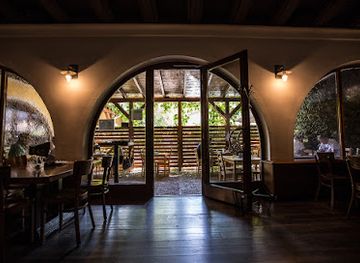
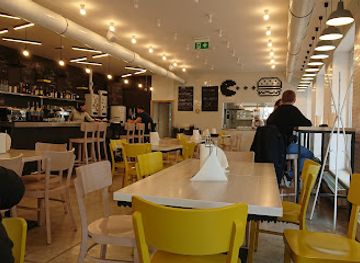
Dining in Bratislava Region ranges from contemporary restaurants and international cooking in the capital to traditional Slovak fare in market towns, wine villages and rural inns. Bratislava provides the widest choice, including cafés, bakeries, modern bistros and restaurants drawing on Central European traditions. Typical Slovak dishes such as bryndzové halušky, potato dumplings with sheep’s cheese, and seasonal soups may appear alongside regional interpretations rather than as exclusively Bratislava specialities. Around Pezinok and Modra, local wines are central to the dining experience, often served with simple savoury dishes, pâtés, cheeses or cold platters. The wider region also benefits from fertile lowlands supplying fruit, vegetables and other farm produce. Farmers’ markets and food halls in the capital are useful places to encounter Slovak products, while lakeside and Danube-area dining tends to be more seasonal. Wine-cellar visits should be arranged in advance, particularly outside the main tourism and harvest periods.
-
Restaurant
Slovak Pub
Experience authentic Slovak cuisine at Slovak Pub in Bratislava - where tradition meets modern dining in a lively atmosphere.
-
Restaurant
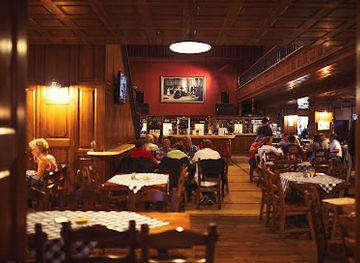
Bratislava Flagship
Experience authentic Slovakian cuisine in a charming old-fashioned setting at Bratislava Flagship – a culinary treasure in Slovakia's capital.
-
Brewery
Bratislavský Meštiansky Pivovar
Experience authentic Slovak cuisine and craft beers at Bratislavský Meštiansky Pivovar in the heart of Bratislava.
-
Hamburger
Roxor
Discover Roxor in Bratislava - home of gourmet burgers that promise an unforgettable culinary adventure.

Best bars in Bratislava Region
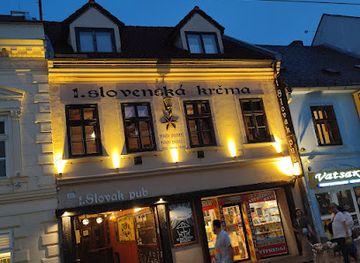
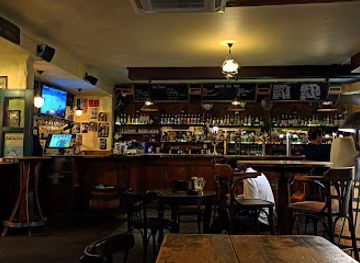
Bratislava is the region’s principal centre for evening life, with traditional pubs, wine bars, craft-beer venues, cocktail establishments, live music spaces and clubs concentrated mainly in and around the historic centre. The city’s student and international communities contribute to a varied nightlife, although individual venues and opening arrangements change regularly. Wine bars provide a natural introduction to the produce of the Little Carpathians, while breweries and modern cafés offer alternatives to late-night entertainment. Outside the capital, Pezinok and Modra have a more restrained evening scene built around wine cellars, restaurants, pubs and occasional cultural events. Senec becomes livelier during the summer lakeside season, but much of the wider region is rural, where evenings usually centre on a local inn, restaurant or private gathering rather than a large club scene. Visitors should use licensed venues and arrange transport before drinking in outlying wine villages.
-
Restaurant
Slovak Pub
Discover the heart of Slovak cuisine at Slovak Pub, where tradition meets taste in a lively Bratislava setting.
-
Irish pub
The Dubliner Irish Pub
Experience authentic Irish hospitality at The Dubliner Irish Pub in the heart of Old Town, where hearty food and lively atmosphere await all visitors.
-
Brewpub
FABRIKA the beer pub
Discover the heart of beer culture at FABRIKA the Beer Pub in Old Town, offering craft brews and delicious local cuisine in a vibrant atmosphere.
-
Pub
17’s BAR
Discover the vibrant flavors and lively atmosphere of Bratislava's 17's BAR, a perfect blend of craft beers, burgers, and local charm.
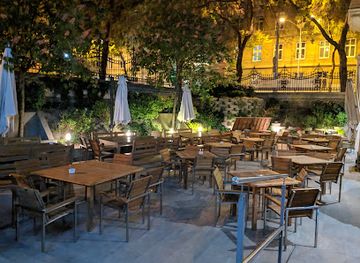

Best nightclubs in Bratislava Region
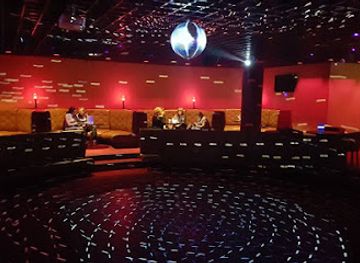
Bratislava is the region’s principal centre for evening life, with traditional pubs, wine bars, craft-beer venues, cocktail establishments, live music spaces and clubs concentrated mainly in and around the historic centre. The city’s student and international communities contribute to a varied nightlife, although individual venues and opening arrangements change regularly. Wine bars provide a natural introduction to the produce of the Little Carpathians, while breweries and modern cafés offer alternatives to late-night entertainment. Outside the capital, Pezinok and Modra have a more restrained evening scene built around wine cellars, restaurants, pubs and occasional cultural events. Senec becomes livelier during the summer lakeside season, but much of the wider region is rural, where evenings usually centre on a local inn, restaurant or private gathering rather than a large club scene. Visitors should use licensed venues and arrange transport before drinking in outlying wine villages.
-
Night club
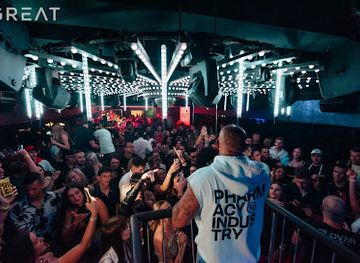
Great Club Bratislava
Dive into the heart of Bratislava's nightlife at Great Club Bratislava – where music, dance, and unforgettable moments await.
-
Disco club
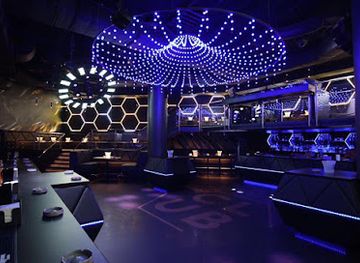
The Club Bratislava
Immerse yourself in the vibrant nightlife of The Club Bratislava, a premier disco destination in the heart of the city.
-
Night club
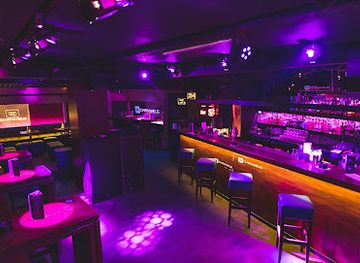
Channels Club
Discover the lively atmosphere of Channels Club, a top nightlife destination in Old Town, featuring exquisite cocktails, dancing, and unforgettable experiences.
-
Disco club
Luna Bar
Dive into an unforgettable nightlife experience at Luna Bar, Bratislava's hottest disco club and bar, where music and fun come alive.
Best shops in Bratislava Region
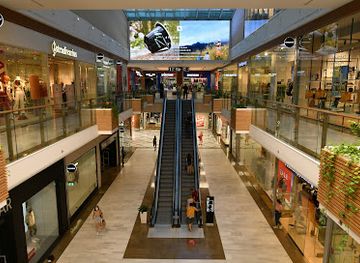
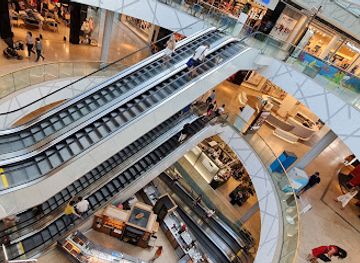
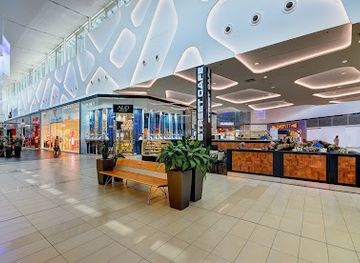
Bratislava offers the region’s broadest shopping choice, from pedestrian historic-centre streets and department stores to independent design shops, bookshops, galleries and food markets. Visitors looking for regional products can seek Slovak wines, honey, preserves, chocolate, spirits and packaged specialities, while craft shops may stock ceramics, glass, textiles and woodwork from across the country rather than exclusively from Bratislava Region. Pezinok and Modra are particularly associated with wine and pottery traditions, and their smaller town centres provide a more local-scale shopping experience than the capital. Modra’s connection with decorated ceramics makes it a useful place to look for traditional craft styles, though stock varies between shops. Seasonal farmers’ markets in Bratislava and market days in regional towns are good opportunities to buy fruit, vegetables and artisanal foods. Shopping in the villages is limited and often seasonal, so visitors should purchase specialist gifts or provisions in the capital or larger wine towns.
-
Shopping mall
Aupark Bratislava
Experience the best of shopping, dining, and entertainment at Aupark Bratislava, a modern mall in the heart of Petržalka.
-
Shopping mall
Eurovea
Discover Eurovea, Bratislava's vibrant shopping mall blending retail, dining, and cultural experiences along the picturesque Danube River.
-
Shopping mall
AVION Shopping Park Bratislava
Discover the ultimate shopping experience at AVION Shopping Park Bratislava, where retail therapy meets entertainment and dining in a vibrant atmosphere.
-
Shopping mall
Bory Mall
Discover Bory Mall in Bratislava, a vibrant shopping center filled with top brands, diverse dining, and family-friendly entertainment for all ages.
Get your free copy of our complete guide to Bratislava Region, delivered straight to you.
Everything on this page, from attractions and restaurants to essentials and local phrases, in one PDF you can read offline, print or share.
Already have an account? Sign in
Your Bratislava Region guide is ready.
We'll send it to · Not you? Sign out

Getting your guide ready…
We are putting together a fresh copy of the Bratislava Region guide. This can take up to a minute.
This can take a few moments. If your browser asks, choose Allow so the download can start. You'll find the guide in your Downloads folder.
Nothing happened? Download it again
Sorry, the guide is taking longer than usual. Please try again in a minute, or get it by email instead.
Bratislava Region essentials
Currency and Payment
Safety
Emergency Situations
Do's and Don'ts
Local Tips
From Eve
Local phrases worth knowing
You don't need to get them perfect. A few words go a long way, and locals appreciate the effort.
Basics
| English | Local | Say it |
|---|---|---|
| Hello | Ahoj | [ahoy] |
| Goodbye | Zbohom | [zbo-hom] |
| Yes | Áno | [ah-no] |
| No | Nie | [nee-eh] |
| Please/You're welcome | Prosím | [pro-seem] |
| Thank you | Ďakujem | [dya-koo-yem] |
| Excuse me/Sorry | Prepáčte | [pre-patch-te] |
| How are you? | Ako sa máš? | [ah-ko sa mash?] |
| Fine. And you? | Dobre. A ty? | [do-bre. A tee?] |
| Do you speak English? | Hovoríš po anglicky? | [ho-va-reesh po ang-lits-kee?] |
| I don't understand | Nerozumiem | [ne-ro-zoo-me-em] |
Eating & Drinking
| English | Local | Say it |
|---|---|---|
| I'd like to see the menu, please | Chcel by som vidieť menu, prosím | [khtsel bee som vid-yet menu, pro-seem] |
| I don't eat meat | Nejem mäso | [nye-yem may-so] |
| Cheers! | Na zdravie! | [na zdra-vye] |
| I would like to pay, please | Chcel by som zaplatiť, prosím | [khtsel bee som zap-la-tit, pro-seem] |
Emergencies
| English | Local | Say it |
|---|---|---|
| Help! | Pomoc! | [po-mots] |
| Go away! | Odiď! | [o-deed] |
| Call the Police! | Zavolajte políciu! | [za-vo-lah-te po-lee-tsi-u] |
| Call a doctor! | Zavolajte doktora! | [za-vo-lah-te dok-to-ra] |
| I'm lost | Som stratený | [som stra-te-ny] |
| I'm ill | Som chorý | [som kho-ree] |
Shopping
| English | Local | Say it |
|---|---|---|
| I'd like to buy... | Chcel by som kúpiť... | [khtsel bee som koo-peet] |
| I'm just looking | Len sa pozerám | [len sa po-ze-ram] |
| How much is it? | Koľko to stojí? | [kol-ko to sto-yee?] |
| That's too expensive | To je príliš drahé | [to ye pree-leesh dra-he] |
| Can you lower the price? | Môžete znížiť cenu? | [mwo-zhe-te znee-zit tse-nu] |
Time & Numbers
| English | Local | Say it |
|---|---|---|
| What time is it? | Koľko je hodín? | [kol-ko ye ho-deen?] |
| It's one o'clock | Je jedna hodina | [ye yed-na ho-dee-na] |
| Half past (10) | Pol (10) | [pol (desiat)] |
| Morning | Ráno | [ra-no] |
| Afternoon | Popoludnie | [po-po-lud-nye] |
| Evening | Večer | [ve-cher] |
| Yesterday | Včera | [v-che-ra] |
| Today | Dnes | [dnes] |
| Tomorrow | Zajtra | [zai-tra] |
| 1 | 1 | [1] |
| 2 | 2 | [2] |
| 3 | 3 | [3] |
| 4 | 4 | [4] |
| 5 | 5 | [5] |
| 6 | 6 | [6] |
| 7 | 7 | [7] |
| 8 | 8 | [8] |
| 9 | 9 | [9] |
| 10 | 10 | [10] |
Transport & Directions
| English | Local | Say it |
|---|---|---|
| Where's a/the...? | Kde je...? | [kde ye...?] |
| What's the address? | Aká je adresa? | [a-ka ye a-dre-sa?] |
| Can you show me (on the map)? | Môžete mi ukázať (na mape)? | [mwo-zhe-te mi oo-kah-zat (na ma-pe)?] |
| When's the next (bus)? | Kedy ide ďalší (autobus)? | [ke-dy ee-de dal-shee (au-to-bus)?] |
| A ticket (to ....) | Lístok (do ....) | [lee-stok (do ....)] |
History of Bratislava Region
Prehistoric settlements and Roman frontiers
The Danube lowlands and the foothills of the Little Carpathians have attracted settlement since prehistoric times, benefiting from fertile soils, river transport and routes across south-western Slovakia. Celtic communities later occupied important sites in the Bratislava area, including the hill associated with the modern castle. Under the Roman Empire, the Danube became a frontier of the province of Pannonia. The Roman military base at Gerulata, in present-day Rusovce, formed part of the Danubian defensive system and remains one of the region’s most important archaeological sites.
Great Moravia and the medieval borderlands
During the ninth century, the wider Bratislava area was connected with the political and religious world of Great Moravia, a Slavic polity whose influence extended across parts of Central Europe. Medieval settlements later developed along the Danube, Morava and important land routes. Bratislava’s older name, Pressburg or Pozsony in historical usage, reflected its position within the Kingdom of Hungary. Castles and fortified sites protected these routes, while ecclesiastical foundations and market settlements helped establish the region’s enduring urban and rural pattern.
Bratislava as a royal coronation city
After much of medieval Hungary came under Ottoman pressure in the sixteenth century, Bratislava became the capital and coronation city of the Kingdom of Hungary under Habsburg rule. Eleven Hungarian kings and queens were crowned in St Martin’s Cathedral between 1563 and 1830. The city’s political importance encouraged the construction and enlargement of palaces, churches and civic buildings, many of which still define the historic centre. The period also strengthened Bratislava’s role as a meeting point for German-, Hungarian- and Slovak-speaking communities.
Wine, crafts and market towns
The Little Carpathian foothills developed a durable economic identity based on vineyards, agriculture and crafts. Pezinok and Modra became substantial market towns, with wine cellars, guild traditions and pottery production contributing to their prosperity. German-speaking settlers played an important role in the medieval development of several towns, while Hungarian and Slovak cultural influences remained part of the region’s complex social history. Terraced slopes, cellar streets and historic town houses still reveal how production and commerce shaped the landscape.
Červený Kameň and aristocratic power
The castle at Červený Kameň, near Častá, developed from a medieval stronghold into a major Renaissance fortress and later an aristocratic residence. Its substantial underground storage spaces reflected the commercial importance of wine and agricultural production, while the Pálffy family helped shape its later architectural and cultural history. The castle illustrates how defence, estate management and elite residence were connected in the region. Its surviving fortifications and collections provide a tangible link to the political and economic structures of early modern Central Europe.
Industrialisation and the modern capital
During the nineteenth and twentieth centuries, Bratislava expanded as an industrial, administrative and transport centre. Railways, river shipping and manufacturing altered the city’s scale and connected it more closely with Vienna, Budapest and the wider Austro-Hungarian economy. After the creation of Czechoslovakia in 1918, Bratislava assumed a new role within a Slovak political framework. Later socialist construction transformed the urban landscape, particularly through large housing estates and industrial development, while the surrounding towns retained stronger agricultural and craft traditions.
The Slovak capital after 1993
Bratislava became the capital of the independent Slovak Republic in 1993, bringing new administrative, diplomatic and economic significance to the region. European integration, cross-border commuting and investment strengthened connections with Austria, Hungary and the Czech Republic. Contemporary Bratislava combines a preserved historic centre with modern business districts, cultural institutions and regenerated riverfront areas. Across the wider region, vineyards, historic towns, protected landscapes and recreational lakes remain important alongside the capital’s expanding metropolitan economy.
Bratislava Region in Photos
Browse through our photo collection highlighting the charm and character of the destination.
Neighbouring regions of Bratislava Region
The closest regions to Bratislava Region, if you have time for more than one.
-

-

-

-

-


Swipe for more regions
Explore more

Explore more of Slovakia
Discover Slovakia: A land of majestic mountains, charming castles, and vibrant culture in the heart of Europe.
Explore Slovakia