

Free Mpumalanga Travel Guide & Mobile App
Explore Mpumalanga with free travel guides. Discover regional history, expert tips, proposed trips, and audio guides on web or mobile app.


Explore Mpumalanga’s Kruger safaris, ancient mountains, waterfalls, gold-mining towns and Blyde River Canyon landscapes in north-eastern South Africa.
Read more about Mpumalanga
When is the best time to visit Mpumalanga?
Best: April, September–October · 24–26°C| Month | High (°C) | Rainfall (mm) |
|---|---|---|
| January | 28 | 100 |
| February | 28 | 90 |
| March | 27 | 80 |
| April (best) | 24 | 60 |
| May | 21 | 30 |
| June | 18 | 20 |
| July | 18 | 20 |
| August | 20 | 30 |
| September (best) | 24 | 40 |
| October (best) | 26 | 60 |
| November | 27 | 80 |
| December | 27 | 90 |
Getting to and around Mpumalanga
How to get there
Transportation
Top city travel guides in Mpumalanga
The cities of Mpumalanga, and the easiest places to base yourself.
-

-

-

-


Swipe for more cities
Destinations in Mpumalanga
Resorts, valleys and scenic spots worth a trip of their own.
-

-

-


Swipe for more destinations
Best attractions in Mpumalanga
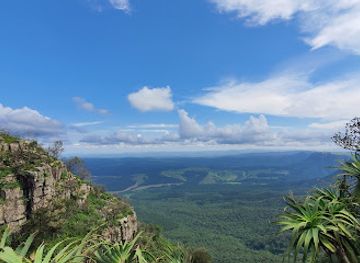
Mpumalanga’s attractions are defined by the transition from high escarpment to warm Lowveld. The Blyde River Canyon Nature Reserve provides the province’s most extensive scenic journey, with viewpoints, geological formations, walking trails and water-based activities around the Blyde Dam area. God’s Window, Bourke’s Luck Potholes and the Three Rondavels are among the best-known sites, while waterfalls and forest walks near Sabie and Graskop offer shorter excursions. In the east, Kruger National Park provides self-drive safaris, guided activities, birding and an exceptional concentration of wildlife habitats. Private reserves and conservation areas add different approaches to game viewing, but should be selected according to location and travel time. History is represented by Pilgrim’s Rest’s preserved gold-mining settlement, Barberton’s museums and heritage streets, and the geological interpretation of the Barberton Makhonjwa Mountains. Sudwala Caves introduce ancient rock formations beneath the escarpment, while farms, craft outlets and cultural experiences broaden the itinerary beyond formal attractions. Distances are substantial, and the province rewards visitors who explore one landscape at a time rather than attempting every highlight from a single base.
-
Tourist attraction
Sudwala Caves
Explore the ancient Sudwala Caves, a natural marvel near Nelspruit, showcasing stunning geological formations and rich historical significance.
-
Tourist attraction
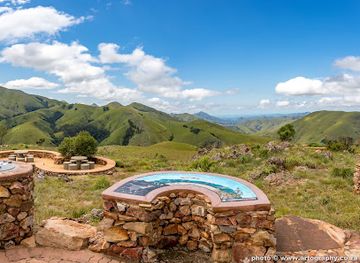
Makhonjwa Lebombo View - Barberton Makhonjwa Mountains World Heritage Site
Discover the breathtaking Makhonjwa Lebombo View, where ancient geological wonders meet stunning natural beauty in a World Heritage Site.
-
Tourist attraction
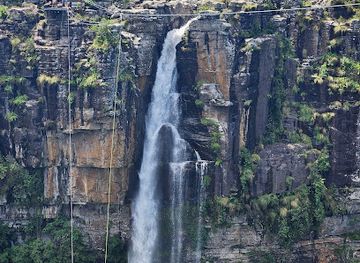
Motitsi Falls @ Graskop Gorge Lift Co
Experience the breathtaking beauty of Motitsi Falls at Graskop Gorge Lift Co, a must-visit destination for adventure and nature lovers alike.
-
Museum
Komatiland Forestry Museum
Explore South Africa's forestry heritage at Komatiland Forestry Museum in Sabie, a captivating destination for history and nature enthusiasts.

Best landmarks in Mpumalanga
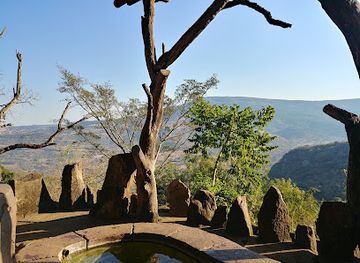
The Blyde River Canyon is Mpumalanga’s defining natural landmark, a vast escarpment valley shaped by the Blyde River and distinguished by high cliffs, wooded slopes and layered geological formations. The Three Rondavels viewpoint presents three rounded peaks whose forms resemble traditional dwellings, while Bourke’s Luck Potholes display cylindrical cavities cut into bedrock by the meeting of the Blyde and Treur rivers. God’s Window is associated with far-reaching views over the Lowveld, although cloud and weather can alter the outlook. The Barberton Makhonjwa Mountains are important not only for their rugged appearance but also for their record of Earth’s early geological history; they form a UNESCO World Heritage Site. Pilgrim’s Rest is a landmark of a different kind, with a surviving nineteenth-century gold-mining townscape of timber, corrugated iron and historic commercial buildings. Sudwala Caves reveal ancient rock beneath the escarpment, while the Crocodile and Sabie river valleys mark the transition into Kruger’s wildlife landscape. Together these places express the province’s geological, mining, architectural and ecological identity.
-
Tourist attraction
Graskop Gorge Lift Co.
Experience the breathtaking beauty of Graskop Gorge with a thrilling glass lift descent into nature's masterpiece, perfect for adventure seekers and nature lovers alike.
-
Tourist attraction
God’s Window
Discover the breathtaking beauty of God's Window in South Africa, where stunning landscapes and scenic trails await adventurous travelers seeking natural wonders.
-
Tourist attraction
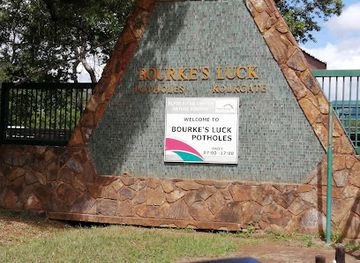
Bourke's Luck Potholes
Discover the breathtaking Bourke's Luck Potholes, a natural marvel in the Blyde River Canyon Nature Reserve, perfect for adventure and photography.
-
Tourist attraction
Sudwala Caves
Unearth the wonders of Sudwala Caves, where ancient geology meets rich history in a breathtaking underground adventure.
Explore Mpumalanga on the map
Plan your trip on one map. See where the top cities, national parks and sights are, and book hotels and experiences in a few clicks.
Best hotels in Mpumalanga
Best restaurants in Mpumalanga
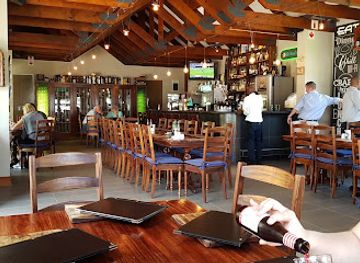
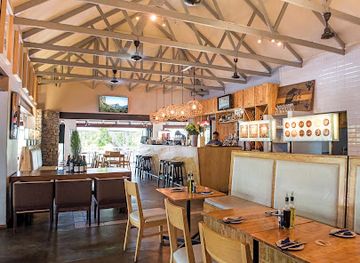
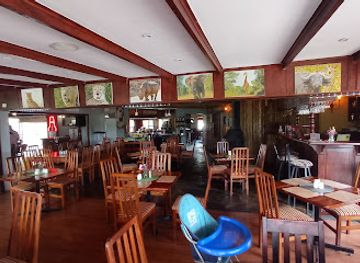
Dining in Mpumalanga ranges from lodge kitchens and rural inns to cafés, family restaurants, farm-style venues and practical eateries in larger towns. South African staples such as grilled meat, stews, maize-based dishes, baked goods and generous breakfasts are widely available, while Lowveld agriculture contributes citrus, subtropical fruit, nuts and vegetables to local menus. Around Hazyview, White River, Mbombela and the Panorama Route, visitors will find restaurants catering to safari travellers and scenic-route traffic, with menus that often combine familiar international dishes and regional produce. Traditional pubs and grills are useful for straightforward meals, whereas lodges may offer more elaborate dining connected to game drives. Markets and farm outlets can be good places to look for fruit, preserves, baked products and locally made foods, though opening patterns vary. In the Lowveld, hot weather makes early breakfasts and lighter meals practical, while cooler escarpment evenings suit hearty country cooking. Dining options become more limited in remote reserve and mountain areas, so plan meals and supplies before leaving the main towns.
-
Restaurant
Mayfly Restaurant & Cocktail Lounge
Discover exquisite dining at Mayfly Restaurant & Cocktail Lounge in Dullstroom - where culinary artistry meets warm hospitality.
-
Restaurant
Kuka Restaurant & Cocktail Lounge
Discover Kuka Restaurant & Cocktail Lounge in Hazyview – where African flavors meet contemporary dining in a vibrant atmosphere.
-
Restaurant
Orange Restaurant
Experience culinary artistry at Orange Restaurant in Mbombela – where fine dining meets exceptional service in a stunning setting.
-
Restaurant
Woodsman Restaurant and Pub
Experience authentic South African cuisine at Woodsman Restaurant and Pub in Sabie – where great food meets warm hospitality.

Best bars in Mpumalanga
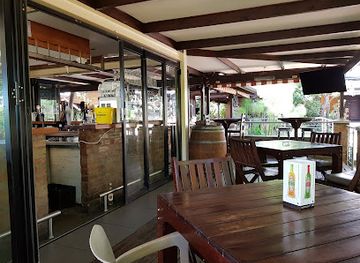
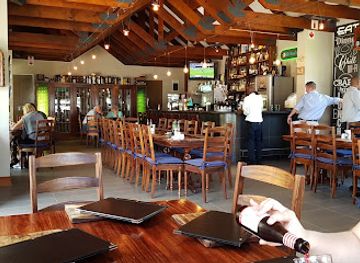
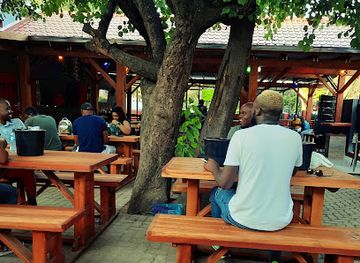
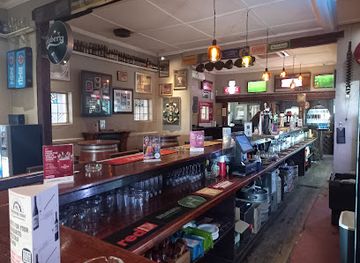
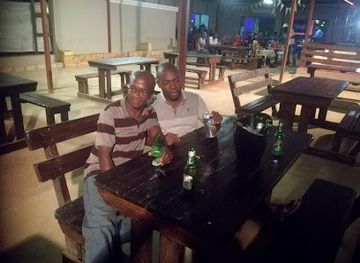
Evening life in Mpumalanga is generally relaxed and town-based rather than centred on a large club scene. Mbombela has the province’s broadest choice of restaurants, bars, shopping-centre venues and occasional live entertainment, while White River, Hazyview, Sabie, Graskop and Barberton offer smaller selections of pubs, cafés and informal bars. In safari country, the evening usually revolves around lodge dining, a fireside drink, stargazing or conversation after a game drive rather than late-night dancing. Traditional pubs and rural inns are common social settings, and some venues serve South African craft beer, wine or spirits alongside food. Nightlife can be seasonal and quieter outside holiday periods; visitors should not expect the same late-night range in a mountain village or reserve as in Mbombela. Arrange transport in advance when staying outside town, as taxis and ride services may be limited in rural districts and around lodges.
-
Grill
Jock Pub and Grill
Experience the best of South African culinary delights at Jock Pub and Grill in Mbombela, where every meal is a celebration of flavor and culture.
-
Restaurant
Mayfly Restaurant & Cocktail Lounge
Discover the culinary delights of Mayfly Restaurant & Cocktail Lounge in Dullstroom, where exceptional cuisine meets a charming atmosphere.
-
Grill
Cayotes Shisa Nyama
Experience the vibrant flavors of South African cuisine at Cayotes Shisa Nyama, a top grill restaurant in Mbombela.
-
Restaurant
Phat Boys Beer House
Experience the best of local cuisine and craft beers at Phat Boys Beer House in White River, a culinary gem for every food lover.
Best nightclubs in Mpumalanga
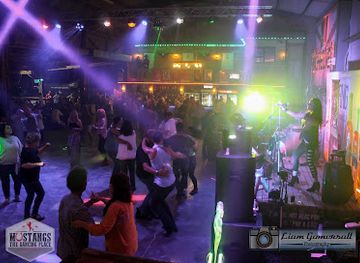
Evening life in Mpumalanga is generally relaxed and town-based rather than centred on a large club scene. Mbombela has the province’s broadest choice of restaurants, bars, shopping-centre venues and occasional live entertainment, while White River, Hazyview, Sabie, Graskop and Barberton offer smaller selections of pubs, cafés and informal bars. In safari country, the evening usually revolves around lodge dining, a fireside drink, stargazing or conversation after a game drive rather than late-night dancing. Traditional pubs and rural inns are common social settings, and some venues serve South African craft beer, wine or spirits alongside food. Nightlife can be seasonal and quieter outside holiday periods; visitors should not expect the same late-night range in a mountain village or reserve as in Mbombela. Arrange transport in advance when staying outside town, as taxis and ride services may be limited in rural districts and around lodges.
-
Dance club
Mustangs - The Dancing Place
Discover the vibrant nightlife at Mustangs - The Dancing Place in Mbombela, where dance, dining, and fun come together for an unforgettable experience.
-
Night club
Junxion Lifestyle
Discover the vibrant nightlife of Middelburg at Junxion Lifestyle, where music, dance, and fun come together for an unforgettable experience.
-
Disco club
Moonlight Club
Experience the vibrant nightlife of Thuthukani at Moonlight Club, where music, dance, and fun come together in a lively atmosphere.
-
Night club
Nyora's Lounge
Discover the vibrant nightlife at Nyora's Lounge, where music, dancing, and local culture collide in a lively atmosphere.

Best shops in Mpumalanga
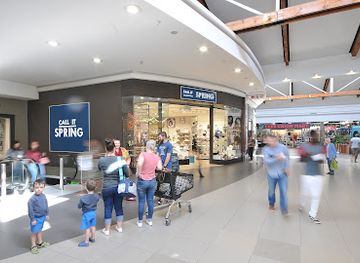
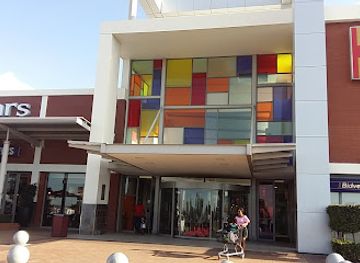
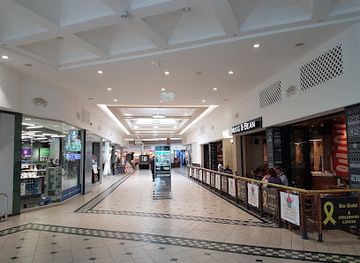
Shopping in Mpumalanga is concentrated in Mbombela, White River and other larger towns, where modern centres and high streets provide supermarkets, pharmacies, outdoor equipment and everyday supplies for road journeys and safaris. Smaller towns such as Sabie, Graskop, Barberton and Pilgrim’s Rest have independent shops, galleries, curios outlets and craft displays aimed at visitors, though stock and opening times can be seasonal. Farm stalls and roadside sellers are useful for Lowveld fruit, citrus products, preserves, nuts and locally produced snacks when operating. Heritage areas may offer books, geological material, antiques or mining-related souvenirs, while craft outlets commonly sell woodwork, beadwork, woven goods and decorative items from South Africa and the wider region. Inspect quality and provenance carefully, particularly for products described as handmade or locally sourced, and follow customs rules for protected natural materials. Since distances between towns are long, purchase fuel, medicines and basic provisions before entering remote mountain or wildlife areas.
-
Shopping mall
i’langa Mall
Explore the diverse shopping and dining experiences at i’langa Mall, the cultural heart of Mbombela, South Africa.
-
Shopping mall
Highveld Mall
Experience the ultimate shopping and dining adventure at Highveld Mall in eMalahleni, where variety and excitement await every visitor.
-
Shopping mall
Riverside Mall
Experience the vibrant shopping, dining, and entertainment at Riverside Mall in Mbombela - a premier destination for travelers.
-
Shopping mall
Secunda Mall
Explore Secunda Mall, your ultimate shopping destination offering diverse stores, delicious dining, and family-friendly entertainment in Secunda, South Africa.
Get your free copy of our complete guide to Mpumalanga, delivered straight to you.
Everything on this page, from attractions and restaurants to essentials and local phrases, in one PDF you can read offline, print or share.
Already have an account? Sign in
Your Mpumalanga guide is ready.
We'll send it to · Not you? Sign out

Getting your guide ready…
We are putting together a fresh copy of the Mpumalanga guide. This can take up to a minute.
This can take a few moments. If your browser asks, choose Allow so the download can start. You'll find the guide in your Downloads folder.
Nothing happened? Download it again
Sorry, the guide is taking longer than usual. Please try again in a minute, or get it by email instead.
Mpumalanga essentials
Currency and Payment
Safety
Emergency Situations
Do's and Don'ts
Local Tips
From Eve
Local phrases worth knowing
You don't need to get them perfect. A few words go a long way, and locals appreciate the effort.
Basics
| English | Local | Say it |
|---|---|---|
| Hello | Sawubona | [sah-woo-BOH-nah] |
| Goodbye | Hamba kahle | [HAHM-bah KAH-leh] |
| Yes | Yebo | [YEH-boh] |
| No | Cha | [CHAH] |
| Please/You're welcome | Ngiyacela | [ngee-yah-CHEH-lah] |
| Thank you | Ngiyabonga | [ngee-yah-BON-gah] |
| Excuse me/Sorry | Uxolo | [oo-KSOH-loh] |
| How are you? | Unjani? | [oon-JAH-nee] |
| Fine. And you? | Ngiyaphila. Wena unjani? | [ngee-yah-PEE-lah. WEH-nah oon-JAH-nee] |
| Do you speak English? | Ukhuluma isiNgisi? | [oo-KHOO-luh-mah ee-see-NGEE-see] |
| I don't understand | Angiqondi | [ahn-gee-KON-dee] |
Eating & Drinking
| English | Local | Say it |
|---|---|---|
| I'd like to see the menu, please | Ngicela ukubona imenyu | [ngee-CHEH-lah oo-KOO-boh-nah ee-MEN-yoo] |
| I don't eat meat | Angidli inyama | [ahn-gee-DLEE in-YAH-mah] |
| Cheers! | Phakade! | [pah-KAH-deh] |
| I would like to pay, please | Ngicela ukukhokha | [ngee-CHEH-lah oo-KOO-koh-khah] |
Emergencies
| English | Local | Say it |
|---|---|---|
| Help! | Usizo! | [oo-SEE-zoh] |
| Go away! | Hamba! | [HAHM-bah] |
| Call the Police! | Biza amaphoyisa! | [BEE-zah ah-mah-POH-yee-sah] |
| Call a doctor! | Biza udokotela! | [BEE-zah oo-DOH-koh-teh-lah] |
| I'm lost | Ngilahlekile | [ngee-lah-LEH-kee-leh] |
| I'm ill | Ngiyagula | [ngee-yah-GOO-lah] |
Shopping
| English | Local | Say it |
|---|---|---|
| I'd like to buy... | Ngifuna ukuthenga... | [ngee-FOO-nah oo-KOO-THENG-ah] |
| I'm just looking | Ngiyabheka | [ngee-yah-BHEH-kah] |
| How much is it? | Kubiza malini? | [koo-BEE-zah mah-LEE-nee] |
| That's too expensive | Lokho kubiza kakhulu | [LOH-kho koo-BEE-zah kah-KHOO-loo] |
| Can you lower the price? | Unganciphisa intengo? | [oon-gahn-SEE-pee-sah in-TENG-oh] |
Time & Numbers
| English | Local | Say it |
|---|---|---|
| What time is it? | Kuyini isikhathi? | [koo-YEE-nee ee-SIH-khah-tee] |
| It's one o'clock | Kuyisikhumbuzo sokuqala | [koo-YEE-see-KHOOM-boo-zoh soo-KOH-kah-lah] |
| Half past (10) | Hhafu kwesithupha | [HAH-foo kweh-SEE-thoo-pah] |
| Morning | Ekuseni | [eh-KOO-seh-nee] |
| Afternoon | Ntambama | [NTAHM-bah-mah] |
| Evening | Ubusuku | [oo-BOO-soo-koo] |
| Yesterday | Izolo | [ee-ZOH-loh] |
| Today | Namuhla | [nah-MOO-hlah] |
| Tomorrow | Mpela | [MPEH-lah] |
| 1 | Eyodwa | [AY-yoh-dwah] |
| 2 | Kubili | [koo-BEE-lee] |
| 3 | Kuthathu | [koo-THAH-thoo] |
| 4 | Kune | [koo-NEH] |
| 5 | Kuhlanu | [koo-LAH-noo] |
| 6 | Kukhombisa | [koo-KHOM-bee-sah] |
| 7 | Kuphakathi | [koo-PHAH-khah-tee] |
| 8 | Kuhlangana | [koo-HLAHNG-ah-nah] |
| 9 | Kune | [koo-NEH] |
| 10 | Kushumi | [koo-SHOO-mee] |
Transport & Directions
| English | Local | Say it |
|---|---|---|
| Where's a/the...? | Iphi...? | [EE-pee...?] |
| What's the address? | Iyini ikheli? | [ee-YEE-nee ee-KHEH-lee?] |
| Can you show me (on the map)? | Ungangibonisa (emaphepheni)? | [oon-gahn-gee-BOH-nee-sah (eh-mah-PEH-peh-nee)?] |
| When's the next (bus)? | Nini ibhasi elilandelayo? | [NEE-nee ee-BAH-see eh-lee-lahn-DLAH-yoh?] |
| A ticket (to ....) | Ithikithi (ku...) | [ee-THIH-kee-thee (koo...)] |
History of Mpumalanga
Early settlement and ancient landscapes
Mpumalanga contains evidence of long human occupation, including Stone Age sites and archaeological remains associated with communities that farmed, herded and traded across the eastern escarpment and Lowveld. The region’s mountains also preserve exceptionally ancient geological formations. The Barberton Makhonjwa Mountains expose rocks formed more than three billion years ago, offering an internationally important record of the early Earth. Later settlement included communities connected with Swazi, isiZulu and other Nguni-speaking societies, as well as baKoni agricultural communities in the highlands.
The nineteenth-century frontier
During the nineteenth century, political change, migration, trade and conflict reshaped the eastern Transvaal. Swazi influence was especially important around the eastern escarpment, while expanding Boer settlements and changing colonial boundaries affected land and movement. The Highveld and Lowveld were linked by paths used for trade, cattle keeping and hunting, although the terrain made travel difficult. These overlapping histories remain visible in place names, cultural landscapes and the provincial borderlands adjoining Eswatini and Mozambique.
Barberton and the gold discoveries of the 1880s
Gold discoveries near Barberton in the 1880s transformed a remote mountain district into a booming mining centre. Prospectors, merchants, engineers and labourers arrived rapidly, and settlements such as Barberton developed around claims, equipment suppliers, hotels and transport routes. The initial rush was short-lived compared with the Witwatersrand’s later expansion, but it left a substantial architectural and historical legacy. The surrounding Barberton Makhonjwa Mountains connect this human story with much older geological history and are now recognised as a UNESCO World Heritage Site.
Pilgrim’s Rest and the goldfields
Gold was discovered in the Pilgrim’s Rest area in the late nineteenth century, creating a mining settlement in the rugged country west of the escarpment. Its streets developed with banks, shops, churches, hotels and other services typical of a frontier gold town. Mining declined during the twentieth century, but many historic structures survived and the settlement became a heritage attraction. Pilgrim’s Rest helps explain how mineral discoveries brought roads, administration and commercial networks into parts of what is now Mpumalanga.
Conservation and the making of Kruger
Growing concern about wildlife depletion led to the creation of the Sabie Game Reserve in 1898, a landmark in the history of conservation in the Lowveld. It later became part of the larger Kruger National Park, formally established in 1926 through the consolidation of reserves and protected areas. The park’s development reflected changing ideas about wildlife, tourism and state management, as well as difficult histories involving local communities and land access. Today, the Mpumalanga section forms a major southern gateway to one of Africa’s best-known protected areas.
Railways, forestry and agricultural change
Railway construction and improved roads connected the escarpment and Lowveld more closely with markets elsewhere in South Africa and with neighbouring territories. Timber plantations expanded in the wetter highlands, while citrus, subtropical fruit and other agriculture became important in warmer districts. These industries shaped towns such as Mbombela, Sabie, White River and Komatipoort, and remain part of the province’s economy. The landscape consequently combines protected wilderness with working farms, plantations, mines and transport corridors.
Modern Mpumalanga and cross-border connections
The province was created in 1994, following South Africa’s transition to democracy, from areas formerly administered within the Transvaal. Its location beside Mozambique and Eswatini gives it a strong cross-border dimension, while the Maputo corridor supports trade and travel through the Lowveld. Tourism now links wildlife, scenery, heritage and geological interpretation, although mining, energy production, agriculture and forestry remain significant. Contemporary Mpumalanga is therefore both a major nature destination and a lived-in province with complex environmental and economic pressures.
Mpumalanga in Photos
Browse through our photo collection highlighting the charm and character of the destination.
Neighbouring regions of Mpumalanga
The closest regions to Mpumalanga, if you have time for more than one.
-

-

-

-

-


Swipe for more regions
Explore more

Explore more of South Africa
Discover South Africa: A land of breathtaking landscapes, rich history, and diverse cultures, from bustling cities to world-renowned wildlife reserves.
Explore South Africa