

Free North Central Province Travel Guide & Mobile App
Explore North Central Province with free travel guides. Discover regional history, expert tips, proposed trips, and audio guides on web or mobile app.


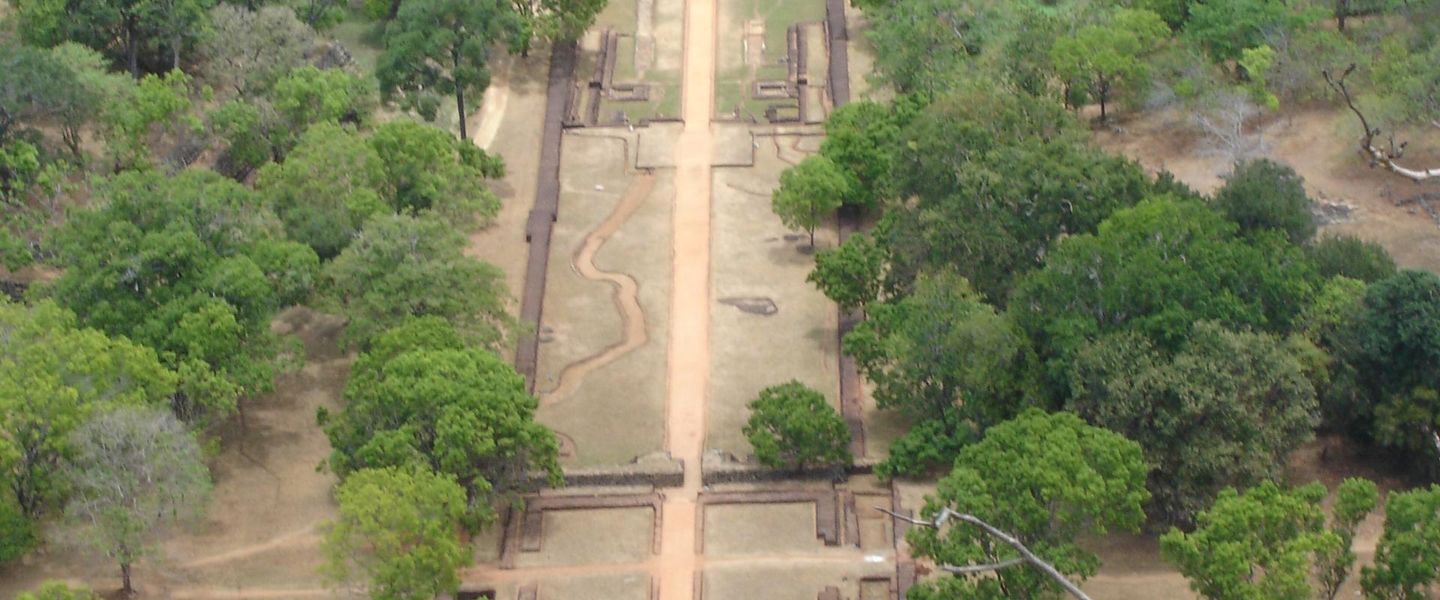


Explore North Central Province for Sri Lanka’s ancient capitals, vast reservoirs, Buddhist monuments, dry-zone wildlife and living rural landscapes.
Read more about North Central Province
When is the best time to visit North Central Province?
Best: January–March · 30–32°C| Month | High (°C) | Rainfall (mm) |
|---|---|---|
| January (best) | 30 | 50 |
| February (best) | 30 | 40 |
| March (best) | 32 | 60 |
| April | 33 | 80 |
| May | 34 | 150 |
| June | 33 | 145 |
| July | 33 | 130 |
| August | 33 | 135 |
| September | 32 | 160 |
| October | 32 | 260 |
| November | 31 | 230 |
| December | 31 | 90 |
Getting to and around North Central Province
How to get there
Transportation
Top city travel guides in North Central Province
The cities of North Central Province, and the easiest places to base yourself.
-

-

-
-


Swipe for more cities
Destinations in North Central Province
Resorts, valleys and scenic spots worth a trip of their own.
-

-

-

-

-


Swipe for more destinations
Best attractions in North Central Province
North Central Province’s attractions are organised around two major archaeological landscapes and the dry-zone environment that sustained them. Anuradhapura’s Sacred City contains immense stupas, monastic ruins, ancient ponds and pilgrimage sites spread across a broad area, while Mihintale adds hilltop shrines, stairways and views over the surrounding plains. Polonnaruwa offers a more concentrated medieval capital, with royal remains, monasteries, reservoirs and finely carved stone sculpture. Away from the cities, Ritigala combines a forested mountain setting with the remains of an early monastery, and Aukana is known for its finely proportioned standing Buddha carved from rock. Minneriya and Kaudulla national parks provide opportunities to observe elephants, waterbirds and dry-zone wildlife around seasonal wetlands, subject to park conditions and responsible guiding. Reservoirs such as Parakrama Samudra and Kala Wewa reveal the continuing importance of irrigation, while rural roads lead through paddy fields, scrub forest and small settlements. The province is best explored as a mixture of archaeology, pilgrimage, landscape and wildlife rather than as a sequence of isolated monuments.
-
Buddhist temple
Tantirimale Rajamaha Viharaya - තන්තිරිමලේ රජමහා විහාරය
Explore the serene beauty and rich heritage of Tantirimale Rajamaha Viharaya, a stunning Buddhist temple and archaeological site in Sri Lanka.
-
Buddhist temple
Lankaramaya | ලංකාරාමය
Explore the serene beauty and rich heritage of Lankaramaya, a captivating Buddhist temple in Anuradhapura, Sri Lanka's ancient capital.
-
Archaeological site
Kaludiya Pokuna Archaeological Site
Explore the tranquility and historical richness of Kaludiya Pokuna, an ancient archaeological site in Dambulla, Sri Lanka.
-
Tourist attraction
Mavil Aru Anicut
Discover the tranquil beauty of Mavil Aru Anicut, a hidden gem in Sri Lanka perfect for nature lovers and tranquil escapes.



Best landmarks in North Central Province
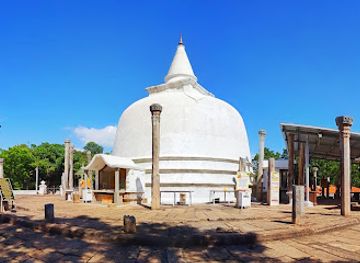
The most recognisable landmarks of North Central Province are the monumental remains of its ancient capitals. In Anuradhapura, Ruwanwelisaya’s white dome, Jetavanaramaya’s immense brick mass and the ancient Sri Maha Bodhi create a powerful religious and architectural ensemble, while Abhayagiri and the Thuparamaya reflect the scale and longevity of monastic life. Mihintale’s stairways, shrines and rocky elevations mark a site of exceptional importance in Sri Lankan Buddhist tradition. At Polonnaruwa, the Vatadage is notable for its circular design and carved guardstones, the Lankatilaka image house for its monumental brick walls, and Gal Vihara for its four celebrated granite Buddha images. Parakrama Samudra, an enormous medieval reservoir beside the ancient capital, remains both an engineering landmark and a working part of the dry-zone landscape. The standing Buddha at Aukana provides a different expression of the region’s artistic heritage, carved directly from the living rock.
-
Buddhist temple
Sri Dalada Maligawa
Discover the spiritual essence of Sri Lanka at Sri Dalada Maligawa, Kandy's iconic temple housing the Sacred Tooth Relic of Buddha.
-
Botanical garden
Royal Botanic Gardens, Peradeniya
Explore the Royal Botanic Gardens, Peradeniya – a stunning sanctuary of exotic plants and breathtaking landscapes in the heart of Sri Lanka.
-
Fortress
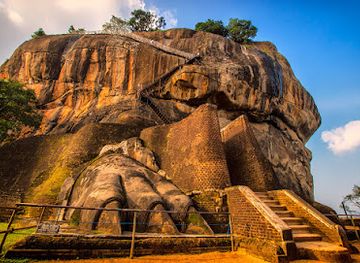
Sigiriya
Explore Sigiriya, the ancient rock fortress of Sri Lanka, a UNESCO World Heritage Site filled with history, stunning frescoes, and breathtaking views.
-
Buddhist temple
Dambulla Royal Cave Temple and Golden Temple
Explore the breathtaking Dambulla Royal Cave Temple, a UNESCO World Heritage site rich in Buddhist history and stunning art.



Explore North Central Province on the map
Plan your trip on one map. See where the top cities, national parks and sights are, and book hotels and experiences in a few clicks.
Best hotels in North Central Province
Best restaurants in North Central Province
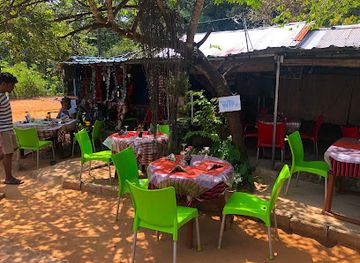
Dining in North Central Province is rooted in Sri Lankan rice-and-curry traditions, with rice accompanied by vegetable curries, dhal, sambols, freshwater fish and occasionally meat or egg dishes. Anuradhapura and Polonnaruwa offer the widest choice, including hotel restaurants, cafés, bakeries and small family-run establishments, while rural roadside eateries tend to focus on filling local meals served during the day. Coconut, jackfruit, plantain, manioc and seasonal fruit are common ingredients, and visitors may encounter hoppers, string hoppers, roti and short eats alongside more substantial dishes. Around farming communities, freshwater fish and locally grown produce reflect the irrigation landscape, although preparation varies from one kitchen to another. Tea, fruit drinks and king coconut are useful refreshments in the heat. Food markets and small shops are practical places to sample regional produce, but hygiene standards differ, so choose busy establishments with good food turnover and drink treated or sealed water.
-
Restaurant
Seedevi Family Restaurant
Discover authentic Sri Lankan flavors at Seedevi Family Restaurant in Anuradhapura - where every dish tells a story.
-
Restaurant
Sigiriya Wew Thawulla Restaurant
Experience authentic Sri Lankan cuisine at Sigiriya Wew Thawulla Restaurant near Sigiriya Rock Fortress.
-
Restaurant
Kenoli Restaurant
Experience the best of Sri Lankan cuisine at Kenoli Restaurant in Sigiriya - where every meal is a culinary journey.
-
Family-friendly
Gami gedara - ගැමි ගෙදර
Discover the flavors of Sri Lanka at Gami Gedara – a family-friendly restaurant in Dambulla serving authentic dishes with warm hospitality.



Best bars in North Central Province
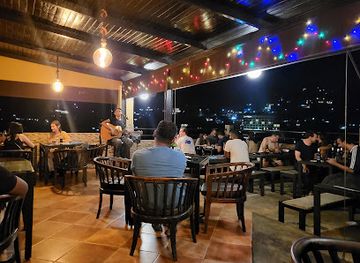
Evening life in North Central Province is generally quiet and centred on hotel restaurants, cafés, family gatherings and traditional local establishments rather than a large nightclub scene. Anuradhapura and Polonnaruwa have the greatest selection of places serving beer, spirits and simple meals, while accommodation outside the towns may offer a bar for guests. Alcohol is not served in some settings and should never be assumed at religious or pilgrimage sites. The most distinctive evening experiences are often cultural or landscape-based: an early dinner after visiting monuments, a calm stay beside a reservoir, or a guided wildlife outing operated within park regulations. During religious observances and public holidays, opening arrangements and alcohol sales can change. Visitors should keep noise low near temples and residential areas, particularly in Anuradhapura, where active pilgrimage continues beyond daylight hours.
-
Gastropub
The Downtown Gastropub
Discover the vibrant flavors of Sri Lanka at The Downtown Gastropub, where local meets global in a lively setting.
-
Bar
DUMBARA WINE(BAR)
Discover the cozy vibe of Dumbara Wine Bar in Dambulla, Sri Lanka – a perfect retreat for wine lovers and travelers seeking relaxation.
-
Bar
Hingurakgoda Wine Rathna Store Bar
Discover the charm of Hingurakgoda Wine Rathna Store Bar - a wine lover's paradise with a cozy atmosphere and affordable selections.
-
Bar
Millenium Restaurant & Bar
Discover the vibrant culinary scene in Anuradhapura at Millenium Restaurant & Bar, where local flavors and a lively atmosphere unite.


Best nightclubs in North Central Province
Evening life in North Central Province is generally quiet and centred on hotel restaurants, cafés, family gatherings and traditional local establishments rather than a large nightclub scene. Anuradhapura and Polonnaruwa have the greatest selection of places serving beer, spirits and simple meals, while accommodation outside the towns may offer a bar for guests. Alcohol is not served in some settings and should never be assumed at religious or pilgrimage sites. The most distinctive evening experiences are often cultural or landscape-based: an early dinner after visiting monuments, a calm stay beside a reservoir, or a guided wildlife outing operated within park regulations. During religious observances and public holidays, opening arrangements and alcohol sales can change. Visitors should keep noise low near temples and residential areas, particularly in Anuradhapura, where active pilgrimage continues beyond daylight hours.
-
Asian Fusion
Slightly Chilled Lounge Bar and Restaurant
Discover the vibrant flavors of Asian Fusion cuisine at Slightly Chilled Lounge Bar and Restaurant in Kandy, where taste meets a relaxed ambiance.
-
Bar
Old Trinitian's Sports Club
Experience the vibrant atmosphere of Old Trinitian's Sports Club in Kandy, a perfect blend of tradition, socializing, and relaxation.
-
Night club
Recreation Club
Dive into Anuradhapura's vibrant nightlife at the Recreation Club, where unforgettable memories are made under the dazzling lights.
-
Night club
Prabhage thippola
Unleash your inner party spirit at Prabhage Thippola, Kandy's top night club, where vibrant music and a lively crowd await.


Best shops in North Central Province
Shopping in North Central Province is practical and locally oriented, with markets, small high-street shops and craft stalls rather than large fashion districts. Anuradhapura and Polonnaruwa are useful places to buy packaged spices, tea, snacks, coconut-based products, fruit and other Sri Lankan food items, while market visits offer a closer view of produce traded for local households. Around major pilgrimage sites, stalls sell Buddhist devotional objects, offerings, postcards, textiles and modest souvenirs; choose respectfully and avoid buying antiquities or items presented as ancient. Handicrafts may include woven goods, woodwork, pottery and lacquered or painted objects, although quality varies and provenance should be considered. Rural shops are better for everyday provisions than for browsing, and card payments may not be available. Buy sealed food products when taking gifts overseas, and check customs rules before purchasing wildlife products, archaeological material or anything made from protected species.
-
Clothing store
CIB Shopping Center - Anuradhapura
Discover fashion and culture at CIB Shopping Center, Anuradhapura's vibrant hub for shopping and local treasures.
-
Clothing store
ASB Fashion
Discover ASB Fashion in Anuradhapura: Your ultimate shopping destination for trendy clothing and local treasures.
-
Fashion accessories store
CKKR Fashion - Online Shopping store in Sri Lanka, A unit of CKKR Holdings (PVT) Ltd
Explore the latest trends at CKKR Fashion, Matale's go-to destination for stylish accessories and Western apparel.
-
Gift shop
Chocolate.lk
Discover a world of exquisite chocolates and unique gifts at Chocolate.lk, the perfect stop for sweet souvenirs and local delicacies.


Get your free copy of our complete guide to North Central Province, delivered straight to you.
Everything on this page, from attractions and restaurants to essentials and local phrases, in one PDF you can read offline, print or share.
Already have an account? Sign in
Your North Central Province guide is ready.
We'll send it to · Not you? Sign out

Getting your guide ready…
We are putting together a fresh copy of the North Central Province guide. This can take up to a minute.
This can take a few moments. If your browser asks, choose Allow so the download can start. You'll find the guide in your Downloads folder.
Nothing happened? Download it again
Sorry, the guide is taking longer than usual. Please try again in a minute, or get it by email instead.
North Central Province essentials
Currency and Payment
Safety
Emergency Situations
Do's and Don'ts
Local Tips
From Eve
Local phrases worth knowing
You don't need to get them perfect. A few words go a long way, and locals appreciate the effort.
Basics
| English | Local | Say it |
|---|---|---|
| Hello | Hello | [Hello] |
| Goodbye | Goodbye | [Goodbye] |
| Yes | Yes | [Yes] |
| No | No | [No] |
| Please/You're welcome | Please/You're welcome | [Please/You're welcome] |
| Thank you | Thank you | [Thank you] |
| Excuse me/Sorry | Excuse me/Sorry | [Excuse me/Sorry] |
| How are you? | How are you? | [How are you?] |
| Fine. And you? | Fine. And you? | [Fine. And you?] |
| Do you speak English? | Do you speak English? | [Do you speak English?] |
| I don't understand | I don't understand | [I don't understand] |
Eating & Drinking
| English | Local | Say it |
|---|---|---|
| I'd like to see the menu, please | I'd like to see the menu, please | [I'd like to see the menu, please] |
| I don't eat meat | I don't eat meat | [I don't eat meat] |
| Cheers! | Cheers! | [Cheers!] |
| I would like to pay, please | I would like to pay, please | [I would like to pay, please] |
Emergencies
| English | Local | Say it |
|---|---|---|
| Help! | Help! | [Help!] |
| Go away! | Go away! | [Go away!] |
| Call the Police! | Call the Police! | [Call the Police!] |
| Call a doctor! | Call a doctor! | [Call a doctor!] |
| I'm lost | I'm lost | [I'm lost] |
| I'm ill | I'm ill | [I'm ill] |
Shopping
| English | Local | Say it |
|---|---|---|
| I'd like to buy... | I'd like to buy... | [I'd like to buy...] |
| I'm just looking | I'm just looking | [I'm just looking] |
| How much is it? | How much is it? | [How much is it?] |
| That's too expensive | That's too expensive | [That's too expensive] |
| Can you lower the price? | Can you lower the price? | [Can you lower the price?] |
Time & Numbers
| English | Local | Say it |
|---|---|---|
| What time is it? | What time is it? | [What time is it?] |
| It's one o'clock | It's one o'clock | [It's one o'clock] |
| Half past (10) | Half past (10) | [Half past (10)] |
| Morning | Morning | [Morning] |
| Afternoon | Afternoon | [Afternoon] |
| Evening | Evening | [Evening] |
| Yesterday | Yesterday | [Yesterday] |
| Today | Today | [Today] |
| Tomorrow | Tomorrow | [Tomorrow] |
| 1 | 1 | [1] |
| 2 | 2 | [2] |
| 3 | 3 | [3] |
| 4 | 4 | [4] |
| 5 | 5 | [5] |
| 6 | 6 | [6] |
| 7 | 7 | [7] |
| 8 | 8 | [8] |
| 9 | 9 | [9] |
| 10 | 10 | [10] |
Transport & Directions
| English | Local | Say it |
|---|---|---|
| Where's a/the...? | Where's a/the...? | [Where's a/the...?] |
| What's the address? | What's the address? | [What's the address?] |
| Can you show me (on the map)? | Can you show me (on the map)? | [Can you show me (on the map)?] |
| When's the next (bus)? | When's the next (bus)? | [When's the next (bus)?] |
| A ticket (to ....) | A ticket (to ....) | [A ticket (to ....)] |
History of North Central Province
The Rise of Anuradhapura, c. fourth century BCE
Anuradhapura grew from an early settlement into the first major capital of the Sinhalese kingdom, benefiting from its position in the dry zone and from expanding systems of irrigation. Its rulers developed reservoirs and channels that supported rice cultivation and sustained a large urban and monastic population. The surviving stupas, monasteries, ceremonial structures and waterworks show that the city was not simply a royal residence but a complex political, religious and agricultural centre.
The Arrival and Consolidation of Buddhism
Sri Lankan tradition associates the introduction of Buddhism with the mission of Mahinda, who is said to have met King Devanampiya Tissa at Mihintale during the third century BCE. Whether considered through religious tradition or archaeological history, the event marks a decisive transformation in the island’s culture. Monastic institutions expanded around Anuradhapura, sacred trees and relic shrines became central to public devotion, and Buddhist architecture shaped the province’s political and artistic identity for centuries.
Irrigation and the Dry-Zone Kingdom
The rulers of Anuradhapura created an interconnected landscape of tanks, canals and paddy fields to manage seasonal rainfall in Sri Lanka’s dry zone. Large reservoirs such as Kala Wewa and the systems associated with Anuradhapura allowed agriculture and urban life to continue through long dry periods. These works required administration, labour and technical knowledge, and their descendants remain visible in the province’s reservoirs and farming communities, even where the original structures have been repaired or modified.
South Indian Rule and the Move to Polonnaruwa
Anuradhapura faced repeated political and military pressure from South India, culminating in Chola rule over much of the island from the early eleventh century. The Cholas used Polonnaruwa as an important administrative centre, and after Sinhalese power was restored the city became the principal royal capital. This period altered the province’s political geography and left a layered heritage in which Buddhist monuments, Hindu influences, royal institutions and irrigation projects reflect interaction across the Indian Ocean.
Polonnaruwa’s Medieval Capital, eleventh to thirteenth centuries
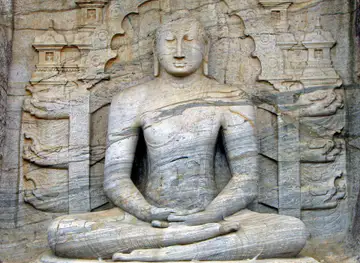
Polonnaruwa reached its greatest importance under rulers including Vijayabahu I, Parakramabahu I and Nissankamalla. The city’s monasteries, image houses, royal structures and reservoirs were developed on a substantial scale, while the enlargement of irrigation supported agriculture and state power. The Gal Vihara’s granite Buddha images and the complex around the Sacred Quadrangle represent the artistic achievements of the period. By the thirteenth century, political authority shifted away from the dry zone and Polonnaruwa’s capital-city role declined.
Colonial Rule, Archaeology and Modern Heritage
Portuguese, Dutch and British rule reshaped Sri Lanka’s political and economic systems, although the great dry-zone capitals remained important primarily as religious and historical places rather than administrative centres. From the nineteenth century onwards, archaeological study and conservation brought Anuradhapura and Polonnaruwa to wider international attention. Modern restoration, pilgrimage and tourism now coexist with farming and settlement, while national parks and protected forests add a conservation dimension to the province’s historic landscape.
North Central Province in Photos
Browse through our photo collection highlighting the charm and character of the destination.
Neighbouring regions of North Central Province
The closest regions to North Central Province, if you have time for more than one.
-

-

-

-

-


Swipe for more regions
Explore more

Explore more of Sri Lanka
Discover Sri Lanka: Rich culture, stunning landscapes, and warm hospitality await you in this tropical paradise. Explore ancient cities, wildlife, tea plantations, and pristine beaches.
Explore Sri Lanka