

Free Anuradhapura District Travel Guide & Mobile App
Explore Anuradhapura District with free travel guides. Discover regional history, expert tips, proposed trips, and audio guides on web or mobile app.


Explore Anuradhapura District for Sri Lanka’s ancient capital, Buddhist monuments, forest monasteries, reservoirs and enduring dry-zone culture.
Read more about Anuradhapura District
When is the best time to visit Anuradhapura District?
Best: January–March · 32–34°C| Month | High (°C) | Rainfall (mm) |
|---|---|---|
| January (best) | 32 | 50 |
| February (best) | 33 | 40 |
| March (best) | 34 | 90 |
| April | 35 | 150 |
| May | 35 | 200 |
| June | 34 | 150 |
| July | 34 | 130 |
| August | 34 | 130 |
| September | 34 | 150 |
| October | 33 | 200 |
| November | 31 | 200 |
| December | 32 | 150 |
Getting to and around Anuradhapura District
How to get there
Transportation
Top city travel guides in Anuradhapura District
The cities of Anuradhapura District, and the easiest places to base yourself.
-

-

-
-


Swipe for more cities
Destinations in Anuradhapura District
Resorts, valleys and scenic spots worth a trip of their own.
-

-

-

-


Swipe for more destinations
Best attractions in Anuradhapura District
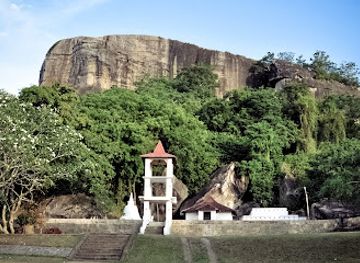
Anuradhapura District’s attractions are built around the relationship between sacred architecture, ancient urban life and water management. The Sacred City contains vast stupas, monastery complexes, image houses, ponds and tree-lined paths, with the Abhayagiri and Jetavana areas offering a sense of the scale of the ancient capital beyond the best-known shrines. Mihintale adds a hilltop pilgrimage landscape of stairways, caves, terraces and viewpoints linked to the arrival of Buddhism. Away from the capital, Ritigala’s forest monastery provides a more secluded archaeological experience, while the Aukana Buddha near Kekirawa is an important example of medieval stone sculpture. Large reservoirs such as Kala Wewa and Nuwara Wewa reveal the practical foundations of dry-zone civilisation, although visitors should respect local water-use areas and safety restrictions. The district also offers cycling, birdwatching, countryside drives and opportunities to observe farming landscapes, village temples and seasonal wetlands. Because sites are widely distributed, a carefully planned route is more rewarding than attempting every monument in a single hurried day.
-
Buddhist temple
Ruwanweli Maha Seya
Explore the sacred Ruwanweli Maha Seya, a historical Buddhist temple in Anuradhapura, embodying Sri Lanka's rich spiritual and cultural heritage.
-
Historical landmark
Pidurangala Rock
Experience the breathtaking beauty and rich history at Pidurangala Rock, a must-visit landmark near Sigiriya in Sri Lanka.
-
 National park
Wilpattu National Park
Explore the breathtaking landscapes and diverse wildlife of Wilpattu National Park, Sri Lanka's largest national park, a haven for nature lovers.
-
Historical place
Yapahuwa Rock Fortress
Discover the rich history and breathtaking views at Yapahuwa Rock Fortress, a remarkable historical site in Sri Lanka.
Best landmarks in Anuradhapura District
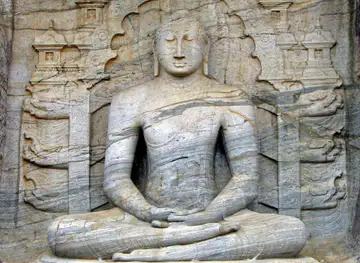
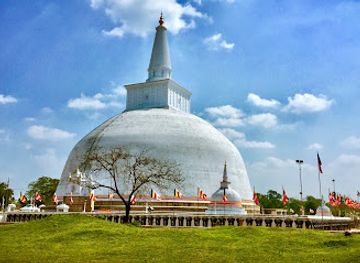
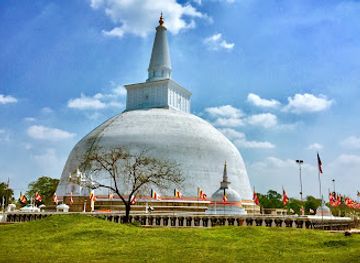
The most recognisable landmarks of Anuradhapura District are its immense brick stupas and the sacred places that continue to define the city. Ruwanwelisaya, with its white hemispherical dome and surrounding elephant wall, is one of Sri Lanka’s most important Buddhist monuments and an active pilgrimage focus. Jetavanaramaya and Abhayagiri rise above the former monastic city as reminders of the engineering and institutional power of ancient Anuradhapura. Sri Maha Bodhi is a living landmark whose religious significance extends far beyond its physical form, while the Isurumuniya complex combines rock-cut features, sculpture and an ancient monastic setting. Mihintale’s flights of steps and granite heights form a separate landmark landscape associated with Mahinda’s meeting with King Devanampiya Tissa. Further south-east, the standing Aukana Buddha is celebrated for its poised proportions and finely carved robe. Across the district, the broad surfaces of Kala Wewa and other ancient tanks are landmarks of hydraulic history, linking monumental religion with the agricultural systems that sustained the kingdom.
-
Buddhist temple
Ruwanweli Maha Seya
Explore the iconic Ruwanweli Maha Seya, a majestic stupa in Anuradhapura, Sri Lanka, and immerse yourself in the rich Buddhist heritage and serene beauty.
-
Buddhist temple
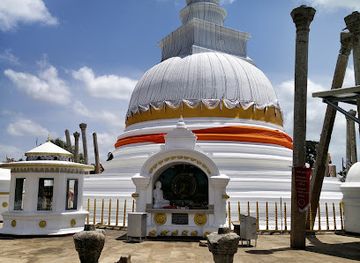
Thuparamaya
Discover the ancient Thuparamaya stupa in Anuradhapura, a sacred site rich in Buddhist heritage and architectural beauty, perfect for cultural exploration.
-
Buddhist temple
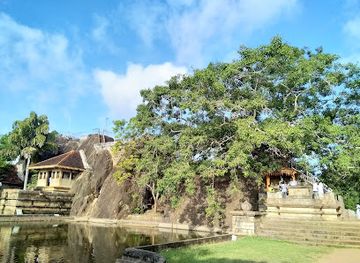
Isurumuniya Temple
Discover the serenity and historical significance of Isurumuniya Temple, a stunning Buddhist haven in the heart of Anuradhapura, Sri Lanka.
-
Buddhist temple
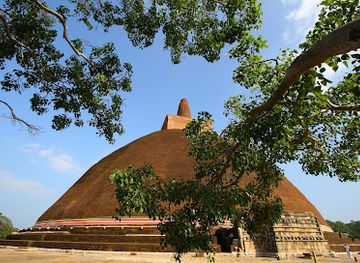
Abhayagiriya
Discover the majesty of Abhayagiriya, a historic Buddhist temple in Anuradhapura, showcasing ancient architecture and deep spiritual significance.
Explore Anuradhapura District on the map
Plan your trip on one map. See where the top cities, national parks and sights are, and book hotels and experiences in a few clicks.
Best hotels in Anuradhapura District
Best restaurants in Anuradhapura District
Dining in Anuradhapura District reflects the wider food culture of Sri Lanka while drawing strongly on the dry-zone setting. Rice and several vegetable curries, dhal, sambol, coconut-based preparations and hopper-style breakfasts are common, with chicken, fish and egg dishes available in town restaurants and hotels. Freshwater fish from local lakes and reservoirs may appear on menus, though preparation and availability vary. Small cafés and family-run eateries generally provide inexpensive rice and curry, kottu and short eats, while larger hotels cater for visitors seeking broader menus. Around pilgrimage areas, simple vegetarian meals are often practical and appropriate, particularly during busy religious periods. Markets and roadside stalls offer fruit, king coconut and seasonal snacks, but hygiene standards differ, so choose busy outlets with a good turnover. Tea is widely available, and visitors should distinguish local Sri Lankan food from dishes created for international hotel menus rather than assuming every restaurant represents regional tradition.
-
Restaurant
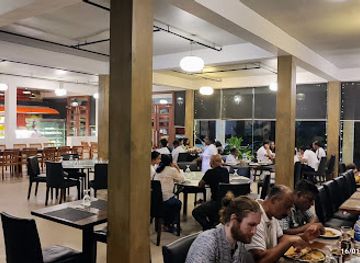
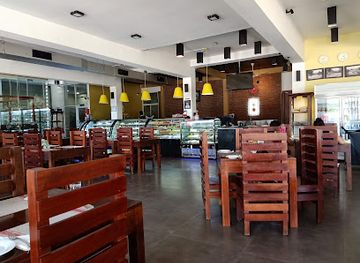
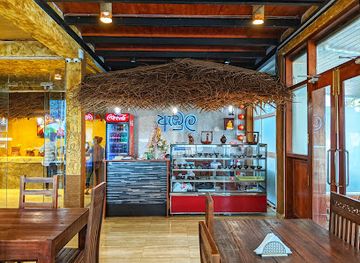
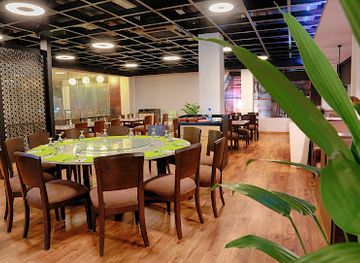
Golden Mango Indian Restaurant
Experience authentic Indian cuisine at Golden Mango Indian Restaurant in Anuradhapura, where rich flavors meet warm hospitality.
-
Restaurant
Seedevi Family Restaurant
Discover authentic Sri Lankan cuisine at Seedevi Family Restaurant in Anuradhapura—where tradition meets taste in every dish.
-
Restaurant
Ambula Restaurant Anuradhapura ඇඹුල අනුරාධපුර
Experience authentic Sri Lankan flavors at Ambula Restaurant in Anuradhapura - where every dish tells a story.
-
Restaurant
Casserole Restaurant
Experience authentic Sri Lankan flavors at Casserole Restaurant in Anuradhapura – where every dish tells a story.
Best bars in Anuradhapura District
Anuradhapura District has a restrained evening scene shaped by pilgrimage, rural settlement and a relatively early daily rhythm rather than by a concentrated nightclub culture. In Anuradhapura town, hotel restaurants, cafés and licensed bars provide the main options for an evening meal or drink, while local pubs and small establishments may become busier at weekends. Mihintale and remote archaeological areas are quiet after dark, with limited services beyond guesthouses and simple eateries. Some hotels offer live music or organised evening entertainment, but arrangements are changeable and should be confirmed locally. Alcohol is not appropriate at active Buddhist sites, and visitors should avoid carrying drinks into temple precincts. For most travellers, the district’s evening appeal lies in unhurried dining, conversation, early-morning sightseeing and the atmosphere of illuminated stupas during permitted religious visits rather than late-night clubbing.
-
Restaurant
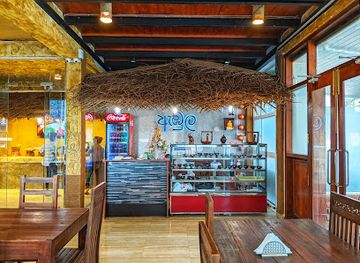
Ambula Restaurant Anuradhapura ඇඹුල අනුරාධපුර
Experience authentic Sri Lankan cuisine at Ambula Restaurant in Anuradhapura, where tradition meets taste in a cozy dining atmosphere.
-
Restaurant
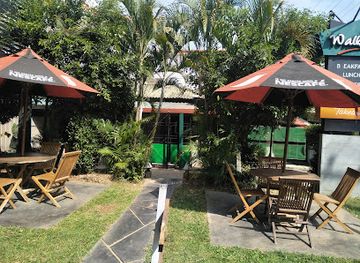
The Walkers Restaurant
Discover the heart of Sri Lankan cuisine at The Walkers Restaurant in Anuradhapura, where every bite tells a story.
-
Bar
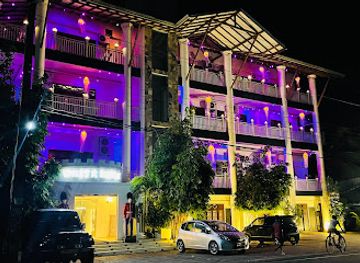
Hotel White House Anuradhapura
Experience the perfect blend of relaxation and adventure at Hotel White House Anuradhapura, where comfort meets exquisite dining in a historic city.
-
Restaurant
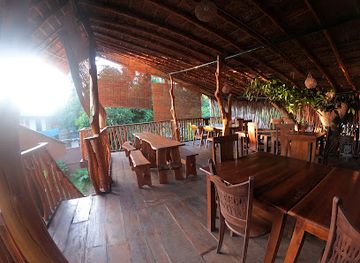
Gemi Gedara Restaurant Anuradhapura
Experience the fusion of Sri Lankan and Chinese flavors at Gemi Gedara Restaurant in Anuradhapura, a dining haven for every traveler.
Best nightclubs in Anuradhapura District
Anuradhapura District has a restrained evening scene shaped by pilgrimage, rural settlement and a relatively early daily rhythm rather than by a concentrated nightclub culture. In Anuradhapura town, hotel restaurants, cafés and licensed bars provide the main options for an evening meal or drink, while local pubs and small establishments may become busier at weekends. Mihintale and remote archaeological areas are quiet after dark, with limited services beyond guesthouses and simple eateries. Some hotels offer live music or organised evening entertainment, but arrangements are changeable and should be confirmed locally. Alcohol is not appropriate at active Buddhist sites, and visitors should avoid carrying drinks into temple precincts. For most travellers, the district’s evening appeal lies in unhurried dining, conversation, early-morning sightseeing and the atmosphere of illuminated stupas during permitted religious visits rather than late-night clubbing.
-
Hotel
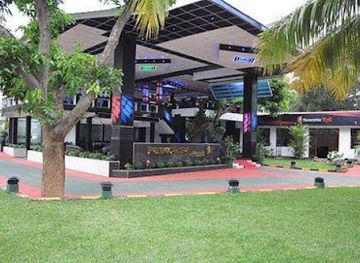
Panorama Rest Anuradhapura
Discover comfort and local culture at Panorama Rest Anuradhapura, your ideal retreat in the heart of Sri Lanka's ancient capital.
-
Night club
Recreation Club
Discover the pulse of Anuradhapura's nightlife at Recreation Club, where music and dance create unforgettable memories.
-
Night club
Restaurant & bar
Experience the vibrant nightlife of Anuradhapura at this premier restaurant and bar, where delicious cuisine and an energetic atmosphere await.
-
Night club
Dumils spot
Discover the heart of Anuradhapura's nightlife at Dumils Spot, a vibrant night club where music, dance, and fun come together in an unforgettable experience.

Best shops in Anuradhapura District
Shopping in Anuradhapura centres on practical town commerce, pilgrimage goods and regional food products rather than large-scale designer retail. Around the Sacred City and Mihintale, visitors find offerings, devotional images, incense, modest temple souvenirs and locally made items, but purchasing should be approached respectfully and antiquities should never be bought. Anuradhapura town has everyday shops, pharmacies, clothing retailers and food markets, while smaller market centres serve surrounding farming communities. Rice, spices, dried foods, treacle, jaggery, coconut products and seasonal fruit make useful edible souvenirs when properly packaged for travel. Handicrafts, carved wood and textiles may be available through shops and hotel outlets, although quality and provenance vary. Bargaining is more customary in informal markets than in fixed-price shops, and visitors should inspect goods carefully and agree prices before buying. For authentic regional purchases, ask accommodation staff about established producers or markets rather than accepting claims that an item is ancient, sacred or locally made without evidence.
-
Buddhist temple
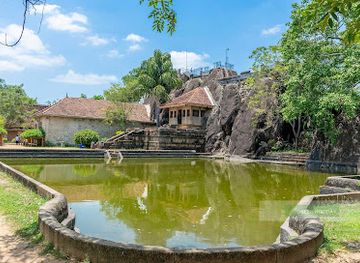
Isurumuniya Temple
Experience the rich cultural heritage and serene atmosphere of Isurumuniya Temple, a historical gem in Anuradhapura, Sri Lanka.
-
Clothing store
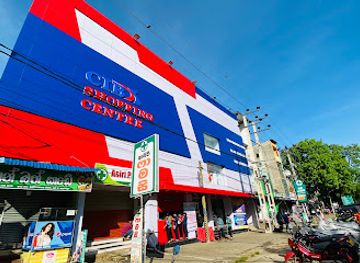
CIB Shopping Center - Anuradhapura
Explore CIB Shopping Center in Anuradhapura for a unique shopping experience, featuring trendy youth clothing and a vibrant atmosphere.
-
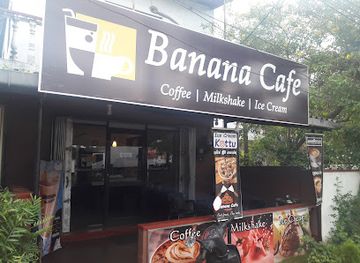
Cafe
Banana Cafe, Coffee shop
Discover Banana Cafe in Anuradhapura, where coffee and ice cream come together in a cozy atmosphere to delight every visitor.
-
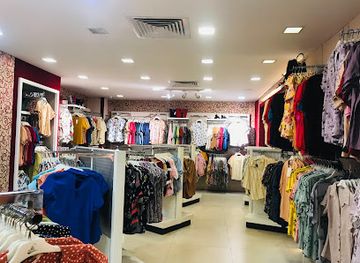
Clothing store
ASB Fashion
Discover the vibrant fashion scene at ASB Fashion in Anuradhapura – where style meets tradition in a delightful shopping experience.
Get your free copy of our complete guide to Anuradhapura District, delivered straight to you.
Everything on this page, from attractions and restaurants to essentials and local phrases, in one PDF you can read offline, print or share.
Already have an account? Sign in
Your Anuradhapura District guide is ready.
We'll send it to · Not you? Sign out

Getting your guide ready…
We are putting together a fresh copy of the Anuradhapura District guide. This can take up to a minute.
This can take a few moments. If your browser asks, choose Allow so the download can start. You'll find the guide in your Downloads folder.
Nothing happened? Download it again
Sorry, the guide is taking longer than usual. Please try again in a minute, or get it by email instead.
Anuradhapura District essentials
Currency and Payment
Safety
Emergency Situations
Do's and Don'ts
Local Tips
From Eve
Local phrases worth knowing
You don't need to get them perfect. A few words go a long way, and locals appreciate the effort.
Basics
| English | Local | Say it |
|---|---|---|
| Hello | ආයුබෝවන් | [Āyubōvan] |
| Goodbye | ගොස්සන් | [Gossan] |
| Yes | ඔව් | [Ov] |
| No | නැහැ | [Næhæ] |
| Please/You’re welcome | කරුණාකර/කැමැත්තක් නැහැ | [Karunākara/Kæmættak næhæ] |
| Thank you | ස්තුතියි | [Sthuthiyi] |
| Excuse me/Sorry | කණගාටුයි | [Kaṇagāṭuyi] |
| How are you? | ඔබට කොහොමද? | [Obaṭa kohomada?] |
| Fine. And you? | හොඳයි. ඔබට කෙසේද? | [Hoṇḍayi. Obaṭa kesēda?] |
| Do you speak English? | ඔබට ඉංග්රීසි කතා කරන්න පුළුවන්ද? | [Obaṭa iṅgṛīsi kathā karanna puḷuvanda?] |
| I don’t understand | මා තේරුම් ගන්නෙ නැහැ | [Mā thērum gannē næhæ] |
Eating & Drinking
| English | Local | Say it |
|---|---|---|
| I’d like to see the menu, please | කරුණාකර මෙනු එක බලන්න | [Karunākara menu eka balanna] |
| I don’t eat meat | මා මාංශය නොකැයි | [Mā māṁśaya nokayi] |
| Cheers! | සුභාශික්ති! | [Subhāśikṭhi!] |
| I would like to pay, please | කරුණාකර මට ගෙවන්න | [Karunākara maṭa gewanna] |
Emergencies
| English | Local | Say it |
|---|---|---|
| Help! | ආධාරයක්! | [Ādhārayak!] |
| Go away! | ඉවතට යන්න! | [Iwatata yanna!] |
| Call the Police! | පොලීසිය අමතන්න! | [Polīsiya amathanna!] |
| Call a doctor! | ඩොක්ටර් අමතන්න! | [Ḍokṭar amathanna!] |
| I’m lost | මා හුස්මනේ | [Mā husmane] |
| I’m ill | මා රෝගී වෙමි | [Mā rōgī vemi] |
Shopping
| English | Local | Say it |
|---|---|---|
| I’d like to buy... | මා මිලදී ගැනීමට කැමතියි... | [Mā milādī gænīmaṭa kæmātiyi...] |
| I’m just looking | මට බලන්නට පමණයි | [Maṭa balannata pamaṇayi] |
| How much is it? | එය කොච්චරද? | [Eya kochchara da?] |
| That’s too expensive | එය තරමට වියදම් | [Eya taramata viyadām] |
| Can you lower the price? | මිල අඩු කරන්නේද? | [Mila aḍu karannēda?] |
Time & Numbers
| English | Local | Say it |
|---|---|---|
| What time is it? | මෙයට කීයේද? | [Mēyata kīyēda?] |
| It’s one o’clock | මෙය අහානයි | [Mēya āhānayi] |
| Half past (10) | අර්ධය (10) | [Ardhaya (10)] |
| Morning | සවස | [Savasa] |
| Afternoon | පැය | [Pæya] |
| Evening | හවස | [Havasa] |
| Yesterday | ඊයේ | [Īyē] |
| Today | අද | [Ada] |
| Tomorrow | හෙට | [Hæṭa] |
| 1 | 1 | [1] |
| 2 | 2 | [2] |
| 3 | 3 | [3] |
| 4 | 4 | [4] |
| 5 | 5 | [5] |
| 6 | 6 | [6] |
| 7 | 7 | [7] |
| 8 | 8 | [8] |
| 9 | 9 | [9] |
| 10 | 10 | [10] |
Transport & Directions
| English | Local | Say it |
|---|---|---|
| Where's a/the...? | කොතැනක්ද...? | [Kothaenakda...?] |
| What’s the address? | ලිපිනය කුමක්ද? | [Lipinaya kumakda?] |
| Can you show me (on the map)? | මට පෙන්වන්න (සිතන ගැටීමේදී)? | [Maṭa penvanna (sithana gæṭīmēdī)?] |
| When’s the next (bus)? | ඊළඟ (බස්) කුමන වේලාවටද? | [Īḷaṅga (bas) kumana vēlāvaṭada?] |
| A ticket (to ....) | මට (....) ටිකට් එකක් | [Maṭa (....) ṭikaṭ ekak] |
History of Anuradhapura District
Early settlement and the rise of Anuradhapura
Archaeological evidence indicates human settlement in the Anuradhapura area before the city became the island’s principal political centre. By the early historic period, the settlement had developed into a capital supported by agriculture, trade and organised communities. Tradition associates the foundation of the Anuradhapura kingdom with King Pandukabhaya, usually dated to the 4th century BC, whose reign is remembered for formalising the city and its civic institutions. Its position in the dry zone allowed rulers to develop a capital connected to interior farming regions and routes across the island.
The arrival of Buddhism in the 3rd century BC
Anuradhapura’s transformation into Sri Lanka’s principal Buddhist centre is traditionally linked to the mission of Mahinda, son of the Indian emperor Ashoka, during the reign of King Devanampiya Tissa in the 3rd century BC. The meeting is associated with Mihintale, whose hills became a major pilgrimage site. The establishment of the Mahavihara monastery and the arrival of a cutting of the bodhi tree from India gave the capital lasting religious importance. Buddhism subsequently shaped the kingdom’s institutions, art, architecture and connections with South Asia.
Irrigation and the hydraulic civilisation
The prosperity of ancient Anuradhapura depended on sophisticated water management in Sri Lanka’s seasonally dry north-central plains. Rulers and local communities constructed reservoirs, channels and drainage systems that stored monsoon water for rice cultivation and urban use. Nuwara Wewa, Tissa Wewa, Nachchaduwa Wewa and the Kala Wewa system are part of a much wider landscape of hydraulic works, many of which were enlarged or repaired over successive reigns. These schemes supported dense settlement and remain fundamental to farming in the district today.
Monastic expansion and monumental building
From the early centuries of Buddhism, Anuradhapura developed several powerful monastic traditions, notably the Mahavihara, Abhayagiri and Jetavana establishments. Their complexes included stupas, image houses, residences, hospitals, bathing ponds and educational facilities. Massive structures such as Abhayagiri and Jetavanaramaya expressed both religious devotion and royal authority, while the surviving stonework records sophisticated engineering and sculpture. Competition and debate among monastic institutions also connected Anuradhapura to wider Buddhist intellectual networks across the Indian Ocean.
Political change and the end of the ancient capital
Anuradhapura remained a major Sri Lankan capital for well over a millennium, but warfare, dynastic conflict and pressure from South Indian powers repeatedly disrupted the kingdom. In the late 10th and early 11th centuries, the Chola conquest brought the city under South Indian rule and weakened its position as the main royal centre. The political focus subsequently shifted towards Polonnaruwa, east of the district. Anuradhapura’s religious importance survived, but parts of the ancient urban system declined and were gradually reclaimed by forest.
Rediscovery, conservation and living pilgrimage
During the colonial period, scholars, surveyors and Buddhist revivalists drew renewed attention to Anuradhapura’s ruins and inscriptions. Archaeological conservation gradually cleared and stabilised the monuments, while restoration of major shrines supported the city’s continuing role as a pilgrimage centre. In the 20th century, the Sacred City became an important symbol of Sri Lanka’s Buddhist and historical identity. Today, archaeological protection exists alongside active worship at sites such as Sri Maha Bodhi and Ruwanwelisaya, making Anuradhapura both a heritage landscape and a living religious centre.
Anuradhapura District in Photos
Browse through our photo collection highlighting the charm and character of the destination.
Neighbouring regions of Anuradhapura District
The closest regions to Anuradhapura District, if you have time for more than one.
-

-

-

-

-


Swipe for more regions
Explore more

Explore more of Sri Lanka
Discover Sri Lanka: Rich culture, stunning landscapes, and warm hospitality await you in this tropical paradise. Explore ancient cities, wildlife, tea plantations, and pristine beaches.
Explore Sri Lanka