

Free Emmental Travel Guide & Mobile App
Explore Emmental with free travel guides. Discover regional history, expert tips, proposed trips, and audio guides on web or mobile app.


Explore Emmental in Switzerland for rolling farm country, medieval towns, dairy traditions, literary heritage and walking routes towards the Napf.
Read more about Emmental
When is the best time to visit Emmental?
Best: June–August · 21–22°C| Month | High (°C) | Rainfall (mm) |
|---|---|---|
| January | 3 | 50 |
| February | 4 | 45 |
| March | 8 | 56 |
| April | 13 | 60 |
| May | 17 | 71 |
| June (best) | 21 | 80 |
| July (best) | 22 | 81 |
| August (best) | 22 | 74 |
| September | 19 | 66 |
| October | 14 | 56 |
| November | 7 | 60 |
| December | 4 | 50 |
Getting to and around Emmental
How to get there
Transportation
Top city travel guides in Emmental
The cities of Emmental, and the easiest places to base yourself.

Swipe for more cities
Destinations in Emmental
Resorts, valleys and scenic spots worth a trip of their own.

Swipe for more destinations
Best attractions in Emmental
Emmental's attractions are spread through valleys and market towns rather than concentrated in one resort. Burgdorf provides the strongest historic introduction, with its castle, old town, museums and views over the lower Emme valley. In the countryside, the Emmentaler Schaukäserei at Affoltern im Emmental explains the region's dairy culture and offers a practical insight into the product that gave Emmental international recognition. Lützelflüh explores the literary world of Jeremias Gotthelf, while Trub combines former monastic heritage with quiet upland walks. The principal outdoor attraction is the landscape itself: meadow-lined lanes, wooded hills, farmsteads and long-distance paths towards the Napf. Walking and cycling routes vary from gentle valley outings to steep ridge excursions, and the higher terrain can be rewarding in clear weather but demanding in poor conditions. Small museums, churches, village centres, farm shops and seasonal agricultural events add local detail, while winter activities are generally modest and weather-dependent rather than comparable with Switzerland's major Alpine resorts.
-
Tourist attraction
Nature and Animal Park Goldau
Explore Nature and Animal Park Goldau, a breathtaking wildlife sanctuary in Switzerland blending education, conservation, and unforgettable outdoor experiences.
-
Tourist attraction
Wildnispark Zürich Langenberg
Explore the Wildnispark Zürich Langenberg, where Swiss wildlife thrives in a stunning natural setting, perfect for families and nature enthusiasts alike.
-
Tourist attraction
Kleine Schanze
Experience the charm of Kleine Schanze, a serene park in Bern, Switzerland, perfect for relaxation, family fun, and stunning city views.
-
Tourist attraction
Emmentaler Schaukäserei
Explore the rich heritage of Swiss cheese-making at Emmentaler Schaukäserei, an interactive experience for the whole family.


Best landmarks in Emmental
Burgdorf Castle is Emmental's most recognisable historic landmark, standing above the old town on a site associated with the medieval Zähringen and Kyburg dynasties. Its position explains Burgdorf's role as a gateway between the Bernese Mittelland and the Emme valley. Trub's former Benedictine monastery is another important landmark: although much of the complex has changed over time, the church and settlement preserve the memory of a religious institution that shaped the surrounding uplands for centuries. The village church and historic buildings of Sumiswald reflect the region's rural Bernese architecture, while Lützelflüh is closely associated with the writer Jeremias Gotthelf and the nineteenth-century countryside he described. Beyond built heritage, the Napf ridges form a defining natural landmark on Emmental's southern side. Their deeply cut valleys, forested slopes and open viewpoints express the geological and agricultural character of the region more clearly than any single monument.
-
Castle
Chillon Castle
Explore Chillon Castle, a breathtaking medieval fortress on Lake Geneva's shores, offering rich history and stunning views for every traveler.
-
Historical place
UNESCO - Bern Old Town
Experience the enchanting medieval charm of Bern's Old Town, a UNESCO World Heritage site filled with history, culture, and local flavors.
-
Tourist attraction
Emmentaler Schaukäserei
Explore the art of Swiss cheese-making at Emmentaler Schaukäserei, a delightful attraction offering tours, tastings, and a gourmet restaurant experience.
-
Historical landmark
Zytglogge
Discover the enchanting Zytglogge in Bern, a historical clock tower showcasing medieval architecture and captivating animated displays.


Explore Emmental on the map
Plan your trip on one map. See where the top cities, national parks and sights are, and book hotels and experiences in a few clicks.
Best hotels in Emmental
Best restaurants in Emmental
Dining in Emmental reflects its farming landscape and the wider culinary traditions of German-speaking Switzerland. Cheese is central, from Emmentaler served in simple meals to fondue and raclette, although visitors should also look for local dairy products, butter, cream and yoghurt in farm shops and village groceries. Rural inns and traditional restaurants commonly offer substantial Swiss cooking, seasonal vegetables, rösti, soups and meat dishes, while bakeries and cafés provide breads, pastries and cakes for journeys between towns. Burgdorf and Langnau have the broadest choice of restaurants and cafés; in smaller villages, options are more limited and opening days should be checked. Farmers' markets and direct-sales shops are useful for regional produce, including cheese, preserves, honey and baked goods. Beer, Swiss wine from elsewhere in the country and non-alcoholic apple-based drinks are widely available, but the region's strongest food identity remains tied to dairy farming and home-style rural cooking rather than a single formal cuisine.
-
Restaurant
Emmentaler Schaukäserei
Experience traditional Swiss cheese-making at Emmentaler Schaukäserei—an unforgettable journey through taste and culture.
-
Swiss
Restaurant Gabelspitz Schallenberg
Experience authentic Swiss cuisine surrounded by breathtaking views at Restaurant Gabelspitz Schallenberg in Emmental.
-
Swiss
Fritzenfluh
Discover authentic Swiss flavors in a charming setting at Fritzenfluh - where tradition meets breathtaking views.
-
Swiss
Sternen
Discover the best of Swiss cuisine at Sternen in Zollbrück – a culinary gem where tradition meets flavor.


Best bars in Emmental
Evenings in Emmental tend to centre on traditional pubs, restaurant dining and small local venues rather than a large nightclub scene. Burgdorf offers the broadest choice of late cafés, bars and cultural events, while Langnau has a modest town-based evening scene. In villages and the upper valleys, historic inns and community-oriented pubs are more typical, with atmosphere shaped by local conversation, seasonal events and occasional live music. Some breweries or drinks producers may offer tastings or visitor arrangements, but these should be checked in advance. Rural public transport becomes less convenient at night, so plan a return journey carefully rather than assuming a late service. Visitors can enjoy the region's evening culture through food, music and sociable meeting places without treating drinking as its defining activity.
-
Restaurant
Hotel Hirschen
Experience authentic Swiss dining and warm hospitality at Hotel Hirschen, a perfect retreat for tourists in Langnau im Emmental.
-
Bar
Restaurant & Bar B5
Experience the flavors of Switzerland at Restaurant & Bar B5, where culinary excellence meets a vibrant bar atmosphere in Burgdorf.
-
Restaurant
Wolke 7 - Restaurant & Take Away
Experience Swiss hospitality at Wolke 7, a top-rated restaurant in Langnau im Emmental, offering delicious meals and convenient take-away options.
-
Swiss
Bädli
Experience the essence of Swiss culture with authentic cuisine at Bädli in Langnau im Emmental, a must-visit for food lovers.


Best nightclubs in Emmental
Evenings in Emmental tend to centre on traditional pubs, restaurant dining and small local venues rather than a large nightclub scene. Burgdorf offers the broadest choice of late cafés, bars and cultural events, while Langnau has a modest town-based evening scene. In villages and the upper valleys, historic inns and community-oriented pubs are more typical, with atmosphere shaped by local conversation, seasonal events and occasional live music. Some breweries or drinks producers may offer tastings or visitor arrangements, but these should be checked in advance. Rural public transport becomes less convenient at night, so plan a return journey carefully rather than assuming a late service. Visitors can enjoy the region's evening culture through food, music and sociable meeting places without treating drinking as its defining activity.
-
Bar
Roots Bar l Cafe l Lounge
Discover the inviting Roots Bar l Cafe l Lounge in Langnau im Emmental - a perfect spot for drinks, dining, and local culture.
-
Nightclub
Gaskessel Bern
Experience the vibrant nightlife at Gaskessel Bern, a unique live music venue in a historic gas storage facility, perfect for music lovers and night owls.
-
Nightclub
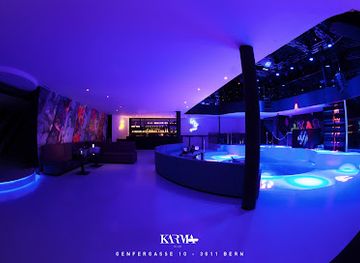
Karma Club & Shisha Lounge
Experience the vibrant nightlife of Bern at Karma Club & Shisha Lounge, a perfect blend of dance, music, and relaxation.
-
Lounge
Old Factory Lounge
Discover the cozy ambiance and delightful drinks at Old Factory Lounge, a hidden gem in Sumiswald, perfect for unwinding after a day of adventures.



Best shops in Emmental
Shopping in Emmental is focused on practical town centres, independent stores, farm produce and locally made goods rather than large-scale retail. Burgdorf has the most varied high-street choice, with everyday shops, cafés, galleries and boutiques around its historic centre, while Langnau serves the upper valley with a mixture of local services and smaller retailers. Farm shops are especially worthwhile for Emmentaler cheese, butter, honey, preserves, bread and other products from nearby producers; opening arrangements vary, particularly in more remote villages. Markets and seasonal events may offer crafts, regional foods and household goods, but dates and locations should be checked locally. Pottery, woodwork, textiles and decorative items can sometimes be found through craft shops or galleries, though they are not uniform souvenirs of the whole region. A useful purchase is therefore often a food product with a clear local provenance rather than a generic Swiss gift.
-
Tourist attraction
Emmentaler Schaukäserei
Experience the rich traditions of Swiss cheese-making at Emmentaler Schaukäserei, a charming attraction for food lovers and cultural enthusiasts.
-
Shopping mall
Wankdorf Shopping Mall
Explore the vibrant Wankdorf Shopping Mall in Bern, your ultimate destination for shopping, dining, and entertainment experiences.
-
Outlet mall
Outlets Murgenthal
Discover unbeatable deals on top brands at Outlets Murgenthal, Switzerland's premier shopping destination for fashion lovers.
-
Market
LANDI Region Langnau AG
Explore LANDI Region Langnau AG - A local market offering Swiss wines, gardening supplies, and delicious snacks in the heart of Zollbrück.


Get your free copy of our complete guide to Emmental, delivered straight to you.
Everything on this page, from attractions and restaurants to essentials and local phrases, in one PDF you can read offline, print or share.
Already have an account? Sign in
Your Emmental guide is ready.
We'll send it to · Not you? Sign out

Getting your guide ready…
We are putting together a fresh copy of the Emmental guide. This can take up to a minute.
This can take a few moments. If your browser asks, choose Allow so the download can start. You'll find the guide in your Downloads folder.
Nothing happened? Download it again
Sorry, the guide is taking longer than usual. Please try again in a minute, or get it by email instead.
Emmental essentials
Currency and Payment
Safety
Emergency Situations
Do's and Don'ts
Local Tips
From Eve
Local phrases worth knowing
You don't need to get them perfect. A few words go a long way, and locals appreciate the effort.
Basics
| English | Local | Say it |
|---|---|---|
| Hello | Grüezi | [Gree-tsee] |
| Goodbye | Adieu | [A-dyoo] |
| Yes | Ja | [Yah] |
| No | Nei | [Nay] |
| Please/You're welcome | Bitte | [Bitt-eh] |
| Thank you | Danke | [Dahn-keh] |
| Excuse me/Sorry | Entschuldigung | [Ent-shool-dee-goong] |
| How are you? | Wie gaht's? | [Vee gaht's?] |
| Fine. And you? | Guet. Und dir? | [Gwet. Oond deere?] |
| Do you speak English? | Sprichsch du Englisch? | [Spreek-sh doo English?] |
| I don't understand | Ich versteh nüt | [Ich fer-shtay nüt] |
Eating & Drinking
| English | Local | Say it |
|---|---|---|
| I'd like to see the menu, please | Ich möcht die Karte sehe, bitte | [Ich muht deeh Kahr-teh seh-eh, bitt-eh] |
| I don't eat meat | Ich esse kein Fleisch | [Ich ess-eh kine Flysh] |
| Cheers! | Zum Wohl! | [Tsoom Vohl!] |
| I would like to pay, please | Ich möcht zahle, bitte | [Ich muht zah-leh, bitt-eh] |
Emergencies
| English | Local | Say it |
|---|---|---|
| Help! | Hilfe! | [Heel-feh!] |
| Go away! | Geh weg! | [Gay veg!] |
| Call the Police! | Ruf d'Polizei! | [Roof dee Pol-ee-tz-eye!] |
| Call a doctor! | Ruf en Dokter! | [Roof en Dock-ter!] |
| I'm lost | Ich bin verlore | [Ich been fer-lo-reh] |
| I'm ill | Ich bin krank | [Ich been krank] |
Shopping
| English | Local | Say it |
|---|---|---|
| I'd like to buy... | Ich möcht ... kaufe | [Ich muht ... cow-feh] |
| I'm just looking | Ich lueg nur | [Ich loo-g noor] |
| How much is it? | Wie viel kostet es? | [Vee feel kostet es?] |
| That's too expensive | Das isch z'teuer | [Das isch ts-tuy-er] |
| Can you lower the price? | Chasch de Preis senke? | [Khash deh Pryce sen-keh?] |
Time & Numbers
| English | Local | Say it |
|---|---|---|
| What time is it? | Wie spät isch es? | [Vee shpaet isch es?] |
| It's one o'clock | Es isch ein Uhr | [Es isch ine Oor] |
| Half past (10) | Halb elf | [Halb elf] |
| Morning | Morge | [Mor-ge] |
| Afternoon | Nachmitag | [Nach-mi-tahg] |
| Evening | Abend | [Ah-bent] |
| Yesterday | Gestern | [Geh-stern] |
| Today | Hüt | [Hoot] |
| Tomorrow | Morn | [Morn] |
| 1 | Eins | [Ine] |
| 2 | Zwei | [Tsvy] |
| 3 | Drei | [Dry] |
| 4 | Vier | [Veer] |
| 5 | Fünf | [Finf] |
| 6 | Sächs | [Zex] |
| 7 | Sibe | [See-beh] |
| 8 | Acht | [Ocht] |
| 9 | Nüün | [Nün] |
| 10 | Zehn | [Tseen] |
Transport & Directions
| English | Local | Say it |
|---|---|---|
| Where's a/the...? | Wo isch ...? | [Vo isch ...?] |
| What's the address? | Was isch d'Adresse? | [Vas isch dee Ah-dress-eh?] |
| Can you show me (on the map)? | Chasch mir zeige (uf de Map)? | [Khash mir tzi-ge (oof de Map)?] |
| When's the next (bus)? | Wänn chunnt de nöchste (Bus)? | [Venn khunnt de ner-shtay (Bus)?] |
| A ticket (to ....) | E Billett (nach ...) | [E Bill-ett (nahch ...)] |
History of Emmental
Early settlement and Roman-era connections
The Emmental's valleys and terraces were settled gradually before the medieval period, with archaeological evidence across the wider Bernese region indicating prehistoric farming and later Roman influence. The Romans did not turn the upper valleys into a major urban centre, but routes through the Bernese Mittelland linked local communities with larger settlements and trading networks. Much of the landscape that visitors now associate with Emmental developed later through woodland clearance, pasture creation and the establishment of dispersed farms. Its historic geography is therefore as much a story of rural land use as of large monuments.
Medieval monasteries, castles and rural lordship
During the Middle Ages, religious foundations and local lords shaped settlement in the valleys. Trub Abbey, founded in the eleventh century, became an important Benedictine institution and influenced the surrounding uplands until the Reformation. Burgdorf Castle, associated with the Zähringen dynasty and later the Kyburgs, reflects the region's political importance at the entrance to the Emmental. Smaller strongholds, churches and market settlements developed within a system of competing feudal jurisdictions, before many territories were drawn more firmly into the orbit of Bern.
Bernese rule and the Reformation
Bern's expansion brought much of Emmental under the authority of the city-state, whose administration, courts and taxation affected rural communities for centuries. The Reformation in the sixteenth century ended the monasteries' institutional role, including that of Trub, and changed religious life across the region. Parish churches became central civic as well as spiritual places, while agriculture remained the economic foundation. The continuing pattern of villages, churches, farmsteads and local market towns owes much to this long period of Bernese governance.
The Swiss Peasant War of 1653
Emmental was one of the principal centres of the Swiss Peasant War of 1653, a major revolt against economic pressure and the policies of the authorities in the aftermath of the Thirty Years' War. Rural communities from the Bernese countryside joined resistance that spread across several Swiss territories. The uprising was eventually suppressed, and its leaders were punished, but the episode remains an important reminder that rural Switzerland was not politically passive. The conflict is commemorated in regional historical interpretation and remains part of Emmental's civic memory.
Dairy farming and the making of Emmental cheese
From the early modern period onwards, livestock keeping and dairy production became increasingly important as farmers adapted the valley pastures and uplands to commercial agriculture. The cheese associated internationally with the name Emmental emerged from this culture of milk production, village dairies and trade, although production methods and commercial organisation changed substantially over time. Improved roads and railways in the nineteenth century helped connect farms and dairies with larger markets. Cheese remains a defining regional product, but it represents a broader agricultural economy rather than an isolated culinary invention.
Industrialisation, railways and modern regional identity
Industrialisation reached Emmental more selectively than the major Swiss cities. Textile work, woodworking, mechanical trades and food processing supplemented farming, while rail connections to Burgdorf, Langnau and the wider Bernese network made commuting and trade easier. The nineteenth-century writer Jeremias Gotthelf documented the tensions and social changes of rural life, giving the region a lasting literary identity. In the twentieth and twenty-first centuries, agriculture remains visible alongside services and small businesses, while heritage, walking and food tourism have become important ways of interpreting the countryside.
Emmental in Photos
Browse through our photo collection highlighting the charm and character of the destination.
Neighbouring regions of Emmental
The closest regions to Emmental, if you have time for more than one.
-

-

-

-

-


Swipe for more regions
Explore more

Explore more of Switzerland
Discover Switzerland's majestic landscapes, vibrant cities, and rich culture. From alpine adventures to urban exploration, experience the best of Europe in one destination.
Explore Switzerland