

Free Southern Zone Travel Guide & Mobile App
Explore Southern Zone with free travel guides. Discover regional history, expert tips, proposed trips, and audio guides on web or mobile app.


Explore Southern Zone Tanzania for expansive safaris, Swahili coast towns, highland scenery, mountain forests and quieter journeys beyond the northern circuit.
Read more about Southern Zone
When is the best time to visit Southern Zone?
Best: June–August · 24–25°C| Month | High (°C) | Rainfall (mm) |
|---|---|---|
| January | 29 | 120 |
| February | 29 | 110 |
| March | 28 | 140 |
| April | 28 | 160 |
| May | 27 | 100 |
| June (best) | 25 | 40 |
| July (best) | 24 | 30 |
| August (best) | 25 | 30 |
| September | 27 | 50 |
| October | 28 | 70 |
| November | 28 | 100 |
| December | 29 | 110 |
Getting to and around Southern Zone
How to get there
Transportation
Top city travel guides in Southern Zone
The cities of Southern Zone, and the easiest places to base yourself.
-

-

-


Swipe for more cities
Destinations in Southern Zone
Resorts, valleys and scenic spots worth a trip of their own.

Swipe for more destinations
Best attractions in Southern Zone
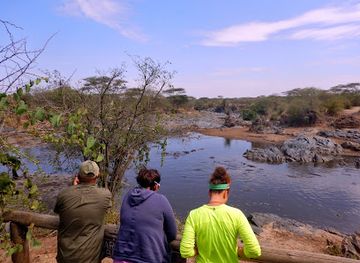
The Southern Zone's attractions are defined by distance and variety rather than by one concentrated sightseeing centre. Wildlife is the major draw: Nyerere National Park offers boat and vehicle-based exploration around the Rufiji system, Ruaha National Park is known for expansive dry-country scenery and large mammal habitats, and Mikumi National Park provides a more accessible safari option along the main southern road. The Udzungwa Mountains bring forest walks, waterfalls and specialist wildlife experiences, while the Uluguru Mountains near Morogoro belong to the wider gateway landscape serving southern itineraries. On the coast, Lindi and Mtwara offer ocean scenery, fishing communities and access to quieter beaches and islands, though services outside town are limited. The southern highlands provide hiking, viewpoints, tea and coffee-growing districts, and cool-weather road journeys around Iringa, Njombe, Mbeya and Songwe. Museums, colonial-era buildings, local markets and cultural sites add context in the towns, while the Makonde woodcarving tradition is particularly associated with the Mtwara area. Because many attractions are far apart, a successful itinerary normally combines one wildlife area with either the coast or the highlands rather than attempting to cover the whole zone quickly.
-
Bridge
Nyerere Bridge
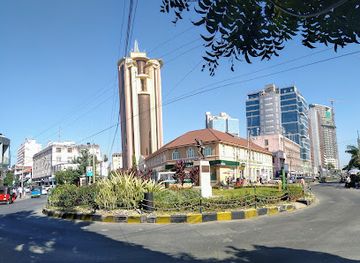
Explore the iconic Nyerere Bridge in Dar es Salaam, a blend of stunning architecture and vibrant local culture, perfect for unforgettable views and experiences.
-
Tourist attraction
Askari Monument
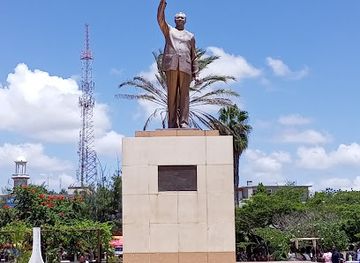
Explore the Askari Monument in Dar es Salaam, a striking tribute to African soldiers with a rich history set in a lush, vibrant landscape.
-
Electronics repair shop
Ubungo plaza
Discover the vibrant energy of Ubungo Plaza in Dodoma – a unique blend of electronics, dining, and local culture.
-
Tourist attraction
Water World
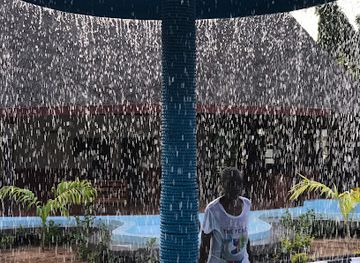
Experience the ultimate aquatic adventure at Water World, Dar es Salaam's premier water park for families and thrill-seekers alike!

Best landmarks in Southern Zone
The Rufiji River system is one of the Southern Zone's defining natural landmarks, forming broad channels, wetlands and wooded banks within and around Nyerere National Park. Ruaha River gives its name to Ruaha National Park and helps shape the dry, baobab-studded scenery for which the park is known. In the highlands, Iringa's position above the Ruaha valley and the surrounding escarpments create a strong geographical identity, while the town's historical associations with the Hehe resistance add cultural significance. The Isimila Stone Age site near Iringa is an important archaeological landmark, known for stone tools and eroded sandstone formations that reveal a very long human presence in the area. The forested Udzungwa Mountains form another major landmark, rising abruptly from surrounding lowlands and protecting habitats found nowhere else. Along the coast, the ports of Lindi and Mtwara preserve the visual character of southern Indian Ocean towns, with palms, boats and low-rise urban districts shaped by Swahili maritime history. The Mbeya area is marked by volcanic and tectonic highland terrain, including the dramatic landscape around the Mbeya Range and nearby crater country. These places are significant for their geology, ecology or history rather than simply as viewpoints.
-
National park
Mikumi National Park
Experience the wild heart of Tanzania at Mikumi National Park, a captivating national park teeming with wildlife, stunning landscapes, and endless adventure.
-
National park
Serengeti National Park
Discover the breathtaking wildlife and stunning landscapes of Serengeti National Park, a premier destination for safari lovers and nature enthusiasts.
-
Nature preserve
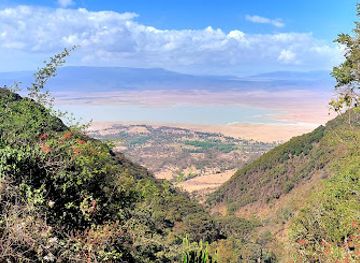
Ngorongoro Conservation Area
Explore the breathtaking Ngorongoro Conservation Area, a UNESCO World Heritage site teeming with wildlife and stunning landscapes in the heart of Tanzania.
-
Fortress
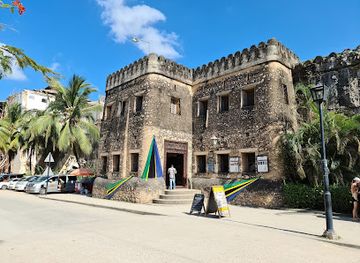
Old Fort
Explore the Old Fort of Zanzibar, a historic fortress blending culture and architecture, set against the stunning backdrop of Stone Town's vibrant atmosphere.

Explore Southern Zone on the map
Plan your trip on one map. See where the top cities, national parks and sights are, and book hotels and experiences in a few clicks.
Best hotels in Southern Zone
Best restaurants in Southern Zone
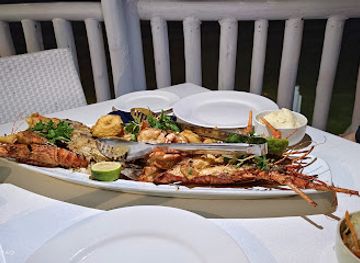
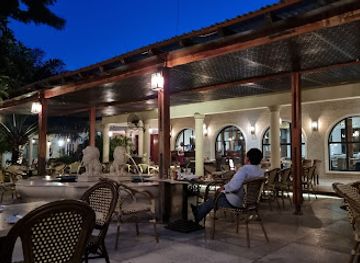
Food across Southern Zone Tanzania changes noticeably between coast, interior and highlands. In Lindi and Mtwara, expect Swahili-influenced cooking based on rice, coconut, cassava, plantain, beans, grilled fish and other seafood, with pilau and spiced sauces appearing alongside everyday dishes. Small restaurants and market stalls in larger towns commonly serve rice with beans, meat or fish, while tea and simple snacks are important during long road journeys. The Southern Highlands have cooler agricultural environments and are associated with maize, potatoes, beans, bananas, leafy vegetables, tea and coffee-producing districts; grilled meat and filling dishes are common in town eateries. Safari lodges generally offer international meals alongside Tanzanian staples, but their menus can be shaped by remote supply chains. Farmers' markets and roadside produce stalls are useful for tasting seasonal fruit, roasted maize and locally grown foods. Alcoholic drinks include Tanzanian beers and locally available spirits, while tea is particularly prominent in the highlands. Food hygiene standards vary, so choose busy establishments, ensure cooked food is served hot and drink treated or sealed water.
-
Restaurant
Samaki Samaki restaurant
Experience the vibrant flavors of Tanzania at Samaki Samaki - where fresh seafood meets lively atmosphere in Dar es Salaam.
-
Restaurant
Karambezi Cafe
Experience stunning ocean views and exquisite cuisine at Karambezi Cafe in Dar es Salaam – where every meal is a celebration of flavor.
-
East African
Chef's pride
Discover the vibrant flavors of East African cuisine at Chef's Pride - your go-to breakfast destination in Dar es Salaam.
-
Restaurant
Levant
Discover Levant in Dar es Salaam: A premier dining destination offering exquisite cuisine and an unforgettable atmosphere.

Best bars in Southern Zone
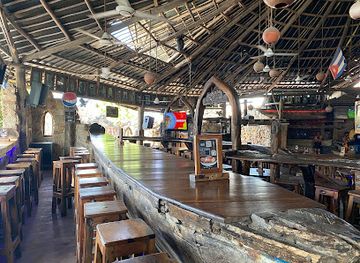
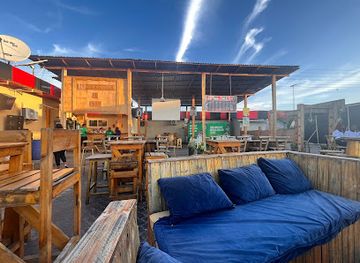
Evening life in the Southern Zone is generally low-key and centred on neighbourhood pubs, hotel bars, restaurants, live sports and occasional music rather than a large club circuit. Iringa, Mbeya, Morogoro, Mtwara and Lindi have the broadest choice of urban venues, with local bars and social spaces serving Tanzanian beer, soft drinks and simple food. In smaller highland towns, evenings may end early, while coastal towns often have relaxed restaurants and bars near the waterfront or central streets rather than a continuous nightlife district. Safari lodges provide atmospheric evening settings, but guests must follow strict safety instructions and should not walk beyond designated areas after dark. Some towns host live music or dancing at particular venues, although programmes and opening arrangements change. Visitors should ask accommodation staff or trusted local contacts for current recommendations, dress respectfully in mixed community settings and avoid assuming that alcohol is central to local hospitality.
-
Grill
Dance Club & Bar
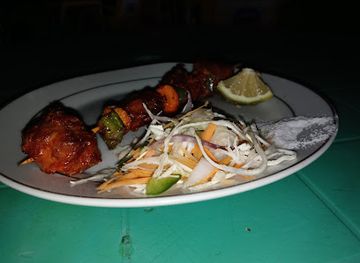
Discover the lively nightlife of Dar es Salaam at Dance Club & Bar, where great food meets an unforgettable party atmosphere.
-
Bar
Bambalaga bar & grill
Experience the vibrant nightlife of Dodoma at Bambalaga Bar & Grill, where delicious food and refreshing drinks await you.
-
 Hostel
The Slow Leopard
Experience the lively atmosphere of The Slow Leopard in Dar es Salaam - a hostel, bar, cafe, and restaurant all in one, offering a taste of local culture.
-
Bar
Ibungu Bar
Experience the vibrant nightlife of Dar es Salaam at Ibungu Bar, a lively spot for drinks, music, and unforgettable memories.

Best nightclubs in Southern Zone
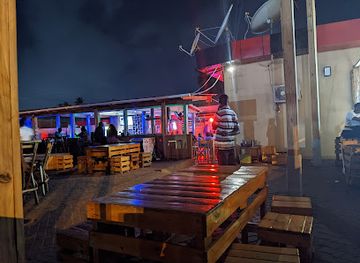
Evening life in the Southern Zone is generally low-key and centred on neighbourhood pubs, hotel bars, restaurants, live sports and occasional music rather than a large club circuit. Iringa, Mbeya, Morogoro, Mtwara and Lindi have the broadest choice of urban venues, with local bars and social spaces serving Tanzanian beer, soft drinks and simple food. In smaller highland towns, evenings may end early, while coastal towns often have relaxed restaurants and bars near the waterfront or central streets rather than a continuous nightlife district. Safari lodges provide atmospheric evening settings, but guests must follow strict safety instructions and should not walk beyond designated areas after dark. Some towns host live music or dancing at particular venues, although programmes and opening arrangements change. Visitors should ask accommodation staff or trusted local contacts for current recommendations, dress respectfully in mixed community settings and avoid assuming that alcohol is central to local hospitality.
-
Grill
Dance Club & Bar
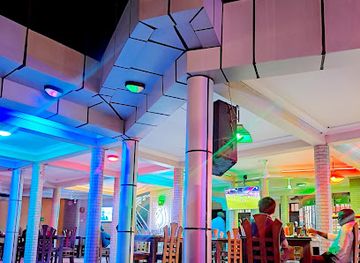
Discover the electrifying atmosphere, delicious grilled cuisine, and vibrant nightlife at Dance Club & Bar in Dar es Salaam.
-
Night club
Havoc Nightspot
Discover the vibrant nightlife of Dar es Salaam at Havoc Nightspot, where exceptional dining, thrilling entertainment, and unforgettable memories await.
-
Bar
Ambiance Bar & Night Club
Discover the pulse of Dar es Salaam's nightlife at Ambiance Bar & Night Club, where music and vibrant atmosphere create unforgettable experiences.
-
Night club
London Lounge Dar Es Salaam
Discover the vibrant nightlife and exquisite cuisine at London Lounge Dar Es Salaam, a top spot for entertainment and dining in Tanzania.

Best shops in Southern Zone
Shopping in the Southern Zone is primarily local and practical, with market towns providing food, textiles, household goods and regional produce rather than extensive luxury retail. Iringa, Mbeya, Morogoro, Mtwara and Lindi have the broadest selection of shops, supermarkets and markets, while smaller towns are better for everyday supplies and seasonal agricultural produce. The Mtwara area is associated with Makonde woodcarving, including carved figures and ornament, but visitors should buy from reputable sellers, ask about provenance and avoid purchasing newly made objects presented misleadingly as antiquities. Across the highlands, coffee, tea, honey, spices and dried foods can make useful regional purchases when properly packaged for travel. Woven goods, fabrics, baskets and simple craftwork appear in markets throughout the south, although quality and pricing vary. Bargaining may be expected in some open markets but not in established shops. Keep receipts where available, check airline and customs rules for wood, plant products and wildlife-related materials, and never buy shells, ivory, animal skins or other protected wildlife products.
-
Shopping mall
Mlimani City Shopping Mall
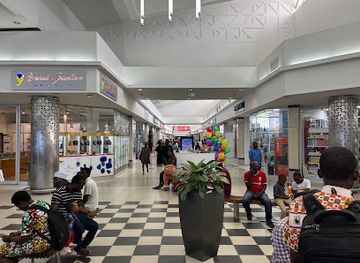
Explore the vibrant Mlimani City Shopping Mall in Dar es Salaam, where shopping, dining, and entertainment come together in a lively atmosphere.
-
Shopping mall
Mkuki House
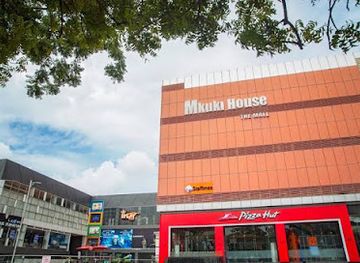
Discover the vibrant shopping and dining scene at Mkuki House, where local culture meets modern amenities in the heart of Dar es Salaam.
-
Shopping mall
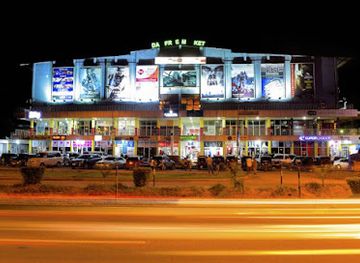
Dar Free Market Mall
Discover the heart of Dar es Salaam at the vibrant Dar Free Market Mall, where shopping, dining, and local culture come together.
-
Shopping mall
The Slipway
Experience shopping, dining, and leisure at The Slipway, Dar es Salaam’s premier shopping destination with stunning coastal views.
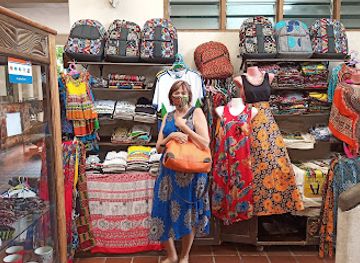
Get your free copy of our complete guide to Southern Zone, delivered straight to you.
Everything on this page, from attractions and restaurants to essentials and local phrases, in one PDF you can read offline, print or share.
Already have an account? Sign in
Your Southern Zone guide is ready.
We'll send it to · Not you? Sign out

Getting your guide ready…
We are putting together a fresh copy of the Southern Zone guide. This can take up to a minute.
This can take a few moments. If your browser asks, choose Allow so the download can start. You'll find the guide in your Downloads folder.
Nothing happened? Download it again
Sorry, the guide is taking longer than usual. Please try again in a minute, or get it by email instead.
Southern Zone essentials
Currency and Payment
Safety
Emergency Situations
Do's and Don'ts
Local Tips
From Eve
Local phrases worth knowing
You don't need to get them perfect. A few words go a long way, and locals appreciate the effort.
Basics
| English | Local | Say it |
|---|---|---|
| Hello | Habari | [ha-ba-ri] |
| Goodbye | Kwaheri | [kwa-he-ri] |
| Yes | Ndio | [n-dee-o] |
| No | Hapana | [ha-pa-na] |
| Please/You’re welcome | Tafadhali | [ta-fa-dha-li] |
| Thank you | Asante | [a-san-te] |
| Excuse me/Sorry | Samahani | [sa-ma-ha-ni] |
| How are you? | Habari gani? | [ha-ba-ri ga-ni] |
| Fine. And you? | Nzuri. Na wewe? | [n-zu-ri na we-we] |
| Do you speak English? | Unazungumza Kiingereza? | [u-na-zun-gum-za ki-in-ge-re-za] |
| I don't understand | Sielewi | [si-e-le-wi] |
Eating & Drinking
| English | Local | Say it |
|---|---|---|
| I’d like to see the menu, please | Ningependa kuona menyu, tafadhali | [nin-ge-pen-da ku-o-na me-nyu ta-fa-dha-li] |
| I don't eat meat | Sikula nyama | [si-ku-la nya-ma] |
| Cheers! | Afya! | [a-fya] |
| I would like to pay, please | Ningependa kulipa, tafadhali | [nin-ge-pen-da ku-li-pa ta-fa-dha-li] |
Emergencies
| English | Local | Say it |
|---|---|---|
| Help! | Msaada! | [m-sa-a-da] |
| Go away! | Ondoka! | [on-do-ka] |
| Call the Police! | Piga simu polisi! | [pi-ga si-mu po-li-si] |
| Call a doctor! | Piga simu daktari! | [pi-ga si-mu dak-ta-ri] |
| I’m lost | Nimepotea | [ni-me-po-te-a] |
| I’m ill | Ninaumwa | [ni-na-um-wa] |
Shopping
| English | Local | Say it |
|---|---|---|
| I’d like to buy... | Ningependa kununua... | [nin-ge-pen-da ku-nu-nu-a] |
| I’m just looking | Natazama tu | [na-ta-za-ma tu] |
| How much is it? | Ni shillingi ngapi? | [ni shi-lin-gi n-ga-pi] |
| That’s too expensive | Hiyo ni ghali sana | [hi-yo ni gha-li sa-na] |
| Can you lower the price? | Unaweza kupunguza bei? | [u-na-we-za ku-pun-gu-za be-i] |
Time & Numbers
| English | Local | Say it |
|---|---|---|
| What time is it? | Ni saa ngapi? | [ni sa-a n-ga-pi] |
| It’s one o'clock | Ni saa moja | [ni sa-a mo-ja] |
| Half past (10) | Nusu ya (10) | [nu-su ya (10)] |
| Morning | Asubuhi | [a-su-bu-hi] |
| Afternoon | Mchana | [m-cha-na] |
| Evening | Jioni | [ji-o-ni] |
| Yesterday | Jana | [ja-na] |
| Today | Leo | [le-o] |
| Tomorrow | Kesho | [ke-sho] |
| 1 | Moja | [mo-ja] |
| 2 | Mbili | [m-bi-li] |
| 3 | Tatu | [ta-tu] |
| 4 | Nne | [n-ne] |
| 5 | Tano | [ta-no] |
| 6 | Sita | [si-ta] |
| 7 | Saba | [sa-ba] |
| 8 | Nane | [na-ne] |
| 9 | Tisa | [ti-sa] |
| 10 | Kumi | [ku-mi] |
Transport & Directions
| English | Local | Say it |
|---|---|---|
| Where's a/the...? | Iko wapi...? | [i-ko wa-pi] |
| What's the address? | Ani anwani? | [a-ni an-wa-ni] |
| Can you show me (on the map)? | Unaweza kunionyesha (katika ramani)? | [u-na-we-za ku-ni-on-ye-sha (ka-ti-ka ra-ma-ni)] |
| When's the next (bus)? | Basi ijayo lini? | [ba-si i-ja-yo li-ni] |
| A ticket (to ....) | Tiketi (ya ....) | [ti-ke-ti (ya)] |
History of Southern Zone
Early Settlement and Indian Ocean Exchange
Southern Tanzania has long been inhabited by farming, fishing and trading communities, with inland routes connecting highland societies to the coast. Along the Indian Ocean, ports and settlements participated in Swahili commerce linking East Africa with Arabia, Persia and the wider Indian Ocean world. Lindi and Mtwara developed within this maritime sphere, where rice, coconuts, fish, cloth and other goods moved through coastal networks. The region's history was never confined to the shoreline: goods, languages and religious influences travelled inland through river valleys and caravan routes, connecting coastal communities with the southern highlands.
Portuguese, Omani and Swahili Coastal Influence
From the late medieval period, Portuguese intervention affected established Swahili trading networks, although Portuguese power on the southern Tanzanian coast was uneven. Omani influence became more important in the nineteenth century as commerce expanded from Zanzibar and coastal ports. The trade in ivory and enslaved people profoundly affected communities and routes across the wider region, bringing wealth to some trading centres while causing violence and displacement elsewhere. Coastal towns such as Kilwa, north of the core southern route, and the ports of Lindi and Mtwara belong to the broader historical world that shaped southern Tanzania's Islamic, linguistic and commercial traditions.
German Colonial Rule and the Maji Maji War
After the establishment of German control over mainland Tanzania, then known as German East Africa, colonial taxation, forced labour and agricultural policies provoked resistance. The Maji Maji War of 1905–07 spread across large parts of southern and south-eastern Tanzania, including areas around Lindi, Mtwara and the southern interior. The uprising united communities that otherwise had distinct political and cultural identities, but it was suppressed with severe loss of life and widespread destruction. The conflict remains central to regional memory and to Tanzania's wider history of resistance to colonial rule.
Hehe Resistance and the Legacy of Mkwawa
In the Iringa highlands, the Hehe leader Mkwawa organised sustained resistance to German expansion during the 1890s. His forces defeated a German column at the Battle of Lugalo in 1891, though German military pressure eventually forced the Hehe into retreat. Mkwawa died in 1898, but his resistance became an important symbol in later Tanzanian national history. Iringa and the surrounding highlands retain monuments and historical associations connected with the Hehe struggle, while the story also illustrates how colonial boundaries and campaigns disrupted established political systems.
Colonial Roads, Railways and Highland Agriculture
Colonial administrations and later governments developed roads, railways and administrative towns to connect the coast with the interior and to support agricultural and commercial production. Iringa, Mbeya and other highland centres grew as transport and administrative junctions, while tea, coffee, tobacco and food crops became important in suitable upland districts. Infrastructure remained uneven, but these routes laid foundations for modern travel across southern Tanzania. The Southern Highlands' cooler climate, fertile volcanic or upland soils and reliable seasonal rainfall helped distinguish their economic history from that of the hotter coastal belt.
Independence, Ujamaa and Modern Conservation
After independence in 1961, Tanzania pursued nation-building policies that included expanded public services and the ujamaa villagisation programme of the 1960s and 1970s. Rural settlement patterns, agricultural production and access to roads were affected in different ways across the southern mainland. At the same time, wildlife conservation expanded through national parks and protected areas, including Ruaha, Mikumi and the Selous ecosystem, now represented principally by Nyerere National Park. Contemporary southern Tanzania therefore reflects several overlapping legacies: pre-colonial societies, colonial infrastructure, post-independence development and the growing importance of conservation tourism.
Southern Zone in Photos
Browse through our photo collection highlighting the charm and character of the destination.
Neighbouring regions of Southern Zone
The closest regions to Southern Zone, if you have time for more than one.
-

-

-

-

-


Swipe for more regions
Explore more
Explore more of Tanzania
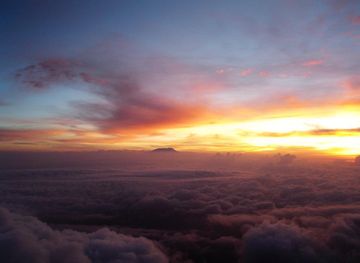
Discover Tanzania: From the majestic Mount Kilimanjaro to the stunning Serengeti and the serene beaches of Zanzibar, experience the best of nature and culture in East Africa.
Explore Tanzania