

Lautem, Timor-Leste Travel Guide
Discover Lautem in Timor-Leste: Pristine beaches, ancient rock art, and vibrant local culture await you in this unspoiled paradise.
Lautem, a district in the eastern part of Timor-Leste, is a paradise waiting to be discovered. Known for its stunning coastline, untouched beaches, and rich cultural heritage, Lautem offers a unique experience for those seeking both adventure and tranquility. The district is home to some of the most pristine coral reefs in the world, making it a haven for snorkeling and diving enthusiasts. Beyond its natural beauty, Lautem is steeped in history. The region is dotted with ancient rock art sites, some dating back thousands of years. These archaeological treasures provide a glimpse into the lives of the island's early inhabitants. Visitors can explore the traditional villages, where locals still practice age-old customs and crafts, offering a rare opportunity to immerse oneself in the local culture. For nature lovers, Lautem's rugged landscapes and lush forests are perfect for hiking and bird watching. The district's diverse ecosystems are home to a variety of flora and fauna, including several endemic species. Whether you're exploring the Nino Konis Santana National Park or relaxing on the secluded beaches of Jaco Island, Lautem promises an unforgettable journey into the heart of Timor-Leste.

Know before you go
Hi, I'm Eve. Here are a few practical things to know before exploring Lautem.
- Bring snorkeling gear to explore Lautem's pristine coral reefs.
- Visit the rock art sites early in the morning to avoid the midday heat.
- Hire a local guide to learn more about the traditional villages and customs.
- Pack insect repellent for hikes in the lush forests.
- Respect local customs and traditions when visiting villages.
Top City Travel Guides in Lautem
The cities of Lautem, and the easiest places to base yourself.

Destinations in Lautem
Resorts, valleys and scenic spots worth a trip of their own.


Explore Lautem: Things to Do, Places to Eat, Hotels & More
Handpicked recommendations for top attractions, local dining, accommodations, and more

Top Attractions & Sightseeing in Lautem
Top-rated picks
Best Attractions

Nino Konis Santana National Park
Discover the breathtaking landscapes and rich biodiversity of Nino Konis Santana National Park, a true gem in Timor Leste's natural heritage.

Ili Kere-Kere
Explore the captivating landscapes and rich biodiversity of Ili Kere-Kere, a hidden gem in Timor-Leste's Tutuala region, perfect for nature lovers and cultural adventurers.

Airleu Beach
Experience the tranquil beauty and local culture at Airleu Beach, a hidden gem in Timor-Leste's stunning coastline.

Uma Lulik
Explore Uma Lulik in Fuiloro, a serene tourist attraction offering stunning landscapes and a glimpse into East Timor's rich cultural heritage.

Best landmarks in Lautem
Top-rated picks
Best Landmarks

Nino Konis Santana National Park
Explore Nino Konis Santana National Park, a stunning natural paradise in Timor-Leste known for its diverse ecosystems, breathtaking landscapes, and rich cultural heritage.

Lene Hara Cave
Discover the breathtaking beauty and rich history of Lene Hara Cave, a hidden gem in Tutuala, perfect for explorers and culture enthusiasts alike.
Ira Lalaro
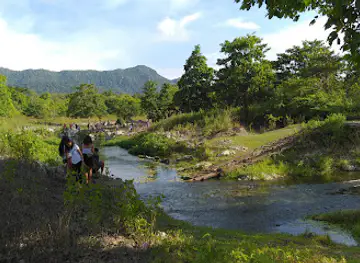
Explore Ira Lalaro, a breathtaking lake in Timor-Leste offering serene landscapes, vibrant ecosystems, and adventure opportunities amidst nature's tranquility.

Hihoru Ili-Pere
Explore Hihoru Ili-Pere in Tutuala, a serene historical landmark that reveals the rich heritage of Timor-Leste amidst breathtaking natural beauty.

Best restaurants in Lautem
Top-rated picks
Best Restaurants

Caz Bar
Discover the vibrant culinary delights at Caz Bar in Dili – where local flavors meet international cuisine in a lively atmosphere.

Castaway Bar and Restaurant
Discover coastal dining at its finest at Castaway Bar and Restaurant in Dili – where local flavors meet breathtaking ocean views.

Pro-Ema Restaurant School
Experience authentic Timorese cuisine at Pro-Ema Restaurant School in Dili—where every meal supports aspiring chefs and local empowerment.

Dilicious Timor
Experience the rich flavors of East Timorese cuisine at Dilicious Timor in Dili - A culinary journey awaits!

Best bars in Lautem
Top-rated picks
Best Bars

Caz Bar
Discover the flavors of Timor-Leste at Caz Bar, a delightful restaurant in Díli offering a mix of local and international cuisine.

Castaway Bar and Restaurant
Discover the vibrant taste of Timor-Leste at Castaway Bar and Restaurant in Dili, where local flavors meet breathtaking ocean views.

Ocean View Restaurant
Discover the exquisite flavors of Timor at Ocean View Restaurant, where breathtaking sea views meet exceptional cuisine for an unforgettable dining experience.

Panorama Restaurant & Sky Bar
Discover exquisite dining with breathtaking views at Panorama Restaurant & Sky Bar in Dili, Timor-Leste, where every meal is a celebration.


Best shops in Lautem
Top-rated picks
Best Shops

Ira-onu mini shop
Discover unique local crafts and delicious snacks at Ira-onu Mini Shop, a charming store in the heart of Timor-Leste, perfect for souvenirs.

Loja Linda
Experience the vibrant flavors and local culture at Loja Linda, Pairara’s premier supermarket offering fresh produce and unique artisanal goods.

LOJA MERSON
Explore Loja Merson, a charming general store in Lacawa, offering local products and a taste of Timor-Leste’s vibrant culture.

Mercado de Terilodae
Discover the vibrant Mercado de Terilodae, a local produce market filled with fresh fruits, vegetables, and a taste of authentic culture.

Explore Lautem on the Map
A handpicked selection of must-see spots in Lautem, mapped for you.
Lautem Essentials
-
Lautem is located in the eastern part of Timor-Leste. The nearest international airport is Presidente Nicolau Lobato International Airport in Dili, approximately 200 kilometers away. From Dili, you can take a bus or hire a private taxi to Lautem. The journey by road typically takes around 6 to 8 hours due to the rugged terrain and road conditions. Alternatively, you can hire a 4x4 vehicle for a more comfortable and flexible travel experience.
-
Once in Lautem, getting around is relatively straightforward but requires some planning. Local minibuses, known as 'microlets,' operate within the town and to nearby villages. Taxis are available but less common, so it is advisable to arrange transportation in advance. Renting a motorbike or bicycle can also be a good option for exploring the area at your own pace. Keep in mind that road conditions can be challenging, so ensure your vehicle is in good condition.
-
The official currency in Timor-Leste is the US Dollar (USD). Credit cards are accepted in some hotels and larger restaurants, but cash is king, especially in smaller establishments and rural areas. ATMs are scarce in Lautem, so it is wise to withdraw sufficient cash in Dili before traveling. Ensure you have small denominations, as change can often be an issue.
-
Lautem is generally safe for tourists, but standard precautions should be taken. Avoid walking alone at night in unfamiliar or poorly lit areas. Petty theft, such as pickpocketing, can occur, so keep an eye on your belongings in crowded places. While there are no specific high-crime areas targeting tourists, it is always best to stay vigilant and aware of your surroundings.
-
In case of emergency, dial 112 for immediate assistance. Lautem has a local police station and basic medical facilities. For serious medical emergencies, you may need to be transported to a hospital in Dili. It is highly recommended to have travel insurance that covers medical emergencies, including evacuation. Pharmacies are limited, so bring essential medications with you.
-
Fashion: Do dress modestly, especially when visiting villages and religious sites. Avoid wearing revealing clothing. Religion: Do respect local customs and traditions. Always remove your shoes when entering homes and places of worship. Public Transport: Do be respectful and give up your seat to elderly passengers. Don’t eat or drink on public transport. Greetings: Do greet people with a handshake and a warm smile. Learning a few basic phrases in Tetum, the local language, can go a long way. Eating & Drinking: Do try local delicacies and accept food offerings graciously. Don’t refuse hospitality, as it is considered impolite.
-
To experience Lautem like a local, visit the weekly markets where you can buy fresh produce and traditional Timorese goods. Engage with locals, as they are often friendly and willing to share stories about the region's history and culture. Don't miss visiting the Lautem Cultural Center for a deeper understanding of local traditions and arts. For a unique experience, explore the ancient rock art sites in Ili Kere Kere and the stunning coastal views from Tutuala Beach.
When is the best time to visit Lautem?
Useful Local Phrases for Lautem
You don't need to speak the language perfectly. Even learning a few simple words can make conversations warmer—and locals usually appreciate the effort.
— Eve

Here are the phrases I use most often in Lautem. Try a few—you'll be surprised how far they go! 😊
❤️
-
- HelloOlá
[oh-lah] - GoodbyeAdeus
[ah-deh-oos] - YesSim
[seem] - NoNão
[n-ow] - Please/You're welcomePor favor
[poor fah-vor] - Thank youObrigado
[oh-bree-gah-doo] - Excuse me/SorryDesculpe
[deh-scool-peh] - How are you?Como você está?
[koh-moh voh-seh eh-stah] - Fine. And you?Bem. E você?
[baym. eh voh-seh] - Do you speak English?Você fala inglês?
[voh-seh fah-lah een-glehz] - I don't understandEu não entendo
[eh-oo n-ow en-ten-doo]
- HelloOlá
-
- I'd like to see the menu, pleaseGostaria de ver o menu, por favor
[goh-stah-ree-ah jeh veh-roh meh-noo, poor fah-vor] - I don't eat meatEu não como carne
[eh-oo n-ow koh-moh car-nee] - Cheers!Saúde!
[sah-oo-deh] - I would like to pay, pleaseGostaria de pagar, por favor
[goh-stah-ree-ah jeh pah-gar, poor fah-vor]
- I'd like to see the menu, pleaseGostaria de ver o menu, por favor
-
- Help!Ajuda!
[ah-zhoo-dah] - Go away!Vai embora!
[vai em-boh-rah] - Call the Police!Chame a polícia!
[sha-meh ah poh-lee-see-ah] - Call a doctor!Chame um médico!
[sha-meh oom meh-dee-koh] - I'm lostEstou perdido
[eh-stoh pair-dee-doo] - I'm illEstou doente
[eh-stoh do-ehn-teh]
- Help!Ajuda!
-
- I'd like to buy...Gostaria de comprar...
[goh-stah-ree-ah jeh kom-prahr] - I'm just lookingEstou apenas a olhar
[eh-stoh ah-peh-nas ah oh-lyar] - How much is it?Quanto custa?
[kwan-toh koos-tah] - That's too expensiveIsso é muito caro
[ee-soh eh mooy-toh kah-roh] - Can you lower the price?Você pode baixar o preço?
[voh-seh poh-jee bye-shar oh preh-soh]
- I'd like to buy...Gostaria de comprar...
-
- What time is it?Que horas são?
[keh oh-ras sah-o] - It's one o'clockÉ uma hora
[eh oo-mah oh-rah] - Half past (10)Dez e meia
[dehz eh may-ah] - MorningManhã
[mahn-yah] - AfternoonTarde
[tar-deh] - EveningNoite
[noy-teh] - YesterdayOntem
[on-tem] - TodayHoje
[oh-zhay] - TomorrowAmanhã
[ah-mahn-yah] - 1Um
[oom] - 2Dois
[doyz] - 3Três
[trehz] - 4Quatro
[kwah-tro] - 5Cinco
[seen-koh] - 6Seis
[says] - 7Sete
[seh-teh] - 8Oito
[oy-toh] - 9Nove
[noh-veh] - 10Dez
[dehz]
- What time is it?Que horas são?
-
- Where's a/the...?Onde está um/a...?
[on-deh eh-stah oom/ah] - What's the address?Qual é o endereço?
[kwahl eh oh in-deh-reh-soo] - Can you show me (on the map)?Você pode me mostrar (no mapa)?
[voh-seh poh-jee meh mohs-trar (noh mah-pah)] - When's the next (bus)?Quando é o próximo (ônibus)?
[kwan-do eh oh proh-see-mo (oh-nee-boos)] - A ticket (to ....)Um bilhete (para ....)
[oom bee-lyeh-teh (pah-rah)]
- Where's a/the...?Onde está um/a...?
History of Lautem
-
Lautem is renowned for its ancient rock art, particularly the sites of Ili Kere Kere and Lene Hara. These prehistoric artworks, dating back thousands of years, provide a glimpse into the lives of Timor-Leste's earliest inhabitants. The intricate carvings and paintings depict scenes of daily life, rituals, and the natural world, showcasing the rich cultural heritage of the region.
-
The Portuguese first arrived in Timor-Leste in the early 16th century, and their influence extended to Lautem. The region became an important outpost for the Portuguese, who established settlements and missions. The colonial period brought changes in social structures, religion, and architecture, with many churches and colonial buildings still standing today as a testament to this era.
-
During World War II, Timor-Leste was invaded by Japanese forces. Lautem, like much of the country, experienced significant turmoil. The Japanese occupation led to widespread suffering and displacement of the local population. However, it also fostered a spirit of resistance, with many Timorese joining the Allied forces in guerrilla warfare against the Japanese occupiers.
-
Following the withdrawal of the Portuguese in 1975, Timor-Leste declared independence, only to be invaded by Indonesia shortly thereafter. Lautem was heavily affected by the subsequent occupation, with the local population enduring significant hardship. The region played a crucial role in the resistance movement, with many Lautem residents actively participating in the struggle for independence.
-
Since gaining independence in 2002, Lautem has experienced a revival of its cultural traditions. Efforts to preserve and promote the unique customs, languages, and practices of the region have been ongoing. Today, Lautem is celebrated for its vibrant cultural festivals, traditional music, dance, and craftwork, which continue to thrive and attract visitors from around the world.
Neighbouring Regions of Lautem
The closest regions to Lautem, if you have time for more than one.




Your all‑in‑one travel companion app
Explore expert travel guides, compare and book tours, experiences, hotels, and more—all from the palm of your hand. Download now for seamless trip planning wherever your wanderlust takes you.


Explore More of Timor-Leste

Looking beyond Lautem? Discover Timor-Leste for broader travel guides, local hot-spots, and regional highlights.
Explore Timor-LesteLautem in Photos
Browse through our photo collection highlighting the charm and character of the destination.


Lautem: The Hidden Gem of Timor-Leste
Lautem, a district in the eastern part of Timor-Leste, is a paradise waiting to be discovered. Known for its stunning coastline, untouched beaches, and rich cultural heritage, Lautem offers a unique experience for those seeking both adventure and tranquility. The district is home to some of the most pristine coral reefs in the world, making it a haven for snorkeling and diving enthusiasts. Beyond its natural beauty, Lautem is steeped in history. The region is dotted with ancient rock art sites, some dating back thousands of years. These archaeological treasures provide a glimpse into the lives of the island's early inhabitants. Visitors can explore the traditional villages, where locals still practice age-old customs and crafts, offering a rare opportunity to immerse oneself in the local culture. For nature lovers, Lautem's rugged landscapes and lush forests are perfect for hiking and bird watching. The district's diverse ecosystems are home to a variety of flora and fauna, including several endemic species. Whether you're exploring the Nino Konis Santana National Park or relaxing on the secluded beaches of Jaco Island, Lautem promises an unforgettable journey into the heart of Timor-Leste.