

Free St. Patrick Travel Guide & Mobile App
Explore St. Patrick with free travel guides. Discover regional history, expert tips, proposed trips, and audio guides on web or mobile app.


Explore St Patrick in south-west Trinidad for the Pitch Lake, oil heritage, coastal villages, religious traditions and rural peninsula landscapes.
Read more about St. Patrick
When is the best time to visit St. Patrick?
Best: January–March · 30–31°C| Month | High (°C) | Rainfall (mm) |
|---|---|---|
| January (best) | 30 | 75 |
| February (best) | 30 | 65 |
| March (best) | 31 | 60 |
| April | 31 | 65 |
| May | 32 | 70 |
| June | 32 | 85 |
| July | 32 | 95 |
| August | 32 | 105 |
| September | 32 | 115 |
| October | 32 | 110 |
| November | 32 | 95 |
| December | 31 | 85 |
Getting to and around St. Patrick
How to get there
Transportation
Destinations in St. Patrick
Resorts, valleys and scenic spots worth a trip of their own.
-

-


Swipe for more destinations
Best attractions in St. Patrick
St Patrick’s attractions are defined by geology, industry, religion and coastal landscapes rather than by a dense concentration of formal museums. The Pitch Lake at La Brea is the principal draw: guided walks explain the bubbling asphalt, extraction history and unusual ecology of the lake while placing it within the history of Trinidad’s road-building and petroleum economy. Siparia offers a cultural dimension through the traditions surrounding La Divina Pastora and the town’s wider religious life. Point Fortin and its neighbouring settlements provide access to beaches, bays and community landscapes, including the coastal areas around Vessigny and Cap-de-Ville. Towards Icacos, the scenery becomes more rural, with wetlands, coconut groves, fishing settlements and views across the Gulf of Paria. Birdwatching, photography, coastal exploration and informal conversations about oil and fishing can be rewarding, although facilities are unevenly distributed. Visitors should distinguish the region’s working coastline from resort-style destinations: some beaches have limited services, and access arrangements can change. The most satisfying itineraries combine one structured visit, such as the Pitch Lake, with slower journeys through villages and countryside.
-
Tourist attraction
Chaguaramas Boardwalk
Explore the scenic beauty and vibrant atmosphere of Chaguaramas Boardwalk, a perfect blend of nature and local culture in Trinidad.
-
Tourist attraction
Tobago Plantations
Experience the lush beauty and recreational activities at Tobago Plantations, your tropical getaway in Lowlands, Trinidad and Tobago.
-
Tourist attraction
La Vega Estate
Experience the serene beauty of La Vega Estate, Trinidad's premier nature preserve, where lush gardens and vibrant flora await your exploration.
-
Nature preserve
Bamboo Cathedral
Explore the enchanting Bamboo Cathedral in Trinidad, a nature preserve offering serene beauty and a unique tropical experience for all visitors.

Best landmarks in St. Patrick
The Pitch Lake at La Brea is St Patrick’s defining natural and industrial landmark. Its dark asphalt surface, pools and shifting formations are the visible result of subterranean petroleum processes, while the surrounding extraction works represent more than a century of commercial activity. In Siparia, the church and devotional setting associated with La Divina Pastora form a landmark of religious and cultural importance, reflecting traditions that cross Catholic and Hindu communities. Point Fortin’s built environment is marked less by a single monumental structure than by the planned streets, civic facilities and industrial legacy of a petroleum town. Along the western peninsula, the coastline itself becomes the dominant landmark: mangrove-edged wetlands, low shores, coconut groves and fishing settlements lead towards Icacos and Trinidad’s south-western extremity. These landscapes are significant because they show the region’s relationship with the Gulf of Paria, agriculture and marine livelihoods. The strongest sense of St Patrick comes from seeing geological, industrial, devotional and coastal landmarks together rather than treating them as isolated sights.
-
Beach
Store Bay Beach
Discover the breathtaking beauty of Store Bay Beach in Tobago, a perfect blend of relaxation and adventure in a tropical paradise.
-
Tour operator
Xanda Tours & Rentals
Discover the best of Tobago with Xanda Tours & Rentals, offering unforgettable boat tours, car rentals, and water sports near Pigeon Point Beach.
-
Park
San Fernando Hill
Discover the breathtaking views and rich history of San Fernando Hill, a serene park perfect for relaxation and family outings in Trinidad.
-
Catholic church
Mount St. Benedict Abbey
Discover tranquility at Mount St. Benedict Abbey, a captivating Catholic church and serene tourist attraction in the lush hills of Trinidad.
Explore St. Patrick on the map
Plan your trip on one map. See where the top cities, national parks and sights are, and book hotels and experiences in a few clicks.
Best hotels in St. Patrick
Best restaurants in St. Patrick
Dining in St Patrick reflects the broad culinary traditions of Trinidad and Tobago, with a particularly strong southern and coastal character. In Siparia, La Brea, Point Fortin and surrounding villages, visitors may find doubles, roti, sada roti, bake, fried fish, pelau, macaroni pie, soups and dishes based on provisions such as cassava, dasheen and sweet potato. Fresh seafood is important in coastal communities, although availability depends on the day’s catch and local supply. Small cafés, roadside stalls, rum shops and family-run eateries often provide the most direct introduction to everyday food, while larger restaurants in the towns offer a wider range of Trinidadian and international dishes. Pepper sauces and seasoned preparations are common, so diners who are sensitive to chilli should ask before ordering. Markets and grocers are useful for buying local fruit, coconut products, snacks and drinks for journeys towards Icacos, where dining options are more limited. The food culture is informal, generous and closely connected to the region’s mixed African, Indo-Trinidadian, European and coastal influences.
-
Restaurant
Town Restaurant & Bar
Discover culinary excellence at Town Restaurant & Bar in Port of Spain – where local flavors meet global cuisine.
-
Restaurant
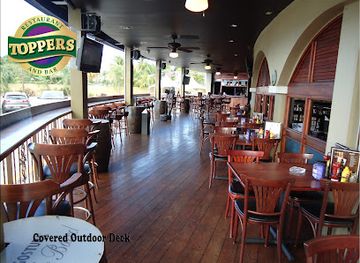
Toppers Restaurant & Bar
Experience Trinidad's culinary delights at Toppers Restaurant & Bar in Valsayn – where flavor meets hospitality.
-
Restaurant
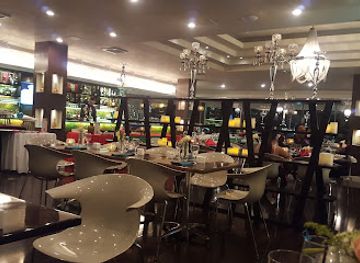
Krave
Experience culinary excellence at Krave in San Fernando - where local flavors meet global cuisine in a sophisticated setting.
-
Seafood
Richard's Bake & Shark
Experience authentic Caribbean flavors at Richard's Bake & Shark in Maracas Bay - famous for its delicious shark sandwiches and stunning seaside views.
Best bars in St. Patrick
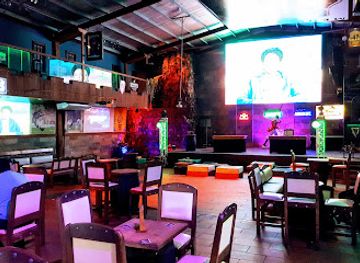
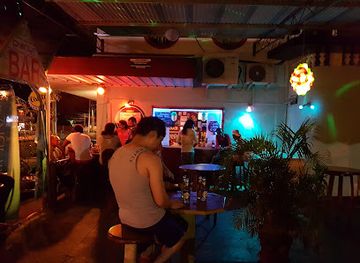
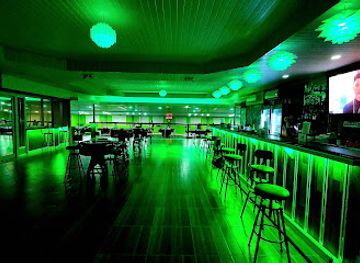
Evening life in St Patrick is generally local and community-centred rather than dominated by large nightclubs. Point Fortin has the broadest choice of bars, casual restaurants and social venues, while La Brea and Siparia are more likely to centre their evenings on rum shops, neighbourhood bars, cafés and family gatherings. Live music, fêtes and seasonal celebrations can bring greater energy at particular times, but events and venues change, so local confirmation is advisable. Traditional rum shops are social spaces where visitors should behave respectfully and avoid assuming that every establishment is designed for tourism. In rural communities and around Icacos, nightlife is limited and often concludes early; visitors should arrange transport before drinking and avoid walking on poorly lit roads. The region’s evening culture is best experienced through food, conversation, music and community events rather than through a conventional club circuit.
-
Sports bar
Hutt Shutts
Experience the thrill of live sports, delicious food, and vibrant atmosphere at Hutt Shutts, Tacarigua's favorite sports bar.
-
Grill
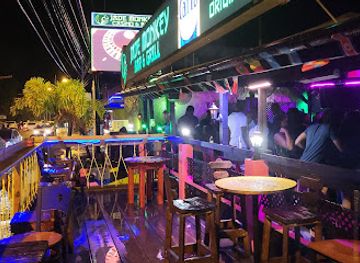
Jade Monkey Casino Bar and Grill
Discover the lively Jade Monkey Casino Bar and Grill, a top spot in Crown Point for delicious grilled dishes and a vibrant nightlife experience.
-
Sports bar
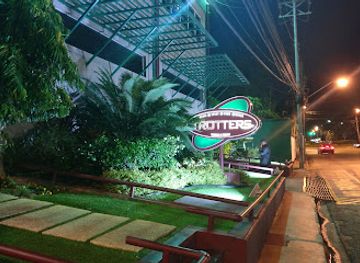
Trotters
Experience the thrill of sports at Trotters, the ultimate sports bar in Port of Spain, where delicious food meets electrifying atmosphere.
-
Bar
Frankie’s Bar
Discover the energetic nightlife and local flavors at Frankie’s Bar in Port of Spain, a perfect blend of relaxation and excitement.
Best nightclubs in St. Patrick
Evening life in St Patrick is generally local and community-centred rather than dominated by large nightclubs. Point Fortin has the broadest choice of bars, casual restaurants and social venues, while La Brea and Siparia are more likely to centre their evenings on rum shops, neighbourhood bars, cafés and family gatherings. Live music, fêtes and seasonal celebrations can bring greater energy at particular times, but events and venues change, so local confirmation is advisable. Traditional rum shops are social spaces where visitors should behave respectfully and avoid assuming that every establishment is designed for tourism. In rural communities and around Icacos, nightlife is limited and often concludes early; visitors should arrange transport before drinking and avoid walking on poorly lit roads. The region’s evening culture is best experienced through food, conversation, music and community events rather than through a conventional club circuit.
-
Grill
Jade Monkey Casino Bar and Grill
Discover the vibrant Jade Monkey Casino Bar and Grill in Crown Point, where great food meets lively entertainment for an unforgettable experience.
-
Night club
VAS Lounge
VAS Lounge in Port of Spain: A vibrant night club experience with electrifying music, delicious drinks, and a lively atmosphere that captures the essence of Trinidad's nightlife.
-
Bar
Chill Out Bar
Experience the vibrant nightlife of Tobago at Chill Out Bar, where great drinks, music, and friendly vibes come together.
-
Bar
Big Dawg Sports Bar & Lounge
Experience the vibrant atmosphere of Big Dawg Sports Bar & Lounge, where delicious food, refreshing drinks, and live sports unite for an unforgettable night.

Best shops in St. Patrick
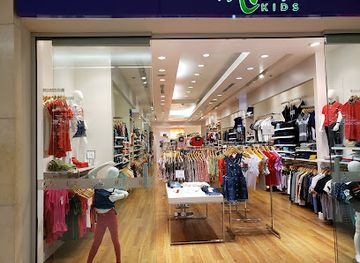
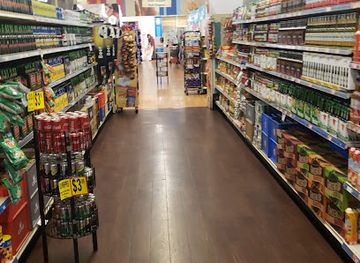
Shopping in St Patrick is practical and locally focused. Point Fortin and Siparia have the region’s more substantial clusters of supermarkets, pharmacies, small retailers and everyday high-street businesses, while La Brea and the villages provide convenience shops and food vendors rather than destination retail. Markets and roadside stalls are useful for seasonal fruit, vegetables, coconut products, baked goods, snacks and prepared food, with the exact selection varying by day and location. Visitors looking for souvenirs should consider packaged Trinidadian seasonings, pepper sauces, cocoa products, local sweets and crafts purchased from established sellers. The Pitch Lake area may offer items connected with the site and asphalt heritage, but visitors should buy only legitimately produced souvenirs and never remove material from the lake. Independent shops and community events may occasionally feature handmade goods, textiles or artwork, though retail provision is modest compared with Port of Spain or larger commercial centres elsewhere in Trinidad. Stock up on essentials before travelling towards Icacos, where shopping opportunities are sparse.
-
Shopping mall
The Falls at Westmall
Explore shopping, dining, and entertainment at The Falls at Westmall, Port of Spain's vibrant shopping destination.
-
Shopping mall
The Shops at Trincity
Explore the ultimate shopping experience at The Shops at Trincity, where local culture meets global brands in a vibrant atmosphere.
-
General store
Phoebe's Variety Store
Explore the vibrant offerings of Phoebe's Variety Store, your go-to destination for unique local products and everyday essentials in Tobago.
-
Gift shop
Trini Necessities Online Gift Shop
Discover the essence of Trinidad at Trini Necessities Online Gift Shop, featuring unique gifts that embody the spirit of the islands.
Get your free copy of our complete guide to St. Patrick, delivered straight to you.
Everything on this page, from attractions and restaurants to essentials and local phrases, in one PDF you can read offline, print or share.
Already have an account? Sign in
Your St. Patrick guide is ready.
We'll send it to · Not you? Sign out

Getting your guide ready…
We are putting together a fresh copy of the St. Patrick guide. This can take up to a minute.
This can take a few moments. If your browser asks, choose Allow so the download can start. You'll find the guide in your Downloads folder.
Nothing happened? Download it again
Sorry, the guide is taking longer than usual. Please try again in a minute, or get it by email instead.
St. Patrick essentials
Currency and Payment
Safety
Emergency Situations
Do's and Don'ts
Local Tips
From Eve
Local phrases worth knowing
You don't need to get them perfect. A few words go a long way, and locals appreciate the effort.
Basics
| English | Local | Say it |
|---|---|---|
| Hello | Hello | [Heh-loh] |
| Goodbye | Goodbye | [Gud-bai] |
| Yes | Yes | [Yes] |
| No | No | [No] |
| Please/You're welcome | Please/You welcome | [Pleez/Yoou wel-kum] |
| Thank you | Thank you | [Tank yuh] |
| Excuse me/Sorry | Excuse me/Sorry | [Eks-cuze meh/Sor-ree] |
| How are you? | How yuh doing? | [How yuh doo-ing?] |
| Fine. And you? | I good. And yuh? | [I gud. And yuh?] |
| Do you speak English? | Yuh does speak English? | [Yuh dez speek Ing-lish?] |
| I don't understand | I eh understand | [I eh un-der-stand] |
Eating & Drinking
| English | Local | Say it |
|---|---|---|
| I'd like to see the menu, please | I want to see the menu, please | [I want to see de men-u, pleez] |
| I don't eat meat | I eh eat meat | [I eh eet meet] |
| Cheers! | Cheers! | [Cheers!] |
| I would like to pay, please | I want to pay, please | [I want to pay, pleez] |
Emergencies
| English | Local | Say it |
|---|---|---|
| Help! | Help! | [Help!] |
| Go away! | Go away! | [Go away!] |
| Call the Police! | Call the Police! | [Call de Po-lice!] |
| Call a doctor! | Call a doctor! | [Call a doc-tor!] |
| I'm lost | I lost | [I lost] |
| I'm ill | I sick | [I sik] |
Shopping
| English | Local | Say it |
|---|---|---|
| I'd like to buy... | I want to buy... | [I want to bai...] |
| I'm just looking | I just looking | [I just looking] |
| How much is it? | How much it cost? | [How much it cost?] |
| That's too expensive | Dat too expensive | [Dat too ex-pen-sive] |
| Can you lower the price? | Yuh could lower the price? | [Yuh could low-er de prais?] |
Time & Numbers
| English | Local | Say it |
|---|---|---|
| What time is it? | Wha time it is? | [Wha time it is?] |
| It's one o'clock | It one o'clock | [It one o'clock] |
| Half past (10) | Half past (10) | [Half past (10)] |
| Morning | Mornin' | [Mornin'] |
| Afternoon | Afternoon | [Af-ter-noon] |
| Evening | Evening | [Eve-ning] |
| Yesterday | Yestahday | [Yes-tah-day] |
| Today | Today | [To-day] |
| Tomorrow | Tomorra | [To-mor-ra] |
| 1 | 1 | [1] |
| 2 | 2 | [2] |
| 3 | 3 | [3] |
| 4 | 4 | [4] |
| 5 | 5 | [5] |
| 6 | 6 | [6] |
| 7 | 7 | [7] |
| 8 | 8 | [8] |
| 9 | 9 | [9] |
| 10 | 10 | [10] |
Transport & Directions
| English | Local | Say it |
|---|---|---|
| Where's a/the...? | Wha de...? | [Wha de...?] |
| What's the address? | Wha de address? | [Wha de ad-dress?] |
| Can you show me (on the map)? | Yuh could show me (on de map)? | [Yuh could show me (on de map)?] |
| When's the next (bus)? | When next (bus)? | [When next (bus)?] |
| A ticket (to ....) | A ticket (to ....) | [A tick-et (to ....)] |
History of St. Patrick
Indigenous Settlement and the South-Western Peninsula
Long before European colonisation, Trinidad was occupied by Indigenous peoples who travelled through its forests, rivers and coastal waters. The south-western peninsula offered access to fishing grounds, wetlands, forest resources and routes towards the Gulf of Paria. Indigenous knowledge also recognised the uses of the natural asphalt at La Brea, which could be applied to waterproofing and the repair of canoes. Much of the early archaeological record has been affected by later settlement and industrial activity, but the region’s geography helps explain why coastal movement and resource use have remained central to its history.
Spanish Trinidad and the Colonial Frontier
Trinidad remained under Spanish rule until 1797, though Spanish settlement was relatively limited compared with later British development. The south-west was distant from the island’s principal centres and was valued for its coastline, forests, agricultural potential and access to the Gulf of Paria. European colonial expansion brought new systems of landholding, forced labour and religious change, while Indigenous communities suffered displacement and demographic loss. Place names, estate patterns and the region’s predominantly coastal orientation retain traces of the island’s colonial geography.
The Pitch Lake and the Asphalt Trade
The Pitch Lake at La Brea became increasingly important during the nineteenth century as engineers and merchants recognised the value of its naturally occurring bitumen. Commercial extraction expanded under British colonial rule, and asphalt from the lake was exported for uses including road construction. The lake’s importance lay not only in its geological rarity but also in the labour, transport and trading networks it generated around La Brea. Its continuing presence links a living natural phenomenon with the industrial history of Trinidad and remains the region’s defining heritage site.
Plantations, Migration and Southern Communities
During the nineteenth century, Trinidad’s agricultural economy depended on estates producing sugar and other crops, supported first by enslaved labour and later by indentured workers, especially from India. After emancipation, new communities and occupational patterns developed across southern Trinidad. Indo-Trinidadian religious customs, foodways and family networks became a major part of the cultural landscape around Siparia and neighbouring districts, alongside African, European, Indigenous and other influences. The region’s festivals, cuisine and religious practices are products of this long process of migration, adaptation and cultural exchange.
Early Petroleum Development
Oil exploration and production transformed south-western Trinidad from the late nineteenth century onwards. Natural seepages had long been known, but commercial drilling, refining and transport created new employment and altered settlements around La Brea, Point Fortin and neighbouring areas. Petroleum required roads, pipelines, storage facilities, ports and a specialised workforce, tying the region to international markets. The industry also introduced a more industrial landscape beside older agricultural and fishing communities. Although oil production has changed over time, its infrastructure and social legacy remain visible across St Patrick.
Point Fortin and the Modern Energy Economy
Point Fortin expanded significantly during the twentieth century as petroleum companies established operations and workers settled in the town and surrounding communities. The energy economy brought improved infrastructure and stronger links with national industry, but also exposed the area to the fluctuations of global oil and gas markets. State involvement in Trinidad and Tobago’s petroleum sector after independence further shaped employment and public investment. Point Fortin’s identity today reflects both its industrial past and its continuing role as a south-western urban centre near beaches, villages and the peninsula’s rural districts.
Religious and Cultural Continuity in Siparia
Siparia became associated with the devotion to La Divina Pastora, a Marian image honoured by Catholic worshippers and also linked in local tradition with Hindu devotion. The annual celebrations demonstrate the layered religious history of Trinidad, where communities have often shared sacred places and adapted traditions across cultural boundaries. The practice should not be reduced to a simple tourist attraction: it remains part of the spiritual and social life of the town. Its continuity offers an important example of the religious pluralism that developed in southern Trinidad.
St. Patrick in Photos
Browse through our photo collection highlighting the charm and character of the destination.
Neighbouring regions of St. Patrick
The closest regions to St. Patrick, if you have time for more than one.
-

-

-

-

-


Swipe for more regions
Explore more
Explore more of Trinidad and Tobago
Discover Trinidad and Tobago: A Caribbean paradise where vibrant culture meets stunning natural beauty, offering unique experiences from lively festivals to serene beaches.
Explore Trinidad and Tobago