

Free Paphlagonia Travel Guide & Mobile App
Explore Paphlagonia with free travel guides. Discover regional history, expert tips, proposed trips, and audio guides on web or mobile app.


Explore Paphlagonia in Türkiye for Black Sea harbours, Ottoman towns, forested mountains, ancient ruins and regional Anatolian food traditions.
Read more about Paphlagonia
When is the best time to visit Paphlagonia?
Best: June–July, September · 23–28°C| Month | High (°C) | Rainfall (mm) |
|---|---|---|
| January | 5 | 60 |
| February | 6 | 50 |
| March | 9 | 40 |
| April | 15 | 30 |
| May | 20 | 20 |
| June (best) | 25 | 10 |
| July (best) | 28 | 10 |
| August | 28 | 10 |
| September (best) | 23 | 20 |
| October | 18 | 30 |
| November | 9 | 40 |
| December | 5 | 50 |
Getting to and around Paphlagonia
How to get there
Transportation
Top city travel guides in Paphlagonia
The cities of Paphlagonia, and the easiest places to base yourself.
-

-


Swipe for more cities
Best attractions in Paphlagonia
Paphlagonia's attractions are distributed across a large and varied landscape. Safranbolu is the region's best-known heritage town, with conserved Ottoman houses, lanes, historic mosques and former commercial buildings that explain how a caravan settlement functioned. Kastamonu offers a more lived-in urban experience, centred on its castle, old quarters, religious architecture and regional museums. Along the coast, Amasra combines harbour scenery with ancient and medieval remains, while Cide and İnebolu provide access to Black Sea landscapes and maritime settlements. The Küre Mountains National Park is the region's principal natural draw, with deep valleys, forest tracks, waterfalls and challenging walking terrain; nearby canyon country around Pınarbaşı includes the striking Valla and Horma valleys. Ilgaz Mountain National Park offers hiking, highland scenery and winter recreation. Archaeological visitors can explore the Roman and late antique remains of Hadrianopolis near Eskipazar, while Çankırı's historic centre and salt-related heritage add an inland dimension. These places are best connected by road, with rural sites often requiring advance planning and flexible expectations about facilities.
-
Historical landmark
Galata Tower
Explore Istanbul's iconic Galata Tower, a historical landmark offering stunning views and a glimpse into the city's rich past.
-
Fortress
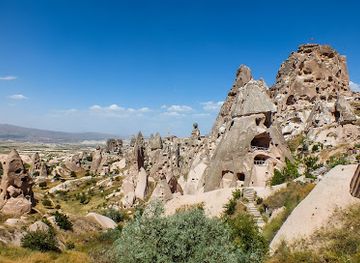
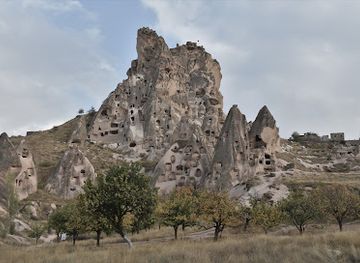
Uchisar Castle
Explore Uchisar Castle, a historical fortress with stunning views, intricate tunnels, and a rich cultural experience in the heart of Cappadocia.
-
Historical landmark
Derinkuyu Underground City
Discover the ancient wonders of Derinkuyu Underground City, a historical marvel that reveals the ingenuity of its creators beneath the stunning landscapes of Cappadocia.
-
Historical landmark
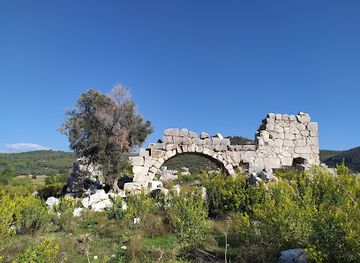
Patara Ancient City
Explore Patara Ancient City, a historical gem in Antalya, Turkey, where ancient ruins meet stunning Mediterranean beaches.

Best landmarks in Paphlagonia
Safranbolu's traditional Ottoman houses are Paphlagonia's most recognisable architectural landmark, distinguished by timber framing, projecting upper storeys and carefully preserved streets shaped by the town's former trading role. Kastamonu Castle occupies a rocky height above the city and provides a visible reminder of the settlement's strategic importance, while the city's historic mosques and tombs reflect the Candaroğlu and Ottoman periods. Amasra's fortified peninsula and harbour are equally emblematic, bringing together Roman, Byzantine and Genoese layers in a compact coastal setting. The stone and timber architecture of İnebolu and other Black Sea towns reflects a different, maritime expression of northern Anatolia. In the natural landscape, the forested gorges of the Küre Mountains and the deep Valla Canyon near Pınarbaşı are defining geographical landmarks rather than ornamental viewpoints. Hadrianopolis near Eskipazar contributes an archaeological landmark of another kind, with late antique churches and mosaics set within the wider countryside. Together these places show why Paphlagonia is best understood through the relationship between mountains, trade routes, fortified towns and the Black Sea.
-
Monument
Anıtkabir
Discover the grandeur of Anıtkabir, the monumental mausoleum of Atatürk, where history and architectural beauty converge in Ankara, Turkey.
-
Mosque
Hagia Sophia Grand Mosque
Explore the Hagia Sophia Grand Mosque, a UNESCO World Heritage Site blending rich history, stunning architecture, and cultural significance in the heart of Istanbul.
-
Museum
Topkapi Palace Museum
Explore the majestic Topkapi Palace Museum in Istanbul, a heritage site that unveils the opulence of the Ottoman Empire through stunning architecture and rich history.
-
Castle
Dolmabahçe Palace
Discover the grandeur of Dolmabahçe Palace, where Ottoman elegance meets European architecture in the heart of Istanbul.


Explore Paphlagonia on the map
Plan your trip on one map. See where the top cities, national parks and sights are, and book hotels and experiences in a few clicks.
Best hotels in Paphlagonia
Best restaurants in Paphlagonia
Dining in Paphlagonia is rooted in home-style northern Anatolian cooking, with differences between the forested interior, Black Sea coast and drier southern districts. Kastamonu is associated with etli ekmek, a long flatbread topped with seasoned meat, as well as hearty soups, meat dishes, noodles, pickles and regional pastries. Safranbolu's food culture includes lokum, saffron-flavoured specialities, walnut-based sweets and dishes prepared in the town's historic domestic style. Around the Black Sea, menus may include seasonal fish, corn, greens, beans and produce shaped by the humid climate, although availability varies by season. Rural restaurants, bakeries and traditional lokantas are often more useful for regional cooking than international-style establishments. Local honey, walnuts, dried fruit, dairy products and handmade pasta make practical food gifts, while markets provide a better sense of regional produce than souvenir shops. Tea is widely served, as elsewhere in Türkiye, and coffee remains part of the country's broader café tradition.
-
Restaurant
Garden 1897 Restaurant
Discover exquisite Turkish cuisine at Garden 1897 Restaurant in Istanbul’s charming Küçük Ayasofya district.
-
Seafood
Fish Home Ahhir Kapi Restaurant
Experience authentic Mediterranean seafood at Fish Home Ahhir Kapi Restaurant in Istanbul's historic Sultan Ahmet district.
-
Turkish
ANTAKYA RESTAURANT
Discover the rich flavors of Turkish cuisine at Antakya Restaurant in Istanbul – a culinary haven for food lovers.
-
Restaurant
Old Ottoman Cafe & Restaurant
Discover the essence of traditional Ottoman cuisine at Old Ottoman Cafe & Restaurant in Istanbul's historic Fatih district.


Best bars in Paphlagonia
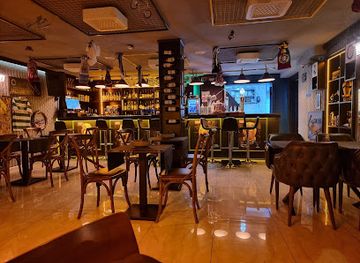
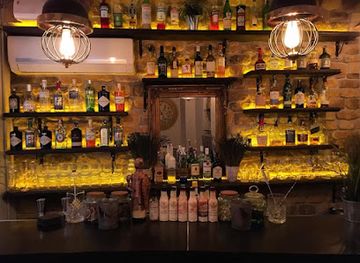
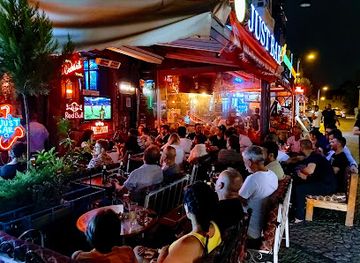
Paphlagonia is not a major clubbing region, and evening life generally centres on tea gardens, cafés, traditional restaurants and neighbourhood establishments rather than large nightclub districts. Kastamonu and Safranbolu have the broadest choice of places to eat and sit out after dark, with some cafés and hotel venues offering contemporary drinks alongside Turkish tea and coffee. Amasra has a more seasonal coastal atmosphere, particularly in warmer months, when restaurants and waterfront venues stay active later. In smaller towns such as Cide, İnebolu and Çankırı, evenings are more likely to involve family restaurants, pastry shops, local cafés or quiet promenades. Visitors should not expect a uniform late-night scene across the mountains, and rural accommodation may have little nightlife nearby. Alcohol is available in licensed venues, but it is not central to the region's social life.
-
Pub
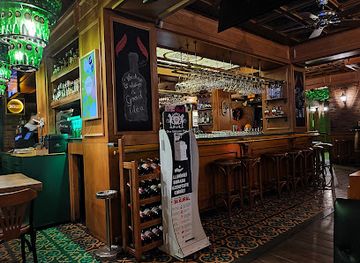
Old English Pub Cafe & Restaurant
Experience the warmth of English hospitality at Old English Pub Cafe & Restaurant in Kadıköy, where delicious food and a vibrant atmosphere await.
-
Pub
Rounders İrish Bar
Discover the lively Rounders İrish Bar in Istanbul, where traditional Irish culture meets vibrant local charm in a cozy atmosphere.
-
Cocktail bar
Flekk
Discover Flekk, a chic cocktail bar in Beyoğlu, Istanbul, where innovative drinks meet a vibrant ambiance for an unforgettable nightlife experience.
-
Bar
Just Bar
Discover Just Bar, a lively hotspot in Istanbul, offering a vibrant atmosphere and a wide selection of beverages for an unforgettable night out.
Best nightclubs in Paphlagonia
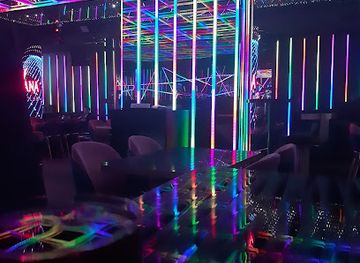
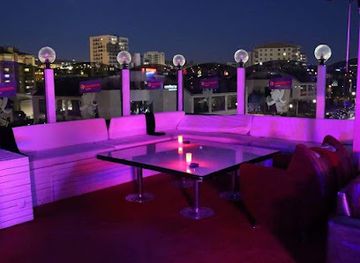
Paphlagonia is not a major clubbing region, and evening life generally centres on tea gardens, cafés, traditional restaurants and neighbourhood establishments rather than large nightclub districts. Kastamonu and Safranbolu have the broadest choice of places to eat and sit out after dark, with some cafés and hotel venues offering contemporary drinks alongside Turkish tea and coffee. Amasra has a more seasonal coastal atmosphere, particularly in warmer months, when restaurants and waterfront venues stay active later. In smaller towns such as Cide, İnebolu and Çankırı, evenings are more likely to involve family restaurants, pastry shops, local cafés or quiet promenades. Visitors should not expect a uniform late-night scene across the mountains, and rural accommodation may have little nightlife nearby. Alcohol is available in licensed venues, but it is not central to the region's social life.
-
Night club
Nirvana Night Club
Discover the heart of Ankara's nightlife at Nirvana Night Club, where unforgettable moments and electrifying music await every night.
-
Night club
Checkpoint Lounge & Terrace
Experience Ankara's nightlife at Checkpoint Lounge & Terrace, a vibrant night club with great music, drinks, and an unforgettable atmosphere.
-
Night club
Night Clup Yalıkent
Dive into the energetic nightlife at Night Club Yalıkent, where music, dance, and unforgettable experiences await in Çankaya, Ankara.
-
Bar
Parizien Night Club
Discover the vibrant nightlife of Istanbul at Parizien Night Club, where music, dance, and unforgettable moments await in a lively bar atmosphere.


Best shops in Paphlagonia
Shopping in Paphlagonia is strongest in historic market towns rather than large retail centres. Safranbolu's restored commercial streets offer lokum, saffron, copperware, textiles, soaps, wooden objects and locally packaged foods, although visitors should distinguish established regional products from generic souvenirs. Kastamonu has a more everyday market culture, with bakeries, food shops, covered-market businesses and outlets selling local honey, walnuts, dried produce and traditional foods. Small coastal towns focus on practical shopping and seasonal fish or agricultural produce, while rural markets are useful for seeing how communities exchange food, household goods and clothing. Handmade items, woven textiles and woodwork can sometimes be found through local craft businesses, but availability varies and quality should be assessed before buying. Antiques and old architectural pieces require particular caution: archaeological material cannot legally be removed from Türkiye, and no artefact should be purchased without clear provenance. Regional food products are generally the most dependable and portable mementoes.
-
Gift shop
Ruby ceramics & gift shop
Explore the vibrant world of Ruby Ceramics & Gift Shop in Sultanahmet, where artistry meets tradition in unique Turkish gifts.
-
Souvenir store
Populus
Discover a vibrant souvenir store in Kayseri, offering unique gifts, anime collectibles, and stylish clothing that celebrate local culture.
-
Gift shop
Tuncer Gift Shop Mosaic Lamps Turkish Lamps
Explore the vibrant artistry of Turkish mosaic lamps at Tuncer Gift Shop in Istanbul, a unique destination for exquisite handcrafted gifts.
-
Shopping mall
Baykuş gift shop
Explore Baykuş Gift Shop in Göreme for authentic Turkish souvenirs and handcrafted treasures that capture the spirit of the region.


Get your free copy of our complete guide to Paphlagonia, delivered straight to you.
Everything on this page, from attractions and restaurants to essentials and local phrases, in one PDF you can read offline, print or share.
Already have an account? Sign in
Your Paphlagonia guide is ready.
We'll send it to · Not you? Sign out

Getting your guide ready…
We are putting together a fresh copy of the Paphlagonia guide. This can take up to a minute.
This can take a few moments. If your browser asks, choose Allow so the download can start. You'll find the guide in your Downloads folder.
Nothing happened? Download it again
Sorry, the guide is taking longer than usual. Please try again in a minute, or get it by email instead.
Paphlagonia essentials
Currency and Payment
Safety
Emergency Situations
Do's and Don'ts
Local Tips
From Eve
Local phrases worth knowing
You don't need to get them perfect. A few words go a long way, and locals appreciate the effort.
Basics
| English | Local | Say it |
|---|---|---|
| Hello | Merhaba | [Mehr-haa-bah] |
| Goodbye | Hoşça kal | [Hosh-chah kal] |
| Yes | Evet | [Eh-vet] |
| No | Hayır | [Hah-yuhr] |
| Please/You're welcome | Lütfen | [Lüt-fen] |
| Thank you | Teşekkür ederim | [Teh-shehk-kür eh-deh-reem] |
| Excuse me/Sorry | Affedersiniz | [Ahf-feh-dehr-see-neez] |
| How are you? | Nasılsınız? | [Nah-suhl-suhn-uhz] |
| Fine. And you? | İyiyim. Siz nasılsınız? | [Ee-yee-yim. Sees nah-suhl-suhn-uhz] |
| Do you speak English? | İngilizce biliyor musunuz? | [Eeng-ee-leez-jeh bee-lee-yor moo-soo-nuz] |
| I don't understand | Anlamıyorum | [Ahn-lah-muh-yor-uhm] |
Eating & Drinking
| English | Local | Say it |
|---|---|---|
| I'd like to see the menu, please | Menüyü görebilir miyim lütfen? | [Meh-nü-yü gö-reh-bee-leer mee-yim lüt-fen] |
| I don't eat meat | Et yemiyorum | [Et yeh-mee-yor-uhm] |
| Cheers! | Şerefe! | [Sheh-reh-feh] |
| I would like to pay, please | Ödemek istiyorum, lütfen | [Ö-deh-mehk ees-tee-yor-um, lüt-fen] |
Emergencies
| English | Local | Say it |
|---|---|---|
| Help! | Yardım edin! | [Yar-duhm eh-deen] |
| Go away! | Git buradan! | [Git boo-rah-dahn] |
| Call the Police! | Polisi ara! | [Poh-lee-see ah-rah] |
| Call a doctor! | Doktor çağır! | [Dok-tor chah-uhr] |
| I'm lost | Kayboldum | [Kai-bold-oom] |
| I'm ill | Hastayım | [Hahs-tah-yim] |
Shopping
| English | Local | Say it |
|---|---|---|
| I'd like to buy... | Satın almak istiyorum... | [Sah-tuhn ahl-mak ees-tee-yor-um] |
| I'm just looking | Sadece bakıyorum | [Sah-deh-jeh bah-kee-yor-um] |
| How much is it? | Bu ne kadar? | [Boo neh kah-dahr] |
| That's too expensive | Bu çok pahalı | [Boo chohk pah-hah-luh] |
| Can you lower the price? | Fiyatı düşürebilir misiniz? | [Fee-yah-tuh dü-shee-reh-bee-leer mee-see-niz] |
Time & Numbers
| English | Local | Say it |
|---|---|---|
| What time is it? | Saat kaç? | [Sah-at kahch] |
| It's one o'clock | Saat bir | [Sah-at beer] |
| Half past (10) | On buçuk | [On boo-chook] |
| Morning | Sabah | [Sah-bah] |
| Afternoon | Öğleden sonra | [Öh-leh-den sohn-rah] |
| Evening | Akşam | [Ahk-shahm] |
| Yesterday | Dün | [Dün] |
| Today | Bugün | [Boo-gün] |
| Tomorrow | Yarın | [Yah-ruhn] |
| 1 | Bir | [Beer] |
| 2 | İki | [Ee-kee] |
| 3 | Üç | [Üch] |
| 4 | Dört | [Dört] |
| 5 | Beş | [Besh] |
| 6 | Altı | [Al-tuh] |
| 7 | Yedi | [Yeh-dee] |
| 8 | Sekiz | [Seh-keez] |
| 9 | Dokuz | [Doh-kooz] |
| 10 | On | [On] |
Transport & Directions
| English | Local | Say it |
|---|---|---|
| Where's a/the...? | Nerede ...? | [Neh-reh-de] |
| What's the address? | Adres nedir? | [Ah-dress neh-deer] |
| Can you show me (on the map)? | Bana (haritada) gösterebilir misiniz? | [Bah-nah (hah-ree-tah-dah) gös-teh-reh-bee-leer mee-see-niz] |
| When's the next (bus)? | Bir sonraki (otobüs) ne zaman? | [Beer sohn-rah-kee (oh-toh-büs) neh zah-mahn] |
| A ticket (to ....) | Bir bilet (....) | [Beer bee-let] |
History of Paphlagonia
The Paphlagonians and Iron Age Anatolia
Paphlagonia first appears in Greek and wider Anatolian historical traditions as a territory occupied by communities known as Paphlagonians. The region's mountains and river valleys encouraged local political identities rather than a single enduring state, while its Black Sea ports connected it with coastal trade. Archaeological evidence from the wider area includes fortified settlements, rock-cut tombs and remains associated with Iron Age kingdoms of northern Anatolia. The name survived because the region remained a recognisable cultural and geographical zone even when its rulers changed.
Persian Rule and the Hellenistic Kingdoms
Following the Achaemenid Persian conquest of Anatolia, Paphlagonia became part of the Persian imperial world, although local dynasties retained varying degrees of authority. Alexander the Great's campaigns then opened the region to Hellenistic political and cultural influences. After his death, Paphlagonia lay between competing powers, including the kingdoms of Pontus and Bithynia. Greek-speaking coastal communities and inland Anatolian settlements developed alongside one another, creating the mixed cultural environment later encountered by Roman historians and travellers.
Roman Paphlagonia and Hadrianopolis
Rome gradually incorporated northern Anatolia during the second and first centuries BC, and Paphlagonia was subsequently administered within changing Roman provincial arrangements. Roads, towns and military organisation connected the Black Sea coast with the interior. Hadrianopolis, near present-day Eskipazar, flourished particularly in the Roman and late antique periods; its excavated mosaics, churches and civic remains show the region's participation in wider imperial culture. Other settlements, including ancient Gangra at modern Çankırı and coastal centres such as Amasra, also gained importance through administration, trade and transport.
Byzantine Fortresses and Christian Landscapes
Under the Eastern Roman, or Byzantine, Empire, Paphlagonia became a frontier and communications region between the Black Sea, central Anatolia and territories contested by rival powers. Fortified hill sites and walled towns reflected the need to protect roads and settlements, while Christianity reshaped the landscape through churches, monasteries and episcopal centres. The region's later medieval archaeology preserves fragments of this period rather than one continuous monumental cityscape. Amasra's fortifications and the remains at Hadrianopolis are among the clearest places to consider the transition from Roman to Byzantine society.
Turkmen Principalities and the Candaroğulları
After the Byzantine balance in Anatolia weakened, Turkic powers expanded into northern Anatolia. Kastamonu and surrounding districts became associated with the Candaroğulları, also called the İsfendiyaroğulları, a principality that ruled much of the central Black Sea hinterland from the fourteenth into the fifteenth century. Their period left mosques, tombs, schools and urban foundations in Kastamonu and nearby towns. The principality also maintained connections with Black Sea trade, making the region a political and commercial meeting point before its absorption into the Ottoman state.
Ottoman Trade, Timber and Urban Culture
Ottoman rule brought Paphlagonia into a long-lasting imperial administrative and commercial framework. Safranbolu prospered as a caravan town on routes linking the Black Sea and interior Anatolia, while Kastamonu became an important provincial centre. Forest products, livestock, grain, craft production and coastal trade supported local economies. The timber-framed houses, mosques, inns and market buildings preserved in Safranbolu and Kastamonu reflect this period of urban development. Black Sea ports also served regional exchange, although difficult roads and rugged terrain kept many communities relatively self-contained.
The Republican Era and Heritage Conservation
The establishment of the Republic of Türkiye brought new roads, administrative structures, schools and patterns of migration to the historic region. Improved connections reduced the isolation of mountain and coastal communities, while economic change shifted many activities away from older caravan routes and small-scale production. From the late twentieth century, conservation projects drew renewed attention to Ottoman urban fabric, traditional houses and archaeological sites. Safranbolu's UNESCO World Heritage listing in 1994 helped establish northern Anatolia's historic towns as an international heritage destination, while protected mountain landscapes broadened the region's appeal beyond architecture.
Paphlagonia in Photos
Browse through our photo collection highlighting the charm and character of the destination.
Neighbouring regions of Paphlagonia
The closest regions to Paphlagonia, if you have time for more than one.
-

-

-

-
-


Swipe for more regions
Explore more
Explore more of Turkiye
Discover Turkiye: Where ancient history, stunning landscapes, and vibrant culture come together to create an unforgettable travel experience.
Explore Turkiye