

Caspian Sea Coastline, Turkmenistan Travel Guide
Discover the untouched beauty and rich cultural heritage of the Caspian Sea Coastline in Turkmenistan – a perfect retreat for peace, adventure, and natural wonders.
The Caspian Sea Coastline in Turkmenistan is a hidden gem waiting to be explored. Stretching along the western edge of the country, this coastline offers pristine beaches, crystal-clear waters, and a tranquil atmosphere that is perfect for travelers seeking a peaceful retreat. The untouched natural beauty of the area is complemented by the rich cultural heritage of Turkmenistan, making it a destination that is both visually stunning and historically fascinating. Visitors can enjoy the warm sands and gentle waves of the Caspian Sea, with plenty of opportunities for swimming, sunbathing, and water sports. The coastal towns, such as Türkmenbaşy, offer a glimpse into local life and provide a welcoming base for exploring the surrounding area. The region is also home to a variety of wildlife, making it an ideal spot for nature enthusiasts and birdwatchers. Beyond the beaches, the Caspian Sea Coastline in Turkmenistan is dotted with historical sites and natural wonders. From ancient ruins to picturesque landscapes, there is much to discover and explore. Whether you are looking to relax by the sea or embark on an adventure, this destination promises a unique and memorable experience.

Know before you go
Hi, I'm Eve. Here are a few practical things to know before exploring Caspian Sea Coastline.
- Visit Türkmenbaşy for a blend of local culture and modern amenities.
- Bring sunscreen and plenty of water as the sun can be very strong.
- Explore the ancient ruins and historical sites near the coastline for a deeper understanding of the region's history.
- Check local regulations regarding swimming and water sports to ensure safety.
- Take a guided tour to learn more about the unique wildlife and natural features of the area.
Destinations in Caspian Sea Coastline
Resorts, valleys and scenic spots worth a trip of their own.

Explore Caspian Sea Coastline: Things to Do, Places to Eat, Hotels & More
Handpicked recommendations for top attractions, local dining, accommodations, and more

Top Attractions & Sightseeing in Caspian Sea Coastline
Top-rated picks
Best Attractions

Monument "Anchor"
Discover the Monument Anchor in Turkmenbashi, a stunning tribute to maritime heritage and a must-visit attraction for all tourists.

Gates of Central Asia
Experience the breathtaking Gates of Central Asia in Turkmenbashi, where modern architecture meets rich Turkmen culture and stunning coastal views.

Strongest Tides - in Caspian Sea
Explore the powerful Strongest Tides of the Caspian Sea, a breathtaking natural phenomenon that showcases the beauty and force of nature in Turkmenistan.

Best landmarks in Caspian Sea Coastline
Top-rated picks
Best Landmarks

Darvaza Gas Crater - "Door to Hell"
Explore the mystical Darvaza Gas Crater in Turkmenistan, a fiery natural phenomenon that captivates with its otherworldly glow and surreal desert landscape.

Independence Monument
Explore the breathtaking Independence Monument in Ashgabat, a symbol of Turkmenistan's rich history and national pride, surrounded by beautiful gardens.

Old Nisa
Explore Old Nisa, an ancient archaeological treasure in Turkmenistan, revealing the rich history of the Parthian Empire and its cultural heritage.

Erk Kala
Explore the ancient ruins of Erk Kala in Merv, Turkmenistan, where the echoes of the Silk Road come alive amidst stunning archaeological wonders.

Best restaurants in Caspian Sea Coastline
Top-rated picks
Best Restaurants

Oguzkent Hotel
Discover unparalleled luxury at Oguzkent Hotel in Ashgabat - where modern elegance meets traditional hospitality.

AlpEt Steakhouse
Discover the taste of expertly grilled steaks at AlpEt Steakhouse in Ashgabat, where culinary excellence meets inviting ambiance.

Altın Çağ Restoranı
Experience authentic Turkmen cuisine at Altın Çağ Restoranı in Awaza - a culinary delight by the sea.

Üzüm Café
Discover the delightful atmosphere and exquisite flavors at Üzüm Café in Ashgabat - your perfect culinary retreat.

Best bars in Caspian Sea Coastline
Top-rated picks
Best Bars

AlpEt Steakhouse
Discover a steak lover's paradise at AlpEt Steakhouse, where quality meets flavor in the heart of Ashgabat, Turkmenistan.

Altın Çağ Restoranı
Experience the authentic flavors of Turkmen cuisine at Altın Çağ Restoranı, a culinary gem in Awaza with a warm ambiance and exquisite dishes.

Üzüm Café
Discover the vibrant flavors of Turkmenistan at Üzüm Café, a cozy retreat in Ashgabat offering delicious local and international cuisine.

KOPETDAG PROJECT
Experience the taste of Turkmen hospitality at the Kopetdag Project, where exquisite flavors meet stunning views in Ashgabat.

Best nightclubs in Caspian Sea Coastline
Top-rated picks
Best Nightclubs

Sanjar club
Discover the lively nightlife at Sanjar Club, a premier night club in Mary, Turkmenistan, where music and dance come alive in a vibrant atmosphere.

Florida
Discover Florida in Ashgabat: a dining experience blending diverse cuisines with vibrant nightlife for all food lovers.

Best shops in Caspian Sea Coastline
Top-rated picks
Best Shops

Berkarar
Discover the best shopping, dining, and entertainment all under one roof at Berkarar Shopping Mall in Ashgabat, Turkmenistan.

State shopping center Gulistan (Russian bazaar)
Experience the vibrant culture of Ashgabat at the State Shopping Center Gulistan, a bustling market filled with local treasures and flavors.

Teke Bazar
Experience the essence of Turkmenistan at Teke Bazar, a lively market in Ashgabat filled with local crafts, flavors, and culture.

Altyn Asyr Bazar
Explore Altyn Asyr Bazar in Ashgabat: A vibrant marketplace filled with local goods, culture, and culinary delights in the heart of Turkmenistan.

Explore Caspian Sea Coastline on the Map
A handpicked selection of must-see spots in Caspian Sea Coastline, mapped for you.
Caspian Sea Coastline Essentials
-
To reach the Caspian Sea Coastline in Turkmenistan, most travelers fly into Turkmenbashi International Airport, which is the nearest major airport. From there, you can take a taxi or a shuttle bus to various points along the coastline. Alternatively, you can also drive from Ashgabat, the capital city, which is about 600 kilometers away. The drive offers a scenic route through the Karakum Desert and typically takes around 7 to 8 hours.
-
Once you arrive, getting around the Caspian Sea Coastline is quite straightforward. Taxis are readily available and relatively inexpensive. For more flexibility, consider renting a car. Public buses and minibuses (marshrutkas) operate between major towns and villages along the coastline. Additionally, some hotels offer shuttle services to popular tourist spots.
-
The official currency in Turkmenistan is the Turkmenistan Manat (TMT). While credit cards are accepted in some hotels and larger restaurants, it's advisable to carry cash, especially in smaller establishments and rural areas. ATMs are available but can be sparse, so ensure you have enough cash for your needs. Currency exchange services are available at the airport and in major hotels.
-
The Caspian Sea Coastline in Turkmenistan is generally safe for tourists. However, like any travel destination, it is wise to take standard precautions. Avoid walking alone at night in unfamiliar areas and keep an eye on your belongings in crowded places. There are no specific high-crime areas targeting tourists, but it's always best to stay vigilant and aware of your surroundings.
-
In case of an emergency, dial 03 for medical emergencies, 02 for police, and 01 for fire services. It is also highly recommended to have travel insurance that covers medical emergencies. Turkmenbashi has medical facilities and pharmacies where you can purchase over-the-counter medications. For serious health issues, you may need to travel to Ashgabat for advanced medical care.
-
Fashion: Do dress modestly, especially when visiting religious sites or rural areas. Avoid wearing revealing clothing. Religion: Do respect local customs and traditions. Always remove your shoes and cover your head when entering mosques. Public Transport: Do be respectful and give up your seat to elderly passengers. Don't eat or drink on public transport. Greetings: Do greet people with a handshake. A slight bow of the head is also a sign of respect. Eating & Drinking: Do try local delicacies and accept food offerings graciously. Don't refuse hospitality, as it is considered impolite.
-
To experience the Caspian Sea Coastline like a local, visit the local markets where you can buy fresh seafood and traditional Turkmen goods. Engage with locals, as they are often friendly and willing to share stories about their culture and history. Don't miss visiting the Avaza National Tourist Zone, which offers a range of activities from beach resorts to water parks. For a unique experience, take a boat trip on the Caspian Sea to enjoy stunning coastal views.
When is the best time to visit Caspian Sea Coastline?
Useful Local Phrases for Caspian Sea Coastline
You don't need to speak the language perfectly. Even learning a few simple words can make conversations warmer—and locals usually appreciate the effort.
— Eve

Here are the phrases I use most often in Caspian Sea Coastline. Try a few—you'll be surprised how far they go! 😊
❤️
-
- HelloSalam
[sah-lahm] - GoodbyeHoş sag bol
[hosh sahg bol] - YesHawa
[hah-wah] - NoYok
[yohk] - Please/You're welcomeSiziň üçin
[sizin ujeen] - Thank youSiziň üçin sag bol
[sizin ujeen sahg bol] - Excuse me/SorryBagyşlaň
[bah-guhsh-lahng] - How are you?Näme ýagdaýda?
[nah-meh yah-goh-da] - Fine. And you?Gowy. Siz näme?
[goh-wee. siz nah-meh] - Do you speak English?Iňlisçe aýdyp bilýärsiňizmi?
[eeng-lees-cheh ah-y-dihp bee-luh-yair-seen-iz-mi] - I don't understandMen düşünmeýärin
[men doo-shun-meh-yair-in]
- HelloSalam
-
- I'd like to see the menu, pleaseMen menýuny görmäge isleýärin
[men men-yoo-ny goor-mah-ge is-leh-yair-in] - I don't eat meatMen et iýmeýärin
[men et ee-yeh-mah-yair-in] - Cheers!Sagat bol!
[sah-gaht bol] - I would like to pay, pleaseMen töleg etmek isleýärin
[men toh-leh-g et-meh-k is-leh-yair-in]
- I'd like to see the menu, pleaseMen menýuny görmäge isleýärin
-
- Help!Ýardam!
[yahr-dahm] - Go away!Git!
[git] - Call the Police!Polisiýa çagyr!
[po-lee-see-yah chah-gir] - Call a doctor!Hekimi çagyr!
[heh-kee-mee chah-gir] - I'm lostMen ýitirip goýdum
[men yee-teer-ip goy-doom] - I'm illMen keselim
[men keh-seh-lim]
- Help!Ýardam!
-
- I'd like to buy...Men almak isleýärin...
[men al-mahk is-leh-yair-in] - I'm just lookingMen diňe gözleýärin
[men din-geh gohz-leh-yair-in] - How much is it?Bu näçe?
[boo nah-cheh] - That's too expensiveBu gaty gymmat
[boo gah-tee ghee-mat] - Can you lower the price?Bahany peseltip bilersiňizmi?
[bah-hah-nee peh-sel-tip bee-leh-r-seen-iz-mi]
- I'd like to buy...Men almak isleýärin...
-
- What time is it?Bu näme wagty?
[boo nah-meh vahg-tee] - It's one o'clockBu nirede bir wagt
[boo nee-reh-de bir vahgt] - Half past (10)On bir geçdi
[on bir gehch-dee] - MorningErte
[air-teh] - AfternoonGündiz
[gün-diz] - EveningAkyşam
[ah-kee-shahm] - YesterdayDüýe
[dwe-ye] - TodayŞu gün
[shoo gun] - TomorrowErte gün
[air-teh gun] - 1Bir
[bir] - 2Iki
[ee-kee] - 3Üç
[ooch] - 4Dört
[duhrt] - 5Bäş
[behsh] - 6Elli
[el-lee] - 7Ýedi
[yeh-dee] - 8Sekiz
[seh-keez] - 9Dokuz
[do-kuz] - 10On
[on]
- What time is it?Bu näme wagty?
-
- Where's a/the...?Nerede ...?
[neh-reh-deh] - What's the address?Salgy näme?
[sal-ghee nah-meh] - Can you show me (on the map)?Meni görkezip bilersiňizmi?
[meh-nee goor-gej-ihp bee-leh-r-seen-iz-mi] - When's the next (bus)?Indi näme wagt (awtobus)?
[een-dee nah-meh vahgt (aw-toh-boos)?] - A ticket (to ....)Bilet (.... üçin)
[bee-let (.... ujeen)]
- Where's a/the...?Nerede ...?
History of Caspian Sea Coastline
-
The Caspian Sea Coastline in Turkmenistan has been a significant area for ancient settlements and trade routes. The region played a vital role in the Silk Road, serving as a bridge between the East and the West. Archaeological evidence suggests that the coastline was home to several ancient cities and ports that facilitated trade and cultural exchange.
-
Between the 7th and 10th centuries, the Caspian Sea Coastline was influenced by the Khazar Khaganate, a powerful Turkic state. The Khazars were known for their trade networks and military strength. They controlled much of the region, including the Caspian coastline, and established trade links with the Byzantine Empire, the Islamic Caliphate, and other neighboring states.
-
In the 13th century, the Caspian Sea Coastline in Turkmenistan was dramatically affected by the Mongol invasions led by Genghis Khan. The Mongols conquered vast territories, including the Caspian region, leading to significant turmoil and the restructuring of local societies. The invasion also facilitated new trade routes and cultural exchanges.
-
In the late 14th century, the Caspian Sea Coastline came under the influence of the Timurid Empire, founded by the conqueror Timur (Tamerlane). The region was incorporated into Timur's vast empire, which stretched from the Levant to India. This period saw the flourishing of art, architecture, and culture, with significant contributions from the Caspian region.
-
During the 19th century, the Caspian Sea Coastline became a focal point of Russian expansion and the geopolitical struggle known as the Great Game, involving Russia and the British Empire. Russia established control over the region, incorporating it into the Russian Empire. The construction of railways and ports facilitated further economic development and integration into the Russian economy.
-
In the 20th century, the Caspian Sea Coastline was part of the Turkmen Soviet Socialist Republic within the Soviet Union. The region saw significant industrialization and modernization efforts, including the development of oil and gas industries. The Soviet era also brought changes in social structure, education, and culture, leaving a lasting impact on the region.
-
Following the dissolution of the Soviet Union in 1991, Turkmenistan gained independence. The Caspian Sea Coastline has since become a crucial area for the country's economic development, particularly in the oil and gas sectors. The region has also seen efforts to promote tourism, leveraging its rich historical and cultural heritage.
Neighbouring Regions of Caspian Sea Coastline
The closest regions to Caspian Sea Coastline, if you have time for more than one.



Your all‑in‑one travel companion app
Explore expert travel guides, compare and book tours, experiences, hotels, and more—all from the palm of your hand. Download now for seamless trip planning wherever your wanderlust takes you.


Explore More of Turkmenistan
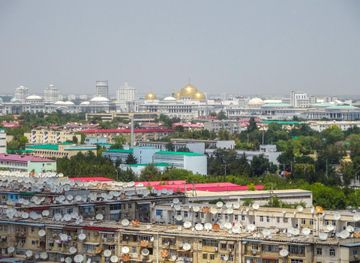
Looking beyond Caspian Sea Coastline? Discover Turkmenistan for broader travel guides, local hot-spots, and regional highlights.
Explore TurkmenistanCaspian Sea Coastline in Photos
Browse through our photo collection highlighting the charm and character of the destination.


The Untouched Beauty of the Caspian Sea Coastline in Turkmenistan
The Caspian Sea Coastline in Turkmenistan is a hidden gem waiting to be explored. Stretching along the western edge of the country, this coastline offers pristine beaches, crystal-clear waters, and a tranquil atmosphere that is perfect for travelers seeking a peaceful retreat. The untouched natural beauty of the area is complemented by the rich cultural heritage of Turkmenistan, making it a destination that is both visually stunning and historically fascinating. Visitors can enjoy the warm sands and gentle waves of the Caspian Sea, with plenty of opportunities for swimming, sunbathing, and water sports. The coastal towns, such as Türkmenbaşy, offer a glimpse into local life and provide a welcoming base for exploring the surrounding area. The region is also home to a variety of wildlife, making it an ideal spot for nature enthusiasts and birdwatchers. Beyond the beaches, the Caspian Sea Coastline in Turkmenistan is dotted with historical sites and natural wonders. From ancient ruins to picturesque landscapes, there is much to discover and explore. Whether you are looking to relax by the sea or embark on an adventure, this destination promises a unique and memorable experience.