

Köpetdag Mountains, Turkmenistan Travel Guide
Discover the untouched beauty and rich heritage of the Köpetdag Mountains in Turkmenistan, a paradise for nature lovers and history enthusiasts alike.
Nestled in the heart of Central Asia, the Köpetdag Mountains form a stunning natural border between Turkmenistan and Iran. These awe-inspiring mountains boast a unique blend of rugged terrain, verdant valleys, and pristine rivers, offering a picturesque setting for nature enthusiasts and adventure seekers alike. The Köpetdag range stretches over 600 kilometers, with its highest peak, Mount Rizeh, reaching an elevation of 2,942 meters. As you explore the Köpetdag Mountains, you'll encounter a rich tapestry of flora and fauna. The mountains are home to a variety of wildlife, including the rare Persian leopard, wild goats, and various bird species. The diverse plant life, ranging from juniper forests to alpine meadows, adds a vibrant touch to the landscape. Hiking trails of varying difficulty levels lead you through these natural wonders, providing breathtaking views at every turn. For history buffs, the Köpetdag Mountains are dotted with ancient ruins and archaeological sites. The Nisa ruins, a UNESCO World Heritage site, reveal the remnants of the Parthian Empire and offer a glimpse into the region's storied past. Traditional Turkmen villages nestled in the valleys provide a cultural experience, where you can witness the local way of life and enjoy warm Turkmen hospitality. Whether you're seeking adventure, serenity, or a cultural journey, the Köpetdag Mountains are a must-visit destination in Turkmenistan.

Know before you go
Hi, I'm Eve. Here are a few practical things to know before exploring Köpetdag Mountains.
- Best time to visit is during spring or autumn when the weather is mild and the landscape is lush.
- Carry plenty of water and snacks as amenities can be sparse in remote areas.
- Hire a local guide to enhance your experience and ensure safe navigation through the mountains.
- Respect local customs and traditions, especially when visiting villages and cultural sites.
- Bring suitable hiking gear and be prepared for sudden weather changes in the mountains.
Top City Travel Guides in Köpetdag Mountains
The cities of Köpetdag Mountains, and the easiest places to base yourself.

Destinations in Köpetdag Mountains
Resorts, valleys and scenic spots worth a trip of their own.

Explore Köpetdag Mountains: Things to Do, Places to Eat, Hotels & More
Handpicked recommendations for top attractions, local dining, accommodations, and more

Top Attractions & Sightseeing in Köpetdag Mountains
Top-rated picks
Best Attractions

Darvaza Gas Crater - "Door to Hell"
Explore the Darvaza Gas Crater, known as the Door to Hell, a mesmerizing natural wonder in Turkmenistan's desert landscape that captivates every visitor.

Independence Monument
Explore the Independence Monument in Ashgabat, a stunning architectural marvel symbolizing Turkmenistan's sovereignty and cultural pride.

Turkmenbashy Ruhy Mosque
Explore the architectural splendor of Turkmenbashy Ruhy Mosque, a serene symbol of Turkmen heritage nestled in the heart of Ashgabat.

Altyn Asyr Bazar
Discover the vibrant Altyn Asyr Bazar in Ashgabat, a bustling market brimming with local crafts, delectable food, and rich cultural experiences.

Best landmarks in Köpetdag Mountains
Top-rated picks
Best Landmarks

Ertugrul Gazi Mosque
Explore the Ertugrul Gazi Mosque in Ashgabat, a stunning blend of cultural heritage and architectural beauty in Turkmenistan.

Independence Monument
Explore the Independence Monument in Ashgabat, a stunning tribute to Turkmenistan's freedom and cultural heritage amidst beautiful gardens.

Turkmenbashy Ruhy Mosque
Discover the Turkmenbashy Ruhy Mosque, a breathtaking architectural masterpiece in Ashgabat showcasing Turkmenistan's rich cultural and spiritual heritage.

Independence Park
Discover the beauty of Independence Park in Ashgabat, an oasis of tranquility featuring monuments, lush landscapes, and rich cultural heritage.

Best restaurants in Köpetdag Mountains


Best bars in Köpetdag Mountains
Top-rated picks
Best Bars

Yyldyz Hotel
Experience unparalleled luxury and comfort at Yyldyz Hotel, the perfect retreat in the heart of Ashgabat, Turkmenistan.
Oguzkent Hotel
Experience unparalleled luxury at Oguzkent Hotel, your premier destination in Ashgabat, Turkmenistan, for relaxation and cultural exploration.
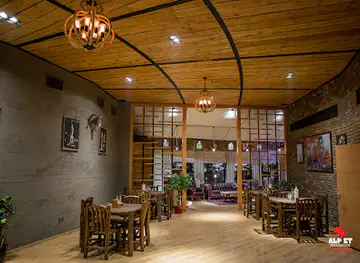
AlpEt Steakhouse
Discover the finest cuts of meat and exceptional dining experience at AlpEt Steakhouse in Ashgabat, Turkmenistan.
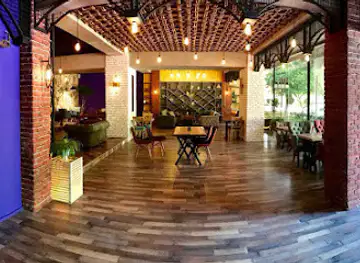
Üzüm Café
Experience the vibrant atmosphere and diverse menu of Üzüm Café, a local gem in the heart of Ashgabat, Turkmenistan.

Best nightclubs in Köpetdag Mountains
Top-rated picks
Best Nightclubs
Grand Turkmen Hotel
Discover the elegance of the Grand Turkmen Hotel in Ashgabat, where luxury meets Turkmen hospitality for an unforgettable stay.

KOPETDAG PROJECT
Experience the finest Turkmen and international cuisine at Kopetdag Project, a culinary gem in Ashgabat, perfect for every palate.

Köpetdag Stadium
Discover the vibrant atmosphere of Köpetdag Stadium, a premier venue for sports and cultural events in Ashgabat, Turkmenistan.

Mukam Club
Discover the lively atmosphere of Mukam Club in Ashgabat, where vibrant nightlife meets delicious cocktails and unforgettable experiences.

Best shops in Köpetdag Mountains
Top-rated picks
Best Shops

Berkarar
Discover Berkarar, Ashgabat's premier shopping mall, blending fashion, dining, and entertainment in a stunning architectural setting.
Grand Turkmen Hotel
Discover the warmth of Turkmen hospitality at the Grand Turkmen Hotel, your luxurious retreat in the heart of Ashgabat.

GN kitap dünýäsi | GN bookstore
Explore a literary paradise at GN Bookstore in Ashgabat, where books come alive and culture thrives.

State shopping center Gulistan (Russian bazaar)
Experience the vibrant Gulistan State Shopping Center in Ashgabat, a cultural treasure trove of local flavors, crafts, and Turkmen hospitality.

Explore Köpetdag Mountains on the Map
A handpicked selection of must-see spots in Köpetdag Mountains, mapped for you.
Köpetdag Mountains Essentials
-
The Köpetdag Mountains are located in southern Turkmenistan, near the border with Iran. The nearest international airport is Ashgabat International Airport in the capital city of Ashgabat, which is approximately 50 kilometers away from the mountains. From Ashgabat, you can hire a taxi or arrange for a private transfer to the Köpetdag Mountains. Public buses and minibuses (marshrutkas) also operate from Ashgabat to nearby towns such as Geok Tepe, from where you can continue your journey to the mountains.
-
Within the Köpetdag Mountains and surrounding areas, transportation options are limited. It is advisable to hire a local guide with a 4x4 vehicle for exploring the mountainous terrain. Local taxis can be found in nearby towns, but they may not always be available for remote areas. Renting a car in Ashgabat is an option, but ensure it is suitable for off-road driving. Public buses and minibuses (marshrutkas) are available for travel between major towns but may not reach remote mountain areas.
-
The official currency in Turkmenistan is the Turkmenistan Manat (TMT). Credit cards are accepted in some hotels and restaurants in Ashgabat, but cash is preferred in rural and remote areas. ATMs are available in Ashgabat, but they can be scarce in smaller towns and nonexistent in the mountains. It is advisable to withdraw sufficient cash in Ashgabat before traveling to the Köpetdag Mountains.
-
Turkmenistan is generally a safe destination for tourists, but it is essential to take standard precautions. Avoid walking alone at night in unfamiliar areas and keep an eye on your belongings in crowded places. The Köpetdag Mountains are remote, so ensure you have a reliable means of communication and inform someone of your travel plans. There are no specific high-crime areas targeting tourists, but always stay vigilant and aware of your surroundings.
-
In case of emergency, dial 03 for medical emergencies and 02 for police assistance. It is recommended to have travel insurance that covers medical emergencies. For minor health issues, carry a basic first aid kit, as medical facilities can be limited in remote areas. The nearest hospitals are in Ashgabat, so it is crucial to have a plan for reaching the city in case of a severe emergency.
-
Fashion: Do dress modestly, especially in rural areas. Avoid wearing revealing clothing. Religion: Do respect local customs and traditions. Remove your shoes when entering mosques and avoid photographing religious ceremonies without permission. Public Transport: Do be respectful and give up your seat to elderly passengers. Don’t eat or drink on public transport. Greetings: Do greet people with a handshake. A slight bow of the head is also a sign of respect. Eating & Drinking: Do try local delicacies and accept food offerings graciously. Don’t refuse hospitality, as it is considered impolite.
-
To experience the Köpetdag Mountains like a local, consider staying in a traditional yurt for an authentic experience. Engage with local shepherds and learn about their way of life. Visit the ancient ruins of Nisa, a UNESCO World Heritage Site, located at the foothills of the mountains. For a unique experience, explore the hidden caves and natural springs that are scattered throughout the mountains. Don't forget to try local dishes such as plov (rice pilaf) and shashlik (grilled meat skewers).
When is the best time to visit Köpetdag Mountains?
Useful Local Phrases for Köpetdag Mountains
You don't need to speak the language perfectly. Even learning a few simple words can make conversations warmer—and locals usually appreciate the effort.
— Eve

Here are the phrases I use most often in Köpetdag Mountains. Try a few—you'll be surprised how far they go! 😊
❤️
-
- HelloSalam
[sah-lahm] - GoodbyeHoşlaşduk
[hosh-lash-dook] - YesHawa
[hah-wah] - NoÝok
[yok] - Please/You're welcomeSöýgiňiz üçin
[soh-ee-geen-iz ee-chen] - Thank youSag boluň
[sahg bo-loon] - Excuse me/SorryBagyşlaň
[bah-gih-lahn] - How are you?Nädip?
[neh-dip] - Fine. And you?Hawa. Siz näme?
[hah-wah. siz nah-meh] - Do you speak English?Iňlisçe gepleýärsiňizmi?
[een-lees-cheh geh-pleh-ree-sin-iz-mee] - I don't understandMen düşündimok
[men doo-shoondim-ok]
- HelloSalam
-
- I'd like to see the menu, pleaseMen menyü görmek isleýärin, haýyş
[men men-yoo gohr-meh-esh ee-leh-yin, hah-wah] - I don't eat meatMen et iýmeýärin
[men et eey-meh-ree-in] - Cheers!Sagat!
[sah-gaht] - I would like to pay, pleaseMen töläýip bilerin, haýyş
[men to-lah-yip bee-leh-rin, hah-wah]
- I'd like to see the menu, pleaseMen menyü görmek isleýärin, haýyş
-
- Help!Yardam!
[yahr-dahm] - Go away!Gaýdyň!
[guy-din] - Call the Police!Polisiýany çaň!
[po-lee-see-yah-nee chahn] - Call a doctor!Doktory çaň!
[dok-toh-ree chahn] - I'm lostMen ýitdim
[men yeet-deem] - I'm illMen näsag
[men nah-sahg]
- Help!Yardam!
-
- I'd like to buy...Men satyn almak isleýärin...
[men sa-tin al-mak ee-leh-yin] - I'm just lookingMen diňe gözleýärin
[men din-geh gohz-leh-yin] - How much is it?Bu näçe?
[boo nah-cheh] - That's too expensiveBu gymmat
[boo ghee-mat] - Can you lower the price?Bahany peseldip bilersiňizmi?
[bah-ah-nee peh-seldip bee-lehr-sin-iz-mee]
- I'd like to buy...Men satyn almak isleýärin...
-
- What time is it?Saýat näme?
[sah-yat nah-meh] - It's one o'clockBu bir sagat
[boo beer sah-gat] - Half past (10)On sanynyň ýarysy
[on sah-neen-yin yah-ree-sih] - MorningErte
[er-teh] - AfternoonIş wagty
[ish vahk-tih] - EveningGije
[gee-jeh] - YesterdayDüýn
[duyn] - TodayBu gün
[boo gyun] - TomorrowErte bilen
[er-teh bee-len] - 11
[bir] - 22
[iki] - 33
[üç] - 44
[dört] - 55
[bäş] - 66
[alty] - 77
[ýedi] - 88
[sekiz] - 99
[dokuz] - 1010
[on]
- What time is it?Saýat näme?
-
- Where's a/the...?Nerede...?
[neh-reh-deh] - What's the address?Salgy näme?
[sal-gee nah-meh] - Can you show me (on the map)?Meni kartoçkada görkezersiňizmi?
[meh-nee kar-tosh-ka-da goh-reh-kersin-iz-mee] - When's the next (bus)?Indi näme wagty (avtobus)?
[in-dee nah-meh vahk-tih (av-toh-boos)] - A ticket (to ....)Bilet (....) üçin
[bee-let (....) ee-chen]
- Where's a/the...?Nerede...?
History of Köpetdag Mountains
-
The Köpetdag Mountains were a significant part of the Parthian Empire, which thrived between 247 BC and 224 AD. The rugged terrain provided a natural defense for the empire and served as a strategic location for overseeing trade routes, especially the Silk Road. The Parthians built fortresses and settlements in these mountains, remnants of which can still be seen today.
-
The Köpetdag Mountains were a critical landmark along the Silk Road, the ancient trade route that connected the East and West. Caravans traversing this route would often stop in the valleys for rest and trade. The mountains provided not only a passage but also resources such as water and shelter. The influence of various cultures can be seen in the artifacts and historical sites scattered throughout the region.
-
During the Sassanian Empire (224–651 AD), the Köpetdag Mountains continued to be an important defensive and strategic location. The Sassanians fortified the region to protect against invasions from Central Asia. Archaeological sites from this period include fortifications, watchtowers, and ancient roadways that showcase the engineering prowess of the time.
-
The Köpetdag Mountains have long been home to various Turkmen tribes. These nomadic groups roamed the mountains, herding livestock and maintaining a lifestyle intricately connected to the natural environment. Their traditions, music, and folklore are deeply rooted in the landscape of the Köpetdag, with many stories and legends passed down through generations.
-
In the late 19th century, the Russian Empire expanded into Turkmenistan, including the Köpetdag region. The mountains saw military campaigns and the establishment of Russian outposts. During the Soviet era, the Köpetdag Mountains became a site for various development projects, including roads and infrastructure, which significantly altered the traditional ways of life for local inhabitants.
-
Following Turkmenistan's independence from the Soviet Union in 1991, the Köpetdag Mountains have become a symbol of national pride and cultural heritage. Efforts have been made to preserve the natural environment and historical sites. The region is now a popular destination for eco-tourism and adventure tourism, attracting visitors from around the world.
Neighbouring Regions of Köpetdag Mountains
The closest regions to Köpetdag Mountains, if you have time for more than one.



Your all‑in‑one travel companion app
Explore expert travel guides, compare and book tours, experiences, hotels, and more—all from the palm of your hand. Download now for seamless trip planning wherever your wanderlust takes you.


Explore More of Turkmenistan
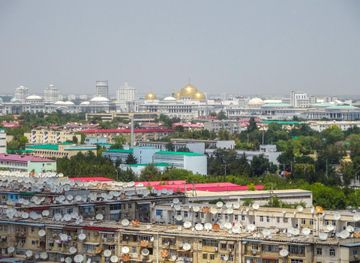
Looking beyond Köpetdag Mountains? Discover Turkmenistan for broader travel guides, local hot-spots, and regional highlights.
Explore TurkmenistanKöpetdag Mountains in Photos
Browse through our photo collection highlighting the charm and character of the destination.


The Majestic Köpetdag Mountains: Turkmenistan's Natural Haven
Nestled in the heart of Central Asia, the Köpetdag Mountains form a stunning natural border between Turkmenistan and Iran. These awe-inspiring mountains boast a unique blend of rugged terrain, verdant valleys, and pristine rivers, offering a picturesque setting for nature enthusiasts and adventure seekers alike. The Köpetdag range stretches over 600 kilometers, with its highest peak, Mount Rizeh, reaching an elevation of 2,942 meters. As you explore the Köpetdag Mountains, you'll encounter a rich tapestry of flora and fauna. The mountains are home to a variety of wildlife, including the rare Persian leopard, wild goats, and various bird species. The diverse plant life, ranging from juniper forests to alpine meadows, adds a vibrant touch to the landscape. Hiking trails of varying difficulty levels lead you through these natural wonders, providing breathtaking views at every turn. For history buffs, the Köpetdag Mountains are dotted with ancient ruins and archaeological sites. The Nisa ruins, a UNESCO World Heritage site, reveal the remnants of the Parthian Empire and offer a glimpse into the region's storied past. Traditional Turkmen villages nestled in the valleys provide a cultural experience, where you can witness the local way of life and enjoy warm Turkmen hospitality. Whether you're seeking adventure, serenity, or a cultural journey, the Köpetdag Mountains are a must-visit destination in Turkmenistan.