

Balkan Region, Turkmenistan Travel Guide
Discover the Balkan Region in Turkmenistan: A blend of stunning landscapes, ancient ruins, and serene Caspian Sea shores.
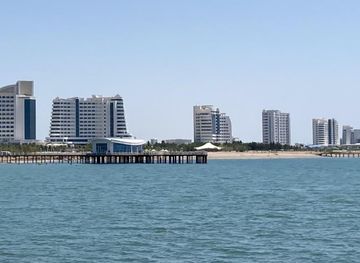
The Balkan Region in Turkmenistan is a land of diverse landscapes and ancient history. Located in the western part of the country, it offers a unique blend of natural beauty and cultural heritage. From the vast desert expanses and mountain ranges to the tranquil shores of the Caspian Sea, every corner of this region is a testament to nature's grandeur and human ingenuity. One of the region's highlights is the Yangykala Canyon, known for its stunning rock formations and vibrant colors. This natural wonder is often compared to the Grand Canyon, offering breathtaking views that are a photographer's dream. The region is also home to the ancient city of Dehistan, which once served as a major Silk Road trading post. Visitors can explore the ruins of mosques, mausoleums, and caravanserais, feeling like they've stepped back in time. The Caspian Sea coastline provides a serene escape with its pristine beaches and clear waters. Here, you can relax, swim, or enjoy a boat ride while taking in the panoramic views. The city of Turkmenbashi, located on the coast, is a hub of modernity with its port, markets, and cultural sites. It's a great place to experience the local lifestyle and cuisine, which is rich in flavors and traditions.

Know before you go
Hi, I'm Eve. Here are a few practical things to know before exploring Balkan Region.
- Visit Yangykala Canyon during sunrise or sunset for the best lighting and most spectacular views.
- Wear sturdy walking shoes when exploring the ancient ruins of Dehistan, as the terrain can be uneven.
- Bring plenty of water and sun protection when traveling through desert areas, as temperatures can be extreme.
- Try local dishes like plov and shashlik in Turkmenbashi to experience authentic Turkmen cuisine.
- Hire a local guide to gain deeper insights into the history and significance of the region's landmarks.
Destinations in Balkan Region
Resorts, valleys and scenic spots worth a trip of their own.

Explore Balkan Region: Things to Do, Places to Eat, Hotels & More
Handpicked recommendations for top attractions, local dining, accommodations, and more

Top Attractions & Sightseeing in Balkan Region
Top-rated picks
Best Attractions

Yangykala Canyon
Explore the stunning Yangykala Canyon in Turkmenistan, where vibrant colors and majestic cliffs create an unforgettable hiking experience.

Caravan Monument
Explore the Caravan Monument in Balkanabat, a stunning tribute to Turkmenistan's Silk Road heritage, and immerse yourself in the rich history of the region.

Centenary monument
Explore the Centenary Monument in Turkmenbashi, a stunning tribute to Turkmen culture and heritage amidst picturesque gardens and modern architecture.

Gözli Ata
Explore Gözli Ata, a captivating historical landmark in Koshoba, Turkmenistan, rich in cultural heritage and stunning architecture.

Best landmarks in Balkan Region
Top-rated picks
Best Landmarks

Caravan Monument
Discover the Caravan Monument in Balkanabat - a stunning tribute to the Silk Road's rich history and cultural significance in Turkmenistan.

Passenger Railway Station Turkmenbashi
Discover the vibrant energy of Turkmenbashi's Passenger Railway Station, a cultural hub connecting travelers to the heart of Turkmenistan.

Freight Railway terminal Turkmenbasi
Explore the Freight Railway Terminal in Turkmenbashi, a fascinating hub of transport and trade, reflecting Turkmenistan's railway heritage.

Dekhistan Ruins
Explore the ancient wonders of Dekhistan Ruins in Turkmenistan, a historical landmark showcasing rich architecture and cultural heritage.

Best restaurants in Balkan Region
Top-rated picks
Best Restaurants

Altın Çağ Restoranı
Discover exquisite dining at Altın Çağ Restoranı in Awaza, where traditional flavors meet modern culinary excellence amidst stunning surroundings.

Zemin Cafe & Restaurant
Discover authentic flavors at Zemin Cafe & Restaurant in Turkmenbashi—where local traditions meet culinary excellence.

Tolkun
Experience authentic Turkmen cuisine at Tolkun in Turkmenbashi - where every dish tells a story.

Кафе "Uly Balkan"
Discover authentic Turkmen cuisine and international flavors at Café Uly Balkan in the heart of Balkanabat.

Best bars in Balkan Region
Top-rated picks
Best Bars

AlpEt Steakhouse
Experience the ultimate steak dining at AlpEt Steakhouse in Ashgabat, where quality meets Turkmen hospitality.

Üzüm Café
Experience the essence of Turkmenistan at Üzüm Café in Ashgabat, where local flavors and a welcoming atmosphere await you.

Kofe 30
Experience the flavors of Turkmenistan at Kofe 30, a cozy café in Ashgabat offering delicious dishes and a welcoming atmosphere.

Gul zaman Restaurant
Discover the flavors of Turkmenistan at Gul Zaman Restaurant, an elegant banquet hall in Ashgabat offering traditional cuisine and a welcoming atmosphere.

Best nightclubs in Balkan Region
Top-rated picks
Best Nightclubs

Yunus Club
Yunus Club: Experience the vibrant nightlife of Ashgabat with electrifying music and unforgettable moments in one of the city's best nightclubs.
Bereket railway station
Experience the architectural charm and cultural significance of Bereket Railway Station, a key transport hub in Turkmenistan's railway network.

Best shops in Balkan Region
Top-rated picks
Best Shops

Berkarar
Discover shopping, dining, and cultural experiences at Berkarar Mall, the ultimate destination in Ashgabat, Turkmenistan.
Grand Turkmen Hotel
Discover the charm of Ashgabat while enjoying unparalleled comfort and luxury at the Grand Turkmen Hotel.

State shopping center Gulistan (Russian bazaar)
Explore the vibrant Gulistan State Shopping Center, a lively market in Ashgabat showcasing local crafts, delicious food, and a rich cultural experience.

Teke Bazar
Explore Teke Bazar: A vibrant market in Ashgabat, where local culture, delicious food, and unique treasures await every visitor.

Explore Balkan Region on the Map
A handpicked selection of must-see spots in Balkan Region, mapped for you.
Balkan Region Essentials
-
The Balkan Region in Turkmenistan can be accessed via Turkmenbashi International Airport, which serves both domestic and international flights. From the airport, you can take a taxi or arrange a shuttle to your accommodation. Alternatively, you can reach the region via train or bus from Ashgabat, the capital city. The train journey offers a scenic view of the Turkmen landscape, but it is slower than traveling by road.
-
Within the Balkan Region, taxis are the most convenient mode of transportation and are relatively affordable. You can also rent a car for more flexibility, but be aware that road conditions can vary. Public buses are available but may not be as reliable or frequent. For shorter distances, walking or biking can be a pleasant way to explore local attractions.
-
The official currency in Turkmenistan is the Turkmenistani Manat (TMT). Credit cards are not widely accepted, so it is advisable to carry cash. ATMs are available in larger towns and cities, but they might not be as common in rural areas. It’s wise to exchange currency at official exchange offices or banks to ensure you get a fair rate.
-
The Balkan Region is generally safe for tourists, but it's always best to take basic precautions. Avoid walking alone at night in unfamiliar areas and keep an eye on your belongings in crowded places. There are no specific high-crime areas targeting tourists, but petty theft can occur, so stay vigilant.
-
In case of emergency, dial 03 for medical assistance and 02 for police. It's highly recommended to have travel insurance that covers medical emergencies. Major towns have hospitals and clinics, but medical facilities may be limited in rural areas. Pharmacies are available for minor health issues, and some staff may speak English.
-
Fashion: Do dress modestly, especially when visiting religious sites. Avoid wearing revealing clothing. Religion: Do respect local customs and traditions. Always cover your head when entering mosques. Public Transport: Do be respectful to other passengers. Don't eat or drink on public transport. Greetings: Do greet people with a handshake. A slight bow of the head is also a sign of respect. Eating & Drinking: Do try local delicacies and accept food offerings graciously. Don't refuse hospitality, as it is considered impolite.
-
To experience the Balkan Region like a local, visit local markets where you can buy fresh produce and traditional Turkmen goods. Engage with locals, as they are often friendly and eager to share stories about the region's history and culture. Don't miss visiting the Yangykala Canyon, known for its stunning landscapes and vibrant colors. For a unique experience, take a boat trip on the Caspian Sea, offering breathtaking views and the chance to see local wildlife.
When is the best time to visit Balkan Region?
Useful Local Phrases for Balkan Region
You don't need to speak the language perfectly. Even learning a few simple words can make conversations warmer—and locals usually appreciate the effort.
— Eve

Here are the phrases I use most often in Balkan Region. Try a few—you'll be surprised how far they go! 😊
❤️
-
- HelloSalam
[sah-lahm] - GoodbyeHoşbye
[hosh-bee] - YesHawa
[ha-wah] - NoÝok
[yok] - Please/You're welcomeSiz haýyş ediň
[siz ha-yish eh-din] - Thank youSag boluň
[sahg bo-loon] - Excuse me/SorryBagyşlaň
[bah-gysh-lahn] - How are you?Näme ýagdaý?
[na-meh yah-gahk] - Fine. And you?Käbir. Siz näme?
[keh-beer. siz na-meh] - Do you speak English?Siz iňlisçe gepleýärsiňizmi?
[siz in-lis-cheh gep-leh-yer-sin-iz-mi] - I don't understandMen düşünmeýärin
[men du-shun-meh-yen]
- HelloSalam
-
- I'd like to see the menu, pleaseMen menýuny görmek isleýärin, haýyş ediň
[men men-yu-nu gor-mehk is-leh-yen, ha-yish eh-din] - I don't eat meatMen et iýmeýärin
[men et ee-meh-yen] - Cheers!Şerefe!
[sheh-reh-feh] - I would like to pay, pleaseMen tölemegi isleýärin, haýyş ediň
[men to-leh-ma-gi is-leh-yen, ha-yish eh-din]
- I'd like to see the menu, pleaseMen menýuny görmek isleýärin, haýyş ediň
-
- Help!Ýardam!
[yar-dahm] - Go away!Düýşüň!
[du-ye-shin] - Call the Police!Polisiýa çagyr!
[po-li-si-ya cha-gir] - Call a doctor!Doktory çagyr!
[dok-tor-y cha-gir] - I'm lostMen ýitdim
[men yit-dim] - I'm illMen kesel
[men keh-sel]
- Help!Ýardam!
-
- I'd like to buy...Men satyn almak isleýärin...
[men sa-tin al-mak is-leh-yen] - I'm just lookingMen diňe gözleýärin
[men din-geh gohz-leh-yen] - How much is it?Bu näçe?
[boo na-cheh] - That's too expensiveBu juda gymmat
[boo joo-dah gym-mat] - Can you lower the price?Bahany peseldip bilersiňizmi?
[ba-ha-ny pe-seldip bi-leh-ri-sin-iz-mi]
- I'd like to buy...Men satyn almak isleýärin...
-
- What time is it?Saating näçedir?
[sah-ting na-che-dir] - It's one o'clockBu bir sagat
[boo beer sah-gat] - Half past (10)On bir geçdi
[on beer geh-dzi] - MorningErte
[er-teh] - AfternoonGündiz
[gun-diz] - EveningAkşam
[ak-sham] - YesterdayDüýşen gün
[du-y-shehn gun] - TodayBugün
[boo-gun] - TomorrowErtir
[er-teer] - 11
[bir] - 22
[iki] - 33
[üç] - 44
[dört] - 55
[bäş] - 66
[alty] - 77
[ýedi] - 88
[sekiz] - 99
[dokuzy] - 1010
[on]
- What time is it?Saating näçedir?
-
- Where's a/the...?Nerede...?
[neh-reh-deh] - What's the address?Adres näme?
[a-dres na-meh] - Can you show me (on the map)?Maňa (karte) görkezip bilersiňizmi?
[ma-ny (kar-te) gör-reh-zip bi-leh-ri-sin-iz-mi] - When's the next (bus)?Indiki (awtobus) haçan?
[in-di-ki (aw-to-bus) ha-chan] - A ticket (to ....)Bir bilet (....)
[beer bi-let (....)]
- Where's a/the...?Nerede...?
History of Balkan Region
-
The Balkan Region of Turkmenistan is home to ancient Merv, one of the oldest and most significant cities of the Silk Road. Founded in the 6th century BCE, Merv was a major center of trade, culture, and learning. The city reached its zenith in the 10th and 11th centuries when it became the largest city in the world. Its strategic location made it a melting pot of cultures, where merchants, scholars, and travelers from different parts of the world converged.
-
Nisa, located in the Balkan Region, was one of the earliest capitals of the Parthian Empire, which ruled much of Iran and the surrounding regions from 247 BCE to 224 CE. The archaeological site of Nisa, a UNESCO World Heritage Site, reveals the grandeur of the Parthian period through its impressive fortresses, ceremonial halls, and richly decorated artifacts. It stands as a testament to the region's historical significance and its role in the cultural and political landscape of ancient Persia.
-
Dehistan, also known as Misrian, was an important city during the Sassanian Empire (224-651 CE). Located near the Caspian Sea in the Balkan Region, Dehistan flourished as a key trading hub. The city’s ruins, including its fortified walls, caravanserais, and distinctive Sassanian architectural elements, highlight the region's historical role as a center of commerce and cultural exchange during the Sassanian period.
-
During the 11th and 12th centuries, the Balkan Region became part of the Khorezmian Empire, a major Islamic state. Under the Khorezmshahs, the region saw significant development in science, literature, and architecture. The remnants of fortresses and palaces from this period illustrate the region's prosperity and its contributions to the Islamic Golden Age. The region's connectivity to the Silk Road facilitated the exchange of ideas and culture between the East and West.
-
In the 13th century, the Balkan Region, like much of Central Asia, experienced the devastating Mongol invasion led by Genghis Khan. The invasion resulted in widespread destruction and a dramatic shift in the region's political landscape. Many of the flourishing cities, including those in the Balkan Region, were sacked, leading to a significant decline in their importance. The Mongol period, however, also marked the beginning of a new era of connectivity and exchange along the Silk Road under the Pax Mongolica.
-
In the 19th century, the Balkan Region came under the control of the Russian Empire, followed by its incorporation into the Soviet Union in the 20th century. This period brought significant changes, including the development of infrastructure, industrialization, and the introduction of Soviet cultural and political systems. The legacy of this era is visible in the region's cities and towns, with Soviet-era architecture and monuments still standing today.
-
Following the dissolution of the Soviet Union in 1991, Turkmenistan, including the Balkan Region, gained independence. The region has since been developing its own identity, balancing the preservation of its rich historical heritage with modernization. Efforts to promote tourism have led to the restoration and conservation of many historical sites, making the Balkan Region an intriguing destination for history enthusiasts and travelers alike.
Neighbouring Regions of Balkan Region
The closest regions to Balkan Region, if you have time for more than one.


Your all‑in‑one travel companion app
Explore expert travel guides, compare and book tours, experiences, hotels, and more—all from the palm of your hand. Download now for seamless trip planning wherever your wanderlust takes you.


Explore More of Turkmenistan
Looking beyond Balkan Region? Discover Turkmenistan for broader travel guides, local hot-spots, and regional highlights.
Explore TurkmenistanBalkan Region in Photos
Browse through our photo collection highlighting the charm and character of the destination.


Balkan Region: The Hidden Gem of Turkmenistan
The Balkan Region in Turkmenistan is a land of diverse landscapes and ancient history. Located in the western part of the country, it offers a unique blend of natural beauty and cultural heritage. From the vast desert expanses and mountain ranges to the tranquil shores of the Caspian Sea, every corner of this region is a testament to nature's grandeur and human ingenuity. One of the region's highlights is the Yangykala Canyon, known for its stunning rock formations and vibrant colors. This natural wonder is often compared to the Grand Canyon, offering breathtaking views that are a photographer's dream. The region is also home to the ancient city of Dehistan, which once served as a major Silk Road trading post. Visitors can explore the ruins of mosques, mausoleums, and caravanserais, feeling like they've stepped back in time. The Caspian Sea coastline provides a serene escape with its pristine beaches and clear waters. Here, you can relax, swim, or enjoy a boat ride while taking in the panoramic views. The city of Turkmenbashi, located on the coast, is a hub of modernity with its port, markets, and cultural sites. It's a great place to experience the local lifestyle and cuisine, which is rich in flavors and traditions.