

Garagum Canal, Turkmenistan Travel Guide
Discover the Garagum Canal: A blend of stunning landscapes and remarkable engineering in Turkmenistan's arid desert.
The Garagum Canal, also known as the Kara Kum Canal, is a marvel of engineering and an essential part of Turkmenistan's history. Spanning over 1,375 kilometers, it is one of the longest irrigation canals in the world. This canal is not just a waterway; it's a lifeline that brings life to the arid desert regions of the country. Constructed during the Soviet era, the canal plays a crucial role in supporting agriculture and providing water to the local population. As you travel along the canal, you will witness a blend of natural beauty and human ingenuity. The lush green fields and the stark desert landscape create a unique and picturesque environment. Tourists visiting the Garagum Canal can explore various points of interest along its length. From the bustling city of Ashgabat to the remote and serene desert areas, there is much to see and experience. The canal also offers opportunities for boat rides and fishing, making it a perfect destination for nature lovers and adventure seekers alike.

Know before you go
Hi, I'm Eve. Here are a few practical things to know before exploring Garagum Canal.
- Best time to visit is during spring or autumn when the weather is milder.
- Carry plenty of water and sun protection as the desert climate can be harsh.
- Hire a local guide to learn about the canal's history and significance.
- Explore nearby attractions such as the capital city, Ashgabat, for a comprehensive travel experience.
- Look out for local wildlife around the canal, including various bird species.
Top City Travel Guides in Garagum Canal
The cities of Garagum Canal, and the easiest places to base yourself.

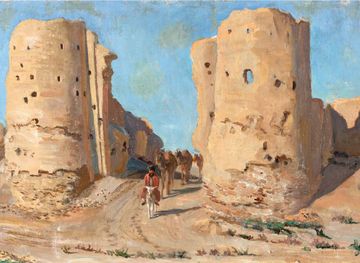

Destinations in Garagum Canal
Resorts, valleys and scenic spots worth a trip of their own.

Explore Garagum Canal: Things to Do, Places to Eat, Hotels & More
Handpicked recommendations for top attractions, local dining, accommodations, and more

Top Attractions & Sightseeing in Garagum Canal
Top-rated picks
Best Attractions

Ertugrul Gazi Mosque
Experience the beauty and tranquility of Ertugrul Gazi Mosque, a stunning architectural gem reflecting Turkmenistan's rich Islamic heritage.

Independence Park
Explore Independence Park in Ashgabat, a beautiful blend of nature, history, and culture in Turkmenistan's capital.

Alem Center
Discover the joy of adventure at Alem Center, Ashgabat's premier amusement hub featuring thrilling rides and family-friendly entertainment.

National Museum of Turkmenistan
Discover the treasures of Turkmenistan at the National Museum, showcasing history, art, and culture through an extensive collection of artifacts.

Best landmarks in Garagum Canal
Top-rated picks
Best Landmarks

Darvaza Gas Crater - "Door to Hell"
Explore the astonishing Darvaza Gas Crater in Turkmenistan, a mesmerizing natural wonder that showcases the earth's fiery beauty in the heart of the Karakum Desert.

Ertugrul Gazi Mosque
Explore the Ertugrul Gazi Mosque in Ashgabat, a stunning example of Islamic architecture and a serene haven of spirituality.

Gujurly Bilim Merkezi
Discover a world of knowledge at Gujurly Bilim Merkezi, Ashgabat's leading educational hub for language and computer training.

State shopping center Gulistan (Russian bazaar)
Explore the State Shopping Center Gulistan, a vibrant Russian bazaar in Ashgabat, where local culture and authentic shopping come alive.

Best restaurants in Garagum Canal
Top-rated picks
Best Restaurants

Hezzet Restaurant
Discover authentic Turkmen flavors at Hezzet Restaurant, where family dining meets rich culinary tradition in Ashgabat.

KOPETDAG PROJECT
Experience the best of Turkmen cuisine at Kopetdag Project in Ashgabat—where tradition meets modern dining.

Dürli Döner
Discover the authentic taste of Turkish döner kebabs at Dürli Döner in Ashgabat - where every bite tells a story!

Chatma Restaurant & Lounge
Discover exquisite dining at Chatma Restaurant & Lounge in Ashgabat – where traditional flavors meet modern elegance.

Best bars in Garagum Canal
Top-rated picks
Best Bars

Berk Garden Pub
Experience the best of local flavors and refreshing brews at Berk Garden Pub in Ashgabat, a must-visit beer garden for every traveler.

Berk brewery and restaurant
Experience the rich flavors of Turkmenistan at Berk Brewery and Restaurant, where locally brewed beers meet traditional cuisine in a charming beer garden setting.

British Pub
Experience the authentic taste of British cuisine and culture at this charming pub in Ashgabat, where good food and great company await.

Saray Pub
Experience the vibrant spirit of Ashgabat at Saray Pub, where local culture meets a lively atmosphere and delicious refreshments.

Best nightclubs in Garagum Canal
Top-rated picks
Best Nightclubs

British Pub
Discover a slice of Britain in Ashgabat at the British Pub, where traditional dishes meet a warm, inviting atmosphere.

CentralPark
Discover CentralPark in Ashgabat, a unique blend of dining and karaoke that promises unforgettable nights filled with joy and laughter.

Yunus Club
Dive into the vibrant nightlife of Ashgabat at Yunus Club, where music, dance, and unforgettable memories await every night.

Mukam Club
Discover the vibrant nightlife of Ashgabat at Mukam Club, where music, drinks, and local culture collide for an unforgettable experience.

Best shops in Garagum Canal
Top-rated picks
Best Shops

Berkarar
Explore Berkarar, Ashgabat's ultimate shopping destination, blending luxury retail, delightful dining, and vibrant entertainment in one stunning location.

State shopping center Gulistan (Russian bazaar)
Explore a vibrant marketplace filled with local crafts, fresh produce, and authentic Turkmen experiences at the State Shopping Center Gulistan.

Teke Bazar
Explore the colorful Teke Bazar in Ashgabat, where local culture, unique crafts, and delicious flavors come together in a vibrant market experience.

Altyn Asyr Bazar
Experience the vibrant culture of Turkmenistan at Altyn Asyr Bazar, a bustling market filled with local crafts, delicious food, and lively interactions.

Explore Garagum Canal on the Map
A handpicked selection of must-see spots in Garagum Canal, mapped for you.
Garagum Canal Essentials
-
The Garagum Canal is located in Turkmenistan, stretching from the Amu Darya River near Atamyrat to the Caspian Sea near Bereket. The nearest international airport is Ashgabat International Airport (ASB), situated in the capital city of Ashgabat. From Ashgabat, you can rent a car, take a bus, or hire a taxi to reach various points along the canal. The journey to the canal will vary depending on your starting point, but generally, it can take anywhere from 2 to 5 hours by road.
-
Transportation options along the Garagum Canal include local taxis, buses, and private car rentals. Taxis are readily available in major cities and towns, and they can be hired for both short and long distances. Buses operate between key cities and towns, offering an affordable means of travel. For those who prefer more flexibility, renting a car is a viable option, allowing you to explore the canal and surrounding areas at your own pace. Be aware that road conditions can vary, so a 4x4 vehicle may be advantageous for certain routes.
-
The official currency in Turkmenistan is the Turkmen manat (TMT). Credit cards are accepted in some hotels, restaurants, and shops in larger cities, but it is advisable to carry cash, especially when traveling to more remote areas along the canal. ATMs are available in major cities, but it is wise to withdraw sufficient cash before venturing out to ensure you have enough funds for your journey.
-
The Garagum Canal region is generally safe for tourists, but it is important to take standard precautions. Avoid walking alone at night in unfamiliar or poorly lit areas. Keep an eye on your belongings in crowded places, and be cautious in less populated areas. While there are no specific high-crime areas targeting tourists, staying vigilant and aware of your surroundings is always recommended. It is also advisable to inform someone of your travel plans and expected return times.
-
In case of an emergency, dial 03 for medical emergencies or 02 for police assistance. Major cities and towns along the canal will have local medical facilities and police stations. It is highly recommended to have travel insurance that covers medical emergencies and evacuation. For minor health issues, pharmacies are available in larger towns, where you can purchase over-the-counter medications.
-
Fashion: Do dress modestly, particularly when visiting rural areas and religious sites. Avoid wearing revealing clothing. Religion: Do respect local customs and traditions. Always remove your shoes when entering a mosque and dress conservatively. Public Transport: Do be respectful and give up your seat to elderly passengers. Don't eat or drink on public transport. Greetings: Do greet people with a handshake or a slight nod. Use your right hand for greetings and exchanges. Eating & Drinking: Do try local dishes and accept food offerings graciously. Don't refuse hospitality, as it is considered impolite.
-
To experience the Garagum Canal like a local, visit the nearby markets where you can purchase fresh produce and traditional Turkmen goods. Engage with locals, as they are often friendly and willing to share stories about the canal's history and their culture. Don't miss the opportunity to see the engineering marvel of the canal and the beautiful landscapes it traverses. For a unique experience, consider taking a boat ride along the canal to fully appreciate its scale and significance.
When is the best time to visit Garagum Canal?
Useful Local Phrases for Garagum Canal
You don't need to speak the language perfectly. Even learning a few simple words can make conversations warmer—and locals usually appreciate the effort.
— Eve

Here are the phrases I use most often in Garagum Canal. Try a few—you'll be surprised how far they go! 😊
❤️
-
- HelloSalam
[sah-lahm] - GoodbyeHoşlaşmak
[hosh-lash-mak] - YesHawa
[ha-wah] - NoÝok
[yok] - Please/You're welcomeSiziň üçin
[si-ziŋ ü-jiŋ] - Thank youSag boluň
[sahg bo-luŋ] - Excuse me/SorryBagyşlaň
[bah-guhsh-lahŋ] - How are you?Näme edýärsiňiz?
[neh-meh edir-si-niz] - Fine. And you?Gowy. Siz hem?
[goh-wee. siz hem] - Do you speak English?İnglisçe aýdyp bilýärsiňizmi?
[in-glis-cheh ayd-yp bil-yer-si-niz-mi] - I don't understandMen düşündimok
[men düshun-di-mok]
- HelloSalam
-
- I'd like to see the menu, pleaseMen menýuny görmek isleýärin, haýyş
[men men-yu-ny gör-mek is-le-ye-rin, ha-wysh] - I don't eat meatMen et iýmeýärin
[men et ee-ye-meyer-in] - Cheers!Şerefe!
[she-re-fe] - I would like to pay, pleaseMen töleg etmek isleýärin, haýyş
[men tö-leg et-mek is-le-ye-rin, ha-wysh]
- I'd like to see the menu, pleaseMen menýuny görmek isleýärin, haýyş
-
- Help!Ýardam!
[yar-dam] - Go away!Gidip git!
[gi-dip git] - Call the Police!Polisiýany çagyr!
[po-li-si-ya-ny cha-gyr] - Call a doctor!Doktory çagyr!
[dok-tor-y cha-gyr] - I'm lostMen ýitdim
[men yi-tdim] - I'm illMen keseldim
[men ke-sel-dim]
- Help!Ýardam!
-
- I'd like to buy...Men ... satyn almak isleýärin
[men ... sat-yn al-mak is-le-ye-rin] - I'm just lookingMen diňe gözleýärin
[men din-geh göz-le-ye-rin] - How much is it?Bu näçe dur?
[bu ne-che dur] - That's too expensiveBu has gymmat
[bu has gym-mat] - Can you lower the price?Bahany peseldip bilersiňizmi?
[ba-ha-ny pe-sel-dip bi-ler-si-niz-mi]
- I'd like to buy...Men ... satyn almak isleýärin
-
- What time is it?Saatingiz näme?
[saa-ting-iz ne-me] - It's one o'clockBu bir sagat
[bu bir sa-gat] - Half past (10)On bir geçdi
[on bir geç-di] - MorningErte
[er-te] - AfternoonGündiz
[gün-diz] - EveningGije
[gi-je] - YesterdayDüýn
[dün] - TodayBugün
[bu-gün] - TomorrowErte
[er-te] - 1Bir
[bir] - 2Iki
[i-ki] - 3Üç
[üch] - 4Dört
[dört] - 5Bäş
[bäsh] - 6Alty
[al-ty] - 7Ýedi
[ye-di] - 8Sekiz
[se-kiz] - 9Dokuz
[do-kuz] - 10On
[on]
- What time is it?Saatingiz näme?
-
- Where's a/the...?Nerede ...?
[ne-re-de] - What's the address?Salgy näme?
[sal-gy ne-me] - Can you show me (on the map)?Meni kartada görkezip bilersiňizmi?
[me-ni kar-ta-da gör-ke-zip bi-ler-si-niz-mi] - When's the next (bus)?Indiki (awtobus) näme wagty?
[in-di-ki aw-to-bus ne-me wa-gh-ty] - A ticket (to ....)Bir bilet (....)
[bir bi-let]
- Where's a/the...?Nerede ...?
History of Garagum Canal
-
The Garagum Canal, also known as the Karakum Canal, is one of the most ambitious engineering projects in Turkmenistan. It stretches over 1,375 kilometers (854 miles) from the Amu Darya River in the east to the Caspian Sea in the west. The canal was constructed to provide irrigation to the arid lands of the Garagum Desert, transforming the region's agricultural landscape.
-
The idea of constructing a canal through the Garagum Desert dates back to the early 20th century. The initial plans were conceived during the Soviet era, with the primary aim of boosting agricultural productivity and supporting the growing population in Turkmenistan. The planning phase involved extensive surveys and feasibility studies to determine the best route and the necessary infrastructure.
-
Construction of the Garagum Canal commenced in 1954 under the leadership of the Soviet Union. The project faced numerous challenges, including harsh desert conditions, logistical difficulties, and the need for advanced engineering solutions. Despite these obstacles, the construction progressed steadily, employing thousands of workers and utilizing heavy machinery.
-
The first phase of the Garagum Canal was completed in 1967, and it was officially inaugurated in a grand ceremony. The canal's completion marked a significant milestone in Turkmenistan's history, as it provided a reliable water source for irrigation, enabling the cultivation of cotton, wheat, and other crops in previously barren lands. The canal also facilitated transportation and improved the livelihoods of many people in the region.
-
The construction and operation of the Garagum Canal have had profound environmental and social impacts. On the one hand, the canal has transformed the desert into fertile farmland, supporting agriculture and boosting the local economy. On the other hand, it has led to significant ecological changes, including alterations in water flow, soil salinization, and impacts on local wildlife. Efforts have been made to address these environmental concerns through sustainable water management practices.
-
Today, the Garagum Canal remains a vital lifeline for Turkmenistan's agriculture and economy. It continues to play a crucial role in providing water for irrigation, supporting food production, and sustaining rural communities. The canal stands as a testament to human ingenuity and determination, showcasing the ability to overcome natural challenges and create opportunities for development.
-
Beyond its practical benefits, the Garagum Canal holds cultural and historical significance for the people of Turkmenistan. It symbolizes national pride and resilience, representing a collective effort to harness nature and improve living conditions. The canal also serves as a reminder of the Soviet era's ambitious infrastructure projects and their lasting impact on the region.
Neighbouring Regions of Garagum Canal
The closest regions to Garagum Canal, if you have time for more than one.
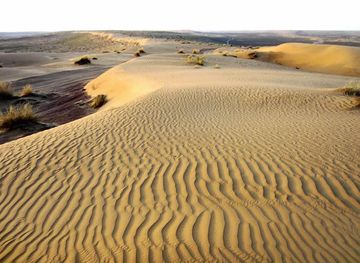


Your all‑in‑one travel companion app
Explore expert travel guides, compare and book tours, experiences, hotels, and more—all from the palm of your hand. Download now for seamless trip planning wherever your wanderlust takes you.


Explore More of Turkmenistan
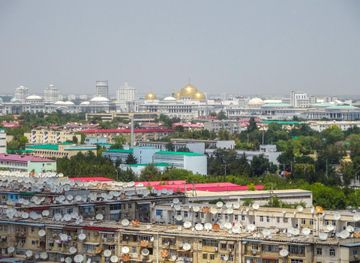
Looking beyond Garagum Canal? Discover Turkmenistan for broader travel guides, local hot-spots, and regional highlights.
Explore TurkmenistanGaragum Canal in Photos
Browse through our photo collection highlighting the charm and character of the destination.


The Majestic Garagum Canal: Turkmenistan's Lifeline
The Garagum Canal, also known as the Kara Kum Canal, is a marvel of engineering and an essential part of Turkmenistan's history. Spanning over 1,375 kilometers, it is one of the longest irrigation canals in the world. This canal is not just a waterway; it's a lifeline that brings life to the arid desert regions of the country. Constructed during the Soviet era, the canal plays a crucial role in supporting agriculture and providing water to the local population. As you travel along the canal, you will witness a blend of natural beauty and human ingenuity. The lush green fields and the stark desert landscape create a unique and picturesque environment. Tourists visiting the Garagum Canal can explore various points of interest along its length. From the bustling city of Ashgabat to the remote and serene desert areas, there is much to see and experience. The canal also offers opportunities for boat rides and fishing, making it a perfect destination for nature lovers and adventure seekers alike.