

Murgab River Basin, Turkmenistan Travel Guide
Discover the tranquil beauty and rich history of the Murgab River Basin in Turkmenistan, a hidden oasis offering lush landscapes, ancient ruins, and traditional hospitality.
The Murgab River Basin in Turkmenistan is a captivating destination off the beaten path, offering a unique blend of natural beauty and cultural heritage. Nestled in the heart of Central Asia, this region is a serene escape surrounded by stunning landscapes and ancient history. Visitors to the Murgab River Basin can explore the lush riverbanks and enjoy the tranquil atmosphere. The area is home to diverse wildlife, making it a paradise for nature enthusiasts and bird watchers. The river itself provides opportunities for fishing and gentle boat rides, allowing tourists to fully immerse themselves in the peaceful surroundings. The region is also steeped in history, with remnants of ancient civilizations dotting the landscape. The ancient city of Merv, a UNESCO World Heritage site, is a must-visit. Once one of the most significant cities on the Silk Road, Merv offers a glimpse into the rich cultural tapestry of the past. Its well-preserved ruins, including mausoleums, fortresses, and mosques, provide a fascinating window into the life of bygone eras. Beyond the natural and historical allure, the Murgab River Basin offers a warm welcome from its local communities. Visitors can experience traditional Turkmen hospitality, sample local cuisine, and even witness traditional artistry and crafts. The blend of nature, history, and culture makes the Murgab River Basin a truly unforgettable destination.

Know before you go
Hi, I'm Eve. Here are a few practical things to know before exploring Murgab River Basin.
- Visit in spring or autumn for the best weather conditions, as summers can be extremely hot.
- Hire a local guide to explore the ancient ruins of Merv for a more in-depth understanding of the history.
- Bring binoculars for bird watching along the riverbanks, as the area is rich in diverse bird species.
- Try local dishes such as plov and kebabs; they offer a delicious taste of Turkmen cuisine.
- Respect local customs and dress modestly, especially when visiting historical or religious sites.
Top City Travel Guides in Murgab River Basin
The cities of Murgab River Basin, and the easiest places to base yourself.
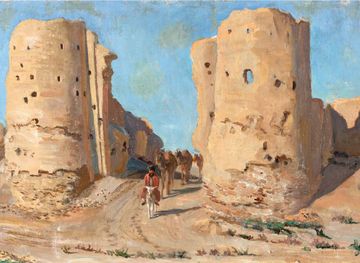

Explore Murgab River Basin: Things to Do, Places to Eat, Hotels & More
Handpicked recommendations for top attractions, local dining, accommodations, and more

Top Attractions & Sightseeing in Murgab River Basin
Top-rated picks
Best Attractions

Darvaza Gas Crater - "Door to Hell"
Explore the extraordinary Darvaza Gas Crater in Turkmenistan, a fiery spectacle that captivates adventurers with its surreal beauty and natural wonder.

Independence Monument
Discover the Independence Monument in Ashgabat, a symbol of Turkmenistan's pride and history surrounded by beautiful gardens.

Turkmenbashy Ruhy Mosque
Explore the Turkmenbashy Ruhy Mosque in Ashgabat - a stunning blend of modern architecture and rich cultural heritage in Central Asia.

Soltan Sanjar Mausoleum
Discover the majestic Soltan Sanjar Mausoleum in Merv, a historical landmark of Turkmenistan showcasing exquisite architecture and rich heritage.

Best landmarks in Murgab River Basin
Top-rated picks
Best Landmarks

Independence Monument
Discover the Independence Monument in Ashgabat, a breathtaking symbol of Turkmenistan's sovereignty and rich cultural heritage.

Soltan Sanjar Mausoleum
Explore the Soltan Sanjar Mausoleum, an architectural marvel of the Seljuk Empire in Merv, Turkmenistan, rich in history and cultural significance.

Mary chief mosque
Discover the beauty and spirituality of the Mary Chief Mosque, a stunning architectural landmark in Turkmenistan that captivates visitors with its serene ambiance.

Old Nisa
Explore Old Nisa, a UNESCO World Heritage site, and delve into the remnants of the ancient Parthian Empire in Turkmenistan's captivating landscape.

Best restaurants in Murgab River Basin
Top-rated picks
Best Restaurants

Hezzet Restaurant
Experience authentic Turkmen cuisine at Hezzet Restaurant in Ashgabat—where family-friendly dining meets cultural richness.

AlpEt Steakhouse
Experience culinary excellence at AlpEt Steakhouse in Ashgabat, where every steak is a celebration of flavor and quality.

Zemin Cafe & Restaurant
Discover the authentic tastes of Turkmenistan at Zemin Cafe & Restaurant in Turkmenbashi – a perfect blend of tradition and modernity.

KOPETDAG PROJECT
Experience exquisite dining at Kopetdag Project in Ashgabat – where local flavors meet international cuisine in an inviting atmosphere.

Best bars in Murgab River Basin
Top-rated picks
Best Bars
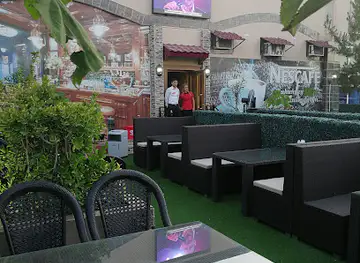
Nescafe Karaoke-Bar
Experience the vibrant fusion of coffee culture and karaoke at Nescafe Karaoke-Bar in Mary, Turkmenistan. A must-visit for an unforgettable evening.

KOPETDAG PROJECT
Experience the authentic taste of Turkmenistan at the Kopetdag Project in Ashgabat—a culinary journey filled with local flavors and warm hospitality.

Cafe & Bar 21
Discover the charm of Café & Bar 21 in Mary, Turkmenistan, where local flavors and a vibrant atmosphere await you.

30+ Kafe-bar
Experience the charm of Mary, Turkmenistan at 30+ Kafe-bar, where local culture meets relaxed ambiance and delightful beverages.

Best nightclubs in Murgab River Basin
Top-rated picks
Best Nightclubs

Yunus Club
Experience the vibrant nightlife of Ashgabat at Yunus Club, where music, dance, and cocktails create unforgettable memories.

Mukam Club
Dive into the energetic nightlife of Ashgabat at Mukam Club, where modern entertainment meets traditional hospitality for an unforgettable experience.

Altyn-Ay Club
Discover the vibrant nightlife at Altyn-Ay Club in Mary, Turkmenistan - where music, dance, and fun come together for an unforgettable experience.

Florida
Experience the vibrant nightlife and diverse dining scene in Florida, where every night brings new adventures and flavors.

Best shops in Murgab River Basin
Top-rated picks
Best Shops

Berkarar
Discover Berkarar, Ashgabat's premier shopping destination, offering an array of shops, dining, and entertainment for every visitor.

State shopping center Gulistan (Russian bazaar)
Explore the vibrant Gulistan Market in Ashgabat, a treasure trove of Turkmen culture, local goods, and delicious cuisine.

Teke Bazar
Explore Teke Bazar in Ashgabat, a vibrant market filled with local crafts, fresh produce, and the essence of Turkmen culture.

Altyn Asyr Bazar
Discover the heart of Turkmen culture at Altyn Asyr Bazar, a vibrant marketplace filled with local crafts, delicious street food, and unforgettable experiences.

Explore Murgab River Basin on the Map
A handpicked selection of must-see spots in Murgab River Basin, mapped for you.
Murgab River Basin Essentials
-
The Murgab River Basin is located in southeastern Turkmenistan. The nearest international airport is Ashgabat International Airport, approximately 400 kilometers away from the basin. From Ashgabat, you can take a domestic flight to Mary Airport, which is closer to the Murgab River Basin. Alternatively, you can hire a taxi or take a bus from Ashgabat to Mary, and then proceed to the basin by car or local transport.
-
In the Murgab River Basin, transportation options are limited but functional. The primary means of transport are local taxis and buses. Renting a car in Mary can offer more flexibility to explore the basin at your own pace. Keep in mind that road conditions can vary, so a vehicle with good suspension is recommended. There are also shared taxis and minibuses (marshrutkas) that connect the smaller villages within the basin.
-
The official currency in Turkmenistan is the Turkmenistani manat (TMT). Credit cards are accepted in some hotels and restaurants in larger towns like Mary, but it is advisable to carry cash, especially when traveling to rural areas and smaller villages in the Murgab River Basin. ATMs are available in Mary, so it is wise to withdraw sufficient cash before heading into the basin.
-
The Murgab River Basin is generally a safe destination for tourists. However, it is important to take standard precautions. Avoid walking alone at night in unfamiliar areas and keep an eye on your belongings in crowded places. There are no specific high-crime areas targeting tourists, but staying vigilant and aware of your surroundings is always advisable.
-
In case of emergency, you can dial 03 for medical emergencies and 02 for police assistance. The local police station and medical facilities are available in Mary. It is recommended to have travel insurance that covers medical emergencies. For minor health issues, there are pharmacies in Mary where you can purchase over-the-counter medications.
-
Fashion: Do dress modestly, especially in rural areas and religious sites. Avoid wearing revealing clothing. Religion: Do respect local customs and traditions. Always remove your shoes when entering mosques. Public Transport: Do be respectful and give up your seat to elderly passengers. Don’t eat or drink on public transport. Greetings: Do greet people with a handshake. A slight bow of the head is also a sign of respect. Eating & Drinking: Do try local delicacies and accept food offerings graciously. Don’t refuse hospitality, as it is considered impolite.
-
To experience the Murgab River Basin like a local, visit the local bazaars where you can buy fresh produce and traditional Turkmen goods. Engage with locals, as they are often friendly and willing to share stories about the area's history and culture. Don't miss visiting the ancient ruins of Merv, a UNESCO World Heritage Site, which offers a glimpse into the region's rich history. For a unique experience, take a guided tour along the river, which offers breathtaking views and opportunities to see local wildlife.
When is the best time to visit Murgab River Basin?
Useful Local Phrases for Murgab River Basin
You don't need to speak the language perfectly. Even learning a few simple words can make conversations warmer—and locals usually appreciate the effort.
— Eve

Here are the phrases I use most often in Murgab River Basin. Try a few—you'll be surprised how far they go! 😊
❤️
-
- HelloSalam
[sah-lahm] - GoodbyeHoşça kal
[hosh-chah kahl] - YesHawa
[hah-wah] - NoÝok
[yok] - Please/You're welcomeÝardam ediň
[yahr-dahm eh-deen] - Thank youSag boluň
[sahg bo-loon] - Excuse me/SorryBagyşlaň
[bah-guhsh-lahn] - How are you?Näme ýagdaý?
[neh-meh yah-dahg] - Fine. And you?Gowy. Siz nähili?
[goh-wee. seez nah-hih-lee] - Do you speak English?Inlisçe aýdyp bilýärsiňizmi?
[een-leesh-cheh ahy-dihp bil-yair-seen-iz-mee] - I don't understandMen düşünmeýärin
[men doosh-un-meh-yeh-rin]
- HelloSalam
-
- I'd like to see the menu, pleaseMen menyuny görmek isleýärin, haýyş
[men meh-nyoo-ny gohr-meh-yeh-rin, ha-wish] - I don't eat meatMen et iýmeýärin
[men et ee-yeh-meh-yeh-rin] - Cheers!Şerefe!
[sheh-reh-feh] - I would like to pay, pleaseMen töleg etmek isleýärin, haýyş
[men tuh-lehg et-meh-yeh-rin, ha-wish]
- I'd like to see the menu, pleaseMen menyuny görmek isleýärin, haýyş
-
- Help!Ýardam!
[yahr-dahm] - Go away!Gidip gaýdyň!
[gee-deep ghai-din] - Call the Police!Polisiýa çagyr!
[po-lee-see-yah chah-ghir] - Call a doctor!Doktory çagyr!
[dok-tor-y chah-ghir] - I'm lostMen ýitdim
[men yeet-dim] - I'm illMen näsag
[men nah-sahg]
- Help!Ýardam!
-
- I'd like to buy...Men ... satyn almak isleýärin
[men ... sah-teen ahl-mahk ee-leh-yeh-rin] - I'm just lookingMen diňe gözleýärin
[men din-yeh gohz-leh-yeh-rin] - How much is it?Bu näçe?
[boo neh-cheh] - That's too expensiveBu diýseň gymmat
[boo dee-sehn ghee-mat] - Can you lower the price?Bahany peseldip bilersiňizmi?
[bah-hah-nee peh-sel-deep bill-er-seen-iz-mee]
- I'd like to buy...Men ... satyn almak isleýärin
-
- What time is it?Saýat näme?
[sah-yat neh-meh] - It's one o'clockBu bir sagat
[boo beer sah-gat] - Half past (10)Ondan ýarym
[on-dahn yar-im] - MorningIrden
[eer-den] - AfternoonIşden soň
[ish-den son] - EveningAgşam
[agh-sham] - YesterdayDüýn
[doo-yehn] - TodayBu gün
[boo guhn] - TomorrowErte
[ehr-teh] - 1Bir
[beer] - 2Iki
[ee-kee] - 3Üç
[ooch] - 4Dört
[duhrt] - 5Bäş
[behsh] - 6Elli
[el-lee] - 7Ýedi
[yeh-dee] - 8Sekiz
[seh-keez] - 9Dokuz
[doe-gooz] - 10On
[on]
- What time is it?Saýat näme?
-
- Where's a/the...?Nerede ...?
[ne-reh-deh] - What's the address?Salgy näme?
[sal-gee neh-meh] - Can you show me (on the map)?Meni görkezip bilersiňizmi (karte)?
[meh-nee ghu-reh-zip bill-er-seen-iz-mee (kar-teh)] - When's the next (bus)?Indiki (awtobus) haçan?
[in-dee-kee (aw-to-boos) hah-chahn] - A ticket (to ....)Bir bilet (....)
[beer bee-let (....)]
- Where's a/the...?Nerede ...?
History of Murgab River Basin
-
The Murgab River Basin is synonymous with the ancient region of Margiana, which emerged around the 3rd millennium BCE. Margiana, centered around the oasis formed by the Murgab River, became a critical hub of the Oxus civilization. Archaeological findings, such as those at the ancient city of Gonur Tepe, reveal sophisticated urban planning and advanced craftsmanship, highlighting Margiana's importance as a center of trade, culture, and innovation in Central Asia.
-
During the Bronze Age, the Murgab River Basin was home to a flourishing civilization known for its impressive architectural feats. The remains of Gonur Depe, an ancient city that dates back to this period, showcase a complex urban center with palaces, temples, and intricate water management systems. This civilization's advancements in metallurgy, ceramics, and agriculture underscore its significance in the ancient world.
-
In the 6th century BCE, Margiana became a part of the Achaemenid Empire under Cyrus the Great. The integration into this vast empire led to significant cultural and economic exchanges. The Achaemenid influence is evident in the administrative practices and architectural styles that permeated the region, blending local traditions with Persian customs.
-
The Murgab River Basin also witnessed the march of Alexander the Great in the 4th century BCE. After defeating the Achaemenid Empire, Alexander's forces entered Margiana, and the region subsequently fell under Hellenistic influence. This period saw the introduction of Greek culture, language, and art, which mingled with local traditions, creating a unique cultural synthesis.
-
Following the decline of Hellenistic control, the Parthians rose to power in the region around the 3rd century BCE. Margiana became a critical part of the Parthian Empire, serving as a strategic location along the Silk Road. The Parthian period is marked by increased trade and cultural exchanges between the East and West, with Margiana playing a pivotal role in these interactions.
-
In the 3rd century CE, the Sassanian Empire took control of Margiana, continuing its legacy as a vital crossroads of trade. The Sasanians fortified the oasis cities and enhanced the irrigation systems, ensuring the region's agricultural productivity. This period also saw the spread of Zoroastrianism, which became the dominant religion in the area.
-
The 7th century CE brought the Islamic conquest to Margiana, leading to significant cultural and religious transformations. Under the Abbasid Caliphate, Margiana thrived as a center of learning and commerce. The spread of Islam introduced new architectural styles, scientific knowledge, and literary traditions, enriching the region's cultural mosaic.
-
In the 13th century, the Mongol Empire under Genghis Khan swept through Central Asia, including the Murgab River Basin. The Mongol invasion brought widespread destruction, but it also facilitated the exchange of ideas and technologies across the vast Mongol Empire. The region eventually recovered and continued to be an important node in the trade networks of the time.
-
The late 14th and early 15th centuries saw the rise of the Timurid Empire, founded by Timur (Tamerlane). The Murgab River Basin, as part of Timur's realm, experienced a cultural renaissance. Timur's patronage of arts and sciences led to a flourishing of architecture, literature, and intellectual pursuits, leaving a lasting legacy in the region.
-
In the 19th century, the Murgab River Basin came under the influence of the Russian Empire, and later became part of the Soviet Union in the 20th century. This period saw significant changes in infrastructure, agriculture, and industry. The Soviet era left an indelible mark on the region's social and economic fabric, including the development of modern irrigation systems and urban centers.
-
Since gaining independence in 1991, Turkmenistan has worked to preserve and promote its rich historical and cultural heritage. The Murgab River Basin remains a vital part of the country's identity, with ongoing archaeological projects and conservation efforts aimed at protecting its ancient sites. Today, the region continues to be a testament to the diverse and vibrant history that has shaped Turkmenistan.
Neighbouring Regions of Murgab River Basin
The closest regions to Murgab River Basin, if you have time for more than one.


Your all‑in‑one travel companion app
Explore expert travel guides, compare and book tours, experiences, hotels, and more—all from the palm of your hand. Download now for seamless trip planning wherever your wanderlust takes you.


Explore More of Turkmenistan
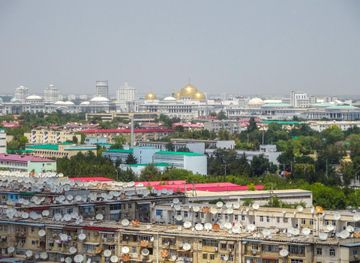
Looking beyond Murgab River Basin? Discover Turkmenistan for broader travel guides, local hot-spots, and regional highlights.
Explore TurkmenistanMurgab River Basin in Photos
Browse through our photo collection highlighting the charm and character of the destination.


Murgab River Basin: A Hidden Oasis in Turkmenistan
The Murgab River Basin in Turkmenistan is a captivating destination off the beaten path, offering a unique blend of natural beauty and cultural heritage. Nestled in the heart of Central Asia, this region is a serene escape surrounded by stunning landscapes and ancient history. Visitors to the Murgab River Basin can explore the lush riverbanks and enjoy the tranquil atmosphere. The area is home to diverse wildlife, making it a paradise for nature enthusiasts and bird watchers. The river itself provides opportunities for fishing and gentle boat rides, allowing tourists to fully immerse themselves in the peaceful surroundings. The region is also steeped in history, with remnants of ancient civilizations dotting the landscape. The ancient city of Merv, a UNESCO World Heritage site, is a must-visit. Once one of the most significant cities on the Silk Road, Merv offers a glimpse into the rich cultural tapestry of the past. Its well-preserved ruins, including mausoleums, fortresses, and mosques, provide a fascinating window into the life of bygone eras. Beyond the natural and historical allure, the Murgab River Basin offers a warm welcome from its local communities. Visitors can experience traditional Turkmen hospitality, sample local cuisine, and even witness traditional artistry and crafts. The blend of nature, history, and culture makes the Murgab River Basin a truly unforgettable destination.