
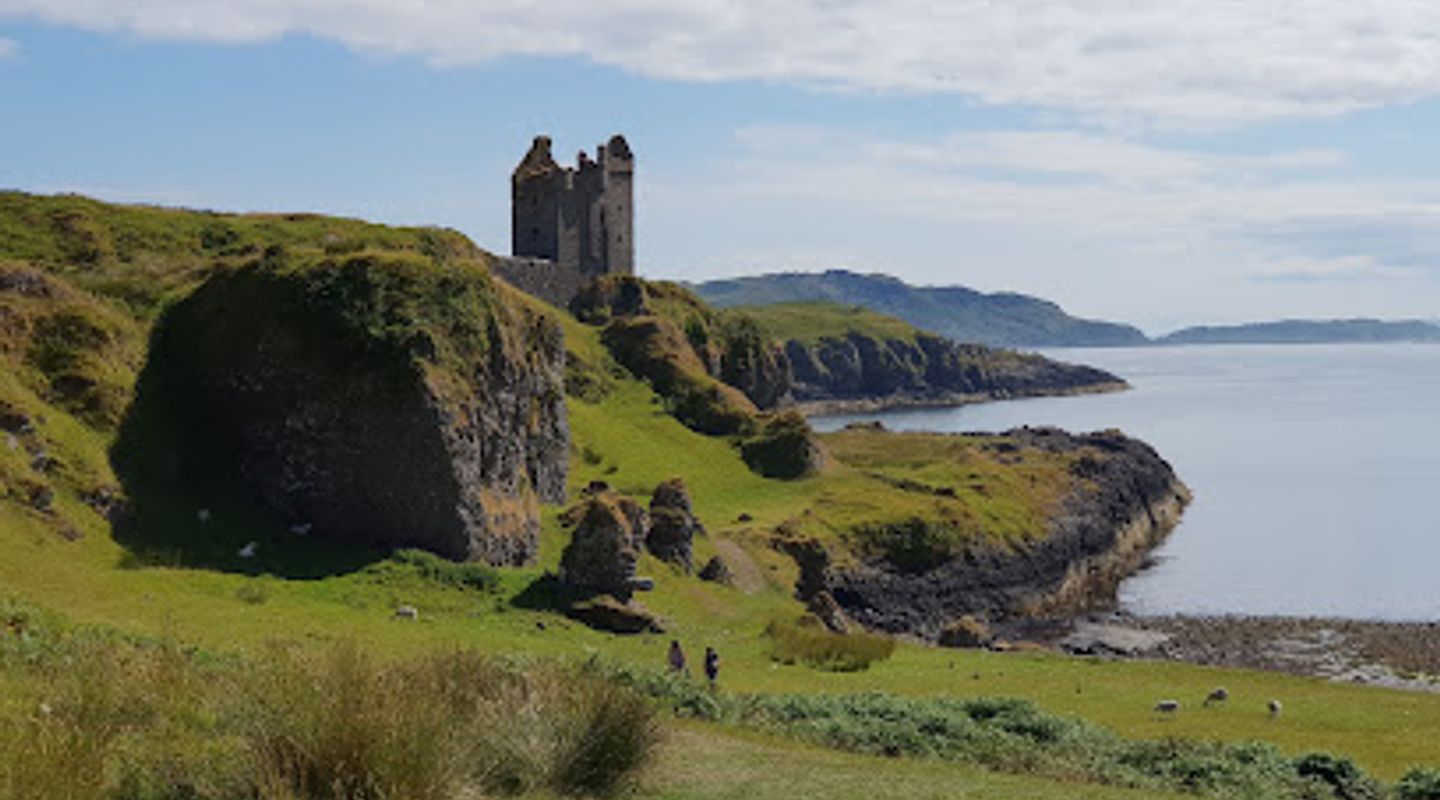
Gylen Castle, Argyllshire Travel Guide
Explore the evocative ruins of Gylen Castle, a 16th-century MacDougall tower house with breathtaking views over Scotland’s Firth of Lorne.
Gylen Castle is a striking 16th-century ruined tower house perched on a rocky promontory at the southern tip of Kerrera Island, overlooking the Firth of Lorne near Oban, Scotland. Built in 1582 by the Clan MacDougall, it was besieged and burned in 1647 during the Wars of the Three Kingdoms. The castle’s dramatic ruins and panoramic coastal views make it a captivating destination for history enthusiasts and hikers alike.
A brief summary to Gylen Castle
- Kerrera, Oban, PA34 4SX, GB
- Duration: 1 to 3 hours
- Free
-
 Outdoor
- Mobile reception: 4 out of 5

Know before you go
Hi, I'm Eve. Here are a few practical things to know before exploring Gylen Castle.
- Wear sturdy footwear for the uneven terrain around the castle and the walk from the ferry landing.
- Bring a camera to capture panoramic views of the Firth of Lorne and surrounding islands.
- Visit the nearby Kerrera Tea Garden for refreshments after exploring the castle.
- Check ferry schedules in advance, especially outside the summer season.
Do you manage this location?
Take control to get all the benefits, like improved information, better appearance, and stronger visibility across AI-powered discovery. Learn more about listing your business on Evendo
Activate your presenceOther nearby places you may find interesting
The closest places of the same kind, if this one is not quite what you had in mind.
Explore Gylen Castle on the Map
A handpicked selection of must-see spots near Gylen Castle, mapped for you.
Getting There
-
Ferry and Walk
Take the passenger ferry from Oban’s North Pier to Kerrera Island, a 10-minute crossing. From the ferry landing, expect a 30 to 45-minute walk over uneven terrain to reach Gylen Castle. The walk offers scenic views but requires good footwear and moderate fitness. Ferry services run regularly in summer; check schedules in advance.
-
Car and Ferry Combination
Drive to Oban and park in designated areas away from the ferry terminal. Use the ferry to Kerrera as foot passengers only. The castle is accessible only by foot after disembarking the ferry. Parking in Oban may incur fees; ferry tickets cost approximately £5-£7 return.
-
Guided Walking Tour
Join a guided walking tour from Oban that includes ferry transfer and a hike to Gylen Castle. Tours typically last 3 to 4 hours and cost between £25 and £40 per person. This option provides historical insights and ensures safe navigation of the island paths.
For the on-the-go comforts that matter to you
-
 Restrooms
-
 Food Options
-
 Drink Options
-
 Seating Areas
-
 Information Boards
Discover more about Gylen Castle
A Tower House Born of Clan MacDougall Ambitions
Gylen Castle, completed in 1582 by Duncan MacDougall, the 16th chief of the clan, stands as a testament to the turbulent history of the Scottish Highlands. Known in Gaelic as *Caisteal nan Geimhlean* or 'castle of the fountains', it was named for the nearby freshwater springs that once sustained its occupants. The castle’s compact L-shaped design features a four-storey main block with an additional storey in the wing, crowned by a corbelled caphouse. Its vaulted cellar and pend passageway, along with an oriel window and machicolation, showcase the architectural sophistication of late 16th-century tower houses in western Scotland.Siege, Fire, and Ruin: The Castle’s Dramatic End
Despite its formidable defenses, Gylen Castle’s occupation was brief. In 1647, during the Wars of the Three Kingdoms, the castle was held by Royalist MacDougalls loyal to the crown. General David Leslie led the Covenanter forces in a siege that ended with the castle’s surrender under promises of leniency. Tradition holds that the garrison was massacred except for the young John MacDougall. The castle was then ransacked and set ablaze, leaving it a charred ruin that remains today. The fire damage is still visible on the masonry, and none of the original floors survive, though remnants of spiral staircases remain.Historical Treasures and Clan Legacy
Gylen Castle was once the safe haven for the Brooch of Lorn, a silver brooch with a quartz charm-stone of great symbolic importance to the MacDougalls. Though the brooch was seized during the 1647 siege, it was eventually returned in the 19th century. The castle’s history intertwines with wider Scottish history, including links to Robert the Bruce and the clan rivalries of the era. Its preservation as a scheduled monument since 1931 and a major conservation effort completed in 2006 have helped maintain this evocative ruin for visitors.A Dramatic Setting with Panoramic Views
Situated on a high rocky ridge at Kerrera’s southern tip, Gylen Castle commands sweeping views over the Firth of Lorne and surrounding islands such as Mull, Colonsay, and Jura. The castle’s location on a narrow promontory with cliffs on multiple sides made it a natural fortress. Visitors today can explore the castle’s interior ruins and the surrounding courtyard and outer defenses. The site also includes traces of related buildings and cultivation rigs, offering a glimpse into the life of its former inhabitants.Access and Surrounding Attractions on Kerrera
The castle is accessible by a ferry from Oban to Kerrera, followed by a scenic walk of a few kilometers across the island’s rugged terrain. Nearby, the Kerrera Tea Garden and local farms offer refreshments and local produce. The island’s walking routes provide stunning coastal views and opportunities to experience the natural beauty and wildlife of the region. Gylen Castle’s dramatic ruins and setting make it a highlight for hikers and history lovers visiting the west coast of Scotland.Preservation and Visitor Experience Today
Though a ruin, Gylen Castle has been consolidated to ensure visitor safety and accessibility. The castle is open year-round at reasonable times and free to visit. The site’s historical importance and evocative atmosphere offer a powerful connection to Scotland’s clan past and the conflicts that shaped the Highlands. Its dramatic silhouette against the coastal landscape continues to inspire artists and visitors alike, including the famed painter J.M.W. Turner who captured it in the 19th century.












Your all‑in‑one travel companion app
Explore expert travel guides, compare and book tours, experiences, hotels, and more—all from the palm of your hand. Download now for seamless trip planning wherever your wanderlust takes you.


Explore More of Argyllshire
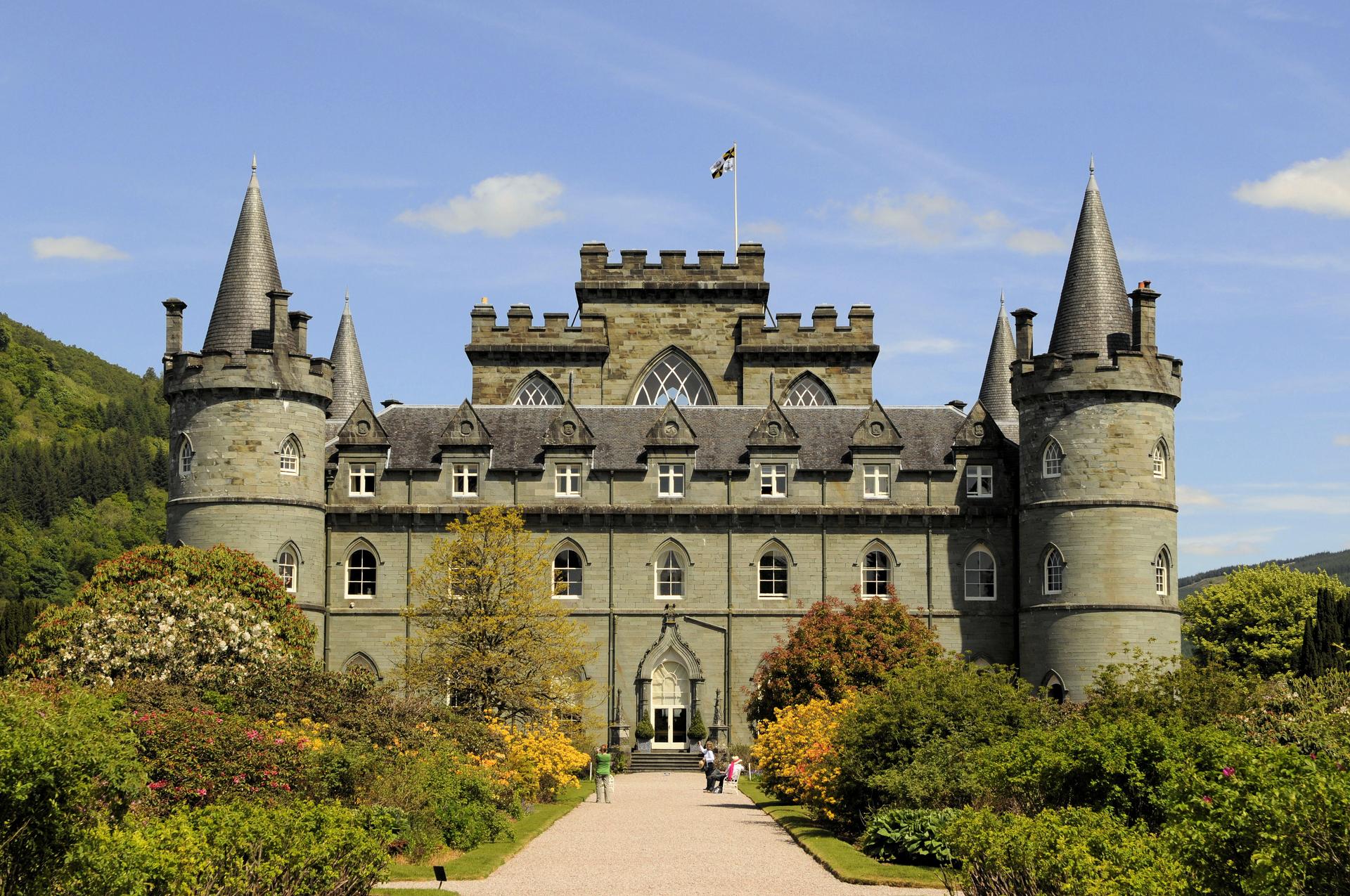
Looking beyond Gylen Castle? Discover Argyllshire for broader travel guides, local hot-spots, and regional highlights.
Explore Argyllshire
Discover the Isle of Mull’s only stone circle, a Bronze Age monument aligned with ancient solar events, set beneath the majestic Ben Buie.
Discover Rudh-a-Chruidh, a tidal island sanctuary near Oban with stunning coastal views, rich wildlife, and a sleek modern home blending nature and luxury.
