Nether Largie Mid Cairn Travel Guide
Free Guide: Bronze Age burial cairn at the heart of Scotland's most significant prehistoric landscape, carved with rare axehead symbols.


A brief summary of Nether Largie Mid Cairn
Bronze Age burial cairn at the heart of Scotland's most significant prehistoric landscape, carved with rare axehead symbols.
A Bronze Age burial cairn standing at the heart of Kilmartin Glen's remarkable linear cemetery. Dating back approximately 4,000–5,000 years, this 30-metre-wide monument features two internal cists decorated with cup marks and a rare axehead carving, offering a tangible connection to Scotland's prehistoric ritual landscape. Free to visit year-round, it forms part of one of the world's most significant concentrations of Neolithic and Bronze Age remains.
On-site amenities
 Information boards
 Seating areas
 Trash bins
 Parking
Opening hours
- Every dayOpen 24 hours
Opening hours as listed on the venue’s Google Business Profile. Hours can change for services and special events, so check with the venue before you go.
- Address
- Lochgilphead PA31 8QF
- Phone
- Website
Getting there
Car from Lochgilphead
Bus from Oban
Walking from Kilmartin village
Guided tour from Kilmartin Museum
Discover more about Nether Largie Mid Cairn
A Monument at the Heart of Ancient Ritual
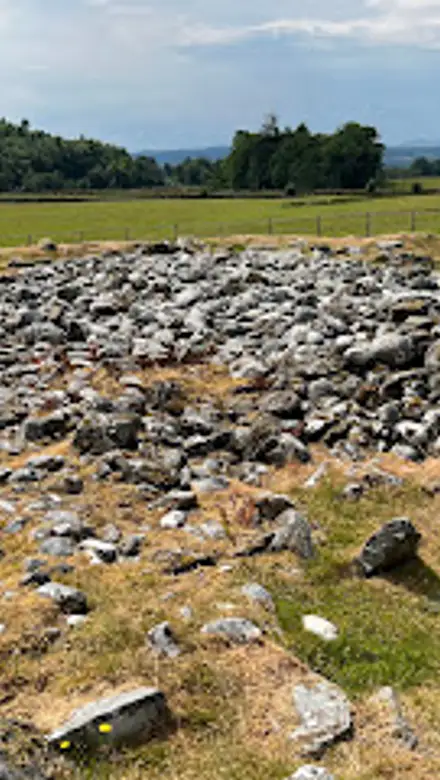
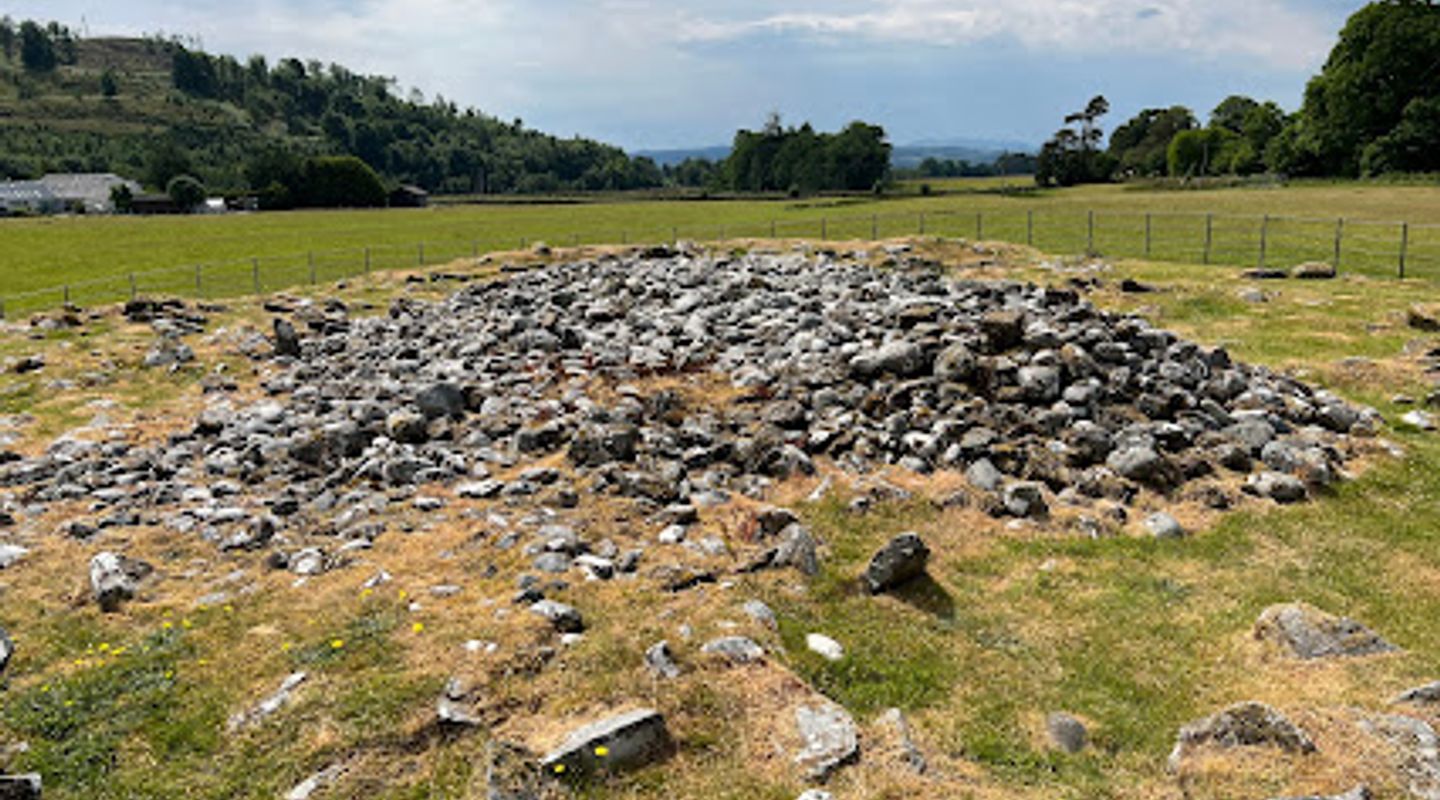
Nether Largie Mid Cairn stands as one of the most evocative monuments within Kilmartin Glen's extraordinary linear cemetery—a 2-kilometre-long alignment of five burial cairns stretching across the landscape. Built between 5,000 and 3,500 years ago during the Bronze Age, this cairn originally measured approximately 30 metres in diameter and rose to a height of 3 metres, though centuries of stone robbing for roadbuilding and agricultural walls have reduced its stature. Today, the kerbstones that once formed the boundary of the mound remain visible, marking the perimeter of what was once a far more imposing structure. The cairn's position within the linear arrangement is not arbitrary; it occupies a central location from which visitors can peer both northward toward Kilmartin village and southward along the entire ceremonial landscape, offering a profound sense of the scale and intentionality of Bronze Age burial practices.
Secrets Carved in Stone
The interior of Nether Largie Mid Cairn reveals the sophistication of prehistoric craftsmanship and belief. Two cists—stone burial chambers constructed from carefully fitted slabs—lie within the mound, their grooved joints demonstrating precision stonework. The southern cist bears faint but unmistakable carvings: cup marks and a carving of an axehead, symbols of power and status that suggest an individual of considerable importance was interred here. These axehead carvings are exceptionally rare in Scottish archaeology, appearing on only a handful of monuments and indicating that the person buried beneath this stone held a position of authority or ritual significance within their community. Remarkably, despite the cairn's clear function as a burial site, no human remains were recovered during excavations in 1929—a phenomenon attributed to the acidic Scottish soil, which dissolves bone over millennia, leaving only the stone monuments as testimony to the dead.
Archaeology and Discovery
The excavation of Nether Largie Mid Cairn in 1929 occurred at a critical moment in the monument's history. By that time, much of the cairn's stone had already been quarried and repurposed in local roadbuilding projects, a common fate for prehistoric monuments in the 19th and early 20th centuries. The excavation, conducted by professional archaeologists, revealed the internal structure and the decorated cists, providing invaluable data about Bronze Age burial practices. The presence of approximately 40 cup and ring marks on the capstone of the adjacent Nether Largie North Cairn raises intriguing questions about whether stones were reused from earlier sites, suggesting layers of ritual activity spanning thousands of years. This palimpsest of use and reuse reflects the enduring sacred significance of Kilmartin Glen across multiple prehistoric periods.
The Linear Cemetery and Landscape Meaning
Nether Largie Mid Cairn is inseparable from its context within the linear cemetery, a phenomenon unique to Argyll and representing one of the most important concentrations of Neolithic and Bronze Age monuments in the world. The five cairns—Kilmartin Glebe to the north, Nether Largie North, Nether Largie Mid, Nether Largie South, and Ri Cruin to the south—form a deliberate processional alignment that may have served ceremonial, territorial, or genealogical purposes. Nether Largie South, the oldest monument in the alignment, dates to the Neolithic period (circa 4000 BC) and was rebuilt and reused during the Bronze Age, suggesting continuity of sacred practice across two millennia. The linear arrangement transforms the entire glen into a ritual landscape, with each cairn marking a point in an ancient geography of memory and power.
Setting Within Kilmartin Glen's Prehistoric Tapestry
The cairn exists within a landscape crowded with prehistoric wonders. Nearby Temple Wood stone circles, dating to approximately 3000 BC, lie within walking distance to the northwest. The Nether Largie Standing Stones, arranged in an X-pattern with cup-marked surfaces, stand to the southeast. Rock carvings at Achnabreck, created over 4,000 years ago, depict animals, people, and geometric forms. To the south, Dunadd Fort—an Iron Age stronghold and the capital of the ancient kingdom of Dalriada—overlooks the Moine Mhòr, a vast estuarine raised bog. This density of monuments, with over 350 ancient sites within a six-mile radius of Kilmartin village, creates an immersive prehistoric environment where visitors can trace the evolution of human belief and social organization across five millennia.
Visiting and Experiencing the Monument
Access to Nether Largie Mid Cairn is straightforward and free, with a well-marked walking route from nearby car parks. Information boards at the site provide context and interpretation, though the monument itself—a weathered mound of stone with visible cists and carved surfaces—speaks most powerfully to those who stand before it. The experience is enhanced by the open landscape, which allows visitors to see the other cairns in the linear cemetery and to understand the monument not in isolation but as part of a vast ceremonial geography. The atmosphere is contemplative and atmospheric, particularly in low light or mist, when the ancient stones seem to emerge from the landscape as if from time itself.
Evendo Review Centre
 Google
Guest reviews
Best time to go
Quietest: Jan, Feb & Nov · before 7am or at 7pm
Busy times are Evendo estimates for a typical year, to help you plan. Actual crowds vary with events, school holidays and the weather.
Explore Nether Largie Mid Cairn on the map
A handpicked selection of must-see spots near Nether Largie Mid Cairn, mapped for you.
Get your free copy of our complete guide to Nether Largie Mid Cairn, delivered straight to you.
Everything on this page, from opening hours and how to get there to Eve’s tips and the best time to go, in one PDF you can read offline, print or share.
Already have an account? Sign in
Your Nether Largie Mid Cairn guide is ready.
We'll send it to · Not you? Sign out

Getting your guide ready…
We are putting together a fresh copy of the Nether Largie Mid Cairn guide. This can take up to a minute.
This can take a few moments. If your browser asks, choose Allow so the download can start. You'll find the guide in your Downloads folder.
Nothing happened? Download it again
Sorry, the guide is taking longer than usual. Please try again in a minute, or get it by email instead.
Other nearby places you may find interesting
The closest places of the same kind, if this one is not quite what you had in mind.
-
-
-
-

-


Swipe for more places
More to explore near Nether Largie Mid Cairn
-
 Best experiences near Nether Largie Mid Cairn
-
 Best hotels near Nether Largie Mid Cairn
-
 Best landmarks near Nether Largie Mid Cairn
-
 Best attractions near Nether Largie Mid Cairn
-
 Best shops near Nether Largie Mid Cairn
-
 Best restaurants near Nether Largie Mid Cairn
-
 Best bars near Nether Largie Mid Cairn


Do you manage this location?
Take control to get all the benefits, like improved information, better appearance, and stronger visibility across AI-powered discovery.
Explore more

Explore more of Argyllshire
Explore Argyllshire: A Scottish paradise of rugged coastlines, ancient castles, and charming villages, offering a blend of natural beauty and rich history.
Explore Argyllshire
Explore more of United Kingdom
Discover the United Kingdom: A blend of rich history, stunning landscapes, and vibrant cities, offering a unique travel experience for every visitor.
Explore United Kingdom