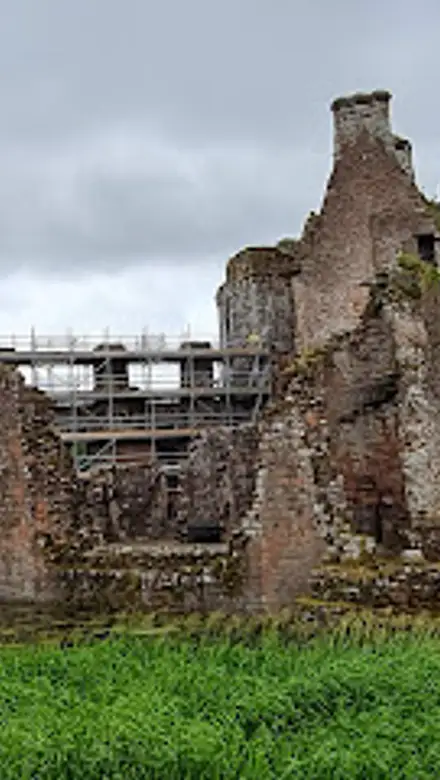
Caerlaverock Castle Travel Guide
Free Guide: Explore Scotland’s rare triangular moated fortress, Caerlaverock Castle, steeped in border history and surrounded by stunning natural reserve landscapes.


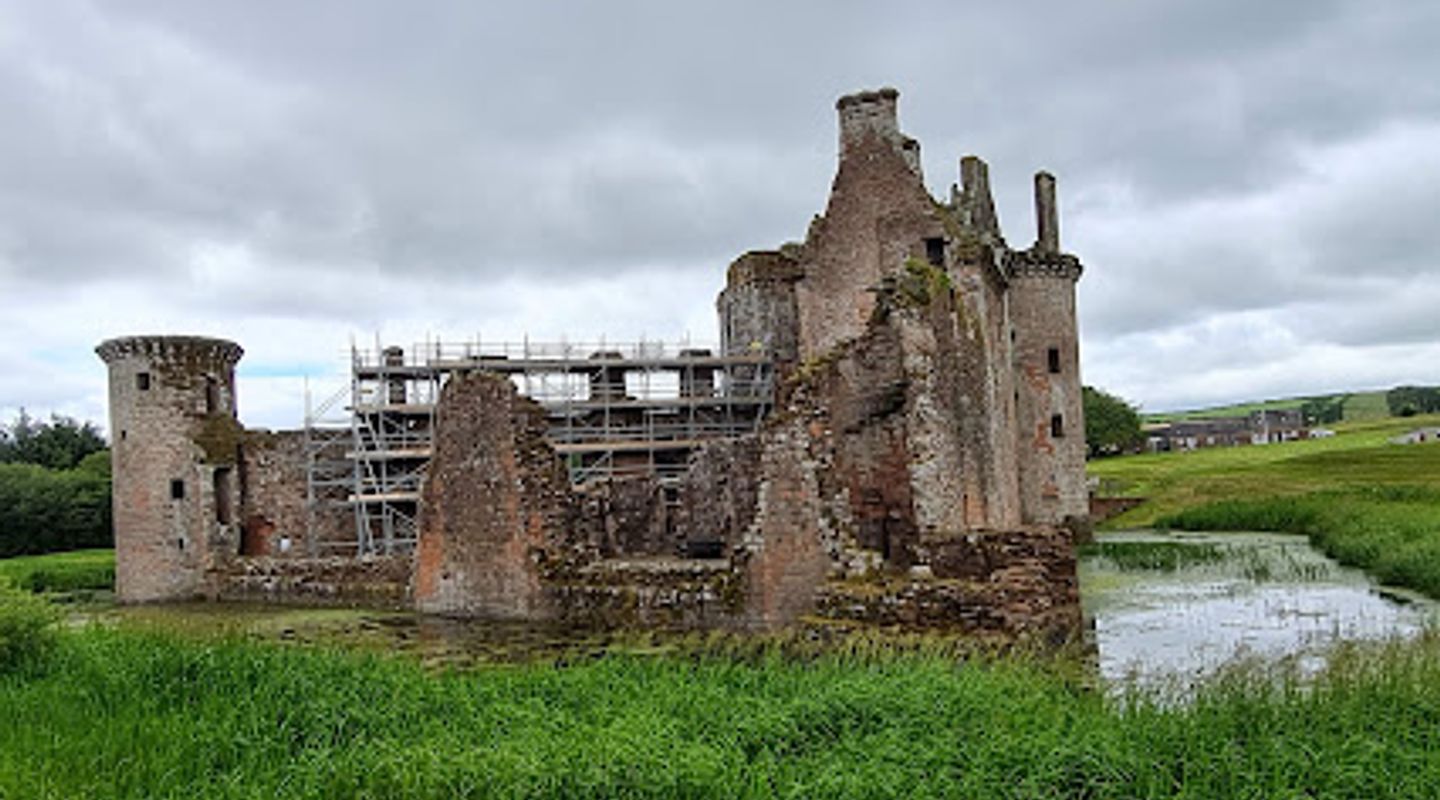
A brief summary of Caerlaverock Castle
Explore Scotland’s rare triangular moated fortress, Caerlaverock Castle, steeped in border history and surrounded by stunning natural reserve landscapes.
On-site amenities
 Restrooms
 Food options
 Drink options
 Seating areas
 Trash bins
 Information boards
 Visitor centre
- Address
- Castle Road End, Dumfries DG1 4RU
- Phone
- Website
Getting there
Car
Bus
Walking
Discover more about Caerlaverock Castle
A Unique Medieval Stronghold on Scotland’s Southern Coast
Caerlaverock Castle stands out as one of Scotland’s most distinctive medieval fortresses, primarily due to its rare triangular plan. Constructed in the 13th century, this moated castle was strategically positioned near the Solway Firth to guard an important gateway into Scotland. Its formidable twin-towered gatehouse and thick battlements exemplify classic defensive architecture designed to withstand sieges and border conflicts. The castle’s moat, still intact, adds to its dramatic presence and medieval charm.
Centuries of Conflict and Architectural Evolution
Throughout its history, Caerlaverock Castle was repeatedly besieged, most notably during the Wars of Scottish Independence and later in 1640 by the Protestant Covenanters. The Maxwell family, who held the castle for over 400 years, transformed it across centuries, including a significant 17th-century Renaissance-style residential addition known as the Nithsdale Apartments. Despite partial demolitions and restricted visitor access to some areas today, the castle’s distinctive triangular layout and many surviving features provide a vivid window into its turbulent past.
Exploring the Grounds and Visitor Experience
Visitors can explore the castle’s interior rooms, including the prison and battlements, and learn about medieval siege warfare through an engaging exhibition featuring reconstructions of siege engines. The castle grounds also include the ruins of an earlier fortification located a short walk to the south, accessible via a nature trail through woodland. Nearby, a tearoom offers freshly baked goods and coffee, while children can enjoy a castle-themed adventure playground.
Setting Within a Protected Natural Landscape
Caerlaverock Castle is situated on the northern edge of the Caerlaverock National Nature Reserve, a significant habitat for waterfowl such as barnacle geese. The surrounding nature reserve enhances the tranquil and scenic atmosphere, making the site appealing for nature lovers and photographers. The castle’s rural location and proximity to the Solway coast provide panoramic views and a peaceful environment contrasting with its martial history.
Access and Practical Information for Visitors
The castle is open year-round with seasonal hours, generally from 9:30am to 5pm in summer and 10am to 4pm in winter, though some sections remain closed for conservation. Facilities include a visitor centre with historical displays, restrooms, a gift shop, and parking. Accessibility is supported by compacted gravel paths and a wooden bridge, though some internal steps exist. Historic Environment Scotland offers discounted tickets and membership benefits to enhance the visit.
Legacy and Cultural Significance
As Scotland’s only triangular castle, Caerlaverock holds a unique place in the country’s architectural heritage. Its design reflects medieval military innovation adapted to the natural landscape. The castle’s history of sieges, family feuds, and political upheaval embodies the complex narrative of Scotland’s borderlands. Today, it stands as a protected scheduled monument, inviting visitors to immerse themselves in centuries of Scottish history amid striking natural surroundings.
Evendo Review Centre
 Google
Guest reviews
Best time to go
Quietest: Jan, Feb & Dec · before 3am
Busy times are Evendo estimates for a typical year, to help you plan. Actual crowds vary with events, school holidays and the weather.
Explore Caerlaverock Castle on the map
A handpicked selection of must-see spots near Caerlaverock Castle, mapped for you.
Get your free copy of our complete guide to Caerlaverock Castle, delivered straight to you.
Everything on this page, from opening hours and how to get there to Eve’s tips and the best time to go, in one PDF you can read offline, print or share.
Already have an account? Sign in
Your Caerlaverock Castle guide is ready.
We'll send it to · Not you? Sign out

Getting your guide ready…
We are putting together a fresh copy of the Caerlaverock Castle guide. This can take up to a minute.
This can take a few moments. If your browser asks, choose Allow so the download can start. You'll find the guide in your Downloads folder.
Nothing happened? Download it again
Sorry, the guide is taking longer than usual. Please try again in a minute, or get it by email instead.
Other nearby places you may find interesting
The closest places of the same kind, if this one is not quite what you had in mind.
-
Caerlaverock Castle Explore Scotland’s unique triangular castle with a moat, twin towers, and rich medieval history near Dumfries.
-
Old Caerlaverock Castle Explore Scotland’s only triangular castle, a moated medieval fortress steeped in centuries of border warfare and Maxwell family history.
-
WWT Caerlaverock Discover Scotland’s premier wetland sanctuary where thousands of migratory birds create a spectacular natural show year-round.
-
Drumburn Viewpoint Discover sweeping views over the Nith Estuary and historic Dumfries countryside from this tranquil scenic viewpoint.
-
New Abbey Corn Mill Discover the charm of New Abbey Corn Mill, an 18th-century water-powered mill showcasing Scotland’s rich milling heritage in a picturesque village setting.
Swipe for more places
More to explore near Caerlaverock Castle

 Best experiences near Caerlaverock Castle
 Best hotels near Caerlaverock Castle
 Best landmarks near Caerlaverock Castle
 Best attractions near Caerlaverock Castle
 Best shops near Caerlaverock Castle
 Best restaurants near Caerlaverock Castle
 Best bars near Caerlaverock Castle
Do you manage this location?
Take control to get all the benefits, like improved information, better appearance, and stronger visibility across AI-powered discovery.