
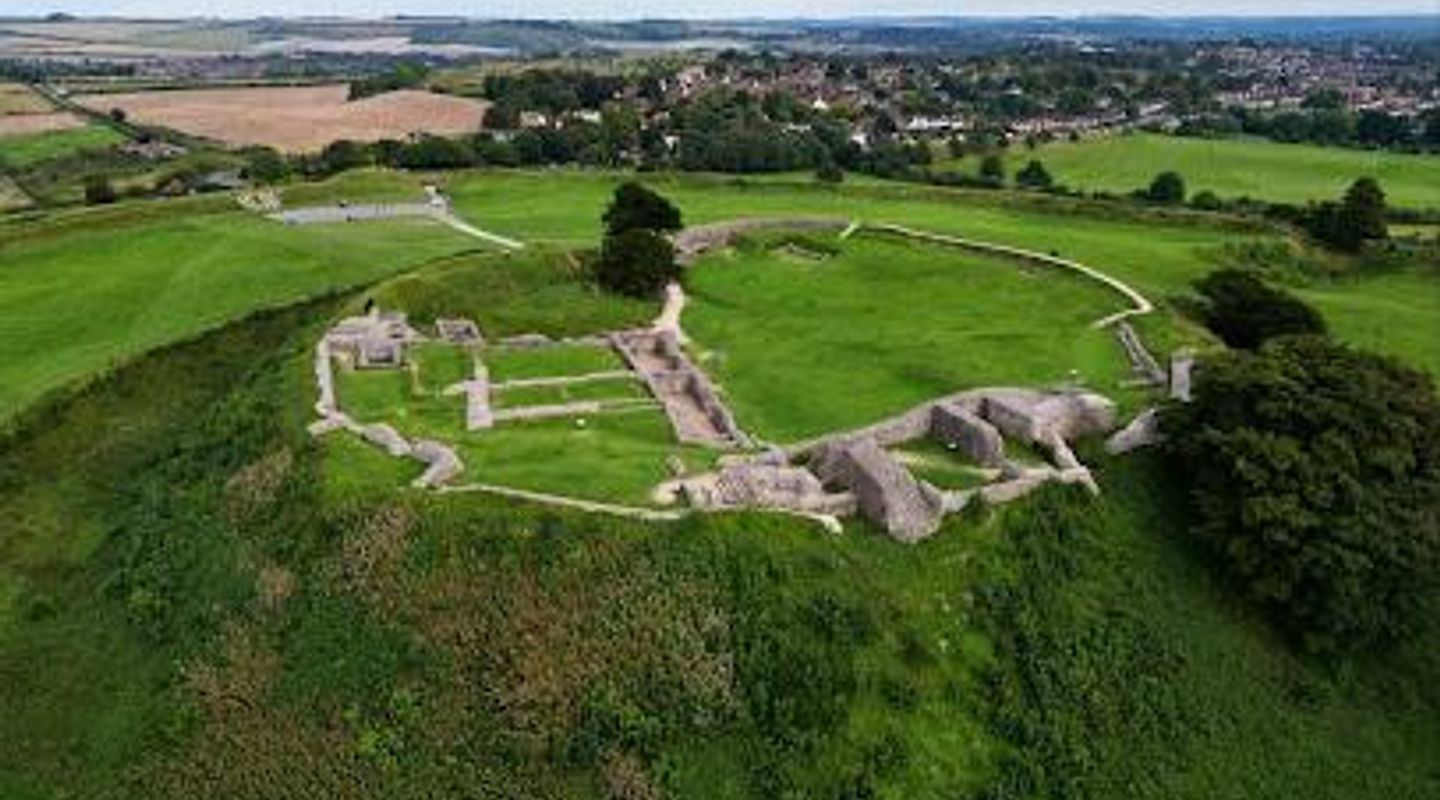
Old Sarum, Wiltshire Travel Guide
Explore Old Sarum’s ancient hillfort, Norman castle, and medieval cathedral ruins—the birthplace of Salisbury with over 2,000 years of layered history.
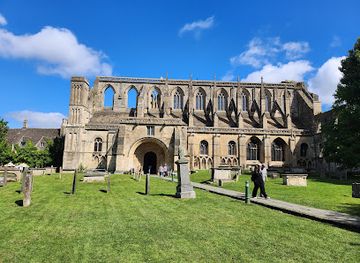
Old Sarum, located just north of Salisbury, England, is a remarkable historic site combining an Iron Age hillfort, a Norman motte-and-bailey castle, and the ruins of a medieval cathedral. It was a key royal and ecclesiastical center from prehistoric times through the Middle Ages, witnessing events from the Oath of Salisbury to the relocation of the cathedral to modern Salisbury in the 13th century. Today, visitors can explore its earthworks, castle remains, and cathedral foundations while enjoying panoramic views over the Wiltshire countryside.
A brief summary to Old Sarum
- Castle Rd, Salisbury, SP1 3SD, GB
- Click to display
- Click to display
- Duration: 1 to 2.5 hours
- Mid ranged
-
 Outdoor
- Mobile reception: 4 out of 5
- Monday 10 am-4 pm
- Tuesday 10 am-4 pm
- Wednesday 10 am-4 pm
- Thursday 10 am-4 pm
- Friday 10 am-4 pm
- Saturday 10 am-4 pm
- Sunday 10 am-4 pm

Know before you go
Hi, I'm Eve. Here are a few practical things to know before exploring Old Sarum.
- Book your tickets online in advance to save around 10-15% and avoid queues.
- Visit early in the day or late afternoon to enjoy quieter surroundings and better photo opportunities.
- Wear comfortable shoes as the site involves walking on uneven terrain and hill slopes.
- Take time to explore the visitor shop for unique local crafts and medieval-themed souvenirs.
- Consider joining a guided tour for detailed historical context and stories about the site.
Do you manage this location?
Take control to get all the benefits, like improved information, better appearance, and stronger visibility across AI-powered discovery. Learn more about listing your business on Evendo
Activate your presenceOther nearby places you may find interesting
The closest places of the same kind, if this one is not quite what you had in mind.
Explore Old Sarum on the Map
A handpicked selection of must-see spots near Old Sarum, mapped for you.
Unlock the Best of Old Sarum
Buy tickets
-
No tickets available
Book tours with entry


Getting There
-
Bus
Take the Salisbury Reds bus service number 6 or 7 from Salisbury city center to Old Sarum, with a journey time of approximately 15-20 minutes. Buses run frequently during the day, and a single ticket costs around £3.50. The bus stop is a short walk from the entrance.
-
Car
Drive via the A345 road, about 3.5 km north of Salisbury city center. Parking is available on site for a fee of approximately £3-5. The drive takes around 10 minutes, but parking can be limited on busy days.
-
Taxi
Local taxis from Salisbury to Old Sarum take about 10 minutes and cost approximately £10-15. This option offers door-to-door convenience, especially for groups or those with mobility needs.
-
Walking
For active visitors, walking from Salisbury city center to Old Sarum is possible in about 45-60 minutes. The route is mostly flat but includes some rural paths. Suitable for those comfortable with a moderate walk.
For the on-the-go comforts that matter to you
-
 Restrooms
-
 Drink Options
-
 Food Options
-
 Seating Areas
-
 Trash Bins
-
 Information Boards
-
 Visitor Center
Discover more about Old Sarum
Layers of History from Prehistory to Norman Conquest
Old Sarum’s story begins in the Neolithic era around 3000 BC, with early farming communities establishing themselves on this chalk hilltop. By the Iron Age, it had developed into a fortified hillfort commanding key trade routes and the surrounding landscape. The Romans later occupied the site, and it continued to be a strategic location through Saxon times, serving as a political and religious hub in the Kingdom of Wessex. This ancient heritage laid the foundation for its prominence in medieval England.Norman Castle and the Birth of a Royal Stronghold
Following the Norman Conquest in 1066, William the Conqueror recognized Old Sarum’s strategic importance and constructed a motte-and-bailey castle atop the existing fortifications by 1069. This castle became a symbol of Norman power and governance in southern England. The castle’s castellan often served as sheriff of Wiltshire, underscoring its administrative significance. The site hosted important royal councils, including the Oath of Salisbury in 1086, where William secured allegiance from his nobles, reinforcing Old Sarum’s role in medieval governance.The Medieval Cathedral and Ecclesiastical Struggles
In the late 11th and early 12th centuries, Old Sarum saw the construction of a grand cathedral dedicated to the Virgin Mary within the castle’s outer bailey. This cathedral served as the seat of the bishop of Salisbury, merging religious authority with military presence. However, tensions arose between the clergy and the castle garrison due to cramped conditions and the exposed hilltop location. The site’s steep slopes and limited water supply made daily life difficult, prompting Bishop Richard Poore to relocate the cathedral and ecclesiastical community to the more hospitable floodplain near the River Avon, founding what is now Salisbury in the early 13th century.Decline, Abandonment, and Legacy
After the cathedral’s move in 1226, Old Sarum gradually declined as a settlement. The castle remained an administrative center into the 14th century but was eventually abandoned and ordered demolished in 1322. Over subsequent centuries, stones from the ruins were quarried for building materials in Salisbury and beyond. Despite its physical decline, Old Sarum retained parliamentary representation until the Reform Act of 1832, becoming a notorious example of a 'rotten borough.' Today, it stands preserved as a monument to England’s layered history.Visiting Old Sarum Today
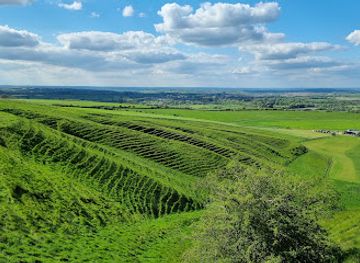
Managed by English Heritage, Old Sarum offers visitors a unique opportunity to walk among the earthworks of the Iron Age fort, explore the ruins of the Norman castle, and stand within the footprint of the medieval cathedral. The site provides sweeping views over Salisbury and the surrounding Wiltshire countryside. Facilities include a visitor shop offering local crafts and knight-themed souvenirs, picnic areas, and accessibility features such as ramps and toilets. Guided tours are available by advance booking, enriching the experience with historical insights.Cultural and Historical Significance
Old Sarum encapsulates over 2,000 years of British history, reflecting the evolution of settlement, military architecture, and ecclesiastical power. It illustrates the transition from prehistoric communities to Norman rule and medieval ecclesiastical authority. Its story is intertwined with major historical events, including the Domesday Book compilation and early parliamentary assemblies. As a preserved heritage site, Old Sarum continues to educate and inspire visitors about England’s complex past.












Your all‑in‑one travel companion app
Explore expert travel guides, compare and book tours, experiences, hotels, and more—all from the palm of your hand. Download now for seamless trip planning wherever your wanderlust takes you.


Explore More of Wiltshire
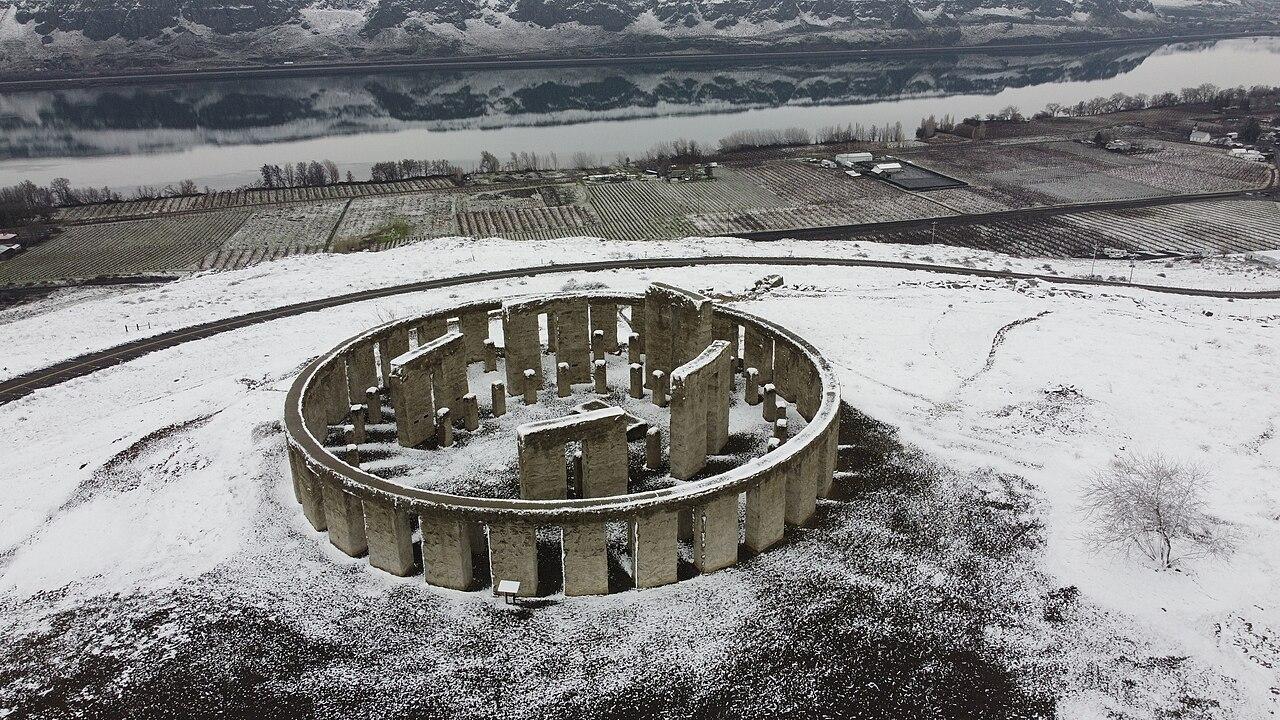
Looking beyond Old Sarum? Discover Wiltshire for broader travel guides, local hot-spots, and regional highlights.
Explore Wiltshire
An iconic chalk hill figure on Wiltshire’s highest point, blending history, legend, and stunning panoramic views across the Pewsey Vale.
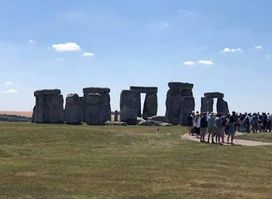
Stonehenge Road leads you through the timeless Salisbury Plain to the legendary Stonehenge, where ancient mysteries and natural beauty converge.
